


The reporting that sparked this guide: Green Card Interview Preparation Tips (Immigration Law)
What This News Means for Immigrants in Orlando and Across Florida
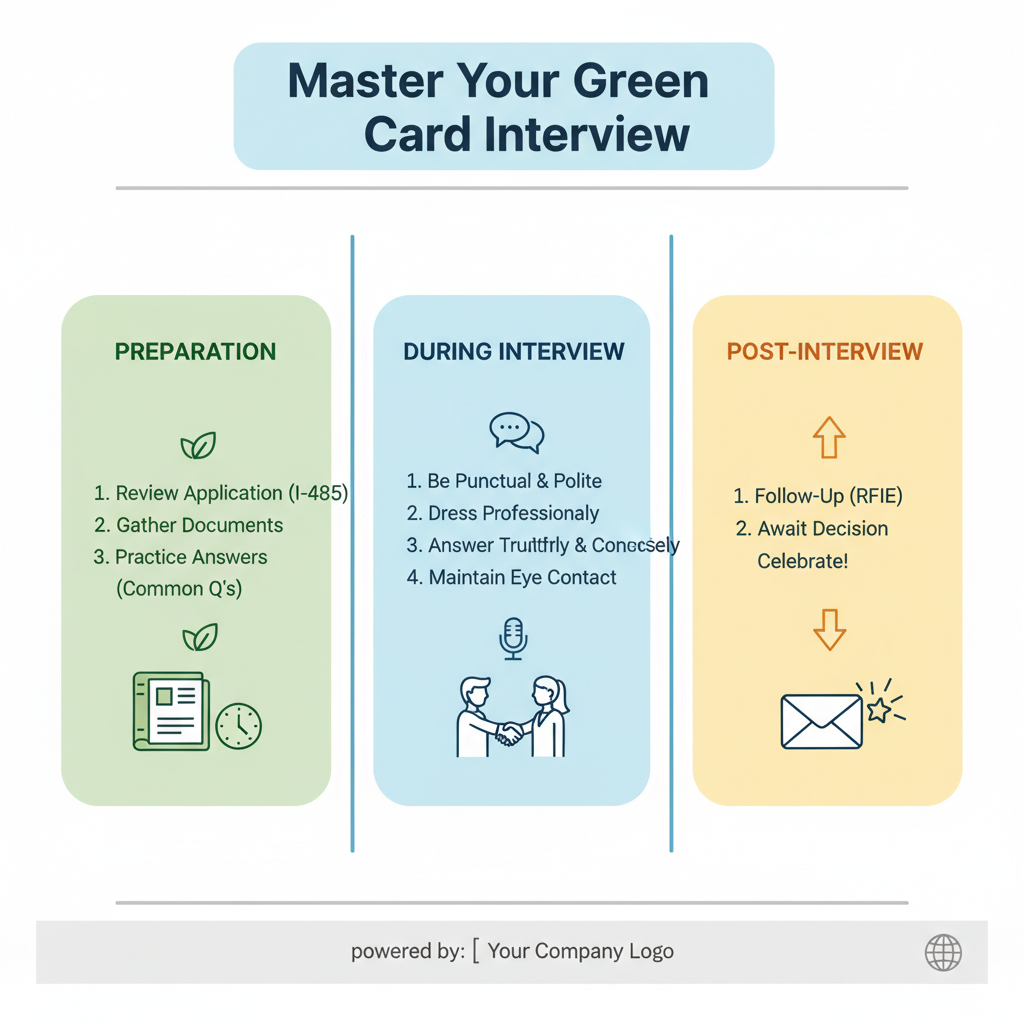
The journey to obtaining a Green Card, or lawful permanent residency in the United States, is often a complex and lengthy process. For many, the culmination of this journey is the Green Card interview with U.S. Citizenship and Immigration Services (USCIS). While the interview itself isn't a new development, its critical importance and the need for thorough preparation are consistently highlighted in immigration law discussions and news. Today, 2026-05-09, we at Imigrar want to empower you with the knowledge and strategies to navigate this pivotal step successfully.
Why this news is showing up now
While the Green Card interview has always been a fundamental part of the immigration process, its significance remains a constant topic in immigration discussions. The "news" here isn't about a sudden change in policy, but rather the ongoing emphasis on the interview as a crucial checkpoint for USCIS. In recent years, with evolving immigration policies and heightened scrutiny, the interview process has become even more rigorous. USCIS officers are meticulously reviewing applications and questioning applicants to ensure eligibility, verify the authenticity of relationships (especially in family-based petitions), and identify any potential grounds of inadmissibility. This sustained focus means that applicants must be more prepared than ever before, making comprehensive interview preparation a timeless and trending topic in immigration law discussions.
How it can affect Florida residents
Florida is home to one of the nation's largest and most diverse immigrant populations. For residents of Orlando, Central Florida, and across the state, the Green Card interview is a very real and often anxiety-inducing step. If your case is in Orlando, your interview will likely take place at the Orlando USCIS Field Office. The outcome of this interview directly impacts your ability to live and work permanently in the U.S., uniting or keeping your family together. Without proper preparation, even the most legitimate applications can face delays or denials. Given the high volume of applications processed in Florida, being well-prepared is not just advisable—it's essential to ensure a smooth and successful outcome. Imigrar, based in Orlando, understands the unique challenges and opportunities faced by immigrants in our community and is dedicated to providing the localized expertise you need.
Need Help? Our Orlando immigration team is ready to assist. Call +1 786-791-3106 for a free consultation, or message us online. Se Habla Español.
What the Green Card Interview Is (and Why It Matters)
A plain-English definition
The Green Card interview is a mandatory meeting with a USCIS officer, or a consular officer if you are applying from outside the U.S. (Consular Processing). Its primary purpose is to verify the information you provided in your Green Card application, confirm your eligibility for permanent residency, and ensure that you do not have any grounds of inadmissibility to the United States. Think of it as the government's way of double-checking everything before granting you one of the most significant immigration benefits. It's an opportunity for you to clarify any ambiguities in your application and for the officer to address any concerns they might have.
Key terms you need to know
- Green Card: Officially known as a Permanent Resident Card, it proves your authorization to live and work permanently in the United States.
- USCIS: U.S. Citizenship and Immigration Services, the government agency responsible for processing immigration benefits.
- Adjustment of Status (AOS): The process of applying for a Green Card while physically present in the United States. This is distinct from Consular Processing.
- Consular Processing: The process of applying for a Green Card through a U.S. embassy or consulate in your home country.
- Sponsor: The U.S. citizen or lawful permanent resident who files an immigration petition on behalf of the beneficiary (e.g., a spouse, parent, or employer).
- Beneficiary: The foreign national seeking a Green Card.
- Form I-130, Petition for Alien Relative: The initial form filed by a U.S. citizen or LPR to establish a relationship with a foreign relative.
- Form I-485, Application to Register Permanent Residence or Adjust Status: The primary application form filed by an individual seeking to adjust their status to lawful permanent resident while in the U.S.
- Form I-864, Affidavit of Support: A legally binding document signed by the sponsor, promising to financially support the beneficiary if needed.
- Form I-693, Report of Medical Examination and Vaccination Record: A document completed by a USCIS-approved civil surgeon, certifying that the applicant has undergone a medical examination and is not inadmissible on public health grounds.
- Inadmissibility: Grounds under U.S. immigration law that can make an individual ineligible for a Green Card, such as certain criminal convictions, health issues, or past immigration violations.
- Priority Date: The date USCIS receives your visa petition (e.g., Form I-130). It determines your place in the visa queue, especially for preference categories.
Current Immigration Law: The Foundation
The legal framework for Green Cards is primarily found in the Immigration and Nationality Act (INA). This act outlines who is eligible for permanent residency, the various categories through which one can apply, and the grounds for inadmissibility.
Federal requirements
To qualify for a Green Card, you must generally meet several federal requirements:
- Eligibility Category: You must qualify under one of the specific Green Card categories, such as family-based (immediate relatives of U.S. citizens, family preference categories), employment-based, diversity lottery, or special immigrant categories.
- Approved Petition: For most categories, a petition must first be filed and approved on your behalf. For example, a U.S. citizen spouse files Form I-130 for their foreign national spouse.
- Admissibility: You must be admissible to the United States. The INA specifies various grounds of inadmissibility, including health-related grounds (INA 212(a)(1)), criminal and related grounds (INA 212(a)(2)), security and related grounds (INA 212(a)(3)), and public charge grounds (INA 212(a)(4)). If you have a ground of inadmissibility, you may need to apply for a waiver.
- Lawful Entry (for Adjustment of Status): If you are applying for Adjustment of Status within the U.S., you generally must have been inspected and admitted or paroled into the U.S.
- Medical Examination: You must undergo a medical examination by a USCIS-approved civil surgeon and submit Form I-693.
- Financial Support: For most family-based and some employment-based categories, your sponsor must submit Form I-864, Affidavit of Support, demonstrating their ability to financially support you.
All these requirements are meticulously reviewed during your Green Card interview. You can find detailed information on these forms and requirements on the USCIS official website.
Florida-specific considerations
While the federal requirements for Green Cards are uniform across the nation, the application of these laws can feel more immediate for Florida residents due to the presence of local USCIS field offices. For instance, if you reside in Orange County or anywhere along the I-4 corridor, your interview will most likely be scheduled at the Orlando USCIS Field Office. Understanding local processing times, the specific procedures of the Orlando office, and the availability of local resources (like accredited interpreters or immigration attorneys) can be crucial. Although Florida does not have its own specific immigration laws concerning Green Cards, the sheer volume and diversity of cases processed here mean that officers are experienced with a wide range of situations, making thorough preparation even more important.
How to Prepare for Your Green Card Interview: A Complete Step-by-Step Guide
The Green Card interview is arguably the most critical step in your journey to permanent residency. Proper preparation can significantly increase your chances of a smooth and successful outcome. Here’s a detailed guide to help you get ready.
1) Understand Your Case & Review Your Application
Before anything else, you must have an intimate understanding of your own application. This means knowing every detail submitted to USCIS.
- Review All Submitted Forms: Go through your entire application package: Form I-130 (if applicable), Form I-485, Form I-864, Form I-693, and any other supporting documents. Familiarize yourself with all the dates, addresses, employment history, and answers you provided.
- Know Your Eligibility Category: Understand the specific basis of your Green Card application (e.g., marriage to a U.S. citizen, employment-based, etc.) and the criteria for that category.
- Identify Potential Red Flags: Be aware of any issues in your application that might raise questions, such as gaps in employment, prior immigration violations, or a criminal record. Prepare to address these honestly and clearly.
Required Documents for this Step:
- Copies of all previously submitted USCIS forms (e.g., Form I-130, Form I-485, Form I-864, Form I-693)
- All supporting evidence submitted with your application
- Receipt notices (Form I-797C) from USCIS
2) Gather All Original Documents
The interview requires you to present original documents that were submitted as copies with your application, plus any new or updated documents.
- Personal Identity & Status Documents: Your passport, birth certificate, marriage certificate (if applicable), divorce decrees (if applicable), national identity cards, previous visas, and I-94 arrival/departure record.
- Proof of Relationship (for family-based cases): Marriage certificate, birth certificates of children, joint bank accounts, joint leases/mortgages, utility bills in both names, joint insurance policies, photos of your relationship over time, affidavits from friends/family, and any other evidence of a bona fide relationship.
- Financial Documents: Original Form I-864, Affidavit of Support, along with your sponsor's federal tax returns (for the last three years), W-2s, 1099s, and employment verification letters. If you are also using your income, bring your tax returns and employment documents.
- Medical Examination: The sealed envelope containing your Form I-693, Report of Medical Examination and Vaccination Record, if you haven't already submitted it. Do NOT open this envelope.
- Police & Court Records: Certified copies of any arrest records, court dispositions, or other criminal history documents, even if charges were dropped or expunged.
- Updated Documents: Any new documents since you filed your application, such as a new job offer, a new child's birth certificate, or updated marriage certificates.
Important: Bring originals AND a complete set of photocopies of EVERYTHING. The officer may keep the copies and return the originals.
Need Help? Our Orlando immigration team is ready to assist. Call +1 786-791-3106 for a free consultation, or message us online. Se Habla Español.
3) Organize Your Evidence Meticulously
A well-organized set of documents makes a positive impression and speeds up the interview process.
- Create a Binder or Folder: Use dividers and labels to separate documents by category (e.g., "Personal ID," "Marriage Evidence," "Financial," "Medical").
- Chronological Order: Arrange documents within each category in chronological order, especially for evidence of relationship (photos, bills).
- Tab and Label: Clearly tab each section so you can quickly retrieve specific documents when asked.
- Translations: Ensure all foreign-language documents are accompanied by a certified English translation. The translator must provide a statement certifying their competence and the accuracy of the translation.
4) Prepare for Common Interview Questions
Anticipating questions can reduce stress and help you provide clear, consistent answers.
- Personal Background: Date and place of birth, parents' names, previous addresses, education, employment history.
- Immigration History: How and when you entered the U.S., previous visas, any prior immigration applications or denials.
- Marriage-Based Cases (Bona Fide Marriage): This is heavily scrutinized. Questions will cover:
- How you met, where you live, daily routines.
- Details about your wedding, honeymoon, and family interactions.
- Shared responsibilities, finances, and future plans.
- Questions about your spouse's family, friends, and work.
- Sponsor's Information: Questions about your sponsor's income, employment, and relationship to you.
- Inadmissibility Questions: Expect questions about any criminal history, past immigration violations, or health issues. Be honest and prepared to discuss any waivers you may have filed.
5) Practice Your Responses and Communication
Practice can make a significant difference in your confidence and clarity.
- Role-Playing: Practice with your spouse, a friend, or an immigration attorney. Have them ask you challenging questions.
- Be Honest and Consistent: Always tell the truth. Any inconsistencies with your application or previous statements can raise serious doubts.
- Answer Clearly and Concisely: Answer only the question asked; avoid volunteering unnecessary information. If you don't understand a question, politely ask the officer to repeat or rephrase it.
- Maintain Respectful Demeanor: Be polite, respectful, and make eye contact. Dress professionally.
- Interpreter Needs: If you are not fluent in English, bring a certified interpreter. If USCIS provides one, they will notify you. For clients of Imigrar, Se Habla Español, so we can assist in your native language.
6) Understand the Interview Day Logistics
Knowing what to expect on the day can ease anxiety.
- Arrive Early: Plan to arrive at the Orlando USCIS Field Office at least 30 minutes before your scheduled time. Parking can be challenging, and you'll need to go through security.
- What to Bring: Your interview notice, all original documents and copies, and your attorney (if applicable). Do not bring prohibited items like weapons.
- Who Should Attend: Typically, the applicant and the petitioner (for family-based cases) must attend. If you have an attorney, they will attend with you. Children listed on the application may also need to attend, especially if they are adjusting status.
- Attorney Presence: You have the right to have an attorney present. An attorney can advise you, object to improper questions, and help clarify complex issues.
7) Know What Happens After the Interview
The interview is not always the final step.
- Approval: If everything goes well and the officer has no further questions or needs, your Green Card may be approved on the spot, or you might receive a notice of approval within a few weeks. Your physical Green Card will be mailed to you.
- Request for Evidence (RFE): If the officer needs more information or documents, they will issue an RFE, giving you a deadline to submit the requested items.
- Notice of Intent to Deny (NOID): If the officer believes you are not eligible, they may issue a NOID, explaining their reasoning and giving you a chance to respond. This is a critical point where legal counsel is paramount.
- Denial: In some cases, the application may be denied. Understanding the reasons for denial and your options (e.g., appeal, refile) is crucial.
Practical Steps You Can Take Today
Don't wait until the last minute to prepare for your Green Card interview. Here are actionable steps you can start taking right now:
Actionable Checklist:
- Create a Master Document Checklist: Based on your specific case (family-based, employment-based, etc.), list every single document you need to bring.
- Start Gathering Originals: Begin collecting all original birth certificates, marriage certificates, passports, and any other identity documents.
- Request Certified Copies: If you have any criminal history, immediately request certified court dispositions and police records.
- Review Your Application Package: Sit down with your spouse or sponsor and go through every form and piece of evidence you submitted. Discuss potential questions.
- Organize a Physical Binder: Get a binder with dividers. Label sections for each type of document (e.g., "ID," "Marriage," "Financial," "Medical").
- Confirm Medical Exam Status: Ensure your Form I-693 is current and sealed. Medical exams are generally valid for two years from the date of the civil surgeon's signature.
- Check USCIS Processing Times: Visit the USCIS Processing Times page for the Orlando Field Office to get an estimate of when your interview might be scheduled.
- Seek Legal Counsel: Schedule a free consultation with an experienced immigration attorney at Imigrar to review your case and develop a personalized preparation strategy.
Document Preparation Guidance
- Originals vs. Copies: Always bring the original document plus a clear photocopy. USCIS usually keeps the copies.
- Translations: For any document not in English, provide both the original foreign language document and a certified English translation. The translation must include a statement from the translator certifying their competency and the accuracy of the translation.
- Organization is Key: A well-organized binder or folder demonstrates your seriousness and helps the officer efficiently review your case. This can significantly reduce the length and stress of the interview.
Timeline Expectations
The timeline from filing your application to your interview notice can vary widely. After your interview, the decision can also vary:
- Interview Scheduling: After filing Form I-485, it can take several months to over a year to receive an interview notice, depending on your visa category, the USCIS field office workload (like the Orlando office), and the current processing times.
- Decision After Interview: Some applicants receive an immediate decision. Others may wait a few days to several weeks. If an RFE is issued, the process will be delayed until you submit the requested documents.
- Green Card Delivery: Once approved, your physical Green Card is typically mailed within 2-4 weeks.
Warning: These timelines are estimates and can change. Always check the official USCIS website for the most current information.
Need Help? Our Orlando immigration team is ready to assist. Call +1 786-791-3106 for a free consultation, or message us online. Se Habla Español.
How Imigrar Helps Immigrants in Orlando
At Imigrar, we understand that the Green Card interview is a high-stakes moment for you and your family. Our firm, conveniently located in Orlando, Florida, serves clients nationwide, ensuring that wherever you are, you have access to expert legal guidance. Our mission, "Keep Families Together," drives everything we do, especially when it comes to guiding you through complex processes like the Green Card interview.
Our experience and expertise: Our seasoned immigration attorneys have extensive experience preparing clients for Green Card interviews across all categories—family-based, employment-based, and more. We provide:
- Comprehensive Case Review: We meticulously review your entire application package, identifying potential issues and ensuring all necessary documents are prepared.
- Personalized Document Preparation: We guide you through gathering and organizing every required document, ensuring nothing is missed and everything is properly translated and presented.
- Mock Interview Sessions: We conduct realistic mock interviews, asking common and challenging questions, helping you practice your responses, and building your confidence.
- Strategic Advice: We prepare you for specific questions related to your case, especially for marriage-based petitions where the bona fides of the relationship are heavily scrutinized.
- Attorney Representation: One of our attorneys can accompany you to your interview at the Orlando USCIS Field Office, providing legal support, clarifying questions, and advocating on your behalf if any issues arise.
We are proud to offer our services in both English and Spanish. Se Habla Español, ensuring that language is never a barrier to receiving the best possible legal representation.
Don't face this critical step alone. Let Imigrar provide the peace of mind and expert guidance you deserve.

Frequently Asked Questions
Q: What if I have a criminal record? Will this prevent me from getting a Green Card?
A: A criminal record does not automatically lead to a Green Card denial, but it is a serious issue that must be addressed. Certain types of convictions can make you inadmissible to the U.S. under INA 212(a)(2). It is crucial to disclose all arrests and convictions, even if they were minor or expunged. Depending on the offense, you may be eligible for a waiver of inadmissibility. This is a complex area of law, and it is imperative to consult with an experienced immigration attorney from Imigrar immediately to assess your eligibility for a waiver and prepare a strong defense for your interview.
Q: Can I travel while my Green Card application is pending?
A: Traveling while your Green Card application (Form I-485 for Adjustment of Status) is pending can have significant consequences. If you leave the U.S. without an approved advance parole document (Form I-131), USCIS generally considers your Form I-485 application abandoned. This can lead to the denial of your Green Card. It's essential to obtain advance parole before any international travel. If you travel without it, you risk not being allowed to re-enter the U.S. and your Green Card application being terminated. Always consult with your attorney before making any travel plans while your application is pending.
Q: How long after the interview will I get a decision?
A: The timeframe for receiving a decision after your Green Card interview varies. Some applicants receive an immediate approval notice at the interview, while others may wait days, weeks, or even months. Factors influencing this include the complexity of your case, the volume of cases at the Orlando USCIS Field Office, and whether the officer needs to conduct further review or request additional evidence (RFE). If you do not hear back within 30 days, you can check your case status online using your receipt number on the USCIS website or contact Imigrar for assistance in inquiring about your case.
Q: What documents are absolutely essential to bring to the interview?
A: While the specific list can vary, absolutely essential documents typically include: your interview notice, passport (and all previous passports), birth certificate, marriage certificate (if applicable), all original supporting documents for your application (e.g., joint bank statements, leases, photos for marriage-based cases), the sealed Form I-693 (medical exam), and all criminal records (if any). It is also vital to bring copies of your entire application package. For a precise checklist tailored to your case, consult with an Imigrar attorney.
Q: Are there additional fees after filing the initial Green Card application?
A: Generally, after you have paid the initial filing fees for Form I-130 and Form I-485 (and any associated biometric fees), there are no additional government filing fees for the interview itself. However, there may be other costs, such as legal fees


