


The reporting that sparked this guide: Green Card Interview Preparation Tips (Immigration Law)
What This News Means for Immigrants in Orlando and Across Florida
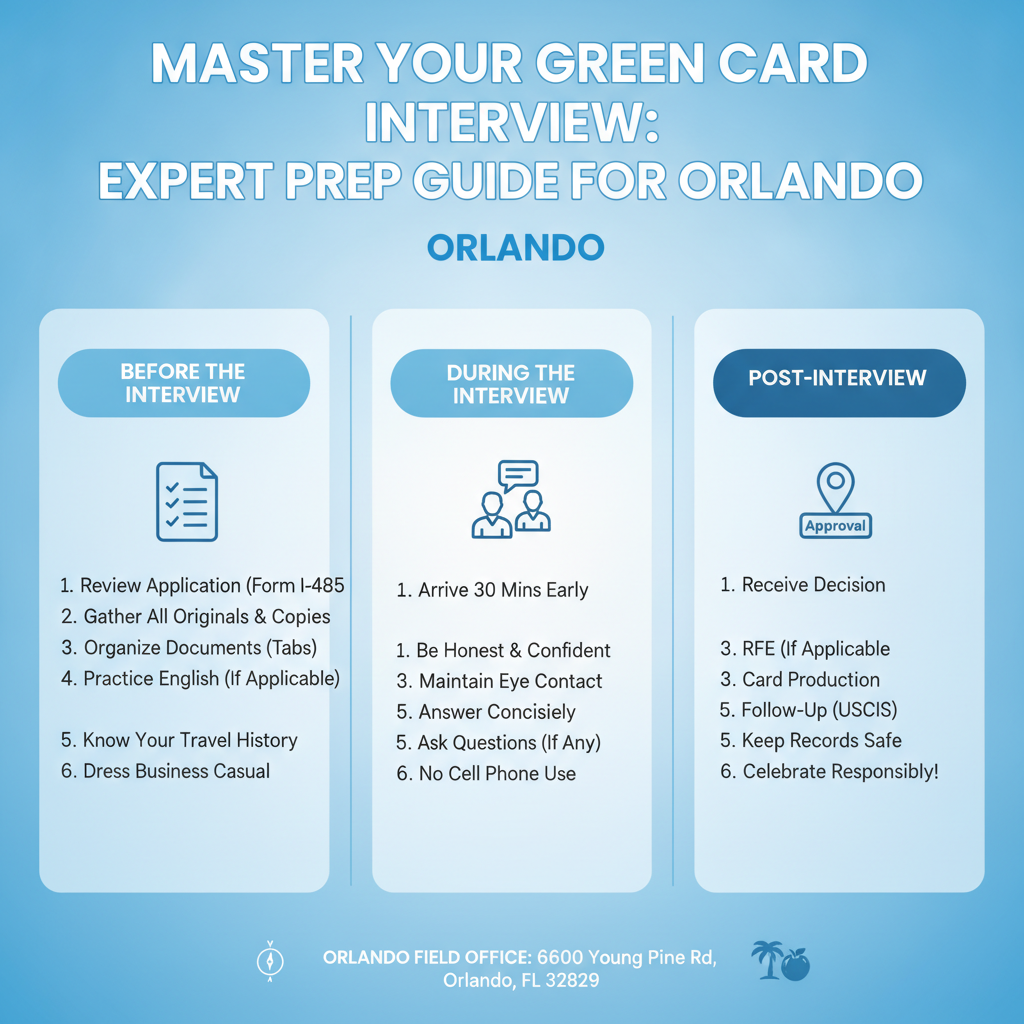
The journey to obtaining a Green Card, or lawful permanent residency, is a pivotal moment for countless individuals and families seeking to build a life in the United States. While the process involves extensive paperwork, one of the most critical stages is the Green Card interview. Recent discussions and guides in immigration law news highlight the ongoing importance of thorough preparation for this interview, underscoring that it is often the final hurdle before approval.
Why this news is showing up now
The Green Card interview has always been a cornerstone of the immigration process, particularly for those applying for Adjustment of Status within the U.S. or through Consular Processing abroad. The recurring focus on interview preparation isn't necessarily due to a new law or policy, but rather a constant reminder of its significance. As immigration policies evolve and processing times fluctuate, the interview remains a consistent opportunity for U.S. Citizenship and Immigration Services (USCIS) or consular officers to verify information, assess eligibility, and ensure the legitimacy of the applicant's claims, especially in family-based petitions. With an ever-increasing number of applications, USCIS is vigilant, and applicants must be equally diligent in their preparation. This emphasis helps applicants understand the consistent standards and expectations that USCIS maintains.
How it can affect Florida residents
For immigrants residing in Florida, particularly those in the bustling Orlando area, these insights into Green Card interview preparation are incredibly relevant. Florida is a melting pot of cultures and a primary destination for immigrants from around the globe. Many individuals and families in Orlando and the broader Central Florida region navigate the Adjustment of Status process, which typically culminates in an interview at the Orlando USCIS Field Office. Proper preparation directly impacts the success of these interviews, potentially preventing delays, requests for additional evidence (RFEs), or even denials. Understanding the nuances of the interview process can alleviate stress and empower applicants to present their case clearly and confidently. For those along the I-4 corridor or in Orange County, knowing what to expect and how to prepare can make all the difference in achieving their dream of permanent residency.
Need Help? Our Orlando immigration team is ready to assist. Call +1 786-791-3106 for a free consultation, or message us online. Se Habla Español.
What Green Card Interview Preparation Is (and Why It Matters)
Green Card interview preparation refers to the comprehensive process of organizing documents, understanding potential questions, and mentally preparing for the final in-person meeting with a USCIS officer or consular official. This interview is a critical step for most individuals seeking a Green Card, whether through family sponsorship, employment, or other categories. It's the moment when the government verifies all the information submitted in your application and assesses your eligibility for permanent residency.
A plain-English definition
Think of the Green Card interview as your final exam for permanent residency. You've submitted all your homework (application forms and supporting documents), and now it's time to sit down with an official who will ask you questions about your application, your background, and your relationship (if applicable) to ensure everything is true and that you meet all legal requirements. It's not designed to trick you, but to confirm your story and verify the authenticity of your claims. For spouses, it's often a chance to prove your marriage is genuine and not just for immigration purposes.
Key terms you need to know
- Green Card: Official name for the U.S. Permanent Resident Card, which allows foreign nationals to live and work permanently in the United States.
- USCIS (U.S. Citizenship and Immigration Services): The government agency responsible for processing immigration benefits, including Green Cards, for applicants within the United States.
- Consular Processing: The process for obtaining an immigrant visa (Green Card) through a U.S. embassy or consulate in your home country if you are applying from outside the U.S.
- Adjustment of Status (AOS): The process of applying for a Green Card from within the United States without having to return to your home country. This typically involves an interview at a USCIS field office.
- Immigrant Visa: A visa issued to foreign nationals who intend to live permanently in the United States. Once approved, it leads to a Green Card.
- Interview Notice (Form I-797C, Notice of Action): The official document from USCIS or the National Visa Center (NVC) informing you of the date, time, and location of your Green Card interview. It also lists required documents.
- Petitioner: The U.S. citizen or lawful permanent resident who files an immigration petition (e.g., Form I-130) on behalf of a foreign national.
- Beneficiary: The foreign national who is seeking an immigration benefit (e.g., a Green Card) based on a petition filed by a petitioner.
- Affidavit of Support (Form I-864): A legally binding document signed by a petitioner (sponsor) to accept financial responsibility for the immigrant.
- Medical Examination: A required health screening conducted by a USCIS-approved civil surgeon (for AOS) or a panel physician (for Consular Processing) to ensure the applicant meets health standards.
- Request for Evidence (RFE): A letter from USCIS asking for additional documents or information to support your application.
- Notice of Intent to Deny (NOID): A letter from USCIS indicating their intention to deny your application and giving you a final opportunity to submit evidence to overcome the denial.
Current Immigration Law: The Foundation
The Green Card interview process is rooted in federal immigration law, primarily the Immigration and Nationality Act (INA). The interview serves to ensure that applicants meet all statutory requirements for admission as a lawful permanent resident and are not inadmissible under any grounds.
Federal requirements
The legal basis for Green Card eligibility is found in various sections of the INA, depending on the category of immigration. For family-based petitions, which account for a significant portion of Green Card applications, key sections include:
- INA Section 201: Defines immediate relatives (spouses, minor children, and parents of U.S. citizens) and family-sponsored preference categories.
- INA Section 203: Outlines the preference system for family-sponsored and employment-based immigrants, including per-country limits.
- INA Section 212: Details the grounds of inadmissibility, which can prevent an applicant from receiving a Green Card (e.g., criminal history, certain health issues, public charge concerns, misrepresentation). The interview is crucial for assessing these grounds.
- INA Section 245: Governs Adjustment of Status for individuals already in the U.S., allowing them to become lawful permanent residents without leaving the country, provided they meet specific criteria.
During the interview, officers verify the bona fides of the relationship (for family petitions), review financial support (via Form I-864, Affidavit of Support), confirm the medical examination results, and ensure the applicant has no inadmissibility issues. They will refer to the information provided in your primary application forms, such as Form I-130 (Petition for Alien Relative), Form I-485 (Application to Register Permanent Residence or Adjust Status), Form DS-260 (Immigrant Visa Electronic Application), and supporting documents like birth certificates, marriage certificates, and police records.
Reminder: All information provided must be truthful and consistent with your application. Any discrepancies can lead to further scrutiny or even denial.
For official information and forms, always refer to the USCIS official website.
Florida-specific considerations
While immigration law is federal, the practical application often involves local USCIS field offices. For residents of Central Florida, the Orlando USCIS Field Office (located at 6680 Corporate Centre Blvd, Orlando, FL 32822) handles Green Card interviews for Adjustment of Status applicants in the area. Interview procedures and officer approaches can vary slightly from office to office, though the underlying legal requirements remain the same. Knowing the local office's procedures and what to expect from an Orlando-based interview can be beneficial. While Florida does not have its own immigration laws, local resources, such as community organizations and legal aid, can be invaluable for immigrants in Orange County and surrounding areas navigating the federal process.
How to Prepare for Your Green Card Interview: A Complete Step-by-Step Guide
Preparing for your Green Card interview is paramount to a successful outcome. This guide provides a detailed, step-by-step approach to ensure you are fully ready.
1) Understand Your Interview Notice (Form I-797C)
Your Interview Notice (typically Form I-797C, Notice of Action) is the first and most crucial document you'll receive regarding your interview. It will specify the date, time, and location of your interview, as well as a list of required original documents. Read it carefully and thoroughly as soon as it arrives.
- Verify Details: Double-check the interview date, time, and location (e.g., Orlando USCIS Field Office). Note the officer's name or number if provided.
- Review Document List: The notice will include a list of specific original documents you must bring. This list is in addition to the general documents you've already submitted.
- Identify Attendees: Determine who needs to attend. For family-based petitions, typically both the petitioner and the beneficiary must attend. For employment-based, usually only the beneficiary. Children included in the application may also need to attend.
Important: If you cannot attend your interview, you must notify USCIS immediately to reschedule. Failure to appear without proper notification can lead to your application being denied.
2) Gather and Organize All Original Documents
This is arguably the most critical step. You must bring ALL original documents that you submitted copies of with your application, plus any new evidence you want to present. Organize them meticulously in a binder or folder, clearly labeled for easy access.
- Identification:
- Valid Passport (for beneficiary and petitioner, if applicable)
- Birth Certificates (original for both petitioner and beneficiary, and any children)
- Marriage Certificate (original, if applicable)
- Driver's License or State ID (Florida ID for local residents)
- Previous immigration documents (e.g., I-94 arrival record, previous visas, EAD card)
- Relationship Evidence (for family-based petitions):
- Marriage Certificate (original)
- Joint bank statements, credit card statements
- Joint utility bills, leases, mortgages (Orlando/Central Florida addresses if applicable)
- Photos of you and your spouse together over time (wedding, vacations, family events)
- Affidavits from friends/family attesting to the bona fide nature of your marriage
- Children's birth certificates (if applicable)
- Life insurance policies, wills, or trusts naming each other as beneficiaries
- Any other evidence proving your relationship is genuine and ongoing.
- Financial Documents:
- Form I-864, Affidavit of Support (original, signed by petitioner and any joint sponsors)
- Petitioner's federal income tax returns for the past 3 years (with W-2s, 1099s, etc.)
- Pay stubs, employment verification letter from petitioner's employer
- Bank statements, asset statements (for petitioner and any joint sponsor)
- Medical Examination:
- Sealed envelope from the civil surgeon containing Form I-693 (Report of Medical Examination and Vaccination Record). Do NOT open this envelope.
- Police and Court Records:
- Original certified copies of any arrest records, court dispositions, or police clearances, even for minor incidents.
- Photographs:
- Two recent, passport-style photos for the beneficiary (if not already submitted or if requested).
- Copy of Entire Application: Bring a complete copy of your entire submitted application package (Form I-130, Form I-485, etc.) for your reference.
Warning: Missing documents are a common cause of delays or RFEs. Bring everything requested and more if you believe it supports your case.
3) Prepare Your Narrative and Practice Answering Questions
The officer will ask questions to verify the information on your forms and to assess your eligibility. For marriage-based Green Cards, expect detailed questions about your relationship.
- Review Your Application Forms: Go through every single question and answer on Form I-130, Form I-485, and any other forms you submitted. Be familiar with all dates, addresses, employers, and personal details.
- Anticipate Questions:
- General: Your name, date of birth, place of birth, current address (e.g., Orlando, FL), previous addresses, employment history, travel history, criminal history.
- Relationship (Marriage-Based): How you met, when you started dating, when you got married, wedding details, everyday life together, future plans, each other's family members, hobbies, etc. Be prepared for very personal questions.
- Inadmissibility: Questions related to criminal history, health, past immigration violations, or public charge concerns.
- Practice Speaking: Practice answering questions clearly, concisely, and truthfully. There's no need to memorize, but understanding the flow of information helps.
- Consistency is Key: Ensure your answers are consistent with the information in your application forms and supporting documents.
4) Review Your Application Forms Thoroughly
Before the interview, make sure you and your petitioner (if applicable) have read every line of every form submitted. Discrepancies between your verbal answers and the written application can raise red flags.
- Accuracy Check: Confirm all dates, names, addresses, and other facts are correct and consistent across all forms (I-130, I-485, I-864, etc.).
- Updates: If any information has changed since you filed your application (e.g., new address, new job, birth of a child, new travel), prepare to inform the officer and bring supporting documents.
- Understand Each Question: Be sure you understand the meaning of every question on the forms. If you used an attorney, they should have explained this during the initial filing.
Navigating complex immigration forms? Imigrar's expert team in Orlando can help ensure accuracy and completeness. Call +1 786-791-3106 for a free consultation. Se Habla Español.
5) Arrange for an Interpreter (If Needed)
If you or your petitioner are not fluent in English, you must bring a certified interpreter to the interview. USCIS officers are not permitted to serve as interpreters.
- Certified Interpreter: The interpreter must be fluent in both English and your native language. They cannot be the petitioner, beneficiary, or a witness to the relationship (for marriage-based cases).
- Professionalism: Ensure the interpreter is professional and understands their role is to accurately translate, not to add or subtract from your answers.
- Imigrar Assistance: If you're an Imigrar client, we can arrange for an interpreter or an attorney who is fluent in both English and Spanish to accompany you. Se Habla Español.
6) Dress Appropriately and Plan Your Travel
Your appearance and punctuality reflect your seriousness about the process.
- Dress Code: Dress in neat, professional attire, similar to what you would wear for a job interview. This shows respect for the process and the interviewing officer.
- Arrive Early: Plan to arrive at the Orlando USCIS Field Office (or other designated location) at least 30 minutes before your scheduled interview time. Account for traffic, parking, and security checks. For Central Florida residents, consider potential I-4 traffic.
- Essentials: Bring your Interview Notice, all organized documents, your attorney (if applicable), and your interpreter (if applicable).
7) What to Expect on Interview Day
Knowing the general flow of the interview can help reduce anxiety.
- Security Check: You will go through a security checkpoint, similar to an airport, upon entering the USCIS office.
- Waiting Area: You will then proceed to a waiting area. Officers will call your name when it's your turn.
- Oath: The interview begins with an oath to tell the truth.
- Fingerprints/Photos: The officer may take your fingerprints and photograph again.
- Questions and Document Review: The officer will review your application forms with you, ask questions, and examine your original documents. Be prepared for them to keep some copies.
- Decision: Sometimes a decision is made on the spot. More often, the officer will tell you that a decision will be mailed to you within a few weeks. They may also issue a Request for Evidence (RFE) if they need more documentation.
Important: Remain calm, respectful, and truthful throughout the entire process. If you don't understand a question, politely ask the officer to rephrase it.
Practical Steps You Can Take Today
Don't wait until the last minute to prepare. Start these steps as soon as you receive your interview notice.
- Create a Document Checklist: Go through your Interview Notice and make a detailed list of every single document required. Add any additional documents you believe will strengthen your case, especially for marriage-based petitions (e.g., more recent joint bills, photos).
- Start Gathering Originals: Immediately begin collecting all original documents. If you need new copies of birth certificates or marriage certificates, start that process now. For Florida residents, you can often obtain these from the Florida Department of Health.
- Organize Your Application Copy: Print out a full copy of your entire submitted application package. Highlight key dates, addresses, and answers. This will be your study guide.
- Practice Your Answers: Ask a trusted friend or family member to conduct a mock interview with you, focusing on questions about your application and personal history. For marriage-based cases, have them ask detailed questions about your relationship.
- Review Financial Documents: Ensure your petitioner has all necessary tax returns, W-2s, and pay stubs ready for the Affidavit of Support.
- Check Processing Times: While not directly interview prep, it helps manage expectations. Visit the USCIS Processing Times page for an estimate of how long it might take to receive a decision after your interview.
Document preparation guidance
- Originals AND Copies: Always bring both the original documents and a complete set of photocopies. The officer may keep the copies and return the originals.
- Translate Foreign Documents: Any document not in English must be accompanied by a certified English translation. The translator must certify that they are competent to translate and that the translation is accurate.
- Binder System: Use a three-ring binder with dividers for different categories of documents (e.g., "Personal IDs," "Marriage Evidence," "Financial," "Medical"). This makes it easy to find documents quickly when the officer asks for them.
Timeline expectations
- Interview Notice: Typically received weeks to months after your application is considered "ready for interview." Processing times can vary significantly by USCIS field office (like Orlando) and application type.
- Interview Day: The interview itself can last anywhere from 15 minutes to over an hour, depending on the complexity of your case and the officer.
- Decision Post-Interview: A decision can be made on the spot, but it is more common to receive a decision by mail within a few weeks to a few months. Sometimes, an RFE is issued, which extends the timeline.
- Green Card Issuance: Once approved, the physical Green Card is usually mailed within 30 days.
Reminder: USCIS processing times are estimates and can change. Always monitor your case status online using your receipt number on the USCIS Case Status Online tool.
How Imigrar Helps Immigrants in Orlando
At Imigrar, our mission is to "Keep Families Together." We understand that the Green Card interview can be daunting, but you don't have to face it alone. Our experienced immigration attorneys in Orlando, Florida, are dedicated to providing comprehensive support throughout your entire Green Card journey, especially during the critical interview phase.
Our experience and expertise
Our legal team has extensive experience guiding clients through USCIS interviews at the Orlando Field Office and consular interviews worldwide. We are intimately familiar with the types of questions officers ask, the documents they scrutinize, and the best practices for presenting a strong, truthful case. We stay up-to-date with the latest immigration laws and policies to ensure our advice is always accurate and effective.
We provide:
- Thorough Document Review: We help you organize and review all necessary documents, ensuring nothing is missed and everything is presented clearly.
- Personalized Interview Preparation: We conduct mock interviews tailored to your specific case, helping you anticipate questions, practice your answers, and build confidence.
- Legal Representation: An Imigrar attorney can accompany you to your Green Card interview, providing legal guidance and support, clarifying questions, and addressing any complex legal issues that may arise. This presence often provides immense peace of mind.
- Post-Interview Support: Whether it's responding to an RFE or appealing a denial, we stand by you until your case is resolved.
For Central Florida residents navigating the immigration process, Imigrar is your trusted partner. We serve clients throughout Orlando, Orange County, and nationwide, ensuring that every family has the opportunity to stay united.
Free consultation offer
If you're preparing for your Green Card interview or have questions about the process, don't hesitate to reach out. We offer a free consultation to assess your case, explain your options, and outline how we can assist you. Our goal is to make your immigration journey as smooth and successful as possible.
Se Habla Español. We are proud to serve our Spanish-speaking community, ensuring clear communication and understanding every step of the way.
Ready to confidently face your Green Card interview? Contact Imigrar today for expert legal guidance. Call +1 786-791-3106 for your free consultation, or fill out our online form. Se Habla Español.
Frequently Asked Questions
Q: What if I don't understand a question during the interview?
A: If you don't understand a question, politely ask the officer to repeat or rephrase it. Do not guess or provide an answer you are unsure about. If you have an attorney or an interpreter with you, they can assist in clarifying the question. It's better to ask for clarification than to provide an inaccurate answer.
Q: How long after my interview will I receive a decision?
A: The timeline for a decision varies. Some applicants receive an immediate approval notice at the end of the interview. More commonly, you will receive a decision by mail within a few weeks to a few months. Factors like the complexity of your case, the volume of applications at the Orlando USCIS Field Office, or the need for additional review can affect this timeline. You can check your case status online using your receipt number on the USCIS website.
Q: What documents are absolutely critical to bring to a marriage-based Green Card interview?
A: For marriage-based interviews, absolutely critical documents include your original marriage certificate, birth certificates for both spouses, valid passports, and comprehensive evidence of your bona fide marriage (e.g., joint bank accounts, joint leases/mortgages, joint utility bills, recent photos together, children's birth certificates if applicable). Also, the sealed Form I-693 (medical exam) and the petitioner's complete financial support documents (Form I-864, tax returns, W-2s) are crucial. Failure to bring these can lead to significant delays.
Q: Can my immigration status be negatively impacted if I make a mistake during the interview?
A: Yes, mistakes or inconsistencies can negatively impact your status. Providing false information, misrepresenting facts, or having significant discrepancies between your application and your interview answers can lead to a denial of your Green Card application and potentially even accusations of immigration fraud. This is why thorough preparation and truthfulness are paramount. If you realize you made an honest mistake on your application, it's best to truthfully explain it to the officer.
Q: What happens if my Green Card application is denied after the interview?
A: If your Green Card application is denied, USCIS will send you a written decision explaining the reasons for the denial. Depending on the reason, you may have options, such as filing a motion to reconsider or reopen the case, or filing an appeal with the Administrative Appeals Office (AAO). In some cases, a new application might be possible. It is crucial to consult with an experienced immigration attorney immediately after a denial to understand your options and next steps. Imigrar can help you assess the denial and strategize an appropriate response.
Q: Are there any specific cost considerations related to the interview itself?
A: There are no additional fees directly associated with attending the Green Card interview itself once you have paid the initial application filing fees. However, you will incur costs for obtaining original documents (e.g., new birth certificates, marriage certificates), certified translations, the required medical examination (Form I-693), and potentially legal fees if you hire an attorney to prepare you and/or attend with you. For those in Orlando, travel costs to the local USCIS office should also be factored in.

Common Mistakes (and How to Avoid Them)
Mistake #1: Failing to Bring All Required Documents
This is perhaps the most common mistake. Applicants often only bring the documents explicitly listed on the Interview Notice, forgetting


