


For many immigrants, the Green Card interview is the final, crucial step on the path to permanent residency in the United States. It's a moment filled with anticipation, and often, a degree of apprehension. At Imigrar, your trusted immigration law firm in Orlando, Florida, we understand the significance of this interview and are dedicated to ensuring you are fully prepared to navigate it successfully. Today, we delve into the essential strategies and tips to help you approach your Green Card interview with confidence, whether you're adjusting status from within the U.S. or attending a consular interview abroad.
Today's Date: 2026-08-30
The reporting that sparked this guide
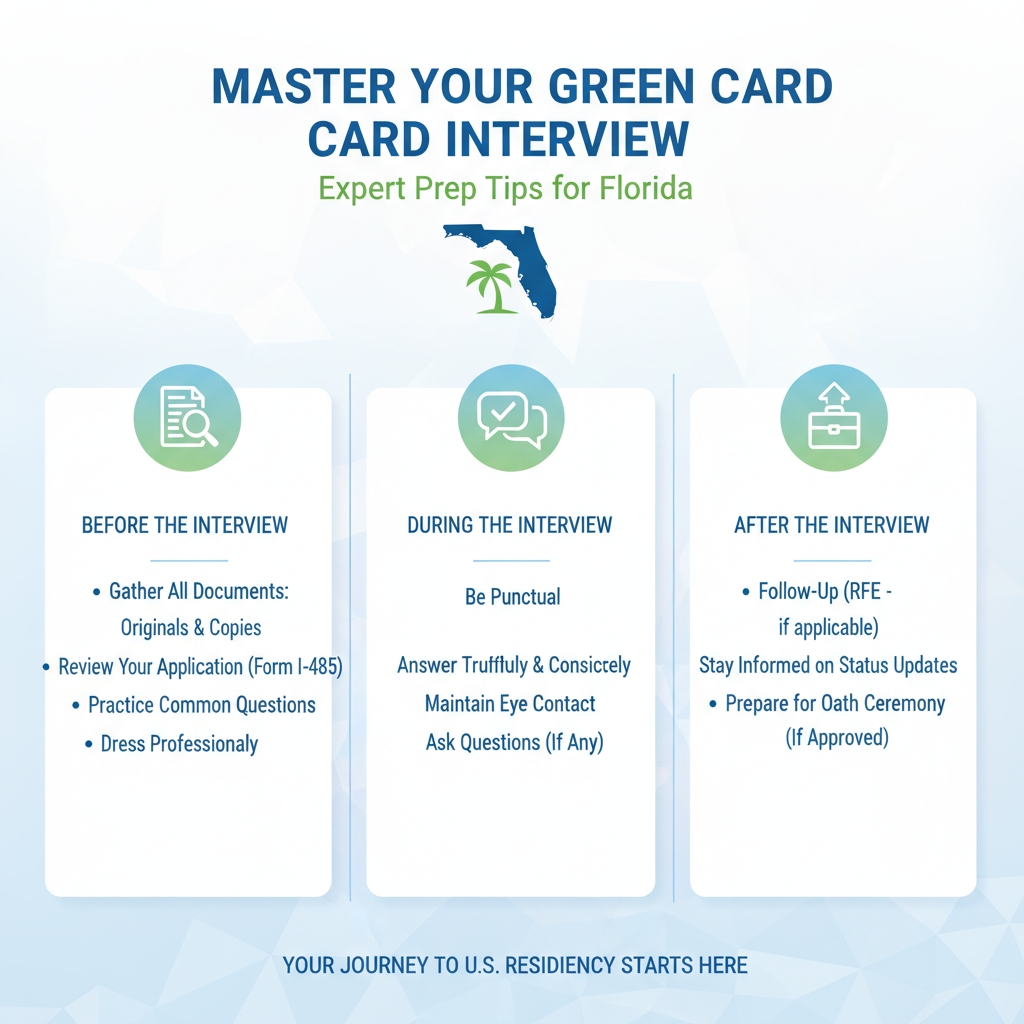
The ongoing conversation around immigration law consistently highlights the Green Card interview as a pivotal moment for applicants. Recent discussions across various legal and news platforms, including general "Immigration Law" searches, underscore the importance of thorough preparation. This constant focus in the legal sphere emphasizes that while each case is unique, a well-prepared applicant stands the best chance of success.
Green Card Interview Preparation Tips (Immigration Law)
What This News Means for Immigrants in Orlando and Across Florida
The consistent attention on Green Card interview preparation in immigration law news isn't just background noise; it's a clear signal that this stage of the immigration process is critically important and often a source of anxiety for applicants. For individuals and families throughout Florida, especially in our vibrant Orlando community, understanding this emphasis is key to a smooth journey.
Why this news is showing up now
The focus on Green Card interview preparation is perennially relevant, but it gains renewed emphasis due to several factors. Firstly, changes in immigration policy and enforcement priorities can shift the scrutiny levels at interviews. Secondly, the sheer volume of applications means USCIS and consular officers are continually refining their interview processes, making it essential for applicants to stay updated. Lastly, the human element of immigration means that every interview is a deeply personal experience. Stories of success and challenges often circulate, reinforcing the need for meticulous preparation.
As of late 2026, USCIS continues to process a significant backlog of cases, leading to varying wait times and, sometimes, more stringent interview protocols as officers work to ensure compliance with current immigration laws. This environment makes expert guidance more valuable than ever.
How it can affect Florida residents
Florida is a melting pot, home to a vast and diverse immigrant population. For residents in Orlando, Tampa, Miami, and beyond, the Green Card interview is a common experience. The Orlando USCIS Field Office, located at 6680 Corporate Centre Blvd, Orlando, FL 32822, serves applicants throughout Central Florida. Understanding the nuances of interview preparation directly impacts you by:
- Reducing Stress: Knowing what to expect and having all your documents in order can significantly alleviate anxiety.
- Minimizing Delays: A well-prepared interview with clear, consistent answers and complete documentation can prevent Requests for Evidence (RFEs) or even denials, which can add months or years to your process.
- Increasing Approval Chances: Presenting a strong, credible case directly to an immigration officer is your best opportunity to secure your permanent residency.
- Navigating Local Specifics: While federal law governs the process, local field offices like the one in Orlando may have particular preferences or common lines of questioning.
Whether you're adjusting status from within the U.S. (Adjustment of Status) or undergoing consular processing abroad, the principles of thorough preparation remain paramount. For those along the I-4 corridor or anywhere in Orange County, Imigrar is here to provide the local expertise you need.
Need Help? Our Orlando immigration team is ready to assist. Call +1 786-791-3106 for a free consultation, or message us online. Se Habla Español.
What Green Card Interview Preparation Is (and Why It Matters)
The Green Card interview is a formal meeting with an immigration officer from U.S. Citizenship and Immigration Services (USCIS) or a consular officer at a U.S. Embassy or Consulate abroad. Its primary purpose is to verify the information provided in your Green Card application, assess your eligibility for permanent residency, and ensure you are not inadmissible to the United States.
This interview matters immensely because it is often the final hurdle before you receive your Green Card. It's your opportunity to personally demonstrate your eligibility and sincerity. A successful interview can lead to immediate approval, while a poorly handled one can result in delays, Requests for Evidence (RFEs), or even a denial, prolonging your journey and adding significant stress.
A plain-English definition
Think of the Green Card interview as a conversation with a government official who needs to confirm that everything you've stated in your application forms is true and that you meet all the legal requirements to become a permanent resident. For family-based applications, especially marriage-based ones, the officer will also verify the authenticity of your relationship. It’s not meant to trick you, but to ensure integrity in the immigration system.
Key terms you need to know
- Adjustment of Status (AOS): The process of applying for a Green Card while physically present in the United States. This typically involves filing Form I-485.
- Consular Processing: The process of applying for an immigrant visa (which leads to a Green Card) through a U.S. Embassy or Consulate in your home country.
- USCIS: U.S. Citizenship and Immigration Services, the federal agency responsible for administering immigration benefits.
- Immigrant Visa: A visa issued to foreign nationals who intend to live permanently in the U.S. (required for consular processing).
- Affidavit of Support (Form I-864): A legally binding document signed by a sponsor (usually the petitioning relative) to accept financial responsibility for the immigrant.
- Petition (e.g., Form I-130): The initial application filed by a U.S. citizen or Green Card holder on behalf of a relative to establish a qualifying relationship.
- Request for Evidence (RFE): A notice from USCIS asking for additional documents or information to support your application.
- Notice of Intent to Deny (NOID): A notice from USCIS indicating their intention to deny your application unless you provide specific information or evidence.
- Inadmissibility: Legal grounds that prevent someone from entering or remaining in the U.S., such as certain criminal convictions, health issues, or past immigration violations.
- Priority Date: The date USCIS receives your petition (e.g., Form I-130). This date determines your place in line for an immigrant visa in numerically limited categories.
Current Immigration Law: The Foundation
The Green Card interview process is governed by the Immigration and Nationality Act (INA), which is the body of law that governs immigration to the United States. Key sections of the INA dictate eligibility criteria, grounds of inadmissibility, and the procedures for obtaining permanent residency.
Federal requirements
The primary legal framework for Green Card interviews stems from the INA. For Adjustment of Status, applicants must meet the requirements outlined in INA Section 245, which generally requires lawful entry and maintenance of status, among other things. For consular processing, INA Section 203 details the categories of immigrant visas available.
Regardless of the path, all applicants must demonstrate that they are not subject to any grounds of inadmissibility under INA Section 212. These grounds can include health-related issues, criminal records, security risks, public charge concerns (relying on government benefits), and past immigration violations. If any ground of inadmissibility applies, a waiver might be necessary, adding another layer of complexity to the process.
Essential forms involved in the Green Card process include:
- Form I-130, Petition for Alien Relative (filed by the U.S. citizen or LPR sponsor)
- Form I-485, Application to Register Permanent Residence or Adjust Status (for AOS applicants)
- Form DS-260, Immigrant Visa Application (for Consular Processing applicants)
- Form I-864, Affidavit of Support (financial sponsorship)
- Form I-693, Report of Medical Examination and Vaccination Record
- Form I-765, Application for Employment Authorization (often filed concurrently with Form I-485)
- Form I-131, Application for Travel Document (Advance Parole, also filed concurrently with Form I-485)
You can find all official forms and instructions on the USCIS Forms page.
Florida-specific considerations
While immigration law is federal, the practical application can have localized aspects. For Florida residents, especially those in Central Florida, your interview will likely be scheduled at the Orlando USCIS Field Office. Understanding their specific procedures and common questioning patterns can be beneficial. For instance, the Orlando office, like many others, often places significant emphasis on marriage fraud prevention for spousal petitions, requiring robust evidence of a bona fide marriage.
Furthermore, Florida has a large population, which can sometimes impact processing times. Keeping track of USCIS Processing Times for the Orlando Field Office is crucial for managing expectations. Imigrar, being based in Orlando, has direct experience with the local USCIS office and can offer insights into regional trends and expectations.
Need Help? Our Orlando immigration team is ready to assist. Call +1 786-791-3106 for a free consultation, or message us online. Se Habla Español.
How to Prepare for Your Green Card Interview: A Complete Step-by-Step Guide
Preparing for your Green Card interview is a multi-faceted process that requires attention to detail, organization, and a clear understanding of what to expect. This guide will walk you through the essential steps to ensure you are ready.
1) Understand Your Case and Review Your Application Forms
The very first step is to thoroughly review all the forms you and your sponsor submitted to USCIS. This includes Form I-130, Form I-485, Form I-864, and any supporting documents. The interviewing officer will primarily use these forms to ask questions and verify information. You must be completely familiar with every detail.
- What to do:
- Read through your entire application package, including all attachments and exhibits.
- Highlight any dates, addresses, employment history, or significant events.
- Ensure you remember the exact information you provided, even if it was several years ago.
- If you have an attorney, request a copy of your full application file and review it with them.
- Required Documents for this step (for review, not submission):
- Complete copy of Form I-130 (if applicable) and all supporting documents.
- Complete copy of Form I-485 and all supporting documents.
- Complete copy of Form I-864 and all supporting documents.
- Copies of any other forms filed (e.g., Form I-765, Form I-131).
- Copies of any RFEs or NOIDs received and your responses.
2) Gather and Organize All Original Documents and Evidence
The interviewing officer will want to see the original versions of all documents you submitted copies of, plus any new evidence that has become available since you filed your application. Organization is critical here.
- What to do:
- Create a well-organized folder or binder.
- Separate documents into categories (e.g., personal identification, financial, relationship evidence).
- Use tabs or dividers for easy access.
- Make sure all documents are current and valid.
- Required Documents (originals AND copies):
- Identification:
- Passport (current and expired)
- Birth Certificate (original with certified translation if not in English)
- National Identity Card (if applicable)
- Any previous U.S. visas
- Marriage Certificate (original, if applicable)
- Divorce Decrees or Death Certificates for any previous marriages (originals)
- Valid government-issued photo ID (e.g., Florida Driver's License or State ID)
- Immigration Documents:
- Original I-797C Notices (Receipts for Form I-130, I-485, etc.)
- Original I-94 Arrival/Departure Record (print from CBP website)
- Employment Authorization Document (EAD card, if applicable)
- Advance Parole Document (if applicable)
- Financial Documents (for sponsor):
- Most recent federal tax returns (3 years recommended)
- W-2s or 1099s for the last 3 years
- Pay stubs (most recent 6 months)
- Employment verification letter
- Bank statements (if relying on assets)
- Relationship Evidence (for marriage-based Green Cards – be exhaustive):
- Joint bank accounts (statements, voided checks)
- Joint utility bills (electricity, water, internet)
- Joint leases or mortgage agreements
- Joint tax returns
- Proof of shared property (car titles, deeds)
- Life insurance policies with each other as beneficiaries
- Health insurance policies listing each other
- Children's birth certificates (if applicable)
- Photos together (over time, with family/friends, from trips, wedding photos)
- Correspondence (emails, texts, cards)
- Affidavits from friends and family attesting to the bona fide marriage
- Travel itineraries and tickets for joint trips
- Medical Examination:
- Original sealed envelope of Form I-693 (Medical Examination Report) if not already submitted or if expired. Do NOT open this envelope.
- Police Records/Court Documents:
- Certified copies of any arrest reports, court dispositions, or police clearances (if applicable, even for minor infractions).
- Identification:
Important: All documents not in English must be accompanied by a certified English translation.
3) Practice Answering Potential Interview Questions
Being able to articulate your answers clearly and consistently is crucial. While you can't predict every question, you can prepare for common lines of inquiry.
- What to do:
- Review your application forms and anticipate questions related to your personal history, family, employment, travel, and how you met your spouse (for marriage-based cases).
- Practice with your spouse, a friend, or your attorney.
- Focus on being honest, direct, and concise. Avoid volunteering information not asked.
- For marriage-based cases, practice questions about daily life, shared memories, future plans, and even intimate details of your relationship.
- Common Question Areas:
- Personal Background: Name, date of birth, place of birth, parents' names, previous addresses, education, employment history.
- Immigration History: How you entered the U.S., previous visas, any past immigration issues, overstays, or violations.
- Criminal History: Any arrests, citations, or convictions, no matter how minor.
- Marriage-Based Questions (for both spouses, often separately):
- How and when did you meet?
- Who proposed?
- What did you do on your first date?
- Describe your wedding day.
- Where do you live? Describe your home.
- Who pays which bills?
- What did you do last weekend?
- What are your spouse’s hobbies?
- Do you have joint bank accounts?
- What are your future plans together?
- Financial Support: Questions about the sponsor's income, assets, and ability to support the applicant.
4) Dress Appropriately and Arrive Early
Your appearance and punctuality reflect your respect for the process and the interviewing officer. First impressions matter.
- What to do:
- Dress in conservative, professional attire. Treat it like a job interview.
- Plan your route to the Orlando USCIS Field Office (or consulate) in advance. Account for traffic, parking, and security screening.
- Aim to arrive at least 30-45 minutes before your scheduled interview time.
- Reminder: For the Orlando USCIS Field Office, security procedures are strict. Be prepared for metal detectors and bag searches. Leave any unnecessary items at home.
5) During the Interview: Be Honest, Calm, and Respectful
The interview itself is the culmination of your preparation. How you conduct yourself can significantly influence the outcome.
- What to do:
- Be Truthful: Always tell the truth. Inconsistencies can lead to serious problems.
- Be Respectful: Address the officer politely. Maintain eye contact.
- Listen Carefully: Pay close attention to each question. If you don't understand, politely ask for clarification.
- Answer Directly: Answer only the question asked. Do not volunteer extra information unless it directly clarifies your answer.
- Stay Calm: It's natural to be nervous, but try to remain composed. Take a deep breath if you feel overwhelmed.
- Correct Mistakes: If you realize you made a mistake on your application or in a previous answer, politely correct it during the interview.
- Bring an Attorney: Having an experienced immigration attorney from Imigrar by your side can provide immense reassurance and ensure your rights are protected. Your attorney can clarify questions, object to inappropriate inquiries, and help you present your case effectively.
- For Spouses: If interviewed together, make sure your answers are consistent. If interviewed separately, ensure your stories align.
6) Follow Up If Necessary
Sometimes, the officer may not make a decision on the spot. They might issue a Request for Evidence (RFE) or indicate that they need to review your case further.
- What to do:
- If an RFE is issued, respond promptly and thoroughly with the requested documents.
- If no decision is made immediately, note the officer's name and extension (if provided) and ask about the expected timeline for a decision.
- If you have an attorney, they will monitor your case status and follow up with USCIS or the consulate on your behalf.
Practical Steps You Can Take Today
Don't wait until your interview notice arrives to start preparing. Here's an actionable checklist to begin your journey to a successful Green Card interview:
Actionable Checklist (5+ items):
- Gather All Previous Applications: Locate copies of every immigration form you've ever filed. This includes visa applications, previous Green Card applications, and any petitions filed on your behalf.
- Start a "Green Card Interview" Binder: Begin collecting and organizing all potential original documents and evidence. Use dividers for clarity (e.g., "Personal IDs," "Financial," "Marriage Evidence," "Medical").
- Request Official Records: If you have any criminal history, no matter how minor or old, obtain certified court dispositions and police reports immediately. These can take time to procure.
- Review Your Social Media: Be mindful of your online presence. While USCIS doesn't always check, ensure nothing on your public profiles contradicts your application or could be misinterpreted.
- Schedule a Consultation with Imigrar: An early consultation with an experienced Orlando immigration lawyer can help you identify potential issues, understand specific requirements for your case, and develop a robust preparation strategy. Call us at +1 786-791-3106.
- Update Your Medical Exam (If Needed): If you had your Form I-693 completed more than two years ago, or if it's nearing its expiration, be prepared to get a new one. The report is generally valid for two years from the civil surgeon's signature date.
- Financial Check-up: Ensure your sponsor's financial documents (tax returns, W-2s, pay stubs) are readily available and meet the poverty guidelines. If not, consider a joint sponsor.
Document Preparation Guidance
- Originals vs. Copies: Always bring originals for the officer to review, but have a full set of copies ready to submit if requested.
- Translations: For any document not in English, provide a complete and accurate English translation certified by a translator. The translator must attest that they are competent to translate and that the translation is accurate.
- "Bona Fide" Marriage Evidence: For marriage-based cases, focus on evidence that shows commingling of finances, shared responsibilities, and public recognition of your relationship. The more diverse and extensive the evidence, the stronger your case.
- Letters from Friends/Family: These should be notarized affidavits describing their knowledge of your relationship's authenticity.
Timeline Expectations
The time between filing your application and receiving an interview notice can vary significantly based on the type of Green Card, the USCIS field office (e.g., Orlando USCIS Field Office), and current processing backlogs. As of 2026, processing times can range from several months to over a year or even longer for some categories.
- Filing to Interview Notice: Typically 6-18 months for AOS cases after filing Form I-485, but can be shorter or longer.
- Interview to Decision: Often, a decision is made at the interview or within a few weeks. However, some cases may take months if further review or an RFE is needed.
- Conditional Green Card: If you are married for less than two years at the time your Green Card is approved, you will receive a conditional Green Card valid for two years. You must then file Form I-751, Petition to Remove Conditions on Residence, within the 90-day window before your conditional Green Card expires.
You can monitor current processing times for your specific application and field office on the USCIS Processing Times website. Keep in mind these are estimates and can change.
How Imigrar Helps Immigrants in Orlando
At Imigrar, we understand that the Green Card interview is a high-stakes event. Our mission is to keep families together, and we achieve this by providing compassionate, expert legal guidance every step of the way.
Our experience and expertise
Our team of dedicated immigration attorneys at Imigrar has years of experience successfully guiding clients through the Green Card interview process. We specialize in family-based immigration, including marriage-based Green Cards, which often involve the most rigorous interviews. We are intimately familiar with the procedures and expectations of the Orlando USCIS Field Office and other immigration agencies.
We provide:
- Comprehensive Case Review: We meticulously review your entire application package to identify any potential issues or inconsistencies before your interview.
- Personalized Interview Preparation: We conduct mock interviews, simulating the actual experience, and provide tailored advice on how to answer difficult questions and present your evidence effectively.
- Document Organization: We help you organize your documents in a clear, accessible manner for the officer.
- Attorney Representation: One of our experienced attorneys can attend the interview with you, providing legal support, intervening if necessary, and offering reassurance. This can significantly reduce stress and improve your chances of success.
- Post-Interview Support: If an RFE is issued or further action is required, we will guide you through the next steps.
For Central Florida residents along the I-4 corridor or in Orange County, our local presence means we understand the specific nuances that might affect your case here in Orlando.
Free consultation offer
Don't face your Green Card interview alone. Contact Imigrar today for a free consultation. We’ll discuss your specific situation, assess your needs, and outline how we can help you achieve your goal of permanent residency. We are committed to providing accessible and effective legal services.
Se Habla Español. We are proud to serve our Spanish-speaking community with clear, culturally sensitive legal advice. Call us at +1 786-791-3106.
Need Help? Our Orlando immigration team is ready to assist. Call +1 786-791-3106 for a free consultation, or message us online. Se Habla Español.

Frequently Asked Questions
Q: What if I have eligibility concerns for my Green Card?
A: Eligibility concerns are common and can range from past immigration violations (like overstaying a visa) to minor criminal offenses or health-related issues. It’s crucial to disclose all relevant information to your attorney and to USCIS. Many eligibility issues can be overcome with waivers, but these require specific applications and strong supporting evidence. For instance, if you entered the U.S. without inspection, you generally cannot adjust


