


The journey to obtaining a Green Card, officially known as a Lawful Permanent Resident (LPR) card, is a significant milestone for many immigrants seeking to build a new life in the United States. While the application process involves numerous forms and stages, the Green Card interview stands out as one of the most critical steps. It’s a moment where you directly interact with a U.S. Citizenship and Immigration Services (USCIS) officer, who will assess your eligibility and verify the information provided in your application.
For many, the prospect of an interview with a government official can be daunting. However, with thorough preparation, clear understanding of the process, and the right legal guidance, you can approach this crucial step with confidence. At Imigrar, we understand the anxieties and hopes tied to this process, and our mission is to help families like yours navigate it successfully.
The reporting that sparked this guide
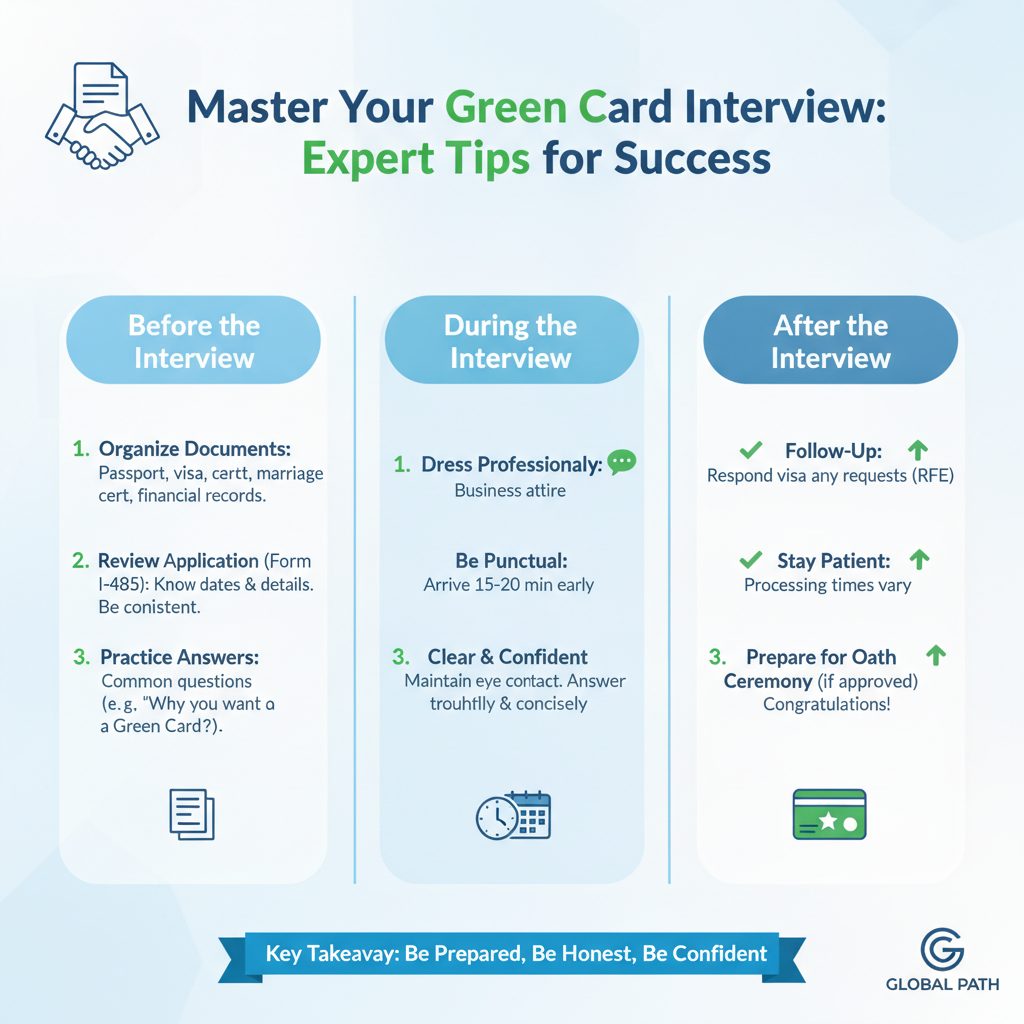
The increasing complexity of immigration procedures and the emphasis on thorough applicant vetting have brought the Green Card interview process into sharper focus. Recent discussions in Green Card Interview Preparation Tips (Immigration Law) highlight the ongoing importance of meticulous preparation for this critical step. As immigration law continues to evolve and USCIS refines its interview protocols, staying informed and well-prepared is more vital than ever.
What This News Means for Immigrants in Orlando and Across Florida
For individuals and families across Florida, particularly in diverse hubs like Orlando, staying abreast of immigration news and preparation strategies is paramount. Florida is home to a vast and vibrant immigrant community, making Green Card applications a frequent occurrence at local USCIS field offices.
Why this news is showing up now
The emphasis on Green Card interview preparation is not entirely new, but its prominence is heightened by several factors in 2026. Firstly, ongoing efforts by USCIS to streamline processing while simultaneously enhancing scrutiny mean that well-prepared applicants can help facilitate a smoother, quicker interview. Secondly, while post-pandemic backlogs are slowly being addressed, interviews remain a critical bottleneck, making efficiency and accuracy on the applicant's part more important than ever. Furthermore, as policies shift with different administrations, the focus on verifying eligibility, preventing fraud, and ensuring national security remains constant, making interview preparation an evergreen and increasingly critical topic.
How it can affect Florida residents
Florida residents, especially those in Central Florida, are directly impacted by these trends. The Orlando USCIS Field Office (located at 6650 Forum Dr, Orlando, FL 32821) processes a significant volume of **Adjustment of Status** cases. For applicants living along the I-4 corridor or anywhere in Orange County and surrounding areas, understanding the specific expectations and procedures of this office can be invaluable. The diverse demographics of Florida mean that many applications involve complex family relationships or employment-based scenarios, each requiring tailored preparation. Delays or denials due to inadequate interview preparation can have profound personal and financial consequences for families striving to build a stable future in the Sunshine State.
Need Help? Navigating your Green Card interview can be complex, but you don't have to face it alone. Our Orlando immigration team is ready to assist. Call +1 786-791-3106 for a free consultation, or message us online. Se Habla Español.
What Green Card Interviews Are (and Why They Matter)
A Green Card interview is a mandatory step for most individuals applying for **Adjustment of Status** (AOS) to become a Lawful Permanent Resident while residing in the United States, as well as for those undergoing **Consular Processing** abroad. It is your opportunity to demonstrate your eligibility for a Green Card directly to a USCIS officer.
A plain-English definition
Think of the Green Card interview as a conversation with an immigration officer. The primary goal of this conversation is for the officer to verify all the information you’ve submitted in your application, ensure you meet all legal requirements for permanent residency, and confirm that there are no factors that would make you "inadmissible" to the U.S. This is their chance to ask questions, clarify any discrepancies, and ensure the legitimacy of your application, especially for family-based petitions where the genuineness of the relationship is key.
Key terms you need to know
- Adjustment of Status (AOS): The process of applying for lawful permanent resident status (a Green Card) while physically present in the United States.
- Consular Processing: The process of applying for an immigrant visa at a U.S. embassy or consulate in your home country, typically if you are outside the U.S.
- Form I-485: Application to Register Permanent Residence or Adjust Status. This is the primary form for AOS applicants.
- Form I-130: Petition for Alien Relative. This form is filed by a U.S. citizen or Lawful Permanent Resident (the **Petitioner**) on behalf of a relative (the **Beneficiary**) who wishes to immigrate to the U.S.
- USCIS Field Office: A local office of U.S. Citizenship and Immigration Services where interviews are conducted. For Central Florida residents, this is typically the Orlando Field Office.
- Petitioner: The U.S. citizen or LPR who files an immigration petition on behalf of another individual.
- Beneficiary: The foreign national on whose behalf an immigration petition is filed.
- Prima Facie: Latin for "on its face" or "at first sight." It refers to an application that appears valid and meets basic requirements.
- Public Charge: A ground of inadmissibility for individuals who are likely to become primarily dependent on the government for subsistence. This is assessed during the interview, primarily through the **Form I-864**.
- Form I-693: Report of Medical Examination and Vaccination Record. Must be completed by a USCIS-approved civil surgeon.
- Form I-864: Affidavit of Support. A legally binding document signed by a **Petitioner** (and sometimes a joint sponsor) to accept financial responsibility for the **Beneficiary**.
Current Immigration Law: The Foundation
The framework for Green Card eligibility and the interview process is rooted in the Immigration and Nationality Act (INA), specifically sections related to **Adjustment of Status** and immigrant visas. While the process can seem complex, it's designed to ensure that only eligible individuals receive permanent residency.
Federal requirements
The core eligibility requirements for a Green Card are established by federal law. Most applicants for **Adjustment of Status** must meet specific criteria, which typically include:
- Being the **Beneficiary** of an approved immigrant petition (e.g., **Form I-130** for family-based, **Form I-140** for employment-based).
- Having an immigrant visa immediately available (determined by visa bulletins and **Priority Date**).
- Lawful entry into the United States or meeting specific exceptions.
- No bars to **Adjustment of Status** (e.g., certain criminal convictions, immigration violations, false claims to U.S. citizenship).
- Being admissible to the United States (not subject to grounds of inadmissibility like certain health-related issues, criminal history, security grounds, or **public charge** concerns).
The primary forms involved in an **Adjustment of Status** application are the **Form I-130** (if applicable) and the **Form I-485**. Other common forms include **Form I-765** (Application for Employment Authorization) and **Form I-131** (Application for Travel Document), which allow applicants to work and travel while their Green Card application is pending. All federal immigration forms and detailed instructions can be found on the USCIS official website.
Florida-specific considerations
While the laws governing Green Card applications are federal, the practical implications can vary by location. There are no Florida-specific state laws that dictate Green Card eligibility or the interview process. However, the high volume of immigration cases in Florida means that local USCIS Field Offices, like the one in Orlando, are experienced in handling a wide array of applications. For Central Florida residents, understanding the specific procedures and common challenges encountered at the Orlando Field Office can be beneficial. Local attorneys, like those at Imigrar, often have direct experience with the nuances of processing at this specific office, which can be invaluable.
Need Help? Our Orlando immigration team is ready to assist. Call +1 786-791-3106 for a free consultation, or message us online. Se Habla Español.
How to Prepare for Your Green Card Interview: A Complete Step-by-Step Guide
Preparing thoroughly for your Green Card interview is the single most important action you can take to ensure a positive outcome. This guide will walk you through the essential steps.
1) Understand Your Case and Review Your Application
The first and most crucial step is to fully understand every detail of your own application. The USCIS officer will have your entire file, including your **Form I-130**, **Form I-485**, and all supporting documents. You must be intimately familiar with every answer you provided and every piece of evidence submitted.
- Review Everything: Go through your entire application package – **Form I-130**, **Form I-485**, and all accompanying documents, including your personal statements, affidavits, and any previous immigration applications you’ve filed.
- Know Your Dates: Be able to recall specific dates for your arrival in the U.S., marriage (if applicable), previous addresses, employment history, and any significant life events.
- Identify Discrepancies: If there are any minor errors or discrepancies between documents (e.g., a misspelling, a slightly different birthdate on an old document), be prepared to explain them honestly and clearly.
- Practice Recalling Information: Have a friend or family member quiz you on the details of your application.
Required Documents for this Step (for review, not submission):
- Copies of your entire submitted **Form I-130** and **Form I-485** package.
- All supporting evidence originally submitted (e.g., birth certificates, marriage certificates, previous divorce decrees, employment letters).
- Any **Request for Evidence (RFE)** responses you submitted.
2) Gather and Organize All Required Documents
The USCIS interview notice will specify a list of documents to bring. However, it's always wise to bring a comprehensive set of documents, including originals and copies, even if not explicitly requested on the notice. Organize them neatly in a binder with tabs for easy access.
- Interview Notice: The official letter from USCIS scheduling your interview.
- Government-Issued Identification: Your passport, driver’s license, or other valid photo ID.
- All Original Petitions and Applications: Bring the originals (or certified copies) of your birth certificate, marriage certificate (if applicable), divorce decrees (if applicable), and any other vital records.
- Medical Examination Report (**Form I-693**): If you haven't already submitted it, or if it has expired (it’s usually valid for two years from the civil surgeon's signature date), bring a new, sealed **Form I-693** from a USCIS-approved civil surgeon.
- Affidavit of Support (**Form I-864**): Your sponsor (the **Petitioner** and any joint sponsors) must bring their original signed **Form I-864**, along with supporting financial documents (latest tax returns, W-2s, pay stubs, bank statements).
- Proof of Relationship (for family-based cases): This is critical for marriage-based Green Cards. Bring extensive evidence of a bona fide marriage, such as:
- Joint bank accounts, credit card statements.
- Joint utility bills, leases, mortgages.
- Birth certificates of children born to the marriage.
- Photos together (dating, wedding, family events, travel).
- Affidavits from friends/family attesting to the relationship.
- Life insurance policies, wills, or trusts naming each other as beneficiaries.
- Any other evidence demonstrating commingling of finances and shared life.
- Proof of Lawful Entry and Immigration History: Your passport with visa stamps, I-94 arrival/departure record, previous Green Cards or work permits.
- Police Records and Court Dispositions: If you have ever been arrested or cited for any offense, bring certified copies of the arrest record and final court disposition, even if charges were dismissed or expunged.
- Translations: Any document not in English must be accompanied by a certified English translation.
- Photos: Bring two recent passport-style photos, even if you submitted them with your application.
Important: Always bring both originals and high-quality photocopies of every document. The officer will typically review the originals and keep the copies for the file.
3) Prepare for the Interview Questions
The questions you face will vary depending on your case type (e.g., family-based vs. employment-based). However, common themes include biographical information, immigration history, criminal history, and for family-based cases, the genuineness of your relationship.
- Biographical Questions: Name, date of birth, place of birth, parents' names, addresses, employment history, educational background.
- Immigration History: How you entered the U.S., previous visas, any past immigration violations, dates of travel in and out of the U.S.
- Criminal History: Any arrests, charges, convictions, or interactions with law enforcement, no matter how minor.
- Relationship Questions (for marriage-based): This is often the most scrutinized area. Be prepared for detailed questions about how you met, your courtship, wedding details, daily life, household routines, finances, and future plans. Officers want to ensure the marriage is bona fide and not solely for immigration purposes.
- Honesty is Key: Always tell the truth. Providing false information or misrepresenting facts can lead to a denial and potentially severe immigration consequences, including permanent bars from the U.S.
- What NOT to Say: Avoid volunteering information not directly asked for. Answer questions directly and concisely. If you don't know an answer, say so. If you don't understand a question, ask for clarification.
4) Dress Appropriately and Plan Your Logistics
First impressions matter, and proper planning can alleviate stress on the day of your interview.
- Dress Professionally: Treat the interview like a job interview. Business casual or professional attire is recommended. It shows respect for the process and the officer.
- Arrive Early: Aim to arrive at the Orlando USCIS Field Office at least 30-45 minutes before your scheduled time. This allows for parking, security screening, and finding your way.
- Know the Location: Confirm the exact address of the Orlando Field Office: 6650 Forum Dr, Orlando, FL 32821. Plan your route, considering potential traffic, especially if traveling during rush hour on the I-4 corridor.
- Childcare/Support: If possible, arrange for childcare. While children can attend, it can be distracting. If your **Petitioner** needs to attend, ensure they are also prepared and bring their valid ID.
- Interpreter: If you are not fluent in English, you have the right to bring a neutral, fluent interpreter. They cannot be the **Petitioner** or your attorney. Inform USCIS in advance if you plan to bring one, or inquire if they can provide one. Your attorney can also act as an interpreter if they are fluent.
5) What to Expect During the Interview
Knowing the typical flow of an interview can help manage expectations and reduce anxiety.
- Oath: The interview will begin with you (and your **Petitioner**, if present) being sworn in to tell the truth.
- Identity Verification: The officer will verify your identity using your government-issued ID and may take your fingerprints or update your photo if needed.
- Questions: The officer will proceed with questions, typically starting with biographical information and then moving to specific details of your application and eligibility.
- Document Review: The officer will review your original documents and compare them to the copies you provide. They may ask for additional evidence or clarification on existing documents.
- Honesty and Clarity: Answer all questions truthfully, clearly, and concisely. If you don't understand a question, politely ask the officer to rephrase it.
- Attorney's Role: If you have an attorney, they will be present to represent you, clarify questions, and ensure your rights are protected. They cannot answer for you but can advise you.
- Decision: Sometimes, an officer may issue a decision on the spot. More often, they will inform you that a decision will be mailed to you. They might also issue a **Request for Evidence (RFE)** if they need more information.
6) Post-Interview Actions
The process doesn't always end when you walk out of the interview room.
- Check Your Status: You can check the status of your case online using your receipt number on the USCIS official website.
- Respond to RFEs: If you receive an **RFE**, respond promptly and thoroughly with all requested documentation by the deadline provided. Failure to do so will likely result in a denial.
- Approval: If approved, you will typically receive a welcome notice and your Green Card in the mail within a few weeks.
- Denial: If your application is denied, you will receive a denial letter explaining the reasons. It is crucial to consult with an immigration attorney immediately to understand your options, which may include filing a motion to reopen/reconsider, appealing the decision to the Administrative Appeals Office (AAO), or in some cases, refiling.
Practical Steps You Can Take Today
Don't wait until the last minute to prepare. Here’s an actionable checklist to start your Green Card interview preparation today:
- Review Your Entire Application: Pull out your copies of **Form I-130**, **Form I-485**, and all supporting documents. Read through every line. Highlight any areas where you might need to refresh your memory or gather additional evidence.
- Organize Your Documents: Start compiling all required original documents and make high-quality photocopies. Use a binder with dividers and labels to keep everything organized and easily accessible.
- Practice Interview Questions: Ask your **Petitioner** (if applicable) or a trusted friend to role-play the interview with you. Focus on areas where you feel less confident.
- Consult with an Immigration Attorney: This is arguably the most important step. An experienced attorney from Imigrar can review your entire case, identify potential issues, help you gather necessary documents, and prepare you for specific questions tailored to your situation. They can also represent you at the interview.
- Check USCIS Processing Times: Visit the USCIS Processing Times page online to get an estimate of how long similar cases are taking at the Orlando Field Office. This helps manage expectations.
- Gather Relationship Evidence (for marriage-based cases): Continuously collect and organize proof of your bona fide marriage. This includes new joint bills, photos, travel itineraries, and any other evidence of your shared life.
- Maintain Good Moral Character: Avoid any actions that could negatively impact your eligibility, such as arrests, violations of immigration law, or tax issues.
Timeline Expectations: While USCIS aims for efficiency, **Adjustment of Status** cases can take time. From filing **Form I-485** to receiving an interview notice, it can range from several months to over a year, depending on the visa category, processing backlogs, and the specific USCIS Field Office (e.g., Orlando). Be patient, but proactive in your preparation.

How Imigrar Helps Immigrants in Orlando
At Imigrar, we understand that the Green Card interview is a pivotal moment in your immigration journey. Our firm is dedicated to providing comprehensive and compassionate legal support to immigrants and their families in Orlando, Central Florida, and nationwide.
Our experience and expertise
Our team of experienced immigration attorneys brings decades of combined knowledge to your case. We specialize in family-based immigration, **Adjustment of Status**, and Green Card applications. We pride ourselves on our meticulous preparation, clear communication, and steadfast advocacy for our clients. We are intimately familiar with the procedures and expectations of the Orlando USCIS Field Office, giving our clients a distinct advantage.
From the initial consultation to preparing your application, gathering extensive documentation, and meticulously preparing you for your interview, we are with you every step of the way. Our goal is not just to file paperwork, but to empower you with the knowledge and confidence needed to succeed. We are committed to our tagline: "Keep Families Together."
Free consultation offer
We believe that everyone deserves access to quality legal advice. That’s why Imigrar offers a free, no-obligation consultation to discuss your Green Card interview and overall immigration case. This is your opportunity to speak directly with an expert, understand your options, and learn how we can help simplify this complex process for you and your family.
Se Habla Español. Our team is fully bilingual, ensuring that language is never a barrier to receiving the legal support you need. We are here to serve the diverse communities of Orlando and beyond.
Ready to prepare for your Green Card interview with confidence? Don't leave your future to chance. Call Imigrar today


Have Questions About Your Case?
Schedule a free consultation with our attorney-reviewed team today