

The reporting that sparked this guide
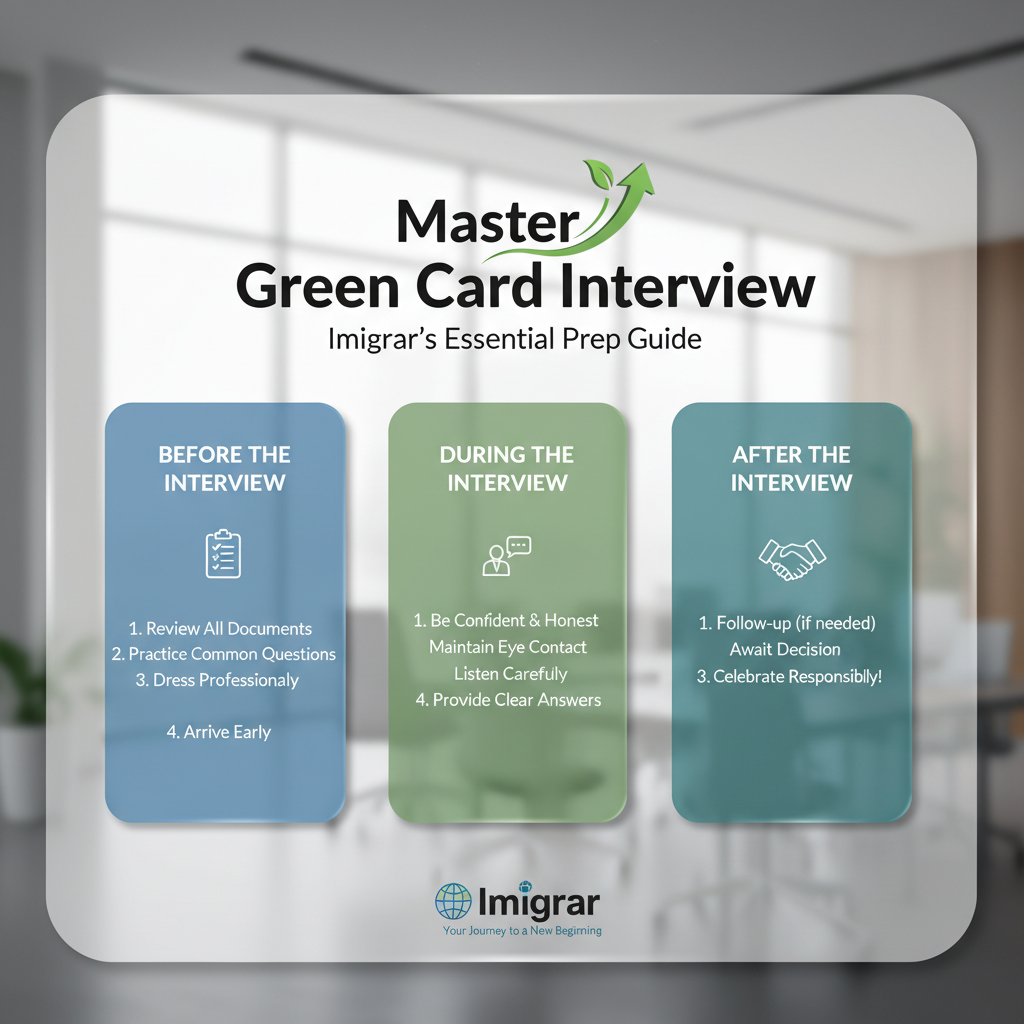
Recent discussions in Green Card Interview Preparation Tips (Immigration Law) highlight the critical importance of being thoroughly prepared for your Green Card interview. This ongoing focus on interview readiness underscores a universal truth in immigration processes: preparation is key to success.
What This News Means for Immigrants in Orlando and Across Florida
For individuals and families pursuing a Green Card, the interview is often the most personal and, for many, the most daunting step in the entire process. The continued emphasis on interview preparation in immigration news isn't just a fleeting trend; it’s a constant reminder of the rigorous scrutiny involved in obtaining lawful permanent residency in the United States. This news reinforces the need for every applicant to approach their interview with diligence, accuracy, and a clear understanding of what is expected.
Why this news is showing up now
The consistent attention to Green Card interview preparation reflects several factors:
- Increased Scrutiny: Immigration authorities, particularly U.S. Citizenship and Immigration Services (USCIS), continue to enhance their review processes to ensure the legitimacy of applications and combat fraud. This means interviews are often more detailed and comprehensive than in previous years.
- Complexity of Cases: As immigration laws evolve and the diversity of familial and employment relationships grows, so does the complexity of individual cases. Applicants need to be prepared to articulate their unique circumstances clearly.
- Applicant Anxiety: The interview is a high-stakes moment. News outlets and legal resources frequently address this topic because applicants consistently seek guidance on how to navigate it successfully, making it a perennially relevant subject.
- Policy Shifts: While the core interview process remains, subtle shifts in policy or enforcement priorities can impact the types of questions asked or the evidence requested. Staying informed is crucial.
How it can affect Florida residents
Florida, with its vibrant multicultural population and status as a major immigration hub, sees a significant volume of Green Card applications. For residents in Orlando, Tampa, Miami, and across the Sunshine State, this news directly impacts their journey:
- Orlando USCIS Field Office: Many Green Card interviews for Central Florida residents are conducted at the Orlando USCIS Field Office. Being prepared means understanding the local office's procedures and potential wait times, which can sometimes differ from national averages.
- Diverse Case Types: Florida’s diverse population means a wide array of Green Card categories are processed here, from family-based petitions (e.g., spouses, parents, children) to employment-based applications. Each category has specific interview nuances that require tailored preparation.
- Language Barriers: While interpreters are available, preparing thoroughly in advance, especially if English is not your first language, is paramount. Imigrar proudly offers services in English and Spanish (Se Habla Español) to bridge this gap.
- Travel Considerations: For those along the I-4 corridor or in more remote parts of Florida, planning travel to the interview site, ensuring punctuality, and having all documents organized for ease of access are practical considerations highlighted by the emphasis on preparation.
- Avoiding Delays: A well-prepared interview can significantly reduce the chances of Requests for Evidence (RFEs) or further delays, which are particularly frustrating when processing times are already lengthy.
The takeaway for Floridians is clear: do not underestimate the Green Card interview. It is a critical juncture where your future in the U.S. is determined, and proper preparation, ideally with experienced legal counsel, is your strongest asset.
Need Help? Our Orlando immigration team is ready to assist. Call +1 786-791-3106 for a free consultation, or message us online. Se Habla Español.
What a Green Card Interview Is (and Why It Matters)
The Green Card interview is a mandatory step for most individuals seeking lawful permanent residency in the United States. It's a face-to-face meeting with an immigration officer from U.S. Citizenship and Immigration Services (USCIS) or, in the case of consular processing abroad, a consular officer from the U.S. Department of State. The primary purpose of this interview is to verify the information provided in your Green Card application, assess your eligibility, and ensure you are admissible to the United States.
A plain-English definition
Think of the Green Card interview as your opportunity to personally present your case to the U.S. government. It’s where an immigration officer will ask you questions about your application, your background, your relationship (if it’s a family-based petition), and any other relevant details to confirm that you meet all the legal requirements for a Green Card. It's a chance for them to put a face to the paperwork and ensure everything is truthful and consistent. For many, it's the culmination of a long application journey.
Key terms you need to know
Understanding these terms will help you navigate the Green Card process more effectively:
- Green Card: Officially known as a Permanent Resident Card, it is proof of your authorization to live and work permanently in the United States.
- Adjustment of Status (AOS): This is the process for individuals who are already in the U.S. to apply for lawful permanent resident status without having to return to their home country. The interview for AOS typically takes place at a USCIS Field Office, such as the one in Orlando.
- Consular Processing: This is the process for individuals who are outside the U.S. to apply for an immigrant visa at a U.S. embassy or consulate in their home country. Once approved, they enter the U.S. as a permanent resident.
- Petitioner: The U.S. citizen or lawful permanent resident who files an immigration petition on behalf of an eligible relative or employee. For family-based Green Cards, this is often the spouse, parent, or child.
- Beneficiary: The foreign national who is seeking a Green Card based on the petition filed by the petitioner.
- Immigrant Visa Petition: The initial application filed by the petitioner, such as Form I-130, Petition for Alien Relative. This form establishes the qualifying relationship between the petitioner and beneficiary.
- Application for Adjustment of Status: The application filed by the beneficiary to request a Green Card while in the U.S., most commonly Form I-485.
- Affidavit of Support: Form I-864, a legally binding document signed by the petitioner (and sometimes a joint sponsor) to accept financial responsibility for the immigrant. This ensures the immigrant will not become a public charge.
- Public Charge: A term used in immigration law to describe an individual who is primarily dependent on the government for subsistence, as demonstrated by the receipt of certain public cash assistance or long-term institutionalization at government expense. The interview will often assess this.
- Request for Evidence (RFE): A notice from USCIS asking for more information or documentation to support your application. An RFE can delay your case.
The Green Card interview is a pivotal moment because it’s the final direct interaction with an immigration officer regarding your application. It’s where discrepancies can be clarified, genuine relationships confirmed, and eligibility definitively established. A successful interview moves you closer to achieving your American dream.
Current Immigration Law: The Foundation
The Green Card interview process is rooted in federal immigration law, primarily the Immigration and Nationality Act (INA). This act governs who is eligible for a Green Card, the procedures for applying, and the grounds for inadmissibility. Understanding these legal underpinnings is crucial for successful preparation.
Federal requirements
The INA sets forth the eligibility categories for Green Cards, which typically fall into family-based, employment-based, special immigrant, and diversity visa categories. For most family-based Green Cards, which constitute a large portion of interviews, the relevant sections of the INA include:
- INA Section 201: Defines the numerical limitations on immigrant visas and establishes categories for immediate relatives (spouses, unmarried children under 21, and parents of U.S. citizens 21 or older), who are not subject to numerical quotas.
- INA Section 203: Outlines the preference categories for family-sponsored and employment-sponsored immigrants, who are subject to numerical limitations and often have longer wait times based on their Priority Date.
- INA Section 212: Details the grounds of inadmissibility, which are reasons an individual might be denied entry or a Green Card. These include health-related grounds, criminal grounds, security and related grounds, public charge grounds, and misrepresentation. The interview extensively checks for these.
- INA Section 245: Specifically addresses Adjustment of Status for those already in the U.S. It outlines the general requirements, such as having been inspected and admitted or paroled into the U.S., being eligible for an immigrant visa, and having an immigrant visa immediately available.
For those applying through Adjustment of Status, the key forms are:
- Form I-130, Petition for Alien Relative: Filed by the U.S. citizen or lawful permanent resident petitioner to establish a qualifying relationship.
- Form I-485, Application to Register Permanent Residence or Adjust Status: Filed by the beneficiary to request the Green Card. This is the application directly tied to the interview.
- Form I-864, Affidavit of Support: Filed by the petitioner to demonstrate financial sponsorship.
- Form I-693, Report of Medical Examination and Vaccination Record: Completed by a USCIS-approved civil surgeon.
The interview officer's role is to ensure compliance with these federal statutes and regulations. They will review your entire application packet, including all supporting documents, to confirm that you meet every legal requirement and are not subject to any grounds of inadmissibility.
For more detailed information on forms and legal requirements, please visit the USCIS official website.
Florida-specific considerations
While immigration law is federal, certain aspects can have practical implications for Florida residents:
- USCIS Field Offices: The primary USCIS Field Office for Central Florida residents is located in Orlando. Understanding the specific procedures, scheduling patterns, and typical interview styles of this particular office can be advantageous.
- State-Level Support Services: Florida offers various community organizations that provide support services to immigrants, from English language classes to assistance with document translation, which can indirectly aid in interview preparation.
- Local Legal Expertise: Engaging an immigration attorney in Florida, particularly one familiar with the Orlando USCIS Field Office, means they understand local nuances and can provide tailored advice based on their experience with local officers and procedures.
- Access to Resources: Being in a major state like Florida often means easier access to USCIS-approved civil surgeons for medical exams, and convenient locations for fingerprinting (biometrics appointments).
Important: Always ensure you are consulting with legal professionals licensed to practice immigration law, as immigration law is federal, not state-specific. However, local attorneys possess invaluable insights into local processing centers.
Facing a Green Card interview? Let Imigrar guide you. We offer comprehensive support, from document review to mock interviews. Call us at +1 786-791-3106 for expert assistance. Se Habla Español.
How to Prepare for Your Green Card Interview: A Complete Step-by-Step Guide
Preparing for your Green Card interview is perhaps the most crucial step in the entire Adjustment of Status or Consular Processing journey. Thorough preparation can alleviate stress, prevent delays, and significantly increase your chances of a successful outcome. Follow this detailed guide to ensure you are fully ready.
1) Understand the Purpose and Format of the Interview
Before diving into document gathering, understand what the interview entails. Its primary goal is to verify the information in your Form I-485 (or immigrant visa application) and associated petitions (like Form I-130), confirm your eligibility, and assess your admissibility to the U.S. The interview typically lasts 20-30 minutes but can be longer or shorter depending on the complexity of your case and the officer. You and your petitioner (if applicable, e.g., in marriage-based cases) will be sworn in and questioned under oath. The officer will review your application, ask questions, and may request additional documentation.
- Key Action: Familiarize yourself with the general flow and purpose. Research common interview questions for your specific Green Card category.
2) Gather and Organize ALL Original Documents and Copies
This is arguably the most critical step. You must bring all original documents that were submitted with your application, plus copies of everything. Organize them neatly in a folder or binder, clearly labeled. Do not rely on the officer having everything in their file; it is your responsibility to present it.
- Required Documents (General):
- Your interview notice (Form I-797C, Notice of Action).
- Valid passport and travel documents.
- Original birth certificate (yours and petitioner's, if applicable).
- Original marriage certificate (if applicable).
- Original divorce decrees or death certificates for any previous marriages (yours and petitioner's).
- Original children's birth certificates (if applicable).
- Original Form I-94, Arrival/Departure Record (if applicable).
- Employment Authorization Document (EAD) and Advance Parole document (if you have them).
- Medical Examination Report (Form I-693) sealed in an envelope (if not already submitted or if it's expired).
- Two passport-style photos meeting USCIS specifications.
- Original police clearance certificates (if applicable and requested).
- Any previous immigration applications or notices (e.g., asylum application, visa denials).
- Required Documents (Marriage-Based Specific - Proof of Bona Fide Marriage):
- Joint bank account statements.
- Joint lease agreements or mortgage statements.
- Utility bills in both names.
- Joint tax returns (most recent 3 years).
- Birth certificates of children born to the marriage.
- Life insurance policies, wills, or trusts naming each other as beneficiaries.
- Photos of your wedding, family events, and travels together (printed and organized in an album).
- Affidavits from friends and family attesting to your relationship.
- Any other evidence demonstrating you share a life together (e.g., credit card statements, health insurance, car titles).
- Required Documents (Financial/Affidavit of Support - Petitioner's Documents):
- Original Form I-864, Affidavit of Support (if not submitted or if changes are needed).
- Proof of U.S. citizenship or lawful permanent residency (passport, Green Card, birth certificate).
- Most recent three years of federal income tax returns and W-2s/1099s.
- Recent pay stubs or employment verification letter.
- Bank statements or other asset documentation (if using assets to meet income requirements).
- If a joint sponsor is used, their Form I-864 and supporting financial documents.
- Key Action: Make a checklist. Gather originals and at least one copy of every document. Place copies in a separate folder for the officer.
3) Review Your Application Forms Thoroughly
You must know every detail of your submitted application (Form I-130, Form I-485, and supporting documents) inside and out. The officer will ask questions directly from these forms. Any inconsistencies, even minor ones, can raise red flags and lead to further questioning or delays.
- Key Action: Read through your entire application package as if you were the officer. Highlight any areas where you might have difficulty remembering details or where information might seem ambiguous. Pay close attention to dates, addresses, employment history, and travel history. Ensure your petitioner also reviews their forms, particularly Form I-130 and Form I-864.
4) Practice Answering Potential Questions
While you can't predict every question, many are standard. Practicing your answers aloud, especially with your petitioner if applicable, will help you feel more confident and articulate. Remember to answer truthfully, concisely, and consistently with your application.
- Common Questions (General):
- "Why are you applying for a Green Card?"
- "What is your current address and phone number?"
- "Tell me about your employment history."
- "Have you ever been arrested or convicted of a crime?"
- "Have you ever violated immigration laws?"
- "Have you ever been a member of any organization?"
- Common Questions (Marriage-Based):
- "How and when did you meet your spouse?"
- "When did you get married?"
- "Where do you live together?"
- "What do you do for fun as a couple?"
- "Who handles the finances?"
- "Describe a typical day in your household."
- "What are your spouse's parents' names?" (and vice versa)
- "Have you taken any trips together?"
- "When did you last see your spouse's family?"
- Key Action: Conduct mock interviews. Have a friend, family member, or your attorney ask you questions. Practice articulating your answers clearly and without hesitation. If your petitioner is attending, practice together to ensure consistency.
5) Consider Bringing an Attorney to the Interview
While not legally required, having an experienced immigration attorney from Imigrar by your side can be invaluable. Your attorney can provide peace of mind, ensure the process is fair, object to improper questions, clarify complex legal points, and help address any unexpected issues that arise. They act as your advocate and guide.
- Key Action: Discuss this option with an attorney well in advance. If you decide to bring counsel, your attorney will help you finalize your preparation and represent you effectively on interview day.
6) What to Expect on Interview Day and Follow-Up
On the day of the interview, arrive early (at least 15-30 minutes before your scheduled time). Dress professionally. Be polite and respectful to all staff. Answer questions truthfully and directly; do not volunteer extra information unless asked. If you don't understand a question, ask for clarification. If you need an interpreter and didn't request one, inform the officer immediately. If you are asked for additional documents, provide them promptly.
- After the Interview:
- The officer may approve your case on the spot, issue a Request for Evidence (RFE), or state that a decision will be mailed.
- If approved, you will typically receive your Green Card in the mail within a few weeks.
- If an RFE is issued, respond promptly and thoroughly.
- If denied, you will receive a written explanation. It is crucial to consult with an attorney immediately if your application is denied.
- Key Action: Maintain composure, be honest, and be prepared for potential follow-up requests. After the interview, review any instructions from the officer carefully.
Overwhelmed by Green Card interview prep? Imigrar in Orlando specializes in guiding families through this process. Contact us at +1 786-791-3106 for a free consultation. Se Habla Español.
Practical Steps You Can Take Today
Don't wait until you receive your interview notice to start preparing. Proactive steps can significantly reduce stress and improve your chances of a smooth interview process. Here's an actionable checklist:
Actionable Checklist (5+ items)
- Compile a Master Document List: Create a comprehensive list of all documents you submitted with your application, plus any additional evidence you might need (e.g., recent joint bank statements, new photos). Start gathering originals and making copies now.
- Review Your Entire Application: Pull out copies of your Form I-130, Form I-485, and all supporting documents. Read through them carefully, noting any dates, addresses, or details that might be difficult to recall. Ensure consistency.
- Collect New Supporting Evidence: Continuously gather and organize new evidence of your relationship or employment. For marriage-based cases, this means new photos, shared bills, updated insurance policies, or travel itineraries.
- Identify Potential Gaps or Issues: As you review your application, identify any potential red flags, such as gaps in employment, prior arrests, or complex immigration history. Discuss these with your attorney so you can prepare explanations.
- Schedule a Medical Exam (If Needed): If you haven't submitted Form I-693 or if your existing one is approaching its expiration date (typically two years from the civil surgeon's signature), schedule an appointment with a USCIS-approved civil surgeon. Bring the sealed envelope to your interview.
- Practice Interview Questions: Familiarize yourself with common interview questions for your specific Green Card category. Practice answering them clearly and concisely. If applicable, practice with your petitioner to ensure consistent answers.
- Consult with an Attorney: Even if you initially filed your application yourself, consider a consultation with an experienced immigration attorney from Imigrar. They can review your case, identify potential weaknesses, and provide tailored advice.
Document preparation guidance
- Organization is Key: Use folders, dividers, or a binder to keep documents categorized. For example, one section for personal documents, another for financial documents, and another for relationship evidence.
- Originals and Copies: Always bring originals and a complete set of copies. The officer may only want to see the originals and keep the copies.
- Translate Foreign Documents: Any document not in English must be accompanied by a certified English translation. The translator must certify that they are competent to translate and that the translation is accurate.
- Photos: For marriage-based cases, organize photos chronologically, perhaps with captions identifying people, places, and dates. Don't just hand over a stack of loose photos.
- Financial Documents: Ensure all financial documents (tax returns, W-2s, pay stubs) are up-to-date and clearly show how the petitioner meets the income requirements.
Timeline expectations
The timeline for receiving an interview notice can vary significantly based on the Green Card category, your country of origin (for visa availability), and the specific USCIS Field Office workload. You can check average processing times on the USCIS Processing Times website.
- Interview Notice: Typically, you will receive an interview notice (Form I-797C) 4-6 weeks before your scheduled interview date.
- Decision: Many officers will give you an indication of approval at the end of the interview. If approved, you can expect your Green Card to be mailed within 2-4 weeks. If there are pending checks or additional requests, it could take longer.
- Post-Interview RFEs: If an RFE is issued after the interview, you generally have 60 to 90 days to respond. Responding promptly is crucial to avoid further delays or denial.
Reminder: Processing times can fluctuate. Stay patient but proactive in your preparation. For residents in Orlando and Central Florida, the local USCIS Field Office processing times should be specifically monitored.
How Imigrar Helps Immigrants in Orlando
At Imigrar, we understand that the Green Card interview can be a source of significant anxiety. Our mission, "Keep Families Together," drives us to provide compassionate, expert legal representation to ensure our clients are fully prepared and confident for this critical step. Based in Orlando, Florida, we serve clients nationwide, bringing our dedicated approach to every case.
Our experience and expertise
Our team of experienced immigration attorneys specializes in family-based Green Cards, Adjustment of Status, and consular processing. We have a deep understanding of USCIS procedures, particularly those at the Orlando USCIS Field Office, and stay abreast of the latest changes in immigration law. When you choose Imigrar, you benefit from:
- Personalized Case Review: We conduct a thorough review of your entire application package, identifying potential issues and ensuring all documentation is in order.
- Comprehensive Document Preparation: We guide you in gathering and organizing all necessary original documents and supporting evidence, ensuring nothing is overlooked.
- Targeted Mock Interviews: We conduct realistic mock interviews, asking questions tailored to your specific case, helping you practice your answers, and building your confidence.
- Legal Representation at the Interview: Our attorneys can accompany you to the interview, providing legal counsel, clarifying complex questions, and advocating on your behalf. This provides invaluable peace of mind.
- Post-Interview Support: We assist with responding to Requests for Evidence (RFEs) or addressing any follow-up actions required by USCIS.
- Multilingual Support: We are proud to offer services in both English and Spanish (Se Habla Español), ensuring clear communication and understanding for all our clients.
For families in Orange County, along the I-4 corridor, and throughout Florida, Imigrar is your trusted partner. We are committed to protecting your rights and helping you achieve your dream of permanent residency.
Free consultation offer
Don't face your Green Card interview alone. We offer a **free initial consultation** to discuss your case, assess your needs, and outline how we can assist you. This is a no-obligation opportunity to get professional advice from an expert immigration legal team.
Call us today at +1 786-791-3106 or visit our website to schedule your consultation. Se Habla Español. Let us help you keep your family together.

Frequently Asked Questions
Q: Who needs to attend the Green Card interview?
A: For family-based Green Cards (e.g., marriage-based), both the beneficiary (the immigrant) and the petitioner (the U.S. citizen or lawful permanent resident spouse) are generally required to attend the interview. For other categories, typically only the beneficiary attends. Children who are beneficiaries and are 14 years or older may also be required to attend. Always check your interview notice for specific instructions.
Q: What if I don't speak English well enough for the interview?
A: If you are not fluent in English, you have the right to bring an interpreter. You must notify USCIS in advance if you require an interpreter. The interpreter must be fluent in both English and your native language, be at least 18 years old, and cannot be your attorney, a witness in your case, or the petitioner. The officer may also provide a government interpreter if available. It's crucial to have a reliable interpreter to ensure clear communication. Imigrar can help coordinate this.
Q: How long does the Green Card interview typically last?
A: Most Green Card interviews last between 20 to 45 minutes, though some can be shorter or significantly longer depending on the complexity of the case, the completeness of your documents, and the officer's discretion. Marriage-based interviews often take longer due to the detailed questions about the relationship.
Q: What kind of questions will the immigration officer ask?
A: The questions will generally cover the information on your application forms (e.g., personal history, employment, travel, criminal record) and, for family-based cases, the legitimacy of your relationship. For marriage-based cases, expect detailed questions about how you met, your daily life together, shared finances, mutual friends, and future plans. Always answer truthfully and consistently with your submitted documents.
Q: What documents should I bring to the interview?
A: You should bring your interview notice, all original documents submitted with your application (birth certificates, marriage certificates, passports, divorce decrees, etc.), copies of everything, and any new evidence that supports your case (e.g., new joint bank statements, recent photos, updated tax returns). For marriage-based cases, bring extensive evidence of your bona fide marriage. Always review the checklist provided in your interview notice. Refer to our detailed guide above for a comprehensive list.
Q: How important is an attorney's presence at the interview?
A: While not legally mandatory, having an experienced immigration attorney from Imigrar present at your Green Card interview can be highly beneficial. Your attorney can provide moral support, ensure your rights are protected, clarify questions, object to inappropriate questioning, and help address any unexpected issues or complex legal points that may arise. They act as your advocate, significantly reducing stress and increasing confidence.
Q: What happens if my Green Card application is denied after the interview?
A: If your Green Card application is denied, USCIS will send you a written decision explaining the


