


The reporting that sparked this guide: Green Card Interview Preparation Tips (Immigration Law)
What This News Means for Immigrants in Orlando and Across Florida
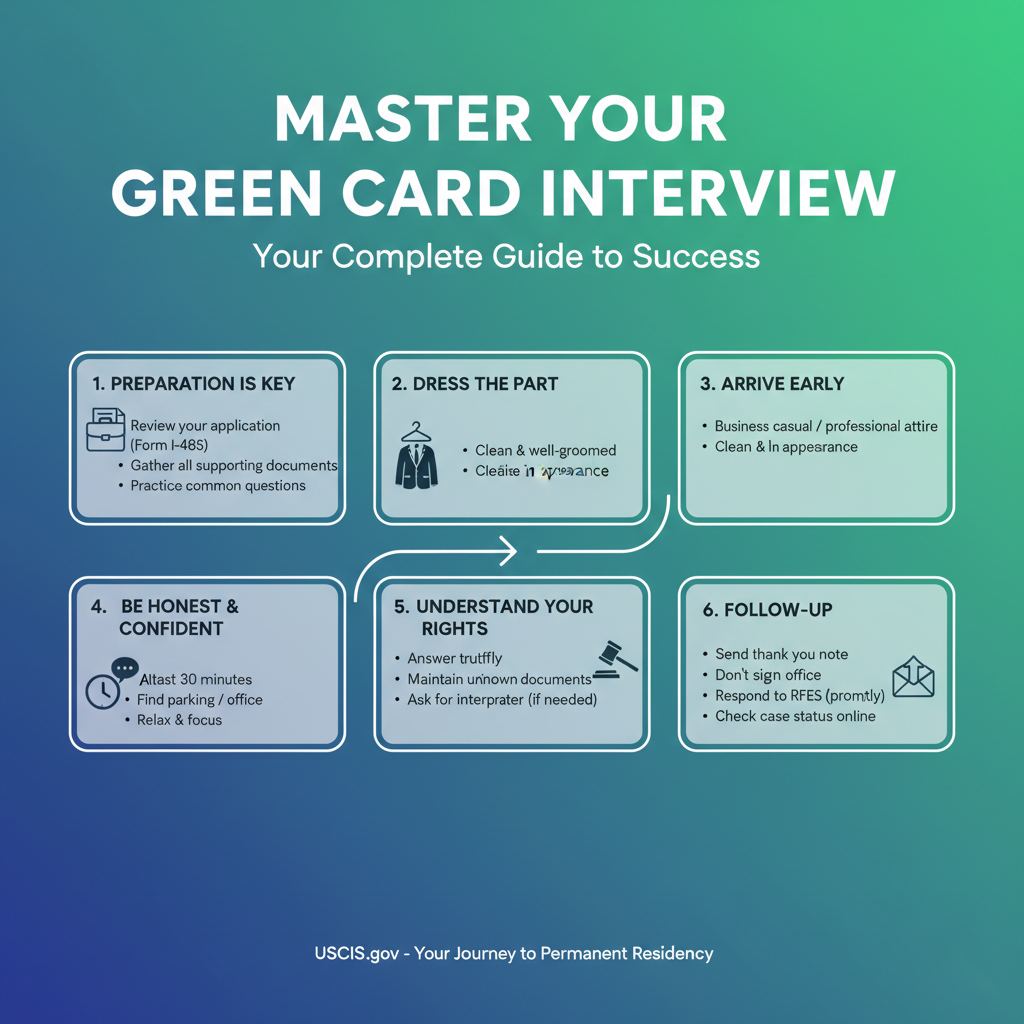
Navigating the complex U.S. immigration system can be daunting, and for many, the green card interview is the final, pivotal step towards securing permanent residency. The ongoing discussions and news surrounding immigration law consistently highlight the importance of thorough preparation for this critical interview. At Imigrar, we understand that this isn't just news; it's a direct impact on the lives and futures of individuals and families we serve in Orlando, across Florida, and nationwide.
Why this news is showing up now
The U.S. Citizenship and Immigration Services (USCIS) conducts millions of interviews each year. While the green card interview has always been a fundamental part of the process, its significance is frequently emphasized due to several evolving factors. Increased scrutiny in immigration enforcement, fluctuating processing times, and a continuous focus on national security and fraud prevention mean that USCIS officers are more vigilant than ever. This heightened attention translates into more detailed questioning and a greater demand for robust, consistent evidence from applicants. Furthermore, as immigration policies adapt and caseloads shift, the importance of being fully prepared for an interview becomes a recurring theme in immigration law discussions, reminding both applicants and legal professionals of its enduring weight.
How it can affect Florida residents
Florida, a state with a vibrant and diverse immigrant population, sees a significant volume of green card applications processed through its various USCIS field offices, including the Orlando USCIS Field Office. For residents in Orlando, Tampa, Miami, and across the I-4 corridor, the emphasis on interview preparation is particularly relevant. The Orlando Field Office serves a vast area, and its officers are highly experienced in various types of green card cases, from family-based petitions to employment-based adjustments of status. Specific local trends, such as a focus on marriage fraud prevention in family-based cases or detailed scrutiny of employment history, can emerge. Therefore, understanding the nuances of the interview process and being meticulously prepared is not just good practice; it's essential for a successful outcome for Central Florida residents and beyond.
Need Help? Our Orlando immigration team is ready to assist. Call +1 786-791-3106 for a free consultation, or message us online. Se Habla Español.
What Green Card Interviews Are (and Why They Matter)
The green card interview is often the most nerve-wracking, yet crucial, step in the journey to becoming a lawful permanent resident of the United States. It's the moment when you, and often your petitioner, meet directly with a USCIS officer to discuss your application and demonstrate your eligibility.
A plain-English definition
Simply put, a Green Card Interview is a formal meeting with an immigration officer from USCIS or, in some cases, a consular officer at a U.S. Embassy or Consulate abroad. The purpose of this interview is for the officer to verify the information you provided in your application, confirm your identity, assess your credibility, and determine if you meet all legal requirements for permanent residency. It’s a mandatory step for most applicants seeking a green card, whether through Adjustment of Status (applying from within the U.S.) or Consular Processing (applying from outside the U.S.). This interview is the government’s opportunity to ensure that you are admissible to the United States and that your petition is legitimate and not based on fraud.
Key terms you need to know
- Green Card: Formally known as a Permanent Resident Card, it is an identification card issued by USCIS to immigrants in the U.S. who have been granted lawful permanent residence. It signifies your authorization to live and work permanently in the United States.
- Adjustment of Status (AOS): The process of applying for lawful permanent resident status (a green card) while physically present in the United States. This typically involves filing Form I-485, Application to Register Permanent Residence or Adjust Status.
- Consular Processing: The process of applying for an immigrant visa at a U.S. Embassy or Consulate in your home country or country of last residence. Once approved, you enter the U.S. with an immigrant visa, which becomes your temporary green card upon entry.
- USCIS: U.S. Citizenship and Immigration Services, the federal agency responsible for administering immigration and naturalization applications and benefits.
- Admissibility: The legal term referring to whether an individual is eligible to enter or remain in the United States. Various grounds of inadmissibility, such as certain criminal convictions, health issues, or past immigration violations, can bar an applicant from getting a green card.
- Sponsor/Petitioner: The U.S. citizen or lawful permanent resident who files an immigrant petition (e.g., Form I-130, Petition for Alien Relative) on behalf of the immigrant applicant (beneficiary).
- Beneficiary: The immigrant applicant seeking a green card based on a petition filed on their behalf.
- Bona Fide Marriage: A legal term meaning a marriage entered into in good faith, not solely for immigration purposes. This is a crucial element in marriage-based green card applications, and officers will scrutinize evidence to ensure the marriage is genuine.
Understanding these terms is fundamental to comprehending the green card process and preparing effectively for your interview. The interview is your chance to clarify any ambiguities, present additional evidence, and demonstrate your eligibility directly to a USCIS officer. It matters because a successful interview leads to the approval of your green card, while a poorly prepared one can lead to delays, Requests for Evidence (RFEs), or even denial.
Current Immigration Law: The Foundation for Your Green Card Interview
The green card interview is not merely a formality; it is a legally mandated step rooted in federal immigration statutes and regulations. Understanding the legal framework is crucial for appreciating the depth of preparation required.
Federal requirements
The primary legal authority governing green card applications and interviews is the Immigration and Nationality Act (INA). Specifically, Section 245 of the INA governs Adjustment of Status within the U.S., while Section 222 governs immigrant visa applications processed abroad (Consular Processing). These sections, along with corresponding federal regulations found in 8 CFR, dictate the eligibility criteria and procedural requirements for obtaining lawful permanent residency. The INA places the burden of proof squarely on the applicant to demonstrate their eligibility for the desired immigration benefit. This means you must affirmatively show that you meet all statutory and regulatory requirements for a green card, and that you are not subject to any grounds of inadmissibility outlined in INA Section 212(a).
During the interview, the USCIS officer acts as the adjudicator, tasked with verifying the information presented in your application, assessing your credibility, and ensuring compliance with all legal requirements. They will review your submitted forms, such as:
- Form I-130, Petition for Alien Relative (if applicable, for family-based cases)
- Form I-485, Application to Register Permanent Residence or Adjust Status
- Form I-864, Affidavit of Support (demonstrating financial sponsorship)
- Form I-693, Report of Medical Examination and Vaccination Record
- Form I-765, Application for Employment Authorization (if filed concurrently)
- Form I-131, Application for Travel Document (if filed concurrently for Advance Parole)
The officer will cross-reference your verbal statements with the documents and information you’ve provided, looking for consistency and accuracy. Any discrepancies or red flags can lead to further questioning, Requests for Evidence (RFEs), or even a Notice of Intent to Deny (NOID). The legal precedent emphasizes the importance of a "bona fide" relationship for marriage-based petitions, requiring applicants to provide ample evidence of a genuine marriage, not one entered into solely for immigration benefits.
Florida-specific considerations
While immigration law is federal, the practical application often varies slightly by USCIS Field Office. For applicants in Florida, particularly those interviewed at the Orlando USCIS Field Office, it's important to understand that local officers are highly experienced with the diverse range of cases typical for our region. There are no state-specific immigration laws that directly impact federal green card eligibility or interview requirements. However, the Orlando Field Office, like others, operates under federal guidelines while processing a high volume of cases, which can sometimes influence local processing times and specific areas of focus. For instance, given Florida's large immigrant population, officers are well-versed in complex family relationships, prior immigration histories, and diverse cultural backgrounds. They are also vigilant in identifying potential fraud, especially in marriage-based cases, reflecting a national priority that resonates strongly in high-volume offices. Being prepared for these specific areas of scrutiny is key for Florida residents.
For the most up-to-date information on forms, fees, and processing times, always refer to the USCIS official website.
Need Help? Our Orlando immigration team is ready to assist. Call +1 786-791-3106 for a free consultation, or message us online. Se Habla Español.
How to Prepare for Your Green Card Interview: A Complete Step-by-Step Guide
The green card interview is a critical juncture in your immigration journey. Proper preparation is paramount to ensure a smooth and successful outcome. Follow this comprehensive guide to navigate each step effectively.
1) Understand Your Case Type and Review Your Application
Before anything else, you must have a clear understanding of the basis of your green card application (e.g., family-based, employment-based, asylum, special immigrant). Each case type has specific eligibility criteria and potential areas of scrutiny. Your first step in preparation is to meticulously review every form and document you submitted to USCIS.
- Review All Submitted Forms: Read through your Form I-485, Form I-130 (if applicable), Form I-864, and any other forms. Ensure you remember every answer, date, and detail you provided. The officer will have your entire file in front of them and will be looking for consistency.
- Identify Key Dates and Facts: Pay special attention to dates of entry, marriage, employment, addresses, and any significant life events.
- Understand the "Why": Why are you eligible for a green card? Be able to articulate the legal basis for your application clearly and concisely.
- For Marriage-Based Cases: Discuss every detail of your relationship, from how you met to your daily life together, with your spouse. Officers are trained to detect fraud and will ask detailed questions about your shared life.
Required Documents for Review:
- A complete copy of your entire USCIS application packet, exactly as submitted.
- Any previous immigration applications or petitions you have filed.
2) Gather All Original Documents and Copies
This is arguably the most crucial step. You must bring all original documents that were submitted with your application, plus copies, and any new supporting evidence. Organize everything methodically in a binder or folder, clearly labeled.
- Personal Identity and Status Documents:
- Your passport (current and expired, if any)
- Birth certificate (original and certified translation, if applicable)
- Marriage certificate (original and certified translation, if applicable)
- Divorce decrees or death certificates for any previous marriages (for both applicant and petitioner)
- Previous visas and entry stamps
- Your EAD card (Form I-766) and Advance Parole document (Form I-512), if you have them
- Driver's license or state ID
- Financial Support Documents (for Sponsor):
- Original Form I-864, Affidavit of Support, signed by your sponsor
- Sponsor's most recent federal tax returns (transcript or full return) and W-2s/1099s for the last three years
- Letters of employment, pay stubs, bank statements for the sponsor
- Medical Examination:
- Original sealed envelope containing your Form I-693, Report of Medical Examination and Vaccination Record. If you submitted it previously, bring a copy of the submission receipt or a new sealed envelope if the previous one expired.
- Proof of Relationship (for Family-Based):
- Joint bank accounts, credit cards, leases/mortgages, utility bills, insurance policies (health, life, car), tax returns filed jointly.
- Photos together (dated, showing progression of relationship, with family/friends).
- Correspondence (emails, texts, social media posts).
- Affidavits from friends/family attesting to the relationship.
- Children's birth certificates (if applicable).
- Criminal and Immigration History Documents:
- Certified copies of police reports, court dispositions, and sentencing records for any arrests or convictions (even if charges were dismissed or expunged).
- Proof of completion of any sentences or probation.
- Any waivers of inadmissibility (e.g., Form I-601, Application for Waiver of Grounds of Inadmissibility) you may have filed.
- Interview Notice:
- The original interview appointment notice (Form I-797C).
Important: Bring both originals AND clear photocopies of every document. The officer will review the originals and keep the copies for the file. For Orlando residents, ensure all documents requiring translation are accompanied by a certified English translation.
3) Prepare for Interview Questions
The officer will ask questions to confirm the information in your application and assess your eligibility. While questions vary, common themes emerge. Practice answering these questions honestly and concisely.
- Personal Background: Name, date/place of birth, parents' names, addresses, education, employment history.
- Immigration History: How you entered the U.S., previous visas, any prior immigration applications, any arrests or immigration violations.
- Relationship (Marriage-Based): How you met, when you started dating, proposal, wedding details, shared life, daily routines, future plans, children. Be prepared for very personal questions.
- Financial Support: Questions about your sponsor's income, assets, and ability to support you.
- Admissibility: Questions about criminal history, health issues, past drug use, affiliations with certain organizations, or history of misrepresentation.
Reminder: Always tell the truth, even if the information is unfavorable. Lying or providing false information can lead to a permanent bar from the U.S.
4) Practice Your English (or Arrange for an Interpreter)
If you are not fluent in English, you have two options:
- Practice English: If you have basic English skills, practicing conversational English and common interview questions can be beneficial.
- Bring a Certified Interpreter: USCIS does not provide interpreters for green card interviews (with rare exceptions). You must bring your own interpreter if you cannot communicate effectively in English. The interpreter must be fluent in both English and your native language, preferably a professional, unbiased party (not your spouse, attorney, or children). They must also bring their photo ID.
Warning: An interpreter who is not neutral or who tries to answer questions for you can negatively impact your case.
5) Dress Professionally and Plan Your Logistics
Your appearance and punctuality reflect your seriousness about the interview.
- Dress Professionally: Wear business casual or formal attire. It shows respect for the process and the officer.
- Plan Your Route: For those visiting the Orlando USCIS Field Office, located at 6650 Corporate Centre Blvd, Orlando, FL 32822, plan your route well in advance. Consider traffic, especially during peak hours on the I-4 corridor.
- Arrive Early: Aim to arrive at least 30-45 minutes before your scheduled appointment. This allows time for parking, security checks, and finding the correct waiting area. Being late can lead to rescheduling, which significantly delays your case.
- Security: Be aware of security protocols. You'll likely go through a metal detector, and certain items (like weapons, large bags) may not be allowed.
6) What to Expect on Interview Day
Knowing the typical flow of the interview can help ease your anxiety.
- Check-in: Upon arrival, you'll check in at the front desk, present your interview notice, and often receive a number.
- Waiting Area: You'll then proceed to a waiting area. Be patient, as interviews can sometimes run behind schedule.
- The Officer: A USCIS officer will call your name. They will lead you to their office or interview room.
- Oath: The interview typically begins with you (and your petitioner/interpreter) taking an oath to tell the truth.
- Questions: The officer will review your application and ask questions. They may ask for specific documents. Answer clearly, concisely, and honestly. If you don't understand a question, ask for clarification. Do not guess.
- Provide New Evidence: If you have new evidence (e.g., recent joint bills, updated medical report, new photos), present it when appropriate or when asked.
7) After the Interview: Next Steps and Potential Outcomes
The interview is not always the final step for immediate approval.
- Approval: In many straightforward cases, the officer may tell you verbally that your case is approved. You will then receive an official approval notice (Form I-797) in the mail, followed by your green card within a few weeks.
- Request for Evidence (RFE): If the officer needs more information or documents, they will issue an RFE (Form I-797E). You will have a specific deadline to respond.
- Administrative Processing: Some cases, particularly those with complex backgrounds or security checks, may be placed in administrative processing. This means your case is still pending, often awaiting further background checks, and can take months.
- Notice of Intent to Deny (NOID): If the officer believes you are not eligible, they may issue a NOID, giving you a chance to rebut their findings before a final decision.
- Denial: If your application is denied, you will receive a written decision explaining the reasons. Depending on the reason, you may have options to appeal, file a motion to reconsider, or reapply. It is critical to consult an attorney immediately if you receive a denial.
Need Help? Our Orlando immigration team is ready to assist. Call +1 786-791-3106 for a free consultation, or message us online. Se Habla Español.

Practical Steps You Can Take Today for a Successful Interview
Proactive preparation is your best defense against interview-day anxiety and potential pitfalls. Here's an actionable checklist to guide your efforts:
Actionable checklist with 5+ items:
- Thoroughly Review Your Entire Application Package: Dedicate several hours to reading every line of every form you submitted (Form I-485, Form I-130, Form I-864, etc.). Highlight key dates, addresses, and employment histories. Ensure you remember all the answers you provided, as the officer will cross-reference your verbal responses with your written application.
- Organize All Original Documents and Copies in a Binder: Create a well-structured binder or folder with dividers. Label each section clearly (e.g., "Birth Certificate," "Marriage Certificate," "Tax Returns," "Joint Bank Statements," "Photos"). Place originals in one section and corresponding copies in another. This organization will save time and demonstrate your preparedness to the officer.
- Practice Answering Common Interview Questions: Rehearse answers to potential questions (see our detailed guide above). Practice with your petitioner if applicable. Focus on being clear, concise, and consistent with your application. Record yourself if it helps, and review for clarity and confidence.
- Discuss Your Case Thoroughly with Your Sponsor/Petitioner: If your case involves a sponsor or petitioner (especially for marriage-based cases), ensure you both understand every detail of the application and the relationship. Review the joint evidence together. Consistency between your answers and your sponsor's is crucial.
- Consult with an Experienced Immigration Attorney: This is a highly recommended step. An attorney can conduct a mock interview, identify potential red flags in your case, help you gather and organize documents, and represent you at the interview. For complex cases or those with prior immigration issues, legal representation can be invaluable.
- Check USCIS Processing Times Regularly: While you prepare, keep an eye on the estimated processing times for your specific case type and field office (e.g., Orlando) on the USCIS Processing Times page. This helps manage expectations regarding when you might receive an interview notice or a decision after your interview.
- Prepare an "Interview Day" Checklist: The day before, make a list of everything you need to bring (documents, IDs, interview notice, interpreter's ID, car keys, wallet, water, snack). Lay out your professional attire. This reduces stress on the morning of the interview.


