

The journey to obtaining a Green Card in the United States is a significant milestone for many individuals and families. For those pursuing Adjustment of Status, the Green Card interview with U.S. Citizenship and Immigration Services (USCIS) is often the final and most critical step. This interview serves as an opportunity for USCIS to verify the information provided in your application, confirm your eligibility, and ensure that you meet all legal requirements for permanent residency.
While the prospect of an interview can be daunting, thorough preparation is your most powerful tool. Understanding the process, knowing what to expect, and organizing your documentation can dramatically increase your chances of a successful outcome. At Imigrar, an immigration law firm based in Orlando, Florida, we are dedicated to helping immigrants and their families navigate complex immigration processes with confidence and clarity. Our mission is to "Keep Families Together," and that includes guiding you through every stage, especially crucial moments like your Green Card interview.
This comprehensive guide is designed to equip you with the knowledge and practical tips you need to approach your Green Card interview well-prepared and poised for success. We’ll cover everything from legal foundations and required documents to common pitfalls and actionable advice, all tailored to help you secure your future in the U.S.
Need Help? Our Orlando immigration team is ready to assist. Call +1 786-791-3106 for a free consultation, or message us online. Se Habla Español.
The reporting that sparked this guide
The consistent focus on immigration law in national and local news, particularly regarding the complexities of obtaining permanent residency, frequently highlights the importance of proper preparation for every step of the Green Card process. A recent search for Green Card Interview Preparation Tips (Immigration Law) underscores the ongoing public interest and need for clear, actionable guidance on this critical topic. As immigration policies and procedures evolve, the core requirement for applicants to demonstrate eligibility and good moral character through a thorough interview remains constant, making expert preparation an evergreen concern for aspiring permanent residents.
What This News Means for Immigrants in Orlando and Across Florida
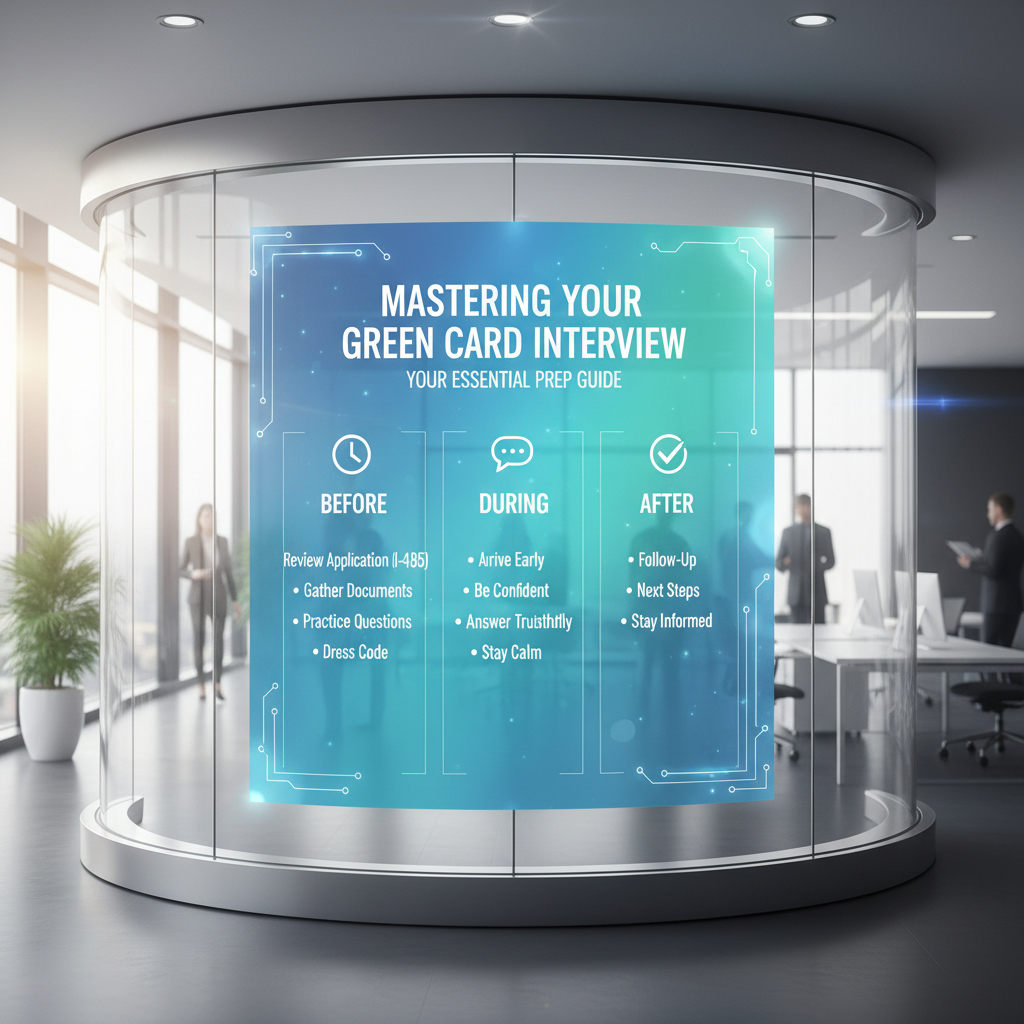
The continuous emphasis on diligent preparation for immigration interviews, particularly for Green Cards, is not merely a national trend; it directly impacts thousands of individuals and families right here in Orlando and throughout Florida. Our state is a vibrant hub for diverse communities, many of whom are navigating the immigration system. For these residents, understanding and preparing for the Green Card interview is paramount to achieving their American dream.
Why this news is showing up now
The topic of Green Card interview preparation is perennially relevant, but its prominence often fluctuates with immigration policy changes, processing backlogs, and shifts in USCIS enforcement priorities. As of 2026, with ongoing efforts to streamline immigration processes and address existing case backlogs, USCIS continues to prioritize efficient and thorough interviews. This means that applicants are increasingly expected to arrive fully prepared, with all necessary documentation and a clear understanding of their case. The news cycle regularly reflects this emphasis, as immigration attorneys and advocacy groups continue to stress the critical role of preparation in navigating these interviews successfully. Furthermore, with the increasing reliance on digital communication and the push for greater transparency, the demand for accessible, reliable information on interview readiness is higher than ever. Many applicants, including those in Central Florida, rely on online resources to guide their journey, making comprehensive guides like this one incredibly valuable.
How it can affect Florida residents
Florida, particularly the Orlando metropolitan area, is home to a significant immigrant population. The Orlando USCIS Field Office, located at 6050 S. Semoran Blvd, serves many residents across Central Florida, including those in Orange, Osceola, Seminole, and surrounding counties. For these individuals, the Green Card interview is a tangible reality, often taking place close to home. The implications of being unprepared can range from minor delays to potential denials, forcing families to face uncertainty and prolonged separation. A lack of proper documentation or inconsistent answers can trigger requests for additional evidence (RFEs) or even a Notice of Intent to Deny (NOID), extending processing times significantly. Given the high volume of cases processed in Florida, any misstep can lead to substantial setbacks. Moreover, for those who have traveled long distances, perhaps even from other parts of Florida or out-of-state to attend their interview in Orlando, a poorly prepared interview can result in wasted time, money, and emotional distress. Imigrar understands these local challenges and is uniquely positioned to provide tailored support for Florida residents, ensuring they are not only legally compliant but also emotionally ready for this crucial step.
What Green Card Interview Preparation Is (and Why It Matters)
Green Card interview preparation refers to the comprehensive process an applicant undertakes to ensure they are ready for their interview with a USCIS officer. This preparation involves gathering and organizing all required documents, reviewing the application forms submitted, understanding the purpose and potential questions of the interview, and mentally preparing for the interaction. It is not merely about showing up; it’s about presenting a clear, consistent, and compelling case for your eligibility for permanent residency.
A plain-English definition
Think of the Green Card interview as your final exam for permanent residency. USCIS wants to meet you in person, review your application face-to-face, and ask questions to make sure everything you’ve submitted is true and that you genuinely qualify for a Green Card. "Preparation" means doing your homework: getting all your papers in order, understanding what you wrote on your application, and being ready to clearly explain your situation to the officer. It's your chance to confirm your story and prove you meet all the requirements.
Key terms you need to know
- Green Card: Also known as a Permanent Resident Card, it grants foreign nationals official authorization to live and work permanently in the United States.
- USCIS (U.S. Citizenship and Immigration Services): The government agency that oversees lawful immigration to the United States. They conduct Green Card interviews. USCIS official website
- Adjustment of Status (AOS): The process of applying for lawful permanent resident status (a Green Card) while physically present in the United States. This is the pathway that typically involves a USCIS interview at a field office like the one in Orlando.
- Consular Processing: The process of applying for a Green Card through a U.S. embassy or consulate in your home country if you are outside the U.S. This also involves an interview, but it's conducted by the U.S. Department of State. U.S. Department of State
- Petition (e.g., Form I-130): The initial application filed by a U.S. citizen or lawful permanent resident on behalf of a relative, or by an employer on behalf of an employee, to establish the qualifying relationship.
- Application (e.g., Form I-485): The actual application for Adjustment of Status filed by the immigrant seeking the Green Card.
- Affidavit of Support (Form I-864): A legally binding document signed by a sponsor (petitioner) to accept financial responsibility for the immigrant. This ensures the immigrant will not become a "public charge."
- Notice of Interview: The official letter from USCIS informing you of your interview date, time, and location, along with a list of documents you must bring.
- Priority Date: The date your immigration petition (e.g., Form I-130) was filed. This date determines your place in line for a Green Card in certain categories.
- Inadmissibility: Grounds under immigration law that can make an individual ineligible for a Green Card, such as certain criminal convictions, health issues, or past immigration violations.
Current Immigration Law: The Foundation
The Green Card interview process is rooted in the Immigration and Nationality Act (INA), which is the body of law governing immigration to the United States. Various sections of the INA define eligibility criteria, grounds of inadmissibility, and the procedural steps for obtaining lawful permanent residency. Understanding these legal foundations is crucial for successful interview preparation.
Federal requirements
At the federal level, the INA outlines who is eligible for a Green Card and under what conditions. The specific requirements depend on the category under which you are applying (e.g., family-based, employment-based, asylum/refugee status). For most Green Card interviews conducted through Adjustment of Status, USCIS officers are primarily concerned with:
- Establishing Eligibility: Confirming the underlying petition (e.g., Form I-130 for family-based) was approved and that the relationship is bona fide (genuine).
- Verifying Admissibility: Ensuring the applicant does not fall under any grounds of inadmissibility outlined in INA §212(a), such as certain health-related grounds, criminal grounds, security grounds, public charge considerations, or previous immigration violations.
- Reviewing Application Accuracy: Cross-referencing all information provided in Form I-485 (Application to Register Permanent Residence or Adjust Status), Form I-130, and supporting documents with your verbal testimony.
- Assessing Good Moral Character: While not explicitly required for all Green Card categories, USCIS officers generally assess an applicant's character during the interview.
Key forms you should be familiar with include:
- Form I-130, Petition for Alien Relative: Filed by a U.S. citizen or LPR to establish a relationship with a foreign national.
- Form I-485, Application to Register Permanent Residence or Adjust Status: The primary application for a Green Card if you are already in the U.S.
- Form I-864, Affidavit of Support: Submitted by the petitioner/sponsor to demonstrate financial ability to support the applicant.
- Form I-693, Report of Medical Examination and Vaccination Record: Completed by a USCIS-approved civil surgeon to document your health status.
- Form I-765, Application for Employment Authorization: Often filed concurrently with Form I-485 to obtain work authorization while the Green Card application is pending.
- Form I-131, Application for Travel Document: Often filed concurrently with Form I-485 to obtain advance parole for travel outside the U.S. while the Green Card application is pending.
All official forms and detailed instructions can be found on the USCIS Forms page.
Florida-specific considerations
While federal law governs the fundamental requirements, the practical application often takes on a local dimension. For Central Florida residents, your Green Card interview will typically be conducted at the Orlando USCIS Field Office. This office processes a high volume of cases, which can sometimes influence scheduling and processing times. It's crucial to be aware of local office procedures, though USCIS aims for national consistency. For example, knowing the specific security protocols and parking situations for the Orlando office can alleviate stress on your interview day. While Florida doesn't have unique state-level immigration laws affecting Green Card eligibility, the diverse demographics of the state mean that officers in Orlando are experienced in handling a wide array of cultural backgrounds and family dynamics. This underscores the importance of clear communication and cultural sensitivity during your interview. If your case is in Orlando, our team at Imigrar has extensive experience with the local field office and can provide insights into what to expect in this specific environment, helping you navigate the interview process more smoothly.
Need Help? Our Orlando immigration team is ready to assist. Call +1 786-791-3106 for a free consultation, or message us online. Se Habla Español.
How to Prepare for Your Green Card Interview: A Complete Step-by-Step Guide
The Green Card interview is a pivotal moment in your immigration journey. Proper preparation is not just recommended; it's essential for a successful outcome. Follow this detailed guide to ensure you are fully ready.
1) Review Your Entire Application Package Thoroughly
Before anything else, you must be intimately familiar with every document you submitted to USCIS. This includes your original petition (e.g., Form I-130), your Adjustment of Status application (Form I-485), and all supporting evidence. USCIS officers will refer to these documents and ask questions based on the information provided. Any inconsistencies between your application and your verbal answers can raise red flags. Pay special attention to dates, addresses, employment history, and any previous immigration entries or departures.
- Action: Gather copies of all submitted forms and supporting documents. Read through them multiple times.
- Focus on: Names, dates of birth, addresses, employment history, travel history, marital history, and answers to all "yes/no" questions on Form I-485, Part 8 (General Eligibility and Inadmissibility Grounds).
- Required Documents (for review):
- Copies of Form I-130 (if applicable) and all supporting evidence (e.g., marriage certificate, birth certificates).
- Copies of Form I-485 and all supporting evidence (e.g., birth certificate, passport pages, I-94 records).
- Copy of Form I-864, Affidavit of Support, and supporting financial documents.
- Copy of Form I-693, Medical Examination Report (if not already submitted, you might need to bring it sealed to the interview).
- Any other forms filed concurrently (e.g., Form I-765, Form I-131).
- Important: If you find any errors or omissions in your submitted application during this review, discuss them immediately with your attorney. You may need to provide corrections or explanations at the interview.
2) Organize and Prepare All Original Documents and Copies
The Notice of Interview will list specific documents you need to bring. However, it’s always wise to bring originals and copies of *all* documents related to your case. This includes documents proving your identity, the legitimacy of your relationship (for family-based petitions), your financial support, and your medical history. Organize these documents neatly in a binder or folder, clearly labeled, making it easy to retrieve them quickly during the interview.
- Action: Create a well-organized binder. Have originals on one side and copies on the other.
- Required Documents (to bring to interview):
- Your Interview Notice (Form I-797C).
- Government-issued photo identification (passport, driver's license).
- Original birth certificate and a copy.
- Original marriage certificate (if applicable) and a copy.
- Original divorce decrees or death certificates for any prior marriages (for both applicant and petitioner, if applicable).
- Original police clearance certificates (if applicable).
- Original medical examination report (Form I-693) in a sealed envelope, if not previously submitted.
- Original I-94 Arrival/Departure Record.
- All passports (current and expired) with visas and entry stamps.
- Original work permits (EAD cards) and travel documents (Advance Parole) if you have them.
- Copies of all previously submitted applications (Form I-130, Form I-485, Form I-864) and supporting evidence.
- For Family-Based Petitions (especially marriage-based):
- Extensive evidence of your bona fide relationship: joint bank accounts, joint utility bills, leases/mortgages showing cohabitation, photos together, travel itineraries, affidavits from friends/family, health/life insurance policies with each other as beneficiaries, children's birth certificates (if any). Bring originals and copies.
- For Financial Support:
- Original Form I-864 (if not submitted or if changes occurred).
- Sponsor's most recent federal income tax returns (IRS transcripts preferred) and W-2s/1099s.
- Proof of current employment for the sponsor (e.g., employment letter, recent pay stubs).
- Reminder: USCIS may keep copies, so having them ready prevents delays.
3) Practice Answering Potential Interview Questions
The interview is a conversation, but it's also a test of your credibility and consistency. While you can't predict every question, you can anticipate common themes. For family-based interviews, expect questions about your relationship: how you met, your wedding, daily life, future plans. For all applicants, questions about your immigration history, employment, education, and answers to the "yes/no" questions on Form I-485 are standard. Practice articulating your answers clearly and concisely.
- Action: Review common interview questions (many resources online, or your attorney can provide a list). Practice with a friend, family member, or your attorney.
- Common Questions to Anticipate:
- "Why are you applying for a Green Card?"
- "How did you meet your spouse?" (for marriage-based)
- "What is your spouse's date of birth/parents' names/job?"
- "What are your daily routines?"
- "Do you have any children together?"
- "Have you ever been arrested or convicted of a crime?"
- "Have you ever violated immigration laws?"
- "Have you ever claimed to be a U.S. citizen?"
- "Do you understand the oath you just took?"
- Warning: Never memorize answers word-for-word. Speak naturally and truthfully. If you don't understand a question, ask the officer to repeat or rephrase it.
4) Consider Bringing an Attorney
While not legally mandatory, having an experienced immigration attorney from Imigrar accompany you to your Green Card interview can be incredibly beneficial. Your attorney can provide legal guidance, clarify complex questions, ensure your rights are protected, and address any unexpected issues that may arise. They can also help you feel more confident and less anxious, acting as a crucial advocate.
- Action: Discuss with Imigrar whether attorney representation at the interview is right for your case.
- Benefits of Attorney Representation:
- Provides legal advice before and during the interview.
- Ensures the officer stays within appropriate lines of questioning.
- Helps clarify confusing questions for you.
- Can address legal issues or inadmissibility concerns on the spot.
- Offers peace of mind and reduces stress.
- Reminder: For Central Florida residents attending interviews at the Orlando USCIS Field Office, having an attorney familiar with local procedures and officers can be a distinct advantage.
5) What to Do on the Day of the Interview
The day of the interview requires punctuality, appropriate attire, and a calm demeanor. Arrive early (at least 30 minutes before your scheduled time) to account for parking, security checks, and finding the correct waiting area. Dress in clean, professional attire, as if you were attending a job interview. This demonstrates respect for the process and the USCIS officer.
- Action: Plan your travel to the Orlando USCIS Field Office in advance. Get a good night's sleep.
- On Interview Day Checklist:
- Arrive early.
- Dress professionally.
- Bring your entire organized binder of documents (originals and copies).
- Bring your interview notice.
- Be polite and respectful to all USCIS staff.
- Answer truthfully and concisely.
- If you don't understand a question, ask for clarification.
- Do not offer information that wasn't asked for.
- Maintain eye contact.
- If you have an attorney, let them guide you on when to speak or defer.
- Warning: Being late can lead to your interview being rescheduled or even denied. Do not bring prohibited items (weapons, excessive electronics) to the USCIS office.
6) After the Interview: Follow-Up and Next Steps
The USCIS officer may inform you of a decision immediately, or they may tell you that a decision will be mailed later. If additional information is needed, they will issue a Request for Evidence (RFE). If your application is approved, you will typically receive your Green Card in the mail within a few weeks. If it’s denied, you will receive a denial letter explaining the reasons, and you should immediately consult with your attorney to discuss options like filing a motion to reconsider or appeal.
- Action: Note down anything important from the interview. Follow up promptly if an RFE is issued.
- Possible Outcomes:
- Approval: You will receive an approval notice, followed by your physical Green Card.
- Request for Evidence (RFE): USCIS needs more documents or information. You'll have a deadline to respond.
- Notice of Intent to Deny (NOID): USCIS intends to deny your application but gives you a chance to respond and explain why it should be approved.
- Denial: Your application is denied.
- Reminder: Processing times can vary. You can check the status of your case online using your receipt number on the USCIS Processing Times page.
Need Help? Our Orlando immigration team is ready to assist. Call +1 786-791-3106 for a free consultation, or message us online. Se Habla Español.

Practical Steps You Can Take Today
Don't wait until the last minute to prepare for your Green Card interview. Proactive steps can significantly reduce stress and improve your chances of success. Here's an actionable checklist you can start working on today.
Actionable Checklist:
- Review Your Case File: Pull out copies of all applications (Form I-130, Form I-485, Form I-864) and supporting documents. Read every line. Make sure you remember all the details.
- Gather Original Documents: Start locating all original birth certificates, marriage certificates, passports, and any other crucial documents. If you need new copies or translations, begin that process now.
- Organize Your Evidence: Create a physical or digital folder for each type of document (e.g., "Identity," "Relationship Evidence," "Financial," "Medical"). This will save you immense time later.
- Update Your Relationship Evidence (for marriage-based): Continuously collect evidence of your ongoing bona fide marriage – new joint bills, photos, travel tickets, joint insurance policies. The more recent, the better.
- Check USCIS Processing Times: Visit the USCIS Processing Times page regularly to get an estimate of how long similar cases are taking at your service center or field office. For Central Florida residents, select the Orlando Field Office.
- Consult with an Attorney: Schedule a consultation with an experienced immigration


