


The journey to U.S. citizenship is a significant milestone for many immigrants, symbolizing a deep commitment to their new home. A crucial part of this journey is the naturalization test, which assesses an applicant's knowledge of U.S. history and government (civics) and their English language proficiency. As we look ahead to 2026, significant changes are on the horizon for this test, which will impact aspiring citizens across the nation, including the vibrant immigrant communities in Orlando and throughout Florida.
At Imigrar, we understand that news of impending changes can bring both hope and apprehension. Our mission is to "Keep Families Together" by providing clear, accurate, and actionable legal guidance. This comprehensive guide will break down the upcoming **Naturalization Test Changes Coming in 2026**, explain what they mean for you, and outline how you can best prepare for your path to U.S. citizenship.
The Reporting That Sparked This Guide
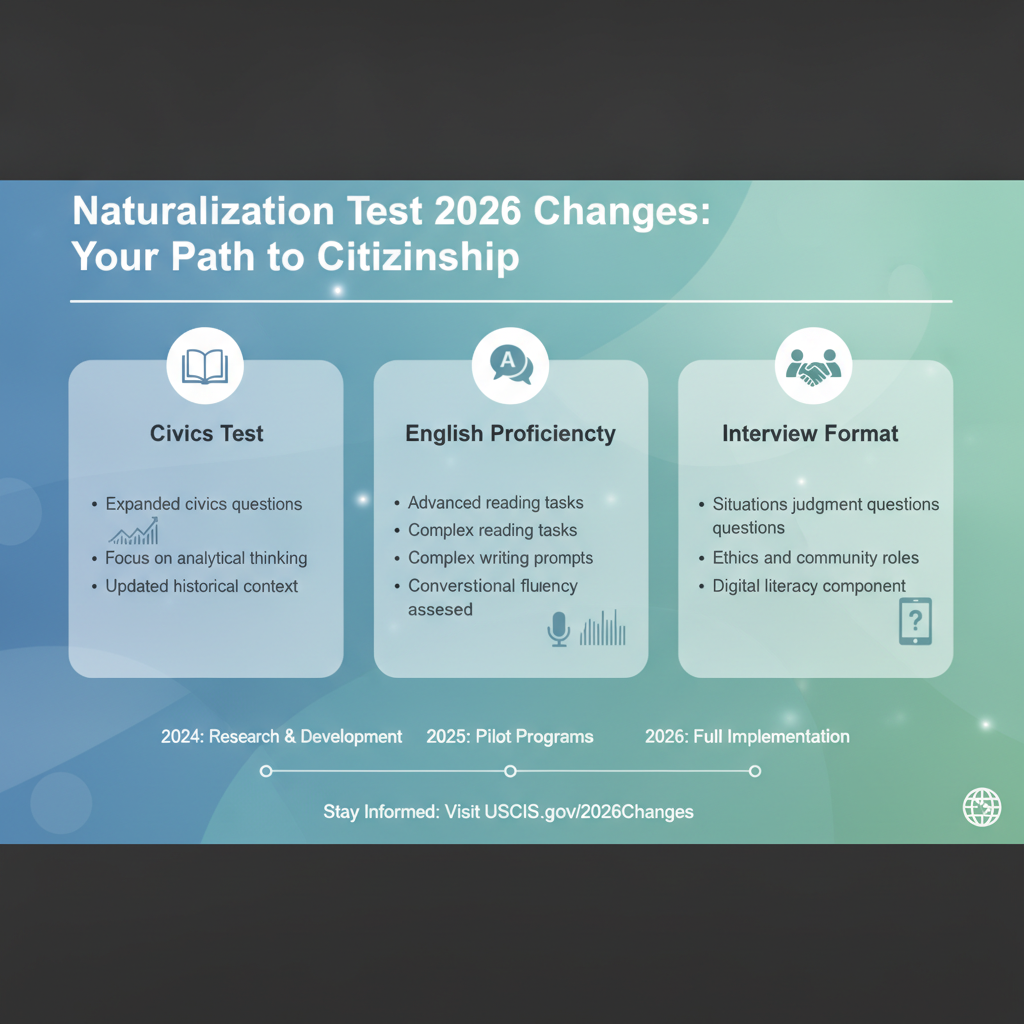
The news of impending changes to the naturalization test has been circulating, prompting many to seek clarity on what to expect. This guide is inspired by the ongoing discussions and reports regarding these crucial updates:
Naturalization Test Changes Coming in 2026 (Citizenship)
What This News Means for Immigrants in Orlando and Across Florida
For individuals residing in Orlando, Central Florida, and across the Sunshine State who are on their journey to becoming U.S. citizens, these upcoming changes are highly relevant. Understanding the implications early can provide a significant advantage in your preparation.
Why this news is showing up now
The U.S. Citizenship and Immigration Services (USCIS) periodically reviews and updates the naturalization test to ensure it remains relevant, fair, and effective in assessing an applicant's understanding of their civic responsibilities and rights. The naturalization test has seen various iterations over the years, with significant revisions occurring in 2008 and a brief, controversial update in 2020 that was later reverted. These changes often reflect evolving pedagogical approaches, feedback from stakeholders, and the priorities of different administrations.
The current discussions surrounding the **Naturalization Test Changes Coming in 2026** stem from a pilot program initiated by USCIS in December 2022. This pilot program, which concluded in early 2024, tested potential new components for the civics portion of the naturalization test. The goal was to explore how to make the test more standardized, accessible, and meaningful. Based on the findings and recommendations from this pilot, USCIS is now moving forward with plans to implement new questions and requirements, anticipated to take effect in late 2025 or early 2026. This advance notice allows aspiring citizens and legal practitioners ample time to prepare for the transition.
These reviews are a standard part of maintaining the integrity of the naturalization process. USCIS aims to create a test that accurately reflects the knowledge needed to be an informed and engaged citizen, while also ensuring the process is as streamlined and transparent as possible. The current news cycle is a direct result of USCIS's commitment to public notification and preparation ahead of these significant updates.
How it can affect Florida residents
Florida boasts one of the largest immigrant populations in the United States, with a significant number of residents actively pursuing U.S. citizenship. Orlando, in particular, is a melting pot of cultures and nationalities, making these changes incredibly pertinent for thousands of individuals and families. The **Orlando USCIS Field Office** processes a substantial volume of naturalization applications, and local community organizations, schools, and legal firms like Imigrar regularly assist applicants.
For Florida residents, the impact of these changes will be multifaceted:
- Preparation Strategy: If you plan to apply for naturalization in 2026 or beyond, your study approach for the civics test will need to incorporate the new materials and question formats that USCIS will release. This means staying updated on official USCIS announcements.
- Timeline Considerations: Depending on when you submit your **Form N-400**, Application for Naturalization, you may fall under the current test rules or the new 2026 rules. It's crucial to understand the cutoff dates, which USCIS will announce.
- Resource Availability: Updated study guides, practice tests, and educational resources will become available. Florida residents will need to access and utilize these new materials.
- Legal Guidance: Navigating these changes, especially with new test formats, can be complex. Consulting with an experienced immigration attorney in Orlando can ensure you are fully prepared and your application is robust.
The I-4 corridor, connecting many of Central Florida's major cities, is home to diverse communities where the dream of citizenship is strong. These upcoming changes underscore the importance of proactive planning and informed action for anyone in Orange County and beyond who is considering naturalization.
Need Help Navigating Naturalization Changes? Our Orlando immigration team is ready to assist. Call +1 786-791-3106 for a free consultation, or message us online. Se Habla Español.
What Naturalization Test Changes Are (and Why It Matters)
Understanding the naturalization test and its upcoming modifications is key to a successful application. This section provides a clear overview for non-lawyers.
A plain-English definition
Naturalization is the process by which a foreign citizen or national can become a U.S. citizen. The naturalization test is a mandatory part of this process for most applicants. It has two main components: an English test and a civics test.
- English Test: This assesses your ability to read, write, and speak basic English. You'll be asked to read a sentence, write a sentence, and answer questions about your **Form N-400** and eligibility during the interview, demonstrating your conversational English.
- Civics Test: This assesses your knowledge of U.S. history, government, and civics. Currently, applicants are asked up to 10 questions from a list of 100 questions, and must answer 6 correctly to pass.
The **Naturalization Test Changes Coming in 2026** refer primarily to anticipated modifications to the *civics* portion of this test, and potentially how the English speaking portion integrates civics knowledge. While the core requirement to demonstrate English proficiency and civics knowledge remains, the *format* and *content* of how that knowledge is assessed are expected to evolve. This matters because it directly influences how you should prepare and what study materials you should use.
Key terms you need to know
Familiarizing yourself with key terminology will help you better understand the naturalization process and the upcoming changes:
- Naturalization: The process of becoming a U.S. citizen after birth.
- U.S. Citizenship and Immigration Services (USCIS): The government agency responsible for overseeing lawful immigration to the United States, including processing naturalization applications. Its official website is a critical resource: USCIS official website.
- Form N-400, Application for Naturalization: The primary form you must file to apply for U.S. citizenship.
- Civics Test: The portion of the naturalization test that evaluates your knowledge of U.S. history and government. This is where the most significant changes are expected.
- English Test: The portion that assesses your ability to read, write, and speak basic English.
- Oath of Allegiance: The final step in the naturalization process, where you pledge loyalty to the United States.
- Continuous Residence: A requirement for naturalization, meaning you must have maintained your residence in the U.S. for a specified period (typically 5 years, or 3 years if married to a U.S. citizen).
- Physical Presence: Another requirement, meaning you must have been physically present in the U.S. for a certain cumulative period within your continuous residence.
- Good Moral Character: A crucial eligibility requirement, meaning you must demonstrate that you are a person of good moral character as defined by immigration law.
- Naturalization Interview: The meeting with a USCIS officer where your application is reviewed, and the English and civics tests are administered.
- Form N-648, Medical Certification for Disability Exceptions: A form used by applicants with certain medical conditions or disabilities to request an exemption from the English and/or civics requirements.
These terms form the foundation of the naturalization process. Understanding them will empower you to navigate your journey to citizenship more confidently, especially as new requirements come into play.
Current Immigration Law: The Foundation for Naturalization
Before delving into the specifics of the 2026 changes, it's essential to understand the existing legal framework for naturalization. The requirements for U.S. citizenship are primarily set forth in the Immigration and Nationality Act (INA), specifically under Title III, Nationality and Naturalization. **INA § 312** directly addresses the English language and civics knowledge requirements, which are the focus of the upcoming test modifications.
Federal requirements
To be eligible for naturalization, most applicants must meet several federal requirements. These foundational criteria will remain largely unchanged, even with the modifications to the test itself:
- Age: You must be at least 18 years old at the time of filing **Form N-400**.
- Continuous Residence: You must have been a lawful permanent resident (Green Card holder) for at least 5 years immediately preceding the date of filing your application. This period is reduced to 3 years if you are married to a U.S. citizen and meet other specific requirements.
- Physical Presence: You must have been physically present in the United States for at least half of the continuous residence period (e.g., 30 months for the 5-year requirement, 18 months for the 3-year requirement).
- Residency in USCIS District or State: You must have resided for at least 3 months immediately preceding the filing of **Form N-400** in the state or USCIS district where you apply. For Central Florida residents, this would typically be the Orlando USCIS Field Office jurisdiction.
- Good Moral Character: You must demonstrate good moral character for the statutory period of continuous residence (5 or 3 years). Certain criminal offenses, false statements, or other actions can prevent you from meeting this requirement.
- Attachment to the U.S. Constitution: You must demonstrate an attachment to the principles of the U.S. Constitution and be well-disposed to the good order and happiness of the United States.
- English Language Proficiency: You must be able to read, write, and speak basic English. This is assessed during your naturalization interview.
- Knowledge of U.S. History and Government (Civics): You must pass a test demonstrating your knowledge of U.S. history and government. This is the part that is undergoing changes for 2026.
- Oath of Allegiance: You must be willing to take the Oath of Allegiance to the United States.
There are certain exemptions to the English language and civics requirements, primarily for older applicants and those with qualifying medical conditions. Applicants aged 50 or older who have lived in the U.S. for at least 20 years as a lawful permanent resident (50/20 rule) or applicants aged 55 or older with at least 15 years of permanent residency (55/15 rule) are exempt from the English test but must still take the civics test in their native language. For those aged 65 or older with 20 years of permanent residency (65/20 rule), there's a modified civics test. Individuals with certain physical or mental disabilities preventing them from learning English or civics may be exempt with a certified **Form N-648**, Medical Certification for Disability Exceptions, from a medical doctor or clinical psychologist.
Florida-specific considerations
While naturalization requirements are federal, the experience can have local nuances. Florida is a key state for immigration, and its diverse population means USCIS field offices, like the one in Orlando, are exceptionally busy. The **Orlando USCIS Field Office** serves a vast area, including Orange County, Osceola, Seminole, Volusia, and surrounding counties. This means:
- Processing Times: Processing times for **Form N-400** can vary by field office. It's advisable to check the USCIS Processing Times page for the Orlando office specifically.
- Interview Scheduling: The volume of applications can influence how quickly interviews are scheduled.
- Local Resources: Many community organizations in Orlando and Central Florida offer citizenship preparation classes, which will be crucial for adapting to the new test format.
Understanding these federal requirements and local dynamics is the first step toward a successful naturalization application, especially as you prepare for the upcoming changes.
Concerned about Your Naturalization Eligibility? Contact Imigrar for personalized legal advice. Our Orlando immigration attorneys are fluent in English and Spanish. Call +1 786-791-3106 for a free consultation. Se Habla Español.

How to Navigate the Naturalization Process with Upcoming Changes: A Complete Step-by-Step Guide
The naturalization process involves several stages, each requiring careful attention to detail. With the **Naturalization Test Changes Coming in 2026**, proactive preparation is more important than ever. This guide provides a detailed roadmap.
1) Determine Your Eligibility and Gather Initial Documents
Before you even touch **Form N-400**, confirm you meet all the foundational eligibility criteria. This includes age, continuous residence, physical presence, and good moral character. Be honest with yourself about any potential issues, such as past arrests or extensive travel outside the U.S., as these can complicate your case.
Required Documents for Eligibility Assessment:
- Your Permanent Resident Card (Green Card)
- All passports you have held (U.S. and foreign)
- Marriage certificate (if applying under the 3-year rule)
- Divorce decrees (if applicable)
- Birth certificates of your children (if applicable)
- Tax returns for the past 5 (or 3) years
- Records of all trips outside the U.S. during your continuous residence period, including dates of departure and return.
- Any records related to arrests, citations, or criminal charges, even if expunged or dismissed.
- Proof of Selective Service registration (for males aged 18-26, if applicable).
Important: Thoroughly review your eligibility. If you have any doubts about meeting the **Good Moral Character** requirement or your continuous residence, consult with an immigration attorney at Imigrar immediately. Addressing these issues proactively is crucial.
2) Prepare and File Form N-400, Application for Naturalization
This is the official application form for U.S. citizenship. It is extensive and requires accurate and complete information about your personal history, residence, employment, travel, family, and good moral character. Any discrepancies or omissions can lead to delays or even denial.
Steps for Form N-400 Preparation and Filing:
- Download the Latest Form: Always download the most current version of **Form N-400** from the USCIS Forms page.
- Fill Out Accurately: Answer every question truthfully and completely. If a question doesn't apply, write "N/A." If you need more space, attach a separate sheet, clearly marking the question number it relates to.
- Gather Supporting Documents: Attach copies of all required supporting documents. Do NOT send originals unless specifically requested by USCIS.
- Passport-Style Photos: Include two identical, color passport-style photos taken within 30 days of filing.
- Fee Payment: Pay the current filing fee and biometrics fee (if applicable). As of 2026, these fees may be subject to change. Check the USCIS website for the most current fee schedule. You can pay by money order, personal check, cashier's check, or credit card using **Form G-1450**, Authorization for Credit Card Transactions. Fee waivers are available for eligible applicants using **Form I-912**.
- Sign the Form: Ensure you sign the application. An unsigned form will be rejected.
- Mail the Application: Send your complete application package to the correct USCIS lockbox facility. The address depends on where you live and whether you're using the U.S. Postal Service or a courier service. Check the **Form N-400** instructions for precise mailing addresses. Consider using a service with tracking.
- Optional: Form G-1145, E-Notification of Application/Petition Acceptance: Include this form to receive an email and/or text message when USCIS accepts your application.
Reminder: Keep a complete copy of your submitted **Form N-400** and all supporting documents for your records. This will be invaluable for your interview preparation.
3) Attend Your Biometrics Appointment
After USCIS receives your **Form N-400**, you will receive an appointment notice (**Form I-797C, Notice of Action**) for a biometrics appointment at an Application Support Center (ASC). This usually happens within a few weeks of filing.
What to Expect:
- Your fingerprints, photograph, and signature will be taken. These are used for background checks.
- The appointment is typically quick.
- Bring your appointment notice, your Permanent Resident Card, and a valid photo ID (e.g., state ID, driver's license, passport).
- If you cannot attend, you must reschedule by following the instructions on the notice, but delays can impact your case processing.
4) Prepare for the Naturalization Interview and the Updated Civics/English Tests
This is the most critical stage, especially with the **Naturalization Test Changes Coming in 2026**. Your interview will include the English and civics tests, and a review of your **Form N-400**.
English Test Preparation:
- Speaking: The USCIS officer will assess your ability to speak English during the interview by asking questions about your application and personal history. Practice answering questions about your **Form N-400** aloud. Engage in daily English conversations.
- Reading: You will be asked to read one out of three sentences correctly. Practice reading aloud from the official USCIS vocabulary list. With the 2026 changes, the *types* of sentences or topics might become slightly more civics-related, so expand your vocabulary.
- Writing: You will be asked to write one out of three sentences correctly. Practice writing sentences from the official USCIS vocabulary list. Pay attention to spelling and capitalization.
Civics Test Preparation (Focus on 2026 Changes):
- Current Test (Pre-2026): The current test involves 10 questions chosen randomly from a list of 100, and you must answer 6 correctly. The questions are asked orally. You can find the official 100 civics questions and answers on the USCIS website.
- Anticipated 2026 Changes: Based on the pilot program and USCIS announcements, the civics test is expected to move towards a more interactive or multiple-choice format, moving away from purely oral questions and answers. There might be new questions or a rephrasing of existing ones, focusing on practical understanding rather than rote memorization. The pilot test included a section where applicants described photographs of historical figures or landmarks. While the exact details are pending official USCIS release, this suggests a more comprehensive assessment of civic knowledge.
- How to Prepare for the New Civics


