


Naturalization Test 2026: Navigating New US Citizenship Changes
The journey to U.S. citizenship is a profound and life-changing step for many immigrants. It signifies a deep commitment to the United States and offers the full rights and responsibilities of being an American citizen. As an immigration law firm dedicated to keeping families together, Imigrar understands the significance of this process. With changes to the Naturalization Test on the horizon for 2026, staying informed is more crucial than ever.
The reporting that sparked this guide:
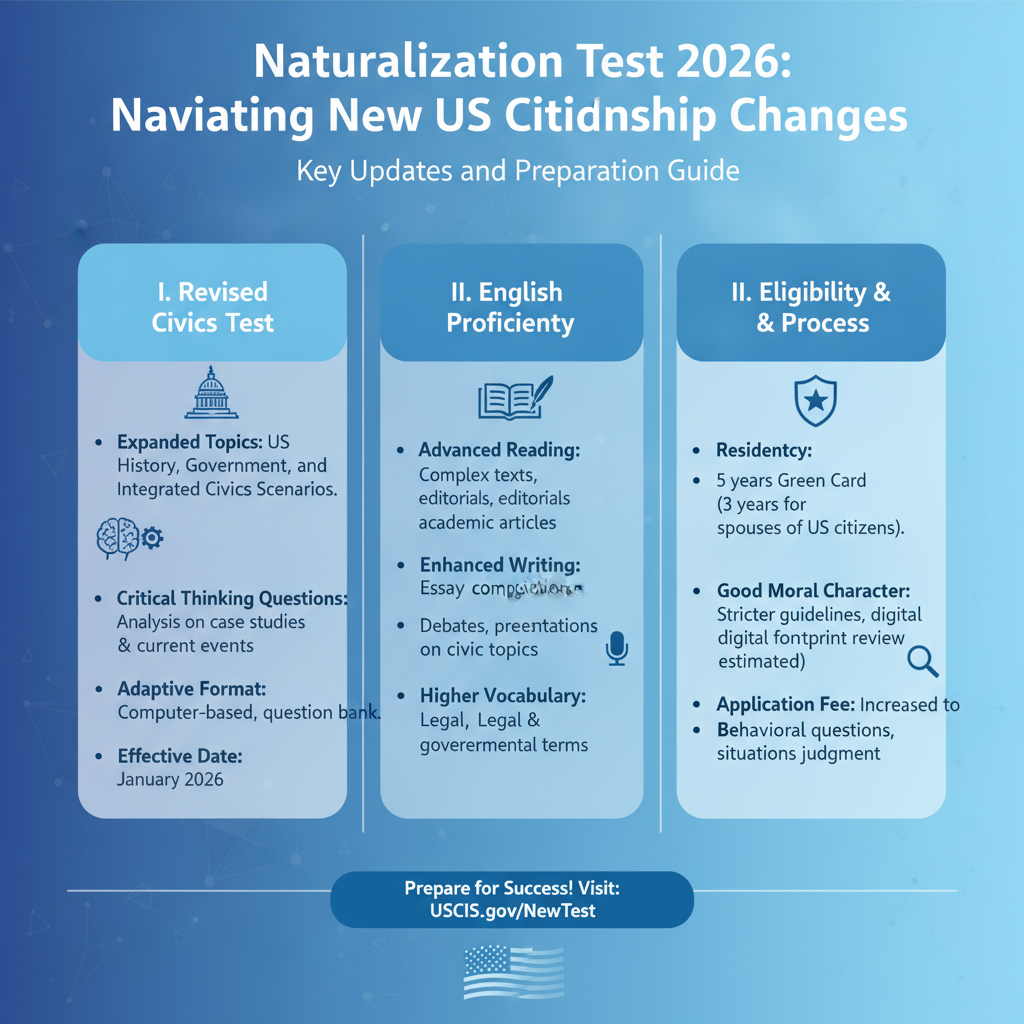
Naturalization Test Changes Coming in 2026 (Citizenship)
What This News Means for Immigrants in Orlando and Across Florida
The announcement of upcoming changes to the U.S. Naturalization Test in 2026 is significant for anyone planning to apply for citizenship. These modifications, particularly concerning the civics portion, aim to ensure that prospective citizens not only memorize facts but also demonstrate a deeper understanding of American history, government, and civic principles.
Why this news is showing up now
Immigration policies and procedures are dynamic, continuously evolving to reflect current needs, educational best practices, and administrative efficiencies. The U.S. Citizenship and Immigration Services (USCIS) periodically reviews the Naturalization Test to ensure it effectively assesses an applicant's knowledge and commitment to the principles of the U.S. Constitution. This news, appearing in 2026, stems from a typical USCIS cycle of evaluation and reform. Historically, USCIS has implemented pilot programs and sought public feedback to refine test content and administration. These proposed 2026 changes are likely the culmination of such a review, designed to enhance the quality and relevance of the citizenship examination. The goal is often to move beyond rote memorization towards a more comprehensive assessment of civic understanding, which has been a recurring theme in past test reform discussions.
How it can affect Florida residents
For the vibrant immigrant communities in Florida, particularly those in Central Florida around Orlando, these changes will directly impact their path to citizenship. While the test is federal, the preparation and application process are deeply personal and often localized. Residents of Orange County, Seminole County, and other areas along the I-4 corridor who plan to apply for naturalization will need to adjust their study strategies. The Orlando USCIS Field Office, which processes applications for many Central Florida residents, will administer the new test format. This means that local community organizations, adult education programs, and legal aid services will need to update their naturalization preparation courses. Imigrar, located in Orlando, is already gearing up to provide the most current advice and resources to ensure our clients are fully prepared for the updated requirements. Understanding the nuances of the new civics questions and the potential for more conversational English assessment will be critical for a successful outcome in Florida.
Need Help? Our Orlando immigration team is ready to assist. Call +1 786-791-3106 for a free consultation, or message us online. Se Habla Español.
What Naturalization Test Changes Are (and Why They Matter)
The Naturalization Test is a critical component of the U.S. citizenship application process. It assesses an applicant's understanding of English and their knowledge of U.S. history and government (civics). The upcoming changes in 2026 are not merely cosmetic; they represent a shift in how USCIS evaluates an applicant's civic integration and language proficiency. These changes matter because they will directly influence how you prepare for and experience your citizenship interview.
A plain-English definition
Naturalization is the process by which a foreign-born person voluntarily becomes a U.S. citizen. The Naturalization Test is the examination administered by USCIS during the citizenship interview. It consists of two main parts: an English test and a civics test. The English test evaluates your ability to read, write, and speak basic English. The civics test assesses your knowledge of U.S. history and government. The "changes coming in 2026" refer specifically to modifications in the format and content of the civics test, and potentially the English speaking portion, moving towards a more interactive and understanding-based assessment rather than simple recall. Instead of just memorizing answers, applicants may need to explain concepts or apply them to scenarios.
Key terms you need to know
- Naturalization: The process of becoming a U.S. citizen after birth.
- USCIS: U.S. Citizenship and Immigration Services, the federal agency that oversees lawful immigration to the United States.
- Form N-400: The Application for Naturalization, the primary form filed to apply for U.S. citizenship.
- Civics Test: The portion of the Naturalization Test that assesses an applicant's knowledge of U.S. history, government, and geography. This is the primary focus of the 2026 changes.
- English Test: The portion of the Naturalization Test that assesses an applicant's ability to read, write, and speak basic English.
- Good Moral Character: A legal requirement for naturalization, generally meaning an applicant has not committed certain crimes and has adhered to societal norms during their residency.
- Lawful Permanent Resident (LPR): Also known as a "Green Card holder," an individual who has been granted the privilege of permanently residing in the United States. This is a prerequisite for most naturalization applicants.
- Oath of Allegiance: The final step in the naturalization process, where applicants swear loyalty to the United States.
These changes are designed to ensure that new citizens possess a foundational understanding of the principles that underpin American democracy, moving beyond simple memorization to demonstrating a more profound grasp of the nation's civic life. This shift is crucial for fostering engaged and informed citizens.
Current Immigration Law: The Foundation for Naturalization
The process of naturalization is governed by federal law, primarily the Immigration and Nationality Act (INA). While the Naturalization Test itself is undergoing changes, the fundamental legal requirements for eligibility for U.S. citizenship remain largely consistent. Understanding these foundational laws is essential before you even begin to think about the test.
Federal requirements
The core federal requirements for naturalization are outlined in Chapter 2 of Title III of the Immigration and Nationality Act (INA), specifically INA Sections 312 and 316. To be eligible for naturalization, most applicants must meet the following criteria:
- Age: Be at least 18 years old at the time of filing Form N-400, Application for Naturalization.
- Lawful Permanent Residency: Be a Lawful Permanent Resident (Green Card holder) for at least 5 years (or 3 years if married to a U.S. citizen and meet other requirements).
- Continuous Residence: Have resided continuously in the U.S. for at least 5 years (or 3 years if married to a U.S. citizen) immediately preceding the filing of Form N-400.
- Physical Presence: Have been physically present in the U.S. for at least half of the required continuous residence period (e.g., 30 months out of 5 years, or 18 months out of 3 years).
- Residency in District or State: Reside for at least 3 months in the state or USCIS district where the application is filed. For Central Florida residents, this would typically be the Orlando USCIS Field Office district.
- Good Moral Character: Demonstrate good moral character for the statutory period (5 or 3 years) leading up to the application and until taking the Oath of Allegiance. This involves disclosing all arrests, citations, and convictions, even if expunged.
- Attachment to the Constitution: Demonstrate an attachment to the principles of the U.S. Constitution and a willingness to take the Oath of Allegiance.
- English and Civics Knowledge: Be able to read, write, and speak basic English, and have a knowledge and understanding of U.S. history and government (civics). This is where the 2026 changes come into play.
Certain exemptions exist for the English and civics requirements, primarily for older applicants and those with certain medical conditions. For example, applicants aged 50 or older who have lived in the U.S. as an LPR for 20 years, or those aged 55 or older with 15 years as an LPR, may be exempt from the English test. Additionally, individuals with qualifying medical impairments may be exempt from both tests, requiring Form N-648, Medical Certification for Disability Exceptions.
Florida-specific considerations
While naturalization requirements are federal, the application process is handled by local USCIS field offices. For residents of Central Florida, including Orlando, Gainesville, and Daytona Beach, the primary office is the Orlando USCIS Field Office. While there are no Florida-specific laws that alter federal naturalization eligibility, local processing times, interview backlogs, and field office procedures can influence the overall timeline. It's crucial for applicants in Orlando to be aware of the specific interview practices at their local office, which may include particular ways in which the English and civics tests are administered, even with the upcoming changes. Our team at Imigrar is intimately familiar with the Orlando Field Office's operations and can provide tailored advice.
All necessary forms and detailed instructions can be found on the USCIS official website, which is the authoritative source for all immigration information.
Warning: The naturalization process involves complex legal requirements. Misinformation or errors can lead to delays or denial. Contact Imigrar at +1 786-791-3106 for expert guidance. Se Habla Español.
How to Prepare for the New Naturalization Test: A Complete Step-by-Step Guide
Preparing for naturalization, especially with upcoming test changes, requires a strategic approach. This guide focuses on how to navigate the process, with particular attention to the new civics test format expected in 2026. This comprehensive preparation will increase your chances of success.
1) Understand the New Test Format and Eligibility
Before diving into study, first confirm your eligibility and understand what the 2026 changes entail. USCIS aims to make the civics test more meaningful. While the exact details will be released closer to 2026, anticipate a shift from primarily multiple-choice or direct recall questions to more scenario-based questions that require you to explain concepts or apply your knowledge. The English portion might also become more conversational, requiring you to describe and explain rather than just read and write simple sentences.
Eligibility Check:
- Review the federal requirements (age, LPR status, continuous residence, physical presence, good moral character) as discussed in the "Current Law" section.
- Confirm you meet the 3-month residency requirement for your state/district (e.g., Florida/Orlando).
Understanding the Changes:
- Monitor the USCIS official website for specific details on the 2026 test format, including new study materials and practice tests.
- Anticipate questions that require you to elaborate on the 'why' and 'how' of U.S. government and history, not just the 'what'. For example, instead of "Who is the current Speaker of the House?", it might be "Describe the role of the Speaker of the House and why it's important in the legislative process."
2) Master the Civics Content with a Focus on Understanding
The traditional 100 civics questions will still form the foundation, but your ability to explain them will be key. Start studying the existing list but deepen your understanding.
Study Materials:
- Utilize the official USCIS 100 Civics Questions and Answers.
- Look for supplementary materials (e.g., educational videos, civics textbooks) that provide context and deeper explanations for each question.
- Focus on understanding the *concepts* behind the questions: e.g., what separation of powers means, why we have three branches of government, the purpose of the Bill of Rights.
- Practice explaining answers in your own words.
3) Enhance Your English Language Proficiency
The English test assesses reading, writing, and speaking. With potential conversational shifts, speaking and comprehension skills become even more vital.
Reading:
- Practice reading sentences from the USCIS Reading Vocabulary List.
- Read simple English texts, such as news articles or children's books.
Writing:
- Practice writing sentences from the USCIS Writing Vocabulary List.
- Focus on correct spelling and basic grammar.
Speaking:
- This is where the new test might see the most change. Practice answering questions about your Form N-400 application and personal history in full sentences.
- Engage in conversations in English daily. Join English language classes or conversation groups in Orlando.
- Practice describing events, explaining your opinions, and narrating simple stories.
- Be prepared to discuss your answers to civics questions in more detail than just a single word or phrase.
4) Gather and Organize All Required Documents
A complete and well-organized application package is crucial. Missing or incorrect documents can lead to significant delays.
Key Documents for Form N-400 Filing:
- Your Lawful Permanent Resident Card (Green Card).
- All passports (current and expired).
- Marriage certificate (if applicable, for 3-year rule).
- Divorce decrees or death certificates for previous spouses (if applicable).
- Birth certificates of your children (if applicable).
- Tax returns for the past 5 (or 3) years.
- Proof of selective service registration (for males aged 18-26).
- Certified court dispositions for any arrests, citations, or convictions, even minor ones.
- Travel records (dates of all trips outside the U.S. for the past 5 or 3 years).
- Medical certifications (Form N-648) if seeking disability exemptions.
Important: Organize your documents meticulously. Make copies of everything you submit and keep the originals safe. Consider creating a binder with dividers for each category of documents.
5) File Form N-400 and Prepare for Biometrics
Once you've confirmed eligibility and gathered your documents, the next step is to file your application.
Filing:
- Complete Form N-400 accurately and thoroughly. Ensure all questions are answered truthfully.
- Attach all required supporting documents.
- Pay the filing fee (and biometric services fee, if applicable). Check the USCIS Form N-400 page for current fees.
- Submit your application to the correct USCIS lockbox facility.
Biometrics Appointment:
- After filing, you will receive a notice for a biometrics appointment at a local Application Support Center (ASC), likely the Orlando ASC for Central Florida residents.
- This appointment is for fingerprinting, photographs, and signature collection.
- Reminder: Attend this appointment promptly. It's a mandatory step.
6) Attend Your Naturalization Interview
This is the culmination of your preparation, where you will take the English and civics tests and discuss your application.
Interview Preparation:
- Review your entire Form N-400 application. The officer will ask questions based on it.
- Be prepared for the new civics test format: practice explaining answers, not just stating facts.
- Practice conversational English. The officer will assess your speaking ability throughout the interview.
- Bring all original documents you submitted copies of, plus any updated documents (e.g., new tax returns, updated travel history).
- Dress professionally and arrive on time at the Orlando USCIS Field Office.
During the Interview:
- Answer truthfully and to the best of your ability.
- If you don't understand a question, politely ask the officer to repeat or rephrase it.
- Demonstrate your understanding of civics concepts, not just memorized answers.
7) Receive a Decision and Attend the Oath Ceremony
After your interview, the officer will typically inform you whether your application is recommended for approval.
Decision:
- You may receive an immediate decision or a decision by mail later.
- If approved, you'll receive a notice for your Oath of Allegiance Ceremony.
- If denied, you will receive a written explanation and information on how to appeal.
Oath Ceremony:
- This is the final step where you officially become a U.S. citizen.
- You will return your Green Card at this ceremony.
- You will take the Oath of Allegiance to the United States.
- Important: You are not a U.S. citizen until you take the Oath of Allegiance.
Practical Steps You Can Take Today
Don't wait until the last minute to prepare for the 2026 Naturalization Test changes. Proactive steps can significantly ease your journey to citizenship.
Actionable Checklist:
- Start Studying Now: Even if the exact new questions aren't released, the foundational civics knowledge remains crucial. Begin by thoroughly understanding the current 100 civics questions and thinking about how you would explain each concept.
- Practice Conversational English: Engage in daily English conversations. Watch English news, listen to podcasts, and try to explain complex ideas in simple terms. This will be invaluable for the potentially more interactive English test.
- Review Your Immigration History: Go through your entire immigration record, including travel dates, previous addresses, employment history, and any encounters with law enforcement (even minor traffic tickets). Ensure you have accurate dates and details.
- Gather Key Documents: Start collecting all necessary documents mentioned in Step 4 of the guide. This includes your Green Card, passports, tax returns, and any court documents. Organize them in a clear, accessible manner.
- Consult an Immigration Attorney: The best way to navigate these changes is with expert legal guidance. An attorney can assess your eligibility, review your application for potential issues, and help you prepare for the new test format.
- Stay Informed: Regularly check the USCIS official website for updates on the 2026 Naturalization Test. Sign up for USCIS email alerts.
Document Preparation Guidance
- Accuracy is Key: Ensure all information on your Form N-400 matches your supporting documents exactly. Discrepancies can raise red flags.
- Certified Copies: For court documents (arrests, divorces, etc.), always provide certified copies.
- Translations: If any document is not in English, you must provide a certified English translation. The translator must certify that they are competent to translate and that the translation is accurate.
- Organize, Organize, Organize: Use folders, binders, or digital files to keep everything categorized. This makes it easier to reference during your interview and ensures nothing is overlooked.
- Photocopies: Always make high-quality photocopies of all documents you send to USCIS. Keep the originals safely with you.
Timeline Expectations
The naturalization process can take anywhere from 6 months to over 2 years, depending on various factors.
- Application Preparation: 1-3 months (or more, if complex documents are needed).
- USCIS Processing Time: After filing Form N-400, it typically takes 6-18 months for USCIS to process the application, schedule biometrics, and then schedule the interview. You can check current processing times for the Orlando Field Office at USCIS Processing Times.
- Interview & Decision: The interview itself is usually 20-30 minutes. A decision can be made immediately or within a few weeks.
- Oath Ceremony: If approved, the Oath Ceremony can be scheduled anywhere from a few days to several months after the interview, depending on local office availability.

How Imigrar Helps Immigrants in Orlando Prepare for Naturalization
At Imigrar, our mission is to "Keep Families Together," and we believe that U.S. citizenship is a cornerstone of family stability and opportunity. We understand the anxieties and complexities that can accompany the naturalization process, especially with impending changes to the test.
Our experience and expertise
Our team of dedicated immigration attorneys in Orlando possesses extensive experience in naturalization cases. We have successfully guided countless individuals through every stage of their citizenship journey, from initial eligibility assessment to the final Oath of Allegiance. We stay abreast of all immigration law updates, including the latest pronouncements from USCIS and the U.S. Department of State, ensuring our advice is always current and accurate. With the 2026 Naturalization Test changes, our firm is committed to developing tailored preparation strategies that address the new civics test format and enhanced English language requirements. We will help you understand the nuances of the new conversational style and scenario-based questions, providing mock interviews and personalized study plans.
Free consultation offer
Navigating the naturalization process, particularly with new test requirements, can feel overwhelming. That's why Imigrar offers a free consultation to discuss your specific situation. During this consultation, we can:
- Assess your eligibility for naturalization.
- Explain how the 2026 test changes might affect you.
- Outline the steps involved in filing Form N-400.
- Identify any potential challenges or red flags in your application (e.g., criminal history, extensive travel).
- Provide a clear roadmap for your citizenship journey.
We are here to provide clarity, confidence, and comprehensive legal support. Whether your case is in Orlando, Central Florida, or anywhere nationwide, our team is ready to serve you. Se Habla Español.


