


The path to U.S. citizenship is a significant milestone for many immigrants and their families, representing the culmination of years of dedication and adherence to the American dream. As a legal immigrant in the United States, obtaining naturalization offers unparalleled stability, rights, and the profound satisfaction of truly belonging. For those considering this crucial step, staying informed about the requirements is paramount. Today, we delve into a significant development that will impact prospective citizens nationwide: the impending changes to the Naturalization Test in 2026.
At Imigrar, an immigration law firm based in Orlando, Florida, our mission is to Keep Families Together. We understand the anxieties and complexities that can arise with changes in immigration policy. This comprehensive guide is designed to provide clarity, practical advice, and actionable steps for immigrants in Orlando, Central Florida, and across the nation, ensuring you are well-prepared for the updated naturalization process.
Concerned About the New Naturalization Test? Don't face these changes alone. Our Orlando immigration team is ready to assist you. Call +1 786-791-3106 for a free consultation, or message us online. Se Habla Español.
The reporting that sparked this guide
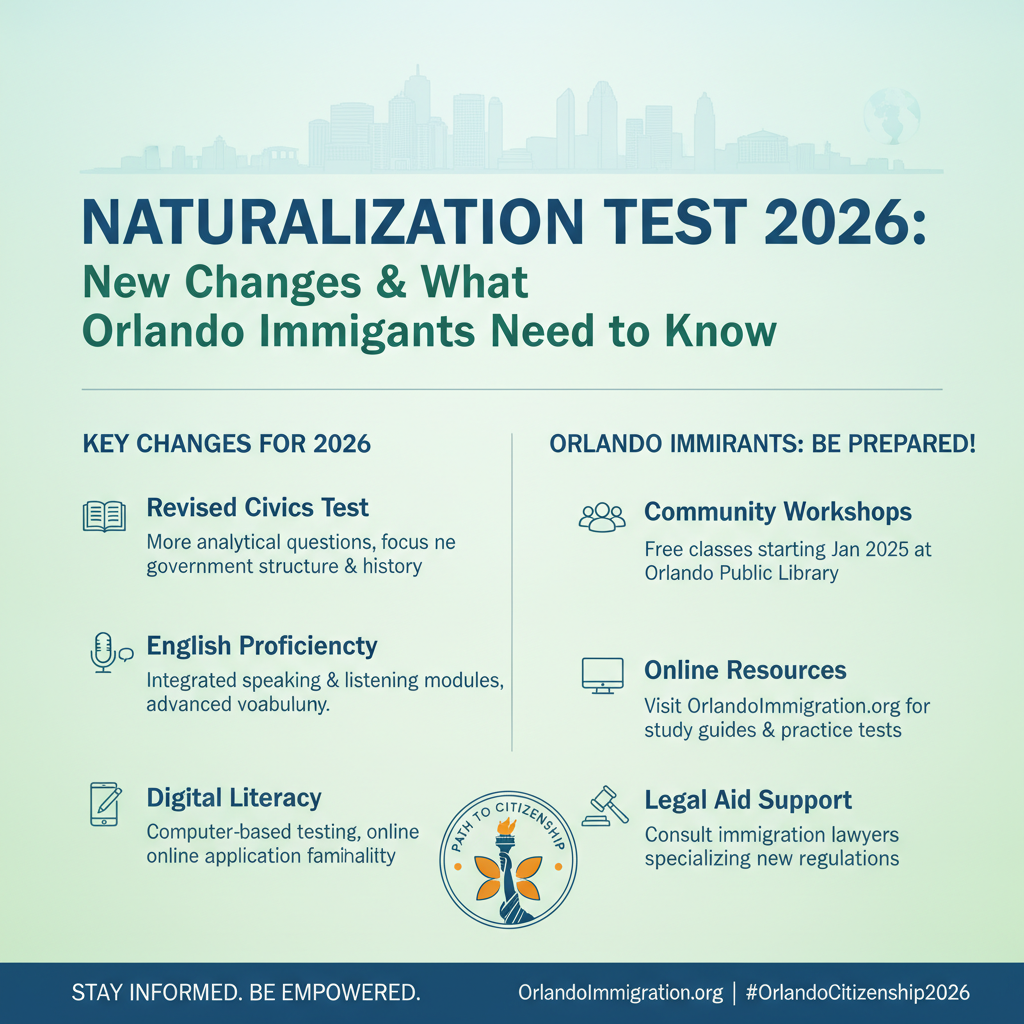
The discussion around updates to the U.S. Naturalization Test has been gaining traction, signaling a shift in how future citizens will demonstrate their understanding of American civics and English proficiency. This guide is informed by recent reports highlighting these significant changes:
Naturalization Test Changes Coming in 2026 (Citizenship)
This news underscores the need for thorough preparation and understanding of the evolving requirements for U.S. citizenship. As your trusted immigration advocates, Imigrar is here to help you navigate these updates.
What This News Means for Immigrants in Orlando and Across Florida
The announcement of changes to the Naturalization Test in 2026 is not just a federal matter; it has direct implications for individuals and families right here in Orlando and throughout the Sunshine State. Understanding these implications early can significantly impact your preparation strategy.
Why this news is showing up now
The U.S. Citizenship and Immigration Services (USCIS) periodically reviews and updates its naturalization policies and tests to ensure they accurately reflect the knowledge and understanding expected of new citizens. While the core requirements for naturalization remain consistent under the Immigration and Nationality Act (INA), the methods of assessment can evolve. The last significant update to the civics test occurred in 2020, followed by a return to the 2008 version in 2021. These upcoming 2026 changes are part of USCIS's ongoing commitment to refining the naturalization process, aiming for a more comprehensive and perhaps more interactive assessment of an applicant's civic knowledge and English language skills.
The timeline for these changes typically involves a pilot program, public comment periods, and then official implementation. As of September 2026, the public and legal community are being alerted to prepare for these changes, which are expected to be fully rolled out and mandatory for all new applicants within the year. This advance notice allows applicants ample time to adapt their study methods and seek appropriate legal guidance.
How it can affect Florida residents
For immigrants residing in Florida, particularly those in the vibrant communities of Orlando, Kissimmee, and along the I-4 corridor, these changes mean a renewed focus on preparation. While the Naturalization Test is a federal requirement, the local USCIS Field Office in Orlando (and others across Florida) will be the primary point of contact for administering these new tests. This means:
- Updated Study Materials: USCIS will release new study guides and resources reflecting the revised test format and content. Florida residents will need to access and utilize these updated materials.
- Increased Preparation Time: Starting your preparation early is more critical than ever. The new format might require a different approach than simply memorizing answers.
- Local Resources: Community organizations and legal firms like Imigrar in Orlando will update their citizenship preparation programs to align with the new test requirements, offering tailored support to Central Florida residents.
- Potential for Initial Delays: As with any new system implementation, there might be initial adjustments or minor delays in processing times at the Orlando USCIS Field Office as staff become accustomed to the new test format. However, USCIS aims for a smooth transition.
Important: Regardless of where you live in Florida, the federal requirements apply uniformly. The key is to be proactive in understanding and preparing for these upcoming modifications.
What Naturalization Test Changes Are (and Why They Matter)
To fully grasp the impact of these impending updates, it's essential to understand what naturalization entails and the components of the test that are subject to change. This section will break down the core concepts in plain language.
A plain-English definition
Naturalization is the process by which a foreign citizen or national becomes a citizen of the United States. It's the most common way for immigrants to achieve full U.S. citizenship, granting rights such as the ability to vote, hold certain federal jobs, and travel with a U.S. passport, while also solidifying family unity.
The Naturalization Test is a critical component of this process. It comprises two main parts:
- English Language Test: This assesses your ability to read, write, and speak basic English.
- Civics Test: This evaluates your knowledge and understanding of U.S. history, government, and civics.
The "changes coming in 2026" refer primarily to anticipated modifications in the *format* and *content* of the English and Civics portions of this test. While the specific details are still being finalized and rolled out by USCIS, early indications suggest a move towards a more interactive and comprehensive assessment. This could include new question types, such as multiple-choice questions, scenario-based questions, or visual aids, designed to test a deeper understanding rather than just rote memorization.
These changes matter significantly because they directly influence how you prepare and perform during your naturalization interview. A different test format means different study strategies and a potentially more rigorous demonstration of your knowledge.
Key terms you need to know
Navigating the immigration landscape requires familiarity with specific terminology. Here are some key terms related to naturalization and the upcoming test changes:
- Naturalization: The process of becoming a U.S. citizen after birth.
- U.S. Citizenship: The legal status of being a citizen of the United States, granting specific rights and responsibilities.
- Civics Test: The portion of the naturalization interview that assesses an applicant's knowledge of U.S. history and government. The current test involves answering 6 out of 10 questions correctly from a list of 100 possible questions.
- English Test: The portion of the naturalization interview that assesses an applicant's ability to read, write, and speak basic English.
- Form N-400: The official application form for Naturalization, submitted to USCIS.
- USCIS: U.S. Citizenship and Immigration Services, the federal agency that oversees lawful immigration to the United States. This agency administers the naturalization process.
- Oath of Allegiance: The final step in the naturalization process, where applicants swear allegiance to the United States.
- Green Card (Permanent Resident Card): The document that proves you are a lawful permanent resident of the United States, a prerequisite for most naturalization applicants.
- Moral Character: A legal requirement for naturalization, meaning you must have demonstrated good moral character during your residency period.
- Residency Requirement: The period of continuous residence and physical presence in the U.S. required before applying for naturalization (typically 5 years, or 3 years for those married to U.S. citizens).
Understanding these terms will empower you to better comprehend the naturalization process and the specific aspects affected by the 2026 test changes.
Don't Let Test Changes Undermine Your Citizenship Goal! Imigrar provides expert guidance for the naturalization process, including preparing for the new test format. Call +1 786-791-3106 for a free consultation today. Se Habla Español.
Current Naturalization Law: The Foundation
Before diving into the specifics of the upcoming changes, it's crucial to understand the legal framework that governs naturalization. The fundamental requirements for becoming a U.S. citizen are enshrined in federal law, primarily the Immigration and Nationality Act (INA).
Federal requirements
The Immigration and Nationality Act (INA) outlines the comprehensive legal basis for immigration in the United States, including naturalization. Specifically, INA Section 312 dictates the English language and civics knowledge requirements for naturalization. While the test format may change, these underlying legal requirements remain constant.
To be eligible for naturalization, most applicants must meet the following federal requirements:
- Age: Be at least 18 years old at the time of filing Form N-400, Application for Naturalization.
- Lawful Permanent Resident Status: Hold a valid Green Card for at least 5 years (or 3 years if married to a U.S. citizen and meet other conditions).
- Continuous Residence and Physical Presence: Have resided continuously in the U.S. for at least 5 years (or 3 years) immediately preceding the filing of Form N-400, and have been physically present in the U.S. for at least half of that time.
- Residence in USCIS District or State: Reside for at least 3 months in the state or USCIS district where the application is filed. For Central Florida residents, this means living within the jurisdiction of the Orlando USCIS Field Office.
- Good Moral Character: Demonstrate good moral character for the statutory period (typically 5 or 3 years) leading up to the application and until the Oath of Allegiance. This involves a review of your criminal record, tax compliance, and other aspects of your conduct.
- Attachment to the Principles of the U.S. Constitution: Be able to show an attachment to the principles of the U.S. Constitution and a willingness to support and defend the U.S.
- English Language Proficiency: Be able to read, write, and speak basic English. This is tested during the naturalization interview.
- Knowledge of U.S. History and Government (Civics): Pass the civics test, demonstrating knowledge of U.S. history and government.
- Oath of Allegiance: Be willing to take the Oath of Allegiance to the United States.
Certain exemptions exist for the English and civics requirements based on age and length of permanent residency (e.g., the "50/20" and "55/15" rules) or for individuals with certain medical disabilities (requiring Form N-648, Medical Certification for Disability Exceptions). It's crucial to discuss these with an attorney if you believe you might qualify.
All official forms and detailed instructions can be found on the USCIS official website, which is the definitive source for up-to-date information.
Florida-specific considerations
While naturalization requirements are federal, the practical application often involves local USCIS offices. For applicants in Orlando and surrounding areas like Orange County, Seminole County, and Osceola County, your application will be processed through the Orlando USCIS Field Office. This office handles interviews, adjudications, and oath ceremonies for residents of Central Florida.
Key Florida-specific considerations include:
- Interview Location: Your naturalization interview will typically take place at the Orlando Field Office. Familiarity with the location and transportation options (e.g., via I-4 or local transit) is helpful.
- Processing Times: While federal, processing times can vary slightly by field office based on caseload. You can check current estimates for the Orlando office at USCIS Processing Times.
- Local Legal Support: Having a local immigration attorney, like those at Imigrar, who are familiar with the Orlando Field Office's procedures and personnel, can provide a significant advantage in preparing your application and for your interview.
- Community Resources: Various non-profit organizations and community centers in Orlando offer citizenship classes and resources. Ensure these resources are updated to reflect the 2026 test changes.
The core legal requirements do not change from state to state, but the local environment and resources available to you in Florida play a vital role in your naturalization journey.
How to Prepare for the New Naturalization Test: A Complete Step-by-Step Guide
Preparing for the Naturalization Test, especially with new changes on the horizon, requires a strategic and thorough approach. This guide will walk you through the essential steps to ensure you are ready for success.
1) Understand the New Test Format and Content
The first and most crucial step is to stay informed about the exact nature of the 2026 changes. USCIS will release detailed information, including updated study materials, question lists, and format descriptions, well in advance of the implementation date. As of September 2026, these materials should be becoming available or recently released.
- Monitor USCIS Official Website: Regularly check the USCIS Citizenship Resource Center for announcements, new study guides, and practice tests. This is your primary source of truth.
- Identify New Question Types: Pay close attention to any changes in how questions are asked. If the test moves towards multiple-choice, picture-based, or scenario-based questions, your study method will need to adapt from simple memorization to conceptual understanding.
- Review Updated Civics Content: While the core 100 civics questions are likely to remain the foundation, USCIS may emphasize certain areas or introduce new ways to test understanding of the principles of American democracy.
- Attend Informational Webinars/Workshops: Many immigration organizations and law firms like Imigrar will host sessions explaining the new test.
Required Documents for this step (Information Gathering): None directly, but you will be collecting official USCIS study guides and potentially practice tests.
2) Master the English Language Requirements
The English test evaluates your ability to read, write, and speak basic English. These skills are assessed throughout your naturalization interview, not just in a separate test section.
- Speaking Test: The USCIS officer will assess your ability to speak and understand English during the interview itself. They will ask you questions about your Form N-400 application and personal history. Practice speaking English regularly, especially about your application details.
- Reading Test: You will be asked to read one out of three sentences correctly from a tablet or piece of paper. These sentences are typically about civics or U.S. history.
- Writing Test: You will be asked to write one out of three sentences correctly. The officer will read a sentence aloud, and you must write it legibly and accurately.
Practical Advice:
- Enroll in ESL Classes: Local community colleges and adult education centers in Orlando offer excellent English as a Second Language (ESL) programs.
- Practice Daily: Read English newspapers or simple books, write short paragraphs, and converse with English speakers.
- Use USCIS Resources: The USCIS website provides lists of vocabulary for the reading and writing tests.
- Mock Interviews: Practice answering questions about your Form N-400 in English with a friend, family member, or immigration attorney.
Required Documents: None specific for this step, but consistent practice records can boost confidence.
3) Deep Dive into U.S. History and Government (Civics)
The civics test is where the 2026 changes are expected to have the most significant impact. The goal is to move beyond mere memorization to a deeper understanding of American principles.
- Study the 100 Civics Questions: Even with changes, the current list of 100 civics questions remains the foundation. Familiarize yourself with all of them, but focus on understanding the *concepts* behind the answers.
- Understand the Branches of Government: Be able to explain the roles of the Executive, Legislative, and Judicial branches, and how checks and balances work.
- Key Historical Events: Know major U.S. historical periods, wars, and founding documents (e.g., Declaration of Independence, Constitution).
- Rights and Responsibilities: Understand the rights and responsibilities of U.S. citizens, such as voting, serving on a jury, and obeying laws.
- Practice with New Formats: If USCIS releases sample questions in new formats (e.g., multiple-choice, scenario-based), practice extensively with these. Understand *why* an answer is correct, not just *what* the answer is.
- Utilize Online Resources: Many websites and apps offer civics test practice. Ensure they are updated for 2026.
Practical Advice: Consider joining a study group in Orlando or taking citizenship classes that specifically address the new test format. Imigrar can also provide resources and guidance on effective study strategies.
Required Documents: Official USCIS Civics Study Guide (newest version for 2026).
4) Gather and Organize All Required Documents
A complete and well-organized application package is critical. Missing or incorrect documents can lead to delays or even denial. This step is largely consistent regardless of test changes.
- Green Card: Your Permanent Resident Card (front and back).
- State-Issued ID: Driver's license or state ID.
- Passports: All valid and expired passports, especially those used for international travel during your residency period.
- Marriage Certificate(s) / Divorce Decree(s): If applicable, especially if applying based on 3-year residency as a spouse of a U.S. citizen.
- Birth Certificates: For yourself and any children, if relevant to your application.
- Tax Returns: Copies of federal income tax returns for the past 5 (or 3) years.
- Selective Service Registration: If you are a male applicant who resided in the U.S. between ages 18 and 26.
- Criminal Records: Certified copies of any arrest reports, court dispositions, or probation records, even for minor offenses. Failure to disclose can be a major issue.
- Child Support/Alimony Orders: If applicable, proof of compliance.
- Travel Records: A detailed list of all trips outside the U.S. during your permanent residency, including dates of departure and return.
- Proof of Residency in USCIS District: Documents like utility bills, lease agreements, or property deeds showing you've lived in the Orlando USCIS Field Office's jurisdiction for at least 3 months.
Warning: Always provide certified English translations for any documents not in English. Make sure to keep original documents safe and only send copies unless USCIS specifically requests originals.
Form: The primary form is Form N-400, Application for Naturalization. Ensure you are using the latest version available on USCIS Forms.
5) The Interview Day: What to Expect and How to Perform
This is where your preparation culminates. The interview at the Orlando USCIS Field Office will cover your application, English skills, and civics knowledge.
- Arrival: Arrive early (15-30 minutes) at the Orlando Field Office. Bring your appointment notice, all original documents you submitted copies of, and any updated documents.
- Oath: You will be asked to swear an oath to tell the truth.
- Review N-400: The officer will go through your Form N-400, asking questions to confirm and update information. Be honest and consistent with your application.
- English Test: The officer will assess your speaking ability through conversation, and administer the reading and writing tests.
- Civics Test: This is where the new 2026 format will be evident. Be prepared for potentially new question types. Listen carefully to each question and answer clearly.


