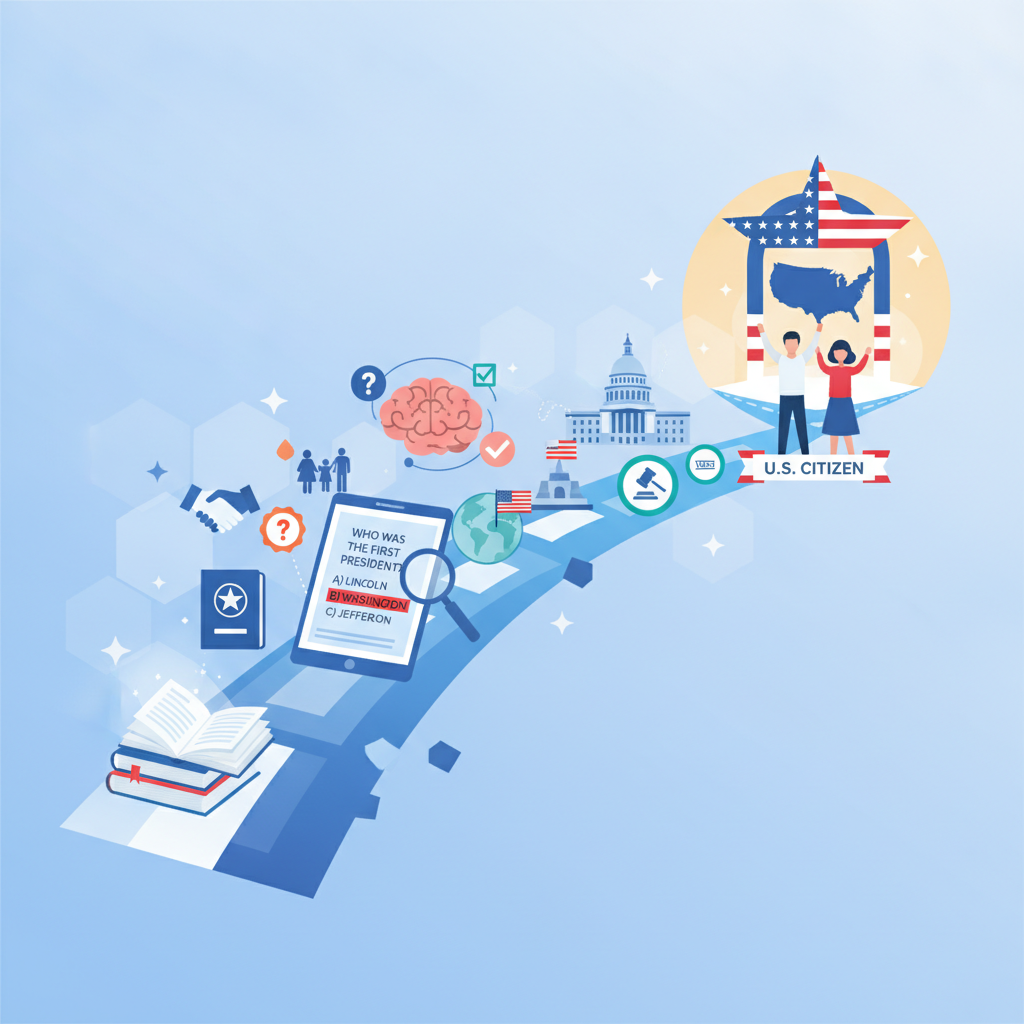
Naturalization Test 2026: Prepare for New Civics & English Requirements
The dream of U.S. citizenship is a powerful one, representing stability, opportunity, and a full embrace of American life. For many, the final hurdle on this journey is the Naturalization Test. As we approach 2026, significant changes are on the horizon for this critical examination, promising new challenges and requiring a fresh approach to preparation. At Imigrar, we believe in keeping families together and empowering our community with the most accurate and up-to-date information. This comprehensive guide will break down everything you need to know about the upcoming Naturalization Test changes, how they might affect you, and how to best prepare for success.The reporting that sparked this guide
The news regarding impending revisions to the U.S. Naturalization Test has been a prominent topic in immigration circles, reflecting USCIS’s ongoing commitment to ensuring the test remains relevant and effective. Our insights are informed by widespread reporting on these developments, particularly from sources monitoring changes in U.S. immigration policy and citizenship requirements.
For more context on the ongoing discussions and updates surrounding these changes, you can refer to general immigration news coverage:
Naturalization Test Changes Coming in 2026 (Citizenship)
What This News Means for Immigrants in Orlando and Across Florida
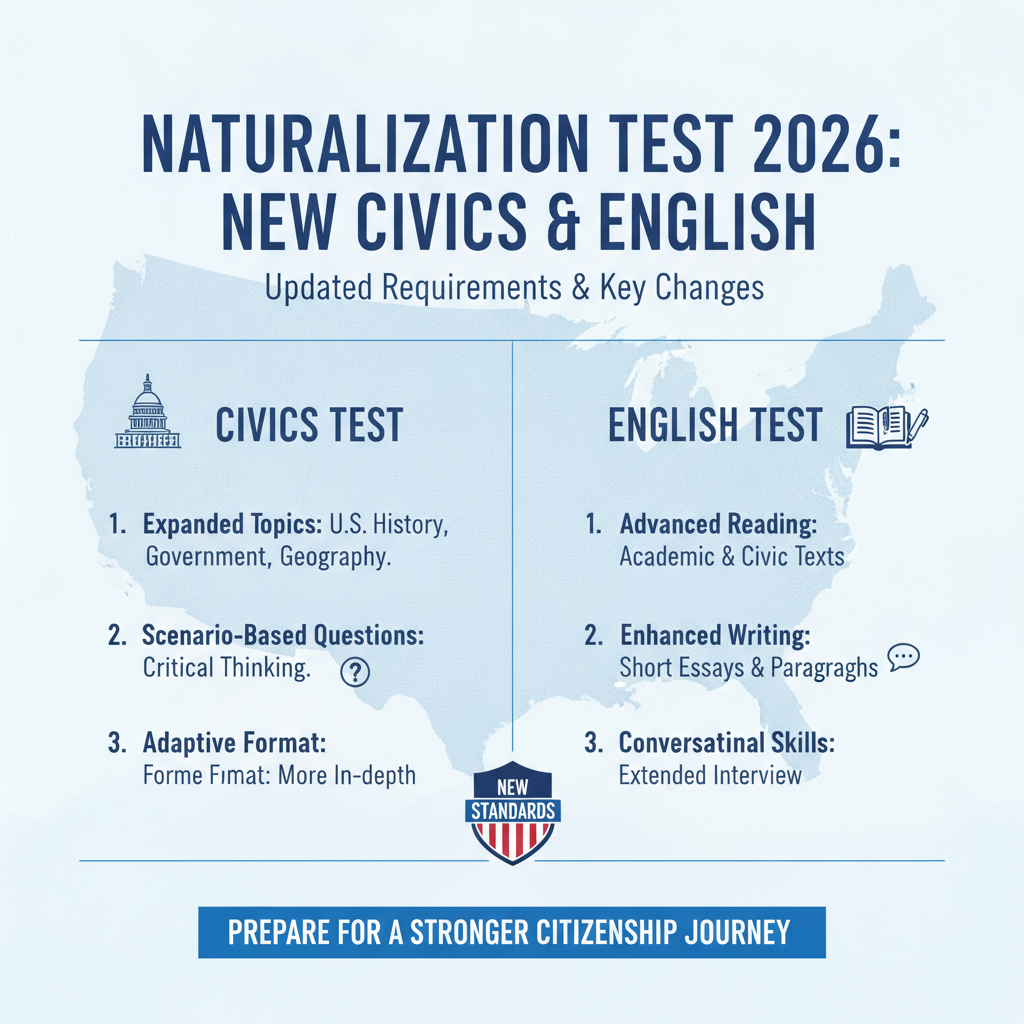
The announcement of changes to the Naturalization Test starting in 2026 is a significant development for anyone planning to apply for U.S. citizenship. While the exact details are still being finalized by U.S. Citizenship and Immigration Services (USCIS), the intention is clear: to update the civics and English portions of the test to better assess an applicant's understanding of American history, government, and civic principles, potentially with a greater emphasis on critical thinking and scenario-based questions.
Why this news is showing up now
USCIS periodically reviews and updates its tests and procedures to ensure they align with current educational standards, reflect contemporary understanding of civics, and remain effective tools for assessing an applicant's commitment to U.S. civic life. The current round of proposed changes stems from a pilot program conducted by USCIS in late 2023 and early 2024, designed to evaluate potential modifications to the civics test and the English speaking assessment. This pilot involved volunteer applicants and allowed USCIS to gather data and feedback on new question formats, including multiple-choice questions for civics and more interactive English speaking exercises. The insights gained from this pilot are now informing the final design of the new test, with a target implementation date in 2026.
The goal is to create a more standardized, accurate, and meaningful assessment. This proactive approach ensures that future citizens possess a robust understanding of the responsibilities and rights that come with U.S. citizenship.
How it can affect Florida residents
For individuals residing in Orlando, across Central Florida, and throughout the state, these upcoming changes hold particular relevance. Florida has a large and diverse immigrant population, with many individuals on various stages of their immigration journey, including those actively preparing for naturalization. If you are a lawful permanent resident (green card holder) living in Orange County or anywhere along the I-4 corridor, these changes will directly impact your path to citizenship if your interview is scheduled on or after the 2026 implementation date.
- Preparation Strategy Shift: Current study materials for the civics test might become partially outdated. Applicants will need to adapt to new question formats and potentially a broader range of civics topics or a deeper level of understanding.
- English Proficiency: The English portion, particularly the speaking assessment, might become more interactive or require more nuanced responses, challenging some applicants who have primarily focused on memorization.
- Timeline Considerations: Depending on your eligibility and when you plan to apply, you might still be able to take the current version of the test. However, if your application is filed closer to 2026 or processing times extend, you will likely face the new test. Understanding processing times for the Orlando USCIS Field Office is crucial.
- Increased Need for Legal Guidance: Navigating these changes without expert help can be daunting. An experienced immigration attorney can provide clarity, help you understand the new requirements as they are officially announced, and guide your preparation strategy.
Important: While the changes are slated for 2026, USCIS will provide ample notice and specific details once the new test format is finalized. Staying informed and preparing proactively is key.
Need Help Preparing for Naturalization? Don't navigate the upcoming changes alone. Our Orlando immigration team at Imigrar is ready to assist you in understanding the new requirements and preparing thoroughly. Call +1 786-791-3106 for a free consultation, or message us online. Se Habla Español.
What Naturalization Test Changes Are (and Why They Matter)
The Naturalization Test is a critical component of the U.S. citizenship application process. It assesses an applicant's knowledge of U.S. history and government (civics) and their ability to read, write, and speak basic English. The upcoming changes aim to refine this assessment, making it more comprehensive and reflective of civic engagement.
A plain-English definition
Naturalization is the process by which a lawful permanent resident (green card holder) becomes a U.S. citizen. The Naturalization Test is one of the final steps in this process, consisting of two main parts: an English language test and a civics test. The English test evaluates your ability to read, write, and speak basic English. The civics test assesses your knowledge of U.S. history, government, and civics. The changes coming in 2026 mean that the *content* and *format* of these tests will be updated, potentially requiring a different style of preparation than what has been standard for decades.
For instance, the civics test might move beyond simple recall to incorporate more critical thinking, asking applicants to explain concepts or apply their knowledge to hypothetical scenarios. The English speaking portion could become more interactive, moving away from purely descriptive answers to more conversational engagement.
Key terms you need to know
- Naturalization: The process of becoming a U.S. citizen after birth.
- U.S. Citizenship and Immigration Services (USCIS): The government agency responsible for overseeing lawful immigration to the United States. They administer the Naturalization Test.
- Lawful Permanent Resident (LPR) / Green Card Holder: An individual who has been granted the privilege of permanently residing in the United States. This is generally the prerequisite status for naturalization.
- Form N-400, Application for Naturalization: The primary form filed to apply for U.S. citizenship.
- Civics Test: The portion of the Naturalization Test that assesses knowledge of U.S. history, government, and civics.
- English Test: The portion of the Naturalization Test that assesses an applicant's ability to read, write, and speak basic English.
- Oath of Allegiance: The final step in the naturalization process, where an applicant formally pledges loyalty to the United States.
- Good Moral Character: A legal requirement for naturalization, meaning an applicant must have demonstrated adherence to moral standards during their residency.
- Residency Requirement: The period of continuous residence in the U.S. as an LPR required before applying for naturalization (typically 5 years, or 3 years if married to a U.S. citizen).
The significance of these changes lies in their potential to alter the preparation landscape for future citizens. While the core purpose of the test remains the same – to ensure applicants understand and appreciate the principles of American democracy – the method of assessment will evolve. This means that simply memorizing answers might no longer be sufficient; a deeper, more contextual understanding could be required. For Imigrar, this underscores our commitment to providing tailored, up-to-date guidance to ensure our clients are fully prepared for whatever format the test takes.
Current Naturalization Law: The Foundation
Before delving into the specifics of the upcoming changes, it's essential to understand the existing legal framework for naturalization. The requirements for U.S. citizenship are primarily governed by the Immigration and Nationality Act (INA).
Federal requirements
The Immigration and Nationality Act (INA), specifically Sections 316 and 319, outlines the general requirements for naturalization. To be eligible for naturalization, an applicant must generally meet the following federal criteria:
- Age: Be at least 18 years old at the time of filing Form N-400.
- Lawful Permanent Residency: Be a lawful permanent resident (green card holder) for a specific period.
- Generally, 5 years of continuous residence as an LPR immediately preceding the date of filing the application.
- 3 years of continuous residence if married to a U.S. citizen and meeting certain other requirements (e.g., spouse has been a U.S. citizen for at least 3 years and you have been living in marital union with your spouse during this time).
- Special provisions exist for military personnel and others.
- Physical Presence: Have been physically present in the U.S. for at least half of the required continuous residence period (e.g., 30 months for the 5-year category, 18 months for the 3-year category).
- Continuous Residence: Maintain continuous residence in the U.S. from the date of filing the application up to the time of naturalization. Absences from the U.S. for longer than 6 months but less than 1 year may break continuous residence unless proven otherwise. Absences of 1 year or more automatically break continuous residence.
- Residency in USCIS District or State: Reside for at least 3 months immediately preceding the filing of Form N-400 in the state or USCIS district where the application is filed. For Central Florida residents, this typically means the Orlando USCIS Field Office jurisdiction.
- Good Moral Character: Demonstrate good moral character for the statutory period (5 or 3 years) leading up to the application and until naturalization. This involves a review of your criminal record, tax compliance, child support payments, and other aspects of your conduct.
- Attachment to the Principles of the U.S. Constitution: Demonstrate an attachment to the principles of the U.S. Constitution and a favorable disposition toward the good order and happiness of the United States. This is assessed during the interview.
- English Language Proficiency: Be able to read, write, and speak basic English. There are exceptions for age and length of residency (e.g., 50/20 rule, 55/15 rule, 65/20 rule) and medical waivers.
- Civics Knowledge: Demonstrate knowledge and understanding of the fundamentals of U.S. history and government. Exceptions apply for age and medical waivers.
- Oath of Allegiance: Be willing to take the Oath of Allegiance to the United States.
These requirements are the bedrock of the naturalization process. The upcoming changes in 2026 will primarily affect the *assessment methods* for English proficiency and civics knowledge, not the underlying eligibility criteria.
Florida-specific considerations
While the naturalization process is federal, there are practical considerations for Florida residents:
- USCIS Field Office: Applicants living in Orlando and surrounding areas will typically have their interviews at the Orlando USCIS Field Office. Understanding the local office's procedures and typical processing times can be beneficial.
- Community Resources: Florida, especially major metropolitan areas like Orlando, offers numerous community organizations, libraries, and adult education programs that provide English as a Second Language (ESL) classes and civics preparation courses.
- Legal Support: The complexity of immigration law, especially with impending changes, makes having local legal counsel invaluable. An Orlando-based immigration law firm like Imigrar understands the nuances of the local USCIS office and can provide tailored advice.
For detailed information on current naturalization requirements and forms, always refer to the official source:
You will primarily interact with Form N-400, Application for Naturalization. Other relevant forms may include Form N-600, Application for Certificate of Citizenship (for derivative citizenship) or Form I-912, Request for Fee Waiver, if applicable.
Considering Naturalization? Let Imigrar guide you through the process, ensuring you meet all current and future requirements. Our Orlando team is here to help. Call +1 786-791-3106 for a free consultation, or message us online. Se Habla Español.
How to Apply for U.S. Citizenship: A Complete Step-by-Step Guide
Applying for U.S. citizenship is a multi-step process that requires careful attention to detail. While the test itself is changing, the overall application procedure remains largely the same. Here’s a detailed guide:
1) Determine Eligibility & Prepare
Before you even begin filling out forms, you must confirm you meet the basic eligibility requirements as outlined in the "Current Law Section." This includes age, lawful permanent residency status, continuous residence, physical presence, and good moral character. It's crucial to gather all necessary documentation that proves your eligibility and supports your application.
- Required Documents for Eligibility Assessment:
- Your Green Card (Form I-551).
- All passports and travel documents for the last 5 years (or 3 years if applying based on marriage to a U.S. citizen).
- Marriage certificate (if applicable).
- Divorce decrees or death certificates for prior spouses (if applicable).
- Birth certificates of children (if applicable).
- Selective Service Registration Number (for males aged 18-25).
- Tax returns for the last 5 years (or 3 years).
- Evidence of any name changes (e.g., marriage certificate, court order).
- Court dispositions for any arrests or citations, even if dismissed.
- Action: Consult with an immigration attorney to assess your eligibility thoroughly, especially if you have any complex issues like criminal history, significant travel abroad, or past immigration violations.
2) Complete & File Form N-400, Application for Naturalization
This is the core of your application. The Form N-400 is extensive and requires detailed information about your personal history, residency, employment, travel, family, and good moral character. Be honest and accurate in your responses. Any misrepresentation can lead to denial and severe consequences.
- Required Documents for Filing Form N-400:
- Completed and signed Form N-400.
- Two passport-style photos (if filing by mail; online filing often allows digital upload).
- Copy of the front and back of your Green Card (Form I-551).
- Check or money order for the filing fee and biometric services fee, payable to "U.S. Department of Homeland Security" (or credit card authorization on Form G-1450). If you qualify for a fee waiver, file Form I-912, Request for Fee Waiver.
- Supporting documents for specific eligibility categories (e.g., marriage certificate, spouse's proof of U.S. citizenship if applying under the 3-year rule).
- Any other documents requested by USCIS or deemed necessary to support your application.
- Action: File your completed Form N-400 and supporting documents with USCIS. You can file online or by mail. Keep a copy of everything you submit for your records.
3) Attend Your Biometrics Appointment
After USCIS accepts your Form N-400, you will receive an appointment notice for biometrics collection at an Application Support Center (ASC). This appointment is for collecting your fingerprints, photograph, and signature. These are used for background checks.
- Required Documents for Biometrics Appointment:
- Appointment notice (Form I-797C, Notice of Action).
- Valid photo identification (e.g., Green Card, state ID, passport).
- Action: Attend the appointment as scheduled. If you miss it, USCIS may deny your application. If you have a valid reason to reschedule, follow the instructions on your notice immediately.
4) The Interview (English & Civics Test)
This is arguably the most critical step. You will be interviewed by a USCIS officer who will verify the information on your Form N-400, assess your English proficiency (reading, writing, speaking), and administer the civics test. This is where the 2026 changes will come into play. If your interview is scheduled in 2026 or later, be prepared for the new test format.
- Required Documents for Interview:
- Interview appointment notice.
- Your Green Card (Form I-551).
- All passports and travel documents used since becoming an LPR.
- Your state-issued identification (e.g., driver's license).
- Originals of any documents you submitted copies of with your Form N-400 (e.g., marriage certificate, divorce decrees, birth certificates, court dispositions).
- Any updated information or documents since you filed your application (e.g., new address, recent travel, new arrests, updated tax returns).
- Proof of Selective Service registration (if applicable).
- Action: Prepare diligently for the English and civics tests. Review your entire Form N-400. Be honest and polite during the interview. If you need an accommodation for a disability, ensure you have filed Form N-648, Medical Certification for Disability Exceptions, prior to your interview.
5) Receive a Decision & Oath Ceremony
After the interview, the USCIS officer will either make a decision, continue your case for further review (e.g., requesting more documents or a second interview), or recommend you for approval. If approved, you will receive a notice for your Oath of Allegiance ceremony.
- Required Documents for Oath Ceremony:
- Oath Ceremony notice (Form N-445, Notice of Naturalization Oath Ceremony).
- Your Green Card (Form I-551) – you will surrender this at the ceremony.
- Any other travel documents or re-entry permits issued by USCIS.
- Action: Attend your Oath Ceremony. You will return your Green Card and receive your Certificate of Naturalization. You are officially a U.S. citizen! Consider registering to vote.
6) (Optional) Derivative Citizenship for Children: Form N-600
If you naturalize and have children under 18 who are lawful permanent residents and reside with you in the U.S. in your legal and physical custody, they may automatically derive citizenship. You can apply for a Certificate of Citizenship for them using Form N-600, Application for Certificate of Citizenship, though it's not strictly required as they are already citizens. This certificate serves as proof of their U.S. citizenship.
- Required Documents for Form N-600:
- Completed and signed Form N-600.
- Child's birth certificate.
- Your Certificate of Naturalization.
- Child's Green Card (Form I-551).
- Proof of child's residency with you.
- Action: If desired, file Form N-600 for your eligible children.
Practical Steps You Can Take Today
Even with changes coming in 2026, there are many proactive steps you can take now to prepare for your naturalization journey.
Actionable checklist with 5+ items
- Assess Your Eligibility: Review all federal requirements. If you're close to meeting the residency or physical presence requirements, start planning your application timeline.
- Start Studying Now: Begin practicing for the English test (reading, writing, speaking) and studying the current 100 civics questions. Even if the test changes, foundational knowledge of U.S. history and government will remain relevant. Many resources are available on the USCIS official website.
- Gather All Documents: Begin compiling all necessary personal documents, travel records, and financial statements. This is often the most time-consuming part of the application.
- Maintain Good Moral Character: Ensure you are compliant with all laws, pay your taxes, and resolve any outstanding legal issues. Any criminal history, even minor infractions, can impact your application.
- Seek Legal Counsel: Consult with an experienced immigration attorney, especially if you have a complex case or are concerned about the upcoming test changes. An attorney can help you understand the nuances and prepare effectively.
- Monitor USCIS Announcements: Regularly check the official USCIS website for updates regarding the 2026 Naturalization Test changes. They will provide official study materials and guidance once the new test is finalized.
Document preparation guidance
- Originals vs. Copies: Always submit copies of documents unless USCIS specifically requests originals. Bring originals to your interview.
- Translations: Any document not in English must be accompanied by a certified English translation. The translator must certify that they are competent to translate and that the translation is accurate.
- Organization: Keep all your documents organized in a binder or folder. Label sections clearly. This will make filling out forms easier and streamline your interview.
- Proof of Residency: Keep records of your continuous residence, such as tax transcripts, utility bills, rental agreements, and employment records.
- Travel Records: Maintain a detailed log of all your international travel, including dates of departure and return, and the countries visited. This is crucial for proving physical presence and continuous residence.
Timeline expectations
The naturalization process can take several months to over a year, depending on the USCIS service center and field office processing times. You can check current processing times on the USCIS Processing Times page. For the Orlando USCIS Field Office, these times can fluctuate.
- Application Filing to Biometrics: Typically 1-2 months.
- Biometrics to Interview: Can range from 6-12 months, or longer, depending on the field office workload.
- Interview to Oath Ceremony: Often within 1-2 months if approved at the interview.
With the impending 2026 test changes, it's possible that there could be a temporary increase in applications leading up to the changeover, or slight delays as USCIS implements new training and procedures. It's prudent to account for these potential factors in your planning.
How Imigrar Helps Immigrants in Orlando
At Imigrar, we understand that the path to U.S. citizenship is one of the most significant journeys an immigrant can undertake. With upcoming changes to the Naturalization Test, the process can feel even more complex and uncertain. Our dedicated team of immigration attorneys in Orlando is here to provide clarity, support, and expert legal guidance every step of the way.
Our experience and expertise: With years of experience focused exclusively on immigration law, Imigrar has successfully helped countless individuals and families in Orlando, Central Florida, and nationwide achieve their citizenship dreams. We stay meticulously updated on all changes in immigration policy, including the latest developments regarding the Naturalization Test. Our expertise means we can:
- Provide Up-to-Date Information: As USCIS releases more details about the 2026 test, we will have the most current information, helping you understand what to expect.
- Tailor Your Preparation: We will help you develop a personalized study and preparation plan for both the English and civics components, adapting to the new test format.
- Navigate Complexities: From assessing eligibility and preparing Form N-400 to addressing issues of good moral character or past immigration challenges, we handle the complexities so you don't have to.
- Prepare for Your Interview: We offer thorough interview preparation, including mock interviews, to ensure you feel confident and ready to answer the USCIS officer's questions accurately and effectively.
- Represent You: While an attorney cannot take the test for you, having legal representation at your interview can provide peace of mind and immediate assistance if any unexpected issues arise.
Free consultation offer: We believe everyone deserves access to quality legal advice. That's why Imigrar offers a free consultation to discuss your naturalization eligibility, concerns about the 2026 test changes, and how our services can best support you. This is an opportunity to get your questions answered and understand your options without obligation.
At Imigrar, our tagline "Keep Families Together" is at the heart of everything we do. We are committed to helping you achieve the stability and security that U.S. citizenship provides. Se Habla Español. Our bilingual team ensures that language is never a barrier to receiving the legal help you need.
Ready to Become a U.S. Citizen? Don't let the upcoming test changes deter you. Contact Imigrar for expert guidance and support. Call +1 786-791-3106 for your free consultation today, or message us online. Se Habla Español.