


For countless immigrants across the United States, obtaining U.S. citizenship is the culmination of years of hard work, dedication, and a deep commitment to building a new life. The Naturalization Test is a critical step in this journey, designed to ensure that new citizens understand the fundamentals of American history, government, and English. As an immigration law firm dedicated to helping families achieve their American dream, Imigrar understands the significance of every stage of this process.
Today, we address a significant development that will impact aspiring citizens: upcoming changes to the Naturalization Test in 2026. Understanding these changes now is crucial for anyone planning to apply for U.S. citizenship in the coming years. Our goal at Imigrar is to provide you with clear, actionable information to navigate these updates successfully.
Need Help? Our Orlando immigration team is ready to assist. Call +1 786-791-3106 for a free consultation, or message us online. Se Habla Español.
The reporting that sparked this guide:
Naturalization Test Changes Coming in 2026 (Citizenship)
What This News Means for Immigrants in Orlando and Across Florida
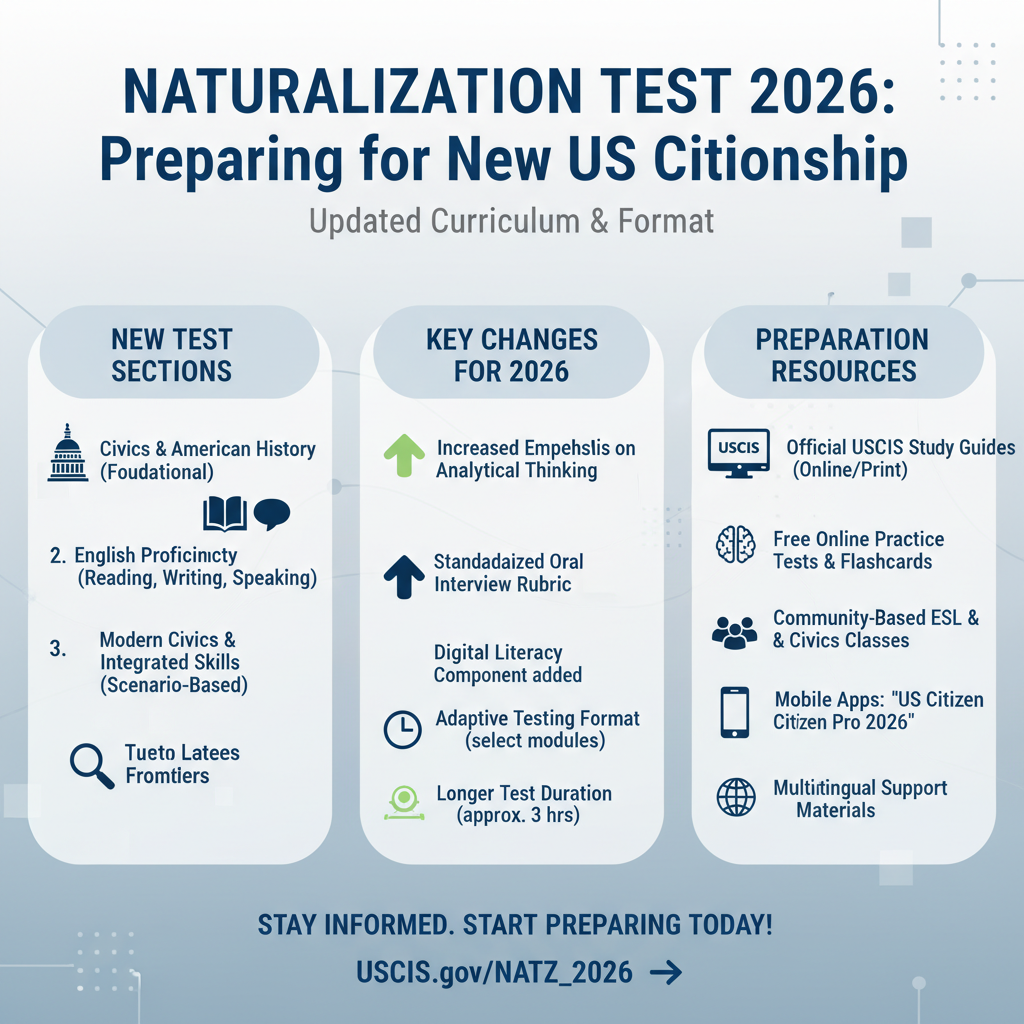
The news of upcoming changes to the U.S. Naturalization Test in 2026 marks an important milestone for anyone on the path to becoming a U.S. citizen. For immigrants and their families in Orlando, Central Florida, and throughout the entire state, this development is not just a headline; it's a call to action to understand, prepare, and adapt.
Why this news is showing up now
United States Citizenship and Immigration Services (USCIS) periodically reviews and updates the naturalization test to ensure it remains relevant, accurate, and effective in assessing an applicant's knowledge of U.S. civics and English proficiency. The last significant update was in 2020, which was later rescinded, returning to the 2008 version of the civics test. This upcoming 2026 revision is part of USCIS's ongoing commitment to modernize the naturalization process and ensure its integrity. USCIS typically announces these reviews and proposed changes well in advance to give applicants ample time to prepare. The current discussions and pilot programs are part of this transparent process, signaling that official changes are indeed on the horizon.
How it can affect Florida residents
For the vibrant immigrant communities across Florida, from Miami to Tampa, and especially here in Orlando, these changes have direct implications:
- Preparation Strategy: If you plan to apply for naturalization in 2026 or later, your study approach for the civics test will need to incorporate the new questions and potentially new formats. Proactive preparation based on available information will be key.
- Application Timing: Some individuals might consider accelerating their naturalization application if they are eligible and prefer to take the current test version. Conversely, others may choose to wait, taking advantage of the additional time to study for the new test.
- Legal Guidance: Navigating new regulations can be complex. For Central Florida residents, understanding how these changes integrate with existing naturalization requirements will be critical. An experienced immigration attorney in Orlando can provide tailored advice based on your individual circumstances.
- Community Resources: Local community organizations and legal aid services in areas like Orange County and along the I-4 corridor will likely update their citizenship preparation courses to reflect the new test content.
Important: While the changes are slated for 2026, the exact implementation date within that year is not yet fixed. This provides a window for strategic planning. Imigrar is closely monitoring all announcements from USCIS to keep our clients fully informed.
What Naturalization Test Changes Are (and Why They Matter)
The Naturalization Test is a fundamental component of the U.S. citizenship application process. It assesses an applicant's understanding of English and their knowledge of U.S. history and government (civics). The upcoming changes in 2026 are focused on updating and modernizing this critical assessment.
A plain-English definition
Simply put, the "Naturalization Test Changes Coming in 2026" refers to an update by USCIS to the exam that aspiring U.S. citizens must pass. This update will likely introduce new questions, and potentially new formats, for both the English and civics portions of the test. The goal is to ensure the test accurately reflects current civic understanding and to potentially make the test more interactive and comprehensive. It's not about making it arbitrarily harder, but about refining it to better assess a candidate's readiness for citizenship.
Key terms you need to know
- Naturalization: The process by which a foreign citizen or national can become a U.S. citizen.
- Naturalization Test: The two-part exam (English and Civics) administered by USCIS during the naturalization interview.
- Civics Test: One component of the Naturalization Test, it assesses an applicant's knowledge of U.S. history, government, and geography. Currently, applicants are asked up to 10 questions from a list of 100, and must answer 6 correctly to pass.
- English Test: The other component, it assesses an applicant's ability to read, write, and speak basic English.
- USCIS (U.S. Citizenship and Immigration Services): The government agency responsible for overseeing lawful immigration to the United States. They administer the naturalization process.
- Form N-400 (Application for Naturalization): The official application form filed with USCIS to begin the naturalization process.
These changes matter because the Naturalization Test is a non-negotiable hurdle for most applicants. Failing either the English or civics portion can lead to a delay or even denial of citizenship. Understanding the scope and nature of the upcoming changes allows applicants to tailor their study plans effectively, reducing stress and increasing their chances of success. It's about being prepared for what's coming, rather than being surprised.
Need Help? Our Orlando immigration team is ready to assist. Call +1 786-791-3106 for a free consultation, or message us online. Se Habla Español.
Current Naturalization Law: The Foundation
Before delving into the upcoming changes, it's essential to understand the existing legal framework for naturalization. The fundamental requirements for U.S. citizenship through naturalization are outlined in the Immigration and Nationality Act (INA), specifically Sections 316 and 319. These sections establish the criteria that most applicants must meet.
Federal requirements
To be eligible for naturalization, most applicants must meet the following federal requirements:
- Age: Be at least 18 years old at the time of filing Form N-400.
- Lawful Permanent Resident Status: Be a lawful permanent resident (green card holder) for a specified period, typically five years. This period can be reduced to three years if you are married to a U.S. citizen and meet certain other criteria.
- Continuous Residence: Have resided continuously in the U.S. as a lawful permanent resident for at least five years (or three years if married to a U.S. citizen) immediately preceding the date of filing the application. You must also have been physically present in the U.S. for at least half of that period (30 months or 18 months, respectively).
- Good Moral Character: Demonstrate good moral character for the statutory period (five or three years) leading up to your naturalization interview. This is a broad requirement that considers criminal history, tax compliance, and other aspects of your conduct.
- Attachment to the Principles of the U.S. Constitution: Demonstrate an attachment to the principles of the U.S. Constitution and a willingness to take the Oath of Allegiance.
- English Language Proficiency: Be able to read, write, and speak basic English. There are certain exceptions for age and length of permanent residency (e.g., the "55/15" or "50/20" rules, where age and years as an LPR can waive the English test).
- Civics Knowledge: Demonstrate knowledge and understanding of U.S. history and government. There are also exceptions for certain applicants with medical conditions affecting their ability to learn.
- Residency in District: Reside for at least three months in the state or USCIS district where you apply.
These requirements are the bedrock of the naturalization process. The upcoming changes in 2026 will primarily affect the *how* of demonstrating English proficiency and civics knowledge, not the *eligibility criteria* themselves. Always refer to the official USCIS official website for the most up-to-date information on eligibility.
Florida-specific considerations
While naturalization is a federal process, certain aspects can have state-level implications, particularly for residency requirements. For applicants in Florida:
- USCIS Field Offices: Your naturalization interview will be scheduled at a USCIS Field Office that serves your residential area. For many Central Florida residents, this means the Orlando USCIS Field Office. Other major offices in Florida include Miami, Tampa, and Jacksonville.
- State ID and Records: When applying for naturalization, you will need to provide various personal documents, including state-issued identification like a Florida driver's license or state ID. Any state-level criminal records, even minor ones, will be scrutinized by USCIS during the good moral character assessment.
- Local Resources: Florida has a robust network of non-profit organizations and community groups that offer citizenship preparation classes, often tailored to the demographics of specific regions like Orlando, where diverse communities thrive.
- Voting Rights: Once naturalized, you gain the right to vote in federal, state, and local elections in Florida, becoming a full participant in the state's civic life.
The core naturalization requirements remain consistent nationwide, but local knowledge and resources, especially from experienced legal counsel in your area, can make a significant difference in navigating the process smoothly. Our team at Imigrar in Orlando is well-versed in the specific nuances of applying for naturalization as a Florida resident.
How to Prepare for the New Naturalization Test: A Complete Step-by-Step Guide
Preparing for U.S. citizenship is a comprehensive undertaking that goes beyond just memorizing facts. With the Naturalization Test changes coming in 2026, a strategic approach is more critical than ever. This guide focuses on preparing for the test, assuming you meet the basic eligibility criteria for naturalization.
1) Understand the Current Test and Anticipate Changes
Even with changes on the horizon, the current test serves as your foundation. Start by familiarizing yourself with the existing 100 civics questions and the format of the English reading and writing tests. USCIS has indicated that the 2026 changes may involve:
- More Interactive English Speaking Test: Potentially involving picture descriptions or conversational prompts rather than just repeating sentences.
- Updated Civics Questions: While the core principles of U.S. history and government will remain, the phrasing, specific facts emphasized, or even the number of questions may change. USCIS often tests a deeper understanding rather than rote memorization.
- Potential New Civics Test Format: The current format asks 10 questions from the 100-question list. Future tests might introduce multiple-choice, fill-in-the-blank, or scenario-based questions to assess understanding more thoroughly.
Action: Download the current 100 civics questions and study materials from the USCIS website. Start practicing your English reading, writing, and speaking skills daily. Follow USCIS announcements closely for specific details about the 2026 test. Required Documents (for preparation): Access to a computer/smartphone for online resources, pen and paper for notes, current USCIS study guides.
2) Strengthen Your English Language Skills
The English test has three components: speaking, reading, and writing. The proposed changes suggest a more interactive speaking portion. This means basic conversational fluency will be even more important.
- Speaking: Practice speaking English daily. Engage in conversations, describe pictures, and practice answering questions about yourself, your family, and your application. Your interview with the USCIS officer is a direct assessment of your speaking ability.
- Reading: Practice reading sentences aloud. USCIS provides a vocabulary list for the reading test. Focus on understanding simple sentences about civics and daily life.
- Writing: Practice writing simple sentences in English. USCIS provides a vocabulary list for the writing test. Be prepared to write a sentence dictated by the officer.
Action: Enroll in an English as a Second Language (ESL) class, join a conversation group in Orlando, or use language learning apps. Practice reading children's books or simple news articles. Write short paragraphs about your day. Required Documents: ESL class enrollment, English dictionary, practice notebooks.
3) Master U.S. History and Government
The civics test is where the most significant changes are anticipated. While specific new questions aren't released, the core topics of U.S. government principles, history, and geography will remain. The changes may focus on how deeply you understand these concepts.
- Deep Dive: Don't just memorize answers. Understand *why* the answers are correct. For example, instead of just knowing "freedom of speech," understand what it means and why it's important.
- Categorize and Connect: Group questions by topic (e.g., branches of government, historical events, rights and responsibilities). This helps build a more cohesive understanding.
- Utilize Diverse Resources: Beyond the USCIS study guide, watch documentaries, read simplified history books, and use online quizzes to reinforce your knowledge.
Action: Dedicate regular study time. Create flashcards for key terms and concepts. Discuss civics topics with English-speaking friends or family. For Central Florida residents, consider local library resources or community college courses. Required Documents: USCIS civics study guide, flashcards, access to educational videos/books.
4) Gather All Necessary Documentation for Form N-400
While the test itself is changing, the application process for naturalization, starting with Form N-400, remains largely the same. Gathering documents early is crucial.
- Personal Documents: Your Green Card (Form I-551), state ID/driver's license, social security card, birth certificate (if applicable), marriage certificate (if applicable), divorce decrees (if applicable).
- Travel Records: All passports, travel history, and dates of all trips outside the U.S. since becoming a permanent resident.
- Financial Records: Tax returns for the last five years (or three years if married to a U.S. citizen), proof of selective service registration (for males aged 18-26).
- Criminal History: Any arrest records, court dispositions, or police reports, even if charges were dismissed or expunged.
- Children's Information: Birth certificates and A-numbers for all your children.
Warning: Missing or incorrect documents can significantly delay your application. Ensure all foreign documents are accompanied by certified English translations. Reminder: The instructions for Form N-400 provide a comprehensive list of required documents.
5) File Your Form N-400 Strategically
Timing your application can be important, especially with the upcoming test changes. If you are eligible now and prefer to take the current test, you might consider filing sooner. If you need more time to prepare for the new test, you can plan accordingly.
- Eligibility Calculation: Ensure you meet the continuous residence and physical presence requirements. You can generally file 90 days before you meet the continuous residence requirement.
- Online Filing Option: USCIS offers an online filing option for Form N-400, which can sometimes be more efficient.
- Biometrics Appointment: After filing, you will receive a notice for a biometrics appointment, typically at an Application Support Center (ASC) in your region (e.g., Orlando ASC).
Action: Consult with an immigration attorney to determine the optimal filing strategy for your situation, especially considering the 2026 changes. Double-check all information on your Form N-400 for accuracy. Required Documents: Completed Form N-400, filing fee, copies of all supporting documents.
6) Prepare for the Interview and Oath Ceremony
The interview is where you'll take the English and civics tests and answer questions about your application. The Oath of Allegiance is the final step.
- Practice Interview Questions: The USCIS officer will ask questions about your Form N-400. Practice answering these questions truthfully and clearly in English.
- Review Good Moral Character: Be prepared to discuss any issues related to good moral character, such as traffic violations, missed tax payments, or any past arrests.
- Oath Ceremony: If approved, you will be scheduled for an Oath of Allegiance ceremony. This is the final step where you officially become a U.S. citizen.
Action: Attend a mock interview session. Review your entire Form N-400 package before the interview. Dress professionally for your interview and oath ceremony. Required Documents: Interview appointment notice, Green Card, passport, any updated documents since filing.
Need Help? Our Orlando immigration team is ready to assist. Call +1 786-791-3106 for a free consultation, or message us online. Se Habla Español.
Practical Steps You Can Take Today
The journey to U.S. citizenship is a marathon, not a sprint. With the 2026 changes on the horizon, starting your preparation early and strategically is the best approach. Here's an actionable checklist to guide you:
Actionable checklist with 5+ items
- Assess Your Eligibility: Confirm you meet all current naturalization requirements, especially continuous residence and physical presence. Use the USCIS Online Account to check your status.
- Start English Immersion: Don't wait for the new test details. Immerse yourself in English now. Watch English news, listen to podcasts, read simple books, and practice speaking with native speakers. This builds foundational fluency.
- Begin Civics Study (Current Test): Download the current 100 civics questions and study materials from USCIS official website. Focus on understanding the concepts, not just memorization.
- Gather All Documents: Begin compiling all documents required for Form N-400. This includes your green card, passports, tax returns, marriage/divorce certificates, and any arrest records.
- Consult an Immigration Attorney: This is perhaps the most critical step. An experienced attorney can assess your unique situation, advise on the best timing for your application, and help you prepare for the specific challenges of the new test.
- Monitor USCIS Announcements: Regularly check the USCIS website for updates regarding the 2026 test changes. Specific details on new questions or formats will be released there.
Document preparation guidance
- Originals vs. Copies: Always keep original documents safe. USCIS typically asks for copies of supporting documents, but you must bring the originals to your interview.
- Translations: Any document not in English must be accompanied by a complete and certified English translation. The translator must certify that they are competent to translate and that the translation is accurate.
- Organization: Organize your documents meticulously. Create a checklist and keep everything in a binder or folder. This will save you time and stress.
- Digital Copies: Consider scanning all your documents and keeping digital copies as a backup.
Timeline expectations
The naturalization process, even without test changes, can take time. Current processing times for Form N-400 vary by field office but can range from 8 to 18 months or more. You can check specific USCIS Processing Times for the Orlando USCIS Field Office.
- Preparation Phase (3-6 months): Dedicated study for English and civics, and thorough document gathering.
- Application Filing to Biometrics (1-3 months): After filing Form N-400, you'll receive a receipt notice and then a biometrics appointment notice.
- Interview Scheduling (6-12 months after biometrics): This is the longest waiting period.
- Interview and Decision (Same day to a few weeks): The interview includes the tests. A decision is often made on the spot or shortly after.
- Oath Ceremony (2-6 weeks after approval): The final step to becoming a U.S. citizen.
Important: The 2026 test changes mean that if you apply mid-to-late 2025 or in 2026, you might encounter the new test format. Strategic timing with legal counsel is crucial.

How Imigrar Helps Immigrants in Orlando
At Imigrar, we understand that the path to U.S. citizenship is deeply personal and often filled with questions and complexities. Our mission, "Keep Families Together," drives every service we offer, especially when it comes to guiding our clients through the naturalization process. For immigrants in Orlando, across Central Florida, and throughout the nation, we stand as a trusted partner.
Our experience and expertise
Our team of dedicated immigration attorneys possesses extensive experience in naturalization law. We stay meticulously updated on all USCIS policy changes, including the anticipated 2026 Naturalization Test updates. We don't just fill out forms; we provide strategic guidance, helping you:
- Assess Eligibility: Thoroughly review your background to ensure you meet all naturalization requirements, identifying and addressing any potential issues (e.g., good moral character concerns, continuous residence breaks).
- Navigate the Application: Prepare and file your Form N-400 with precision, ensuring all supporting documents are correctly assembled and translated.
- Prepare for the Interview: Conduct mock interviews, reviewing your application in detail and preparing you for the English and civics test portions, including anticipated changes. We help you understand the types of questions USCIS officers ask and how to answer them confidently.
- Address Complex Cases: Handle cases with prior arrests, long absences from the U.S., or other complexities that might impact eligibility.
- Advocate for You: Represent you at your USCIS interview, providing legal support and ensuring your rights are protected throughout the process.
Our local presence in Orlando means we are familiar with the specific procedures and practices of the Orlando USCIS Field Office, giving our clients an added advantage.
Free consultation offer
We believe that access to expert legal advice should be a right, not a privilege. That's why Imigrar offers a free consultation to discuss your naturalization goals and how the upcoming 2026 test changes might affect you. This initial conversation allows us to understand your situation, answer your preliminary questions, and outline a clear path forward without any financial commitment.
Don't face the complexities of immigration law alone. Let us be your guide. Call us today to schedule your consultation.
Se Habla Español. Our bilingual team is ready to assist Spanish-


