

The path to U.S. citizenship is a significant journey for many immigrants, symbolizing new beginnings and the realization of long-held dreams. One of the most critical steps in this process is passing the Naturalization Test, which assesses an applicant's knowledge of U.S. history and government (civics) and their ability to read, write, and speak English. As your trusted immigration law firm in Orlando, Imigrar is dedicated to keeping you informed about all developments that could impact your journey.
Today, we address important news regarding significant changes to the Naturalization Test that are being implemented in 2026. Understanding these changes now is crucial for anyone planning to apply for U.S. citizenship in the coming years. Our goal is to provide you with comprehensive, actionable information to help you navigate this evolving landscape with confidence.
Need Expert Guidance on Naturalization? Don't face the upcoming changes alone. Our Orlando immigration team is ready to assist you every step of the way. Call +1 786-791-3106 for a free, confidential consultation, or message us online. Se Habla Español.
The reporting that sparked this guide
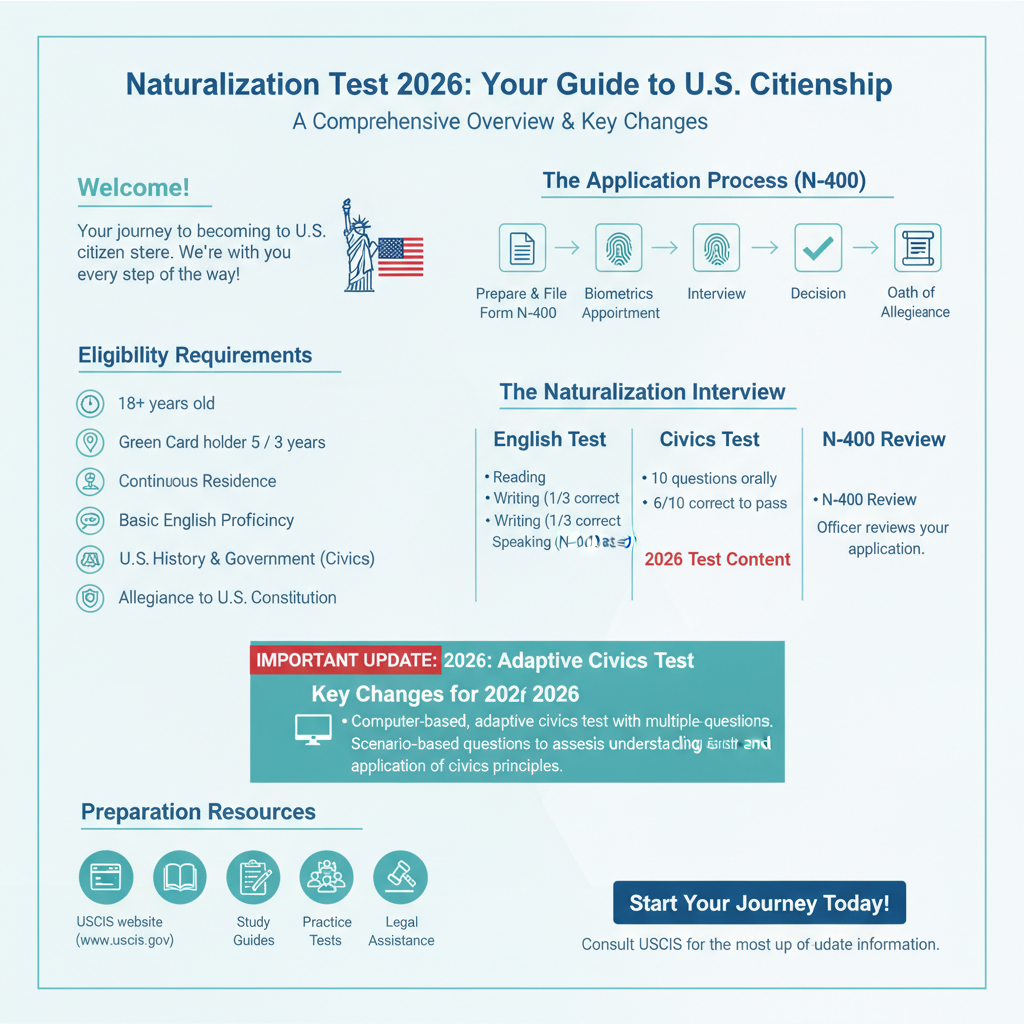
The news of impending changes to the Naturalization Test has generated considerable discussion within the immigrant community and among legal professionals. This guide is prompted by recent reporting on these developments:
Naturalization Test Changes Coming in 2026 (Citizenship)
What This News Means for Immigrants in Orlando and Across Florida
The announcement of changes to the Naturalization Test is not just a federal matter; it has direct and significant implications for individuals and families residing here in Florida and across the nation. At Imigrar, we understand the unique concerns of our community, from Orlando to Miami, and beyond.
Why this news is showing up now
The U.S. Citizenship and Immigration Services (USCIS) regularly reviews and updates its processes to ensure they are fair, effective, and reflect current educational standards. The concept of updating the naturalization test has been discussed and piloted for some time. USCIS conducted a pilot program for a revised civics test between December 2022 and February 2023, involving community-based organizations and volunteers. The results of this pilot, coupled with USCIS's commitment to continuous improvement, have led to the decision to implement a new version of the test starting in 2026. This timing allows for adequate preparation and public awareness campaigns before the new format becomes mandatory.
This news is surfacing now because USCIS has moved from the pilot phase to the implementation planning phase, signaling that the changes are concrete and on a definitive timeline. For aspiring citizens, this means it’s time to shift from general preparation to understanding the specifics of the new test format.
How it can affect Florida residents
For the vibrant immigrant communities throughout Florida, including those in Orlando, Tampa, Jacksonville, and South Florida, these changes will directly impact how you prepare for and experience the naturalization process. Florida has one of the largest immigrant populations in the U.S., with many individuals actively pursuing citizenship. The Orlando USCIS Field Office, along with others in the state, will administer this new test.
- Preparation Strategies Must Evolve: The current test focuses on rote memorization of 100 civics questions. The new test, as piloted, is expected to be more interactive, with a focus on demonstrating understanding and critical thinking rather than just recall. This means study methods will need to adapt.
- Increased Emphasis on English Proficiency: While the English test components (reading, writing, speaking) remain, the interactive nature of the civics test may place a greater practical demand on conversational English skills.
- Potential for Delayed Applications: Some applicants might choose to apply sooner to take the current test, while others might delay their application to better prepare for the new format. This could lead to fluctuations in processing times at the Orlando USCIS Field Office and other centers.
- Community Resources: Local organizations and educational centers across Central Florida will need to update their citizenship preparation courses to align with the new test requirements.
Understanding these potential impacts now allows you to make informed decisions about your application timeline and preparation strategy. Imigrar is here to help you navigate these changes, offering tailored advice for your specific situation.
What Naturalization Test Changes Are (and Why They Matter)
The upcoming changes to the Naturalization Test in 2026 represent a significant update to a crucial part of the U.S. citizenship process. For hundreds of thousands of immigrants each year, this test is a gateway to full participation in American society. Understanding what these changes entail and why they are being implemented is essential for anyone on the path to becoming a U.S. citizen.
A plain-English definition
The Naturalization Test is a two-part examination administered by USCIS during your naturalization interview. It consists of an English test and a civics test. To become a U.S. citizen, most applicants must pass both. The "changes coming in 2026" refer to a revised format and content for these tests, particularly the civics portion, and potentially the English speaking assessment.
Based on USCIS's pilot program and announcements, the key proposed changes include:
- Interactive Civics Test: Instead of the current format where an officer asks 10 questions from a list of 100, and you must answer 6 correctly, the new civics test is expected to be more interactive. It may involve scenario-based questions where applicants demonstrate their understanding of civics concepts by explaining them or discussing their relevance. For example, an officer might present a hypothetical situation related to the First Amendment and ask how it applies.
- Visual Aids: The pilot program included questions that used photographs or visual materials to prompt discussion, assessing an applicant's ability to describe and discuss civics topics in English.
- Integrated English Assessment: The speaking portion of the English test might be more integrated with the civics portion, requiring applicants to articulate their understanding of civics concepts rather than simply answer direct questions. The reading and writing portions are generally expected to remain similar, focusing on common vocabulary and simple sentences.
These changes aim to create a more meaningful assessment of an applicant's civic knowledge and English proficiency, moving beyond mere memorization to a deeper understanding of American democratic principles.
Key terms you need to know
Navigating the naturalization process requires familiarity with specific immigration terms. Here are some key terms relevant to the Naturalization Test and upcoming changes:
- Naturalization: The process by which a foreign-born person voluntarily becomes a citizen of the United States. This is the ultimate goal for many immigrants.
- U.S. Citizenship and Immigration Services (USCIS): The government agency responsible for administering immigration and naturalization benefits. USCIS develops and administers the Naturalization Test. USCIS official website.
- Naturalization Test: The two-part test (English and Civics) that most applicants must pass during their citizenship interview.
- Civics Test: The portion of the Naturalization Test that assesses an applicant's knowledge and understanding of U.S. history, government, and civics. This is the primary area undergoing significant changes.
- English Test: The portion of the Naturalization Test that assesses an applicant's ability to read, write, and speak English. It includes reading one out of three sentences correctly, writing one out of three sentences correctly, and demonstrating spoken English during the interview.
- Oath of Allegiance: The final step in the naturalization process, where applicants swear allegiance to the United States and renounce allegiance to any foreign state.
- Form N-400, Application for Naturalization: The official form used to apply for U.S. citizenship. This form collects all necessary information about your eligibility.
- Pilot Program: A trial run or test of a new system or process. USCIS conducted a pilot program for the revised civics test, which informed the upcoming 2026 changes.
- Exemptions/Waivers: Certain individuals may be exempt from the English test or allowed to take the civics test in their native language due to age, length of U.S. residency, or medical disability.
Understanding these terms will empower you to better comprehend the naturalization process and the specific impact of the 2026 test changes.
Current Immigration Law: The Foundation of U.S. Citizenship
The Naturalization Test, even with its upcoming changes, operates within the framework of existing U.S. immigration law. The Immigration and Nationality Act (INA) is the principal body of law governing immigration and citizenship in the United States. Specifically, Chapter 2 of Title III of the INA (Sections 310-336) outlines the general requirements for naturalization.
Federal requirements
To be eligible for naturalization, most applicants must meet several core federal requirements established by the INA. These requirements are the foundation upon which the test is based and remain largely unchanged, regardless of the test format. You can find detailed information on the USCIS official website.
The main federal requirements for naturalization include:
- Age: Be at least 18 years old at the time of filing Form N-400.
- Lawful Permanent Resident Status: Be a lawful permanent resident (Green Card holder) for a specific period (generally 5 years, or 3 years if married to a U.S. citizen and meet other criteria). This period is referred to as continuous residence.
- Physical Presence: Have been physically present in the U.S. for at least half of the required continuous residence period (e.g., 30 months out of 5 years).
- Continuous Residence: Maintain residency in the U.S. without extended absences that break the continuity.
- Residency in USCIS District or State: Reside for at least 3 months in the state or USCIS district where you file your application. For those in Orlando, this means living in Florida for at least 3 months.
- Good Moral Character: Demonstrate good moral character for the statutory period (typically 3 or 5 years) leading up to the application and until the Oath of Allegiance. This involves an assessment of your criminal record, tax compliance, and other aspects of your conduct.
- Attachment to the Principles of the U.S. Constitution: Demonstrate a commitment to the U.S. Constitution and its form of government.
- English Language Proficiency: Be able to read, write, and speak basic English. (Waivers exist for certain age and residency requirements, or medical conditions).
- Knowledge of U.S. History and Government (Civics): Pass the civics test. (Waivers exist for certain medical conditions).
These are the fundamental eligibility criteria that applicants must satisfy before even taking the Naturalization Test. The test is merely an assessment of two of these critical requirements.
Florida-specific considerations
While naturalization is a federal process, there are practical considerations for applicants residing in Florida, especially in the Orlando area:
- USCIS Field Office: Your naturalization interview will typically be conducted at the nearest USCIS Field Office. For many in Central Florida, this is the Orlando USCIS Field Office located at 6680 Corporate Centre Blvd, Orlando, FL 32822. Knowing your local office helps with planning and understanding local processing nuances.
- Community Resources: Florida has numerous community organizations, non-profits, and educational institutions that offer citizenship preparation classes. These resources will be vital in adapting to the new test format. For Central Florida residents, local libraries and adult education centers often provide valuable support.
- Legal Support: Given the complexities of immigration law and the upcoming test changes, having an experienced immigration attorney in Orlando, like those at Imigrar, is invaluable. We understand the specific needs and challenges of the diverse communities in Orange County and surrounding areas.
The law governing naturalization is federal, but the application of that law and the practical steps you take are very much influenced by your local environment. Staying informed about both federal requirements and local resources is key to a successful naturalization journey.
Worried About Eligibility? The federal requirements for naturalization can be complex. Imigrar offers expert legal advice to assess your eligibility and guide you through the process. Contact us at +1 786-791-3106 for a free consultation. Se Habla Español.
How to Prepare for the New Naturalization Test: A Complete Step-by-Step Guide
Preparing for the Naturalization Test requires dedication and a strategic approach, especially with the upcoming changes in 2026. This guide provides a comprehensive roadmap for aspiring citizens in Florida and nationwide.
1) Understand the Current Test vs. Proposed Changes
Before you begin intensive preparation, it’s crucial to understand what you’re preparing for. If you plan to apply before the 2026 changes fully roll out, you’ll take the current test. If your application falls within or after the implementation period, you must prepare for the new format.
- Current Test Format:
- English Test: Demonstrate ability to read, write, and speak basic English. This includes reading aloud one out of three sentences correctly, writing one out of three sentences correctly, and answering questions during the interview in English.
- Civics Test: Answer 6 out of 10 questions correctly from a pre-determined list of 100 civics questions. Questions are typically asked verbally by the USCIS officer.
- Proposed 2026 Test Changes (based on pilot):
- English Test: Likely similar reading and writing components. The speaking portion may be more integrated with the civics test, requiring more conversational fluency.
- Civics Test: Expected to be more interactive and scenario-based. Questions may involve describing images, explaining concepts, and demonstrating a deeper understanding of U.S. government and history rather than just memorizing facts. The number of questions might also differ.
Action: Check the latest USCIS announcements on their official website for the precise implementation date and details of the new test. If you are eligible, consider filing your Form N-400 sooner rather than later if you prefer the current test format.
2) Meet Eligibility Requirements for Naturalization
Passing the test is only one part of the naturalization process. You must first meet all basic eligibility criteria. Reviewing these requirements carefully is your first practical step.
- Key Eligibility Points:
- Be 18 years or older.
- Be a Lawful Permanent Resident (Green Card holder) for at least 5 years (or 3 years if married to a U.S. citizen and meet other criteria).
- Have maintained continuous residence and physical presence in the U.S. for the required period.
- Demonstrate good moral character.
- Reside in the state or USCIS district for at least 3 months. For Central Florida residents, this means residing in Florida.
- Required Documents for Eligibility Assessment:
- Your Green Card (Form I-551)
- Travel records (passports, entry/exit stamps)
- Marriage certificate (if applying under the 3-year rule)
- Proof of residency (utility bills, lease agreements)
- Tax returns for the past 5 years (or 3 years)
- Court dispositions for any arrests or citations, even minor ones.
Important: Any issues with good moral character, extended absences from the U.S., or discrepancies in your application can lead to denial. Consult with Imigrar to ensure you meet all criteria before filing Form N-400.
3) Master English Language Skills (Reading, Writing, Speaking)
The English test remains a core component. With the new interactive civics test, strong English communication skills will be even more critical.
- Speaking: Practice answering common interview questions about your application (e.g., your name, address, family, travel history) in clear, simple English. Engage in daily conversations.
- Reading: Study the official USCIS vocabulary lists for reading. Practice reading simple sentences aloud. The new civics test may also require reading scenario descriptions.
- Writing: Study the official USCIS vocabulary lists for writing. Practice writing simple sentences dictated to you.
- Resources: Utilize ESL classes, online English learning platforms, and local community programs in Orlando and Central Florida.
Reminder: Waivers for the English test are available for applicants who are 50 years old and have been a permanent resident for 20 years (50/20 rule), or 55 years old and a permanent resident for 15 years (55/15 rule). There are also medical waivers using Form N-648.
4) Study for the Civics Test (Current 100 questions and anticipated new format)
This is where the most significant preparation shift will occur.
- For the Current Test: Memorize the 100 civics questions and answers provided by USCIS. Practice answering verbally.
- For the 2026 Test (Anticipated):
- Go Beyond Memorization: Focus on understanding the *concepts* behind the civics questions. For example, instead of just knowing "What are the two parts of the U.S. Congress?" (The Senate and House of Representatives), understand *why* we have two parts, what each does, and how they interact.
- Practice Explaining: Be able to explain key terms (e.g., "rule of law," "separation of powers," "amendment") in your own words.
- Describe and Discuss: If the test includes visuals, practice describing what you see and relating it to civics principles.
- Stay Updated: Regularly check the USCIS official website for updated study materials and sample questions for the 2026 test.
Action: USCIS provides study materials, including the 100 civics questions and flashcards. These are foundational. For the new test, seek out materials that encourage deeper understanding and discussion.
5) Gather Required Documents for Form N-400
A complete and accurate application package is crucial to avoid delays. Gather all necessary documents well in advance.
- General Required Documents:
- Copy of your Green Card (front and back).
- Copies of all passports and travel documents (if you traveled outside the U.S. for 6+ months).
- Two passport-style photos (taken within 30 days of filing).
- Copy of your marriage certificate (if applicable).
- Copies of divorce decrees, annulment certificates, or death certificates for current and all prior spouses (if applicable).
- Copies of birth certificates for all your children.
- Proof of selective service registration (for male applicants aged 18-26).
- Certified court dispositions for any arrests, citations, or criminal charges, even if dismissed or expunged.
- Proof of payment for child support or alimony (if applicable).
- Tax returns for the relevant statutory period.
- Additional Documents (if applicable):
- Form N-648, Medical Certification for Disability Exceptions (if seeking a waiver).
- Proof of military service (if applicable).
Warning: Never submit original documents unless specifically requested by USCIS. Always keep copies of everything you send.
6) Attend the Interview at the Orlando USCIS Field Office
Your interview is the culmination of your preparation. Dress professionally, arrive on time at the Orlando USCIS Field Office, and bring all original documents you submitted copies of, plus any new documents requested.
- During the Interview:
- The officer will review your Form N-400, confirm your identity, and ask questions about your application.
- You will take the English test (reading, writing, speaking).
- You will take the Civics Test.
- Be honest and straightforward in your answers. If you don't understand a question, politely ask the officer to repeat or rephrase it.
Tip: Practice mock interviews with a friend, family member, or your attorney. This will help you feel more comfortable and confident.
7) Take the Oath of Allegiance
If your application is approved after the interview, you will receive a notice for your Oath of Allegiance ceremony. This is the final step to becoming a U.S. citizen.
- Ceremony Details:
- Ceremonies are often held at the USCIS Field Office or other designated locations. In Orlando, these are typically held at the Orlando USCIS Field Office.
- You will return your Green Card (Form I-551) at the ceremony.
- You will take the Oath of Allegiance.
- You will receive your Certificate of Naturalization.
Congratulations! Once you take the oath, you are a U.S. citizen. You can then apply for a U.S. passport and register to vote.
Practical Steps You Can Take Today
Don't wait until the last minute to prepare for naturalization, especially with the upcoming test changes. Here are practical steps you can take starting today:
Actionable Checklist (5+ items)
- Assess Your Eligibility: Review all naturalization requirements (age, residency, good moral character) against your personal circumstances. If uncertain, contact Imigrar for a professional evaluation.
- Start Studying English: Regardless of the test format, strong English skills are paramount. Dedicate time daily to reading, writing, and speaking English. Utilize free online resources, library programs, or local ESL classes in Orlando.
- Begin Civics Preparation: Download the current 100 civics questions from the USCIS official website. Start learning the answers, but also try to understand the concepts behind them. This will better prepare you for the new interactive format.
- Gather Key Documents: Start compiling all required documents mentioned in Step 5 of our guide. This includes your Green Card, passports, tax returns, and any court records. Organizing these early will save significant time and stress later.
- Consult an Immigration Attorney: The most crucial step. A qualified legal professional can provide personalized advice, help you understand the new test implications, review your eligibility, and ensure your Form N-400 is filed correctly.
- Stay Informed: Regularly check the USCIS website for official updates on the 2026 Naturalization Test changes. Sign up for USCIS email alerts.
- Practice Interview Skills: Even before your interview is scheduled, practice discussing your application details and civics knowledge with others. This builds confidence and fluency.
Document Preparation Guidance
- Create a Checklist: Use the list from Step 5 and customize it for your specific situation.
- Organize Digitally and Physically: Keep both digital copies (scans) and physical copies of all documents in an organized binder.
- Certifications: For any documents not in English (e.g., birth certificates from your home country), you will need certified English translations.
- Official Copies: For court records or marriage/divorce certificates, ensure you have certified copies from the issuing authority, not just photocopies.
- Photographs: Get professional passport-style photos taken according to USCIS specifications.
Timeline Expectations
The naturalization process can take time, and the 2026 changes add another layer to consider:
- Preparation for Application: Gathering documents and preparing Form N-400 can take weeks to months, depending on your organization.
- USCIS Processing Times: After filing Form N-400, processing times vary significantly by field office and current workload. You can check current processing times for the Orlando USCIS Field Office on the USCIS Processing Times page.
- Interview Scheduling: After biometrics, it could be several months before your interview is scheduled.
- Oath Ceremony: If approved, the oath ceremony typically follows within a few weeks to a couple of months after the interview.
Key Timeline Consideration: If you apply in early 2026, you might still take the current test. If you apply later in 2026 or beyond, you will likely face the new test format. Plan your application submission strategy with this in mind.
Facing a Tight Timeline? The sooner you start, the better prepared you'll be. Imigrar helps clients in Orlando and across Florida streamline their naturalization process. Call us today at +1 786-791-3106 for a free consultation. Se Habla Español.
How Imigrar Helps Immigrants in Orlando Prepare for Naturalization
At Imigrar, we understand that the journey to U.S. citizenship is one of the most important steps an immigrant can take. With the Naturalization Test changes coming in 2026, the process can seem even more daunting. Our dedicated team of immigration attorneys in Orlando is here to provide the expert guidance and support you need to navigate these complexities successfully.
Our experience and expertise
Imigrar has a proven track record of assisting countless individuals and families in achieving their American dream. Our attorneys possess in-depth knowledge of U.S. immigration law, including the intricacies of naturalization and the evolving requirements set by USCIS. We stay abreast of all policy changes, including the detailed aspects of the upcoming Naturalization Test modifications, to ensure our clients receive the most current and accurate advice.
We pride ourselves on:
- Personalized Case Assessment: We thoroughly review your individual circumstances to determine your eligibility, identify potential challenges, and develop a tailored strategy for your naturalization application.


