


The journey to U.S. citizenship is a momentous one, representing the culmination of years of effort and dedication. For many, it's the ultimate step in building a new life and keeping families together in the United States. A critical part of this journey is the naturalization test, which assesses an applicant's knowledge of English and U.S. civics. As we look ahead to 2026, significant changes are on the horizon for this test, bringing both anticipation and questions for aspiring citizens.
At Imigrar, an immigration law firm based in Orlando, Florida, we understand the profound impact these changes can have on individuals and families across the nation. Our mission is to provide clear, accurate, and actionable guidance, ensuring you are well-prepared for every step of your immigration process. Today, we delve into the upcoming **Naturalization Test Changes Coming in 2026**, offering a comprehensive guide to help you navigate this evolving landscape.
The reporting that sparked this guide

The news of impending changes to the naturalization test has naturally generated considerable discussion within immigrant communities and legal circles. USCIS periodically reviews and updates its processes to ensure they remain effective and relevant. This proactive approach by the agency is what brings these changes to light.
Naturalization Test Changes Coming in 2026 (Citizenship)
What This News Means for Immigrants in Orlando and Across Florida
For individuals and families residing in the Sunshine State, particularly in bustling metropolitan areas like Orlando, Tampa, and Miami, these forthcoming changes are a crucial development. Understanding their implications now can significantly impact your naturalization strategy.
Why this news is showing up now
The U.S. Citizenship and Immigration Services (USCIS) has a mandate to periodically review and update the naturalization test to ensure it accurately reflects current civic education standards and effectively assesses an applicant's understanding of U.S. history and government. This isn't the first time the test has been revised; for example, a redesigned test was implemented in late 2020 but was subsequently reverted to the 2008 version in early 2021. The current initiative for 2026 stems from USCIS's ongoing commitment to improving the naturalization process. They aim to create a test that is standardized, fair, and relevant, reflecting input from experts in civics education and immigrant integration. By announcing these changes well in advance, USCIS provides applicants with ample time to prepare.
How it can affect Florida residents
Whether you're living in Orange County, along the I-4 corridor, or anywhere else in Florida, these changes will directly impact your path to U.S. citizenship if you file your **Form N-400, Application for Naturalization**, on or after the effective date in 2026. For residents of Central Florida, the **Orlando USCIS Field Office** is where many will attend their naturalization interviews. While the core eligibility requirements for naturalization remain federal, your preparation strategy will need to adapt to the new test format and content. This means:
- New Study Materials: You will need to familiarize yourself with updated civics questions and potentially new English test components once released by USCIS.
- Adjusted Preparation Timelines: If you plan to apply in 2026 or later, you'll need to factor in time to study the new material.
- Potential for Increased Complexity: While the goal is clarity, any new test can initially feel more challenging until applicants and legal professionals become familiar with it.
For those eligible to apply now, considering filing your application before the changes take effect could allow you to take the current version of the test, for which study materials are readily available.
Need Help Navigating These Changes? Our Orlando immigration team at Imigrar is ready to assist. Don't let uncertainty delay your path to citizenship. Call +1 786-791-3106 for a free consultation, or message us online. Se Habla Español.
What Naturalization Test Changes Are (and Why They Matter)
To fully grasp the significance of the upcoming changes, it's essential to understand the naturalization process itself and the role the test plays.
A plain-English definition
Naturalization is the process by which a lawful permanent resident (also known as a **Green Card holder**) voluntarily becomes a U.S. citizen. It’s a legal pathway outlined in the **Immigration and Nationality Act (INA)** that grants individuals the full rights and responsibilities of citizenship, including the right to vote, hold a U.S. passport, and petition for more family members. A key requirement for naturalization is demonstrating an understanding of English and U.S. civics.
The **Naturalization Test** consists of two main parts: an English test and a civics test. The English test assesses your ability to read, write, and speak basic English. The civics test evaluates your knowledge of U.S. history, government, and civics. The upcoming changes in 2026 are specifically focused on modifying the content and format of these tests, particularly the civics portion, to ensure it better reflects a comprehensive understanding of American civic life.
Key terms you need to know
- Naturalization: The process of becoming a U.S. citizen after fulfilling specific requirements.
- U.S. Citizenship and Immigration Services (USCIS): The federal agency responsible for administering immigration and naturalization benefits. You will interact with USCIS throughout your naturalization application.
- Lawful Permanent Resident (LPR) / Green Card Holder: An individual who has been granted the privilege of living permanently in the United States. This status is a prerequisite for naturalization.
- Form N-400, Application for Naturalization: The official form you must file with USCIS to apply for U.S. citizenship.
- Civics Test: The portion of the naturalization test that covers U.S. history, government, and civics. This is the primary focus of the 2026 changes.
- English Test: The portion of the naturalization test that assesses your ability to read, write, and speak basic English.
- Oath of Allegiance: The final step in the naturalization process, where applicants swear loyalty to the United States.
- Continuous Residence: A requirement that a naturalization applicant has maintained residence in the U.S. for a specific period (usually 3 or 5 years) prior to filing and up to the time of naturalization.
- Physical Presence: A requirement that an applicant has been physically present in the U.S. for a certain aggregate period within their continuous residence.
- Good Moral Character: A legal standard requiring applicants to demonstrate adherence to societal norms and laws, free from certain criminal offenses or other disqualifying acts.
These changes matter because they directly impact the preparation required for aspiring citizens. A revised test means new study materials, potentially different interview dynamics, and a need for diligent preparation. Staying informed is your first step toward success.
Current Immigration Law: The Foundation of Naturalization
While the test questions may change, the fundamental legal framework governing naturalization remains constant. The **Immigration and Nationality Act (INA)** is the bedrock of U.S. immigration law, outlining the eligibility criteria for becoming a U.S. citizen.
Federal requirements
To be eligible for naturalization under the general provisions of the INA, applicants must meet several key federal requirements. These are enshrined in sections such as **INA 316** and **INA 319** (for spouses of U.S. citizens):
- Age: Be at least 18 years old at the time of filing **Form N-400**.
- Lawful Permanent Resident (LPR) Status: Have held **Green Card** status for at least 5 years (or 3 years if married to and living with a U.S. citizen, and meeting other criteria).
- Continuous Residence: Have resided continuously in the U.S. as an LPR for at least 5 years (or 3 years for spouses of U.S. citizens) immediately preceding the date of filing **Form N-400** and up to the time of naturalization. Absences from the U.S. can affect this.
- Physical Presence: Have been physically present in the U.S. for at least half of the required continuous residence period (e.g., 30 months for the 5-year period, 18 months for the 3-year period).
- Residence in USCIS District or State: Have resided for at least 3 months in the state or USCIS district where you file your application. For those in Orlando, this means residing in Florida for that period.
- Good Moral Character: Demonstrate **Good Moral Character** for the statutory period (5 or 3 years) leading up to the application and until the oath of allegiance. This is a crucial requirement, and certain criminal offenses or actions can disqualify an applicant.
- English Language Proficiency: Be able to read, write, and speak basic English. There are exceptions for certain older applicants or those with medical disabilities (Form N-648, Medical Certification for Disability Exceptions).
- Knowledge of U.S. History and Government (Civics): Demonstrate an understanding of the fundamentals of U.S. history and principles and form of government. This is where the test changes come into play.
- Attachment to the U.S. Constitution: Be able to demonstrate an attachment to the principles of the U.S. Constitution and well-disposed to the good order and happiness of the United States.
Important: These requirements are non-negotiable and form the bedrock of any naturalization application. The 2026 changes will modify *how* the English and civics knowledge is assessed, not *if* it is required.
Florida-specific considerations
While naturalization is a federal process, state residency plays a role in meeting certain requirements. For example, the 3-month residency requirement in the USCIS district or state applies. If your case is in Orlando, you will likely attend your interview at the **Orlando USCIS Field Office**. Processing times can vary by field office, so monitoring the USCIS Processing Times for the Orlando office is advisable. Furthermore, understanding the impact of state laws on your "good moral character" (e.g., how Florida state criminal convictions are viewed under federal immigration law) is crucial. Imigrar's local expertise in Orlando and Central Florida ensures we can provide tailored advice for your specific situation.
For official information and forms, always refer to the USCIS official website.
Confused by Legal Jargon? Our team at Imigrar simplifies complex immigration laws. Get personalized guidance for your naturalization journey. Call +1 786-791-3106 for a free consultation. Se Habla Español.
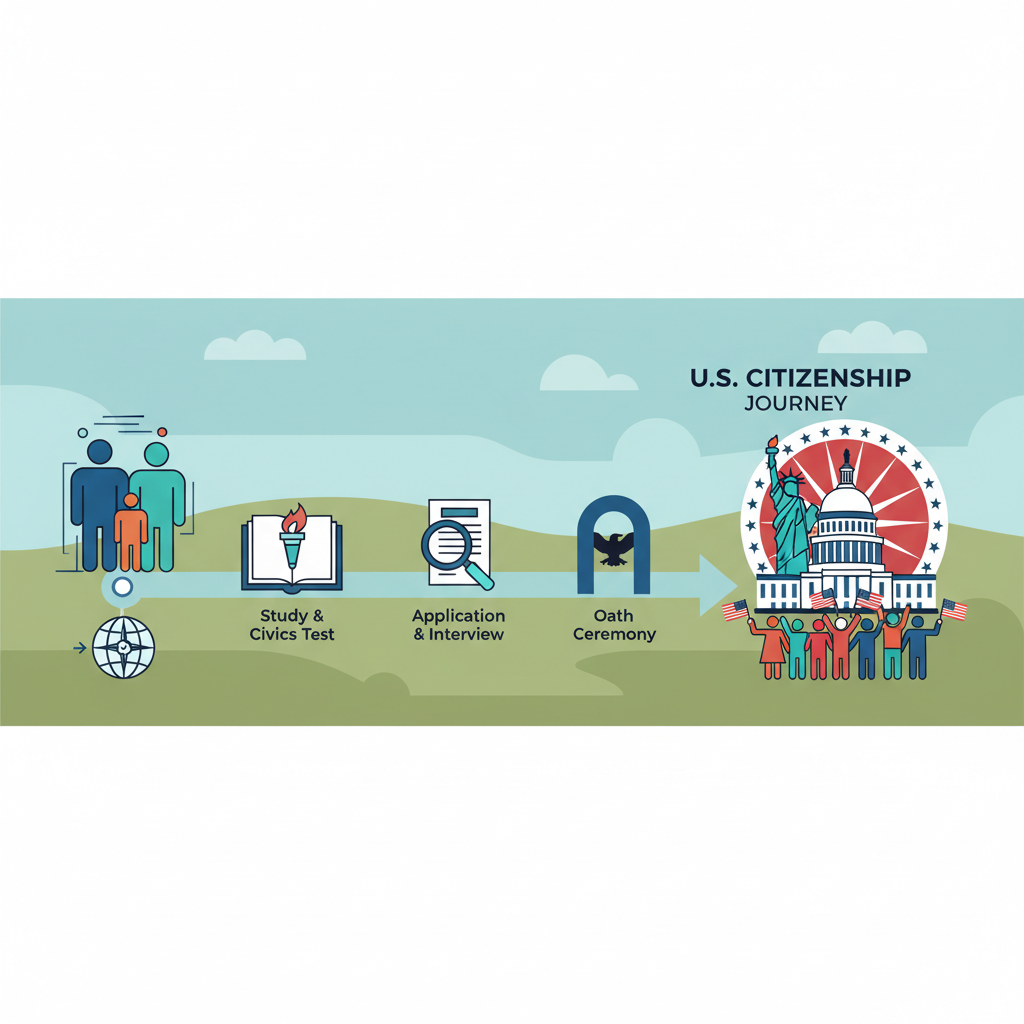
How to Prepare for the Naturalization Test Changes: A Complete Step-by-Step Guide
Preparing for naturalization, especially with upcoming test changes, requires a methodical approach. Here's a detailed guide to help you through the process:
1) Determine Your Eligibility and Gather Initial Documents
Before you even consider applying, confirm you meet all the basic eligibility criteria. This includes reviewing your **Green Card** issuance date, calculating your **continuous residence** and **physical presence**, and ensuring you meet the **good moral character** standard.
Required Documents (Initial Assessment):
- Your **Green Card** (Form I-551)
- Passports and travel records for the last 5 years (or 3 years if applicable)
- Marriage certificate (if applying based on marriage to a U.S. citizen)
- Divorce decrees or death certificates for prior marriages (if applicable)
- Tax returns for the last 5 years (or 3 years)
Warning: Be honest about any arrests, citations, or criminal history, no matter how minor. These must be disclosed and properly documented.
2) Prepare and File Form N-400, Application for Naturalization
This is the cornerstone of your naturalization application. Complete **Form N-400** accurately and thoroughly. Any errors or omissions can lead to delays or even denial. Pay close attention to questions about your travel history, employment, marital status, and good moral character.
Required Documents (for Filing Form N-400):
- Completed and signed **Form N-400**
- Copy of the front and back of your **Green Card**
- Two passport-style photos (if required by current instructions)
- Application fee or **Form I-912, Request for Fee Waiver** (if eligible)
- Certified copies of court dispositions for any arrests or citations (if applicable)
- Certified copies of marriage certificates, divorce decrees, or name change documents (if applicable)
- Evidence of selective service registration (if applicable)
Reminder: Always make a complete copy of your entire application package for your records before mailing it to USCIS.
3) Attend Your Biometrics Appointment
After filing **Form N-400**, USCIS will send you an appointment notice for biometrics collection. This involves taking your fingerprints, photograph, and signature. These are used for background checks and identity verification.
Required Documents (for Biometrics Appointment):
- Your Biometrics Appointment Notice (Form I-797C)
- Your **Green Card** and any other valid government-issued identification (e.g., driver's license, passport)
Important: Do not miss this appointment. If you have an unavoidable conflict, follow the instructions on the notice to reschedule immediately.
4) Prepare for the English and Civics Test (Current & Anticipated Changes)
This is where the upcoming 2026 changes are most relevant. Currently, for the civics test, you are asked up to 10 questions from a list of 100, and you must answer 6 correctly. The English test involves reading one out of three sentences correctly, writing one out of three sentences correctly, and demonstrating your ability to speak English during the interview.
For the 2026 changes, while the exact format and content are still being finalized, USCIS has indicated a move towards a more interactive and potentially scenario-based civics test. This could mean:
- New Civics Questions: A revised list of civics questions, possibly focusing more on concepts and less on rote memorization.
- Different Question Format: Instead of simply asking "Who is the Chief Justice of the United States?", questions might be more open-ended or require critical thinking, similar to how civic knowledge is assessed in educational settings.
- Increased Number of Questions: There's a possibility of being asked more questions or needing to get more correct answers to pass, similar to the 2020 test's requirement of 12 correct answers out of 20.
- Subtle English Test Changes: While the primary focus is civics, the English portion of the interview might also see minor adjustments to ensure comprehensive assessment.
Actionable Advice:
- Start with the Current 100 Questions: A strong foundation in the existing civics questions is invaluable, as many core concepts will likely remain. You can find these on the USCIS official website.
- Practice English Daily: Read English newspapers, watch English news, and practice speaking with native speakers.
- Monitor USCIS for Updates: Regularly check the USCIS website for official announcements and new study materials regarding the 2026 test.
- Consider an Attorney: An immigration lawyer can provide the most current information and guide your study based on anticipated changes.
Required Documents (for Preparation):
- Official USCIS Civics Study Guide (current and future versions)
- English language learning materials
5) Attend Your Naturalization Interview
This is a critical step where a USCIS officer will review your **Form N-400** application with you, assess your English proficiency, and administer the civics test. Be prepared to answer questions about your application, personal history, and eligibility.
Required Documents (for Interview):
- Your interview appointment notice
- Your **Green Card** (original)
- Your passport and all travel documents (originals)
- All original documents you submitted copies of with your **Form N-400** (e.g., marriage certificates, court dispositions, tax transcripts)
- Any updated documents (e.g., new passport, divorce decree, arrest records) since you filed your application


