


The journey to U.S. citizenship is a pivotal moment for many immigrants, offering a pathway to full participation in American society and the cherished right to vote. For those in Orlando, Central Florida, and across the nation, this journey involves several crucial steps, including passing the Naturalization Test. As of early 2026, significant changes to this test are being implemented, and staying informed is more critical than ever.
Considering U.S. Citizenship? Don't navigate the upcoming test changes alone. Our Orlando immigration team is ready to assist. Call +1 786-791-3106 for a free consultation, or message us online. Se Habla Español.
The reporting that sparked this guide
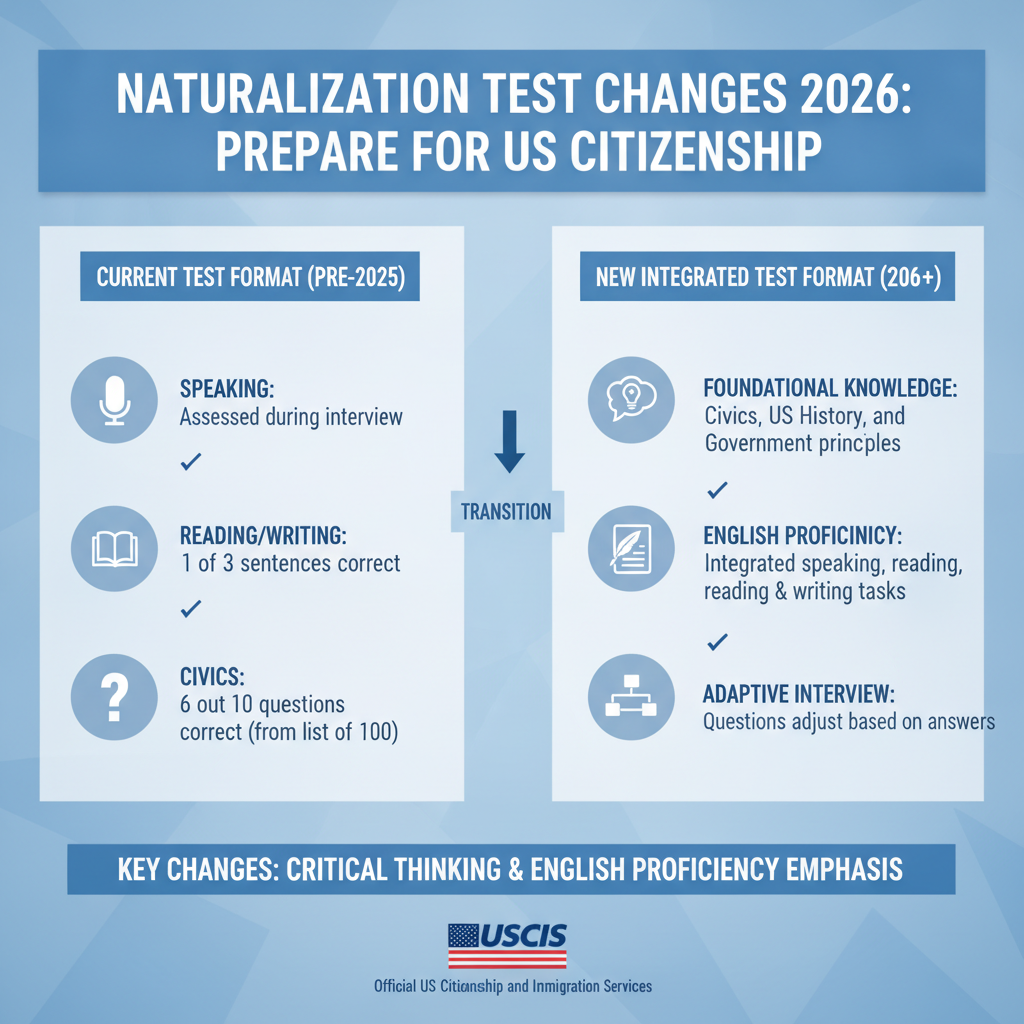
The U.S. Citizenship and Immigration Services (USCIS) has been actively developing and piloting revisions to the Naturalization Test. These changes, aimed at making the test more standardized and reflective of modern educational practices, are set to be fully implemented throughout 2026. While the core requirements for naturalization remain, the way civics knowledge is assessed is evolving. The news of these impending changes, widely reported in immigration and citizenship circles, highlights the importance of proactive preparation for aspiring citizens.
Naturalization Test Changes Coming in 2026 (Citizenship)
What This News Means for Immigrants in Orlando and Across Florida
For hundreds of thousands of immigrants living in Florida, especially in diverse hubs like Orlando, these changes to the Naturalization Test are not just bureaucratic updates; they are a direct influence on their path to becoming U.S. citizens. Understanding the implications and preparing effectively is crucial to a successful application.
Why this news is showing up now
The discussion around Naturalization Test changes isn't new, but the current initiative by USCIS has a distinct timeline and approach. In late 2022 and early 2023, USCIS announced a pilot program for a revised civics test. This program allowed USCIS to gather data and feedback on new test formats, including scenario-based questions, before a broader rollout. The goal was to ensure the test is a more effective and consistent measure of an applicant’s understanding of U.S. history, government, and civic principles. This current wave of news reflects the conclusion of that pilot phase and the impending, full-scale implementation of the revised test throughout 2026. It’s important to note that this is distinct from the 2020 civics test changes, which were later reverted, demonstrating USCIS's ongoing commitment to refining the naturalization process.
How it can affect Florida residents
Florida is home to a vast and diverse immigrant population, with many individuals and families actively pursuing U.S. citizenship. For residents along the I-4 corridor, in Orange County, and throughout Central Florida, the updated Naturalization Test means that the study materials and preparation strategies that were effective for previous applicants may need to be adjusted. The Orlando USCIS Field Office, like all others nationwide, will administer the new test. This means that if you are applying for naturalization or are currently in the process, your interview—especially if scheduled in mid-to-late 2026 or beyond—may involve the new test format. Proactive preparation, focusing not just on memorization but on a deeper understanding of civics, will be key to navigating these changes successfully for Florida's aspiring citizens.
What Naturalization Test Changes Are (and Why It Matters)
The Naturalization Test is a critical component of the application process for U.S. citizenship. It assesses an applicant's knowledge of U.S. history and government (civics) and their ability to read, write, and speak English. The upcoming changes primarily focus on the civics portion, aiming for a more comprehensive and engaging evaluation.
A plain-English definition
In simple terms, the Naturalization Test is an interview conducted by a USCIS officer to determine if you meet the requirements for U.S. citizenship. It has two main parts:
- English Test: Evaluates your ability to read, write, and speak basic English.
- Civics Test: Evaluates your knowledge and understanding of U.S. history and government.
The "changes coming in 2026" refer specifically to modifications in how the civics portion of the test will be administered and the types of questions asked. While the current civics test often involves answering 6 out of 10 questions from a predefined list of 100, the new test is expected to incorporate more scenario-based questions and potentially an adaptive format. This means instead of simply reciting facts, applicants may be asked to explain how certain civic principles apply in real-world situations or to demonstrate a deeper understanding of governmental functions rather than just naming them.
These changes matter because they shift the focus from rote memorization to a more nuanced understanding of American civics. This could mean a more challenging test for some, requiring a different study approach, but ultimately aiming to ensure that new citizens have a more profound grasp of their rights and responsibilities.
Key terms you need to know
- Naturalization: The process by which a foreign citizen or national becomes a citizen of the United States.
- Naturalization Test: The two-part examination (English and Civics) required for most naturalization applicants.
- Civics Test: The portion of the Naturalization Test that assesses knowledge of U.S. history and government. This is the primary area undergoing changes.
- English Test: The portion of the Naturalization Test that assesses reading, writing, and speaking ability in English. While not the primary focus of *these* changes, strong English skills are always vital.
- USCIS (U.S. Citizenship and Immigration Services): The government agency responsible for overseeing lawful immigration to the United States. They administer the Naturalization Test.
- Form N-400: The official application form for naturalization. Submitting this form initiates the citizenship process.
- Oath of Allegiance: The final step in the naturalization process, where an applicant formally pledges loyalty to the United States.
- Adaptive Testing: A potential new format where questions are selected based on the applicant's previous answers, tailoring the difficulty level. This is a concept USCIS has explored.
- Scenario-Based Questions: Questions that present a hypothetical situation and ask the applicant to explain how civic principles or governmental processes relate to it, requiring more critical thinking than simple recall.
Don't let the new test changes overwhelm you. Imigrar provides expert guidance for your citizenship application. Contact us at +1 786-791-3106 for a free consultation. Se Habla Español.
Current Immigration Law: The Foundation
The requirements for naturalization are enshrined in federal law, primarily the Immigration and Nationality Act (INA). While the test format is changing, the underlying legal eligibility criteria remain consistent. Understanding these foundational laws is crucial for any aspiring citizen.
The authority for naturalization stems from Title III of the Immigration and Nationality Act (INA). Specifically, INA §312, "English language and civics knowledge," outlines the requirement for applicants to demonstrate an ability to read, write, and speak English and to possess a knowledge and understanding of the fundamentals of U.S. history and principles and form of government. This is the statute that directly governs the Naturalization Test.
Other relevant sections of the INA include:
- INA §316: General requirements for naturalization, including continuous residence, physical presence, and good moral character.
- INA §319: Special provisions for spouses of U.S. citizens.
- INA §329: Special provisions for military personnel.
These legal frameworks define who is eligible for citizenship and what they must demonstrate to achieve it. The changes to the civics test are an update to the *method* of assessment, not the *underlying legal requirement* for knowledge.
For official information and detailed legal statutes, always refer to the USCIS official website.
Federal requirements
To be eligible for naturalization, most applicants must meet the following federal requirements:
- Be 18 years of age or older.
- Be a lawful permanent resident (green card holder) for at least 5 years (or 3 years if married to a U.S. citizen and meet other criteria).
- Have continuously resided in the U.S. as a green card holder for at least 5 years (or 3 years if applicable) immediately preceding the filing of Form N-400.
- Be physically present in the U.S. for at least half of the required continuous residency period (e.g., 30 months out of 5 years).
- Reside for at least 3 months in the state or USCIS district where the application is filed. For Central Florida residents, this would typically be the Orlando USCIS Field Office jurisdiction.
- Demonstrate good moral character for the statutory period (5 or 3 years).
- Demonstrate an attachment to the principles and ideals of the U.S. Constitution.
- Be able to read, write, and speak basic English.
- Pass the civics test demonstrating knowledge of U.S. history and government.
- Take an Oath of Allegiance to the United States.
Important: There are exceptions and waivers for certain requirements, such as the English test for older applicants or those with specific disabilities. Consult with an attorney to understand your specific eligibility.
Common USCIS forms related to naturalization include: Form N-400, Application for Naturalization; Form N-600, Application for Certificate of Citizenship (for those who acquire or derive citizenship); and Form I-912, Request for Fee Waiver (if applicable).
Florida-specific considerations
While naturalization is a federal process governed by federal law, Florida residents interact with the system through local USCIS offices and resources. There are no Florida-specific immigration laws that impact naturalization eligibility or the test itself. However, practical considerations for Floridians include:
- Orlando USCIS Field Office: This is the primary office for interviews and processing for many Central Florida residents, including those in Orange County and surrounding areas. Understanding local processing times and procedures can be beneficial.
- Community Resources: Florida has numerous non-profit organizations and adult education centers offering English as a Second Language (ESL) classes and civics preparation courses. These resources are invaluable, especially with the upcoming test changes.
- Legal Support: Access to qualified immigration attorneys in Orlando and across Florida is crucial for navigating complex cases, understanding the new test requirements, and ensuring a smooth application process.
How to Prepare for the Naturalization Test Changes: A Complete Step-by-Step Guide
Preparing for U.S. citizenship requires diligence and strategic planning, especially with the Naturalization Test changes coming in 2026. This guide provides a comprehensive roadmap for aspiring citizens in Orlando and nationwide.
1) Understand Current Requirements & Eligibility
Before you even think about the test, confirm you meet all the foundational eligibility criteria. This is the first and most crucial step.
- Review Green Card Status: Ensure you are a Lawful Permanent Resident (green card holder).
- Calculate Residency: Determine if you meet the continuous residency and physical presence requirements (typically 5 years, or 3 years if married to a U.S. citizen). Be meticulous with travel dates.
- Good Moral Character: Understand what constitutes "good moral character." Past criminal offenses, failure to pay child support, or tax issues can impact eligibility.
- Age and Location: Confirm you are 18 or older and have resided for at least 3 months in the state or USCIS district where you will apply (e.g., Central Florida for the Orlando Field Office).
Required Documents for Eligibility Assessment:
- Your Permanent Resident Card (Green Card)
- Travel history records (entry/exit dates, passport stamps)
- Marriage certificate (if applying under the 3-year rule)
- Divorce decrees or annulment records (if applicable)
- Tax returns for the past 5 (or 3) years
- Any arrest records, court dispositions, or police clearances (even if charges were dropped or expunged)
2) Master English Proficiency
The English test assesses your ability to read, write, and speak basic English. Even with changes to the civics test, strong English skills remain paramount for the entire naturalization interview.
- Speaking: This is evaluated throughout your interview. Practice answering common questions about yourself, your application, and U.S. history/government. Engage in daily English conversation.
- Reading: You will need to read one out of three sentences correctly. These sentences are often drawn from the civics test vocabulary list or parts of the N-400 application.
- Writing: You will need to write one out of three sentences correctly. The sentences are typically dictated by the officer and relate to civics or personal information.
Practical Steps:
- Enroll in ESL classes in Orlando or online.
- Practice reading and writing sample sentences provided by USCIS.
- Watch English news, listen to podcasts, and read English books or newspapers.
- Practice mock interviews with a native English speaker.
3) Dive Deep into Civics Knowledge (Current & Anticipated)
This is where the 2026 changes will have the most impact. While the 100 civics questions remain the foundation, prepare for a more analytical assessment.
- Master the 100 Civics Questions: Start by knowing all 100 questions and their official answers. USCIS provides study guides, flash cards, and audio resources.
- Understand, Don't Just Memorize: For the new test, focus on understanding the *why* and *how* behind the facts. For example, instead of just naming a branch of government, understand its role and responsibilities.
- Scenario-Based Practice: Practice thinking critically about how government functions. How would a law be passed? What are the rights and responsibilities of citizens? What are the implications of a particular amendment?
- Study Materials: Utilize the official USCIS study materials. Look for updated guides that address the new test format as they become available.
Recommended Resources:
- USCIS Civics Test Study Materials
- USCIS official website for any new guides related to the 2026 test.
Reminder: For applicants aged 65 or older who have been a permanent resident for at least 20 years, you only need to study 20 specific civics questions (marked with an asterisk on the official list).
4) Gather & Organize Your Documents
A complete and well-organized application package is crucial to avoid delays. Start gathering these well in advance.
- Personal Identification:
- Permanent Resident Card (Green Card)
- All current and expired passports
- State-issued ID (e.g., Florida driver's license)
- Proof of Residency:
- Tax transcripts for the past 5 (or 3) years
- Lease agreements, utility bills, or mortgage statements showing continuous residence
- Employment history (pay stubs, W-2s)
- Marital & Family Documents (if applicable):
- Marriage certificate(s)
- Divorce decrees or annulment records
- Birth certificates of children
- U.S. citizen spouse's birth certificate or naturalization certificate (if applying under the 3-year rule)
- Travel History:
- List of all trips outside the U.S. since becoming a permanent resident, including dates of departure and return.
- Criminal History (if applicable):
- Certified copies of arrest reports, court dispositions, probation records, and evidence of fulfilling sentencing (even for minor offenses).
- Photos: Two passport-style photos meeting USCIS specifications.
Warning: Ensure all non-English documents are translated by a certified translator and accompanied by a certification of translation.
5) File Form N-400 and Attend Biometrics
Once you've confirmed eligibility and gathered your documents, it's time to submit your application.
- Complete Form N-400: Fill out the application accurately and completely. Any errors or omissions can lead to delays or denial.
- Pay Filing Fees: Submit the correct filing fee and biometrics fee, or apply for a fee waiver (Form I-912) if eligible.
- Submit Application: Mail your completed Form N-400 and supporting documents to the correct USCIS lockbox facility.
- Receive Receipt Notice: USCIS will send you a Form I-797C, Notice of Action, confirming receipt of your application.
- Biometrics Appointment: You will receive a notice for a biometrics appointment at a local Application Support Center (ASC), likely in Orlando or a nearby Florida location. This involves fingerprinting and photographing for background checks.
6) Prepare for the Interview (English & Civics)
The interview is your opportunity to demonstrate your eligibility and pass the English and Civics tests. This is where your preparation for the new civics test format will be critical.
- Review Your Form N-400: The interviewing officer will ask questions based on your application. Know every answer you provided.
- Practice English: Be ready to converse clearly about your life, work, and family.
- Civics Test Practice: Practice both the 100 civics questions and, importantly, scenario-based questions if new USCIS materials are available. Understand the underlying principles.
- Mock Interview: Conduct mock interviews with an attorney or trusted friend. This helps reduce anxiety and identify areas for improvement.
For Central Florida residents, your interview will likely be at the Orlando USCIS Field Office.
7) Attend the Oath of Allegiance Ceremony
This is the final, celebratory step in becoming a U.S. citizen.
- Receive Decision: After your interview, USCIS will issue a decision. If approved, you will receive a notice for your Oath Ceremony.
- Attend Ceremony: You will attend a public or private ceremony where you take the Oath of Allegiance and receive your Certificate of Naturalization.
- Return Green Card: At the ceremony, you will surrender your Permanent Resident Card.
Congratulations! You are now a U.S. citizen.

Practical Steps You Can Take Today
Don't wait for the new test to fully roll out. Start preparing now to ensure a smooth path to citizenship, especially if you reside in Orlando or elsewhere in Florida.
Ready to start your citizenship journey? Imigrar's experienced attorneys can guide you through every step, including preparing for the new Naturalization Test. Call us at +1 786-791-3106 for a free consultation. Se Habla Español.
Actionable Checklist:
- Review Your Eligibility Thoroughly: Re-examine your green card issuance date, travel history, and any potential good moral character issues. Be honest and proactive.
- Start or Intensify English Study: Focus on conversational English, reading comprehension, and basic writing. Utilize free online resources, local community college courses, or tutoring.
- Master the Current 100 Civics Questions: This is your foundation. Know them cold. Then, transition to understanding the *concepts* behind them.
- Stay Informed on Test Updates: Regularly check the USCIS official website for the latest information on the 2026 Naturalization Test changes, new study guides, and pilot program results.
- Organize Your Documents: Create a physical and digital folder for all necessary documents. Ensure copies are made and originals are secure.
- Begin Financial Planning: Account for USCIS filing fees and potential legal fees.
- Seek Legal Counsel: Consult with an experienced immigration attorney at Imigrar to assess your eligibility, understand the nuances of the new test, and prepare your application.
Document Preparation Guidance:
- Create a Checklist: Use the USCIS instructions for Form N-400 and your attorney's guidance to create a personalized document checklist.
- Categorize Documents: Organize documents into logical categories (e.g., personal ID, residency proof, marital history).
- Make Copies: Always keep original documents and submit only copies unless USCIS specifically requests originals.
- Translate Properly: Any document not in English must have a certified English translation.
- Chronological Order: Arrange documents in chronological order within each category for easy review.
Timeline Expectations:
The naturalization process can take time, and the 2026 test changes may introduce slight variations. Here's a general timeline:
- Application Preparation: 1-3 months (depending on how quickly you gather documents and complete Form N-400).
- USCIS Processing Time: This varies significantly by field office and current caseload. For the Orlando USCIS Field Office, you can check current estimates on the USCIS Processing Times page. As of early 2026, these times can range from 6 months to over a year or more from filing to interview.
- Biometrics Appointment: Typically 3-5 weeks after filing.
- Interview Scheduling: Can take several months after biometrics.
- Oath Ceremony: Usually 1-4 weeks after a successful interview, though sometimes on the same day.
Important: If you are filing in late 2025 or early 2026, there's a possibility your interview could fall


