


The journey to U.S. citizenship is a momentous one, representing the culmination of years of dedication, resilience, and a desire to fully integrate into American society. For many, it’s about establishing permanent roots, enjoying full civic participation, and, as our firm motto states, "Keep Families Together." As an immigrant, staying informed about changes to the naturalization process is crucial to navigating this path successfully.
Today, we address significant updates on the horizon: the **Naturalization Test Changes Coming in 2026**. These changes will introduce new civics test questions and potentially alter other requirements, impacting aspiring citizens nationwide, including those right here in Orlando and across Florida.
Need Help? Navigating upcoming changes to the Naturalization Test can be complex. Our Orlando immigration team is ready to assist you in preparing for your citizenship journey. Call +1 786-791-3106 for a free consultation, or message us online. Se Habla Español.
The reporting that sparked this guide
The news regarding impending changes to the U.S. Naturalization Test has been circulating through various channels, prompting many to seek clarity and guidance. The core of this discussion stems from reports indicating that U.S. Citizenship and Immigration Services (USCIS) is planning a significant overhaul of the civics portion of the test, with an expected rollout in 2026. This initiative is designed to ensure the test remains relevant, comprehensive, and effectively assesses an applicant's knowledge of U.S. history, government, and civics principles.
You can find more information about these discussions and developments through general immigration news searches, such as:
Naturalization Test Changes Coming in 2026 (Citizenship)
This report highlights the ongoing efforts by USCIS to review and potentially revise the naturalization process, emphasizing the importance of staying current with official announcements directly from the agency.
What This News Means for Immigrants in Orlando and Across Florida
For individuals on the path to becoming U.S. citizens, particularly those in vibrant communities like Orlando and throughout Florida, these upcoming changes are highly significant. Understanding their implications now is key to a successful application in the future.
Why this news is showing up now
The U.S. Naturalization Test, particularly the civics portion, has undergone revisions periodically to ensure it accurately reflects current educational standards and remains a meaningful assessment of an applicant's understanding of American principles. The last major revision was implemented in 2020 under the previous administration, which was then largely reverted to the 2008 version in 2021. The current discussions and pilot programs for new test formats and questions signal another upcoming revision, slated for 2026.
USCIS typically conducts pilot programs and gathers feedback before implementing widespread changes. This methodical approach ensures that any new test is fair, effective, and aligns with the agency's goals. The news is surfacing now because USCIS is in the active stages of developing and testing these revisions, making it a crucial time for future applicants to be aware and begin preparing.
How it can affect Florida residents
While the Naturalization Test is a federal requirement, its impact is felt directly by individuals at the local level. For Florida residents, especially those navigating the process through the **Orlando USCIS Field Office**, these changes mean:
- New Study Materials: The current 100 civics questions will likely be updated, requiring applicants to study a new set of questions and answers. It's possible the format of the test, including how questions are asked and answered, could also evolve.
- Increased Preparation Time: Starting early and dedicating sufficient time to study will become even more critical. If you are planning to apply for naturalization in 2026 or later, you should keep these potential changes in mind and plan your study strategy accordingly.
- Potential for Anxiety: Any change to a critical examination can induce stress. Knowing what to expect and having access to accurate information and resources, like those provided by Imigrar, can significantly alleviate this.
- Local Resources: Communities along the I-4 corridor, including Orlando and Tampa, offer numerous resources for immigrants. However, these resources will need to adapt to the new test content, so applicants must ensure they are using up-to-date study guides.
It's important to remember that these changes are designed to ensure that new citizens possess a foundational understanding of U.S. civics. With proper preparation and guidance, aspiring citizens in Florida can successfully navigate this updated requirement.
What Naturalization Test Changes Are (and Why It Matters)
To fully grasp the implications of the **Naturalization Test Changes Coming in 2026**, it's essential to understand what naturalization entails and the role the test plays in this life-changing process.
A plain-English definition
Naturalization is the process by which a lawful permanent resident (Green Card holder) becomes a U.S. citizen. It’s the final step for many immigrants to gain full rights and responsibilities in the United States. A critical component of this process is the Naturalization Test, which assesses an applicant's proficiency in English and knowledge of U.S. history and government (civics).
The **Naturalization Test Changes** refer to updates USCIS is planning to implement for the civics portion of this test. While the specifics are still being finalized, these changes are expected to introduce new questions, and potentially a different approach to how civics knowledge is evaluated. The goal is to ensure the test is a robust and fair measure of an applicant's understanding of American democratic principles.
Key terms you need to know
Navigating the naturalization process involves understanding several key terms:
- Naturalization: The process of becoming a U.S. citizen after fulfilling specific requirements.
- USCIS: **U.S. Citizenship and Immigration Services**, the federal agency responsible for administering immigration and naturalization benefits. This is the primary agency you will interact with.
- Civics Test: One part of the naturalization interview, assessing your knowledge of U.S. history and government. This is the component expected to change significantly in 2026.
- English Test: The other part of the naturalization interview, assessing your ability to read, write, and speak basic English. This generally involves reading a sentence, writing a sentence, and answering questions during the interview.
- Form N-400: The **Application for Naturalization**, the primary form you must file to apply for U.S. citizenship.
- Oath of Allegiance: The final step in the naturalization process, where applicants formally swear allegiance to the United States.
- Lawful Permanent Resident (LPR): Also known as a Green Card holder, an individual granted the privilege of permanently residing in the U.S. and often the first step towards naturalization.
- Good Moral Character: A legal requirement for naturalization, meaning an applicant has adhered to certain ethical and legal standards during their residency in the U.S.
These terms are foundational to understanding the naturalization process. The upcoming changes primarily focus on the **Civics Test**, meaning the content you need to study for that specific portion will be updated. This matters because a passing score on both the English and Civics tests is mandatory for naturalization, unless you qualify for an exemption.
Considering Naturalization? Don't let new test changes deter you. Imigrar provides expert guidance to help you prepare. Contact our Orlando office at +1 786-791-3106 for a free consultation. Se Habla Español.
Current Immigration Law: The Foundation of Naturalization
Before delving into the specifics of the upcoming **Naturalization Test Changes**, it's crucial to understand the legal framework that governs naturalization. This foundation remains largely consistent, regardless of test revisions.
Federal requirements
The requirements for naturalization are primarily outlined in the **Immigration and Nationality Act (INA)**. Specifically, **INA §312** establishes the English language and civics knowledge requirements, while **INA §316** details the general qualifications for naturalization. To be eligible, applicants typically must meet the following federal requirements:
- Age: Be at least 18 years old at the time of filing **Form N-400**.
- Lawful Permanent Residency: Have been a **Lawful Permanent Resident** (Green Card holder) for at least 5 years. This period can be reduced to 3 years if you are married to and living with a U.S. citizen for that entire period, or if you qualify under certain other exceptions (e.g., military service).
- Continuous Residence and Physical Presence:
- Maintain **continuous residence** in the U.S. for at least 5 years (or 3 years if applicable) immediately preceding the date of filing the application and up to the time of naturalization.
- Be physically present in the U.S. for at least half of that continuous residence period (e.g., 30 months out of 5 years).
- Reside for at least 3 months in the state or USCIS district where you apply (e.g., in Florida, if applying through the Orlando Field Office).
- Good Moral Character: Demonstrate **good moral character** for the statutory period (5 or 3 years) leading up to the application and until naturalization. This involves not committing certain crimes, paying taxes, and being truthful.
- Attachment to the U.S. Constitution: Show attachment to the principles of the U.S. Constitution and be well-disposed to the good order and happiness of the United States.
- English Language Proficiency: Be able to read, write, and speak basic English. Exemptions apply for age and length of residence (e.g., applicants 50 years old and have been LPRs for 20 years, or 55 years old and LPRs for 15 years, are exempt from the English test but must still take the civics test in their native language with an interpreter).
- Civics Knowledge: Demonstrate knowledge and understanding of U.S. history and government. This is the **Civics Test** portion that will be updated in 2026.
These requirements are strictly enforced by **USCIS**. For more detailed information on eligibility and the naturalization process, always refer to the USCIS official website.
Florida-specific considerations
While the naturalization laws are federal, the process is administered through USCIS field offices located across the country. For applicants in Florida, this means interacting primarily with USCIS offices in cities like Orlando, Miami, and Tampa. There are no Florida-specific naturalization laws that alter the federal requirements. However, understanding the local context is helpful:
- Orlando USCIS Field Office: If you reside in Central Florida, including Orange County and surrounding areas, your naturalization interview will typically be scheduled at the **Orlando USCIS Field Office**. Familiarity with this office's procedures and typical interview styles can be beneficial.
- Local Resources: Many community organizations and legal aid groups in Florida offer assistance with naturalization applications and test preparation. Imigrar, based in Orlando, provides personalized legal support tailored to the needs of Florida residents.
- Processing Times: Processing times for **Form N-400** can vary significantly by field office. It's essential to check the USCIS Processing Times page regularly for the Orlando Field Office to get an estimated timeline for your application.
Regardless of where you are in Florida, the federal requirements remain paramount. The upcoming changes to the **Civics Test** will apply uniformly across all USCIS offices, including those in Florida.
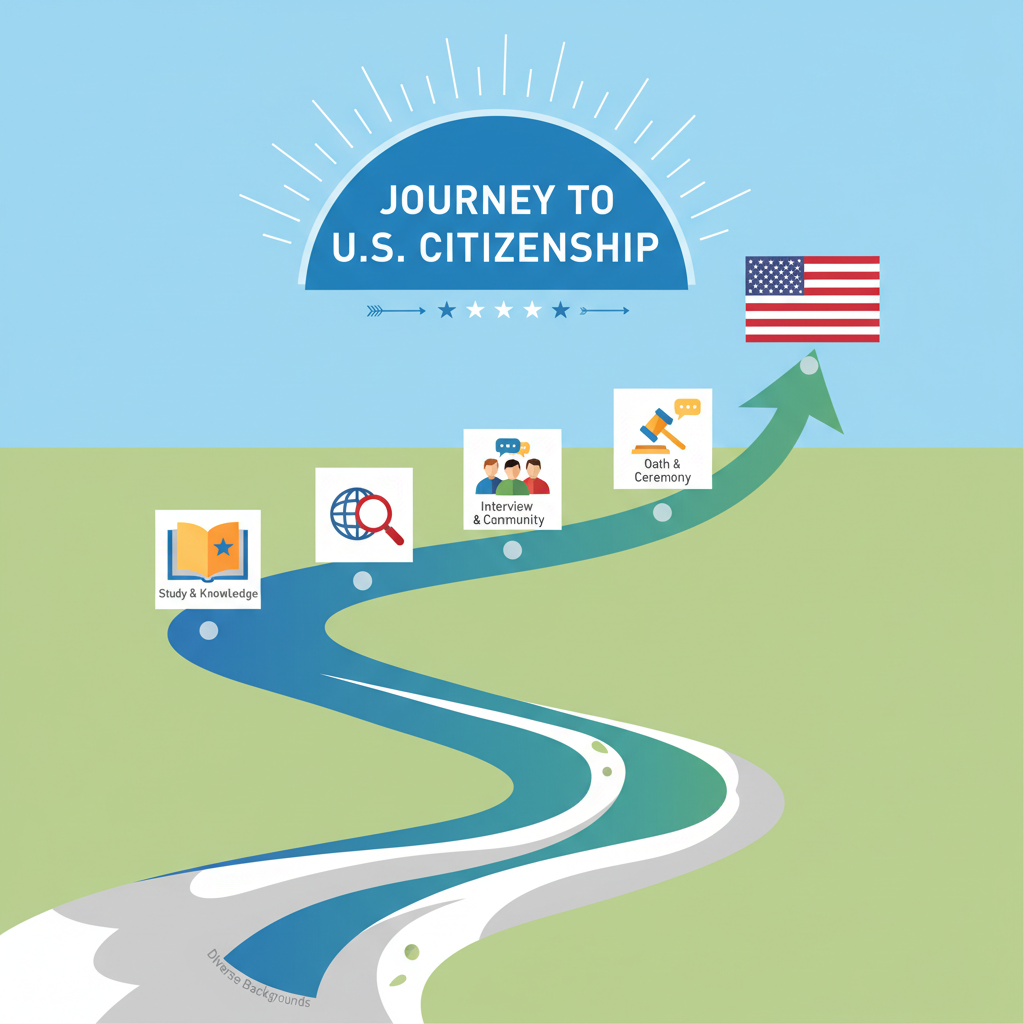
How to Apply for Naturalization: A Complete Step-by-Step Guide
The naturalization process is a multi-step journey. While the **Naturalization Test Changes** will affect one specific part of this journey, the overall steps remain consistent. Here's a comprehensive guide:
1) Determine Your Eligibility
Before anything else, you must confirm you meet all the basic requirements. This is the most crucial first step. Review the federal requirements mentioned above, paying close attention to residency, age, good moral character, and physical presence. Consider if any exemptions apply to you, such as those for military service members or spouses of U.S. citizens, which might shorten the required residency period. If you have any criminal history, consult an attorney to determine its impact on your **good moral character** assessment.
- Required Documents for Eligibility Check (Internal):
- Your **Green Card** (Form I-551)
- Marriage Certificate (if applying as spouse of U.S. citizen)
- Military service records (if applicable)
- Travel history records (entry/exit dates)
- Tax returns for the past 5 (or 3) years
2) Prepare and File Form N-400, Application for Naturalization
This is the core of your application. The **Form N-400** is extensive and requires detailed information about your personal history, residency, employment, travel, and moral character. Accuracy is paramount. Any discrepancies or omissions can lead to delays or even denial. Gather all supporting documents as you complete the form.
- Required Documents for Filing:
- Completed and signed **Form N-400** (download from USCIS Forms)
- Copy of your **Green Card** (front and back)
- Two passport-style photos (if filing by mail, check current USCIS instructions)
- Copy of your marriage certificate (if applicable)
- Copies of divorce decrees or death certificates for prior spouses (if applicable)
- Copies of birth certificates for your children (if applicable)
- Proof of selective service registration (for males 18-26)
- Certified copies of court dispositions for any arrests or convictions, even if expunged or dismissed.
- Fee payment (check or money order) or **Form I-912, Request for Fee Waiver**, if eligible.
- Translations of any foreign-language documents, certified by a competent translator.
Important: Ensure all sections are filled out truthfully and completely. If a question does not apply, write "N/A."
3) Attend Your Biometrics Appointment
After filing **Form N-400**, USCIS will send you an appointment notice (Form I-797C, Notice of Action) for a biometrics appointment at an Application Support Center (ASC). This typically occurs a few weeks after your application is filed. At this appointment, USCIS will collect your fingerprints, photograph, and signature. These are used for background checks and to verify your identity.
- Required Documents for Biometrics:
- Your official Biometrics Appointment Notice
- A valid photo identification (e.g., your Green Card, state ID, or passport)
Reminder: Do not miss this appointment. If you have an emergency, contact USCIS immediately to reschedule.
4) Prepare for the Naturalization Interview and Tests
This is where the upcoming **Naturalization Test Changes** become critical. After your biometrics, you will receive an interview notice. The interview covers your **Form N-400** application, your eligibility, your **good moral character**, and includes the English and Civics tests.
- English Test: You will be tested on your ability to speak, read, and write English. The officer will assess your speaking ability during the interview. For reading, you'll read one out of three sentences correctly. For writing, you'll write one out of three sentences correctly.
- Civics Test: You will be asked up to 10 questions from a list of 100 civics questions (currently). You must answer 6 out of 10 correctly to pass. **In 2026, this list and potentially the test format will change.** Start studying the current list now, but stay vigilant for official updates from USCIS regarding the new questions and study materials.
- Required Documents for Interview:
- Your Interview Appointment Notice
- Your **Green Card**
- Your passport and any other travel documents
- Originals of all documents you submitted with your **Form N-400** (marriage certificates, divorce decrees, birth certificates, court dispositions, tax returns, etc.)
- Any updated documents since filing (e.g., new employment, new address, recent tax returns)
- Proof of current residence (e.g., utility bills, lease agreements)
- Study materials for the English and Civics tests.
Warning: Be truthful and provide accurate information during your interview. If you need an interpreter (for the civics test only, if you qualify for an English exemption), ensure they are present.
5) Receive a Decision and Attend the Oath of Allegiance Ceremony
After your interview, the officer may provide a decision immediately or notify you by mail. If approved, you will typically receive a notice for your **Oath of Allegiance Ceremony**. This is the final step where you officially become a U.S. citizen. During the ceremony, you will surrender your **Green Card** and receive your Certificate of Naturalization.
- Required Documents for Oath Ceremony:
- Oath Ceremony Notice (**Form N-445**)
- Your **Green Card** (to be surrendered)
- Any re-entry permits or travel documents issued by USCIS
6) Understand Post-Naturalization Responsibilities
Congratulations, you are now a U.S. citizen! Your journey doesn't end here. As a new citizen, you have new rights and responsibilities:
- Register to Vote: You can now vote in federal, state, and local elections.
- Apply for a U.S. Passport: Your Certificate of Naturalization is proof of citizenship, but a U.S. passport is your official travel document.
- Petition for Relatives: You may now petition for certain family members to immigrate to the U.S. with more favorable categories and processing times.
- Serve on a Jury: You may be called for jury duty, a civic responsibility.
- Required Documents for Post-Naturalization:
- Your original Certificate of Naturalization
- Application for a U.S. Passport (**Form DS-11**)
Practical Steps You Can Take Today for Naturalization
Even with **Naturalization Test Changes** on the horizon, there are many proactive steps you can take now to ensure your naturalization journey is smooth and successful. Especially for those in Orlando and Central Florida, early preparation is key.
- Start Studying for the Current Civics Test: While the test is changing in 2026, the core principles of U.S. history and government remain. Familiarize yourself with the current 100 civics questions available on the USCIS official website. This will build a strong foundation for understanding the new material when it is released.
- Improve Your English Language Skills: The English test components (reading, writing, speaking) are unlikely to change drastically. Engage in activities that boost your English proficiency: read English newspapers, watch English-language TV, practice speaking with native speakers, and take ESL classes.
- Gather All Required Documents: Begin compiling all necessary supporting documents for **Form N-400** now. This includes your **Green Card**, birth certificates, marriage/divorce certificates, tax returns for the statutory period, and any court or police records. Organizing these early will save you significant time and stress.
- Maintain Good Moral Character: Ensure you continue to meet the **good moral character** requirement. This means avoiding any criminal activity, paying your taxes on time, registering for Selective Service if required, and being truthful in all interactions with government agencies.
- Consult with an Immigration Attorney: The most crucial step. An experienced immigration lawyer, like those at Imigrar in Orlando, can assess your eligibility, identify potential issues (especially related to **good moral character** or complex residency calculations), and guide you through the entire application process, including preparing for the new test format. They can also advise you on the best time to file your application relative to the 2026 changes.
- Stay Informed about USCIS Updates: Regularly check the USCIS official website for official announcements regarding the **Naturalization Test Changes**. Imigrar will also provide updates as soon as they are confirmed.
- Check USCIS Processing Times: Keep an eye on the USCIS Processing Times for the Orlando Field Office to get an idea of the current timeline for naturalization applications.
Document Preparation Guidance
- Organize: Create a dedicated folder for your naturalization documents. Label sections clearly (e.g., "Personal IDs," "Marriage/Divorce," "Tax Records," "Travel History").
- Copy Everything: Make clear photocopies of all documents you plan to submit. You will also need to bring the originals to your interview.
- Translate and Certify: Any document not in English must be accompanied by a complete and accurate English translation, certified by a competent translator.
- Review and Verify: Double-check all dates, names, and numbers on your documents against your **Form N-400** to ensure consistency.
Timeline Expectations
The naturalization process can take anywhere from **6 months to 2 years**, or even longer, depending on the USCIS field office workload, the complexity of your case, and any unforeseen delays. The **90-day window** before your eligibility date allows you to file early, but your eligibility period must be fully met by the time of your interview. The **Naturalization Test Changes** in 2026 mean that if you apply closer to or after that date, you will likely face the new test. Consulting with an attorney can help you strategize the optimal filing time.
Ready to Apply? Don't go through the Naturalization process alone. Imigrar is here to


Have Questions About Your Case?
Schedule a free consultation with our attorney-reviewed team today