
As an immigrant in the United States, the journey to citizenship is often the culmination of years of hard work, dedication, and a deep desire to build a permanent home. The Naturalization Test is a critical step in this process, designed to ensure that prospective citizens have a foundational understanding of U.S. history, government, and civics, as well as proficiency in English.
At Imigrar, an immigration law firm based in Orlando, Florida, we understand the significance of this journey. Our mission, "Keep Families Together," drives us to provide accurate, timely, and compassionate legal guidance to immigrants nationwide, including our vibrant community here in Central Florida. Today, we delve into important news that will impact many on their path to becoming U.S. citizens: the upcoming Naturalization Test changes expected in 2026.
The reporting that sparked this guide:
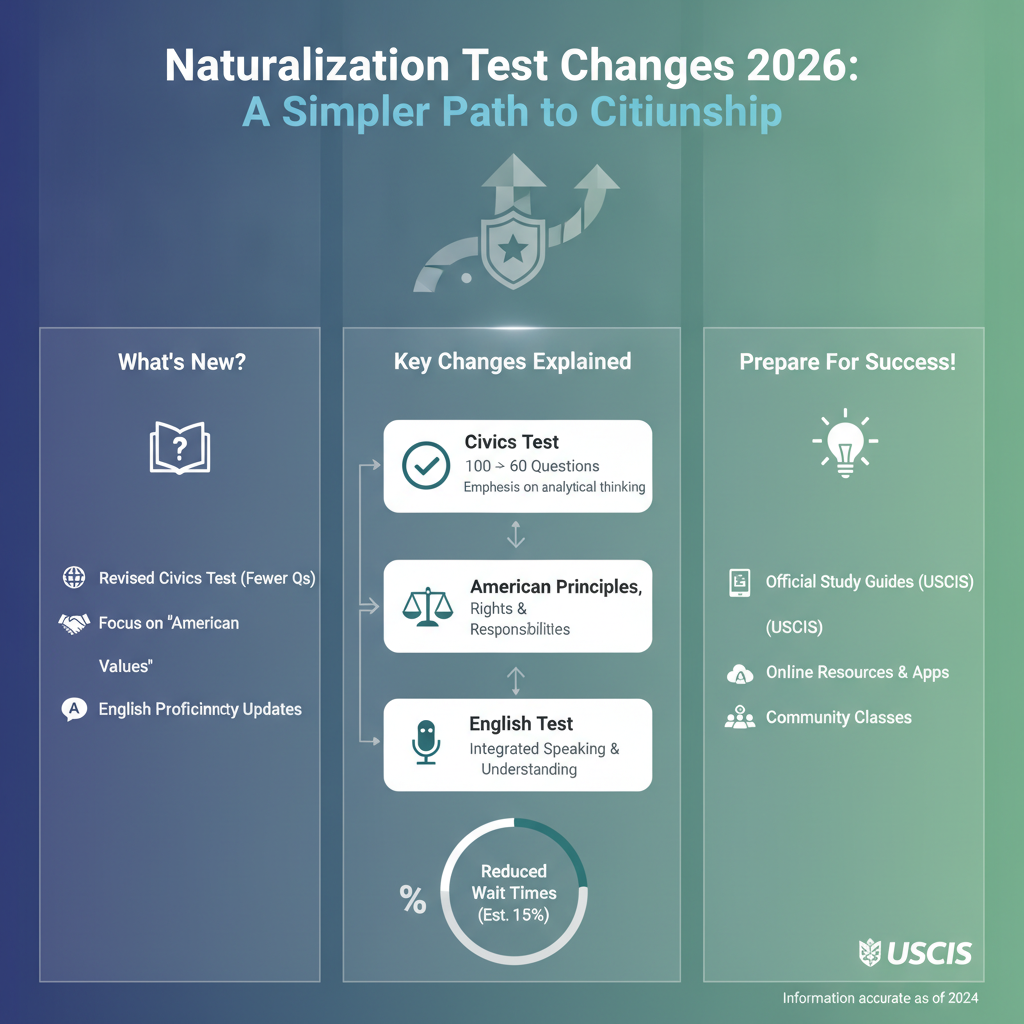
Naturalization Test Changes Coming in 2026 (Citizenship)
What This News Means for Immigrants in Orlando and Across Florida
The prospect of changes to a crucial part of the naturalization process can naturally bring questions and concerns. For those living in Orlando, throughout Florida, and indeed across the nation, understanding these impending adjustments is paramount to preparing effectively for U.S. citizenship.
Why this news is showing up now
The U.S. Citizenship and Immigration Services (USCIS) has a history of periodically reviewing and updating the naturalization test to ensure it remains relevant and effective. The most recent significant change occurred in December 2020, under the previous administration, which introduced a longer and more complex civics test. However, this version was quickly reverted in February 2021, and USCIS returned to the 2008 version of the civics test.
Following this, in December 2022, USCIS announced its intention to develop a new version of the naturalization test. This development process includes a pilot program to test potential new formats and questions. The goal is to ensure the test is standardized, up-to-date, and accurately assesses an applicant's knowledge of U.S. civics and their English language proficiency. The "changes coming in 2026" refer to the anticipated rollout of this newly developed test, after the pilot phase, public feedback, and finalization by USCIS. This news is surfacing now because the development and pilot phases are well underway, making the 2026 implementation a tangible and approaching reality. Immigrar is closely monitoring these developments to provide the most current advice.
How it can affect Florida residents
For individuals residing in Florida, particularly those in the Orlando metropolitan area, the upcoming changes will directly impact their preparation for the naturalization interview at the Orlando USCIS Field Office or other field offices across the state, such as Miami, Tampa, or Jacksonville. While the core requirements for naturalization—such as continuous residency, good moral character, and attachment to the U.S. Constitution—remain unchanged, the way an applicant demonstrates their knowledge of civics and English will evolve.
Specifically, Florida residents might need to:
- Adjust Study Methods: The new test format could be more interactive or conversational, moving beyond rote memorization of the current 100 civics questions.
- Focus on English Comprehension: If the test becomes more scenario-based, a deeper understanding of spoken and written English will be crucial, not just the ability to read and write simple sentences.
- Stay Informed Locally: While the test is federal, local community organizations and legal aid groups in Orange County and surrounding areas often provide naturalization preparation classes. These organizations will need to update their curricula, and applicants should seek out programs that reflect the new test structure.
- Consult with an Attorney: An immigration attorney in Orlando can provide personalized advice based on the latest USCIS guidelines, helping applicants understand how the changes specifically apply to their case and what additional preparation might be needed.
Understanding these potential shifts now allows applicants in Central Florida and beyond to begin adapting their preparation strategies, ensuring they are well-equipped to meet the new standards when they come into effect.
Need Help Navigating Naturalization Changes? Our Orlando immigration team is ready to assist. Call +1 786-791-3106 for a free consultation, or message us online. Se Habla Español.
What Naturalization Test Changes Are (and Why It Matters)
The news about forthcoming changes to the Naturalization Test in 2026 is significant because it directly impacts the final hurdle for many aspiring U.S. citizens. To fully grasp its importance, it's essential to understand what naturalization entails and the role of the test within that process.
A plain-English definition
Naturalization is the process by which a foreign citizen or national can voluntarily become a U.S. citizen. It’s the final step for many immigrants who have legally resided in the United States for a specified period and meet other eligibility requirements. The Naturalization Test is a mandatory component of this process for most applicants. It consists of two parts: an English test and a civics test.
- The English test assesses an applicant's ability to read, write, and speak basic English.
- The Civics test evaluates an applicant's knowledge and understanding of U.S. history, government, and civics.
The upcoming changes refer to modifications in the format, content, or administration of these tests, particularly the civics portion. While the core purpose remains the same—to ensure applicants can demonstrate a basic understanding of American life and language—the method of assessment is being updated.
Key terms you need to know
Navigating the naturalization process requires familiarity with several key terms:
- USCIS (U.S. Citizenship and Immigration Services): The government agency responsible for overseeing lawful immigration to the United States. They administer the naturalization process, including the test.
- Form N-400, Application for Naturalization: This is the primary form you must file to apply for U.S. citizenship. It gathers extensive personal, residency, and background information.
- Naturalization Interview: This is the meeting with a USCIS officer where your Form N-400 is reviewed, your eligibility is confirmed, and you take the English and civics tests.
- Civics Test: The portion of the naturalization test that covers U.S. history and government. Currently, applicants are asked up to 10 questions from a list of 100 possible questions. The changes primarily focus on this part.
- English Test: The portion that assesses your ability to read, write, and speak basic English. It typically involves reading a sentence, writing a sentence, and answering questions from the USCIS officer during the interview.
- Good Moral Character: A crucial eligibility requirement for naturalization, meaning you must demonstrate adherence to basic moral standards for a specified period (usually 3 or 5 years) prior to your application and up to the Oath of Allegiance.
- Continuous Residence: Another key eligibility requirement, meaning you must have maintained your residence in the U.S. for a certain period without significant breaks.
- Oath of Allegiance: The final step in the naturalization process, where you formally pledge loyalty to the United States and renounce allegiance to any foreign state.
The changes anticipated for 2026 are expected to make the civics test more interactive and potentially introduce new question formats that go beyond simple recall. This means that while the core subject matter will likely remain, the way it's presented and the depth of understanding required could shift, making comprehensive preparation even more vital. Understanding these terms will empower you to follow the process and prepare effectively.
Current Naturalization Law: The Foundation
Before delving into the specifics of the upcoming test changes, it's crucial to understand the bedrock of current naturalization law. U.S. citizenship through naturalization is governed primarily by the Immigration and Nationality Act (INA). This foundational law outlines the eligibility requirements and procedures that all applicants must meet.
Federal requirements
The core eligibility requirements for naturalization are established at the federal level by the INA, particularly sections 310 through 347. Most applicants fall under INA § 316(a) or § 319(a). Here are the primary federal requirements:
- Age: You must be at least 18 years old at the time of filing Form N-400.
- Lawful Permanent Resident (Green Card Holder): You must be a lawful permanent resident (Green Card holder) for at least five years immediately preceding the date of filing your Form N-400. This period can be reduced to three years if you are married to a U.S. citizen and meet specific conditions, as outlined in INA § 319(a).
- Continuous Residence: You must have resided continuously in the U.S. as a lawful permanent resident for at least five years (or three years if married to a U.S. citizen). You cannot have left the U.S. for a continuous period of one year or more during this time.
- Physical Presence: You must have been physically present in the U.S. for at least half of the required continuous residence period (e.g., 30 months out of 5 years, or 18 months out of 3 years).
- Residence in USCIS District or State: You must have resided for at least three months immediately preceding the filing of Form N-400 in the state or USCIS district where you file your application. For those in Orlando, this means living in Florida for that period.
- Good Moral Character: You must demonstrate Good Moral Character for the statutory period (typically 3 or 5 years) preceding your application and up to the Oath of Allegiance. This involves a review of your criminal record, tax history, and other conduct. Certain crimes or activities can bar you from establishing Good Moral Character.
- English Language Proficiency: You must be able to read, write, and speak basic English. This is tested during the naturalization interview. Certain exemptions apply for age and length of residency (e.g., applicants 50 years old and residing in the U.S. for 20 years, or 55 years old and residing for 15 years, are exempt from the English test but must take the civics test in their native language with an interpreter).
- Civics Knowledge: You must demonstrate knowledge and understanding of the fundamentals of U.S. history, government, and civics. This is the Civics Test portion of the interview. Exemptions are available for certain medical conditions.
- Attachment to the Constitution: You must demonstrate an attachment to the principles and ideals of the U.S. Constitution and be willing to take the Oath of Allegiance.
For more detailed information on eligibility and the naturalization process, always refer to the official USCIS official website.
Florida-specific considerations
While naturalization is a federal process, there are practical considerations for Florida residents:
- USCIS Field Offices: Applicants residing in Orlando and surrounding areas like Orange County will typically have their naturalization interview scheduled at the Orlando USCIS Field Office. Other major field offices in Florida include Miami, Tampa, and Jacksonville. The specific office depends on your residential address.
- Community Resources: Florida has numerous community organizations, non-profits, and adult education centers that offer naturalization preparation classes, often with free or low-cost options. For residents along the I-4 corridor, these resources are readily accessible.
- Legal Support: Given the complexity of immigration law and the specific requirements for naturalization, having experienced legal counsel is invaluable. An Orlando immigration lawyer familiar with local USCIS practices can help ensure your application is complete and accurate, and prepare you for the interview, especially with the upcoming test changes.
Understanding these foundational laws and local nuances is the first step toward a successful naturalization journey. The upcoming test changes in 2026 will build upon these existing requirements, making diligent preparation even more critical.
How to Prepare for the Naturalization Test Changes: A Complete Step-by-Step Guide
With the Naturalization Test changes on the horizon for 2026, proactive and informed preparation is more important than ever. This guide outlines the steps you should take to ensure you are ready, regardless of the exact format of the new test.
1) Understand the Current Test vs. Proposed Changes
Before you can prepare for the future, you must understand the present. The current civics test involves answering 6 out of 10 questions correctly from a list of 100 possible questions. The English test involves reading one out of three sentences correctly and writing one out of three sentences correctly, in addition to conversational assessment.
Proposed Changes: USCIS has indicated the new test might be more interactive, potentially incorporating scenario-based questions that require critical thinking rather than just memorization. The English portion might also become more dynamic, assessing comprehension and conversational ability more deeply. While the exact details are not yet finalized, the shift is towards a more comprehensive assessment of civic knowledge and English proficiency.
- Action: Familiarize yourself with the current 100 civics questions and practice the current English reading and writing tests. This provides a strong baseline.
- Documents/Resources: USCIS Civics Test Study Guide (current 100 questions), USCIS English Test examples.
2) Review the Existing 100 Civics Questions and Study Materials
Even with changes coming, the fundamental principles of U.S. history and government will remain. The current 100 civics questions cover core topics that will likely still be relevant, even if the format of asking them changes. Consider these questions as your foundational knowledge base.
- Action: Thoroughly study the official 100 civics questions and answers provided by USCIS. Don't just memorize; try to understand the concepts behind the answers.
- Documents/Resources: USCIS Study Materials, Civics Flash Cards, "Learn About the United States: Quick Civics Lessons for the N-400 Test."
3) Stay Informed on Official USCIS Updates
The most critical step is to monitor official announcements from USCIS. They will be the authoritative source for the new test format, sample questions, and implementation timelines. Relying on unofficial sources can lead to misinformation and inadequate preparation.
- Action: Regularly check the "Citizenship Resource Center" on the USCIS official website. Subscribe to USCIS email updates if available. Consult with your immigration attorney for the latest official information.
- Documents/Resources: USCIS website announcements.
4) Enhance Your English Proficiency (Reading, Writing, Speaking, Listening)
If the new test becomes more interactive, a strong command of English across all four domains will be paramount. This goes beyond basic vocabulary and sentence structure to include comprehension and the ability to articulate thoughts clearly.
- Action: Engage in daily English practice. Read English newspapers (like the Orlando Sentinel), watch English-language news and TV shows, listen to English podcasts, and actively practice speaking with native speakers or in English classes. Focus on understanding questions and formulating clear answers.
- Documents/Resources: English language learning apps, local ESL classes in Orlando or Orange County, conversation groups.
5) Gather and Organize All Required Documents for Form N-400
While the test is changing, the application form and supporting documents for Form N-400 are not. A complete and accurate application package is essential for a smooth process. Start gathering these documents well in advance.
- Action: Create a checklist and systematically collect all necessary documents. Make copies and organize them clearly.
- Required Documents (common examples):
- Copy of your Green Card (both sides)
- Copy of your current and expired passports (if applicable)
- Marriage certificate (if applicable, for 3-year rule)
- Divorce decrees (if applicable)
- Birth certificates of children (if applicable)
- Tax returns for the past 3-5 years (proof of good moral character, especially if you have tax issues)
- Proof of selective service registration (for males 18-26)
- Certified court dispositions for any arrests or citations (even minor ones)
- Travel history (dates of all trips outside the U.S. for the past 5 years)
- Two passport-style photos
- Fee payment (or Fee Waiver application, Form I-912)
6) Seek Professional Legal Guidance from Imigrar
Navigating immigration law, especially during periods of change, can be complex. An experienced immigration attorney can provide personalized advice, ensure your application is flawless, and help you prepare specifically for the new test format.
- Action: Schedule a consultation with an immigration lawyer at Imigrar. Our team in Orlando can assess your eligibility, review your documents, prepare your Form N-400, and provide specific strategies for the updated test.
- Documents/Resources: Imigrar contact information: +1 786-791-3106.
7) Practice for the Naturalization Interview
The naturalization interview is more than just the English and civics tests. It's a comprehensive review of your Form N-400 and your eligibility. The USCIS officer will ask questions about your application, personal history, and good moral character. Practice answering these questions clearly and honestly.
- Action: Conduct mock interviews with family, friends, or your attorney. Practice explaining any discrepancies or complex parts of your application. Be prepared to discuss your travel history, employment, and any past legal issues.
- Documents/Resources: Your completed Form N-400 and supporting documents.
Practical Steps You Can Take Today
Don't wait until the 2026 changes are fully implemented to begin your preparation. There are many actionable steps you can take right now to build a strong foundation for your naturalization application and test success, especially for those living in Orlando and Central Florida.
Ready to Start Your Citizenship Journey? Imigrar's Orlando team offers expert guidance through every step. Call +1 786-791-3106 for a free consultation. Se Habla Español.
Actionable Checklist for Aspiring Citizens:
- Review Your Eligibility: Confirm you meet all current naturalization requirements (age, residency, good moral character, etc.). Use the USCIS website's eligibility tool.
- Start Studying Current Civics: Master the 100 civics questions and answers. This foundational knowledge will be invaluable regardless of future test format changes. Use flashcards and online quizzes.
- Improve Your English Daily: Read, write, speak, and listen to English every day. Join a local English conversation group in Orlando or a nearby community. Watch local news channels (e.g., WKMG, WFTV) to improve listening comprehension.
- Gather Your Documents: Begin compiling all necessary supporting documents for Form N-400. This includes your Green Card, passports, tax records, marriage/divorce certificates, and any court documents. Organization is key.
- Check Your Travel History: Accurately list all your international trips for the past 5 years (or 3 years if applicable). Ensure no single trip exceeded 6 months, or if it did, understand the implications.
- Address Any Legal Issues: If you have any arrests, citations, or legal issues, even minor ones, gather certified court dispositions. Consult an attorney immediately to understand their impact on your Good Moral Character.
- Save for Application Fees: The Form N-400 filing fee can be substantial. Start saving now, or research eligibility for a fee waiver (Form I-912).
- Consider Professional Help: Schedule a consultation with an experienced immigration attorney at Imigrar. They can provide personalized advice, help you understand the nuances of the upcoming changes, and ensure your application is robust.
Document Preparation Guidance:
- Create a Master Folder: Keep all original documents in a secure place and create a separate working folder with photocopies for your application.
- Organize by Category: Group documents by type (e.g., Green Card copies, tax returns, travel records).
- Label Clearly: Label each document with a brief description.
- Get Certified Copies: For court records or vital statistics, ensure you obtain certified copies, not just regular photocopies.
- Translate Foreign Documents: Any document not in English must be accompanied by a certified English translation.
- Keep a Copy of Everything: Before submitting your application to USCIS, make a complete copy of your entire application package for your records.
Timeline Expectations:
The naturalization process can take time, often ranging from 8 to 24 months, depending on the USCIS field office and current processing loads. The Orlando USCIS Field Office processing times can be checked on the USCIS Processing Times page.
- Preparation Phase (1-3 months): Gathering documents, studying, and preparing Form N-400.
- Application Submission to Interview (6-18 months): After filing Form N-400, you'll receive a receipt notice, then an appointment for biometrics, and finally, your interview notice.
- Interview to Oath Ceremony (1-4 months): If approved, you'll receive a notice for your Oath of Allegiance ceremony.
Important: These timelines are estimates and can fluctuate. The 2026 test changes might also temporarily affect processing times as USCIS implements and adapts to the new system. Starting early and being well-prepared is the best way to manage these timelines.
How Imigrar Helps Immigrants in Orlando Navigate Naturalization Changes
The journey to U.S. citizenship is a significant milestone, and with upcoming changes to the Naturalization Test in 2026, having knowledgeable legal support is more crucial than ever. At Imigrar, we are dedicated to guiding individuals and families in Orlando, Central Florida, and across the nation through this complex process with confidence and clarity.
Our experience and expertise
Imigrar is an Orlando-based immigration law firm with a deep understanding of U.S. immigration laws and procedures. Our team of experienced attorneys specializes in naturalization cases, helping countless clients achieve their dream of becoming U.S. citizens. We pride ourselves on:
- Up-to-Date Knowledge: We continuously monitor all USCIS announcements, policy changes, and legal precedents, including the ongoing developments regarding the 2026 Naturalization Test changes. This ensures our advice is always current and accurate.
- Personalized Strategy: Every client's situation is unique. We provide tailored legal strategies, assessing individual eligibility, identifying potential challenges (such as issues with Good Moral Character or continuous residency), and preparing comprehensive applications.
- Comprehensive Application Preparation: We assist with the meticulous preparation of Form N-400 and all supporting documents, ensuring everything is complete, accurate, and properly organized to avoid delays or denials.
- Interview Preparation: Our team provides thorough preparation for the naturalization interview, including mock interviews, guidance on what to expect at the Orlando USCIS Field Office, and specific coaching for the English and civics tests, adapting our methods as the new test details emerge.
- Addressing Complex Cases: Whether you have a criminal record, extensive travel history, or other complexities, our attorneys have the expertise to address these issues proactively and present your case effectively to USCIS.
Our commitment is to "Keep Families Together" by providing compassionate and effective legal representation. We understand the anxieties that can accompany immigration processes, and we strive to make your path to citizenship as smooth and stress-free as possible.
Free consultation offer
We believe that access to expert legal advice should be within reach. That's why Imigrar offers a free consultation to discuss your naturalization eligibility and how the upcoming test changes might affect you. This is an opportunity to:
- Have your questions answered by an experienced attorney.
- Understand the current naturalization requirements and the expected changes.
- Receive an initial assessment of your case and potential next steps.
- Learn how Imigrar can support you throughout the entire process, from application filing to the Oath of Allegiance ceremony.
Don't navigate these changes alone. Let our Orlando-based team provide the clarity and support you need.
Se Habla Español. We are proud to serve the diverse immigrant community of Florida and beyond, offering our services in both English and Spanish to ensure clear communication and understanding for all our clients.

Frequently Asked Questions About Naturalization and the Upcoming Test Changes
Q: Who is eligible to apply for U.S. naturalization?
A: Generally, you must be at least 18 years old, a lawful permanent resident (Green Card holder) for at least 5 years (or 3 years if married to a U.S. citizen), have maintained continuous residence and physical presence in the U.S., demonstrate Good Moral Character, show basic English proficiency, pass a civics test, and be willing to take the Oath of Allegiance. Specific exemptions apply for certain military personnel or individuals with medical conditions. It's crucial to review the detailed requirements on the USCIS official website or consult an attorney.


