


The journey to U.S. citizenship is a significant milestone for many immigrants, symbolizing a new chapter of belonging and opportunity. A crucial part of this journey is the naturalization interview, which includes the English and civics tests. As an immigration law firm dedicated to keeping families together, Imigrar understands the importance of staying informed about any changes to this process.
Today, we're addressing a topic that has generated considerable discussion and concern among aspiring U.S. citizens: the impending changes to the Naturalization Test in 2026. These updates are more than just minor tweaks; they represent a shift in how civic knowledge will be assessed, requiring careful preparation from applicants.
Feeling overwhelmed by upcoming changes? Don't navigate the naturalization process alone. Our experienced Orlando immigration team at Imigrar is here to guide you. Call +1 786-791-3106 for a free consultation, or message us online. Se Habla Español.
The reporting that sparked this guide
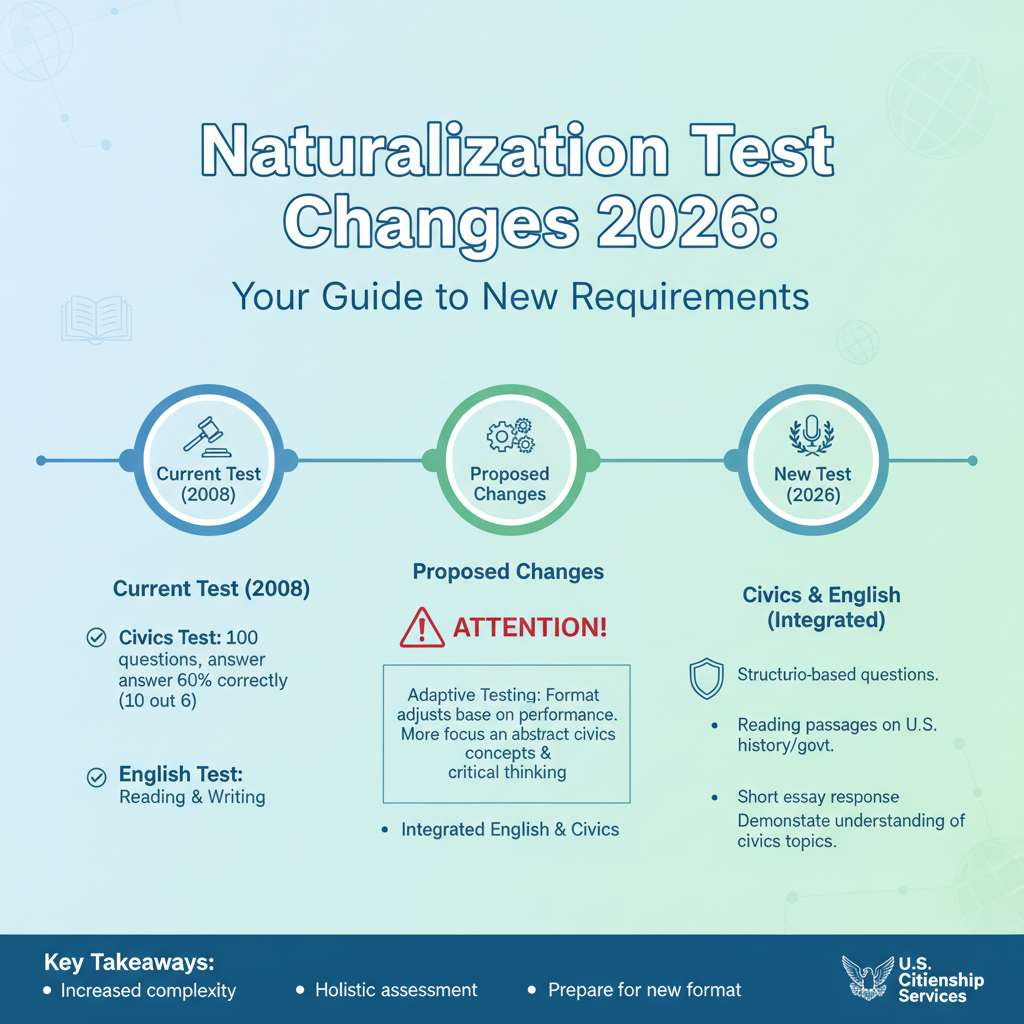
The news of impending changes to the Naturalization Test has been circulating, prompting questions and a need for clarity among immigrant communities nationwide. This comprehensive guide is inspired by recent reports on these significant updates:
Naturalization Test Changes Coming in 2026 (Citizenship)
What This News Means for Immigrants in Orlando and Across Florida
The prospect of changes to a fundamental part of the citizenship process can be daunting. For individuals and families in Orlando, throughout Central Florida, and across the entire state, understanding these updates is paramount to a successful naturalization journey.
Why this news is showing up now
The U.S. Citizenship and Immigration Services (USCIS) periodically reviews and updates its naturalization test components to ensure they remain relevant, fair, and effective in assessing an applicant's knowledge of U.S. history and government. This isn't the first time the test has seen revisions; there was a significant update in December 2020 under the previous administration, which was later reverted in February 2021 to the 2008 version. These past experiences highlight USCIS's ongoing commitment to refining the test.
The current push for changes, slated for implementation in 2026, stems from a desire to modernize the civics portion of the test. USCIS has indicated that the goal is to make the test more engaging, reflective of current civics education standards, and potentially more conversational. This means moving beyond simple recall of facts to potentially assessing a deeper understanding of civic principles and the functions of government. The agency has been conducting pilot programs and gathering feedback to inform the final design of the new test, ensuring a thoughtful and evidence-based approach to its implementation.
How it can affect Florida residents
While the Naturalization Test is a federal requirement, its changes will directly impact thousands of aspiring citizens living in Florida. Whether you reside in Orlando, along the I-4 corridor, in Miami, Tampa, or any other part of the Sunshine State, the new test format and questions will apply to your application if you file on or after the effective date in 2026.
- Increased Preparation Time: For many, the current 100 civics questions are already a significant study undertaking. The new format, which may include more open-ended or scenario-based questions, will likely require a different approach to studying. Florida residents planning to apply for naturalization in 2026 or later should start preparing early and monitor USCIS announcements for official study materials.
- Impact on Local Resources: Community organizations, libraries, and legal aid groups in Florida that offer citizenship preparation classes will need to update their curricula. Imigrar, with its strong presence in Orlando, is already gearing up to provide the most current information and tailored preparation strategies to our clients.
- Orlando USCIS Field Office: The Orlando USCIS Field Office, like all others nationwide, will implement the new test. Understanding the local office's procedures and having an attorney familiar with the nuances of the Orlando immigration landscape can be a significant advantage.
- Language Access: For Florida's large Spanish-speaking population, the availability of study materials and guidance in Spanish will be crucial. Imigrar is proud to offer services in both English and Spanish (Se Habla Español) to ensure all our clients are well-prepared.
Important: These changes underscore the need for proactive engagement with reliable sources of information and, ideally, legal counsel to navigate the updated requirements effectively.
What Naturalization Test Changes Are (and Why It Matters)
Understanding the core concept of naturalization and the role of the test is the first step toward appreciating the significance of these upcoming changes.
A plain-English definition
Naturalization is the process by which a foreign citizen or national becomes a U.S. citizen. It's the final stage of a long immigration journey for many, granting rights and responsibilities, including the right to vote and hold certain public offices. A key component of this process is demonstrating a commitment to and understanding of American society, which is assessed through the Naturalization Test. This test has two main parts:
- English Test: Evaluates an applicant's ability to read, write, and speak basic English.
- Civics Test: Assesses an applicant's knowledge of U.S. history and government.
The "changes" coming in 2026 primarily refer to modifications in the Civics Test questions and possibly their format. Instead of simply memorizing facts, applicants may be asked to demonstrate a more nuanced understanding of civic principles.
Key terms you need to know
- Naturalization: The process of becoming a U.S. citizen after fulfilling specific requirements.
- Civics Test: The portion of the naturalization interview that evaluates an applicant's knowledge of U.S. history and government. This is the part undergoing significant changes.
- English Test: The portion of the naturalization interview that evaluates an applicant's ability to read, write, and speak basic English.
- USCIS (U.S. Citizenship and Immigration Services): The federal agency responsible for administering immigration and naturalization benefits. This is the agency implementing the test changes. You can find official information on their USCIS official website.
- Form N-400: The official application form for naturalization. Filing this form initiates the citizenship process.
- Oath of Allegiance: The final ceremonial step where an applicant publicly pledges loyalty to the United States and its Constitution, officially becoming a U.S. citizen.
- Good Moral Character: A legal requirement for naturalization, meaning an applicant must have demonstrated adherence to societal standards of morality for a specified period.
- Continuous Residence: The requirement that an applicant maintains a residence within the U.S. for a certain period before applying for naturalization.
- Physical Presence: The requirement that an applicant must have actually been physically present in the U.S. for a certain cumulative period.
These changes matter because they directly impact how you prepare and perform in a critical part of your citizenship interview. A shift in the test format or content means that study strategies that worked for previous applicants may no longer be sufficient. Successful navigation of these updates will be key to avoiding delays or denials in your naturalization application.
Confused by immigration terminology or new test requirements? Imigrar breaks down complex legal concepts into clear, actionable advice. Reach out to our Orlando team at +1 786-791-3106 for a free consultation. Se Habla Español.
Current Immigration Law: The Foundation for Naturalization
Before diving into the specifics of the test changes, it's essential to understand the legal framework that governs naturalization. The U.S. citizenship process is rooted in federal law, primarily the Immigration and Nationality Act (INA).
Federal requirements
The INA outlines the general requirements for naturalization. Key sections include:
- INA § 312: This section specifically addresses the English language and civics knowledge requirements. It mandates that an applicant must demonstrate an ability to read, write, and speak words in ordinary usage in the English language and have a knowledge and understanding of the fundamentals of U.S. history and principles and form of government.
- INA § 316: This section details the general requirements for naturalization, which include:
- Age: Be at least 18 years old at the time of filing Form N-400.
- Lawful Permanent Resident (Green Card Holder): Have been a lawful permanent resident for at least 5 years (or 3 years if married to a U.S. citizen and meet other specific criteria).
- Continuous Residence: Have resided continuously in the U.S. for at least 5 years (or 3 years) immediately preceding the date of filing the application and up to the time of naturalization.
- Physical Presence: Have been physically present in the U.S. for at least half of the required continuous residence period (e.g., 30 months out of 5 years, or 18 months out of 3 years).
- Residence in USCIS District: Have resided for at least 3 months in the state or USCIS district where you file your Form N-400. For Central Florida residents, this would typically be within the jurisdiction of the Orlando USCIS Field Office.
- Good Moral Character: Demonstrate Good Moral Character for the statutory period (usually 5 or 3 years) leading up to the application and until naturalization. This includes having a clean criminal record, paying taxes, and generally abiding by the law.
- Attachment to the U.S. Constitution: Demonstrate an attachment to the principles of the U.S. Constitution and a willingness to take the Oath of Allegiance.
Applicants must file Form N-400, Application for Naturalization, to initiate the process. In some cases, individuals with certain medical conditions preventing them from learning English or civics may apply for an exception using Form N-648, Medical Certification for Disability Exceptions. All official forms and detailed instructions are available on the USCIS Forms page.
Florida-specific considerations
While the requirements for naturalization are federal, the application process is handled by USCIS field offices located throughout the country. For Central Florida residents, the Orlando USCIS Field Office is the primary point of contact for interviews and other in-person appointments. While the Naturalization Test itself is standardized, local office procedures can affect scheduling and specific aspects of your interview experience.
Florida also has a robust network of community organizations and educational institutions that offer assistance with citizenship preparation. However, it's crucial to ensure that any resources used for the new test are up-to-date once official materials are released by USCIS. Imigrar continuously monitors these local nuances and federal updates to provide the most accurate and effective guidance to our clients in Orlando and across Florida.

How to Prepare for Naturalization (and the New Test): A Complete Step-by-Step Guide
Navigating the naturalization process, especially with upcoming changes, requires a structured approach. Here's a detailed guide to help you prepare.
1) Determine Your Eligibility
Before anything else, confirm you meet the fundamental criteria for naturalization. This is the bedrock of your application.
- Age: You must be at least 18 years old.
- Green Card Status: You must be a Lawful Permanent Resident (Green Card holder).
- Continuous Residence: Generally, you need 5 years of continuous residence as a Green Card holder immediately preceding your application. This period reduces to 3 years if you are married to and living with a U.S. citizen for that entire time, and meet other requirements.
- Physical Presence: You must have been physically present in the U.S. for at least half of your continuous residence period (e.g., 30 months for the 5-year rule, 18 months for the 3-year rule).
- Residence in State/USCIS District: You must have resided for at least 3 months in the state or USCIS district where you file your Form N-400.
- Good Moral Character: You must demonstrate Good Moral Character for the statutory period.
Required Documents for Eligibility Assessment:
- Your current Green Card (Form I-551)
- Passports and travel records (to verify physical presence and continuous residence)
- Marriage certificate (if applying under the 3-year rule)
Warning: Any extended trips outside the U.S. can impact your continuous residence or physical presence. Consult an attorney if you have spent significant time abroad.
2) Prepare and File Form N-400
This is the official application to become a U.S. citizen. Accuracy and completeness are critical.
- Obtain the Form: Download the latest version of Form N-400, Application for Naturalization from the USCIS Forms website.
- Fill Out Carefully: Answer every question truthfully and completely. If a question doesn't apply, write "N/A." If you need more space, attach a separate sheet.
- Gather Supporting Documents: This typically includes copies of your Green Card, marriage certificate (if applicable), birth certificates of children, tax transcripts for the past 5 years (or 3 years), and any certified court dispositions for arrests or citations, even if expunged or dismissed.
- Photographs: While USCIS often takes photos at biometrics, review the instructions for any specific photo requirements.
- Filing Fee: Include the correct filing fee. As of the date of this article, it is $725 (which includes the biometrics fee), but always verify on the USCIS website. Fee waivers (Form I-912) may be available for eligible applicants.
- Submit Your Application: You can file Form N-400 online through a USCIS online account or by mail to the appropriate USCIS Lockbox facility.
Required Documents for Filing Form N-400:
- Copy of your Green Card (front and back)
- Copies of marriage certificates, divorce decrees, or death certificates (if applicable)
- Copies of birth certificates for children (if applicable)
- Evidence of selective service registration (for males 18-26)
- Certified court dispositions for any arrests, citations, or criminal incidents
- Tax transcripts for the past 5 (or 3) years
- Passport-style photographs (if required by instructions)
3) Attend Biometrics Appointment
After filing Form N-400, you will receive an appointment notice for biometrics collection.
- Receive Notice: USCIS will send you Form I-797C, Notice of Action, with the date, time, and location of your biometrics appointment.
- What Happens: At the appointment, your fingerprints, photograph, and signature will be collected. These are used for background checks.
- Be Prepared: Bring your appointment notice, a valid photo ID (e.g., Green Card, state ID, passport), and any other documents requested in the notice.
Required Documents for Biometrics:
- Form I-797C, Notice of Action for biometrics
- Valid photo identification (e.g., Green Card, driver's license, passport)
4) Prepare for the Naturalization Interview (Including the New Test)
This is arguably the most critical step, especially with the upcoming changes. Your interview will include questions about your application, the English test, and the civics test.
- Interview Content: The officer will review your Form N-400, asking questions to verify the information. You must answer truthfully and consistently with your application.
- English Test: You will be tested on your ability to read, write, and speak basic English.
- Reading: Read one out of three sentences correctly.
- Writing: Write one out of three sentences correctly.
- Speaking: Your ability to speak English will be assessed throughout the interview.
- Civics Test (The New Changes): This is where the 2026 changes will be most apparent.
- Current Test (Pre-2026): Consists of 100 possible questions. You are asked up to 10 questions and must answer 6 correctly to pass.
- New Test (2026 Onward): While the exact number of questions and passing score may remain similar, the *format* and *nature* of the questions are expected to evolve. USCIS is exploring a more conversational style, potentially involving scenario-based questions that require more than rote memorization. For example, instead of "Who is the Chief Justice of the United States now?", you might be asked to explain the role of the judicial branch in a given scenario. The topics covered in civics may also be expanded or presented differently.
- Study Materials: For the current test, USCIS provides official study guides, flashcards, and audio recordings. For the new test, USCIS has committed to releasing new study materials well in advance of the 2026 implementation. Monitor the USCIS Study Materials page closely.
- Prepare for the Interview: Practice answering questions about your application, review your travel history, and ensure you understand the "Good Moral Character" requirements.
Required Documents for Interview:
- Your interview notice
- Your Green Card
- Your passport and any other travel documents
- Your state-issued identification (e.g., driver's license)
- Originals of all supporting documents you submitted with your Form N-400 (e.g., marriage certificates, birth certificates, court dispositions)
- Updated documents since filing (e.g., new tax returns, new employment letters, new arrest records)
- A copy of your submitted Form N-400 application
5) Receive a Decision and Attend the Oath Ceremony
The final steps towards becoming a U.S. citizen.
- Decision: At the end of the interview, the officer may issue a decision on the spot, or you may receive a decision by mail later. Possible outcomes include:
- Approved: Your application meets all requirements.


