


At Imigrar, we understand that the journey to U.S. citizenship is one of the most significant milestones in an immigrant's life. It represents stability, belonging, and the fulfillment of the American dream. As your trusted immigration law firm in Orlando, Florida, we are committed to keeping you informed about critical updates that could impact your path to naturalization.
Today, we address a significant development that will affect many aspiring citizens: the upcoming changes to the US Naturalization Test in 2026. Understanding these changes early is paramount for effective preparation and a successful outcome.
The reporting that sparked this guide
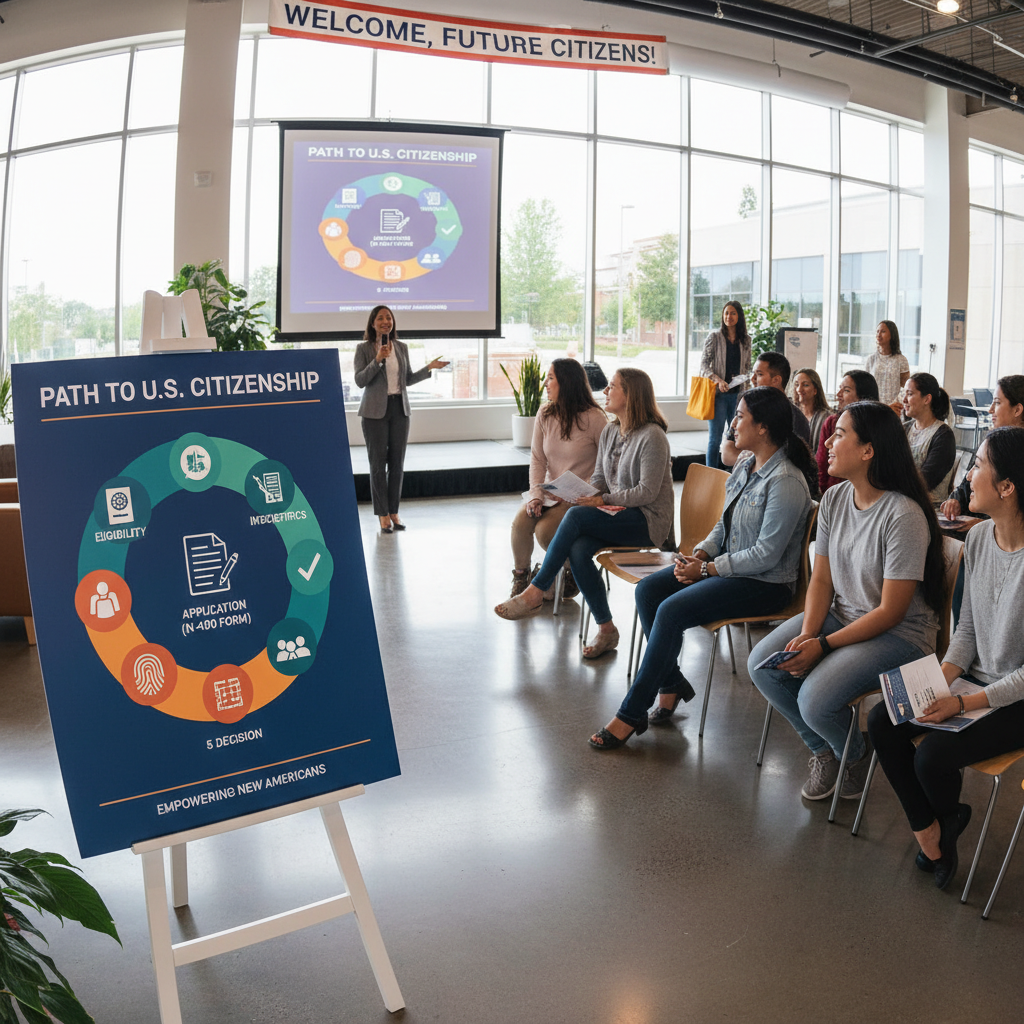
The news that has prompted this comprehensive guide highlights the impending modifications to the U.S. naturalization test:
Naturalization Test Changes Coming in 2026 (Citizenship)
What This News Means for Immigrants in Orlando and Across Florida
The announcement of changes to the naturalization test, specifically concerning the civics portion, is a crucial development for anyone planning to apply for U.S. citizenship. While these are federal changes, their impact will be felt directly by immigrants living in Orlando, across Florida, and throughout the nation.
Why this news is showing up now
The U.S. Citizenship and Immigration Services (**USCIS**) periodically reviews and updates the naturalization test to ensure it remains relevant, accurately assesses an applicant's knowledge of U.S. history and government, and reflects current educational best practices. These reviews are often a response to evolving civics education standards or to address feedback from applicants and educators. The decision to implement changes in 2026 is likely part of a planned update cycle, giving **USCIS** ample time to develop new materials and provide applicants with sufficient notice to prepare. This proactive approach aims to minimize disruption and ensure a fair transition to the updated test format. It also allows legal professionals, like those at Imigrar, to adapt our guidance and resources to best serve our clients.
How it can affect Florida residents
For individuals residing in Central Florida, including Orlando, Kissimmee, and surrounding counties like Orange, Osceola, and Seminole, these changes mean that the way you prepare for the civics test portion of your naturalization interview will need to align with the new requirements once they go into effect. While the core knowledge of U.S. history and government remains essential, the *format* of the questions, the *types* of questions asked, or even the *emphasis* on certain topics could shift. This means:
- Early Preparation is Key: If you are considering applying for naturalization in the next few years, understanding that the test format will change is critical. Starting your preparation now, even with the current materials, provides a strong foundation.
- Stay Informed: It will be vital to monitor official **USCIS** announcements for the release of new study guides and practice materials. Relying on outdated information could jeopardize your application.
- Impact on Application Timelines: If you are eligible now, you might consider filing your Form N-400, Application for Naturalization, before the new test rules take effect to be tested under the current format. However, processing times vary, and there's no guarantee your interview will be scheduled before the 2026 changes.
- Local Resources: The Orlando **USCIS** Field Office will administer the new test just like the current one. Access to local community classes, legal aid, and experienced immigration attorneys in Orlando will be more important than ever to navigate the new landscape successfully.
At Imigrar, we are already preparing to integrate these upcoming changes into our client preparation strategies. Our goal is to ensure that every client in Orlando and across Florida is fully equipped to meet the new standards and achieve their dream of U.S. citizenship.
Need Help? Navigating immigration changes can be complex. Our Orlando immigration team is ready to assist you in understanding the new naturalization test requirements. Call +1 786-791-3106 for a free consultation, or message us online. Se Habla Español.
What Naturalization Test Changes Are (and Why They Matter)
The naturalization test is a cornerstone of the U.S. citizenship process, designed to ensure that new citizens possess a basic understanding of the English language and the fundamental principles of American democracy, history, and government. The news regarding 2026 indicates that while the core purpose remains, the *method* of assessment for the civics portion is evolving.
A plain-English definition
**Naturalization** is the legal process by which a foreign national becomes a U.S. citizen. A key part of this process is passing the **Naturalization Test**, which has two main components: an **English Test** and a **Civics Test**. The **English Test** assesses your ability to read, write, and speak basic English. The **Civics Test** evaluates your knowledge of U.S. history and government. The upcoming changes for 2026 are primarily focused on this **Civics Test** portion. Instead of simply memorizing a list of facts, the new test might incorporate more scenario-based questions, critical thinking elements, or a broader range of topics within the existing 100 civics questions. The aim is to move beyond rote memorization towards a more comprehensive understanding of civic responsibilities and the workings of the U.S. system.
Key terms you need to know
- Naturalization: The process by which a lawful permanent resident (Green Card holder) applies for and obtains U.S. citizenship.
- Civics Test: One of the two main components of the naturalization test, covering U.S. history and government. This is the primary focus of the 2026 changes.
- English Test: The other main component, assessing an applicant's ability to read, write, and speak basic English.
- USCIS (U.S. Citizenship and Immigration Services): The federal agency responsible for administering immigration and naturalization benefits, including the naturalization test.
- Form N-400, Application for Naturalization: The official form filed by individuals seeking to become U.S. citizens.
- Good Moral Character: A legal requirement for naturalization, meaning applicants must have adhered to certain moral standards during their residency in the U.S.
- Oath of Allegiance: The final step in the naturalization process, where applicants formally pledge loyalty to the United States.
For non-lawyers, these changes matter because they represent an evolution in how **USCIS** wants to assess civic knowledge. It's not just about knowing *what* the Constitution is, but perhaps understanding *how* it applies or *why* certain amendments are important. This shift could require a deeper level of engagement with the study materials, moving beyond simple flashcard memorization. Preparing for the new test will likely demand a more nuanced approach, focusing on comprehension and context rather than just recall. This ensures that new citizens are not only aware of facts but also understand the principles that underpin American society and government. For residents of Orlando and across Florida, this means investing more time in comprehensive study and potentially seeking guidance from experts like Imigrar to navigate the updated curriculum effectively.
Current Immigration Law: The Foundation of Naturalization
The naturalization process is firmly rooted in federal law, primarily the **Immigration and Nationality Act (INA)**. Understanding the current legal framework is essential, as the 2026 changes will modify only one component (the civics test) within this established structure.
Federal requirements
The authority for naturalization stems from **Section 312 of the Immigration and Nationality Act (INA)**, which mandates that applicants demonstrate an understanding of the English language and knowledge of U.S. history and government. Beyond these test requirements, the **INA** outlines several other critical eligibility criteria for naturalization:
- Age: Applicants must be at least 18 years old at the time of filing Form N-400.
- Lawful Permanent Resident Status: You must be a lawful permanent resident (Green Card holder) for a specified period, typically 5 years. This period is reduced to 3 years for spouses of U.S. citizens, provided they have been living in marital union with the citizen spouse for that entire period.
- Continuous Residence and Physical Presence: You must have resided continuously in the U.S. for at least 5 years (or 3 years for spouses of U.S. citizens) immediately preceding the filing of your application. You must also have been physically present in the U.S. for at least half of that period (30 months or 18 months, respectively).
- Residency in USCIS District or State: You must have resided for at least 3 months in the state or **USCIS** district where you file your application. For those in Orlando, this means living in Florida for at least 3 months.
- Good Moral Character: You must demonstrate **Good Moral Character** for the statutory period (5 or 3 years) leading up to your application and until you take the Oath of Allegiance. This involves an assessment of your criminal record, tax compliance, and other legal obligations.
- Attachment to the Constitution: You must show an attachment to the principles of the U.S. Constitution and be willing to take the Oath of Allegiance.
The current **Civics Test** consists of 100 questions. During the interview, an **USCIS** officer will ask the applicant up to 10 of these questions, and the applicant must answer 6 correctly to pass. The **English Test** involves reading one out of three sentences correctly, writing one out of three sentences accurately, and demonstrating the ability to speak and understand English during the interview itself.
Certain exemptions exist for the English and/or Civics Test based on age and length of permanent residency, or for individuals with qualifying physical or mental disabilities, who can submit Form N-648, Medical Certification for Disability Exceptions.
Florida-specific considerations
While naturalization is a federal process, its administration occurs at the local level. For residents of Orlando and Central Florida, the **Orlando USCIS Field Office** handles naturalization interviews. This means:
- Local Interview Experience: The specific demeanor and style of interviewers at the Orlando office can influence the applicant's experience. Our attorneys at Imigrar are familiar with the local office's procedures and can help prepare you for what to expect.
- Access to Resources: Florida residents benefit from a network of community organizations, adult education centers, and legal services dedicated to assisting immigrants with English language acquisition and civics preparation.
- Legal Support in Florida: Having an experienced immigration law firm like Imigrar, based in Orlando, provides invaluable local expertise. We understand the nuances of practicing immigration law within Florida's legal landscape and can offer tailored advice to clients across the state.
It is crucial to note that all information, forms, and updates related to naturalization are available on the USCIS official website. We strongly advise against relying on unofficial sources for such critical information. Imigrar ensures all our advice and strategies are based on the latest official **USCIS** guidance and federal statutes.
Need Assistance with Naturalization? Don't navigate the complex process alone. Imigrar offers expert legal guidance for immigrants in Orlando and nationwide. Call +1 786-791-3106 for a free consultation. Se Habla Español.

How to Prepare for the New Naturalization Test: A Complete Step-by-Step Guide
Preparing for U.S. naturalization requires diligence, attention to detail, and a clear understanding of each step. With the upcoming changes in 2026, a strategic approach to the **Civics Test** is more important than ever. Here’s a comprehensive guide to help you through the process, tailored for those in Orlando and beyond.
1) Understand Your Eligibility Requirements
Before embarking on the naturalization journey, confirm you meet all the foundational criteria. This is the first and most critical step.
- Age: You must be at least 18 years old.
- Lawful Permanent Resident Status: You must have held a Green Card for at least 5 years, or 3 years if you are married to and living with a U.S. citizen.
- Continuous Residence: You must have maintained continuous residence in the U.S. for the required 5 or 3 years. Absences longer than 6 months can break continuity, requiring careful review.
- Physical Presence: You must have been physically present in the U.S. for at least half of your continuous residence period (30 months for 5-year residents, 18 months for 3-year residents).
- State/District Residence: You must have lived in the state or **USCIS** district where you apply for at least 3 months. For Central Florida residents, this means within Florida.
- Good Moral Character: You must demonstrate **Good Moral Character** for the entire statutory period. This includes having a clean criminal record, paying taxes, and adhering to all laws.
- Attachment to the Constitution: You must be willing to support and defend the U.S. Constitution.
Required Documents: Your valid Green Card, current passport, marriage certificate (if applying under the 3-year rule), and any documents related to your travel history. An attorney at Imigrar can help you assess your eligibility thoroughly.
2) Apply for Naturalization (Form N-400)
Once you confirm your eligibility, the next step is to prepare and submit Form N-400, Application for Naturalization. This form is extensive and requires detailed information about your personal history, residency, employment, travel, and moral character.
- Completing Form N-400: Fill out every section completely and accurately. Any omissions or errors can cause delays or even lead to denial. Be honest and comprehensive, especially regarding any past interactions with law enforcement, even minor ones.
- Gather Supporting Documents: Collect all necessary documents to accompany your application.
- Pay the Filing Fee: As of today, the **Form N-400** filing fee is $725 (including the biometrics fee), but always check the USCIS website for the latest fee schedule. Fee waivers are available for eligible applicants.
Required Documents: Completed Form N-400, two passport-style photographs, a copy of your Green Card (front and back), a copy of your marriage certificate (if applicable), and proof of fee payment or fee waiver request. For official guidance and to download the form, visit USCIS Form N-400.
3) Attend Your Biometrics Appointment
After **USCIS** accepts your Form N-400, you will receive an appointment notice for biometrics collection at an Application Support Center (ASC). This typically occurs a few weeks after filing.
- Purpose: At this appointment, **USCIS** will collect your fingerprints, photograph, and signature. These are used for background checks and to verify your identity.
- Preparation: Arrive on time with your appointment notice and a valid photo identification (e.g., Green Card, passport, state ID).
Required Documents: Biometrics appointment notice (Form I-797C), valid photo identification.
4) Prepare for the English Test
The English test assesses your ability to read, write, and speak basic English. This component is generally not expected to change significantly in 2026, but continuous practice is vital.
- Speaking: Your ability to speak English is determined during your interview. The **USCIS** officer will ask you questions about your application.
- Reading: You will need to read one out of three sentences correctly from a list of official vocabulary.
- Writing: You will need to write one out of three sentences accurately, dictated by the officer, from a list of official vocabulary.
Practical Tip: Practice speaking English daily, read English newspapers or books, and practice writing simple sentences. **Important:** Focus on the official vocabulary lists provided by **USCIS** for reading and writing.
5) Master the Civics Test (New 2026 Version)
This is where the 2026 changes will have the most significant impact. While the exact new test format and questions are yet to be fully released by **USCIS**, you should prepare strategically.
- Stay Updated: Regularly check the USCIS official website for the release of new study materials, question lists, and guidance. **Warning:** Do not rely on unofficial sources for study materials.
- Foundational Knowledge: Start studying the *current* 100 civics questions now. This will provide a strong foundation in U.S. history and government that will undoubtedly remain relevant in the new test.
- Anticipate Changes: Expect the new test to potentially include more analytical or scenario-based questions, requiring a deeper understanding rather than just memorization. Focus on *why* things are the way they are, not just *what* they are.
- Utilize Official Resources: Once released, download and thoroughly study the new official **USCIS** study guide, flashcards, and practice tests. Imigrar will also provide updated resources and guidance to our clients.
Required Documents: No physical documents are required for the test itself, but consistent access to and study of official **USCIS


