


The journey to U.S. citizenship is a significant milestone for many immigrants, symbolizing the culmination of years of hard work, dedication, and integration into American society. A critical component of this journey is the naturalization interview, which includes both an English proficiency test and a civics test. As of March 9, 2026, significant changes are anticipated for this crucial examination, potentially altering the path to citizenship for countless individuals and families across the nation, including those right here in Orlando and throughout Florida.
At Imigrar, an immigration law firm based in Orlando, Florida, we understand the profound impact these changes can have. Our mission, "Keep Families Together," drives us to provide the most accurate, timely, and actionable information to help you navigate these complex processes. We serve clients nationwide, and our team is proficient in both English and Spanish (Se Habla Español), ensuring clear communication and comprehensive support every step of the way.
NEWS SOURCE REFERENCE SECTION
The reporting that sparked this guide: Naturalization Test Changes Coming in 2026 (Citizenship)
What This News Means for Immigrants in Orlando and Across Florida
The announcement of impending changes to the naturalization test is a development that warrants close attention from all aspiring U.S. citizens. These updates are not merely procedural; they reflect ongoing efforts by U.S. Citizenship and Immigration Services (USCIS) to ensure the test remains relevant, fair, and an accurate measure of an applicant's understanding of American history, government, and civic principles.
Why this news is showing up now
The discussion around naturalization test changes is not new, but it has gained renewed prominence as 2026 approaches. USCIS periodically reviews and updates the naturalization test to reflect current educational best practices and to ensure the civics portion adequately assesses an applicant's knowledge of U.S. government and history. For instance, a revised test was implemented briefly in December 2020 but was subsequently reversed in February 2021, reverting to the 2008 version. This history indicates that USCIS is committed to a thorough and thoughtful review process, often engaging with experts in adult education, civics, and English as a Second Language (ESL).
The current push for changes slated for 2026 stems from USCIS's continued commitment to improving the naturalization process. These proposed changes are typically developed over several years, involving pilot programs, public feedback, and expert consultations. The goal is often to create a test that is more consistent, less prone to subjective interpretation, and better aligned with the educational experiences of a diverse applicant pool. For many, the news signifies a proactive measure by the government to adapt the test to modern learning standards, ensuring it serves its intended purpose effectively.
How it can affect Florida residents
For the vibrant immigrant communities in Orlando, Central Florida, and across the entire state, these changes carry significant weight. Florida is home to one of the largest immigrant populations in the U.S., with a substantial number of residents actively pursuing naturalization. Any alteration to the naturalization test directly impacts these individuals:
- Preparation Strategies: Current study materials, which focus on the 2008 version of the civics test (100 questions), may become partially or entirely obsolete. Applicants will need to adapt their study methods and resources to the new format and content.
- Increased Anxiety: The uncertainty surrounding new requirements can cause significant stress for applicants who have been diligently studying for years based on the existing test.
- Timelines and Planning: Individuals nearing eligibility for naturalization might consider applying sooner rather than later to take the current test, or they might choose to wait to fully understand the new requirements. This decision can impact personal and family planning.
- Local Resources: Community organizations, ESL schools, and legal aid services in areas like Orlando, Tampa, Miami, and other parts of Florida will need to update their curricula and support programs to reflect the new test.
- Interview Experience: The format of the interview itself might shift, potentially introducing new types of questions or different ways of assessing English proficiency and civic knowledge.
Understanding these potential effects is the first step in preparing effectively. Imigrar is dedicated to providing timely updates and expert guidance to ensure our Florida clients are fully prepared, regardless of when they apply. We help clients navigate the specific requirements of the Orlando USCIS Field Office and other locations across the state.
Need Help? The naturalization process can be complex, especially with upcoming changes. Our Orlando immigration team is ready to assist. Call +1 786-791-3106 for a free consultation, or message us online. Se Habla Español.
What Naturalization Test Changes Are (and Why They Matter)
Naturalization is the process by which U.S. citizenship is conferred upon a foreign citizen or national after he or she has fulfilled the requirements established by Congress in the Immigration and Nationality Act (INA). A crucial part of this process is passing the naturalization test, which assesses an applicant's English proficiency and knowledge of U.S. civics. The changes anticipated in 2026 aim to refine this assessment.
A plain-English definition
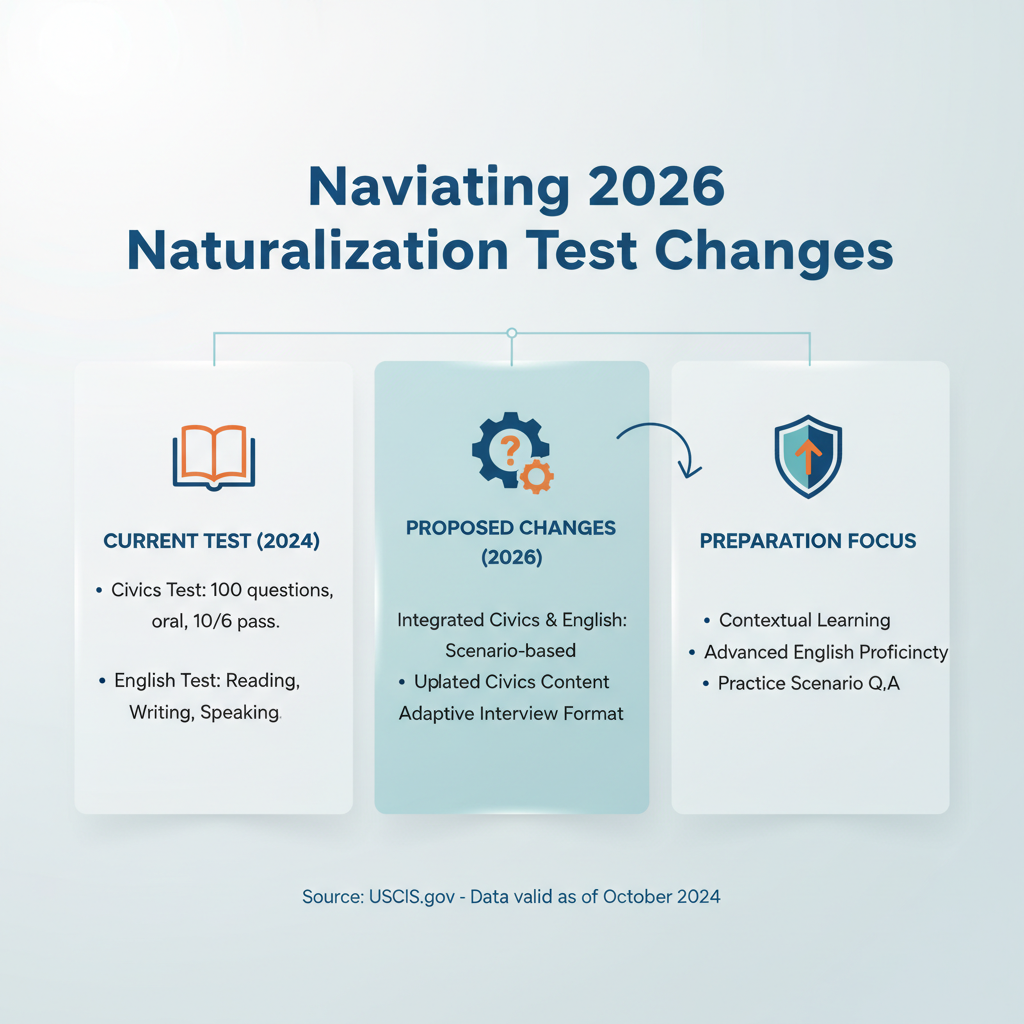
The "naturalization test changes" refer to modifications that USCIS plans to implement regarding the interview portion of the naturalization process. This interview typically consists of two main parts: an English test and a civics test. The proposed changes are expected to affect the content, format, or administration of one or both of these components. For example, the civics test might introduce new questions, revise existing ones, or change the way questions are asked (e.g., from rote memorization to more conceptual understanding). Similarly, the English test might incorporate new methods to evaluate an applicant's ability to read, write, and speak English.
These changes are significant because they directly impact how aspiring citizens demonstrate their eligibility for citizenship. They mean that the study materials and preparation strategies currently used by thousands of applicants may need to be updated. The goal of these changes, from USCIS's perspective, is to ensure the test accurately reflects an applicant's integration into American society and their understanding of the rights and responsibilities that come with citizenship.
Key terms you need to know
Understanding the following terms will help you navigate the naturalization process, especially as changes approach:
- Naturalization: The process by which eligible lawful permanent residents (green card holders) become U.S. citizens.
- U.S. Citizenship and Immigration Services (USCIS): The government agency responsible for administering immigration and naturalization benefits. This is the agency you will interact with for your application and interview. You can find official information on their USCIS official website.
- Form N-400, Application for Naturalization: The primary form used to apply for U.S. citizenship. This form collects detailed information about your eligibility, background, and moral character.
- Naturalization Test: The interview component of the naturalization process, comprising two parts:
- English Test: Assesses your ability to read, write, and speak basic English.
- Civics Test: Assesses your knowledge of U.S. history, government, and geography. The current test consists of 100 possible questions, from which an officer asks up to 10, and you must answer 6 correctly.
- Lawful Permanent Resident (LPR) / Green Card Holder: An individual who has been granted authorization to live permanently in the United States. This is a prerequisite for naturalization.
- Continuous Residence: A naturalization requirement stating that an applicant must have maintained a continuous physical presence in the U.S. for a specified period (typically 5 years, or 3 years if married to a U.S. citizen).
- Good Moral Character: A naturalization requirement that applicants must demonstrate adherence to community standards of morality and lawfulness. Certain criminal offenses can prevent an applicant from meeting this requirement.
- Oath of Allegiance: The final step in the naturalization process, where new citizens pledge their loyalty to the United States.
Important: Staying informed about these terms and the specific requirements is crucial, especially with changes on the horizon. Imigrar is here to clarify any confusion and ensure you have a clear understanding of your path forward.
Current Naturalization Law: The Foundation
The naturalization process is governed by federal law, primarily found in the Immigration and Nationality Act (INA). While changes to the test format are administrative, the underlying legal requirements for naturalization remain foundational. Understanding these current laws is essential, as they dictate who is eligible to apply for citizenship, regardless of the test's structure.
The primary legal framework for naturalization is Section 312 of the Immigration and Nationality Act (INA), codified at 8 U.S.C. § 1423. This section specifically outlines the requirements for English language proficiency and knowledge of U.S. history and government. Additionally, INA Section 316 (8 U.S.C. § 1427) details the general requirements for naturalization, including continuous residence, physical presence, and good moral character.
Federal requirements
To be eligible for naturalization, an applicant must generally meet several federal requirements:
- Age: Be at least 18 years old at the time of filing Form N-400.
- Lawful Permanent Resident Status: Be a lawful permanent resident (green card holder) for at least 5 years. This period is reduced to 3 years if you are married to a U.S. citizen and meet specific additional criteria.
- Continuous Residence and Physical Presence:
- Have maintained continuous residence in the U.S. as an LPR for at least 5 years (or 3 years if married to a U.S. citizen) immediately preceding the filing of the application.
- Be physically present in the U.S. for at least half of that continuous residence period (e.g., 30 months out of 5 years, or 18 months out of 3 years).
- Reside for at least 3 months in the state or USCIS district where you apply. For those in Orlando, this means living in the Orlando district for at least 3 months.
- Good Moral Character: Demonstrate good moral character for the statutory period (5 or 3 years) leading up to your application and until you take the Oath of Allegiance. This involves having no disqualifying criminal record or other adverse factors.
- Attachment to the Principles of the U.S. Constitution: Be willing to support the Constitution and laws of the United States.
- English Language Proficiency: Be able to read, write, and speak basic English. There are certain exemptions for age and length of LPR status (e.g., "50/20" or "55/15" rules).
- Knowledge of U.S. Government and History (Civics): Pass a civics test demonstrating knowledge of U.S. history and government. Exemptions exist for certain applicants with medical disabilities.
- Oath of Allegiance: Be willing to take the Oath of Allegiance to the United States.
Warning: Any misrepresentation or failure to disclose relevant information on Form N-400 can lead to denial of your application, and in some cases, could have more severe immigration consequences. Always provide truthful and complete information.
Florida-specific considerations
While the laws for naturalization are federal, the application process involves local USCIS Field Offices. For residents of Central Florida, your application will typically be processed through the Orlando USCIS Field Office. This means:
- Interview Location: Your naturalization interview will be conducted at the Orlando Field Office, which is located at 6650 Corporate Centre Blvd, Orlando, FL 32822.
- Processing Times: Processing times for Form N-400 can vary significantly by field office. You can check the current estimated processing times for the Orlando Field Office on the USCIS Processing Times page.
- Local Resources: Orlando and surrounding areas in Orange County and along the I-4 corridor offer various community resources, ESL classes, and civics preparation courses that can be valuable. However, always verify that these resources are up-to-date with the latest USCIS guidelines, especially as 2026 approaches.
- Legal Support: Having an experienced Orlando immigration attorney, like those at Imigrar, who are familiar with the specific procedures and common issues at the local Field Office can be a significant advantage.
Imigrar serves clients across Florida, including those in Miami, Tampa, Jacksonville, and beyond, providing consistent, high-quality legal representation tailored to their specific needs and local USCIS office procedures.
Navigating Naturalization? Don't leave your citizenship journey to chance. Our Orlando immigration lawyers are experts in the naturalization process and can help you prepare for upcoming changes. Contact Imigrar for a free consultation at +1 786-791-3106. Se Habla Español.
How to Prepare for the Naturalization Test Changes: A Complete Step-by-Step Guide
Given the anticipated changes to the naturalization test in 2026, proactive and strategic preparation is more important than ever. This guide outlines the steps you can take now to position yourself for success, regardless of the exact nature of the updates.
1) Understand the Current Test and Eligibility (Your Baseline)
Before you can prepare for changes, you must understand the current requirements and test format. This establishes your baseline knowledge and ensures you meet all foundational eligibility criteria for naturalization.
- Review Eligibility: Confirm you meet all general requirements for naturalization (age, LPR status, continuous residence, physical presence, good moral character, etc.). USCIS provides detailed eligibility guidelines on its website.
- Study Current Civics Questions: Familiarize yourself with the current 100 civics questions and answers. These are publicly available on the USCIS website. While the test is changing, a core understanding of U.S. history and government will always be beneficial.
- Assess English Skills: Evaluate your current English reading, writing, and speaking abilities. The English test component typically involves:
- Reading: Reading one out of three sentences correctly.
- Writing: Writing one out of three sentences accurately.
- Speaking: Answering questions about your Form N-400 and personal background during the interview.
- Gather Basic Documents: Start compiling documents related to your eligibility, even before filing Form N-400. This includes your Green Card, passports, marriage certificates (if applicable), and any court/arrest records.
2) Stay Informed About Proposed Changes
USCIS typically announces proposed changes well in advance, often through pilot programs, public comment periods, and official press releases. Monitoring these announcements is critical.
- Regularly Check USCIS Official Channels: Make it a habit to visit the USCIS official website, particularly their "Citizenship" and "News" sections. Subscribe to their email updates if available.
- Consult with Trusted Legal Counsel: An experienced immigration attorney, like those at Imigrar, will stay abreast of all official announcements and can interpret how proposed changes might affect your specific situation. We can provide clarity on rumors versus confirmed updates.
- Understand the Nature of Changes: Distinguish between changes to the civics test (content, format) and potential changes to the English test or interview process.
- Look for Pilot Programs: USCIS sometimes runs pilot programs for new test formats. If you are invited to participate or if results are published, review them for insights.
3) Practice English Language Skills Intensively
Regardless of the exact changes, strong English proficiency will always be a cornerstone of the naturalization process. Begin or intensify your English language studies now.
- Enroll in ESL Classes: Local community colleges, adult education centers, and non-profit organizations in Orlando, Central Florida, and beyond often offer affordable or free ESL courses.
- Practice Conversational English: Engage in daily conversations in English. This could be with friends, family, or community groups. The interview is a conversation, and practicing speaking will build confidence.
- Improve Reading and Writing: Read English newspapers, books, or online articles. Practice writing simple sentences and paragraphs. Focus on understanding and conveying basic information, as required for the test.
- Utilize Online Resources: Many free online resources, apps, and videos are designed for naturalization English test preparation.
- Focus on N-400 Vocabulary: The interview heavily relies on discussing your Form N-400. Familiarize yourself with all the questions on the form and be able to answer them clearly in English.
4) Deepen Your Understanding of U.S. Civics and History
While the civics questions may change, a fundamental understanding of U.S. government, history, and geography will remain relevant.
- Study Beyond Memorization: Instead of just memorizing answers, try to understand the concepts behind the civics questions. For example, don't just know "who is the President," but understand the role of the President, how they are elected, and their powers.
- Explore U.S. History: Read about key historical events, founding fathers, and significant movements. Many online resources and libraries offer accessible materials.
- Learn About the Branches of Government: Understand the functions of the Legislative, Executive, and Judicial branches, and the system of checks and balances.
- Review Rights and Responsibilities: Be familiar with the rights and responsibilities of U.S. citizens.
- Use Diverse Study Methods: Flashcards, practice tests, study groups, and educational videos can all be effective.
5) Prepare and Organize All Required Documents for Form N-400
A complete and well-organized application package is crucial for a smooth process. This step is independent of test changes but essential for naturalization.
- Complete Form N-400 Accurately: Fill out every section of Form N-400 truthfully and completely. Any omissions or errors can cause delays or even denial.
- Gather Supporting Documents:
- Copy of your Green Card (front and back).
- Copy of your current and expired passports (all pages with stamps/visas).
- Marriage certificate (if applicable, for 3-year residency).
- Divorce decrees or death certificates (if applicable).
- Birth certificates of your children (if applicable).
- Tax returns for the past 3-5 years.
- Court disposition documents for any arrests, citations, or convictions, even if expunged or minor.
- Evidence of selective service registration (for males 18-26).
- Fee Waiver/Reduction application (Form I-912 or Form I-942), if applicable.
- Two identical passport-style photos (ensure they meet USCIS specifications).
- Make Copies: Always keep a complete copy of your submitted application and all supporting documents for your records.
- Organize: Arrange your documents logically, potentially using tabs or dividers, to make it easy to find specific items during your interview.
6) Seek Professional Legal Guidance from Imigrar
The complexities of immigration law, especially with impending changes, make legal counsel invaluable.
- Consult an Immigration Attorney: Schedule a consultation with an experienced immigration lawyer at Imigrar. We can assess your eligibility, review your Form N-400, identify potential issues (e.g., criminal history, extended absences), and advise on the best strategy given the upcoming test changes.
- Understand Exemptions: If you believe you might qualify for an exemption from the English or civics test due to age or disability, an attorney can help determine your eligibility and prepare the necessary documentation (e.g., Form N-648, Medical Certification for Disability Exceptions).
- Interview Preparation: Imigrar attorneys can conduct mock interviews, helping you practice answering questions about your application and preparing for the civics and English tests. This is particularly important for the Orlando USCIS Field Office, where specific interviewing styles might be observed.
- Representation at Interview: While not always necessary, having an attorney accompany you to your naturalization interview can provide peace of mind and immediate assistance if any unexpected issues arise.
7) Prepare for the Interview Day (and the New Test Format)
The interview is the culmination of your preparation. Being ready for the format, whatever it may be, is key.
- Review Your Application: Before your interview, thoroughly review your submitted Form N-400. The USCIS officer will ask questions based on this document.
- Practice the Oath: Be prepared to answer questions about your willingness to take the Oath of Allegiance and to understand the meaning of the oath.
- Anticipate New Question Types: Based on USCIS announcements, prepare for any new question formats for the civics test. If, for example, the test shifts to more open-ended questions or scenario-based questions, practice answering in a comprehensive manner.
- Be Punctual and Prepared: Arrive at the Orlando USCIS Field Office well in advance of your scheduled time. Bring your appointment notice, Green Card, passport, and original copies of all documents submitted with your Form N-400.
- Maintain Good Moral Character: Remember that you must maintain good moral character up to the moment you take the Oath of Allegiance. Avoid any activities that could jeopardize this.

Practical Steps You Can Take Today
Don't wait until 2026 to begin your naturalization journey or to prepare for the test changes. Here are actionable steps you can implement immediately:
Actionable Checklist (5+ items)
- Download Current Study Materials: Obtain the official 100 civics questions and answers from the USCIS official website. Start studying them now to build a strong foundation.
- Enroll in English Classes: Find an ESL program in your local Orlando or Central Florida community. Consistent practice is key to improving your reading, writing, and speaking skills.
- Subscribe to USCIS Updates: Visit the USCIS Newsroom Subscriptions page and sign up for email alerts to receive official news about policy changes and test updates.
- Review Your Immigration History: Go through your personal records. Note any arrests, extended absences from the U.S., or changes in marital status that might impact your Form N-400.
- Start a "Naturalization Documents" Folder: Begin collecting and organizing all necessary documents as outlined in Step 5 of the guide above. This proactive step saves time and reduces stress later.
- Schedule a Consultation with Imigrar: Get personalized advice from an immigration attorney. We can review your specific situation, discuss potential challenges, and help you strategize for the upcoming test changes. Call us at +1 786-791-3106.
- Practice Mock Interviews: If possible, ask a friend, family member, or a professional to conduct a mock naturalization interview with you. Practice answering questions about your Form N-400 and the civics questions in English.
Document preparation guidance
Thorough document preparation is often the most overlooked yet critical aspect of the naturalization process. Here’s how to approach it:
- Originals vs. Copies: USCIS generally requires copies of most supporting documents with your Form N-400. However, you MUST bring the originals to your interview. Always keep originals safe.
- Translations: Any document not in English must be accompanied by a complete English translation certified by a competent translator. The translator must attest that they are fluent in both languages and that the translation is accurate.
- Affidavits: If a required document is unavailable (e.g., a birth certificate for a country that no longer exists), you may need to provide secondary evidence, such as affidavits from individuals with personal knowledge of the event.
- Organize and Label: Use cover sheets or sticky notes to clearly label each document in your package and during your interview. This shows organization and professionalism.
- Criminal Records: For any arrests, citations, or convictions, you must provide certified court dispositions, even if the case was dismissed, expunged, or occurred many years ago. "Good moral character" is continuously evaluated.
Timeline expectations
Understanding the timeline is crucial, especially with changes on the horizon:
- Test Changes Rollout: USCIS has indicated the changes are coming in 2026. This means there's a window of opportunity to apply under the current test rules if you are already eligible. However, if your interview is scheduled in late 2025 or 2026, you might be subject to the new test. USCIS usually provides a specific effective date.
- Form N-400 Processing Times: These vary widely by field office. For the Orlando USCIS Field Office, processing times for Form N-400 can range from 8 to 18 months, or even longer in some cases. Check the USCIS Processing Times page regularly.
- Interview Scheduling: After filing Form N-400, you will receive a receipt notice, then a biometrics appointment notice, and finally, an interview appointment notice.


