

The ability to work legally in the United States is a cornerstone for many immigrants seeking to build a new life, support their families, and contribute to their communities. For those in Orlando, Florida, and across the nation, obtaining or renewing an Employment Authorization Document (EAD), often referred to as a work permit, is a critical step in this journey.
At Imigrar, our mission is to "Keep Families Together," and ensuring our clients have the legal right to work is often central to achieving that goal. We understand that the process can be complex, and recent updates from U.S. Citizenship and Immigration Services (USCIS) regarding EAD applications and renewals have brought both challenges and opportunities.
Need Help? Our Orlando immigration team is ready to assist. Call +1 786-791-3106 for a free consultation, or message us online. Se Habla Español.
NEWS SOURCE REFERENCE SECTION
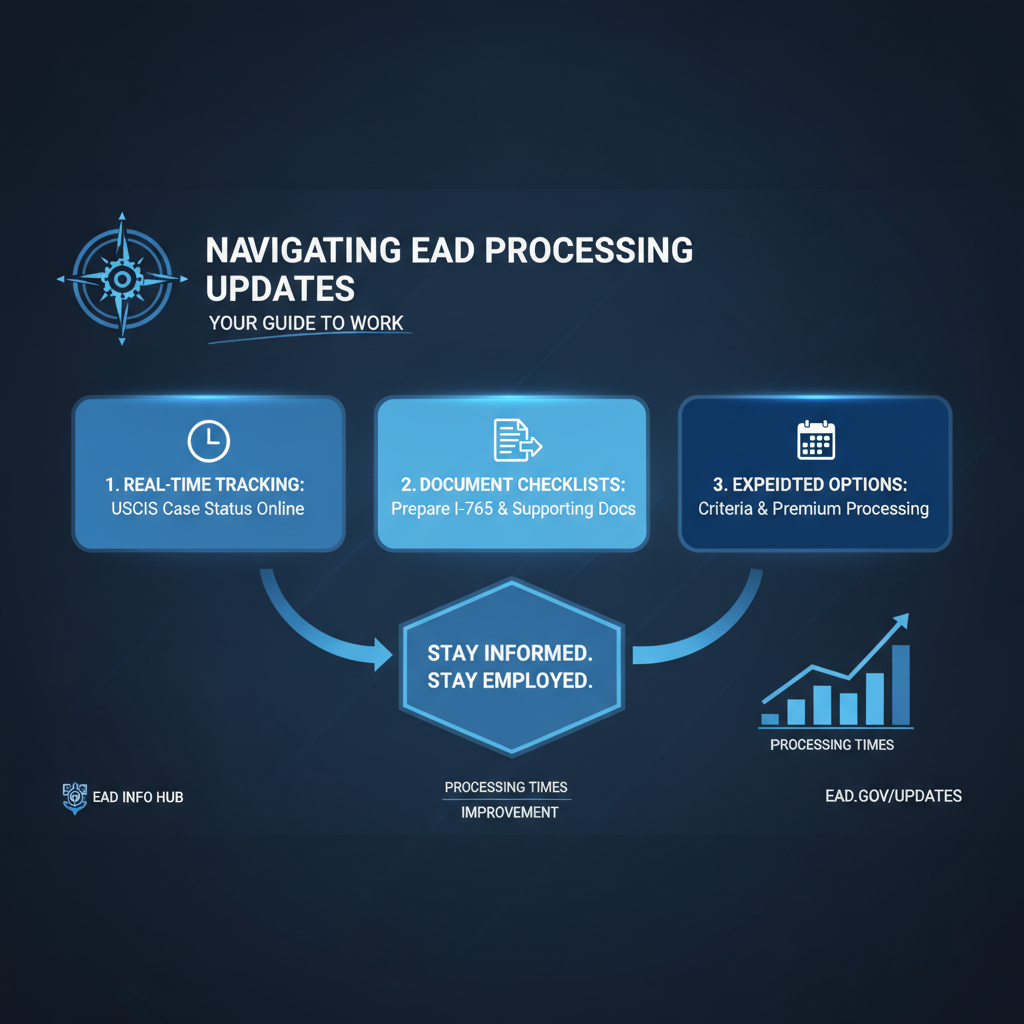
The reporting that sparked this guide: Employment Authorization Document Processing (USCIS)
What This News Means for Immigrants in Orlando and Across Florida
Recent reports and official announcements from USCIS indicate ongoing efforts and adjustments to the processing of Employment Authorization Documents (EADs). These changes are crucial for anyone planning to apply for or renew their work permit.
Why this news is showing up now
USCIS has been under immense pressure to address backlogs across various application types, including Form I-765, Application for Employment Authorization. Over the past few years, the agency has implemented several policy changes and operational improvements aimed at streamlining processes and reducing wait times. For instance, in 2022, USCIS announced temporary final rules increasing the maximum validity period for certain EADs and extending the automatic extension period for renewal applicants. While these measures provided significant relief, the agency continues to refine its approach based on evolving caseloads, resource allocation, and technological advancements. The "news" today reflects USCIS's ongoing commitment to improving efficiency, which often involves adjusting policies, updating processing time estimates, and rolling out new online tools. These updates are a direct response to a dynamic immigration landscape and the need to balance security with service delivery. For instance, the expansion of online filing options for Form I-765 is a continuous effort to make the application process more accessible and potentially faster.
How it can affect Florida residents
For immigrants residing in Florida, particularly in bustling metropolitan areas like Orlando, Tampa, and Miami, these USCIS updates have direct and significant implications. Florida has a large and diverse immigrant population, meaning a high volume of EAD applications and renewals originate from our state. Changes in processing times, eligibility criteria for automatic extensions, or even specific filing instructions can directly impact an individual’s ability to work, support their family, and maintain their legal status.
- Processing Delays and Extensions: If USCIS processing times fluctuate, Florida residents might experience longer waits for new EADs or renewals. Conversely, policy changes extending automatic EAD validity periods (such as the 540-day rule for certain categories) can provide a crucial safety net, preventing gaps in employment authorization for those awaiting a renewal. This is particularly vital for those working in industries prevalent in Central Florida, such as tourism, hospitality, and agriculture.
- Economic Impact: A stable EAD means stable employment. Delays or confusion around EAD processing can lead to job loss, financial hardship, and stress for families across the I-4 corridor and beyond. Understanding the latest rules, especially regarding automatic extensions, is paramount to maintaining continuous employment.
- Local Resources: While EAD applications are processed nationally, local resources and legal aid in Orlando, Orange County, and neighboring areas often see an increase in inquiries following USCIS announcements. Knowing how to navigate these changes efficiently, perhaps with the help of an experienced immigration firm like Imigrar, can make a significant difference.
- Employer Awareness: Florida employers must comply with federal regulations regarding employment eligibility verification. Updated EAD policies mean employers need to be aware of the new rules, especially concerning the validity of expired EADs with automatic extensions, to avoid inadvertently terminating employees or facing penalties.
Staying informed and proactive is key. Our firm, Imigrar, closely monitors these developments to provide timely and accurate advice to our clients in Orlando and throughout Florida, ensuring they can continue to live and work legally in the U.S.
What Employment Authorization Document (EAD) Is (and Why It Matters)
The Employment Authorization Document (EAD), commonly known as a work permit, is a crucial document for many non-citizens in the United States. It provides official authorization from the U.S. government for an individual to work legally in the country for a specific period.
A plain-English definition
Think of the EAD as your official permission slip to work in the U.S. If you are not a U.S. citizen or a lawful permanent resident (green card holder), but you are in a specific immigration category that allows you to work, you will likely need an EAD. This card looks similar to a driver's license and contains your photo, name, date of birth, country of birth, and an expiration date. When you get a job, your employer will ask to see this document (along with another form of ID) to verify you are legally allowed to work in the United States, usually as part of the Form I-9, Employment Eligibility Verification process.
The EAD is not an immigration status itself, but rather a benefit granted to individuals who already hold certain immigration statuses or have specific applications pending. For example, individuals applying for Adjustment of Status (a green card), those granted Asylum or Temporary Protected Status (TPS), certain students on Optional Practical Training (OPT), and some spouses of H-1B visa holders (H-4 EAD) are among the many categories eligible for an EAD.
Key terms you need to know
Navigating immigration processes requires understanding specific terminology. Here are some key terms related to EADs:
- Employment Authorization Document (EAD): The official card issued by USCIS allowing non-citizens to work legally in the U.S. (also known as a work permit).
- Form I-765: This is the official USCIS application form used to request an EAD. Whether you're applying for an initial EAD or renewing an existing one, you'll use this form.
- Eligibility Category: USCIS assigns a specific category code to each type of applicant eligible for an EAD. Examples include (c)(9) for Adjustment of Status applicants, (a)(5) for Asylees, (c)(3)(C) for STEM OPT, and (c)(26) for H-4 spouses. Your eligibility category determines your specific requirements and sometimes your EAD's validity period.
- Automatic Extension: For certain EAD categories, if you file a renewal application before your current EAD expires, USCIS may automatically extend your work authorization for a specific period (currently up to 540 days for many categories) while your renewal is pending. This is a critical provision to prevent gaps in employment.
- Adjustment of Status (AOS): The process of applying for lawful permanent resident status (a green card) while physically present in the United States. Many individuals applying for AOS (using Form I-485) are eligible to apply for an EAD concurrently.
- Advance Parole: Often filed concurrently with an EAD for Adjustment of Status applicants (using Form I-131, Application for Travel Document). An EAD/Advance Parole "combo card" allows you to work and travel internationally without abandoning your green card application.
- Biometrics Appointment: A scheduled appointment at a USCIS Application Support Center (ASC) where applicants provide fingerprints, photographs, and a signature for background checks. This is a standard part of most EAD applications.
- Processing Times: The estimated time USCIS takes to process an application from the date of filing to the date of decision. These times vary significantly by form type, service center, and eligibility category and are subject to frequent change. You can check current times on the USCIS Processing Times website.
Understanding these terms is the first step towards successfully navigating your EAD application or renewal. If any of these terms seem confusing, remember that legal professionals are here to help clarify.
Current Immigration Law: The Foundation
The legal framework for obtaining an Employment Authorization Document (EAD) is rooted in federal immigration law, primarily the Immigration and Nationality Act (INA) and its implementing regulations found in the Code of Federal Regulations (CFR). While the EAD is a benefit that allows an individual to work, it is not an immigration status in itself. Instead, it is granted to non-citizens who fall into specific eligibility categories defined by law and regulation.
Federal requirements
The authority for employment authorization is outlined in 8 CFR § 274a.12, which lists various classes of aliens authorized to be employed in the United States. These categories are diverse and cover a wide range of immigration statuses and pending applications. Some of the most common categories include:
- Asylees and Refugees: Individuals granted asylum or refugee status (8 CFR § 274a.12(a)(5) and (a)(3), respectively).
- Adjustment of Status Applicants: Individuals who have filed Form I-485, Application to Register Permanent Residence or Adjust Status, and whose application is pending (8 CFR § 274a.12(c)(9)).
- Applicants for Asylum or Withholding of Removal: Individuals with a pending asylum application (Form I-589) who have waited for a certain period (8 CFR § 274a.12(c)(8)).
- Temporary Protected Status (TPS) Holders: Individuals granted TPS for designated countries (8 CFR § 274a.12(a)(12) and (c)(19)).
- Certain Nonimmigrants: This includes specific categories like spouses of certain nonimmigrant visa holders (e.g., H-4 spouses of H-1B holders, under 8 CFR § 274a.12(c)(26)), K-1 fiancé(e) visa holders, and certain students on Optional Practical Training (OPT) (8 CFR § 274a.12(c)(3)).
- Deferred Action for Childhood Arrivals (DACA) Recipients: Those granted DACA are eligible for EADs (8 CFR § 274a.12(c)(33)).
To apply for an EAD, individuals must file Form I-765, Application for Employment Authorization, with USCIS. The form requires applicants to select their specific eligibility category, provide supporting documentation, and often pay a filing fee. USCIS reviews the application to ensure the individual meets the statutory and regulatory requirements for the chosen category.
A significant federal provision affecting EAD renewals is the automatic extension rule. For certain categories, if an applicant files a renewal Form I-765 before their current EAD expires and they are applying under the same category, their work authorization is automatically extended. The duration of this automatic extension has varied; currently, for many eligible categories, it is up to 540 days from the expiration date of the previous EAD. This rule is critical in preventing employment gaps due to USCIS processing delays.
For official information and to download forms, always refer to the USCIS official website.
Florida-specific considerations
While EAD eligibility and processing are federal matters, there are indirect considerations for Florida residents:
- E-Verify Requirements: Florida state law mandates that public employers and contractors/subcontractors working with public employers use the E-Verify system to confirm the employment eligibility of new hires. While this doesn't change EAD eligibility, it underscores the importance for Florida workers to have valid work authorization that can be verified.
- Local USCIS Offices: Although Form I-765 applications are generally processed at USCIS service centers nationwide, applicants in Florida may interact with local USCIS Field Offices, such as the Orlando USCIS Field Office, for biometrics appointments or, in some cases, interviews related to their underlying immigration application (e.g., Adjustment of Status). The efficiency of these local offices can indirectly influence the overall timeline for an EAD, especially if it's tied to an application requiring a local interview.
- Community Resources: Florida has numerous community organizations and legal aid services, particularly in areas like Orlando, Miami, and Tampa, that assist immigrants with EAD applications. Understanding the local support network can be beneficial.
- State-Specific ID Laws: A valid EAD can be used to obtain a Florida driver's license or state identification card, which is essential for daily life in Orlando and throughout the state.
It's important to remember that state laws cannot override federal immigration laws regarding EAD eligibility. However, state-level requirements, particularly for employers, emphasize the necessity of maintaining valid federal work authorization. Consulting with an immigration attorney in Orlando ensures you navigate both federal and any indirectly related state requirements effectively.
Need Help? Our Orlando immigration team is ready to assist. Call +1 786-791-3106 for a free consultation, or message us online. Se Habla Español.
How to Apply for or Renew Your EAD: A Complete Step-by-Step Guide
Applying for an initial Employment Authorization Document (EAD) or renewing an existing one requires careful attention to detail. This step-by-step guide will walk you through the process, ensuring you cover all essential requirements.
1) Determine Your Eligibility Category and Gather Core Information
Before you even touch a form, you must confirm you are eligible for an EAD and identify your specific eligibility category. This is the most crucial first step, as it dictates the documents you'll need and the instructions you'll follow. Common categories include applicants for Adjustment of Status (c)(9), asylees (a)(5), students on OPT (c)(3), and H-4 spouses (c)(26).
- Action: Review USCIS EAD eligibility categories. Understand which category applies to your situation.
- Required Documents (for this step):
- Your current immigration document (e.g., I-94, visa stamp, green card application receipt Form I-485, asylum application receipt Form I-589).
- Any previous EAD cards.
- Your passport or other government-issued identification.
Important: If you are unsure about your eligibility category, seek legal advice. Choosing the wrong category can lead to denial and wasted filing fees.
2) Complete Form I-765, Application for Employment Authorization
This is the primary form for all EAD applications. It's essential to complete it accurately and thoroughly. You can download the latest version from the USCIS Forms page.
- Action: Fill out Form I-765 completely. Answer all questions truthfully. If a question doesn't apply, write "N/A." Do not leave any fields blank. If you are renewing, indicate "Renewal" in Part 1, Item 1.b. Pay close attention to Part 2, Item 27, where you must enter your eligibility category.
- Required Documents (for this step):
- Two identical passport-style photos taken within 30 days of filing. Write your A-Number (Alien Registration Number) and full name lightly on the back of each photo.
- Copy of your last EAD card (front and back), if renewing.
- Copy of your passport biographical page or birth certificate (if no passport).
- Copy of your Form I-94, Arrival/Departure Record (front and back, if applicable).
- Copies of any previous U.S. visas.
- Evidence of your eligibility category (e.g., Form I-485 receipt notice, Form I-589 receipt, marriage certificate for H-4 EAD, I-20 for OPT).
- For certain categories, a copy of a government-issued photo identification.
Reminder: Ensure your mailing address is current and accurate on Form I-765, as your EAD card will be mailed to this address.
3) Calculate and Pay the Filing Fee
Most EAD applications require a filing fee. The fee amount can change, so always check the USCIS Form I-765 page or the USCIS Fee Schedule for the current amount. Some categories are fee-exempt.
- Action: Determine the correct fee. You can pay by money order, personal check, cashier's check, or by credit card using Form G-1450, Authorization for Credit Card Transactions. Make checks payable to "U.S. Department of Homeland Security."
- Required Documents (for this step):
- Check or money order for the exact amount.
- Or, completed Form G-1450.
Warning: Incorrect fees or payment methods can lead to rejection of your application.
4) Assemble and Mail Your Application Package
Once you've completed the form, gathered all supporting documents, and prepared your payment, you need to assemble the package correctly and mail it to the appropriate USCIS filing address.
- Action:
- Organize your documents. USCIS recommends placing the check/money order or Form G-1450 on top, followed by Form I-765, then supporting documents in a logical order (e.g., EAD copy, I-94, passport, eligibility evidence).
- Make a complete copy of the entire package for your records before mailing.
- Find the correct filing address on the USCIS Form I-765 page. The address depends on your eligibility category and sometimes your state of residence. For Central Florida residents, this will typically be a lockbox facility, not the Orlando USCIS Field Office.
- Mail your package via certified mail with a return receipt requested, or use a courier service that provides tracking. This provides proof of mailing and delivery.
- Required Documents (for this step):
- All completed forms, photos, payment, and supporting documents from previous steps.
Tip: If you are filing Form I-765 concurrently with another application, such as Form I-485 for Adjustment of Status, it's generally best to mail them together in one package to the address specified for the primary application.
5) Attend Your Biometrics Appointment (if required)
After USCIS receives your application, they will send you a receipt notice (Form I-797C, Notice of Action). For most EAD applicants, USCIS will then send a separate appointment notice for biometrics.
- Action: Attend your biometrics appointment at the designated Application Support Center (ASC) on the scheduled date and time. For those in Orlando, this will typically be the Orlando ASC.
- Required Documents (for this step):
- Your Biometrics Appointment Notice (Form I-797C).
- A valid photo identification (e.g., passport, driver's license).
Important: Do not miss your biometrics appointment. If you have an unavoidable conflict, follow the instructions on the notice to reschedule, but be aware that rescheduling can cause delays.
6) Monitor Your Application Status and Respond to RFEs
After biometrics, your application will be under review. You can track its progress online.
- Action:
- Use the receipt number from your Form I-797C to check your case status online on the USCIS Case Status Online tool.
- Be prepared to receive a Request for Evidence (RFE) if USCIS needs more information or clarification. Respond to RFEs promptly and comprehensively.
Reminder: USCIS processing times can vary widely. Check the USCIS Processing Times page regularly for estimates relevant to your form and service center.
7) Receive Your EAD Card
Once your application is approved, USCIS will mail your Employment Authorization Document to the address you provided on Form I-765.
- Action: Upon receiving your EAD card, verify all the information on it (name, date of birth, category, expiration date) is correct. If there are errors, contact USCIS immediately.
- Required Documents (for this step):
- Your new EAD card.
Congratulations! With your EAD in hand, you are legally authorized to work in the United States. Remember to keep your EAD card safe, as it is a vital document for employment and identification.
Practical Steps You Can Take Today
Proactive preparation is key to a smooth EAD application process, especially with fluctuating USCIS processing times. Here are practical steps you can take starting today, whether you're an Orlando resident or anywhere else in Florida.
Actionable Checklist
- Confirm Your Eligibility and Category: Re-verify your specific EAD eligibility category on the USCIS website. If your underlying immigration status has changed or is about to change, this could affect your EAD.
- Gather All Required Documents: Start collecting every document listed for your eligibility category. This includes identification, immigration documents, photos, and any specific evidence (e.g., marriage certificates, I-20s, previous EADs).
- Check USCIS Website for Updates: Regularly visit the USCIS official website for the latest version of Form I-765, current filing fees, and specific instructions for your category. Policies, particularly regarding automatic extensions, can change.
- Review Automatic Extension Rules (If Renewing): If you are renewing your EAD, understand if your category is eligible for an automatic extension and for how long. This is critical for preventing employment gaps.
- Organize Your Application Materials: Create a physical or digital folder for all your EAD application documents. Keep copies of everything, including the mailed application and any receipt notices.
- Consult an Immigration Attorney: If you have any doubts about eligibility, required documents, or the application process, schedule a consultation with a qualified immigration lawyer, like those at Imigrar.
Document Preparation Guidance
- Quality Copies: Always provide clear, legible copies of all supporting documents. Do not send original documents unless specifically requested by USCIS.
- Translations: If any document is not in English (e.g., a birth certificate from your home country), it must be accompanied by a complete and accurate English translation and a certification by the translator.
- Photos: Ensure your passport-style photos meet USCIS specifications (2x2 inches, white background, no glasses, taken within 30 days).
- Consistency: Ensure your name and date of birth are consistent across all documents. Any discrepancies should be addressed or explained.
- Address: Double-check that the address on your Form I-765 is current and where you can reliably receive mail. If you move, file a change of address with USCIS immediately.
Timeline Expectations
Warning: EAD processing times can vary significantly and are unpredictable. USCIS has made efforts to reduce backlogs, but factors like application volume, staffing, and policy changes can impact wait times. For example, while USCIS aims for shorter processing, some categories might still take 6-12 months, or even longer, for an initial EAD.
- Initial EAD: For first-time applicants, processing can range from a few months to over a year, depending on the underlying application and eligibility category.
- EAD Renewal: It is highly recommended to file your renewal application at least 5-6 months before your current EAD expires. This allows time for processing and maximizes the benefit of any automatic extension. For certain categories, USCIS has implemented an automatic extension of up to 540 days for timely filed renewal applications. This means your work authorization may continue for over a year past your card's expiration date while your renewal is pending. However, you must meet specific criteria for this extension to apply. Always check the USCIS Processing Times tool and the USCIS Automatic EAD Extension page for the most current information.
- Biometrics: Expect a biometrics appointment notice within 3-8 weeks of filing, with the appointment itself typically scheduled 2-4 weeks after the notice.
- RFEs: If you receive a Request for Evidence, responding promptly is crucial. This will add time to your overall processing, but timely submission can prevent denial.
For Central Florida residents, while the Orlando USCIS Field Office handles some interviews and biometrics, the primary processing of Form I-765 occurs at national service centers. Therefore, wait times are generally consistent nationwide for specific form types and eligibility categories.

How Imigrar Helps Immigrants in Orlando
At Imigrar, we understand the profound impact that having a valid Employment Authorization Document (EAD) has on the lives of immigrants and their families in Orlando, Central Florida, and across the United States. Our firm is dedicated to providing expert legal guidance and support through every step of the immigration process, ensuring that you can achieve your goals and "Keep Families Together."
Navigating USCIS


