


The journey to U.S. citizenship is a significant milestone for many immigrants, offering the promise of full participation in American society. A crucial step in this process is passing the naturalization test, which assesses an applicant's knowledge of U.S. history and government (civics) and their ability to read, write, and speak English. As of 2026, significant changes are being rolled out to this test, and understanding them is vital for anyone pursuing citizenship.
Need Help? Our Orlando immigration team is ready to assist. Call +1 786-791-3106 for a free consultation, or message us online. Se Habla Español.
The reporting that sparked this guide
The news of impending changes to the naturalization test has generated considerable discussion and concern within immigrant communities nationwide. The updates, which began as a pilot program and are now slated for full implementation throughout 2026, aim to modernize the assessment and better evaluate an applicant's understanding of civics and English proficiency. This guide is inspired by the ongoing reports on these crucial updates, particularly those highlighted in general immigration law news sources such as this one:
Naturalization Test Changes Coming in 2026 (Citizenship)
What This News Means for Immigrants in Orlando and Across Florida
For individuals and families across Florida, particularly those in diverse metropolitan areas like Orlando, these naturalization test changes are more than just a procedural update; they represent a new challenge and a new opportunity on the path to becoming a U.S. citizen. At Imigrar, we understand the profound impact these changes can have on your future and are here to help you navigate them effectively.
Why this news is showing up now
The U.S. Citizenship and Immigration Services (USCIS) regularly reviews and updates its processes to ensure they are fair, effective, and relevant. The current changes to the naturalization test stem from a pilot program conducted between December 2023 and March 2024. During this period, USCIS tested proposed modifications to the civics and English portions of the naturalization test with volunteer applicants and community organizations. The goal was to solicit feedback and assess the practicality and fairness of the new format. Following the conclusion of the pilot and the review of public input, USCIS announced its intention to fully implement these changes throughout 2026. This proactive announcement allows aspiring citizens ample time to understand and prepare for the new requirements before they become mandatory for all applicants.
The impetus for these changes includes a desire to make the civics test more conversational and less reliant on rote memorization. Additionally, USCIS aims to integrate the English speaking assessment more naturally into the interview process, moving away from a separate, more formal assessment. These adjustments are part of a broader effort to modernize the naturalization process and ensure that future citizens possess a comprehensive understanding of their rights and responsibilities.
How it can affect Florida residents
Florida is home to a vibrant and diverse immigrant population, with many individuals actively pursuing naturalization. For residents in Orlando, the surrounding Orange County, and indeed across the entire I-4 corridor and the state, these changes will directly impact their journey to citizenship. Here’s how:
- Preparation Strategy Shift: The emphasis will move from simply memorizing 100 civics questions to understanding concepts and being able to discuss them in a conversational manner. This requires a different study approach.
- English Proficiency: The integrated English speaking assessment means applicants will need to demonstrate their ability to understand and respond to questions during the interview itself, rather than just reading and writing simple sentences. This could be particularly challenging for applicants who have relied on memorized responses.
- Increased Anxiety: Any change to a critical process like naturalization can understandably cause anxiety. Immigrants in Central Florida, many of whom are already balancing work, family, and study, may feel additional pressure to adapt to new requirements.
- Local Resources: The Orlando USCIS Field Office will be implementing these new test formats. Knowing what to expect there, and having access to local resources and legal guidance, will be more crucial than ever.
- Community Impact: Florida's diverse communities, including large Haitian, Cuban, Venezuelan, and other Hispanic populations, will need tailored support to understand these changes, especially with language barriers. Imigrar is proud to offer services in both English and Spanish (Se Habla Español) to bridge this gap.
Important: While the changes are slated for 2026, applicants should start preparing now, keeping both the current and the proposed new formats in mind, especially if their interview is scheduled later in the year.
What Naturalization Test Changes Are (and Why They Matter)
Naturalization is the process by which a foreign citizen or national can become a U.S. citizen. The naturalization test is a key component of this process, designed to ensure that applicants possess a basic understanding of American civics and sufficient English language proficiency. The upcoming changes are significant because they alter the very nature of how these critical abilities are assessed.
A plain-English definition
In simple terms, the "Naturalization Test Changes" refer to new ways USCIS will administer the civics and English portions of the U.S. citizenship interview, expected to be fully in place throughout 2026. Instead of primarily asking specific, factual questions from a list (like "Who is the current Speaker of the House?"), the new civics test will include more scenario-based questions. This means an officer might describe a situation and ask you to explain how the U.S. government functions in that context, or how a citizen might respond. For example, instead of just naming a right, you might be asked what you would do if you felt your rights were violated, demonstrating a deeper understanding.
The English portion will also be more integrated. While you'll still be assessed on your ability to read and write English, the speaking part will be evaluated more naturally throughout the entire interview, rather than through specific, separate questions. This aims to make the interview feel more like a conversation and less like a formal exam, but it requires applicants to be more confident and fluid in their English communication.
These changes matter because they shift the focus from rote memorization to a more nuanced demonstration of understanding and practical application of knowledge. For aspiring citizens, this means a different, and potentially more challenging, preparation strategy.
Key terms you need to know
To navigate the naturalization process and understand these changes, familiarize yourself with these important terms:
- Naturalization: The process by which a lawful permanent resident (green card holder) becomes a U.S. citizen.
- USCIS (U.S. Citizenship and Immigration Services): The government agency responsible for administering immigration and naturalization benefits. This is where you will file your application and attend your interview.
- Form N-400, Application for Naturalization: The primary form you must file to apply for U.S. citizenship.
- Civics Test: The portion of the naturalization test that assesses an applicant's knowledge of U.S. history, government, and civics.
- English Test: The portion of the naturalization test that assesses an applicant's ability to read, write, and speak basic English. This includes reading a sentence, writing a sentence, and understanding/responding to questions during the interview.
- Oath of Allegiance: The final step in the naturalization process, where an applicant formally pledges loyalty to the United States.
- Lawful Permanent Resident (LPR): Also known as a green card holder, an individual who has been granted the privilege of residing permanently in the United States. Naturalization is generally only available to LPRs after a certain period.
- Good Moral Character: A legal requirement for naturalization, meaning an applicant must demonstrate adherence to community standards of morality and lawfulness for a specific period before applying.
Need Help? Our Orlando immigration team is ready to assist. Call +1 786-791-3106 for a free consultation, or message us online. Se Habla Español.
Current Naturalization Law: The Foundation
Before delving into the changes, it's crucial to understand the existing legal framework for naturalization. The primary law governing naturalization is the Immigration and Nationality Act (INA), specifically sections 310 through 347. While the test format is changing, the fundamental eligibility requirements for naturalization remain largely the same.
Federal requirements
To be eligible for naturalization under federal law, most applicants must meet the following criteria as outlined in the INA §316 and INA §312:
- Age: Be at least 18 years old at the time of filing Form N-400.
- Lawful Permanent Residence: Be a Lawful Permanent Resident (green card holder) for at least 5 years. This period can be reduced to 3 years if you are married to a U.S. citizen and meet specific requirements (INA §319).
- Continuous Residence: Have resided continuously in the U.S. as an LPR for at least 5 years (or 3 years if married to a U.S. citizen) immediately preceding the filing of Form N-400. You generally cannot have any single absence from the U.S. of 180 days or more during this period without potentially breaking continuous residence.
- Physical Presence: Be physically present in the U.S. for at least half of the continuous residence period (e.g., 30 months out of 5 years, or 18 months out of 3 years).
- Residency in State/USCIS District: Have resided for at least 3 months in the state or USCIS district where you file your application. For those in Orlando, this means residing in the jurisdiction of the Orlando USCIS Field Office.
- Good Moral Character: Demonstrate Good Moral Character for the statutory period (typically 5 or 3 years) leading up to your application and until you take the Oath of Allegiance. This involves having a clean criminal record and adhering to societal norms.
- Attachment to the Principles of the U.S. Constitution: Be willing to support the U.S. Constitution and government.
- English Language Proficiency: Demonstrate the ability to read, write, and speak basic English. Certain exemptions apply for age and length of residence (e.g., 50/20 rule, 55/15 rule, or medical disability waiver on Form N-648).
- Civics Knowledge: Pass a test on U.S. history and government. Exemptions also apply for age and length of residence.
All these requirements are assessed during the naturalization interview by a USCIS officer. The application itself is initiated by filing Form N-400, Application for Naturalization, along with supporting documentation and the applicable fee.
For the most current information and official forms, always refer to the USCIS official website.
Florida-specific considerations
While naturalization is a federal process and the core requirements are uniform nationwide, there are practical considerations for Florida residents:
- Orlando USCIS Field Office: If you live in Orlando or Central Florida, your interview will likely be scheduled at the Orlando USCIS Field Office. Familiarity with the office location and local procedures can ease the process.
- Diverse Population Needs: Florida's diverse immigrant communities, including many Spanish speakers, benefit greatly from legal services that can explain complex immigration laws in their native language. Imigrar proudly offers services in English and Spanish (Se Habla Español) to ensure no information is lost in translation.
- Access to Resources: Florida has numerous community organizations and adult education centers that offer naturalization classes and English language courses. While these are invaluable, it's crucial to ensure their curriculum aligns with the *new* test format as it rolls out.
- Attorney Support: Given the nuances of residency requirements, criminal history checks, and now the evolving test format, having an experienced immigration attorney in Orlando can make a significant difference. They can help navigate complex situations unique to Florida's large immigrant population, ensuring all requirements are met and potential issues are addressed proactively.
Reminder: While state laws don't directly govern naturalization eligibility, any interactions with state or local law enforcement (e.g., arrests, convictions) can impact your Good Moral Character assessment, which is a federal requirement.
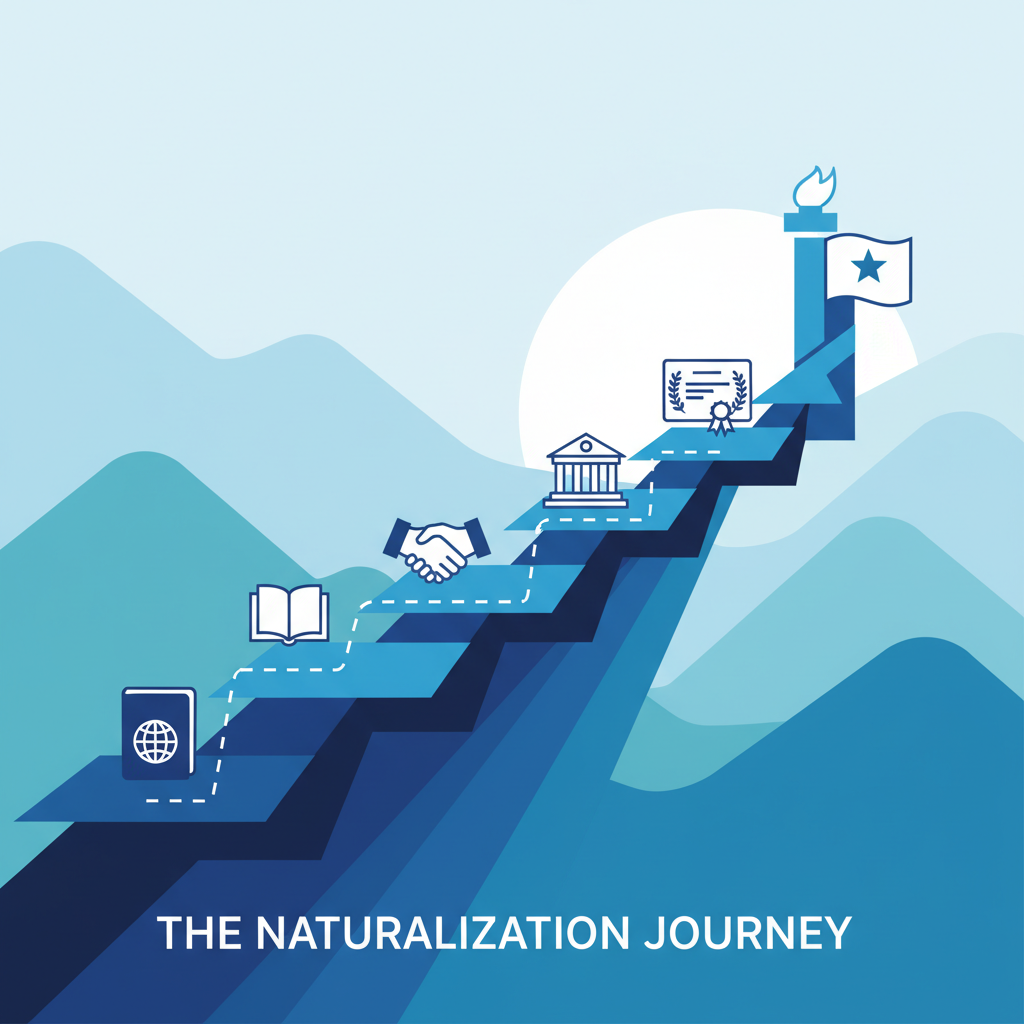
How to Prepare for the Naturalization Test Changes: A Complete Step-by-Step Guide
Preparing for naturalization, especially with upcoming test changes, requires a strategic and thorough approach. This guide outlines the essential steps to ensure you are ready for success.
1) Understand the New Test Format and Content
The most critical first step is to familiarize yourself with the proposed changes. USCIS has indicated that the new civics test will feature more scenario-based questions, requiring applicants to demonstrate a deeper understanding of U.S. civics rather than just memorizing facts. The English speaking test will also be more integrated into the overall interview.
- Action: Regularly check the USCIS official website for the latest updates on the new test format, sample questions, and study materials. USCIS typically releases official study guides and practice tests.
- What to Expect: For the civics test, anticipate questions that might ask you to explain "why" or "how" certain government functions work, or how specific rights apply in real-world situations. For English, be prepared to engage in a natural conversation with the officer, demonstrating your ability to comprehend and respond appropriately.
- Documents for this step: No specific documents needed, but print out any official USCIS study guides or fact sheets on the new test.
2) Master the English Language Requirements
The English test has three components: reading, writing, and speaking. With the integrated speaking assessment, your overall conversational ability will be more thoroughly evaluated.
- Reading: You must read one out of three sentences correctly to demonstrate your ability to read English. The sentences typically come from the official USCIS vocabulary list.
- Writing: You must write one out of three sentences correctly to demonstrate your ability to write English. This is often dictated by the officer.
- Speaking: This is where the changes are most prominent. Your ability to understand and respond to questions during the entire interview (including questions about your Form N-400 and the civics test) will be assessed. Practice speaking about your life, work, and the naturalization process in English.
- Action: Enroll in English as a Second Language (ESL) classes, practice speaking English regularly with native speakers, watch English-language news and TV shows, and use online resources. Focus on conversational fluency, not just vocabulary.
- Documents for this step: If you qualify for an English exemption (e.g., 50/20 or 55/15 rule, or a medical disability waiver on Form N-648), gather supporting documentation.
3) Study the Civics Content Strategically
While the current list of 100 civics questions is still relevant, the new test will require a deeper understanding. Don't just memorize the answers; understand the concepts behind them.
- Action: Study the current 100 civics questions thoroughly. For each question, try to explain the answer in your own words and understand its significance. For example, if asked "What does the Constitution do?", don't just say "Sets up the government." Understand *how* it sets up the government and *why* that's important.
- Focus Areas: Concentrate on the three branches of government, important historical events, key amendments, and the rights and responsibilities of citizens.
- Practice Scenario Questions: If USCIS releases sample scenario-based questions, practice answering them. If not, consider hypothetical situations and discuss how U.S. government principles would apply.
- Documents for this step: Official USCIS Civics Test Study Guide, flashcards, online practice tests.
4) Gather and Organize All Required Documents
A complete and accurate application package is essential. Missing or incorrect documents can cause significant delays.
- Personal Documents:
- Your Green Card (Form I-551)
- State-issued identification (Driver's License or State ID)
- Passport(s) and travel documents
- Birth certificates of children (if applicable)
- Marriage certificate(s) and divorce decrees (if applicable)
- Evidence of name change (if applicable)
- Financial Documents:
- Tax transcripts or returns for the past 5 (or 3) years
- Proof of financial support if you are exempt from fees
- Travel History: A complete list of all trips outside the U.S. since becoming an LPR, including dates of departure and return.
- Criminal History: Certified copies of arrest records, court dispositions, and probation records, even for minor offenses that were dismissed or expunged.
- Selective Service: If you are a male applicant between 18 and 26 years old, proof of Selective Service registration.
- Action: Start gathering these documents well in advance. Make copies of everything and keep them organized. Do not send original documents unless specifically requested by USCIS.
5) File Your Application (Form N-400) Carefully
The Form N-400 is extensive and requires precise information. Any errors or omissions can lead to delays or even denial.
- Complete Accurately: Fill out every section of Form N-400 truthfully and completely. If a question doesn't apply, write "N/A."
- Supporting Documents: Attach all necessary supporting documents as outlined in the form instructions. Ensure all copies are clear and legible.
- Photographs: Include two identical passport-style photos if required (check current USCIS instructions).
- Fees: Pay the correct filing fee and biometric services fee, or apply for a fee waiver using Form I-912, Request for Fee Waiver if eligible.
- Action: Review your completed Form N-400 multiple times. It's highly recommended to have an experienced immigration attorney review your application before submission. This is particularly important for residents in Orlando and Central Florida who may have unique circumstances.
6) Attend Your Interview Prepared
After filing Form N-400, you will receive an appointment notice for biometrics (fingerprints and photos), and then an interview notice. This is the culmination of your preparation.
- What to Bring:
- Your interview appointment notice.
- Your Green Card (Form I-551).
- Your passport(s) and any other travel documents.
- Your state-issued ID.
- All original documents that you submitted copies of with your Form N-400 (e.g., birth certificates, marriage certificates, divorce decrees, tax returns).
- Any updated documents or information since your application was filed.
- Your most recent tax returns.
- Preparation for the Interview:
- Review your entire Form N-400. The officer will ask questions based on your application.
- Practice answering potential questions about your background, travel, employment, and moral character in English.
- Be ready for the English reading, writing, and speaking tests, including the new conversational civics questions.
- Dress professionally and arrive early at the Orlando USCIS Field Office.
- Action: Consider a mock interview with your attorney or a trusted advisor. This can significantly reduce anxiety and help you practice your responses, especially with the new test format.
7) Take the Oath of Allegiance
If your application is approved after the interview, you will receive a notice for your Oath of Allegiance ceremony. This is the final step to becoming a U.S. citizen.
- What to Expect: The ceremony typically involves pledging allegiance to the United States and receiving your Certificate of Naturalization. You will usually be required to return your Green Card at this time.
- Action: Attend the ceremony on time and be prepared to return your Green Card. Celebrate this momentous occasion!
- Documents for this step: Oath ceremony notice, Green Card, any other documents requested on the notice.
Need Help? Our Orlando immigration team is ready to assist. Call +1 786-791-3106 for a free consultation, or message us online. Se Habla Español.
Practical Steps You Can Take Today
Even though the full implementation of the naturalization test changes is set for 2026, there are many proactive steps you can take right now to strengthen your application and prepare for the updated requirements.
Actionable Checklist:
- Start Studying Now (Both Formats): Begin studying the current 100 civics questions. As new materials for the 2026 test become available from USCIS, integrate those into your study plan. Focus on understanding concepts, not just memorizing answers.
- Intensify English Language Practice: Engage in daily English conversation, reading, and writing exercises. Watch English news, listen to podcasts, and try to articulate your thoughts in English


