


The journey to U.S. citizenship is a profound and life-changing step for many immigrants and their families. It signifies not just a change in legal status but a deeper integration into the fabric of American society. At Imigrar, we are dedicated to helping individuals and families navigate this complex path, always keeping our mission to "Keep Families Together" at the forefront.
As expert immigration attorneys based in Orlando, Florida, we understand the importance of staying informed about every development in immigration law. Today, we bring you crucial information about significant updates on the horizon: changes to the Naturalization Test expected in 2026. These changes could impact how you prepare for and ultimately pass the final hurdle to becoming a U.S. citizen.
Need Help? Our Orlando immigration team is ready to assist. Call +1 786-791-3106 for a free consultation, or message us online. Se Habla Español.
The reporting that sparked this guide
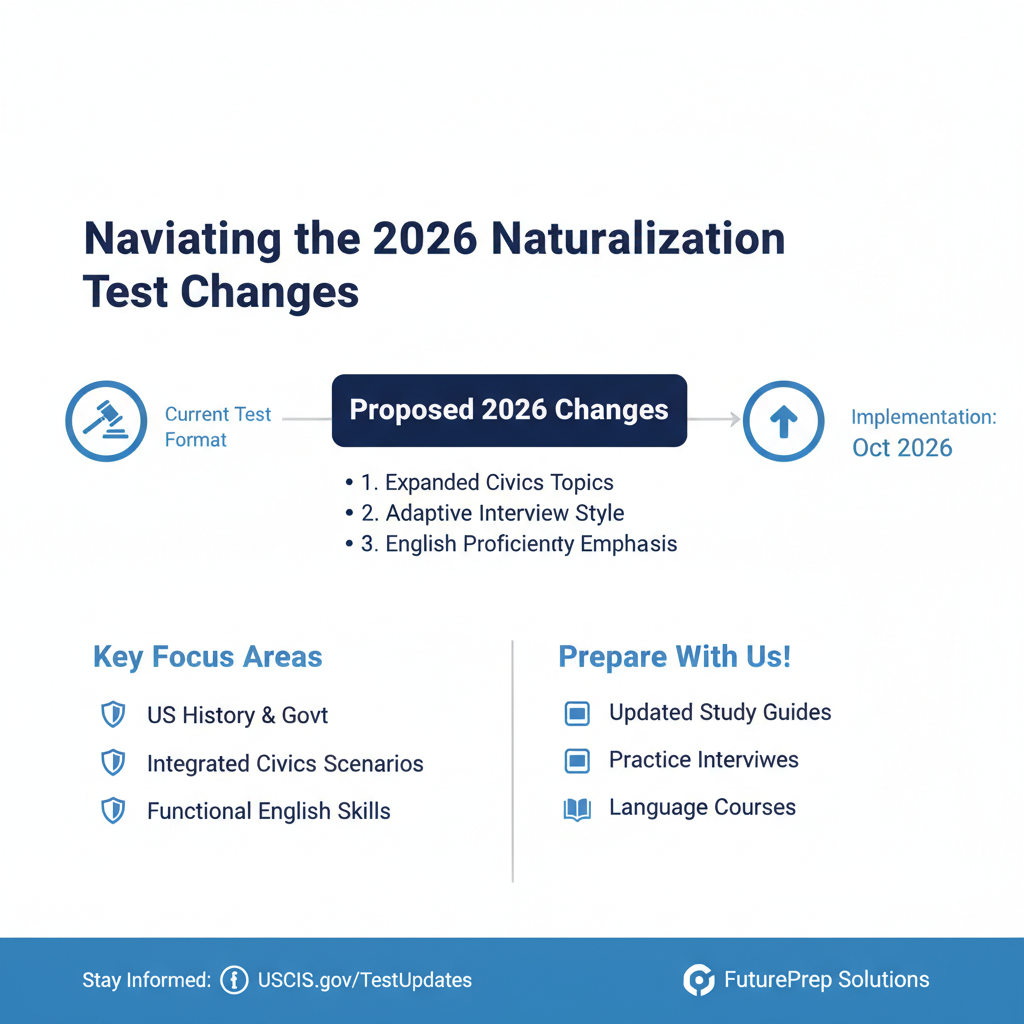
The news of impending changes to the Naturalization Test has been a topic of discussion among immigration advocates and government agencies for some time. While specific details are still being finalized, the general direction points towards updates that aim to enhance the assessment of civic knowledge and English proficiency for prospective citizens.
Naturalization Test Changes Coming in 2026 (Citizenship)
What This News Means for Immigrants in Orlando and Across Florida
For individuals residing in Orlando, across Central Florida, and indeed nationwide, the news of upcoming changes to the Naturalization Test is highly significant. It means that preparation strategies may need to adapt, and understanding the nuances of these changes will be critical for a successful application.
Why this news is showing up now
The U.S. Citizenship and Immigration Services (USCIS) periodically reviews and updates the Naturalization Test to ensure it remains relevant, effective, and fair. The current civics test, based on 100 questions, has been largely in place since 2008 (with a brief, controversial update in 2020 that was later rescinded). The current administration, through USCIS, has expressed a commitment to modernizing the test, making it more accessible while still maintaining its integrity as a measure of civic knowledge.
In December 2022, USCIS announced a pilot program to test a revised version of the civics test. This pilot explored changes such as an updated speaking section and a multiple-choice format for some civics questions, moving away from solely verbal answers. The feedback and results from this pilot are directly informing the changes expected to be implemented in 2026. This proactive approach by USCIS is why we are seeing news and discussions about these changes now, giving applicants time to prepare.
How it can affect Florida residents
Florida is home to one of the largest and most diverse immigrant populations in the United States. For residents in Orlando, Tampa, Miami, and other parts of the Sunshine State, the path to citizenship is a common goal. The impending changes will affect all applicants nationwide, meaning those applying through the Orlando USCIS Field Office or any other office will encounter the new test format once it's implemented.
The impact could include:
- New Study Materials: Applicants will need to study updated civics questions and potentially a new format, requiring different preparation materials and methods.
- English Proficiency Assessment: Changes to the English portion of the test might affect how reading, writing, and speaking abilities are evaluated.
- Increased Complexity: If the test shifts towards more analytical, multiple-choice questions, it might require a deeper understanding of U.S. history and government principles, rather than rote memorization.
- Timeline Considerations: Individuals who are eligible for naturalization now may consider applying sooner rather than later to take the current test, or they may choose to wait and prepare specifically for the 2026 version. This decision will depend on individual circumstances and readiness.
Regardless of the specifics, preparation will be key. Imigrar is committed to keeping our Central Florida clients informed and equipped to handle these changes effectively.
What Naturalization Test Changes Are (and Why They Matter)
To understand the significance of the upcoming changes, it's essential to first grasp what naturalization entails and what the test currently involves. These changes are not merely administrative tweaks; they represent an evolution in how the U.S. government assesses a prospective citizen's readiness to integrate into American civic life.
A plain-English definition
Naturalization is the process by which a foreign citizen or national can voluntarily become a U.S. citizen. It is the final step for many individuals who have lived in the United States as Lawful Permanent Residents (LPRs), also known as Green Card holders, for several years. The process involves meeting specific eligibility requirements, submitting an application, and passing an interview that includes tests of English proficiency and knowledge of U.S. history and government (the Civics Test).
The "Naturalization Test Changes Coming in 2026" specifically refers to anticipated revisions to these examination components, primarily the Civics Test and potentially the English speaking portion. These revisions aim to create a more effective and standardized assessment of an applicant's understanding of American principles and their ability to communicate in English.
Key terms you need to know
Understanding these terms is crucial as you navigate the naturalization process:
- Naturalization: The process of becoming a U.S. citizen after fulfilling specific requirements.
- USCIS (U.S. Citizenship and Immigration Services): The government agency responsible for overseeing lawful immigration to the United States, including processing naturalization applications. You can find more information on the USCIS official website.
- Lawful Permanent Resident (LPR) / Green Card Holder: An individual who has been granted the privilege of permanently residing in the United States. This is a prerequisite for most naturalization applicants.
- Form N-400: The official "Application for Naturalization" form that all applicants must complete and submit to USCIS.
- Civics Test: A component of the naturalization interview that assesses an applicant's knowledge of U.S. history, government, and civics. The current test requires applicants to answer 6 out of 10 questions correctly from a list of 100 possible questions.
- English Test: Another component of the naturalization interview that assesses an applicant's ability to read, write, and speak basic English.
- Good Moral Character: A legal requirement for naturalization, meaning applicants must have adhered to societal norms and laws, without committing certain crimes or engaging in specific activities that would disqualify them.
- Continuous Residence: The requirement that an applicant must have maintained residence in the U.S. for a specified period (typically 5 years, or 3 years if married to a U.S. citizen) immediately preceding the application.
- Physical Presence: The requirement that an applicant must have actually been physically present in the U.S. for a certain cumulative period during their continuous residence.
- Oath of Allegiance: The final step in the naturalization process, where approved applicants formally pledge their loyalty to the United States.
These changes matter because they directly impact the preparation required for one of the most significant parts of the naturalization process. A shift in test format, question style, or even the topics covered means that future applicants will need to adjust their study methods and materials. The goal of these changes, according to USCIS, is to make the test more consistent, secure, and reflective of civic knowledge, ensuring that new citizens have a foundational understanding of American democracy and values.
Need Help? Our Orlando immigration team is ready to assist. Call +1 786-791-3106 for a free consultation, or message us online. Se Habla Español.
Current Immigration Law: The Foundation for Naturalization
While the test components are subject to change, the fundamental legal framework for naturalization remains rooted in the Immigration and Nationality Act (INA). Understanding these core requirements is the first step for any aspiring U.S. citizen.
Federal requirements
The eligibility criteria for naturalization are primarily set forth in Sections 316 and 319 of the Immigration and Nationality Act (INA). To be eligible for naturalization, most applicants must meet the following federal requirements:
- Age: Be at least 18 years old at the time of filing Form N-400.
- Lawful Permanent Resident (LPR) Status: Hold a Green Card for a minimum of 5 years. This period is reduced to 3 years if you are married to and living with a U.S. citizen and meet other requirements under INA Section 319(a). Special provisions also exist for military personnel under INA Sections 328 and 329.
- Continuous Residence: Have maintained continuous residence in the U.S. as an LPR for at least 5 years (or 3 years, if applicable) immediately preceding the date of filing Form N-400. Absences from the U.S. for more than 6 months but less than 1 year may break continuous residence unless proven otherwise. Absences of 1 year or more automatically break continuous residence.
- Physical Presence: Have been physically present in the U.S. for at least half of the continuous residence period (e.g., 30 months out of 5 years, or 18 months out of 3 years).
- Residence in a State or USCIS District: Have resided for at least 3 months in the state or USCIS district where you file your application. For Central Florida residents, this typically means the Orlando USCIS Field Office district.
- Good Moral Character: Demonstrate good moral character for the statutory period (5 or 3 years) leading up to your application and until the Oath of Allegiance. This is a crucial requirement, and certain criminal offenses or activities can disqualify an applicant.
- Attachment to the U.S. Constitution: Be able to demonstrate an attachment to the principles of the U.S. Constitution and a favorable disposition toward the good order and happiness of the U.S.
- English Language Proficiency: Demonstrate the ability to read, write, and speak basic English, as required by INA Section 312. Certain exemptions apply based on age and length of LPR status.
- Knowledge of U.S. History and Government (Civics): Demonstrate knowledge and understanding of the fundamentals of U.S. history and government, also required by INA Section 312. Exemptions also apply based on age and length of LPR status.
- Oath of Allegiance: Be willing to take the Oath of Allegiance to the United States.
Florida-specific considerations
While the requirements for naturalization are federal, the practical application and resources available can vary by location. For those in Florida, particularly in the Orlando area, the process is handled by the USCIS Field Office in Orlando. This office conducts interviews and ceremonies for applicants residing in its jurisdiction, which includes Orange County and surrounding areas along the I-4 corridor.
There are no Florida-specific laws that alter federal naturalization requirements. However, Florida's diverse immigrant communities benefit from various non-profit organizations and legal aid services, in addition to firms like Imigrar, that provide support and resources for naturalization applicants. Understanding local processing times and community resources can be beneficial.
When preparing your application, you will primarily interact with USCIS Forms. The most important one for naturalization is Form N-400, Application for Naturalization. You might also encounter Form N-600, Application for Certificate of Citizenship, if you are seeking proof of derivative citizenship through a parent.
Need Help? Our Orlando immigration team is ready to assist. Call +1 786-791-3106 for a free consultation, or message us online. Se Habla Español.

How to Prepare for Naturalization and the Upcoming Test Changes: A Complete Step-by-Step Guide
The path to U.S. citizenship involves several critical steps. With the 2026 changes on the horizon, it's more important than ever to be thoroughly prepared. This guide will walk you through the process, keeping the future test changes in mind.
1) Determine Your Eligibility and Gather Initial Documents
Before you even begin filling out forms, confirm you meet all the basic eligibility requirements. This includes verifying your Lawful Permanent Resident status (Green Card holder), age, continuous residence, physical presence, and good moral character. Start collecting all necessary supporting documents early, as some may take time to obtain.
- Required Documents for Eligibility Check:
- Your Green Card (Form I-551)
- Passports and travel records (Entry/Exit dates for all trips outside the U.S. since becoming an LPR)
- Marriage certificate (if applying under the 3-year rule)
- Divorce decrees or death certificates (if applicable, for marital history)
- Birth certificates of your children (if applicable)
- Tax transcripts for the past 5 (or 3) years
- Selective Service Registration number (for males aged 18-26 when residing in the U.S.)
2) Complete and File Form N-400, Application for Naturalization
This is the cornerstone of your naturalization application. Form N-400 is a comprehensive document that asks for detailed personal information, residency history, marital history, employment, travel, and moral character background. Accuracy and completeness are paramount.
Important: Answer every question truthfully. If a question doesn't apply, write "N/A" (not applicable) or "None." Any misrepresentation or omission can lead to delays or denial.
- Required Documents for Filing Form N-400:
- Completed and signed Form N-400
- Photocopies of both sides of your Green Card
- Two identical passport-style photographs (if filing by mail)
- Fee payment (check, money order, or credit card info via Form G-1450). Be aware of the current USCIS filing fees for Form N-400, and inquire about fee waivers if eligible.
- Any additional supporting documents as requested by specific questions on the form (e.g., proof of name change, court dispositions for arrests).
3) Attend Your Biometrics Appointment
After filing Form N-400, USCIS will send you an appointment notice for biometrics collection. This typically involves fingerprints, photographs, and a signature. These are used to conduct background and security checks.
- What to Bring to the Biometrics Appointment:
- Your biometrics appointment notice (Form I-797C)
- A valid photo identification (e.g., Green Card, passport, driver's license)
4) Prepare for the Naturalization Interview and Test
This is where the upcoming 2026 changes become critical. The interview involves a USCIS officer reviewing your Form N-400, asking questions about your eligibility, and administering the English and Civics Tests.
Current Test (Pre-2026):
- English Test: The officer will assess your ability to speak English during the interview. You will also be asked to read one out of three sentences correctly and write one out of three sentences correctly.
- Civics Test: You will be asked up to 10 questions from a list of 100 civics questions. You must answer 6 correctly to pass. The questions are usually asked verbally, and you must provide a verbal answer.


