


The journey through the U.S. immigration system can often feel like navigating a complex maze, with one of the most significant challenges being the unpredictable nature of application processing times. For immigrants and their families in Orlando, Central Florida, and nationwide, understanding these timelines is crucial for planning futures, managing expectations, and making informed decisions.
At Imigrar, we believe in empowering our clients with accurate, up-to-date information. Today, we delve into the latest USCIS processing time updates for 2026, offering clarity and practical guidance to help you through every step.
Need Help? Our Orlando immigration team is ready to assist. Call +1 786-791-3106 for a free consultation, or message us online. Se Habla Español.
The reporting that sparked this guide
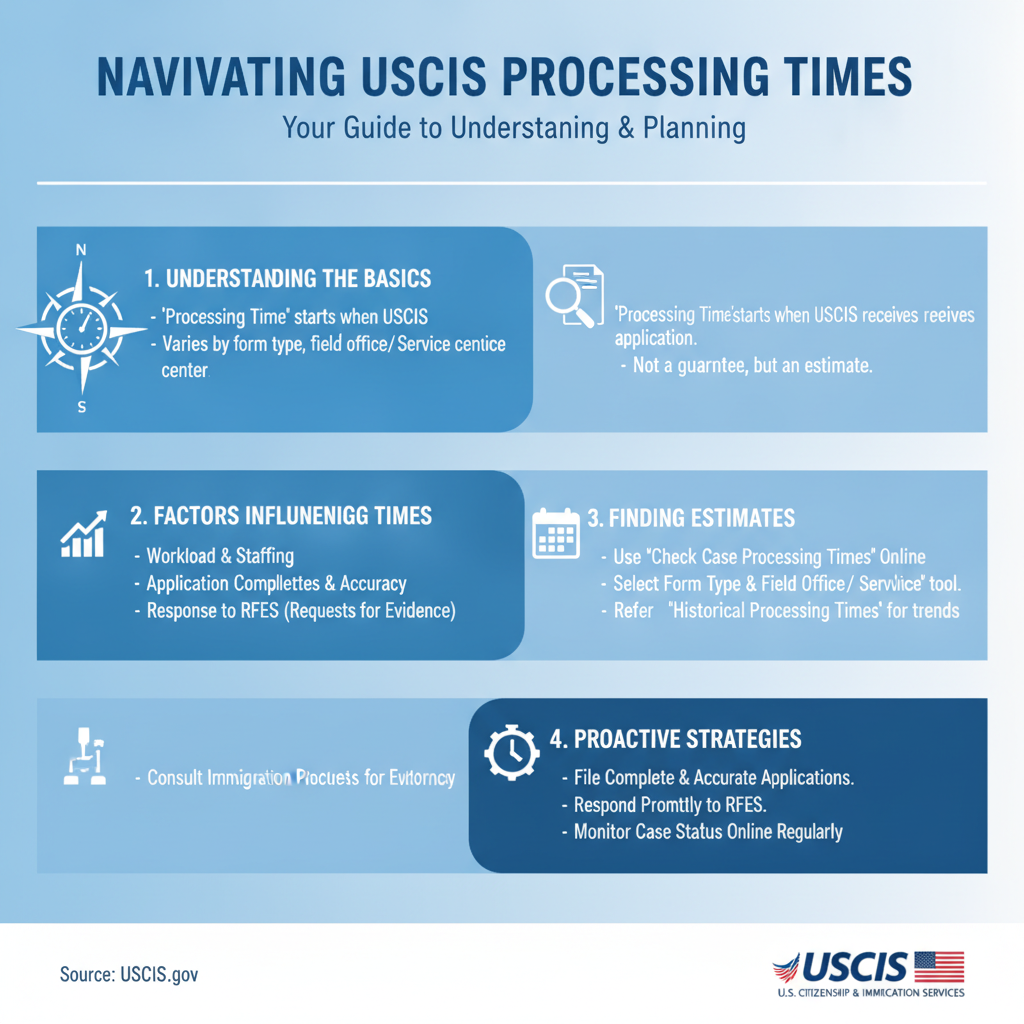
This comprehensive guide is built upon the latest information regarding USCIS processing times, drawing directly from official government sources and trends observed in immigration policy and adjudication. Keeping abreast of these developments is vital for anyone with a pending or prospective immigration application.
USCIS Processing Times and Updates for 2026 (USCIS)
What This News Means for Immigrants in Orlando and Across Florida
The continuous updates to USCIS processing times are more than just numbers; they represent the real-life waiting periods that impact families, careers, and futures. For the vibrant immigrant communities throughout Florida, from the bustling streets of Orlando to the coastal cities, these changes have tangible effects.
Why this news is showing up now
USCIS processing times are not static. They are dynamic estimates that fluctuate based on a multitude of factors, including the volume of applications received, staffing levels at various service centers and field offices, evolving immigration policies, and the efficiency of internal adjudication processes. The 2026 updates reflect USCIS's ongoing efforts to manage backlogs that accumulated during and after the global pandemic, adapt to new technological implementations, and respond to legislative or administrative changes that might impact case intake and review. Every quarter, or even more frequently, USCIS reviews and adjusts these posted times to provide the most current estimates based on historical data and projected workloads. This constant adjustment is why updates are a regular occurrence and why staying informed is paramount.
How it can affect Florida residents
Florida is home to one of the largest and most diverse immigrant populations in the United States, with a significant number of residents relying on USCIS to process their applications for permanent residency, naturalization, work authorization, and family reunification. For those living in Orlando, Orange County, or anywhere along the I-4 corridor, these processing time updates can directly influence critical aspects of their lives:
- Family Petitions (Form I-130): Longer processing times for petitions filed by U.S. citizens or lawful permanent residents for their relatives mean extended separation from loved ones, often across international borders.
- Adjustment of Status (Form I-485): For individuals seeking to obtain a Green Card while remaining in the U.S., delays can prolong the period of uncertainty, impacting travel plans, employment, and the ability to fully integrate into society.
- Employment Authorization Documents (Form I-765): Delays in processing EADs can lead to gaps in employment, causing severe financial hardship for individuals and families who depend on this authorization to work legally. Many essential workers in Central Florida rely on timely EAD processing.
- Naturalization Applications (Form N-400): Aspiring U.S. citizens in Florida may face longer waits to take the Oath of Allegiance, delaying their ability to vote, serve on juries, and fully participate in civic life. The Orlando USCIS Field Office handles a significant volume of these interviews.
- Asylum and Refugee Cases: While often prioritized, even slight fluctuations can have profound impacts on vulnerable individuals seeking protection, affecting their ability to gain stability and security.
Understanding these impacts is the first step toward preparing for and navigating the immigration process effectively. Imigrar is deeply rooted in the Orlando community, and we understand the unique challenges faced by Florida residents.
What USCIS Processing Times Are (and Why It Matters)
Navigating the U.S. immigration system requires a clear understanding of its terminology and processes. Among the most critical concepts for any applicant are USCIS processing times.
A plain-English definition
Simply put, **USCIS processing times** are estimates of how long it takes U.S. Citizenship and Immigration Services (USCIS) to process a specific type of application or petition from the date it receives your submission to the date it makes a final decision. These are not guaranteed timelines but rather an average or range based on how long it has taken to process similar cases in the past. They reflect the current workload at a particular **Service Center** or **Field Office** responsible for your case.
Factors influencing these times include:
- The specific type of form you filed (e.g., Form I-130, Form I-485, Form N-400).
- The USCIS Service Center or Field Office handling your case.
- The volume of applications currently being processed.
- Staffing levels and resource allocation at USCIS.
- Changes in immigration policy or procedures.
- The completeness and complexity of your individual application.
- Whether you receive a **Request for Evidence (RFE)** or need an interview.
These times matter immensely because they dictate the duration of uncertainty in an applicant's life, affecting their ability to plan for work, travel, and family reunification.
Key terms you need to know
To effectively monitor your case and understand USCIS updates, familiarity with these key terms is essential:
- Receipt Date: This is the date USCIS officially receives your application or petition. You will receive a Form I-797C, Notice of Action, confirming this date and providing your unique 13-digit **receipt number**.
- Priority Date: Primarily relevant for family-sponsored and employment-based immigrant visa petitions (e.g., Form I-130, Form I-140) that are subject to annual quotas. This is the date your petition was properly filed with USCIS. It determines your place in the visa queue, and you can only proceed with **Adjustment of Status** or **Consular Processing** once your priority date becomes "current" according to the U.S. Department of State Visa Bulletin.
- Current Processing Time: The estimated time range USCIS reports for a specific form at a particular service center or field office. This is what you check on the official USCIS website.
- Case Status Online: An online tool on the USCIS website where you can enter your 13-digit **receipt number** to get real-time updates on your individual case's progress.
- Service Center vs. Field Office:
- Service Centers (e.g., Nebraska, Texas, California, Vermont) typically handle the initial processing of petitions and applications that do not require an interview (e.g., Form I-130, some Form I-140, Form I-765).
- Field Offices (e.g., the Orlando USCIS Field Office) handle cases that often require in-person interviews, such as **Adjustment of Status** (Form I-485) applications and **Naturalization** (Form N-400) interviews.
- Adjustment of Status (AOS): The process by which an eligible immigrant already in the United States can apply for lawful permanent resident status (a Green Card) without having to return to their home country to complete visa processing.
- Consular Processing: The process of applying for an immigrant visa at a U.S. embassy or consulate abroad. This is for individuals who are outside the U.S. or ineligible for **Adjustment of Status**.
- Request for Evidence (RFE): A notice from USCIS requesting additional documents or information to support your application. Responding promptly and completely to an RFE is critical.
Feeling overwhelmed by immigration terminology? Our experienced attorneys can clarify your situation. Call +1 786-791-3106 for a free consultation. Se Habla Español.
Current Immigration Law: The Foundation for Processing Times
While USCIS processing times seem like an administrative function, they are deeply rooted in the complex framework of U.S. immigration law. The laws and regulations dictate what types of applications are permitted, who is eligible, what evidence is required, and the procedural steps that USCIS must follow. Understanding this foundation helps contextualize why processing times can be lengthy and why they vary so significantly.
The primary body of U.S. immigration law is the Immigration and Nationality Act (INA). Passed by Congress, the INA governs virtually all aspects of immigration, from who may enter the U.S. to the conditions under which they may remain. USCIS operates under the authority granted by the INA and its subsequent amendments to adjudicate immigration benefits.
Federal requirements impacting processing
Several federal requirements directly influence USCIS processing times:
- Statutory Quotas and Caps: The INA establishes annual limits (quotas) on the number of immigrant visas available for certain categories, such as family-sponsored and employment-based visas. When demand exceeds supply, applicants must wait for their **priority date** to become current, regardless of how quickly USCIS processes the underlying petition (e.g., Form I-130, Form I-140). This creates backlogs that are legal, not administrative, in nature.
- Eligibility Criteria and Evidence: Federal law mandates specific eligibility requirements for each immigration benefit. USCIS officers must thoroughly review all submitted evidence to ensure compliance. If evidence is missing or insufficient, a **Request for Evidence (RFE)** is issued, which pauses and extends the processing time.
- Security Checks and Vetting: All applicants undergo rigorous background and security checks mandated by federal law to protect national security. These checks involve multiple government agencies and can sometimes take an unpredictable amount of time, contributing to overall delays.
- Administrative Procedure Act (APA): This federal law governs how federal agencies, including USCIS, must develop and issue regulations, provide public notice, and conduct adjudications. It ensures fairness and transparency but also adds procedural steps that can impact efficiency.
- Biometrics Collection: Most applicants for Green Cards, work permits, and naturalization must attend a biometrics appointment (fingerprints, photos, signature). Scheduling and processing these appointments add a necessary step to the timeline.
USCIS forms are the backbone of these federal requirements. Key forms you might encounter include:
- Form I-130 (Petition for Alien Relative): Initiates the family-sponsored immigration process.
- Form I-485 (Application to Register Permanent Residence or Adjust Status): For those seeking a Green Card while in the U.S.
- Form N-400 (Application for Naturalization): For those seeking U.S. citizenship.
- Form I-765 (Application for Employment Authorization): To obtain an EAD.
- Form I-140 (Immigrant Petition for Alien Worker): For employment-based immigration.
- Form I-90 (Application to Replace Permanent Resident Card): For renewing or replacing a Green Card.
For official information on these forms and more, always refer to the USCIS official website and the USCIS Forms page.
Florida-specific considerations
While federal law applies uniformly across the U.S., its implementation and impact can feel different in states with high immigrant populations like Florida. The sheer volume of applications originating from Florida, especially Central Florida, means that the Orlando USCIS Field Office and the service centers handling Florida cases are often among the busiest. This high volume can sometimes translate to longer local processing times, particularly for interview-based applications like **Adjustment of Status** and **Naturalization**.
Moreover, Florida's diverse immigrant communities – including large populations from Latin America, the Caribbean, and other regions – often have specific immigration needs and trends. For example, the number of asylum applications or certain family-based petitions might be higher, placing particular demands on the system. Local resources, community organizations, and legal aid services in areas like Orlando and Tampa play a crucial role in assisting applicants through this federally mandated process, highlighting the interplay between federal law and local realities.

Navigating USCIS Processing Times: A Complete Step-by-Step Guide
Understanding USCIS processing times is one thing; actively managing your case within these timelines is another. This guide provides actionable steps to monitor your application, address delays, and stay informed throughout your immigration journey.
1) Understand Your Application and Its Typical Timeline
Before you can track your case, you must thoroughly understand what you filed. Every immigration form has distinct requirements and processing pathways.
- Identify Your Specific Form: Know the exact USCIS form number you submitted (e.g., Form I-130, Form I-485, Form N-400).
- Determine Your Filing Location: Your **receipt notice** (Form I-797C) will indicate which USCIS Service Center (e.g., Texas, Nebraska) or Field Office (e.g., Orlando) is processing your case. This is critical as processing times vary by location.
- Note Your Receipt Date and Priority Date: These dates are found on your Form I-797C and are your official starting points for tracking.
Required documents for this step:
- Your original or copy of Form I-797C, Notice of Action (Receipt Notice).
- A copy of the application or petition you filed.
- Knowledge of your specific immigration category (e.g., family-based, employment-based).
2) Regularly Check Official USCIS Processing Times
USCIS provides an online tool to check current processing times. This should be your primary resource for general timeframes.
- Access the Tool: Visit the official USCIS Processing Times page.
- Select Your Form and Office: Use the dropdown menus to select your specific form and the Service Center or Field Office handling your case. For Central Florida residents, this might be the Orlando Field Office for interviews or a specific Service Center for initial petitions.
- Interpret the Times: USCIS typically displays a range (e.g., "6 Months to 10.5 Months"). The lower number often represents the median processing time, while the higher number indicates the 80th percentile. This means 80% of cases are processed within the longer timeframe.
- Check Frequently: Processing times can change monthly or quarterly. Make it a habit to check periodically.
Required documents for this step:
- Your form type.
- The Service Center or Field Office where your case is pending.
3) Utilize the USCIS Case Status Online Tool
This tool provides specific updates on your individual application, not just general processing times.
- Access the Tool: Go to the USCIS Case Status Online page.
- Enter Your Receipt Number: Input the 13-digit **receipt number** found on your Form I-797C.
- Understand Status Messages: Common messages include "Case Was Received," "Fingerprint Review Was Completed," "Interview Was Scheduled," or "New Card Is Being Produced." While generic, these provide insight into your case's progression.
- Sign Up for Alerts: You can create an account to receive email and text notifications when your case status changes.
Required documents for this step:
- Your 13-digit USCIS **receipt number**.
4) Know When and How to Submit an "Outside Normal Processing Time" Inquiry
If your case has been pending longer than the *highest* number displayed on the


