


The journey through the U.S. immigration system can often feel like navigating a complex maze, and one of the most challenging aspects for many applicants is the waiting period. USCIS processing times are a constant source of anxiety, hope, and sometimes frustration for individuals and families seeking to build their lives in the United States. As of mid-2026, staying updated on these timelines is more critical than ever.
At Imigrar, an immigration law firm based in Orlando, Florida, we understand the profound impact these waiting times have on families. Our mission is to "Keep Families Together," and that means empowering you with accurate, timely information and expert legal guidance.
Need Help? Our Orlando immigration team is ready to assist. Call +1 786-791-3106 for a free consultation, or message us online. Se Habla Español.
The reporting that sparked this guide
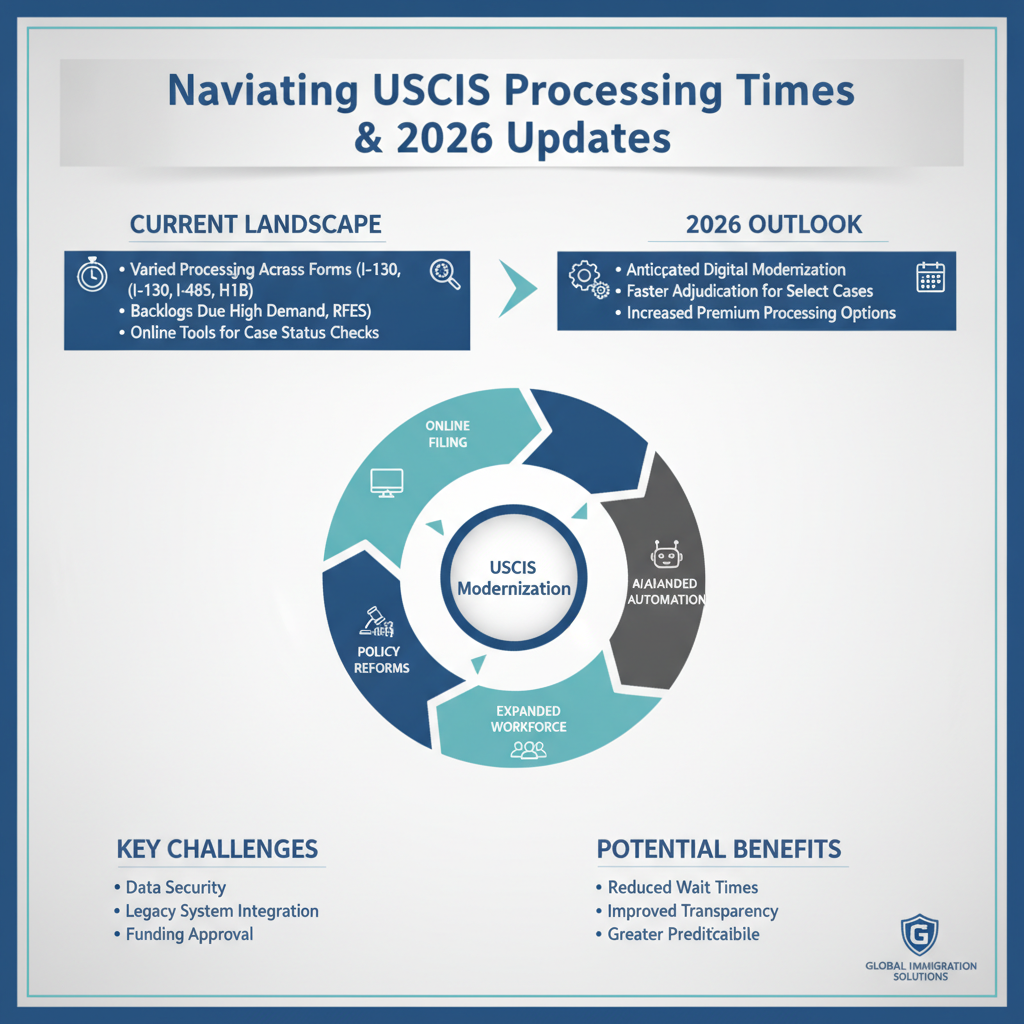
This comprehensive guide is prompted by the latest discussions and updates surrounding USCIS processing times for various immigration applications in 2026, reflecting the ongoing efforts by the agency to manage caseloads and provide transparency. For the most current official data, always refer directly to the source:
USCIS Processing Times and Updates for 2026 (USCIS)
What This News Means for Immigrants in Orlando and Across Florida
For immigrants residing in Orlando, across Central Florida, and throughout the Sunshine State, updates to USCIS processing times are not just statistics; they represent the real-life progression of their dreams, their families, and their futures. Whether you're waiting for a Green Card, a work permit, or citizenship, these times dictate when you can expect a decision.
Why this news is showing up now
USCIS regularly updates its processing timeframes as part of its commitment to transparency and to provide applicants with an estimated period for their cases. These updates are dynamic, influenced by several factors including:
- Application Volume: Fluctuations in the number of new filings can significantly impact how quickly cases are processed.
- Staffing Levels: The availability of adjudicators and support staff at various service centers and field offices plays a crucial role.
- Policy Changes: New immigration policies or changes in existing ones can sometimes shift priorities or introduce new steps, affecting timelines.
- Technological Enhancements: USCIS continues to implement digital processing initiatives, which can both streamline some processes and, during transition periods, create temporary backlogs.
- Budgetary Constraints: Funding levels directly impact USCIS's operational capacity.
As of mid-2026, USCIS has continued to adapt to post-pandemic challenges, aiming to reduce backlogs that accumulated over previous years. These ongoing updates reflect their current operational capacity and projected workload.
How it can affect Florida residents
Florida, particularly the Orlando metropolitan area and the I-4 corridor, is home to a vibrant and diverse immigrant population. The impact of USCIS processing times here is multifaceted:
- Family Unity: Many Floridians are sponsoring family members. Delays in processing Form I-130 (Petition for Alien Relative) or Form I-485 (Application to Register Permanent Residence or Adjust Status) can mean prolonged separation or uncertainty for families.
- Employment Opportunities: For those awaiting an Employment Authorization Document (EAD) via Form I-765, processing delays can directly impact their ability to work legally and support themselves and their families in cities like Orlando.
- Travel Restrictions: Applicants waiting for advance parole (Form I-131) may be unable to travel internationally, affecting personal and professional obligations.
- Community Planning: Longer processing times can affect an individual's long-term planning, including buying a home in Orange County, enrolling children in schools, or starting a business.
- Orlando USCIS Field Office Impact: The processing times for certain applications, especially those requiring interviews like Adjustment of Status or Naturalization (Form N-400), are heavily influenced by the workload at the local Orlando USCIS Field Office. Longer queues here directly translate to longer waits for Central Florida residents.
Understanding these updates is the first step in managing your immigration journey effectively. Imigrar is here to help you navigate these complexities.
Need Help? Our Orlando immigration team is ready to assist. Call +1 786-791-3106 for a free consultation, or message us online. Se Habla Español.
What USCIS Processing Times Are (and Why It Matters)
When you submit an application to U.S. Citizenship and Immigration Services (USCIS), you embark on a waiting period. The "processing time" is the estimated duration it takes for USCIS to make a decision on your application, from the moment they receive it until they issue an approval, denial, or Request for Evidence (RFE).
A plain-English definition
Simply put, USCIS Processing Times are the estimates, published by USCIS, of how long it will take to process a specific form at a particular service center or field office. These are not guarantees, but rather a guide based on historical data and current workload. They are designed to give applicants a general idea of when they might expect a decision on their case.
It's crucial to understand that these times can vary significantly based on the type of application, the specific USCIS office handling your case (e.g., the National Benefits Center (NBC) or the Orlando Field Office), and even the individual adjudicator's workload.
Key terms you need to know
Navigating USCIS processing times requires familiarity with several important terms:
- Receipt Date: This is the date USCIS physically receives your application. It is stamped on your Form I-797C, Notice of Action, and is the starting point for calculating your processing time.
- Notice Date: This is the date USCIS sends you a notice, such as a receipt notice or an RFE.
- Processing Date: On the USCIS processing times tool, this refers to the "date USCIS is currently working on." If your Receipt Date is before the displayed processing date, your case might be considered "outside normal processing times."
- National Benefits Center (NBC): A USCIS facility that processes many types of applications, especially those related to Adjustment of Status, before forwarding them to local field offices for interviews.
- Field Office: Local USCIS offices (like the one in Orlando) that conduct interviews, process certain applications, and provide services to local residents.
- Service Center: Regional USCIS centers (e.g., California Service Center, Nebraska Service Center) that process specific types of petitions and applications that do not typically require an interview.
- Priority Date: For family-sponsored and employment-based Green Card categories, this is the date your petition (usually Form I-130 or Form I-140) was properly filed with USCIS. This date determines your place in the visa queue, which is managed by the U.S. Department of State's U.S. Department of State Visa Bulletin.
- Visa Bulletin: A monthly publication from the U.S. Department of State that lists when immigrant visas are available for specific categories and countries. Your Priority Date must be "current" according to the Visa Bulletin before you can apply for a Green Card (Adjustment of Status or Consular Processing).
- Request for Evidence (RFE): A notice from USCIS asking for additional documents or information to support your application. Promptly and thoroughly responding to an RFE is critical.
- Notice of Intent to Deny (NOID): A more serious notice indicating USCIS intends to deny your application unless you provide compelling evidence to overcome their concerns.
- Case Status Online Tool: A USCIS official website feature where you can enter your receipt number to check the latest status of your application.
Understanding these terms will empower you to better interpret the information provided by USCIS and manage your expectations throughout the process.
Current Immigration Law: The Foundation of Processing
USCIS processing times are not arbitrary; they are governed by a complex framework of federal immigration laws and regulations. The primary legal authority is the Immigration and Nationality Act (INA), along with various federal regulations and policy memoranda.
Federal requirements
The INA sets forth the requirements for eligibility for various immigration benefits, from family-based petitions to naturalization. While the INA doesn't specify exact processing times for each form, it mandates that USCIS adjudicate applications in a "timely manner." However, what constitutes "timely" can be subjective and is heavily influenced by USCIS's operational capacity and caseload.
Key federal requirements impacting processing include:
- Adjudication Standards: USCIS officers must follow specific legal standards and guidelines when reviewing applications, ensuring fairness and consistency.
- Background Checks: All applicants undergo rigorous background and security checks, which are federally mandated and can sometimes cause delays if there are complex issues.
- Interview Requirements: Many applications, such as Form I-485 (Adjustment of Status) and Form N-400 (Application for Naturalization), require an interview with a USCIS officer, typically conducted at a local field office like the one in Orlando.
- Documentary Evidence: Federal law requires applicants to submit specific supporting documents to prove eligibility. Incomplete submissions often lead to RFEs, extending processing times.
Some of the most commonly filed forms and their federal significance include:
- Form I-130, Petition for Alien Relative: The initial step for family-sponsored immigration, establishing the relationship between petitioner and beneficiary.
- Form I-485, Application to Register Permanent Residence or Adjust Status: The application to become a lawful permanent resident (Green Card holder) from within the U.S.
- Form I-765, Application for Employment Authorization: Allows eligible non-citizens to work legally in the U.S.
- Form I-131, Application for Travel Document: Used for re-entry permits, refugee travel documents, and advance parole.
- Form N-400, Application for Naturalization: The application to become a U.S. citizen.
You can find all official forms and their instructions on the USCIS Forms page.
Florida-specific considerations
While immigration law is primarily federal, there are some Florida-specific considerations that can indirectly interact with an immigrant's journey:
- State ID and Driver's Licenses: The ability to obtain a Florida driver's license or state ID often depends on one's current immigration status and the validity of their documents. Delays in receiving EADs or Green Cards can impact this.
- Public Services: Eligibility for certain state or local benefits and services in Florida can be tied to immigration status, which in turn is affected by USCIS processing.
- Local Resources: Communities like Orlando and Orange County offer various resources for immigrants, from language classes to community support groups, which can be vital during long waiting periods.
It's important to remember that USCIS is a federal agency, and state laws cannot directly alter federal immigration processing times or requirements. However, the outcomes of federal processing have significant implications for life in Florida.
Need Help? Our Orlando immigration team is ready to assist. Call +1 786-791-3106 for a free consultation, or message us online. Se Habla Español.
How to Navigate USCIS Processing Times: A Complete Step-by-Step Guide
Managing your immigration case effectively, especially concerning processing times, requires proactive engagement and careful monitoring. This guide focuses on how to understand, track, and respond to USCIS processing updates, rather than the initial filing of an application.
1) Understand Your Application and Receipt Date
The very first step is to know exactly what you've filed and when. Your Receipt Date is the anchor for all processing time calculations.
- Action: Locate your Form I-797C, Notice of Action, which contains your 13-digit receipt number (e.g., EAC-26-XXX-XXXXX) and the official Receipt Date. This notice confirms USCIS has received your application.
- Information/Records Needed:
- Original or copy of Form I-797C, Notice of Action.
- Type of application filed (e.g., Form I-485, Form I-765, Form N-400).
- The USCIS Service Center or Field Office where your application was sent (also on Form I-797C).
2) Locate Your Specific Processing Time
USCIS provides an online tool to check processing times, which is updated monthly. This is your primary resource for estimated wait times.
- Action: Visit the USCIS Processing Times page. Select your form type, application category, and the specific Service Center or Field Office (e.g., Orlando Field Office for interviews). The tool will display a range of processing times and the "processing date" USCIS is currently working on.
- Important: The processing times are estimates. Your individual case may take more or less time.
- Information/Records Needed:
- Access to the internet.
- Knowledge of your form type and the USCIS office handling your case.
3) Monitor the USCIS Processing Times Online Tool Regularly
Processing times can change. What was a 10-month wait last month could be 12 months this month, or vice-versa. Regular monitoring is key.
- Action: Check the USCIS processing times tool at least once a month. Also, use the USCIS official website's "Case Status Online" tool to input your receipt number and see if there are any specific updates to your individual case.
- Reminder: Keep a log of the processing times you observe, noting the date you checked. This can be useful if you later need to make an inquiry about your case being outside normal processing times.
- Information/Records Needed:
- Your 13-digit receipt number.
- A reliable method to track dates and processing time changes.
4) Submit an "Outside Normal Processing Times" Service Request (If Applicable)
If your Receipt Date is *before* the "processing date" shown on the USCIS tool for your specific form and office, your case may be considered outside normal processing times. This allows you to formally inquire.
- Action: You can submit an "e-Request" online via the USCIS website. You will need your receipt number and the date you checked the processing times. USCIS typically responds within 30 days.
- Warning: Do not submit an inquiry if your case is still within the posted processing times. This can unnecessarily burden the system and will likely result in a generic response.
- Information/Records Needed:
- Your 13-digit receipt number.
- The Receipt Date of your application.
- The processing date shown on the USCIS tool on the day you check.
5) Follow Up on Service Requests and Inquiries
If you've submitted an inquiry and haven't received a satisfactory response, or if the delay persists, further action may be necessary.
- Action: If 30 days pass after an e-Request without a substantive response, or if the response is unhelpful, you can call the USCIS Contact Center (+1-800-375-5283). For persistent and unexplained delays, especially those significantly beyond posted times, consulting with an immigration attorney from Imigrar is highly recommended. We can help escalate the inquiry, potentially involving congressional liaisons or even federal litigation (Mandamus actions) in extreme cases.
- Information/Records Needed:
- All previous receipt numbers and inquiry reference numbers.
- A detailed log of all communications with USCIS.
6) Prepare for Potential RFEs or Interviews
Even during long processing times, USCIS may issue a Request for Evidence (RFE) or a notice for an interview. Being prepared can prevent further delays.
- Action: Keep all copies of your original application and supporting documents organized. If you receive an RFE, gather the requested documents promptly and accurately. If an interview is scheduled (e.g., at the Orlando USCIS Field Office), prepare all original documents and practice answering potential questions.
- Reminder: An RFE response usually has a deadline (e.g., 87 days). Missing this deadline can lead to denial.
- Information/Records Needed:
- Complete copies of your entire application package.
- Original supporting documents (birth certificates, marriage certificates, financial records, etc.) for interviews.
- Any RFE notice you receive.
7) Consider Legal Assistance for Delays
When processing times become excessively long or your situation is complex, legal counsel can be invaluable.
- Action: If your case is significantly outside normal processing times, or if you've received an RFE/NOID, or if you face an upcoming interview, consult with an experienced immigration attorney. At Imigrar, we can assess your situation, make appropriate inquiries, and represent you in communications with USCIS, helping to prevent errors and advocate for your case.
- Important: An attorney can often uncover issues or take actions that individuals cannot, potentially speeding up a stalled case or preventing a denial.
- Information/Records Needed:
- All case documents, notices, and correspondence from USCIS.
- A detailed timeline of your application process.
Practical Steps You Can Take Today
Proactive management is the best defense against the anxieties of long USCIS processing times. Here are concrete steps you can take starting today:
Actionable Checklist:
- Organize Your Documents: Create a physical and digital folder for all immigration-related documents. Include copies of every form submitted, all supporting evidence, and every notice received from USCIS (e.g., Form I-797C).
- Keep Your Address Updated: If you move, even within Orlando or Central Florida, immediately update your address with USCIS via their online tool and by mail. Failure to do so could mean missing critical notices like RFEs or interview appointments.
- Track Your Case Status Online: Regularly check your case status using your receipt number on the USCIS official website. This provides real-time updates and can sometimes indicate an upcoming action before you receive a mailed notice.
- Monitor Processing Times Monthly: As discussed, visit the USCIS Processing Times page each month to understand the current estimates for your application type and service center/field office.
- Maintain a Communication Log: Document every interaction with USCIS, including phone calls (date, time, agent name/ID, summary of discussion), e-requests (reference numbers), and mailed inquiries.
- Save Money for Potential Costs: Be prepared for potential fees for new applications, legal consultations, or if you need to travel for an interview.
- Seek Legal Advice for Complexities: Don't hesitate to contact Imigrar if you encounter an RFE, NOID, or if your case falls significantly outside normal processing times. Early intervention can make a significant difference.
Document Preparation Guidance
The quality and completeness of your initial submission and any subsequent responses (like RFEs) are paramount. Sloppy or incomplete submissions are a primary cause of delays.
- Accuracy is Key: Double-check all information on forms for accuracy. Even minor errors can lead to RFEs.
- Completeness: Ensure all required fields are filled, and all necessary supporting documents are included. Refer to the form instructions on USCIS Forms.
- Organize and Label: Present your documents in a clear, organized manner. Use cover letters, tabs, and logical sequencing.
- Copies, Not Originals: Unless specifically requested, always submit copies of documents, not originals. Keep your originals safe.
- Translations: Any document not in English must be accompanied by a certified English translation.
Timeline Expectations
While specific times vary wildly, here’s a general framework for what to expect:
- Initial Receipt: You should receive Form I-797C, Notice of Action, within 2-4 weeks of USCIS receiving your application.
- Biometrics Appointment: For many applications (e.g., Form I-485, Form I-765, Form N-400), a biometrics appointment is scheduled 3-8 weeks after the receipt notice. This will likely be at the Application Support Center (ASC) serving the Orlando area.
- RFEs: These can come at any point during processing. Respond promptly, typically within 87 days.
- Interviews: If required, an interview notice (e.g., for Adjustment of Status at the Orlando Field Office) typically arrives a few weeks before the scheduled date.
- Decision: The final decision notice will be mailed after all reviews and interviews are complete.
Warning: Be wary of anyone promising "guaranteed" or "faster" processing. While legal strategies can sometimes help resolve undue delays, no one can guarantee specific processing times outside of USCIS's control.
Need Help? Our Orlando immigration team is ready to assist. Call +1 786-791-3106 for a free consultation, or message us online. Se Habla Español.

How Imigrar Helps Immigrants in Orlando and Beyond
At Imigrar, we understand that behind every application is a family, a dream, and a future. Our firm is dedicated to providing compassionate, effective legal representation to immigrants in Orlando, across Florida, and nationwide.
Our team of experienced immigration attorneys regularly monitors USCIS updates, including the latest processing times for 2026. We leverage this knowledge to provide our clients with realistic expectations and proactive strategies.
- Expert Guidance: We demystify the complex immigration process, explaining each step and helping you understand what to expect from USCIS processing times.
- Application Preparation: We meticulously prepare and review all forms and supporting documents (e.g., Form I-130, Form I-485, Form I-765, Form N-400) to ensure accuracy and completeness, minimizing the risk of RFEs and denials.
- Case Monitoring and Inquiry: We actively monitor your case status and processing times. If your case falls outside normal processing times, we submit inquiries to USCIS on your behalf and follow up diligently.
- RFE/NOID Responses: Should you receive a Request for Evidence or a Notice of Intent to Deny, we provide expert assistance in formulating strong, timely responses.
- Interview Preparation: For clients in Orlando facing interviews at the local USCIS Field Office, we provide comprehensive preparation, ensuring you are confident and ready.
- Advocacy for Delays: In cases of extreme or unexplained delays, we explore all legal avenues, including congressional inquiries or Mandamus actions, to compel USCIS to act on your case.
Our commitment to "Keep Families Together" extends to every client we serve. We believe that everyone deserves clear, honest legal advice and vigorous advocacy.
We offer a free consultation to discuss your specific immigration needs and


