


Understanding USCIS processing times is a critical aspect of any immigration journey. For families and individuals in Orlando, throughout Florida, and across the nation, these timelines dictate how long you might wait for life-changing decisions on visas, green cards, and citizenship applications. As we move through 2026, USCIS continues to update its processing metrics, and staying informed is key to managing expectations and planning your future.
Need Help? Our Orlando immigration team is ready to assist. Call +1 786-791-3106 for a free consultation, or message us online. Se Habla Español.
NEWS SOURCE REFERENCE SECTION
The reporting that sparked this guide: USCIS Processing Times and Updates for 2026 (USCIS)
What This News Means for Immigrants in Orlando and Across Florida
The consistent updates from U.S. Citizenship and Immigration Services (USCIS) regarding processing times are more than just numbers; they are a direct reflection of the agency’s workload, staffing levels, policy changes, and the volume of applications submitted. For immigrants and their families, these updates provide a crucial barometer for their personal timelines and future plans.
Why this news is showing up now
USCIS processing times are dynamic, not static. The agency is legally mandated to provide transparent estimates, and these are regularly updated based on a complex interplay of factors:
- Application Volume: Fluctuations in the number of applications filed across various categories directly impact how long it takes to process each one. High demand, often driven by economic shifts, humanitarian crises, or policy changes, can lead to longer waits.
- Staffing and Resources: USCIS's ability to process cases efficiently depends heavily on its workforce and technological infrastructure. Hiring initiatives, budget allocations, and system upgrades or downtimes can all affect processing speed.
- Policy Changes: New administrations or legislative actions can introduce new requirements, interview protocols, or security checks, which inevitably add layers to the processing workflow. For example, increased vetting procedures can extend timelines significantly.
- Pandemic Backlogs: While we are in 2026, the ripple effects of the COVID-19 pandemic, including office closures, reduced capacity, and a shift to remote work, continue to influence backlogs in certain application types. USCIS has been working to reduce these, but some categories still feel the impact.
- Fiscal Year Cycle: Processing times can also be influenced by the federal fiscal year, which runs from October 1 to September 30. There can be a push to finalize cases at the end of the fiscal year, and new priorities or budget allocations at the start.
Therefore, any news regarding USCIS processing times in 2026 is a direct consequence of these ongoing operational realities and provides a snapshot of the current state of the immigration system.
How it can affect Florida residents
Florida, and particularly the Orlando area, is a vibrant hub for immigrant communities. The impact of USCIS processing times on residents here is profound:
- Family Reunification: For those sponsoring family members, longer processing times mean extended periods of separation. Families in Orlando waiting for a spouse, child, or parent to join them face emotional and financial strain. A delay in Form I-130, Petition for Alien Relative, or Form I-485, Application to Register Permanent Residence or Adjust Status, can mean years apart.
- Employment Opportunities: Individuals awaiting employment authorization documents (EADs) through Form I-765, Application for Employment Authorization, are directly impacted. Delays can mean inability to start new jobs, loss of income, and economic hardship for families along the I-4 corridor and beyond.
- Travel Plans: Those with pending Adjustment of Status applications often need Advance Parole (Form I-131, Application for Travel Document) to travel internationally without abandoning their application. Extended processing for these documents can halt urgent travel plans for family emergencies or business.
- Citizenship Aspirations: Aspiring U.S. citizens in Central Florida filing Form N-400, Application for Naturalization, watch processing times closely. Delays mean a longer wait for the rights and privileges of citizenship, including voting and easier international travel. The Orlando USCIS Field Office handles many of these interviews.
- Uncertainty and Stress: Perhaps the most significant impact is the pervasive uncertainty. Not knowing when a decision will be made makes it difficult to plan for housing, schooling, career changes, or even simple daily life. This can lead to significant stress for individuals and families in Orange County and surrounding areas.
At Imigrar, we understand these anxieties. Our mission, "Keep Families Together," is directly tied to helping you navigate these complex and often lengthy processes, ensuring you are prepared for whatever the current processing times may bring.
Need Clarity on Your Application? Don't face uncertainty alone. Contact Imigrar for expert guidance on USCIS processing times. Call +1 786-791-3106 or reach out online. Se Habla Español.
What USCIS Processing Times Are (and Why It Matters)
When you submit an application to USCIS, one of the first questions on your mind is, "How long will this take?" The answer lies in understanding USCIS processing times – a crucial metric that can make or break your personal planning.
A plain-English definition
Simply put, USCIS processing times are the estimated periods it takes for USCIS to process and make a decision on a specific immigration application or petition. These are not guarantees, but rather historical averages based on how long it has taken the agency to complete similar cases in the past. They are calculated based on the oldest cases currently being processed and the workload for that particular form type at a specific service center or field office.
For example, if the processing time for a Form I-485 at the Orlando USCIS Field Office is listed as 12 to 18 months, it means that, historically, 80% of similar applications are processed within that timeframe from the Receipt Date.
Key terms you need to know
Navigating USCIS processing times effectively requires familiarity with several important terms:
- Receipt Date: This is the date USCIS officially receives your application or petition. It's usually found on your Form I-797C, Notice of Action, which is mailed to you after your application is accepted. This is the starting point for calculating your processing time.
- Priority Date: Primarily relevant for visa categories with annual numerical limits (e.g., most family-sponsored and employment-based visas), the Priority Date is the date your petition was properly filed with USCIS (or, for employment-based cases, the date your labor certification application was accepted for processing by the Department of Labor). Your green card application (Form I-485) or immigrant visa application cannot be approved until your Priority Date becomes current according to the Visa Bulletin, published monthly by the U.S. Department of State.
- Processing Time Range: USCIS typically provides a range (e.g., "10.5 months to 14 months"). This range represents the estimated time it takes to process 80% of cases for a particular form type at a specific service center or field office.
- Normal Processing Time: Your case is considered "outside normal processing times" if it has been pending longer than the upper end of the posted range. Only then can you typically submit a Service Request (e-request) to inquire about your case.
- Case Status Online: This is a tool on the USCIS website where you can enter your Receipt Number to check the current status of your application. It provides updates like "Case Was Received," "Biometrics Appointment Was Scheduled," "Request for Evidence Sent," or "Case Was Approved."
- Service Request: If your case falls outside the normal processing times, you can submit an online inquiry to USCIS. This can sometimes prompt a review of your case.
- Adjustment of Status (AOS): This refers to the process of applying for a green card while you are physically present in the United States, typically using Form I-485. Processing times for AOS can vary significantly depending on your underlying visa category and local field office workload (like the Orlando USCIS Field Office).
- Consular Processing: This is the alternative to Adjustment of Status, where you apply for an immigrant visa at a U.S. embassy or consulate in your home country. Processing times here are influenced by the National Visa Center (NVC) and the specific consulate's workload.
Understanding these terms is crucial because they directly impact your ability to plan for your future. Long processing times can delay family reunification, career opportunities, and the overall stability you seek. Knowing what to expect allows you to prepare for potential delays and respond effectively when necessary.
Current Immigration Law: The Foundation of Processing Times
While USCIS processing times are operational metrics, they are deeply rooted in the framework of U.S. immigration law. The Immigration and Nationality Act (INA), along with various regulations, dictates who can apply for what, how many visas are available, and the general procedures USCIS must follow. These legal foundations inherently influence the complexity and duration of processing for different application types.
Federal requirements
The vast majority of immigration law in the United States is federal, meaning it applies uniformly across all states, including Florida. The INA establishes the various visa categories and their requirements, which directly affect processing times:
- Family-Based Immigration: The INA defines immediate relatives (spouses, unmarried children under 21, and parents of U.S. citizens) who are not subject to annual visa quotas, often leading to generally faster processing times (though still lengthy for Adjustment of Status). Other family preference categories (e.g., adult children, siblings) are subject to annual limits and the U.S. Department of State's Visa Bulletin, which means longer waits tied to Priority Dates. Forms like Form I-130, Petition for Alien Relative, are the initial step in these processes.
- Employment-Based Immigration: Similarly, the INA sets out different employment-based visa categories (EB-1, EB-2, EB-3, etc.), each with specific eligibility criteria and annual quotas. The demand in these categories often exceeds supply, leading to significant backlogs and long waits, especially for applicants from certain countries. Forms like Form I-140, Immigrant Petition for Alien Worker, are foundational here.
- Humanitarian Relief: Laws governing asylum, refugee status, U Nonimmigrant Status (U-visa), and VAWA (Violence Against Women Act) petitions also have specific eligibility requirements and often involve complex adjudications, which can contribute to varying processing times.
- Naturalization: The INA outlines the requirements for U.S. citizenship, including residency, good moral character, and English/civics proficiency. Form N-400, Application for Naturalization, processing times are influenced by these requirements and the interview process at local field offices like the one in Orlando.
- Security Checks: Federal law mandates extensive background and security checks for all immigration applicants. These checks are non-negotiable and can introduce unpredictable delays into any application's processing time.
Important: All USCIS forms, regulations, and guidelines are available on the USCIS official website. We strongly recommend referring to this source for the most accurate and up-to-date information.
Florida-specific considerations
While immigration law is federal, its implementation and the local environment can present unique considerations for Florida residents:
- High Volume of Cases: Florida is one of the most populous states and a major destination for immigrants. This means that USCIS Service Centers (which process forms like Form I-130) and the local Orlando USCIS Field Office (which handles interviews for Form I-485, Form N-400, etc.) often have a higher volume of cases compared to less populated areas. This increased workload can sometimes translate into longer local processing times for interviews and final adjudications, even if national service center times are stable.
- Diversity of Applicant Pool: Florida's diverse population means a wide array of application types are filed here, from family-based petitions to asylum claims and employment visas. This diversity requires USCIS staff to be proficient in many different legal frameworks, which can affect efficiency.
- Local Resources and Support: For Central Florida residents, access to local immigration attorneys, non-profit organizations, and community resources can be vital in preparing applications correctly, thus potentially avoiding delays caused by RFEs (Requests for Evidence) or denials.
- State-Level Policies (Indirect Impact): While Florida cannot directly alter federal immigration law, state-level policies related to driver's licenses, public benefits, or law enforcement cooperation with federal agencies can indirectly impact the lives of immigrants while their applications are pending. For example, certain state policies might make it more challenging for individuals with pending applications to access state-level IDs, even if they have federal work authorization.
Understanding this interplay of federal law and local dynamics is crucial for anyone navigating the immigration system in Orlando or elsewhere in Florida. Preparing your case meticulously and understanding the legal context can help mitigate potential delays.
Overwhelmed by Immigration Law? Imigrar's experienced attorneys simplify the process. Get your questions answered. Call +1 786-791-3106 for a free consultation. Se Habla Español.
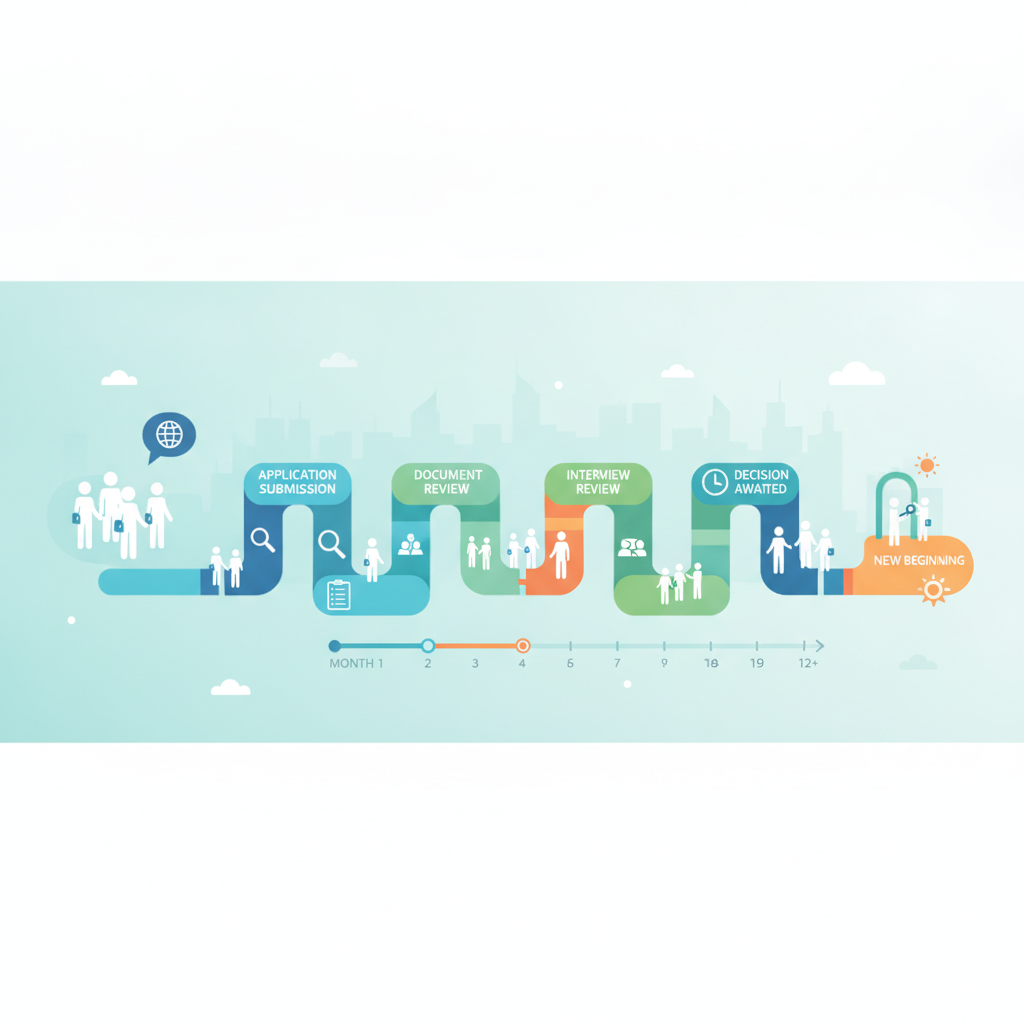
How to Navigate USCIS Processing Times: A Complete Step-by-Step Guide
Managing your expectations and strategically planning your immigration journey requires a clear understanding of how to monitor and respond to USCIS processing times. This guide will walk you through the essential steps.
1) Understand Your Application Category and Form
Before you even check processing times, you must know exactly what you're applying for. Different immigration benefits have different forms and processing pathways.
- Identify Your Goal: Are you seeking a family-based green card, employment authorization, U.S. citizenship, or a travel document?
- Determine the Correct Form(s): Each goal corresponds to specific USCIS forms. For example:
- Family-based petition: Form I-130, Petition for Alien Relative
- Adjustment of Status (Green Card in the U.S.): Form I-485, Application to Register Permanent Residence or Adjust Status
- Work Permit: Form I-765, Application for Employment Authorization
- Travel Document (Advance Parole): Form I-131, Application for Travel Document
- Naturalization (Citizenship): Form N-400, Application for Naturalization
- Understand the Process: Some applications are standalone, while others (like Form I-765 and Form I-131) are often filed concurrently with or subsequent to a primary application like Form I-485.
Required Documents: The specific application form(s) relevant to your immigration goal, along with all required supporting documentation (e.g., birth certificates, marriage certificates, financial documents, photos, medical exam results). Always refer to the official USCIS Forms instructions for a comprehensive list.
2) Check Current Processing Times on the USCIS Website
Once you know your form, you can check the official estimates.
- Go to the Official Source: Navigate to the USCIS Processing Times page. This is the only reliable source for this information.
- Select Your Form: Use the dropdown menus to select your specific form number (e.g., I-485).
- Select Your Form Category (if applicable): Some forms have sub-categories (e.g., Form I-485 has categories like "Family-Based" or "Employment-Based"). Choose the one that applies to you.
- Select Your Field Office or Service Center:
- For forms processed at Service Centers (e.g., Form I-130, Form I-140, initial Form I-485 filing), your receipt notice (Form I-797C) will indicate which Service Center (e.g., Nebraska, Texas, California, Vermont, Potomac) is handling your case.
- For forms that require an interview (e.g., Form I-485, Form N-400), the processing time will often be listed for your local Field Office (e.g., the Orlando USCIS Field Office).
- Interpret the Results: The website will display a range (e.g., 10.5 to 14 months). This is your current estimated wait time.
Reminder: Processing times are updated frequently. Check regularly, as they can change without prior notice.
3) Determine Your Priority Date (If Applicable)
For many family-sponsored and employment-based categories, your Priority Date is as important as, if not more important than, the processing time.
- Locate Your Priority Date: Your Priority Date is typically listed on the Form I-797C, Notice of Action, that USCIS sent you after your petition (e.g., Form I-130 or Form I-140) was accepted.
- Check the Visa Bulletin: Each month, the U.S. Department of State publishes the Visa Bulletin. You must check this bulletin to see if your Priority Date is "current" for your specific visa category and country of chargeability.
- Understand "Current": Your Priority Date must be current for you to file your Adjustment of Status application (Form I-485) or for an immigrant visa to be issued through consular processing. Even if USCIS could process your Form I-485 in a week, they cannot approve it until your Priority Date is current.
Required Documents: Your Form I-797C, Notice of Action, confirming your Priority Date.
4) Monitor Your Case Status Online
Once your application is filed, you can track its progress.
- Use Your Receipt Number: On your Form I-797C, Notice of Action, you will find a 13-character Receipt Number (e.g., EACXXXXXXXXXX, WACXXXXXXXXXX, LINXXXXXXXXXX, SRCXXXXXXXXXX, YSCXXXXXXXXXX).
- Access the Tool: Go to the USCIS Check Your Case Status page and enter your Receipt Number.
- Understand the Updates: The system will show you the latest status of your case (e.g., "Case Was Received," "Biometrics Appointment Was Scheduled," "Request for Evidence Was Sent," "Interview Was Scheduled," "Case Was Approved"). While it doesn't show exact processing times for your individual case, it confirms activity.
- Create an Account: Consider creating a myUSCIS account to link your cases and receive email notifications when your case status updates.
Required Documents: Your Receipt Number.
5) Know When to Inquire: Submitting a Service Request
If your case has been pending longer than the posted processing times, you may be able to make an inquiry.
- Check "Normal Processing Time": Revisit the USCIS Processing Times page. If your Receipt Date is older than the "Case Inquiry Date" listed for your specific form and office/service center, your case is outside normal processing times.
- Submit an E-Request: You can then submit an online Service Request (e-request) through the USCIS website. This is the first step for most inquiries. Provide accurate details about your case.
- Contact USCIS by Phone: If the e-request doesn't yield results within 30 days or if you have a complex issue, you can call the USCIS Contact Center. Be prepared for potentially long wait times.
- Seek Congressional Help: In rare cases, if your case is significantly delayed and other avenues have failed, you can contact your local congressional representative's office for assistance. They have liaisons who can inquire with USCIS on your behalf.
Required Documents: Your Receipt Number, application details, and any previous correspondence from USCIS.
6) Respond Promptly to RFEs and NOIDs
One of the quickest ways to delay your case is to mishandle a USCIS request for information.
- Request for Evidence (RFE): USCIS may send an RFE if your initial application was missing documents or if they need more information to make a decision. The RFE letter will specify a deadline (often 87 days).
- Notice of Intent to Deny (NOID): A NOID is a serious notice indicating USCIS intends to deny your application unless you provide specific information or arguments to overcome the issues identified. The deadline for response is critical (often 30 days).
- Respond Thoroughly and Timely: Gather all requested documents, provide clear explanations, and submit your response well before the deadline. An incomplete or late response can lead to delays or even denial.
Warning: Failure to respond to an RFE or NOID by the deadline will almost certainly lead to a denial of your application. If you receive one, contact an experienced immigration attorney immediately.
Required Documents: The RFE or NOID letter itself, and all requested evidence or legal arguments.


