

The immigration journey can often feel like a waiting game, marked by anticipation, uncertainty, and the constant monitoring of application statuses. For immigrants and their families across the United States, especially here in Orlando and throughout Florida, understanding USCIS processing times is not just a matter of curiosity—it's a critical component of planning their lives.
As we navigate through 2026, the United States Citizenship and Immigration Services (USCIS) continues to implement new strategies and face evolving challenges that directly impact how long it takes for applications to be processed. These changes, often subtle yet significant, can have profound implications for individuals seeking visas, green cards, or citizenship.
The reporting that sparked this guide
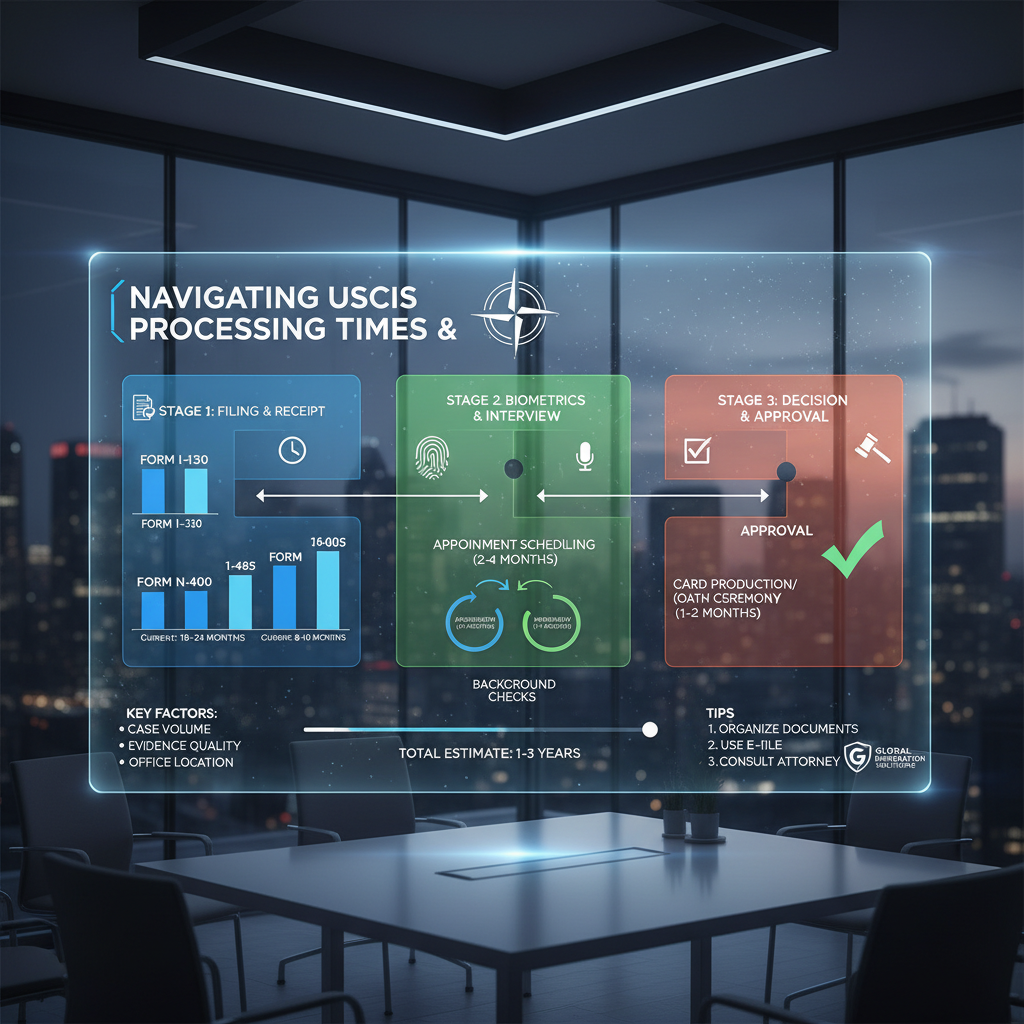
The dynamic nature of immigration processing times is a constant topic of discussion and reporting within legal and news circles. Our comprehensive guide is directly informed by the latest trends and announcements regarding USCIS Processing Times and Updates for 2026 (USCIS), as reported and discussed across various immigration news outlets, reflecting USCIS’s ongoing efforts to manage its caseload and improve efficiency.
Need Help? Our Orlando immigration team is ready to assist. Navigating USCIS processing times can be complex. Call +1 786-791-3106 for a free consultation, or message us online. Se Habla Español.
What This News Means for Immigrants in Orlando and Across Florida
For individuals and families living in the Sunshine State, particularly those residing in vibrant cities like Orlando and its surrounding communities, shifts in USCIS processing times are more than just statistics; they represent potential delays or accelerations in achieving long-awaited dreams. Florida is a melting pot of cultures and a primary destination for immigrants, making these updates especially relevant.
Why this news is showing up now
The constant flux in USCIS processing times is a recurring theme, and 2026 is no exception. Several factors contribute to why these updates are consistently in the news:
- Post-Pandemic Backlogs: While significant progress has been made since the peak of the COVID-19 pandemic, USCIS continues to grapple with a substantial backlog of cases. This is a carryover from operational shutdowns, reduced staffing, and increased filing volumes.
- Staffing and Resources: USCIS's ability to process applications efficiently is directly tied to its funding, staffing levels, and technological infrastructure. Congressional appropriations and internal resource allocation decisions can cause processing times to fluctuate.
- Policy Changes: New presidential administrations or changes in immigration policy can introduce new procedures, prioritize certain case types, or alter the adjudication process, leading to shifts in processing durations.
- Increased Filings: Economic opportunities, humanitarian crises, or changes in global political landscapes can lead to surges in specific application types, overwhelming USCIS resources and extending wait times.
- Technological Modernization: USCIS is continually working to modernize its systems, including transitioning to electronic filing and case management. While intended to improve efficiency long-term, these transitions can sometimes cause short-term disruptions.
- Public Scrutiny and Accountability: Immigration advocacy groups, legal organizations, and the public frequently monitor and report on processing times, pushing for greater transparency and efficiency from USCIS. This ongoing scrutiny keeps processing times a regular news item.
How it can affect Florida residents
Florida, with its diverse immigrant population and multiple USCIS field offices, experiences the impact of these processing updates acutely. Here’s how:
- Local Field Office Impact: The Orlando USCIS Field Office (located at 6680 Corporate Centre Blvd, Orlando, FL 32822) handles interviews for many Adjustment of Status applications (Form I-485), naturalization applications (Form N-400), and other local services. Longer national processing times can translate into longer waits for interview scheduling, biometrics appointments, and final decisions for Central Florida residents. If your case is in Orlando, understanding the local office's specific processing capacity is crucial.
- Economic Planning: Delays in work authorization (Form I-765) or travel permits (Form I-131) can significantly impact an immigrant’s ability to work, travel, and contribute to Florida’s economy, affecting families along the I-4 corridor and beyond.
- Family Reunification: For many in Florida, immigration is about keeping families together. Extended processing times for family-based petitions (Form I-130) mean longer separations for loved ones, causing emotional and financial strain on families in Orange County and across the state.
- Legal Strategy Adjustments: Immigration attorneys in Orlando and across Florida must constantly adapt their strategies based on current processing trends. This includes advising clients on realistic timelines, potential risks, and when to consider alternative pathways or follow-up actions.
- Community Resources: Local non-profits and community organizations in areas like Kissimmee, Sanford, and Lakeland often provide support to immigrants. They too must stay abreast of USCIS updates to offer relevant assistance and manage expectations.
- Uncertainty and Stress: Perhaps the most significant impact is the emotional toll of prolonged uncertainty. Immigrants in Florida often put their lives on hold, delaying major life decisions until their immigration status is resolved.
Important: While national trends give a general picture, specific processing times can vary by the type of application, the service center, and even the individual USCIS officer assigned to a case. This makes personalized legal advice invaluable for Florida residents.
What USCIS Processing Times Is (and Why It Matters)
At its core, "USCIS processing times" refers to the estimated period it takes for the United States Citizenship and Immigration Services to adjudicate a specific type of immigration application or petition. These times are published on the USCIS website and are a crucial tool for applicants and their legal representatives to gauge how long their immigration journey might take.
A plain-English definition
Imagine you've sent a letter to a large government agency, asking them to review your request. "Processing time" is simply how long it takes them to open your letter, read it, check all the information, ask for more if needed, and then give you a final answer. For USCIS, this involves receiving your application, performing background checks, scheduling interviews (if necessary), and making a decision. It’s an estimate, not a guarantee, and it can change frequently.
USCIS calculates these times based on historical data—specifically, how long it took to complete 80% of cases for a particular form type at a specific service center or field office over the past six months. This means the times you see online are a snapshot of past performance and may not perfectly predict your future outcome, but they offer the best available guidance.
Key terms you need to know
Navigating USCIS processing times requires familiarity with several key terms:
- Receipt Date: This is the date USCIS officially received your application or petition. You'll find it on your Form I-797C, Notice of Action. This date is crucial for tracking your case and determining when you might be able to inquire about its status.
- Priority Date: Primarily relevant for visa categories with annual limits (e.g., most family-sponsored and employment-based categories). This is the date your petition (e.g., Form I-130 or Form I-140) was properly filed with USCIS or, for employment-based cases requiring a labor certification, the date the Department of Labor received the labor certification application. Your priority date must be "current" according to the U.S. Department of State's Visa Bulletin before you can file an Adjustment of Status application (Form I-485) or proceed with consular processing.
- Current: In the context of the Visa Bulletin, "current" means that there are visas available for your specific category and country of chargeability, and your priority date is earlier than the cut-off date listed in the Visa Bulletin.
- Visa Bulletin: A monthly publication by the U.S. Department of State that summarizes the availability of immigrant visas for the upcoming month. It indicates which priority dates are "current" for various visa categories and countries.
- Adjustment of Status (AOS): The process by which an eligible immigrant already in the United States can apply for lawful permanent resident status (a Green Card) without having to return to their home country to complete visa processing. This typically involves filing Form I-485.
- Consular Processing: The process by which an eligible immigrant residing outside the U.S. obtains an immigrant visa at a U.S. embassy or consulate in their home country.
- Biometrics Appointment: A scheduled appointment where USCIS collects fingerprints, photographs, and a signature from an applicant for background checks. This is usually required for Form I-485, Form I-765, Form I-131, and Form N-400.
- Request for Evidence (RFE): A notice from USCIS asking for additional documents or information to support your application. Responding promptly and thoroughly to an RFE is critical to avoid delays or denials.
- Notice of Intent to Deny (NOID): A notice from USCIS indicating that they intend to deny your application and providing you with an opportunity to submit additional evidence or arguments to overcome the proposed denial.
- Case Status Online: The USCIS Case Status Online tool allows applicants to track the progress of their application using the receipt number provided on the Form I-797C.
Understanding these terms empowers you to interpret USCIS updates and track your case more effectively. The process is intricate, and each term plays a specific role in determining your application's journey and overall timeline.
Confused by immigration jargon? Let Imigrar simplify it for you. Our experienced attorneys provide clear, actionable advice. Call us at +1 786-791-3106 for a free consultation. Se Habla Español.
Current Immigration Law: The Foundation
All USCIS processing, including the timelines involved, operates within the framework of U.S. immigration law. The primary legal authority governing immigration is the Immigration and Nationality Act (INA), first enacted in 1952 and frequently amended since. The INA is codified in Title 8 of the United States Code and dictates who can enter, reside, and become a citizen of the U.S., as well as the procedures for doing so.
Federal requirements
The INA sets forth the eligibility criteria for various immigration benefits, the types of visas available, annual numerical limitations, and the processes for adjudication. For instance:
- Family-Based Immigration: Sections 201, 203(a), and 204 of the INA establish the categories for family-sponsored immigrants (e.g., U.S. citizens petitioning for spouses, children, parents; lawful permanent residents petitioning for spouses and children) and outline the petitioning process using forms like Form I-130, Petition for Alien Relative. The INA also defines "immediate relatives" (spouses, unmarried children under 21, and parents of U.S. citizens 21 or older) who are not subject to numerical quotas, thus often having faster processing times than other family preference categories.
- Employment-Based Immigration: Sections 203(b) and 204 of the INA govern employment-based immigration, outlining preference categories (e.g., EB-1, EB-2, EB-3) and requirements for petitions such as Form I-140, Immigrant Petition for Alien Worker.
- Adjustment of Status: Section 245 of the INA details the requirements for an individual to adjust their status to a lawful permanent resident while physically present in the U.S., typically through Form I-485, Application to Register Permanent Residence or Adjust Status. It specifies eligibility criteria, such as lawful entry and continued maintenance of status, though exceptions exist.
- Naturalization: Sections 301-347 of the INA cover the requirements for naturalization, including continuous residence, physical presence, good moral character, English language proficiency, and knowledge of U.S. civics, all assessed through Form N-400, Application for Naturalization.
- Asylum and Refugee Status: Sections 208 and 207 of the INA define asylum and refugee status and the procedures for applying for these protections.
Each form (e.g., Form I-130, Form I-485, Form I-765, Form I-131, Form N-400) is designed to collect specific information required by the INA to determine eligibility for a particular immigration benefit. USCIS adjudicators are bound by these federal laws and regulations when reviewing applications, and any updates to processing times often reflect the agency's operational capacity within these legal mandates.
Reminder: The INA is complex, and its interpretation can be intricate. Consulting an immigration attorney is highly recommended to understand how these federal requirements apply to your specific situation.
Florida-specific considerations
While U.S. immigration law is federal, Florida residents face specific practical considerations:
- Local USCIS Field Office: The Orlando USCIS Field Office is a key touchpoint for many Central Florida applicants. This office conducts interviews for Adjustment of Status, naturalization, and certain asylum cases. Its workload, staffing, and local procedures can influence the speed of case adjudication, particularly for the interview phase. You can check the specific processing times for the Orlando Field Office on the USCIS Processing Times page.
- Demand in Florida: As a major hub for immigration, Florida sees a high volume of various application types. This high demand can sometimes contribute to longer wait times compared to regions with lower immigrant populations.
- Proximity to Consulates: For those undergoing consular processing, Florida's proximity to various Caribbean and Latin American countries means that many applicants may have family or ties in these regions, impacting their choice of processing route.
- State-Level Support (or Lack Thereof): While Florida does not have its own immigration laws that directly affect federal processing times, state policies regarding driver's licenses for non-citizens, access to social services, or occupational licensing can indirectly affect immigrants' lives while they await their federal immigration decisions.
For more detailed information on specific forms and the overall immigration process, always refer to the USCIS Forms section of the USCIS official website.
How to Navigate USCIS Processing Times: A Complete Step-by-Step Guide
Understanding and proactively managing your immigration case in light of USCIS processing times is essential. Here’s a detailed guide to help you through the process:
1) Check Current Processing Times and Understand Your Receipt Date
Your first step is always to know what to expect. USCIS provides estimated processing times online, which are updated monthly. These estimates give a range (e.g., 10 to 14 months) for 80% of cases for a specific form type at a particular service center or field office.
- Action: Visit the USCIS Processing Times page. Select your form number (e.g., Form I-485) and the field office or service center handling your case (e.g., National Benefits Center, or Orlando Field Office).
- Key Data: You will need your Receipt Date (from your Form I-797C, Notice of Action). This is the date USCIS officially received your application. Compare your receipt date to the "Case Inquiry Date" listed by USCIS. If your receipt date is before the inquiry date, your case is outside normal processing times, and you may be able to submit an inquiry.
- Required Documents (for reference): Your Form I-797C, Notice of Action (to identify your receipt number and date).
2) Gather Comprehensive Documentation and Prepare Your Application Meticulously
The most common cause of delays is incomplete or incorrectly prepared applications. USCIS will issue an RFE or even a denial if your submission lacks required evidence. Proactive preparation saves significant time.
- Action: Review the instructions for your specific form thoroughly. Create a checklist of every required document. Gather originals and make clear copies. Organize your application logically with cover letters, tabs, and a table of contents.
- Example Documents for Common Petitions (e.g., Form I-130 & I-485):
- Form I-130:
- Proof of U.S. citizenship or LPR status for petitioner (e.g., U.S. passport, birth certificate, naturalization certificate, Green Card).
- Proof of qualifying relationship (e.g., marriage certificate, birth certificates of children).
- Passport-style photos of petitioner and beneficiary.
- Evidence of bona fide marriage (if applicable): joint bank statements, joint leases/mortgages, utility bills, photos, affidavits from friends/family.
- Divorce decrees for any prior marriages of either party.
- Form I-485:
- Copy of birth certificate.
- Copy of passport biographical page and visa pages.
- Copies of Form I-94, Arrival/Departure Record.
- Medical examination report (Form I-693) completed by a USCIS-authorized civil surgeon.
- Affidavit of Support (Form I-864) from the petitioner and any co-sponsors, with supporting financial documents (tax transcripts, W-2s, pay stubs).
- Passport-style photos.
- Police clearances from home country (if applicable).
- Form I-765, Application for Employment Authorization (optional, but highly recommended for those who need to work while waiting).
- Form I-131, Application for Travel Document (optional, but highly recommended for those who need to travel internationally while waiting).
- Form I-130:
3) Submit Your Application and Keep Records
Once your application is meticulously prepared, submit it according to USCIS instructions (usually by mail to a specific lockbox facility or service center, or online for certain forms).
- Action: Mail your application via certified mail with return receipt requested, or use a courier service that provides tracking. For online submissions, print all confirmation pages. Make and keep a complete copy of everything you send to USCIS, including the payment receipt.
- Required Documents (for submission): The original completed forms, all supporting documents as copies (unless originals specifically requested), and the correct filing fee (check or money order payable to "U.S. Department of Homeland Security" or online payment confirmation).
4) Monitor Your Case Status Regularly
After submission, USCIS will send you a Form I-797C, Notice of Action with your receipt number. This is your key to tracking your case.
- Action: Use the USCIS Case Status Online tool (uscis.gov/tools/case-status) by entering your receipt number. Check it periodically (e.g., once a month) for updates.
- Key Events to Look For: Updates on biometrics appointments, RFEs, interview notices, and final decisions.
- Required Documents (for monitoring): Your Form I-797C (to retrieve your receipt number).
5) Respond Promptly and Thoroughly to RFEs or NOIDs
If USCIS needs more information, they will send an RFE. If they intend to deny your case, they will send a NOID.
- Action: Read the RFE/NOID carefully. Understand exactly what is being requested. Gather all specified documents and submit them before the deadline (typically 87 days for RFEs and 30 days for NOIDs, but always check the specific notice). Provide a cover letter referencing the RFE/NOID and your case number.
- Warning: Failure to respond by the deadline or providing incomplete responses can lead to a denial.
- Required Documents: The RFE/NOID notice itself, and all additional documents requested by USCIS.
6) Attend Interviews and Biometrics Appointments
For many applications (e.g., Form I-485, Form N-400), you will receive notices for a biometrics appointment and/or an interview.
- Action: Attend all scheduled appointments. For biometrics, bring the appointment notice and a valid photo ID. For interviews at the Orlando Field Office, bring your interview notice, a valid photo ID, and all original documents you submitted with your application (and copies of any new documents). Be prepared to answer questions about your application truthfully.
- Important: If you cannot attend, follow the instructions on the notice to reschedule. Unexcused absences can lead to case abandonment or denial.
- Required Documents: Appointment notice(s), valid government-issued photo ID, original supporting documents.
7) Seek Legal Guidance When Needed
Navigating USCIS processing times and the complex immigration system is challenging. An experienced immigration attorney can provide invaluable assistance.
- Action: If you receive an RFE or NOID, your case is outside normal processing times, or you have any doubts about your application, consult an attorney. They can help you understand the requirements, prepare your application, represent you in interviews, and advocate on your behalf.
- Required Documents: All case correspondence from USCIS, copies of your submitted application, and any supporting documents.

Practical Steps You Can Take Today
Even while your application is pending, there are proactive measures you can take to ensure your case proceeds as smoothly as possible and to manage your expectations.
Actionable Checklist:
- Bookmark the USCIS Processing Times Page: Regularly check the official USCIS Processing Times page for updates relevant to your form type and service center/field office (e.g., Orlando Field Office).
- Keep a Master File of Your Application: Maintain a meticulously organized file with copies of every document submitted to USCIS, every notice received, and tracking information. This is critical if documents are lost or further inquiries are needed.
- Sign Up for Case Status Updates: Register for email and/or text message alerts on the USCIS website for your specific case. This ensures you receive notifications as soon as your case status changes.
- Do Not Travel Internationally Without Advance Parole: If you have a pending Form I-485 and need to travel abroad, you MUST obtain Advance Parole (Form I-131) BEFORE you leave the U.S. Leaving without it can be considered abandonment of your Adjustment of Status application.
- Update Your Address Immediately: If you move, file Form AR-11, Alien's Change of Address Card, online and update your address for any pending applications directly with USCIS. Failure to do so can result in missed notices and critical delays.
- Prepare for Potential RFEs: Anticipate what additional evidence USCIS might request. For instance, if you submitted an affidavit of support with limited income, start gathering additional evidence from a co-sponsor.
- Consult an Immigration Attorney: If your case is outside normal processing times, you receive an RFE/NOID, or you simply need peace of mind, contact an experienced immigration lawyer. They can help you understand your options and next steps.
Document Preparation Guidance
Thorough and accurate document preparation is the cornerstone of a successful immigration application. Here are key tips:
- Read Instructions Carefully: USCIS form instructions are detailed and specific. Read them line by line before filling out any form.
- Provide All Requested Documents: Do not omit any required evidence. If a document is genuinely unavailable, provide a detailed explanation and secondary evidence.
- Submit Clear Copies: Unless specifically requested, send copies, not originals. Ensure all copies are legible.
- Translate Foreign Documents: Any document not in English must be accompanied by a complete English translation


