


Understanding the Expanded Travel Ban Effective January 1, 2026
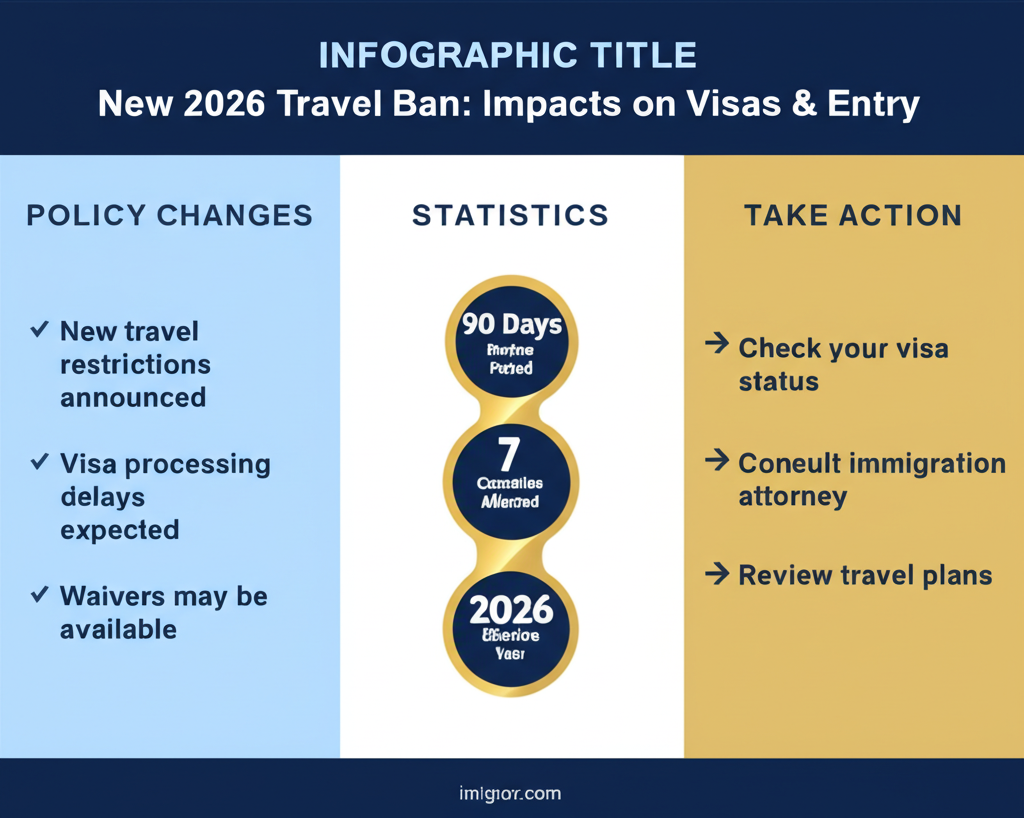
A new Presidential Proclamation titled "Restricting and Limiting the Entry of Foreign Nationals to Protect the Security of the United States," issued December 16, 2025, significantly expands travel restrictions starting at 12:01 a.m. EST on January 1, 2026. This builds on Proclamation 10949 from June 4, 2025, under Section 212(f) of the Immigration and Nationality Act (INA), now imposing full entry suspensions for nationals of 19 countries deemed deficient in vetting and security cooperation.[1][3][8]
The ban suspends both immigrant and nonimmigrant visas for affected nationals who are outside the U.S. on January 1, 2026, without a valid, pre-existing visa. Existing visas issued before the effective date remain usable, providing a narrow window for compliance.[3][8] This development, confirmed across official White House releases and legal analyses, marks one of the most immediate shifts in U.S. immigration policy for 2026.[2][3]
Key Provisions of the Proclamation
- Full Entry Bans: Applies to nationals from 19 countries (expanding prior lists), blocking entry on any visa type unless exceptions apply.[3]
- Scope: Targets individuals outside the U.S. without valid visas as of January 1; does not retroactively invalidate visas already issued.[1][8]
- No Certain Exceptions: Removes prior carve-outs for immediate family immigrant visas, adoptions, asylum seekers, refugees, and Convention Against Torture (CAT) protections.[3]
- Re-Review Mandates: Approved benefits for entrants from restricted countries since January 20, 2021, face comprehensive scrutiny, including potential interviews for national security risks.[3]
- Enforcement Flexibility: Not limited to passport nationality; considers birthplace or travel history in screening.[2]
Legal Implications for Visa Applications and Green Cards
This proclamation directly invokes INA § 212(f), granting the President broad authority to suspend entry when deemed detrimental to U.S. interests. Legally, it overrides standard visa processing for affected nationalities, shifting adjudication toward heightened national security vetting.[1][3] For green card applicants (adjustment of status under INA § 245), those from banned countries already in the U.S. may proceed but risk re-review of prior approvals.[3]
Visa Bulletin for January 2026 shows ongoing availability in family-sponsored (e.g., F2A at 77% of limit) and employment-based categories, but travel ban overrides these for overseas processing.[5] H-1B petitions face compounded challenges: new $100,000 fee for external applicants (per September 2025 proclamation), plus expanded social media vetting from December 3, 2025, State Department rules.[2][4]
Courts may challenge aspects, as prior travel bans faced litigation (e.g., Trump v. Hawaii, 585 U.S. 667 (2018), upholding § 212(f)). The proclamation includes severability clauses to withstand partial invalidation, directing officials to conform with court orders.[1] Employers risk disparate treatment claims if policies discriminate by nationality, aligning with 2026 DOL enforcement priorities.[4]
Related USCIS Updates Amplifying Impact
- December 5: New USCIS Vetting Center centralizes screening for threats, fraud, using social media for H-1B/H-4 (previously F/M/J only).[2]
- December 4: EAD validity capped at 18 months with enhanced screening.[2]
- Indefinite asylum pause and frozen benefits for 20 high-risk countries, with case reopenings.[4]
- SR religious worker visas expire January 30, 2026 (H.R. 5371).[5]
Actionable Guidance for Affected Individuals and Employers
Immediate steps are critical given the January 1 effective date. Imigrar, an Orlando-based immigration law firm, recommends the following tailored strategies:
For Visa Applicants and Travelers
- Inventory Status: Identify nationality, birthplace, travel history against the 19-country list. If outside U.S. without valid visa post-January 1, entry barred.[2][3]
- Secure Travel Before Deadline: Postpone non-essential trips; build buffer time for returns. Use existing visas promptly.[2]
- Prepare Social Media: For H-1B/H-4, disclose identifiers, set accounts public, ensure consistency—no deletions.[2]
- Seek Waivers: Limited case-by-case waivers for U.S. national interest, lawful permanent residents, or dual nationals; document thoroughly.[3]
- Consult Counsel: File FOIA for vetting status; prepare for re-interviews on existing approvals.[3]
For Employers Sponsoring H-1B or Green Cards
- Assess workforce: Flag employees/dependents from restricted countries; delay abroad stamping.[2][4]
- Budget for fees: $100,000 per new external H-1B; plan lottery overhaul impacts (March 2026).[4]
- Compliance audit: Review EADs, benefits for re-vetting; train HR on nationality-neutral policies.[4]
- Alternatives: Prioritize EB-3 skilled/unskilled or STEM OPT extensions amid labor shortages.[6]
Family-based applicants should leverage F2A advancements but avoid overseas processing if banned.[5] Deportation defense clients from affected countries face heightened scrutiny; those with post-2021 entries need proactive status checks.[3]
Broader 2026 Immigration Landscape
Beyond the ban, merit-based shifts favor high-skilled visas (H-1B, EB-3) despite restrictions, with Visa Bulletin signaling EB opportunities.[5][6] Student visas move to fixed 4-year limits, ending "duration of status."[4] Political priorities emphasize enforcement against illegal entry while sustaining legal channels for economy needs.[6]
At Imigrar, we track these via AILA clips (January 5, 2026) and official bulletins, offering free consultations for Orlando clients.[7] Changes like these demand expert navigation to avoid denials or separations.
Case Citations and Official Sources
- Proclamation Text: White House, Dec. 16, 2025.[1]
- INA § 212(f): Basis for suspension; upheld in Trump v. Hawaii (2018).
- Visa Bulletin: State Dept., January 2026.[5]
- USCIS Vetting: Dec. 5 announcement.[2]
- H.R. 5371: Extends SR visas to Jan. 30, 2026.[5]
Why Act Now? Risks of Delay
Non-compliance risks visa revocation, entry denial, or reopened deportation proceedings. With USCIS backlogs and new vetting, processing times extend—proactive filings preserve options.[2][3] Imigrar attorneys specialize in waiver petitions, employer strategies, and family reunifications under these constraints.
Schedule a consultation today to safeguard your immigration goals amid 2026's evolving rules. Our Florida expertise ensures compliance and opportunity.


