


The journey to U.S. citizenship is a profound step, representing a commitment to American values and the pursuit of a better future. For many immigrants in Orlando, across Florida, and throughout the nation, naturalization is the ultimate goal. As an expert immigration law firm, Imigrar is dedicated to guiding you through every step of this critical process, especially as significant changes approach.
Today is June 10, 2026, and the discussion around the upcoming modifications to the U.S. naturalization test is intensifying. These changes, set to be fully implemented later this year, will impact how aspiring citizens demonstrate their knowledge of American civics and English proficiency. Understanding these updates is crucial for anyone planning to apply for citizenship.
Need Help? Our Orlando immigration team is ready to assist. Navigating naturalization, especially with new test requirements, can be complex. Call +1 786-791-3106 for a free consultation, or message us online. Se Habla Español.
The reporting that sparked this guide
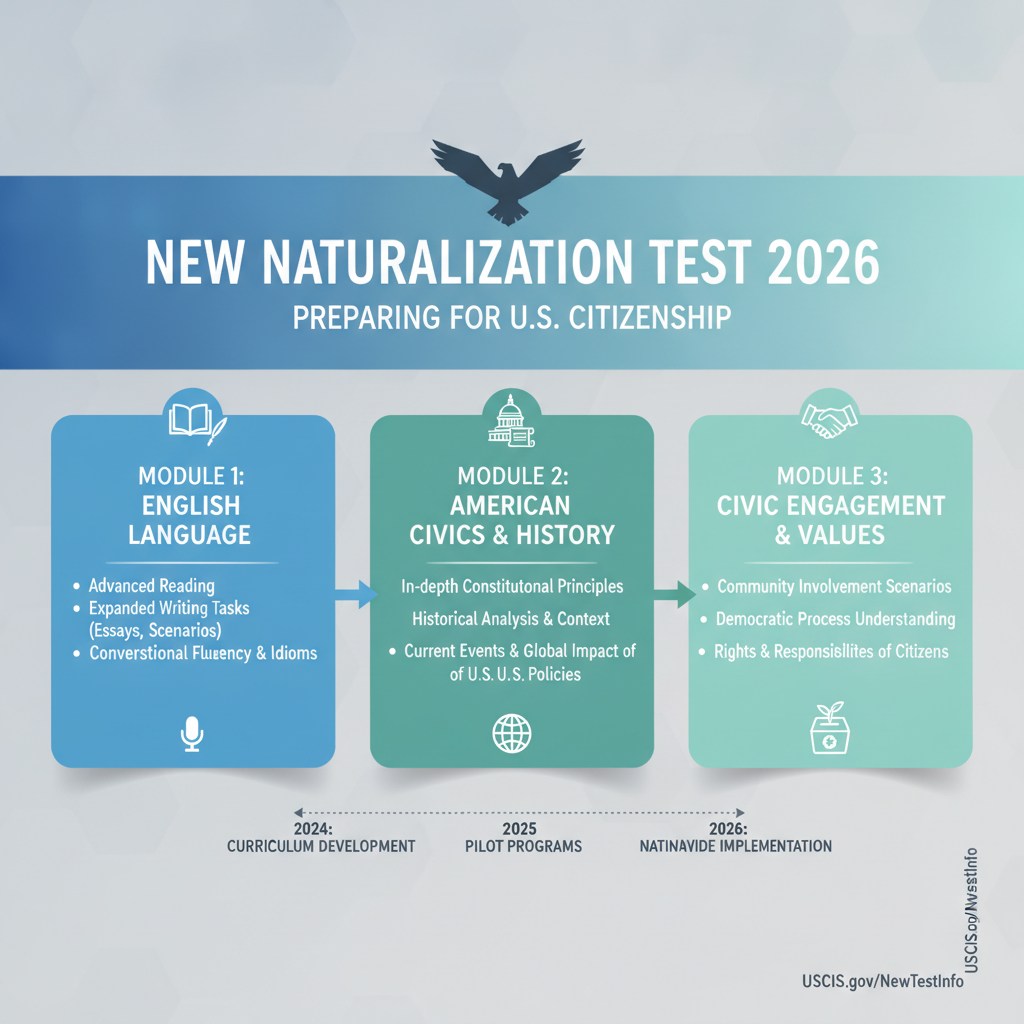
Recent reports highlight the impending changes to the U.S. naturalization test, marking a significant update to a cornerstone of the citizenship process. For more context, please refer to: Naturalization Test Changes Coming in 2026 (Citizenship)
What This News Means for Immigrants in Orlando and Across Florida
The news about the upcoming naturalization test changes isn't just a headline; it's a critical development that directly impacts the lives and aspirations of thousands of immigrants in Florida and nationwide. At Imigrar, we understand that such announcements can bring both anticipation and apprehension. Our goal is to provide clarity and actionable advice.
Why this news is showing up now
The U.S. Citizenship and Immigration Services (USCIS) periodically reviews and updates the naturalization test to ensure it remains relevant, effective, and accurately assesses an applicant's understanding of U.S. history, government, and civic principles. The current changes are the culmination of a pilot program initiated by USCIS to evaluate potential modifications to the civics test and, to a lesser extent, the English portion.
These reviews are standard practice, but the current updates are particularly significant because they aim to shift the civics test from primarily rote memorization to a more conceptual understanding. USCIS wants to ensure that new citizens not only know the facts but also grasp the underlying principles of American democracy. The timeline for these changes has been widely discussed, with 2026 being the target year for full implementation following the pilot phase and public feedback.
How it can affect Florida residents
For immigrants living in Florida, especially those in the Orlando area, these changes are highly relevant. Florida is home to a large and diverse immigrant population, many of whom are on the path to becoming U.S. citizens. Whether you are preparing to file Form N-400, Application for Naturalization, or already have an application pending, understanding these changes is paramount.
Specifically, if your naturalization interview is scheduled to occur after the official implementation date of the new test later in 2026, you will likely be subject to the updated requirements. This means that your study materials and preparation strategy for the civics test will need to align with the new format and questions. While the core knowledge base of U.S. history and government remains, the way you demonstrate that knowledge will evolve.
For Central Florida residents, the Orlando USCIS Field Office will be implementing these new test procedures. This means local applicants will need to be particularly diligent in their preparation. Imigrar, based in Orlando, is uniquely positioned to assist clients throughout the state, from the I-4 corridor to South Florida, in navigating these new requirements. We stay abreast of all USCIS updates to provide the most current and effective guidance.
What Naturalization Test Changes Are (and Why It Matters)
The U.S. naturalization process culminates in an interview where applicants must demonstrate their ability to read, write, and speak basic English, and their knowledge of U.S. history and government (civics). The upcoming "Naturalization Test Changes" primarily refer to modifications in how this knowledge is assessed, particularly within the civics portion, and potentially a more interactive English test.
A plain-English definition
At its heart, naturalization is the process by which a foreign citizen or national becomes a U.S. citizen. The naturalization test is a crucial component of this process, designed to ensure that prospective citizens understand and appreciate the fundamental aspects of American society and governance. The "changes" mean that the specific questions asked on the civics test, and possibly the way your English is evaluated, will be different from the current version. Instead of simply recalling facts, you might be asked to explain concepts or respond to scenarios, requiring a deeper understanding of the material.
For example, instead of just naming a branch of government, you might be asked to explain the function of that branch or how it interacts with another branch. This shift aims to foster a more meaningful engagement with American civic principles.
Key terms you need to know
- Naturalization: The process by which U.S. citizenship is granted to a foreign citizen or national after he or she has fulfilled the requirements established by Congress in the Immigration and Nationality Act (INA).
- Civics Test: A component of the naturalization interview that assesses an applicant's knowledge of U.S. history and government.
- English Test: A component of the naturalization interview that assesses an applicant's ability to read, write, and speak basic English.
- USCIS (U.S. Citizenship and Immigration Services): The government agency responsible for overseeing lawful immigration to the United States.
- Form N-400: The official application form for naturalization.
- Oath of Allegiance: The final step in the naturalization process, where applicants formally pledge loyalty to the United States.
- Good Moral Character: A legal requirement for naturalization, meaning the applicant has adhered to certain moral and ethical standards during their residency.
These changes matter because they represent an evolution in how the U.S. government defines what it means to be a civically engaged citizen. They reflect a desire to move beyond rote memorization towards a more robust demonstration of understanding and commitment to the principles that underpin American democracy. For applicants, this means that preparation strategies will need to adapt, focusing on conceptual learning rather than just memorizing a list of answers.
Considering applying for naturalization soon? Don't let the upcoming changes catch you off guard. Imigrar's experienced attorneys can help you understand the new requirements and prepare effectively. Call us at +1 786-791-3106 for personalized guidance. Se Habla Español.
Current Immigration Law: The Foundation of Naturalization
The naturalization process is governed by federal law, primarily the Immigration and Nationality Act (INA). While the naturalization test questions may change, the underlying legal requirements for becoming a U.S. citizen remain steadfast. Understanding these foundational laws is crucial for any applicant.
Federal requirements
The primary legal framework for naturalization is found in Chapter 2 of Title III of the Immigration and Nationality Act (INA). Key sections include:
- INA Section 312: This section outlines the English language and civics knowledge requirements. It mandates that an applicant must demonstrate an understanding of the English language, including an ability to read, write, and speak words in ordinary usage, and a knowledge and understanding of the fundamentals of the history, and of the principles and form of government, of the United States. Certain exemptions exist for age and length of residency.
- INA Section 316: This section details the general requirements for naturalization, which include:
- Age: Be at least 18 years old.
- Lawful Permanent Residency: Have been a lawful permanent resident (Green Card holder) for at least 5 years (or 3 years if married to a U.S. citizen and meet other requirements).
- Continuous Residency: Have resided continuously in the U.S. for at least 5 years (or 3 years) immediately preceding the date of filing the application and up to the time of naturalization.
- Physical Presence: Have been physically present in the U.S. for at least half of the continuous residency period (i.e., 30 months out of 5 years, or 18 months out of 3 years).
- Residency in State/USCIS District: Have resided for at least 3 months in the state or USCIS district where the application is filed. For Orlando residents, this means within the jurisdiction of the Orlando USCIS Field Office.
- Good Moral Character: Demonstrate good moral character for the statutory period (typically 5 or 3 years) leading up to the application and until naturalization. This is a critical and often complex requirement, encompassing aspects like criminal history, tax compliance, and family support obligations.
- Attachment to the Constitution: Demonstrate an attachment to the principles of the U.S. Constitution and a favorable disposition toward the good order and happiness of the United States.
All naturalization applicants must file Form N-400, Application for Naturalization, with USCIS. This form collects extensive personal, biographical, and historical information to verify eligibility against the INA's requirements. It is imperative that this form is completed accurately and truthfully.
For detailed information on all requirements and to access official forms, always refer to the USCIS official website.
Florida-specific considerations
While the laws governing naturalization are federal, the practical application involves local USCIS field offices. For applicants in Florida, this typically means interacting with the USCIS Field Office in Orlando or Miami, depending on your county of residence. These offices conduct interviews, administer the naturalization test, and host oath ceremonies.
There are no Florida-specific laws that alter the federal requirements for naturalization. However, local considerations can include:
- Processing Times: Processing times can vary between field offices. For up-to-date estimates, check the USCIS Processing Times page for the Orlando or Miami field office.
- Local Resources: Access to local English language classes, civics education programs, and immigration legal services can vary. Orlando, being a major metropolitan area, offers numerous resources for aspiring citizens.
- Attorney Presence: Having an experienced Orlando immigration attorney, like those at Imigrar, who are familiar with the local USCIS office and its specific nuances, can be a significant advantage.
Reminder: Staying informed about federal law and local procedures is key to a successful naturalization application.
How to Navigate the Naturalization Process (and Prepare for the New Test): A Complete Step-by-Step Guide
The naturalization process is a multi-step journey that requires careful preparation and adherence to specific requirements. With the upcoming test changes, strategic preparation is more important than ever. Here’s a detailed guide:
1) Determine Your Eligibility
Before you even consider filing, you must confirm you meet all the federal eligibility requirements. This is the foundational step.
- Check Age: You must be at least 18 years old at the time of filing Form N-400.
- Verify Green Card Status: You must be a lawful permanent resident (Green Card holder).
- Calculate Residency:
- Generally, you need 5 years as a permanent resident.
- If married to a U.S. citizen and meet other criteria, it's 3 years.
- Important: Ensure you meet the continuous residency and physical presence requirements. Extended trips outside the U.S. can interrupt continuous residency.
- Assess Good Moral Character: Review your history for any issues that could impact your good moral character, such as arrests, convictions, failure to pay taxes, or child support. Consult an attorney if you have any concerns.
- State/USCIS District Residency: You must have lived for at least 3 months in the state or USCIS district where you file your application. For those in Orlando, this means within the Orlando USCIS Field Office's jurisdiction.
2) Prepare and File Form N-400
Once you confirm eligibility, the next step is to accurately complete and submit your application.
- Gather Required Documents:
- Copy of your Permanent Resident Card (front and back).
- Marriage certificate (if applicable, especially for 3-year residency rule).
- Divorce decrees or death certificates for prior marriages (if applicable).
- Birth certificates of children (if applicable).
- Tax transcripts for the past 5 (or 3) years (from IRS website).
- Certified court dispositions for any arrests, citations, or convictions, even if expunged or dismissed.
- Travel records, including dates of all trips outside the U.S. for the last 5 (or 3) years.
- Proof of Selective Service registration (for males aged 18-26).
- Proof of payment for child support/alimony (if applicable).
- Complete Form N-400: Fill out every section completely and accurately. Any omissions or errors can cause delays or even denial. Be honest about all information, especially regarding your criminal history and travel.
- Pay the Filing Fee: As of June 2026, the fee for Form N-400 is typically $710 (includes biometrics fee). Verify the current fee on the USCIS website. Fee waivers may be available for eligible applicants.
- Submit Your Application: Mail your completed form and supporting documents to the correct USCIS lockbox facility. Keep a copy of everything you send.
3) Attend Biometrics Appointment
After filing, USCIS will schedule you for a biometrics appointment.
- Receive Appointment Notice: USCIS will send Form I-797C, Notice of Action, with the date, time, and location of your appointment.
- Attend Appointment: Go to the designated Application Support Center (ASC) for fingerprinting, photographs, and signature. This is for background checks.
- Documents to Bring: Your appointment notice and a valid photo ID (e.g., Green Card, state driver's license).
4) Prepare for the Interview (and the New Test)
This is where the upcoming changes become most relevant. Dedicated preparation is key.
- Study for the Civics Test:
- Current Test: If you anticipate taking the current test, study the 100 civics questions and answers provided by USCIS.
- New Test (2026): If your interview is likely after the implementation date, focus on understanding the *concepts* behind U.S. history and government. While specific questions are still being finalized, USCIS's pilot program indicated a move towards scenario-based or multiple-choice questions that require deeper comprehension. Stay tuned to USCIS for updated study guides.
- Resources: Utilize official USCIS study materials, online courses, and community programs.
- Improve English Skills:
- Practice reading and writing simple English sentences.
- Practice speaking and understanding English by conversing with native speakers, watching English-language news, and listening to podcasts. The new test might include more interactive conversations.
- Review Your N-400 Application: USCIS officers will ask questions based on your application. Know your answers and be consistent.
- Practice Interview Questions: Rehearse common questions about your application, eligibility, and good moral character.
5) Attend Your Naturalization Interview
The interview is a crucial step where your eligibility is formally assessed.
- Receive Interview Notice: USCIS will send you Form I-797C, Notice of Action, with the date, time, and location (e.g., Orlando USCIS Field Office).
- Documents to Bring:
- Your interview notice.
- Your Permanent Resident Card.
- Your passport and all travel documents.
- Originals of all documents you submitted with your Form N-400 (e.g., marriage certificates, tax transcripts, court dispositions).
- Any updated documents since filing (e.g., new passport, updated tax returns).
- The Interview: The USCIS officer will verify your identity, review your N-400, ask questions about your eligibility, and administer the English and civics tests.
- English Test: You will read a sentence aloud, write a dictated sentence, and answer questions verbally.
- Civics Test: You will be asked a certain number of questions from the civics test. With the new 2026 changes, expect these questions to potentially be more analytical.
6) Receive a Decision and Attend the Oath Ceremony
Following a successful interview, the final steps await.
- Decision: The officer may give you a decision on the spot or mail you a notice (Form N-652, Naturalization Interview Results) later.
- Approved: You will receive a notice for your Oath of Allegiance ceremony.
- Continued: You may be asked to provide additional documents or re-take a portion of the test.
- Denied: You will receive a denial letter explaining the reasons. You may have options to appeal.
- Oath of Allegiance Ceremony: This is the final step where you officially become a U.S. citizen.
- Receive Notice: You'll get Form N-445, Notice of Naturalization Oath Ceremony.
- Attend Ceremony: Bring your Green Card and Form N-445. You will return your Green Card and take the Oath of Allegiance.
- Receive Certificate: You will receive your Certificate of Naturalization, your proof of U.S. citizenship.
7) Understand Your Rights and Responsibilities as a U.S. Citizen
Becoming a citizen comes with important rights and duties.
- Rights: The right to vote, hold federal office, apply for a U.S. passport, and petition for more family members to immigrate.
- Responsibilities: Support and defend the Constitution, stay informed of the issues affecting your community, participate in the democratic process, and serve on a jury if called.

Practical Steps You Can Take Today to Prepare
Proactive preparation is your best defense against the complexities of the naturalization process, especially with the upcoming test changes. Here are actionable steps you can start taking right now:
Actionable Checklist:
- Start Studying Civics (Conceptually): Don't just memorize the current 100 questions. Begin learning about the underlying principles of the U.S. government, key historical events, and civic duties. Look for resources that explain *why* things are the way they are, not just *what* they are. This will better prepare you for potentially more analytical questions.
- Enhance Your English Skills: Practice reading, writing, and speaking English daily. Watch English-language news, read newspapers, and practice conversational English. Focus on being able to discuss common topics and respond to questions interactively, as the English test may become more dynamic.
- Gather All Necessary Documents: Begin compiling every document listed in the Form N-400 instructions and any additional documents relevant to your case (e.g., court records, tax transcripts). Organize them meticulously.
- Consult with an Immigration Attorney: This is arguably the most important step. An expert like Imigrar can assess your eligibility, review your documents, help you understand the new test changes, and guide you through the entire process, minimizing errors and maximizing your chances of success.


