


Overview — What happened
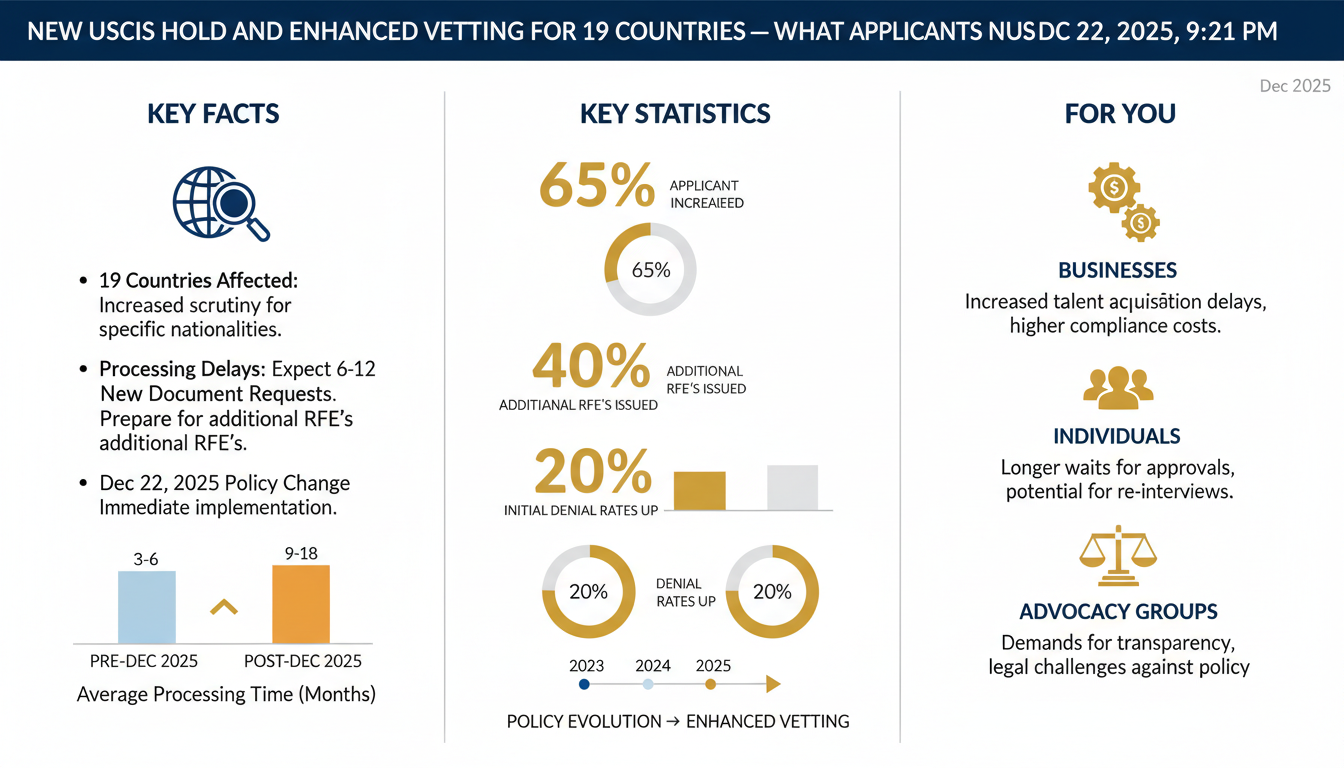
The Department of Homeland Security (DHS) and U.S. Citizenship and Immigration Services (USCIS) have implemented a series of enhanced vetting measures and an operational hold on adjudications affecting nationals from 19 countries designated in Presidential Proclamation 10949; the measures include suspension of final adjudications for pending asylum applications, pauses on pending benefit requests for the 19 countries, and comprehensive reviews of some previously approved benefits for nationals who entered the U.S. on or after Jan. 20, 2021[1][4].
Key official actions and sources
- USCIS internal guidance / Policy Memoranda: DHS directed USCIS to suspend and review all pending asylum applications and suspend pending benefit requests for nationals of the 19 countries listed in Presidential Proclamation 10949; USCIS issued related internal guidance placing holds on adjudications and instructing re-review of approved benefits for certain entrants[1][4].
- Department of State enhanced vetting: The Department of State issued enhanced vetting guidance for H‑1B and H‑4 applicants effective Dec. 15, 2025, expanding consular screening measures for those visa classes[1].
- USCIS Vetting Center: USCIS announced a new Vetting Center (headquartered in Atlanta) to coordinate intelligence and law‑enforcement screening resources and to prioritize reviews for nationals of the presidentially‑designated countries[4].
- Field impacts reported by practitioners: Immigration attorneys and firms have reported cancellations of naturalization ceremonies, paused adjustment‑of‑status interviews, and delays in final decisions affecting nationals from Venezuela, Iran, Afghanistan and other listed countries[2].
Which countries are affected
The measures target the 19 countries named in Presidential Proclamation 10949 (commonly referenced in recent guidance): Afghanistan, Myanmar (Burma), Chad, Republic of the Congo, Equatorial Guinea, Eritrea, Haiti, Iran, Libya, Somalia, Sudan, Yemen, Burundi, Cuba, Laos, Sierra Leone, Togo, Turkmenistan, and Venezuela[2].
Practical legal implications
- Adjudication pauses and delays: Final approvals and denials for many applications — including asylum (Form I‑589), adjustment of status (Form I‑485), naturalization (Form N‑400) ceremonies, and potentially other benefit forms — may be placed on hold until enhanced vetting and review are completed[1][2][4].
- Re‑review of prior approvals: USCIS will comprehensively re‑review some previously approved benefits for nationals of the listed countries who entered the U.S. on or after Jan. 20, 2021, which could result in revocation or initiation of further action in select cases[1][4].
- Consular vetting changes: H‑1B and H‑4 applicants from these countries face more intensive consular review under the Department of State’s enhanced vetting guidance effective mid‑December 2025, which could increase visa denials or administrative processing at U.S. consulates[1].
- Naturalization impacts: Naturalization ceremonies for nationals of affected countries have reportedly been cancelled in some districts while USCIS sorts implementation and vetting procedures[2].
- Broader enforcement risk: Hold and re‑review policies can increase the chance that adverse immigration actions (requests for evidence, revocations, initiation of removal proceedings) follow the vetting process for select individuals[1][4].
Who is likely to be affected
- Individuals from the 19 listed countries with pending USCIS benefits (I‑589 asylum, I‑485 adjustment, N‑400 naturalization, travel documents, employment‑based petitions, etc.)[1][4].
- Approved beneficiaries from those countries who entered the U.S. on or after Jan. 20, 2021 and whose approvals are subject to re‑review[1][4].
- H‑1B and H‑4 applicants from those countries applying at U.S. consulates, who will face enhanced vetting measures[1].
- Immigration practitioners and employers sponsoring nationals from those countries, who may see processing delays and need to adjust timelines[4].
Actionable guidance for affected individuals
If you are an individual from one of the 19 countries, or represent someone who is, take the following steps immediately to protect immigration benefits and prepare for additional scrutiny.
1. Confirm current case status and preserve documentation
- Check your case online and note any USCIS notices (receipt, interview, biometrics, or decision). Keep originals and clear copies of passports, I‑94s, prior approvals, and all immigration filings and receipts.[4]
- If you received an approval that might be subject to re‑review (entered on or after Jan. 20, 2021), compile documentation showing lawful entry, basis of adjudication (approval notices), and any evidence submitted with the original filing[1][4].
2. Contact counsel promptly
- Consult an experienced immigration attorney immediately — hold and re‑review policies raise procedural and due‑process questions that benefit from counsel input; attorneys can monitor for notices and prepare responses to Requests for Evidence (RFEs) or Notices of Intent to Revoke (NOIRs)[2][4].
- If you cannot afford private counsel, contact local legal aid organizations, bar association referral services, or the American Immigration Lawyers Association for pro bono options[3].
3. Prepare for additional vetting — gather corroborating evidence
- Collect identity documents, birth and marriage certificates, travel records, employment records, and evidence supporting any immigration claim (e.g., asylum supporting exhibits, medical reports, affidavits, employment letters).[1][4]
- Obtain certified translations of non‑English documents and organize a chronological evidence file to respond rapidly to USCIS requests.
4. For naturalization applicants
- If your naturalization ceremony is cancelled or delayed, retain proof of continuous eligibility (permanent resident card, tax records, selective service registration when applicable, evidence of residence and good moral character) and consult counsel about filing motions or seeking status updates with the local USCIS field office[2].
- Do not assume a denial; USCIS guidance indicates holds for further screening rather than automatic denials, so be ready to respond to requests and preserve evidence of eligibility for naturalization[1][2].
5. For asylum applicants
- USCIS has suspended final adjudications of asylum applications broadly while it conducts review[1]. If you have a pending Form I‑589, notify your attorney and ensure your contact information with USCIS is current so you receive any notices promptly.
- Preserve all evidence supporting an asylum claim (country conditions, identity documents, witness statements) and be prepared for potential re‑interviews or additional vetting steps[1].
6. For employers and petitioning sponsors
- Employers sponsoring H‑1B or other immigrant/nonimmigrant workers from affected countries should anticipate consular delays and enhanced vetting; plan for staffing contingencies and maintain records of recruitment and job‑site documentation[1][4].
- Consider extending offer timelines, consulting immigration counsel on premium processing options (where available), and preparing alternative labor coverage if visa start dates are delayed.
Possible legal challenges and remedies
These administrative holds and enhanced vetting measures raise potential procedural and constitutional questions that could be litigated, including claims under the Administrative Procedure Act (APA) and due process principles if the government acts without adequate notice or justification. Recent litigation already demonstrates courts will examine DHS and USCIS authority in implementing new oversight or policies (for example, a federal judge recently stayed DHS oversight visit policies in Neguse v. ICE under the APA[3]).
If USCIS re‑reviews an approved benefit and issues a Notice of Intent to Revoke or revokes an approval, affected individuals generally have statutory or regulatory avenues to respond — including responding to NOIRs, appealing certain decisions to the Administrative Appeals Office (AAO), or seeking injunctive relief in federal court depending on jurisdiction and the type of benefit[4]. Consult counsel promptly for case‑specific remedies.
Relevant official and legal citations
- USCIS Policy Memorandum and internal guidance referenced in DHS December 2, 2025 Policy Memorandum and subsequent USCIS guidance placing holds and directing re‑reviews[1][4].
- Department of State H‑1B/H‑4 Enhanced Vetting Guidance (effective Dec. 15, 2025) as publicly reported by legal outlets and firm advisories[1].
- Reports of field impacts and paused adjudications documented by immigration practices and newsletters (e.g., law firm advisories and AILA postings)[2][3][4].
What to watch next
- USCIS issuance of formal, public guidance clarifying which form types are paused, expected timelines for vetting, and procedures for re‑reviewed approvals (USCIS has issued some guidance internally but public instructions may follow)[1][4].
- Announcements regarding the operational scope and authorities of the new USCIS Vetting Center and how it will coordinate with intelligence and law enforcement databases[4].
- Litigation challenging the scope or process of holds and re‑reviews; court orders could limit or clarify agency authority as seen in recent immigration‑related APA litigation[3].
Final practical checklist
- Verify whether you are from one of the 19 listed countries and whether your case is pending or previously approved[2].
- Keep copies of all immigration documents, receipts, and notices; update contact information with USCIS immediately if it changes[4].
- Contact an immigration attorney or accredited representative to evaluate your case and prepare for possible RFEs/NOIRs or re‑review[2].
- For employers, coordinate with immigration counsel to manage workforce impacts and consular scheduling for affected foreign nationals[1][4].
- Monitor official USCIS and Department of State announcements for public guidance and timelines[4][1].
If you would like, our office can review your case status, help assemble documents for a potential re‑review, and represent you in responses to USCIS requests or in litigation if necessary. Contact Imigrar to schedule a consultation.


