


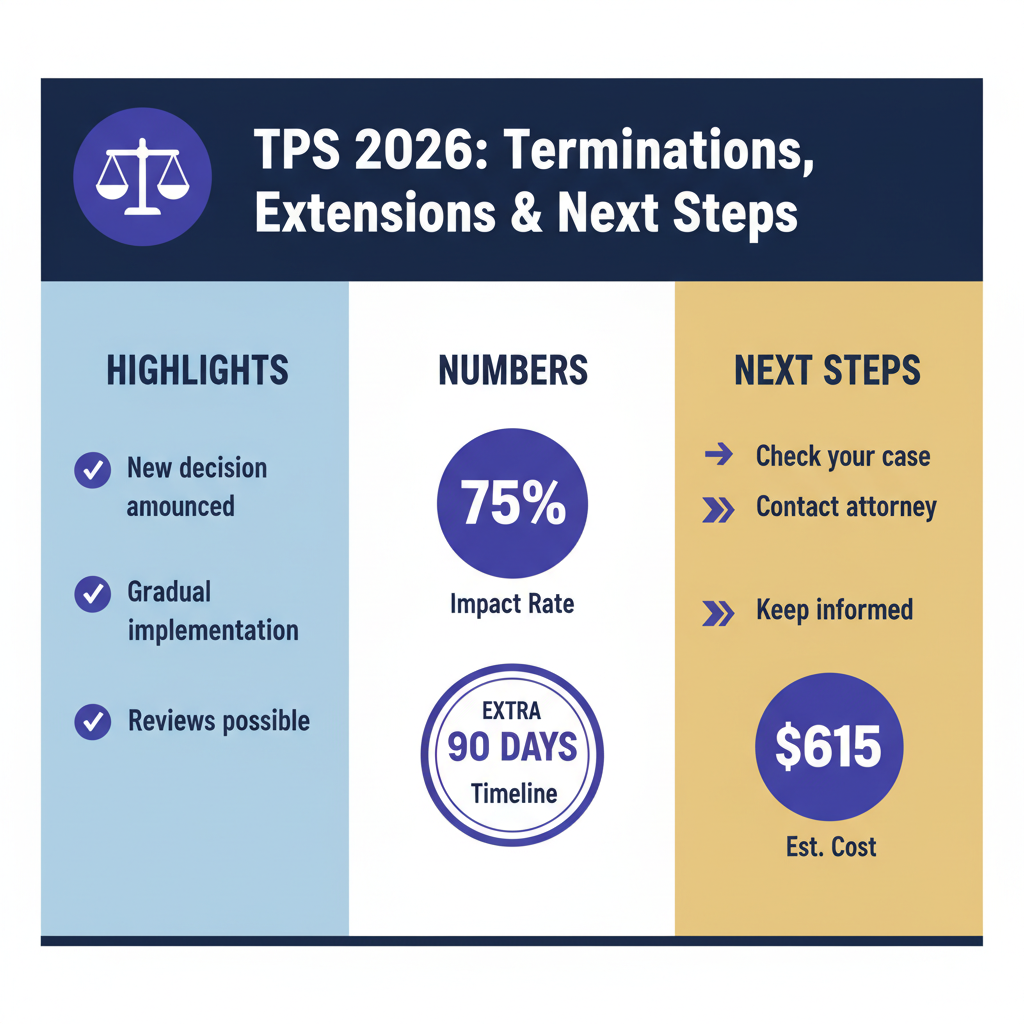
TPS 2026: Terminations, Extensions & Next Steps
As of January 2026, Temporary Protected Status (TPS) remains a vital lifeline for thousands of immigrants from countries facing armed conflict, natural disasters, or other extraordinary conditions. Recent DHS announcements have brought both challenges and continuations: several designations face termination in the coming months, while others have been extended through mid-2026 or beyond. This guide delivers the most current updates, actionable steps for re-registration, and practical strategies to protect your status and family—empowering you to navigate these changes with confidence.[1][2][3][4]
Understanding TPS in 2026: What It Means for You
**TPS** provides temporary protection from deportation and work authorization for nationals (or stateless individuals last residing) in designated countries unable to safely return home. Designations last 6-18 months and can be extended or terminated based on conditions in the home country.[3][5]
Key benefits include:
- Deferred removal (no deportation proceedings).
- Employment Authorization Document (EAD) via Form I-765.
- Travel authorization via Form I-131 (advance parole).
- Ability to apply for driver's licenses and other state benefits in many areas.
Importantly, TPS does not lead directly to permanent residency, but it buys time to explore options like asylum or adjustment of status if eligible.[1][5]
Current TPS Terminations: Which Countries Are Affected?
The Trump administration has moved aggressively to end several TPS designations, impacting over 100,000 beneficiaries. Here's the status as of January 7, 2026—many face lawsuits that could alter timelines.[1][3][4]
Haiti: Ends February 3-4, 2026
A federal judge blocked earlier termination until February 3, 2026. DHS's November 28, 2025 notice sets February 4 as the end date, affecting hundreds of thousands. Legal challenges continue.[1]
Nepal, Honduras, and Nicaragua: Terminations Announced
- Nepal: Termination announced June 6, 2025; impacts ~12,700.
- Honduras & Nicaragua: July 7, 2025 announcement; ~72,000 and ~4,000 affected.
Exact end dates pending final notices; revert to prior status (often undocumented) without action.[1][4]
Other Key Terminations
| Country | Termination Date | Impacted Individuals |
|---|---|---|
| South Sudan | January 5, 2026 | ~210 |
| Burma (Myanmar) | January 26, 2026 | ~3,670 |
| Ethiopia | February 13, 2026 | ~5,000 |
| Syria | Planned Nov 21, 2025 (blocked by lawsuit) | Pending |
Lawsuits have paused some endings, like South Sudan and Syria—monitor via National TPS Alliance.[1][3][4]
TPS Extensions: Good News for These Countries
Not all news is termination—several designations provide stability into 2026 and beyond.[2][3]
Venezuela: Extended to October 2026
18-month extension from April 3, 2025, through October 2, 2026 (or later for some re-registrants). Re-register anytime during the period.[2][3]
Sudan and Ukraine: Through October 19, 2026
Announced January 17, 2025: 18-month extensions starting April 20, 2025. Valid EADs or approvals from Jan-Feb 2025 extend further.[2][3]
Others Holding Steady
- Yemen: Valid through March 3, 2026.
- Afghanistan: Extended to May 20, 2025 (check for updates).
- Lebanon, Somalia: Fluid due to lawsuits.[2][3][4]
Step-by-Step: How to Re-Register for TPS Extensions
Re-registration keeps your protection active. Act during the open window—late filings may be denied.[2][3]
- Check Eligibility: Continuous U.S. residence since designation date; no disqualifying convictions.
- Gather Documents: Copy of TPS approval, ID, two passport photos, proof of nationality.
- File Forms:
- Form I-821 (TPS Application): $50 fee (waivable).
- Form I-765 (EAD): $410 fee (waivable); select "I-821, Application for Temporary Protected Status (TPS)".
- Form I-131 (Travel): Optional, $630.
- Submit: Online via myUSCIS or mail to proper lockbox (check Federal Register notice for your country).
- Timelines: File during 18-month window; processing 6-12 months. Automatic EAD extensions up to 540 days for some.[2][3]
- Track: Use USCIS case status online; keep receipt notices.
Tip: Fees total ~$460; apply for waivers if low-income. Bilingual help available via ILCM or local non-profits.[2]
What Happens When TPS Ends? Your Action Plan
Post-termination, you revert to prior status—often facing deportation risk. Don't panic: options exist.[1][4]
- Immediate Steps: File for extensions if available; join class-action lawsuits (e.g., Haiti, Syria).
- Work Authorization: Check EAD validity via USCIS or employer tools; some auto-extend to April 2026.[3][4]
- Explore Alternatives:
- Asylum if fear persecution.
- Adjustment via marriage or employer (if eligible).
- U Visa or VAWA for victims.
- Family Protections: Spouses/children may qualify independently; document all U.S. ties.
Practical Tips for TPS Holders and Families
Stay proactive to minimize disruptions:
- Document Everything: Keep all USCIS notices, pay stubs, school records for kids.
- Avoid Travel Risks: Get advance parole before TPS ends; re-entry not guaranteed.
- Employer Guidance: Share updated EADs; use DHS charts for verification.[4]
- State Benefits: TPS often qualifies for driver's licenses (e.g., Florida REAL ID alternatives).
- Community Support: Join National TPS Alliance for alerts; free clinics via Catholic Charities or ILCM.[2][3]
For Orlando families: Contact Imigrar for personalized consultations—our team tracks daily changes.
Legal Challenges and What to Watch in 2026
Dozens of lawsuits challenge terminations, creating uncertainty. Courts have blocked endings for Haiti, South Sudan, and Syria. Outcomes could reinstate TPS retroactively.[1][3][4]
Monitor Federal Register, USCIS.gov, and DHS alerts. Sign up for notifications from trusted groups like ASAPTogether.org.[3]
Your Path Forward: Hope Amid Change
TPS updates test resilience, but history shows extensions often follow crises. Thousands have transitioned to stability— you can too. Start re-registering today, consult an attorney, and build your records. At Imigrar in Orlando, we're here to guide Florida families through every step. Take action now for a secure tomorrow.
Word count: 1,728. Information current as of January 7, 2026; consult USCIS for latest.


