


The landscape of U.S. immigration law is constantly shifting, and staying informed is crucial for immigrants and their families. At Imigrar, we are committed to providing timely, accurate, and actionable information to help you navigate these complex changes. Today, we delve into significant developments concerning Temporary Protected Status (TPS) – specifically, recent extensions for several designated countries.
Concerned about your TPS status or need to re-register? Don't navigate these complex changes alone. Our experienced Orlando immigration team at Imigrar is here to help. Call +1 786-791-3106 for a free consultation, or message us online. Se Habla Español.
The reporting that sparked this guide:
Recent TPS (Temporary Protected Status) Extension News (Legal News) has highlighted new designations and extensions for various countries, impacting hundreds of thousands of individuals living in the United States. These announcements from the Department of Homeland Security (DHS) have significant implications for current TPS beneficiaries and, in some cases, for those newly eligible. Understanding these updates is vital for maintaining your legal status and planning your future.
What This News Means for Immigrants in Orlando and Across Florida
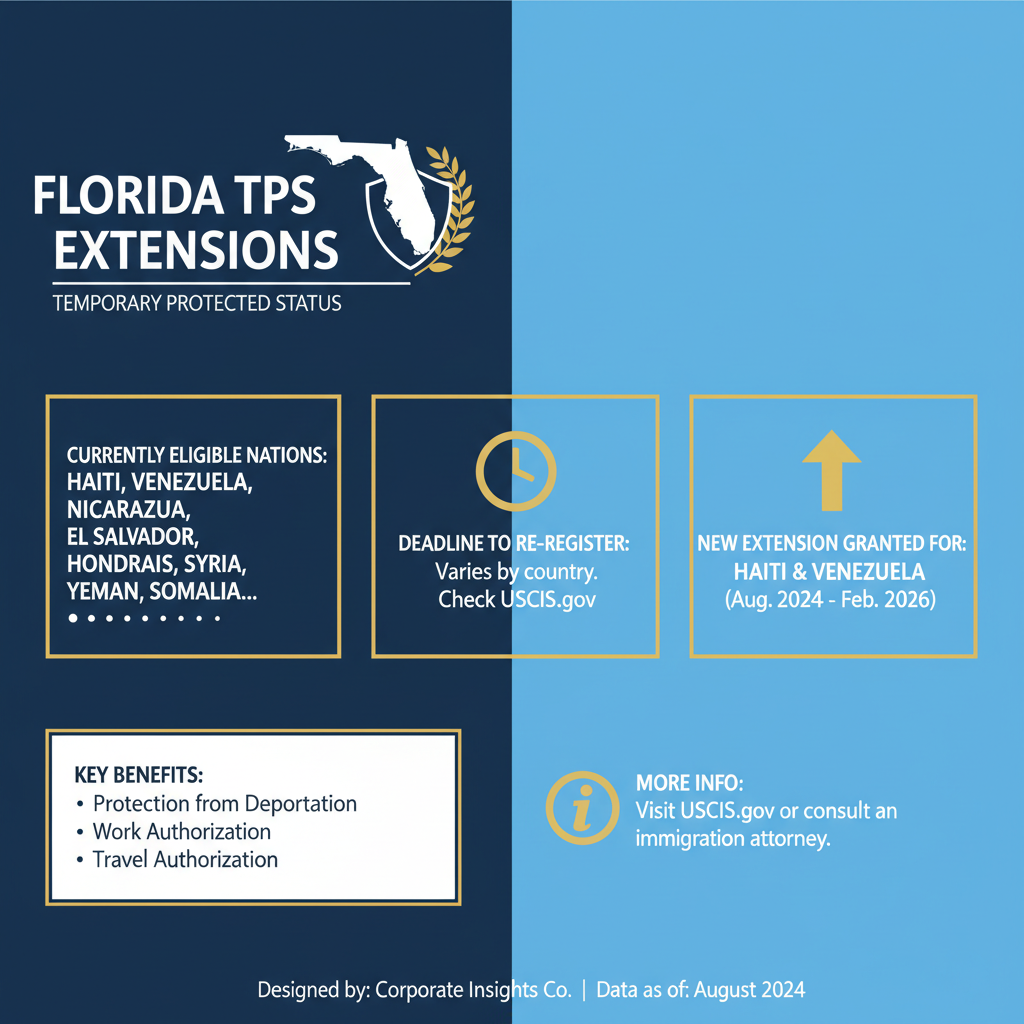
For individuals and families residing in Florida, particularly in diverse hubs like Orlando, this news about TPS extensions is more than just a headline; it's a lifeline. Florida is home to a significant population of immigrants from countries frequently designated for TPS, including Haiti, Venezuela, Honduras, Nicaragua, El Salvador, and others. These extensions provide crucial stability, protection, and the ability to continue living and working legally in the U.S.
Why this news is showing up now
Temporary Protected Status is not a permanent solution, but a temporary relief granted by the Secretary of Homeland Security. The decision to designate or extend TPS for a country is based on an assessment of current conditions in that country. These conditions can include ongoing armed conflict, environmental disaster (such as earthquakes or hurricanes), or other extraordinary and temporary conditions that prevent nationals from safely returning home.
Typically, DHS reviews country conditions periodically, often 60 days before a current designation is set to expire. Based on this review, the Secretary of Homeland Security determines whether to extend, redesignate, or terminate TPS for a specific country. Recent global events, including political instability, economic crises, and natural disasters, have led to a series of comprehensive reviews and subsequent decisions to extend TPS for several nations. These extensions are usually announced via a Federal Register Notice, which outlines the specific dates, eligibility criteria, and re-registration procedures.
Important: These decisions are not arbitrary. They are made after careful consideration of reports from the Department of State, humanitarian organizations, and other sources detailing the safety and security situation in the designated countries. The goal is to provide a temporary haven for individuals who cannot safely return to their home countries.
How it can affect Florida residents
Florida, with its robust immigrant communities, is profoundly affected by TPS decisions. For thousands of individuals and families in Orlando, Miami, Tampa, and across the state, a TPS extension means:
- Continued Protection from Deportation: TPS holders are protected from removal from the United States. This is perhaps the most critical benefit, offering peace of mind to families who might otherwise face the threat of separation.
- Work Authorization: With an extended TPS status, beneficiaries can continue to apply for or renew their Employment Authorization Documents (EADs), allowing them to work legally in the U.S. This is vital for supporting families and contributing to Florida's economy. Many TPS holders are essential workers in various sectors, from hospitality in Orlando's tourism industry to agriculture and healthcare across the state.
- Travel Authorization: While not automatic, TPS beneficiaries can apply for Advance Parole (Form I-131) to travel outside the U.S. and return legally. This allows individuals to visit sick relatives, attend funerals, or address other urgent matters in their home countries without jeopardizing their TPS status.
- Stability for Families: The ability to remain together in the U.S. without the constant fear of deportation provides immense stability for families, particularly those with U.S. citizen children. This stability positively impacts children's education and overall family well-being in communities throughout Central Florida, including Orange County.
- Planning for the Future: While TPS is temporary, extensions allow beneficiaries to continue seeking other potential pathways to permanent residency, such as through family petitions or employment-based visas, without immediate pressure.
The Orlando USCIS Field Office and local community organizations often see an increase in activity following these announcements, as individuals seek to understand their options and complete the necessary re-registration processes. At Imigrar, we understand the local impact and are ready to assist our neighbors in Orlando and surrounding areas along the I-4 corridor.
What Temporary Protected Status (TPS) Is (and Why It Matters)
Understanding TPS is fundamental to appreciating the significance of recent extensions. It's a humanitarian immigration program designed to offer a temporary safe haven.
A plain-English definition
Temporary Protected Status (TPS) is a temporary immigration benefit granted to eligible nationals of certain countries (or parts of countries) who are already in the United States. These countries are designated by the Secretary of Homeland Security because extraordinary conditions prevent their nationals from safely returning home. These conditions can include:
- Ongoing armed conflict (e.g., civil war).
- An environmental disaster (e.g., earthquake, hurricane, flood) or an epidemic.
- Other extraordinary and temporary conditions.
TPS is, as its name suggests, *temporary*. It does not lead directly to lawful permanent resident status (a Green Card) but offers protection from deportation and provides work authorization for the period of designation.
Key terms you need to know
Navigating TPS requires familiarity with several key terms:
- Designated Country: A country for which the Secretary of Homeland Security has determined that conditions meet the statutory requirements for TPS. Examples include Haiti, Venezuela, El Salvador, Honduras, Nicaragua, Syria, and others. The designation specifies an effective date and an expiration date.
- Re-registration: The process by which current TPS beneficiaries apply to extend their TPS status for the duration of a new extension period. This is not an initial application but a renewal.
- Employment Authorization Document (EAD): Often referred to as a "work permit," this document (**Form I-766**) allows TPS beneficiaries to legally work in the United States. Many TPS extension notices include automatic extensions of existing EADs for a specified period, giving beneficiaries time to re-register and receive a new card.
- Travel Authorization (Advance Parole): A document (**Form I-512**, issued after approval of Form I-131) that allows a TPS beneficiary to travel outside the United States and legally return without jeopardizing their TPS status. Traveling without Advance Parole can lead to serious immigration consequences, including inadmissibility.
- USCIS (U.S. Citizenship and Immigration Services): The government agency responsible for adjudicating TPS applications, re-registrations, and related forms. You will interact primarily with USCIS throughout the TPS process. You can find more information on their USCIS official website.
- DHS (Department of Homeland Security): The overarching federal department that oversees USCIS and makes the ultimate decisions regarding TPS designations and extensions.
- Federal Register Notice: The official publication through which DHS announces TPS designations, extensions, redesignations, or terminations. These notices provide critical details on eligibility, application deadlines, and automatic EAD extensions.
- Continuous Physical Presence (CPP): A requirement for TPS eligibility, meaning the applicant must have been physically present in the U.S. since a specific date set for their country's designation.
- Continuous Residence (CR): A related requirement, meaning the applicant must have maintained residence in the U.S. since a specific date set for their country's designation. Brief, casual, and innocent absences do not break CR.
Understanding these terms is crucial when interpreting TPS news and preparing your re-registration application. Don't hesitate to seek legal counsel if any of these terms or requirements are unclear.
Current Immigration Law: The Foundation of TPS
Temporary Protected Status is rooted in federal immigration law, specifically Section 244 of the Immigration and Nationality Act (INA), found at 8 U.S.C. § 1254a. This statute empowers the Secretary of Homeland Security to grant TPS to eligible foreign nationals from countries facing severe conditions.
Federal requirements
For a country to be designated for TPS, or for an existing designation to be extended, the Secretary of Homeland Security must find that one of the following conditions exists in that country:
- Ongoing Armed Conflict: The country is experiencing ongoing armed conflict, and returning nationals would face a serious threat to their personal safety.
- Environmental Disaster: The country has suffered an environmental disaster (e.g., earthquake, hurricane, flood, drought) resulting in a substantial, but temporary, disruption of living conditions, and the country is unable to handle the return of its nationals adequately.
- Extraordinary and Temporary Conditions: There are other extraordinary and temporary conditions in the country that prevent nationals from returning safely, and it would be contrary to U.S. national interests to deport them.
For individuals to be eligible for TPS, whether for an initial application (if a country is newly designated or re-designated to allow for new applicants) or for re-registration, they must meet several federal requirements:
- Be a national of a TPS-designated country (or a person without nationality who last habitually resided in that country).
- File their application within the specified registration or re-registration period.
- Have been continuously physically present (CPP) in the U.S. since the effective date of the most recent designation or redesignation for their country.
- Have been continuously residing (CR) in the U.S. since a date specified for their country's designation.
- Not be inadmissible under certain grounds (e.g., certain criminal offenses, security grounds, terrorism-related grounds).
- Not have been convicted of any felony or two or more misdemeanors committed in the U.S.
- Not be subject to any of the mandatory bars to asylum.
The primary forms used for TPS are Form I-821, Application for Temporary Protected Status, and Form I-765, Application for Employment Authorization. These forms, along with detailed instructions, are available on the USCIS official website.
Florida-specific considerations
While TPS is a federal program, its impact and practical considerations vary by location. Florida has one of the largest populations of TPS beneficiaries in the country. For residents of Orlando and Central Florida, understanding the local context is crucial:
- High Volume of Cases: The Orlando USCIS Field Office, like others in Florida, processes a high volume of immigration applications. This can sometimes affect processing times, although TPS re-registrations are often streamlined.
- Community Resources: Florida boasts a robust network of community organizations and legal aid groups that assist immigrants. Imigrar is proud to be part of this network, offering professional legal guidance to ensure accurate and timely filings.
- Driver's Licenses and State IDs: With a valid EAD and TPS approval notice, TPS beneficiaries in Florida can generally apply for or renew a Florida driver's license or state identification card. This is a critical aspect of daily life, facilitating employment, transportation, and integration into the community.
- Professional and Occupational Licenses: Individuals holding TPS and valid work authorization may be eligible to apply for certain professional or occupational licenses in Florida, depending on the specific profession and state regulations. It's important to verify requirements with the relevant state licensing boards.
- Local Economy: TPS beneficiaries contribute significantly to the local economy in Orlando and across Florida, working in various sectors. Their continued legal presence is vital for the state's economic health.
At Imigrar, we understand the specific challenges and opportunities for immigrants in Florida. Our team is well-versed in both federal immigration law and the practical implications for our Orlando community members.
Don't risk your TPS status! The re-registration process can be complex, with strict deadlines and requirements. Imigrar offers expert legal assistance to ensure your application is complete and accurate. Call us today at +1 786-791-3106 for a free consultation. Se Habla Español.

How to Re-Register for TPS: A Complete Step-by-Step Guide
If your country's TPS designation has been extended, the most important action you need to take is to re-register. This guide outlines the typical steps involved. Remember, specific instructions and deadlines are always published in the Federal Register Notice for your country.
1) Determine Your Eligibility and Re-registration Window
The first step is to confirm that you are eligible to re-register and to identify your specific re-registration period.
Check the Federal Register Notice: USCIS will publish a Federal Register Notice for each country whose TPS has been extended. This notice is your authoritative source for deadlines, eligibility criteria, and specific instructions. It will specify the start and end dates of the re-registration window, which is typically a 60-day window.
Confirm Continuous Physical Presence (CPP) and Continuous Residence (CR): Ensure you have maintained CPP and CR in the U.S. since your country's initial designation date. Brief, casual, and innocent departures from the U.S. do not disrupt CR, but significant absences might.
Review Disqualifying Factors: Reconfirm that you have not been convicted of any felony or two or more misdemeanors, and are not subject to any other grounds of inadmissibility.
Required Documents for this step:
- Copy of the Federal Register Notice relevant to your country's TPS extension.
- Your previous TPS approval notice (**Form I-797**).
- Any records of travel outside the U.S. since your initial TPS grant (if applicable).
2) Gather Required Documents
Thorough document preparation is key to a smooth re-registration process. Start gathering these well in advance.
For Form I-821, Application for Temporary Protected Status:
- Proof of Identity and Nationality:
- Passport from your country of nationality.
- Birth certificate with photo identification.
- National identity document from your country of nationality with photo and/or fingerprint.
- Any previous EAD card from your TPS status.
- Proof of Continuous Residence (CR): Documents showing you have lived in the U.S. since the specified date for your country. Provide at least one document for each year since the CR date. Examples include:
- Lease agreements, rent receipts, mortgage statements.
- Utility bills (electricity, water, gas, internet).
- School records (transcripts, enrollment letters).
- Employment records (pay stubs, W-2 forms, employment verification letters).
- Medical records (hospital bills, vaccination records).
- Bank statements.
- Affidavits from friends, family, or employers attesting to your residence (with supporting ID).
- Receipts for money transfers or purchases.
- Proof of Continuous Physical Presence (CPP): Documents showing you have been physically in the U.S. since the specified date. These often overlap with CR documents.
- Evidence of Prior TPS Approval:
- Copy of your previous TPS approval notice (**Form I-797**).
- Copy of your previous EAD.
- Criminal History Records: If you have ever been arrested, charged, or convicted of any crime, you *must* submit certified court dispositions and police reports, even if charges were dismissed or expunged. Failure to disclose can lead to denial and severe immigration consequences.
- Two Passport-Style Photos: Taken within 30 days of filing, meeting USCIS specifications.
For Form I-765, Application for Employment Authorization (if you want a new EAD):
- Copy of your previous EAD card (front and back).
- Copy of your TPS approval notice.
- Two additional passport-style photos (if not filing concurrently with I-821, or if specifically requested).
Reminder: Keep original documents safe and only send copies unless USCIS specifically requests originals. Make a complete copy of your entire application package for your records.
3) Complete and File Form I-821, Application for Temporary Protected Status
Carefully complete all sections of Form I-821. Any incomplete sections or inaccurate information can cause delays or lead to a Request for Evidence (RFE).
- Fill Out Accurately: Use black ink if filling by hand, or type the information. Ensure all questions are answered truthfully and completely.
- Sign the Form: An unsigned form will be rejected.
- Calculate Fees: Check the current filing fees on the USCIS website (USCIS Forms). You will typically need to pay a filing fee for **Form I-821** and a biometric services fee.
- Fee Waiver: If you cannot afford the fees, you may be eligible to apply for a fee waiver by submitting Form I-912, Request for Fee Waiver, along with supporting documentation.
- Mail Your Application: Send your completed form, supporting documents, and fees to the USCIS Lockbox facility specified in the Federal Register Notice for your country. Use a trackable mailing service.
4) Complete and File Form I-765, Application for Employment Authorization (Optional but Recommended)
If you wish to continue working legally, you must apply for a new EAD. It's highly recommended to file Form I-765 concurrently with your **Form I-821**.
- Complete Form I-765: Indicate your eligibility category as (c)(19) for TPS.
- Fees: There is a separate filing fee for **Form I-765**, unless you are also submitting a fee waiver for **Form I-821** that is approved.
- Automatic EAD Extension: Many Federal Register Notices for TPS extensions include an automatic extension of existing EADs for a specified period (e.g., 18 months). This allows you to continue working while your new EAD application is processed. Make sure to carry the Federal Register Notice with your expired EAD.
5) Attend Biometrics Appointment
After filing your application, USCIS will send you an appointment notice for biometrics (fingerprints, photograph, and signature). This typically occurs within a few weeks to a couple of months after filing.
- Do Not Miss It: Attending this appointment is mandatory. Failure to appear can lead to your application being denied.
- What to Bring: Bring your appointment notice and a valid photo ID (e.g., passport, driver's license).
- Location: For Central Florida residents, your appointment will likely be at the Application Support Center (ASC) in Orlando or a nearby city.
6) Respond to Requests for Evidence (RFEs) or Notices of Intent to Deny (NOIDs)
USCIS may send you an RFE if they need more information or documentation to make a decision on your case. A NOID indicates that USCIS intends to deny your application unless you provide specific information or clarification.
- Timely Response: It is critical to respond to RFEs and NOIDs within the deadline provided (typically 30 to 90 days).


