

The immigration landscape is constantly evolving, and staying informed is crucial for individuals and families building their lives in the United States. Today, March 29, 2026, we bring you critical updates regarding Temporary Protected Status (TPS) extensions that could significantly impact many in our community.
The reporting that sparked this guide: TPS (Temporary Protected Status) Extension News (Legal News)
What This News Means for Immigrants in Orlando and Across Florida
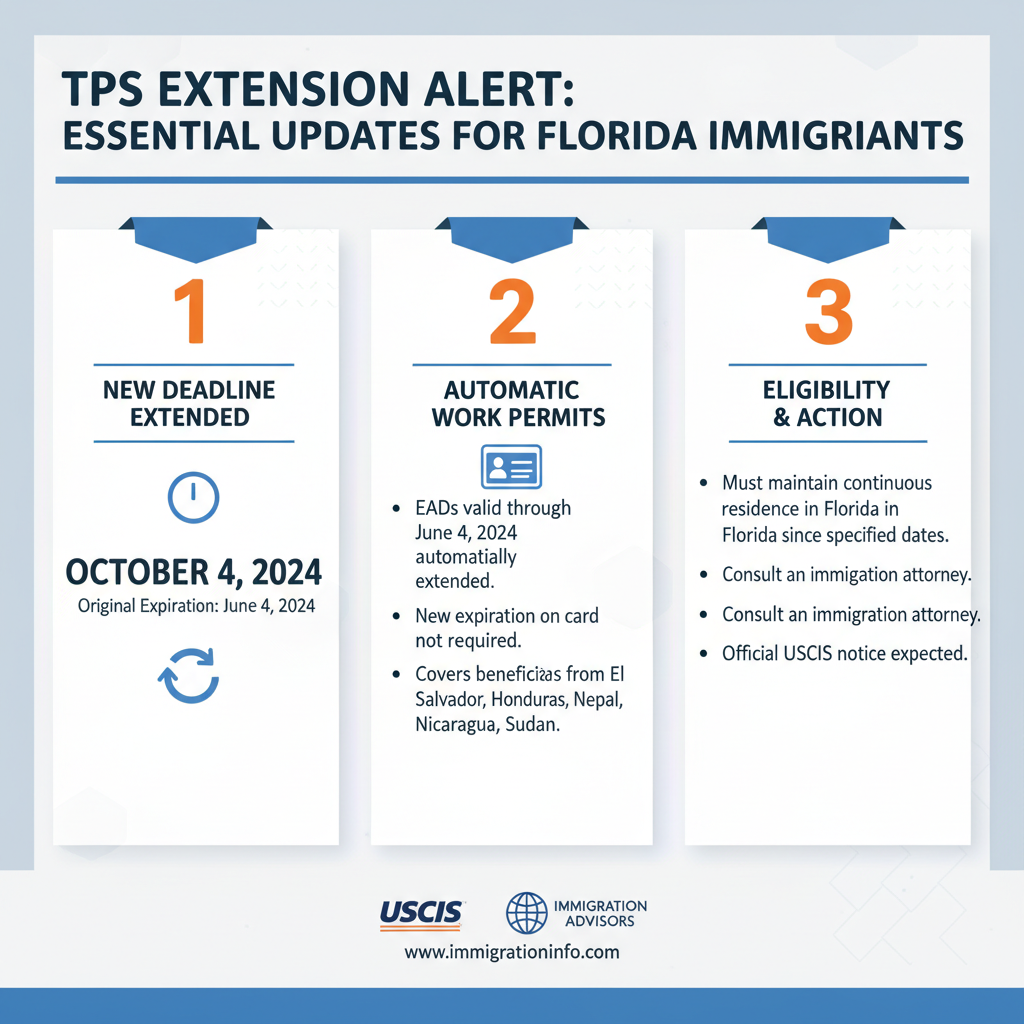
For hundreds of thousands of immigrants across the nation, and particularly within Florida’s vibrant communities, news of TPS extensions is a lifeline. These announcements directly affect individuals who have found refuge and built lives in the U.S. after fleeing humanitarian crises in their home countries. Understanding the nuances of these updates is not just about compliance; it's about protecting your ability to live, work, and contribute to your community without fear.
Why this news is showing up now
Temporary Protected Status is, as its name suggests, temporary. It's granted by the Secretary of Homeland Security to eligible nationals of certain countries who are already in the United States. The designation is based on conditions in their home country that prevent their safe return, such as armed conflict, environmental disaster, or other extraordinary and temporary conditions. These designations are not permanent and must be periodically reviewed and either extended, re-designated, or terminated. As of March 29, 2026, several countries’ TPS designations have reached their expiration dates, necessitating a decision from the Department of Homeland Security (DHS) regarding their future status. The recent legal news reports reflect these ongoing governmental reviews and the subsequent announcements of extensions for various designated countries. These decisions are often the result of careful monitoring of the geopolitical and humanitarian situations in the affected nations, ensuring that the U.S. government responds appropriately to evolving crises.
For those holding TPS, these announcements are critical because they dictate the continuity of their protected status, their work authorization, and their ability to remain lawfully in the U.S. without fear of deportation. Delays or changes in these announcements can cause significant anxiety and uncertainty, which is why Imigrar is committed to providing timely and accurate information.
How it can affect Florida residents
Florida is home to a vast and diverse immigrant population, including a significant number of individuals from countries that have been designated for TPS. For residents across Central Florida, including those living in and around Orlando, these extensions have direct and profound implications:
- Continued Protection from Deportation: The most immediate effect of a TPS extension is the continued protection from removal from the United States. This means TPS holders can remain in the U.S. legally, offering stability and peace of mind to families who have established roots here.
- Work Authorization: An extended TPS designation typically comes with an automatic extension of Employment Authorization Documents (EADs), or the opportunity to re-register for a new EAD. This is crucial for TPS holders in Orlando to continue working legally, supporting their families, and contributing to Florida’s economy. Without a valid EAD, individuals face job loss and financial hardship.
- Travel Authorization: With an approved Travel Authorization (Advance Parole), TPS holders can continue to travel outside the U.S. and return legally. This is vital for maintaining family ties abroad or attending to urgent matters in their home country, though it must be done carefully and with prior approval.
- Community Stability: For cities like Orlando, which boast a rich tapestry of cultures, TPS extensions help maintain the stability of communities. Families can plan for their children’s education, invest in local businesses, and participate fully in civic life without the constant threat of displacement.
- Legal Planning: These extensions provide a window for TPS holders to explore other potential pathways to permanent residency, if available. It's a critical time to consult with an immigration attorney to assess all options.
The Orlando USCIS Field Office and local community organizations often see an increase in inquiries and requests for assistance following such announcements. Imigrar is here to serve this need, providing expert legal counsel to help you navigate these changes effectively and protect your status.
Need Help Navigating TPS Extensions? Our Orlando immigration team is ready to assist. Call +1 786-791-3106 for a free consultation, or message us online. Se Habla Español.
What Temporary Protected Status (TPS) Is (and Why It Matters)
Understanding TPS is the first step in protecting your future. It's a vital form of humanitarian relief that has provided safety and opportunity for countless individuals and families in the U.S.
A plain-English definition
Temporary Protected Status (TPS) is a temporary immigration benefit provided to nationals of certain countries who are already in the United States. The U.S. Secretary of Homeland Security may designate a country for TPS due to extraordinary conditions that prevent its nationals from returning safely. These conditions typically fall into one of three categories:
- Ongoing Armed Conflict: Where returning nationals would face a serious threat to their personal safety due to war or civil strife.
- Environmental Disaster: Such as earthquakes, hurricanes, or floods, that result in a substantial, but temporary, disruption of living conditions, and the foreign government is unable to handle the return of its nationals adequately.
- Other Extraordinary and Temporary Conditions: Any other exceptional circumstances that prevent safe return.
Individuals granted TPS are protected from removal (deportation) from the U.S. and are eligible to obtain an Employment Authorization Document (EAD), allowing them to work legally. They may also be granted travel authorization. Important: TPS does not lead directly to permanent resident status (a Green Card), but it provides a crucial temporary refuge, allowing beneficiaries to live and work in the U.S. while conditions in their home country remain unsafe.
Key terms you need to know
Navigating the TPS process requires familiarity with specific terminology. Here are some key terms that will help you understand your status and any updates:
- Designated Country: A country whose nationals are eligible for TPS due to the conditions specified by the Secretary of Homeland Security. Examples of countries that have held TPS designations include El Salvador, Honduras, Nicaragua, Haiti, Venezuela, Ukraine, Afghanistan, and others. The list changes based on global events and U.S. policy.
- Eligibility Requirements: The specific criteria an individual must meet to be granted TPS. These typically include continuous physical presence (CPP) in the U.S. since a certain date and continuous residence (CR) in the U.S. since a separate, often earlier, date. Applicants must also pass security checks and not be inadmissible under certain grounds (e.g., certain criminal offenses).
- Initial Designation Period: The period during which nationals of a newly designated country can first apply for TPS.
- Re-registration Period: A specific window of time (usually 60 days) during which current TPS beneficiaries must re-apply to maintain their status when their country’s designation is extended. Missing this deadline can lead to loss of status.
- Employment Authorization Document (EAD): Also known as a work permit, this is the official document (**Form I-766**) that allows a TPS beneficiary to work legally in the U.S.
- Automatic EAD Extension: Often, when a TPS designation is extended, USCIS will automatically extend the validity of existing EADs for a certain period to prevent a lapse in work authorization while new EADs are being processed. This is usually published in the Federal Register.
- Travel Authorization (Advance Parole): A document (**Form I-131**) that permits a TPS beneficiary to travel outside the U.S. and return legally without terminating their TPS status. Warning: Traveling without Advance Parole can have severe negative consequences, including the termination of your TPS.
- Form I-821: The official application form for Temporary Protected Status.
- Form I-765: The official application form for Employment Authorization.
- Form I-131: The official application form for a Travel Document (Advance Parole).
- Continuous Physical Presence (CPP): The requirement that an applicant has been physically present in the U.S. since a specific date set for their country’s TPS designation. Brief, casual, and innocent departures do not necessarily break CPP.
- Continuous Residence (CR): The requirement that an applicant has resided in the U.S. since a specific date set for their country’s TPS designation.
Understanding these terms is critical for anyone with TPS, especially during an extension period. If any of these terms seem confusing, remember that Imigrar is here to provide clarity and expert assistance.
Current Immigration Law: The Foundation of TPS
Temporary Protected Status is rooted in federal law, specifically the Immigration and Nationality Act (INA) Section 244. This statute outlines the authority of the Secretary of Homeland Security to grant and extend TPS based on specific criteria related to conditions in a foreign country.
Federal requirements
To be eligible for TPS, individuals must meet several federal requirements as stipulated by the INA and further defined by USCIS regulations:
- Nationality: Be a national of a country designated for TPS, or a person without nationality who last habitually resided in that country.
- Continuous Physical Presence (CPP): Have been continuously physically present in the United States since the effective date of the most recent designation for your country.
- Continuous Residence (CR): Have been continuously residing in the United States since the date specified for your country’s designation.
- Application Deadline: Apply for TPS within the initial registration period or any subsequent re-registration period.
- Admissibility: Not be inadmissible under specific grounds, including certain criminal and security-related grounds.
- No Criminal Record: Not have been convicted of any felony or two or more misdemeanors committed in the U.S.
- No Persecution: Not be found to have ordered, incited, assisted, or otherwise participated in the persecution of any person on account of race, religion, nationality, membership in a particular social group, or political opinion.
- Not Subject to Certain Bars: Not be subject to any of the mandatory bars to asylum.
Important: Even if you meet all general eligibility requirements, the Secretary of Homeland Security has the discretion to deny TPS if there are national security concerns or other public interest grounds. For detailed and up-to-date information, always refer to the USCIS official website.
The primary forms used for TPS applications are: Form I-821, Application for Temporary Protected Status, and if seeking work authorization, Form I-765, Application for Employment Authorization. For travel, applicants must file Form I-131, Application for Travel Document.
Florida-specific considerations
While TPS is a federal immigration benefit and there are no Florida-specific laws governing eligibility, the impact of TPS extensions on Florida residents is substantial due to the state's large and diverse immigrant communities. Florida, particularly the Central Florida region encompassing Orlando, Kissimmee, and Sanford, is home to significant populations from countries such as Haiti, Venezuela, Honduras, and El Salvador, all of which have at some point been designated for TPS. For these communities, TPS extensions mean:
- Driver's Licenses and State IDs: With a valid EAD based on TPS, Florida residents are generally eligible to apply for or renew a Florida driver's license or state identification card. This is essential for daily life, employment, and mobility within the state. The Department of Highway Safety and Motor Vehicles (DHSMV) will require proof of lawful presence, which the EAD provides.
- Access to Services: Continued legal status allows TPS holders to access certain public services and benefits that require proof of lawful presence.
- Community Resources: Local non-profits and community centers in Orlando and surrounding areas often provide support, language assistance, and sometimes legal clinics for immigrants. Awareness of TPS extensions allows these organizations to better serve their communities.
- Economic Contribution: TPS holders contribute significantly to Florida's economy through their labor, entrepreneurship, and consumption. Extensions help maintain this vital economic input.
For those in Central Florida, understanding how your federal TPS status intersects with state-level processes is key. Imigrar is familiar with the local context and can guide you through these interactions, ensuring a smooth process for your status and related needs in Florida.

How to Re-register for TPS: A Complete Step-by-Step Guide
When a country’s TPS designation is extended, current beneficiaries must re-register to maintain their status. This is a critical process that requires attention to detail and strict adherence to deadlines. This guide focuses on the re-registration process, assuming you already hold TPS.
1) Understand the Designation and Re-registration Period
The very first step is to confirm that your country's TPS designation has indeed been extended and to identify the specific re-registration period. USCIS announces these extensions and accompanying re-registration windows through official channels, including the Federal Register and press releases on their website.
- Check Official USCIS Announcements: Regularly visit the USCIS official website, specifically the TPS page, for updates concerning your country. Look for the Federal Register notice, which provides precise dates and instructions.
- Note the Re-registration Window: This is typically a 60-day period. Warning: Missing this deadline can result in the loss of your TPS status and work authorization, potentially leading to removal proceedings. Mark these dates clearly on your calendar.
- Understand Automatic EAD Extensions: The announcement will also specify if there is an automatic extension of existing EADs for current beneficiaries. This is crucial for maintaining legal employment while your new EAD application is processed. Keep a copy of the Federal Register notice with your expiring EAD as proof of extension.
2) Gather Your Required Documents
Thorough document preparation is essential to avoid delays or denials. Start gathering these well in advance of the re-registration period.
- Proof of Identity and Nationality:
- Copy of your passport from your designated country (if available).
- Copy of your birth certificate with a photo identification (if no passport).
- Any national identity document from your country of origin.
- Proof of Entry into the U.S.:
- Copy of your Form I-94, Arrival/Departure Record.
- Copies of any entry stamps in your passport.
- Proof of Continuous Residence (CR) and Continuous Physical Presence (CPP) in the U.S.: You need to demonstrate that you have continuously resided and been physically present in the U.S. since the specified dates for your country's TPS designation. Provide at least one document for each year since the CR date. Examples include:
- Employment records (pay stubs, W-2 forms, letters from employers).
- Rent receipts, utility bills (electricity, water, gas, internet) in your name.
- School records (transcripts, report cards) for yourself or your children.
- Medical records (hospital visits, doctor's appointments).
- Bank statements showing transactions in the U.S.
- Affidavits from friends, family, or employers attesting to your presence (with their contact info).
- Any other dated documents showing your presence in the U.S.
- Previous TPS Documentation:
- Copy of your previous TPS approval notice (**Form I-797**).
- Copy of your previous Employment Authorization Document (**Form I-766**).
- Two Recent Passport-Style Photos: Ensure they meet USCIS specifications (2x2 inches, white background, taken within 30 days of filing).
- Proof of Any Name Changes (if applicable): Marriage certificates, divorce decrees, or legal name change documents.
3) Complete and File Form I-821 and Form I-765
These are the core forms for re-registration. Ensure they are filled out accurately and completely.
- Form I-821, Application for Temporary Protected Status:
- Carefully read all instructions.
- Complete every section. If a section does not apply to you, write "N/A" (Not Applicable).
- Sign and date the form. An unsigned form will be rejected.
- Form I-765, Application for Employment Authorization:
- If you wish to obtain a new EAD card (which is highly recommended even with automatic extensions), you must file this form.
- For TPS re-registration, your eligibility category will typically be (c)(19).
- Sign and date the form.
- Filing Fees:
- Check the current USCIS fee schedule for both **Form I-821** and **Form I-765**. Fees can change, so always verify on the USCIS website.
- For TPS re-registration, the **Form I-821** fee is often waived, but the **Form I-765** fee and the biometrics fee are usually required.
- If you cannot afford the fees, you may apply for a fee waiver using **Form I-912, Request for Fee Waiver**. You must provide evidence of your inability to pay.
- Payment should be by money order, personal check, cashier’s check, or credit card using **Form G-1450, Authorization for Credit Card Transactions**. Make checks payable to the "U.S. Department of Homeland Security."
- Where to File:
- The mailing address for your application depends on your country of designation and where you reside. Always refer to the specific Federal Register notice or the "Where to File" section on the USCIS website for **Form I-821**. Do not send it to a general USCIS address.
- Use certified mail with a return receipt to track delivery.
Overwhelmed by Forms and Deadlines? Our Orlando immigration lawyers simplify the TPS re-registration process. Contact Imigrar at +1 786-791-3106 for professional assistance. Se Habla Español.
You may also be interested in: Stay informed on DACA updates and renewal requirements for 2026. This comprehensive guide details the process, eligibility, and how Imigrar helps DACA... Navigate the complex world of family-based immigration with Imigrar's expert guide. Learn how to petition for relatives, understand requirements, and ... Stay informed on USCIS processing times and critical updates for 2026. This comprehensive guide from Imigrar helps immigrants in Orlando, Florida, and... Stay informed on USCIS Employment Authorization Document (EAD) processing changes for 2026. This comprehensive guide helps Orlando immigrants understa...Related Articles


