

The reporting that sparked this guide
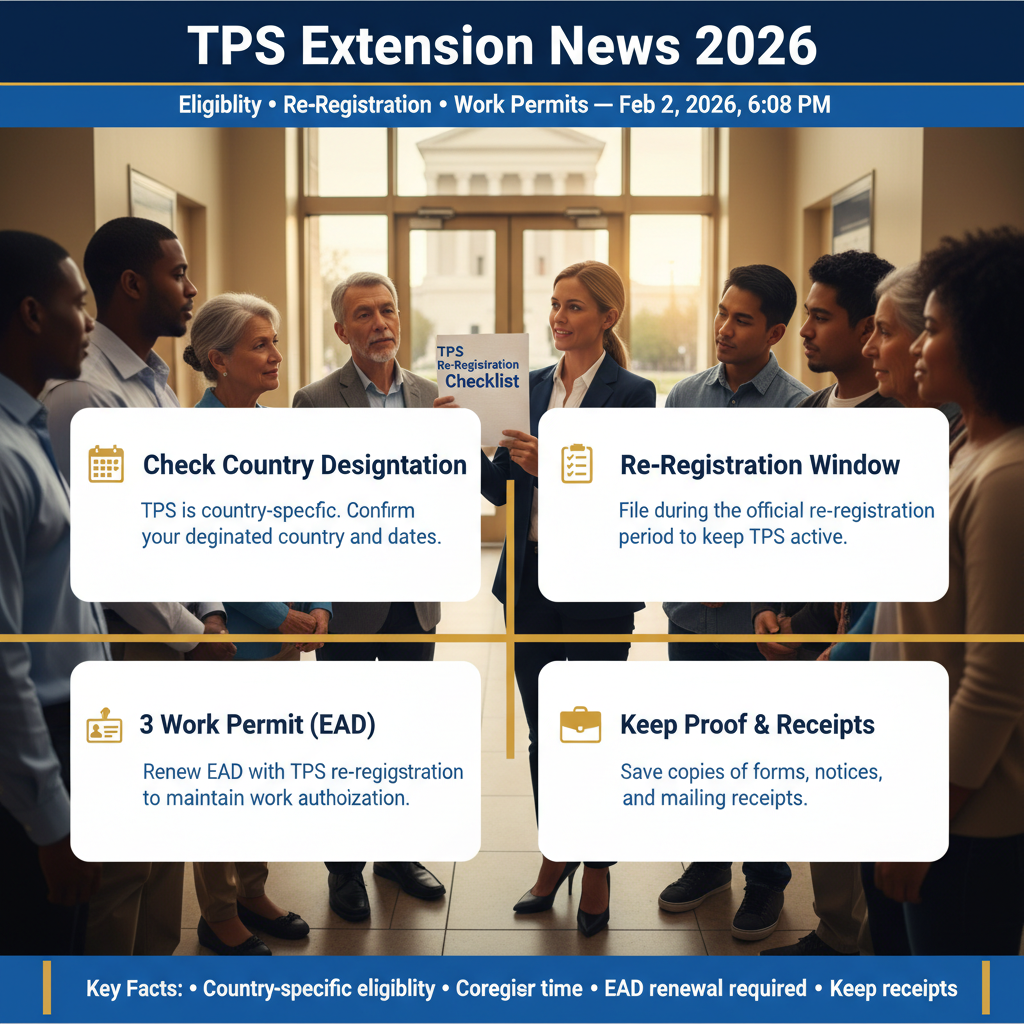
TPS has been in the headlines again due to ongoing federal announcements and litigation affecting designated countries and extension timelines. The news coverage that prompted this practical guide is here: TPS (Temporary Protected Status) Extension News (Legal News).
Reminder: News headlines can move faster than official government instructions. This article focuses on how TPS extension and re-registration typically work, what to watch for in official notices, and how to protect your work authorization and lawful presence while updates develop.
Need Help? Our Orlando immigration team is ready to assist. Call +1 786-791-3106 for a free consultation, or message us online. Se Habla Español.
What This News Means for Immigrants in Orlando and Across Florida
Why this news is showing up now
TPS extension news trends for a few predictable reasons:
- DHS review cycles: TPS designations must be reviewed and extended (or terminated) on set timelines, often every 6, 12, or 18 months depending on the country.
- Federal Register notices: Extensions and re-registration instructions are published publicly and can trigger a wave of media coverage.
- Work permit timing: Many TPS holders must renew their Employment Authorization Document (EAD) using Form I-765, and delays make deadlines feel urgent.
- Lawsuits and policy shifts: TPS for certain countries has historically been affected by litigation, injunctions, settlements, and administrative changes.
Important: The only reliable “start date” for re-registration and EAD renewal is the official DHS/USCIS guidance—usually tied to a Federal Register notice and mirrored on the USCIS official website.
How it can affect Florida residents
Florida is home to large communities from TPS-designated countries. If you live in Orlando, Orange County, or along the I-4 corridor (Kissimmee, Altamonte Springs, Sanford, Lake Mary, and Tampa-to-Daytona connections), TPS updates can affect:
- Your ability to work legally: EAD validity and automatic extensions can determine whether you can keep your job.
- Driver’s license renewals: Florida licensing often depends on valid immigration documentation dates.
- Travel plans: TPS does not automatically authorize travel; you may need advance permission (typically via advance parole) depending on your situation.
- Family stability: TPS decisions can impact whether families remain together in the U.S.—which aligns with Imigrar’s mission: Keep Families Together.
- Immigration court posture: If you are in removal proceedings, TPS may affect case strategy before the Executive Office for Immigration Review.
If your case is in Orlando, timing matters because mailing, biometrics scheduling, and any local follow-up can affect how quickly you receive receipt notices and updated evidence of work authorization.
What TPS (Temporary Protected Status) Extension News Is (and Why It Matters)
A plain-English definition
Temporary Protected Status (TPS) is a humanitarian program that allows eligible nationals of certain countries (or people who last habitually resided there) to remain in the United States temporarily when conditions in their home country make return unsafe—such as armed conflict, environmental disaster, or other extraordinary conditions.
“TPS extension news” usually means the U.S. government has announced that a country’s TPS designation is being extended (and sometimes re-designated), which can:
- Extend protection from removal (deportation) for eligible TPS holders
- Allow continued eligibility for work authorization (EAD)
- Open (or re-open) a re-registration period
- In re-designations, potentially allow additional people from that country to apply if they meet new residence/physical presence dates
Key terms you need to know
- Designation: When DHS first selects a country for TPS.
- Extension: DHS continues TPS for the country and sets new end dates.
- Re-designation: DHS may reset certain cut-off dates, allowing additional eligible people to apply (not guaranteed).
- Re-registration: Current TPS holders must re-register during a specific window to keep TPS benefits.
- EAD (work permit): The Employment Authorization Document, typically requested with Form I-765.
- Automatic extension: Sometimes DHS automatically extends expiring EADs for a set period while renewals are pending.
- Continuous residence / continuous physical presence: Required date-based rules that can make or break eligibility.
- Warning: TPS is temporary. It is not a green card by itself and does not automatically lead to permanent residence.
Although this article focuses on TPS, many TPS holders also explore permanent options such as family-based processes involving Form I-130 and Form I-485 (often called Adjustment of Status). If a family petition is involved, concepts like Priority Date can matter.
Current Immigration Law: The Foundation
TPS is governed by federal law and implemented through DHS regulations and policy guidance. Understanding the legal foundation helps you spot misinformation and act within deadlines.
Federal requirements
TPS is authorized under INA § 244 (Immigration and Nationality Act), codified at 8 U.S.C. § 1254a. Key implementing regulations include 8 C.F.R. § 244.
In practice, TPS extension and re-registration instructions are published in the Federal Register and summarized on the USCIS official website. You can also find required filing instructions and editions on USCIS Forms.
Typical federal eligibility pillars include:
- Nationality (or last habitual residence) in a TPS-designated country
- Meeting “continuous residence” and “continuous physical presence” dates set in the designation/extension notice
- Timely filing during initial registration or re-registration periods (unless an exception applies)
- No disqualifying criminal history or inadmissibility bars (case-specific)
- Submitting biometrics when required
Important: If you have arrests, charges, or convictions, do not assume TPS is safe or unsafe without a legal review. Even outcomes that seem “minor” can affect immigration eligibility.
Florida-specific considerations
TPS is federal immigration law, but Florida residents often face state-level practical issues:
- Driver license/REAL ID timing: Florida agencies often tie validity to your immigration document end date. An EAD automatic extension or a TPS extension notice may be crucial.
- Employment verification: Employers may re-verify work authorization. Understanding EAD categories and automatic extension language can prevent job disruption.
- Local processing realities: For Central Florida residents, mailing times, biometrics scheduling, and follow-up can affect how quickly you receive receipts and approvals.
The Orlando USCIS Field Office generally handles interviews for many benefit types (like Form I-485), but TPS filings are typically processed through USCIS service centers. Still, Orlando-area applicants may receive biometrics appointments at local Application Support Centers (ASC).
For official updates, always cross-check with: USCIS official website, USCIS Processing Times, and if travel is involved, U.S. Department of State.
Need Help? Our Orlando immigration team is ready to assist. Call +1 786-791-3106 for a free consultation, or message us online. Se Habla Español.
How to Re-Register for TPS and Renew Your Work Permit: A Complete Step-by-Step Guide
The most common “action item” after TPS extension news is re-registration and (often) renewing your EAD. Below is a step-by-step roadmap that applies to most TPS extensions. Always confirm country-specific instructions on the USCIS official website.
1) Confirm your country’s TPS extension and your deadlines
Identify (a) whether your country is extended, (b) whether it is re-designated, and (c) the re-registration window. Many TPS extensions include a specific filing period (often around 60 days). Missing the window can trigger a denial unless you qualify for a late filing exception.
Reminder: Some notices also provide an EAD automatic extension for a defined time period. This can be essential for work and driver’s license renewals.
Documents to gather at this step:
- Your current/most recent TPS approval notice (I-797)
- Your current/most recent EAD (front and back)
- Your passport bio page (if available) and any U.S. ID
- Proof of Florida residence (lease, utility bill) if you need it for state purposes
- Printout/PDF of the USCIS TPS country page or Federal Register notice for your records
2) Decide whether you are re-registering, applying initially, or seeking late initial registration
TPS extension news can affect three groups:
- Current TPS holders: Usually need to re-register to keep TPS.
- New eligible applicants (re-designation): May be able to file an initial TPS application if they meet the new residence/physical presence dates.
- Late initial registrants: Some people can file late if they meet specific criteria (for example, having certain pending applications or status during the initial registration period). This is highly fact-specific.
Warning: Do not assume a country’s “extension” automatically allows new applicants. That is usually only true if DHS also announces a re-designation.
Documents to gather at this step:
- All prior USCIS receipts/decisions related to TPS
- Evidence of entry and stay in the U.S. (I-94 if any, travel records)
- Proof you meet required “continuous residence” and “continuous physical presence” dates (see Step 3)
- If late filing may apply: evidence of qualifying condition (e.g., prior status, pending application receipts)
3) Build your evidence packet (identity, nationality, residence, and presence)
USCIS evaluates TPS eligibility based on identity/nationality and date-based requirements. Even for re-registration, USCIS may request evidence if something is missing or inconsistent.
Common evidence categories:
- Identity and nationality: passport, birth certificate with photo ID, national ID card, consular ID, prior immigration records
- Continuous residence: leases, rent receipts, utility bills, school records, medical records, pay stubs, tax transcripts
- Continuous physical presence: similar records showing you were physically in the U.S. as of the required date and maintained presence
- Any name changes: marriage certificate, court order
If your case is in Orlando or elsewhere in Central Florida, organize documents by month/year. A clean timeline can reduce the risk of a Request for Evidence (RFE).
Documents to gather at this step:
- Passport(s), national ID, birth certificate (with certified translation if not in English)
- Two passport-style photos if required by the form instructions (country/process dependent)
- IRS tax transcripts or W-2s (optional but helpful for residence proof)
- School/medical records for you and/or children showing dates
- Travel history notes (any departures/returns)
4) Prepare and file the correct USCIS forms (TPS + EAD)
Most TPS filings involve:
- Form I-821 (Application for Temporary Protected Status) for TPS registration/re-registration
- Form I-765 (Application for Employment Authorization) if you want/need an EAD
- Form I-912 (Request for Fee Waiver) if eligible and requesting a waiver (not available in every scenario; follow USCIS instructions)
Important: Use the current edition of each form from USCIS Forms and follow the country-specific filing addresses and instructions.
TPS holders often also ask about longer-term options through family or employment. Depending on your situation, you may also file (separately) forms like Form I-130 (family petition) and Form I-485 (Adjustment of Status) when eligible. If a visa category is backlogged, your Priority Date controls when you can file.
Documents to gather at this step:
- Completed Form I-821 and (if desired) Form I-765
- Filing fees or fee waiver packet (Form I-912) with supporting evidence
- Copy of government photo ID
- Copies of prior TPS/EAD approvals
- Any court dispositions for arrests/charges (certified copies)
5) Track your receipts, biometrics, and processing times
After filing, USCIS should issue receipt notices (Form I-797). You may be scheduled for biometrics. Processing times vary by workload and country-specific surges.
Track your case and set expectations using: USCIS Processing Times.
Reminder: If an EAD automatic extension applies, keep a copy of the Federal Register notice and your receipt notice with your expired EAD for I-9 and DMV purposes (when applicable).
Documents to gather at this step:
- USCIS receipt notices (I-797) for TPS and EAD
- Biometrics appointment notice
- Copy of the Federal Register notice (if it grants EAD automatic extension)
- Any RFE notices and your response proof
6) Respond to RFEs quickly and keep proof of delivery
If USCIS issues an RFE, respond by the deadline with a complete packet. Missing an RFE deadline can cause a denial.
Warning: USCIS RFE deadlines are strict. If you need more time, speak with an attorney immediately—extensions are not guaranteed.
Documents to gather at this step:
- Full copy of the RFE
- Requested evidence, organized and labeled
- Cover letter and index
- Delivery tracking confirmation
7) Plan beyond TPS: evaluate permanent options and travel risks
TPS can be a bridge, not a destination. Many TPS holders qualify (or may become eligible) for permanent status through:
- Family petitions (Form I-130) and potential Adjustment of Status with Form I-485
- Employer sponsorship
- Asylum or other humanitarian relief (case-specific)
Travel is another common issue. TPS alone does not guarantee re-entry after travel. If you are considering travel, consult counsel first and review official guidance on the USCIS official website and the U.S. Department of State.
Documents to gather at this step:
- Marriage certificate, children’s birth certificates, proof of U.S. citizen/LPR relatives (if exploring Form I-130)
- Immigration history documents (I-94, prior petitions, court notices)
- Any prior removal proceedings paperwork (EOIR documents)
Need Help? Our Orlando immigration team is ready to assist. Call +1 786-791-3106 for a free consultation, or message us online. Se Habla Español.
Practical Steps You Can Take Today
TPS extension announcements can create confusion, especially when social media circulates partial information. Here is an actionable checklist you can start today—before you even file.
Actionable checklist (do these now)
- Check the official country page: Confirm extension dates, re-registration window, and whether EADs are automatically extended on the USCIS official website.
- Create a “TPS binder” (paper or digital): Keep receipts, approvals, EAD copies, and identity documents together.
- Screenshot/print your deadline: Put reminders on your phone for the start and end of the re-registration period.
- Order certified court dispositions: If you have any criminal history, get certified records early. Waiting can cause missed deadlines.
- Update your address with USCIS: If you moved, update promptly so you don’t miss biometrics or RFEs.
- Talk to HR proactively: If your EAD is expiring and an automatic extension may apply, prepare the documentation your employer may need for I-9 re-verification.
Document preparation guidance
Build evidence that shows an uninterrupted story of your life in the U.S.:
- Use monthly proof (rent/utility) where possible.
- Use “institutional records” (school, medical, tax transcripts) because they are harder to dispute.
- Translate non-English documents with proper certification.
Timeline expectations
While timelines vary, many TPS applicants experience these phases:
- 1–4 weeks: Receipt notices after filing (varies by workload and mailing).
- 3–8 weeks: Biometrics appointment (sometimes waived or reused).
- 2–8+ months: EAD processing in many cases (check USCIS Processing Times).
Important: Do not wait until the last week of the re-registration period. Mailing delays and rejected filings can push you past the deadline.
How Imigrar Helps Immigrants in Orlando
Imigrar is an immigration law firm based in Orlando, Florida, serving clients nationwide. We help individuals and families navigate TPS extensions, re-registration, work permits, and long-term immigration strategies consistent with our mission: Keep Families Together.
How we help with TPS extension cases:
- Confirming whether your country’s TPS is extended, re-designated, or subject to special instructions
- Preparing and filing TPS re-registration and EAD renewals (Form I-821 and Form I-765)
- Assessing criminal/immigration history risks before filing
- Responding to RFEs and Notices of Intent to Deny
- Planning for permanent options (family-based Form I-130, Form I-485 Adjustment of Status, consular processing, and more)
- Guidance for clients in removal proceedings, including coordination with the Executive Office for Immigration Review
For Central Florida residents, we understand practical local issues—like DMV documentation timing, employer verification questions, and the realities of living and working along the I-4 corridor.
Call us at +1 786-791-3106 for a free consultation. Se Habla Español.
Frequently Asked Questions
Q: Am I automatically eligible when TPS is extended for my country?
A: Not necessarily. An extension typically benefits people who already have TPS and re-register on time. New applicants are usually only eligible if DHS also announces a re-designation (with new cut-off dates) or if they qualify for late initial registration. Check your country’s page on the USCIS official website and consider a legal review if you are unsure.
Q: Does TPS give me lawful status or a path to a green card?
A: TPS is a temporary protection and does not automatically lead to permanent residence. However, many TPS holders may qualify for a green card through other routes, such as family sponsorship with Form I-130 and potentially Form I-485 (Adjustment of Status) if eligible. Whether you can adjust can depend on your entry history, any prior orders, and your Priority Date availability.
Q: How long do I have to re-register after an extension is announced?
A: The re-registration period is set in the official DHS notice and is often a limited window (commonly around 60 days). Some benefits may also involve a 90-day window concept in other immigration contexts, but TPS re-registration uses the dates in the extension notice. Reminder: File early—USCIS can reject packets for missing signatures, wrong fees, or outdated form editions.
Q: What documents do I need for TPS re-registration and EAD renewal?
A: Re-registration commonly requires your prior TPS approval/receipt notices, identity documents, and completed Form I-821. If renewing your work permit, you typically file Form I-765 and include a copy of your prior EAD. If you have any arrests/charges, include certified dispositions. If USCIS questions your residence/presence, you may need supporting proof such as leases, bills, school records, and tax transcripts.
Q: How much does it cost to re-register and renew my work permit?
A: Costs depend on whether you are filing only TPS re-registration, also requesting an EAD, and whether biometrics fees apply. USCIS fees can change, so verify current amounts and fee waiver rules on USCIS Forms. Some applicants may qualify for a fee waiver using Form I-912, but eligibility is strict and evidence-based.
Q: What happens if my TPS or EAD renewal is denied?
A: A denial can place you at risk of losing work authorization and protection from removal, depending on your situation. Next steps may include filing a motion, re-filing if eligible, or exploring other relief. If you are in immigration court, the denial can affect your strategy before the Executive Office for Immigration Review. Warning: Do not ignore a denial notice—contact an immigration attorney immediately to evaluate deadlines and options.
Q: Can I travel outside the U.S. while on TPS?
A: Travel can be risky without proper authorization. TPS does not automatically grant permission to leave and return. If you are considering travel, speak with counsel first and review guidance on the USCIS official website and the U.S. Department of State. Your immigration history (prior unlawful presence, removal orders, or pending applications) can change the risk analysis significantly.
Q: I live in Orlando—does local USCIS affect my TPS case?
A: TPS filings are usually processed by USCIS service centers, but Orlando-area applicants may have biometrics locally and may need to use local documentation for DMV/employer purposes. The Orlando USCIS Field Office is more commonly involved in interview-based benefits like Form I-485 (Adjustment of Status), not routine TPS re-registration—though every case is different.
Common Mistakes (and How to Avoid Them)
Mistake #1: Missing the re-registration deadline
TPS re-registration windows can be short. People often wait because they assume an extension means “automatic renewal.” It usually does not.
- How to avoid it: File as early as possible in the window; set calendar reminders; keep proof of mailing and delivery.
Mistake #2: Filing the wrong forms, wrong fees, or outdated editions
USCIS may reject your filing if the form edition is outdated, signatures are missing, or fees are incorrect.
- How to avoid it: Download fresh forms from USCIS Forms the day you file and follow the country-specific instructions carefully.
Mistake #3: Ignoring immigration history or criminal issues
A past arrest, a prior order, or misstatements in earlier filings can create risks. Filing without a strategy can trigger denials or enforcement exposure.
- How to avoid it: Get certified court records, request FOIA records if needed, and consult an attorney before filing if anything is unclear.
Need Help? Our Orlando immigration team is ready to assist. Call +1 786-791-3106 for a free consultation, or message us online. Se Habla Español.

Closing: Protect Your TPS, Your Work, and Your Family
TPS extension news can be good news—but only if you take the right steps on time. Re-registration, EAD renewal, and document organization are the difference between staying protected and facing avoidable problems with work, DMV renewals, or even immigration enforcement.
If you are unsure whether you must re-register, whether an automatic EAD extension applies, or whether you have a long-term path beyond TPS (such as Form I-130 and Form I-485 Adjustment of Status with the right Priority Date), Imigrar can help you build a plan.
Call +1 786-791-3106 for a free consultation or message us online. Se Habla Español. We’re here to help Keep Families Together in Orlando, Orange County, and across Florida.


