


The reporting that sparked this guide
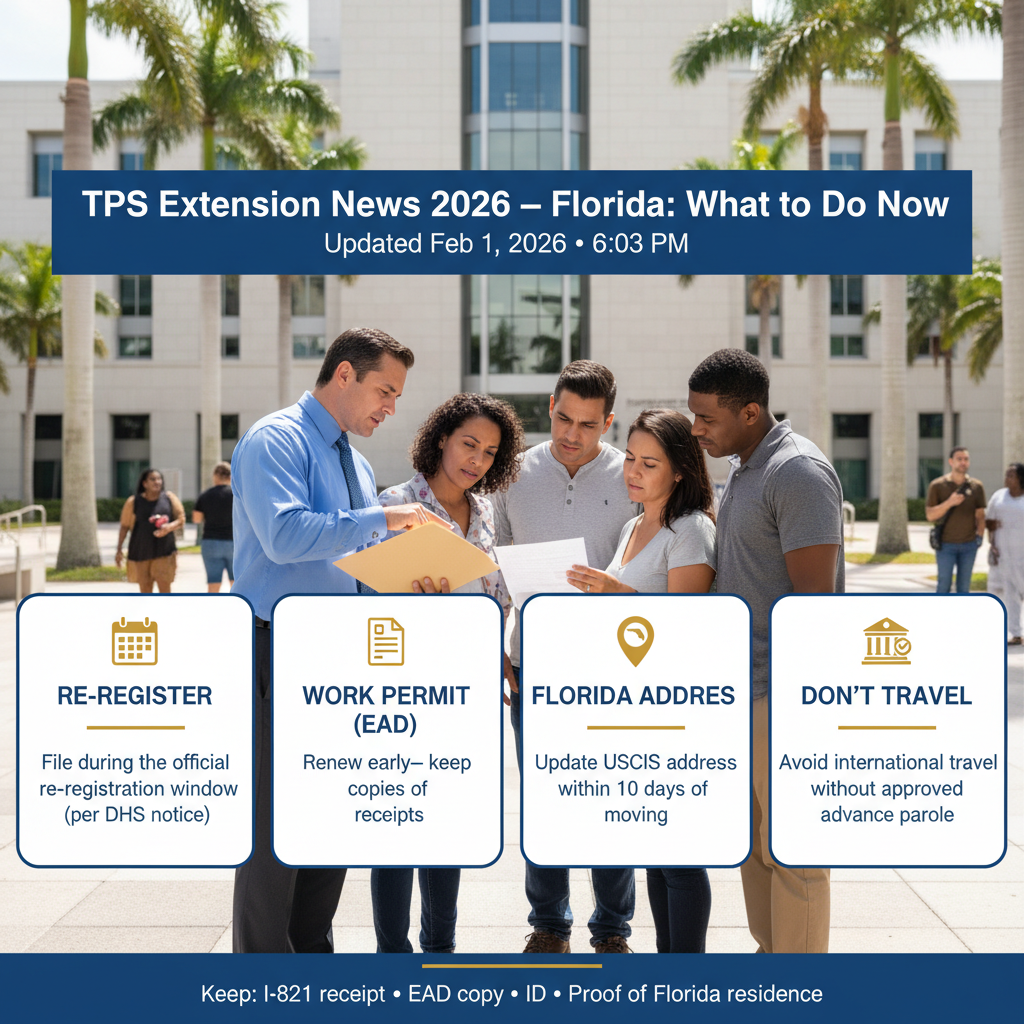
This article is based on the recent wave of coverage and updates appearing in legal and immigration reporting feeds about TPS redesignations and extensions for certain countries. The specific news reference we’re tracking is: TPS (Temporary Protected Status) Extension News (Legal News).
Important: News headlines can move faster than official government notices. The only binding guidance is what DHS/USCIS publishes in the Federal Register and on official webpages. We link those official sources throughout this guide.
Need Help? Our Orlando immigration team is ready to assist. Call +1 786-791-3106 for a free consultation, or message us online. Se Habla Español.
What This News Means for Immigrants in Orlando and Across Florida
Why this news is showing up now
TPS is a humanitarian protection that DHS can grant to nationals of certain countries facing extraordinary conditions—such as armed conflict, environmental disaster, or other temporary but dangerous circumstances. TPS is time-limited, so it must be periodically extended, redesignated, or terminated. That creates recurring “TPS extension news” cycles that often spike when:
- DHS is approaching an existing TPS expiration date and must announce an extension or termination.
- USCIS issues a Federal Register notice with a new re-registration period (often a 90-day window).
- USCIS announces automatic EAD extensions tied to certain TPS categories.
- Litigation or policy shifts create uncertainty—and people rush to confirm whether they must re-register.
Reminder: Even when TPS is extended, many TPS holders must still re-register and may need to renew their work permit using Form I-765. Missing the re-registration period can put your protection at risk.
How it can affect Florida residents
Florida is home to many TPS holders and TPS-eligible communities. For Central Florida residents—especially along the I-4 corridor (Orlando, Kissimmee, Sanford, and surrounding areas)—TPS updates can quickly impact:
- Employment authorization (whether your EAD is valid, auto-extended, or must be renewed).
- Driver’s license renewal and Real ID documentation timing.
- Travel plans (TPS travel requires advance permission; leaving without it can be disastrous).
- Removal defense strategy if you’re in immigration court or have an old order of removal.
- Family planning and long-term options like Adjustment of Status through a qualifying relative.
If your case is in Orlando, TPS developments can also affect how you coordinate filings with the Orlando USCIS Field Office and how you track timelines using USCIS Processing Times.
Need Help? Our Orlando immigration team is ready to assist. Call +1 786-791-3106 for a free consultation, or message us online. Se Habla Español.
What TPS (Temporary Protected Status) Extension News Is (and Why It Matters)
A plain-English definition
TPS is a temporary immigration status the U.S. government can grant to eligible people from certain designated countries who are already in the United States. If you qualify, TPS generally provides:
- Protection from removal (deportation) while TPS is in effect;
- Eligibility to apply for a work permit (Employment Authorization Document, EAD) using Form I-765;
- Eligibility to request permission to travel internationally using Form I-131 (travel without permission can have serious consequences).
“TPS extension news” usually means DHS has announced that a country’s TPS designation will continue for a new period (for example, 6, 12, or 18 months), often with instructions on re-registration and EAD renewals.
Warning: TPS is not a green card. It does not automatically lead to lawful permanent residence or U.S. citizenship. But for many families, it can be a critical bridge to other options—especially when combined with family petitions like Form I-130 or an employment-based strategy.
Key terms you need to know
- Designation / Redesignation: DHS identifies a country for TPS; redesignation can allow newer arrivals (after a specified date) to apply.
- Extension: DHS continues TPS for current beneficiaries for a new period.
- Re-registration: Existing TPS holders must often file during a set period (commonly a 90-day window) to keep TPS.
- EAD (work permit): A card showing you can work; you typically apply/renew with Form I-765.
- Automatic EAD extension: USCIS may automatically extend certain EADs for a limited time if you timely file or if a Federal Register notice grants it.
- Continuous residence / continuous physical presence: Rules requiring you to have lived in and been present in the U.S. since certain dates.
- Inadmissibility / bars: Criminal, immigration fraud, or other issues that can block TPS or other benefits.
- Removal proceedings: Immigration court cases handled by EOIR; TPS can be a defense or basis to seek administrative closure in some situations.
You can confirm official TPS designations and filing instructions on the USCIS official website, and always cross-check the Federal Register notice referenced on the USCIS TPS country page.
Current Immigration Law: The Foundation
TPS is grounded in federal statute and implemented through DHS regulations and Federal Register notices. Understanding the legal foundation helps you avoid misinformation and focus on what USCIS will actually require.
Federal requirements
The core TPS authority is found in Immigration and Nationality Act (INA) § 244 (8 U.S.C. § 1254a). Key federal concepts include:
- Eligibility based on nationality (or last habitual residence if stateless) of a designated country.
- Continuous physical presence in the U.S. since a date set by DHS for that country.
- Continuous residence since a date set by DHS for that country.
- Timely filing during the initial registration period, or qualifying for late initial filing under specific rules.
- Admissibility and disqualifying factors (certain crimes, security-related grounds, and other bars can disqualify).
TPS filings commonly involve:
- Form I-821 (Application for Temporary Protected Status)
- Form I-765 (Application for Employment Authorization)
- Form I-131 (Application for Travel Document)
You can access forms and instructions on USCIS Forms and verify current filing addresses and fees on the country-specific TPS page at the USCIS official website.
If you are in immigration court, TPS can intersect with EOIR procedures. For court resources and updates, see the Executive Office for Immigration Review.
Florida-specific considerations
TPS is federal, so Florida does not create separate TPS eligibility rules. But Florida residents often face state-level practical issues tied to TPS documentation:
- Driver’s license and ID timing: Florida DHSMV often ties expiration dates to your lawful presence document validity. If USCIS grants an automatic EAD extension, you may need the Federal Register notice and your I-797 receipt to update records.
- Employment verification: Employers may request updated I-9 documentation. TPS-based EAD auto-extensions can be valid for I-9 purposes if you meet the notice requirements.
- Local access to USCIS: For Central Florida residents, the Orlando USCIS Field Office may handle interviews for related applications (for example, Adjustment of Status with Form I-485), while many TPS filings are processed through USCIS service centers.
If your case is in Orlando and you are also pursuing family-based options, it’s critical to coordinate TPS timelines with: Form I-130 (family petition) and Form I-485 (green card application), including your Priority Date rules where applicable.
For travel and consular processing context, see the U.S. Department of State.
Need Help? Our Orlando immigration team is ready to assist. Call +1 786-791-3106 for a free consultation, or message us online. Se Habla Español.
How to Respond to a TPS Extension: A Complete Step-by-Step Guide
The right response depends on whether you are (1) an existing TPS holder who must re-register, (2) eligible for late initial registration, or (3) unsure whether your country is designated or redesignated. The steps below are designed to help you act safely and on time.
1) Confirm whether your country is designated (and the exact dates)
Start by confirming the official TPS designation, extension dates, and re-registration instructions for your country. Do not rely only on social media or headlines.
- Check your country’s TPS page on the USCIS official website.
- Locate the Federal Register notice link on that page (USCIS typically posts it with the extension announcement).
- Write down the key dates: TPS validity period, re-registration start/end, and any automatic EAD extension end date.
Documents to gather for this step:
- Your current EAD (front/back copy)
- Your last TPS approval notice (I-797)
- Any USCIS receipts for Form I-821 or Form I-765
- Your passport and I-94 (if available)
2) Determine whether you must re-register (or file an initial TPS application)
Most existing TPS holders must re-register during the designated period to maintain TPS. Some people may qualify for “late initial registration” if they meet specific criteria (for example, having a qualifying immigration status or pending application during the initial registration period).
Important: Missing the re-registration period can lead to TPS withdrawal unless you show good cause for late filing.
Documents to gather for this step:
- Proof you previously received TPS (prior approval notices)
- Proof of identity and nationality (passport, birth certificate with photo ID, national ID)
- Proof of continuous residence/physical presence (see Step 3)
- If filing late initial TPS: documents proving you meet a late filing category
3) Build your evidence packet (identity, presence, and eligibility)
TPS requires you to prove identity and nationality, and—depending on whether you are re-registering or applying initially—continuous residence and continuous physical presence since specific dates.
Documents to gather for this step (examples):
- Identity/Nationality: passport biographic page, national ID, birth certificate + photo ID
- U.S. presence: leases, rent receipts, utility bills, school records, medical records, pay stubs, tax records
- Travel history: passport stamps, I-94 records, flight itineraries (if any)
- Criminal/immigration history: certified court dispositions, arrest reports, prior immigration decisions
Warning: Arrests—even without conviction—can complicate TPS. Get certified dispositions and speak with an immigration attorney before filing.
4) Prepare and file the correct USCIS forms (I-821 + I-765, and sometimes I-131)
TPS filings typically include Form I-821 and often Form I-765 for a work permit. If you need to travel, you may file Form I-131 for advance permission.
Documents to gather for this step:
- Completed Form I-821 (signed)
- Completed Form I-765 (signed), if requesting/renewing EAD
- Two passport-style photos (if required by form instructions)
- Copy of government-issued photo ID
- Filing fee(s) or fee waiver request (if eligible)
- Any prior EADs and TPS approval notices
Always download the latest editions from USCIS Forms and follow the country-specific filing instructions. USCIS can reject packages that use outdated editions or incorrect fees.
Reminder: If you are also pursuing a green card through family, you may be filing Form I-130 and Form I-485 separately. TPS can be a bridge, but it is not the same as Adjustment of Status.
5) Track receipts, biometrics, and EAD validity (including automatic extensions)
After filing, USCIS typically issues receipt notices (I-797). You may also receive a biometrics appointment notice. You should track:
- Your receipt numbers for Form I-821 and Form I-765
- Biometrics appointment date/time (and reschedule rules if necessary)
- EAD expiration date and whether an automatic extension applies
Documents to gather for this step:
- I-797 receipt notices
- Biometrics notice
- Federal Register notice printout (for automatic EAD extension proof, if applicable)
- Current EAD (copy)
For timelines, check USCIS Processing Times, but understand TPS surges can change processing speed.
6) Protect your future options (family petitions, court cases, and travel)
TPS is often one part of a larger strategy. Before you travel or file other applications, consider how TPS interacts with:
- Family-based immigration via Form I-130
- Green card filing via Form I-485 and Adjustment of Status
- Your Priority Date (in categories where it matters)
- Immigration court proceedings (EOIR)
- Prior removal orders or unlawful entry issues
Documents to gather for this step:
- All prior immigration filings and decisions
- Any Notice to Appear (NTA) or immigration court documents
- Marriage and birth certificates (for family-based options)
- Proof of lawful entry (I-94) if considering Form I-485
If you are in proceedings, consult the Executive Office for Immigration Review resources and speak with counsel before taking action that could affect your case posture.
Practical Steps You Can Take Today
TPS extension announcements are time-sensitive. Here is an actionable checklist you can start right now—especially helpful for Central Florida residents balancing work, family, and tight deadlines.
- 1) Print the official USCIS TPS country page and the Federal Register notice for your records.
- 2) Calendar your re-registration deadline and set reminders at 30/14/7 days before the end of the 90-day window (if applicable).
- 3) Make a “TPS folder” (digital + paper) with your EAD, all I-797 notices, passport, and proof of address in Orange County or your Florida county.
- 4) Request certified court dispositions immediately if you have any arrest history—this can take weeks.
- 5) If your EAD is expiring soon, plan for I-9 updates with your employer and bring receipts and the Federal Register notice if an automatic extension applies.
- 6) Avoid international travel unless you have approved TPS travel authorization (typically through Form I-131) and have reviewed risks with counsel.
- 7) If you may qualify for a green card, start that analysis now (for example, through a U.S. citizen spouse filing Form I-130 and potentially Form I-485 if eligible).
Timeline expectations (general): TPS re-registration can be relatively straightforward, but EAD processing can vary. Some people receive receipts within weeks, biometrics notices shortly after, and EADs in a few months—others wait longer depending on volume and country-specific surges. Always verify current estimates at USCIS Processing Times.
Reminder: If your case is in Orlando and you have a pending Form I-485 interview or request for evidence (RFE), TPS re-registration does not replace those deadlines. You must meet both.
How Imigrar Helps Immigrants in Orlando
At Imigrar, we help TPS holders and their families protect work authorization, stay compliant with re-registration rules, and explore long-term solutions beyond TPS. Our team supports clients in Orlando, across Central Florida, and nationwide.
- TPS re-registration and EAD renewal strategy using Form I-821 and Form I-765
- Risk review for criminal/immigration history before filing
- Travel planning and TPS travel authorization guidance using Form I-131
- Family-based pathways: Form I-130, Form I-485, and Adjustment of Status screening
- Coordination for clients with EOIR matters and USCIS filings (when appropriate)
If your case is in Orlando, we can help you prepare filings with an eye toward local realities—employment verification, Florida ID renewal timing, and coordination with the Orlando USCIS Field Office for related benefits.
We offer a free consultation. Se Habla Español.
Need Help? Our Orlando immigration team is ready to assist. Call +1 786-791-3106 for a free consultation, or message us online. Se Habla Español.
Frequently Asked Questions
Q: How do I know if I’m eligible for a TPS extension?
A: TPS extensions apply to people who already have TPS under a specific country designation, as long as they remain eligible and properly re-register (if required). Check the country’s TPS page on the USCIS official website and confirm the re-registration instructions and dates in the Federal Register notice. If you have criminal history, prior immigration fraud findings, or missed prior re-registration, speak with an attorney before filing.
Q: Does TPS give me lawful status or a path to a green card?
A: TPS is a lawful, temporary protection from removal and can allow work authorization, but it is not a direct green card path. Some TPS holders may become eligible for permanent residence through other routes (for example, marriage to a U.S. citizen with Form I-130 and possibly Form I-485 through Adjustment of Status, depending on entry and other factors). A personalized screening is essential.
Q: How long does TPS re-registration and EAD renewal take?
A: Timeframes vary widely by country, filing volume, and USCIS workload. Many applicants receive receipts within a few weeks, biometrics appointments thereafter, and EADs in subsequent months. To estimate current ranges, check USCIS Processing Times for Form I-765 and relevant categories. Important: If USCIS provides an automatic EAD extension by notice, you may be authorized to work while the renewal is pending—if you meet the notice requirements.
Q: What documents do I need to re-register for TPS?
A: Typically you will need proof of identity/nationality (passport or national ID), your prior TPS approval notices, your current EAD (if any), and updated information about your address and any arrests/charges. If USCIS requests evidence, you may need proof of continuous residence/physical presence. Always follow the instructions for Form I-821 and Form I-765 from USCIS Forms and the country-specific TPS page.
Q: How much does it cost to file TPS and renew my work permit?
A: Costs depend on whether you are re-registering, requesting an EAD, and whether biometrics fees apply. USCIS fees can change, so verify the current fee schedule and form instructions on the USCIS official website and USCIS Forms. Some applicants may qualify for a fee waiver in limited circumstances; eligibility depends on the form and category.
Q: What happens if my TPS re-registration or EAD renewal is denied?
A: A denial can end TPS protection and can trigger immigration enforcement risk depending on your situation. Next steps may include filing a motion, addressing the denial basis with new evidence, or exploring other relief (family-based, asylum-related, cancellation, etc.). If you are in removal proceedings, the posture of your EOIR case matters—see Executive Office for Immigration Review for general information. Warning: Do not ignore a denial notice; act quickly and get legal advice.
Q: Can I travel outside the U.S. while on TPS?
A: Travel is risky without advance authorization. Many TPS holders must apply for travel permission using Form I-131 before leaving. Departing without authorization may result in loss of TPS or other serious immigration consequences. Also consider any pending applications like Form I-485 (Adjustment of Status) that may have separate travel rules. For general travel guidance, see the U.S. Department of State and consult counsel for your specific facts.
Common Mistakes (and How to Avoid Them)
Mistake #1: Assuming “extension” means you don’t have to file anything
Many TPS extensions still require re-registration and/or EAD renewal. Avoid this by reading the Federal Register notice and confirming whether a re-registration period (often a 90-day window) applies to you. Reminder: Keep proof of timely filing (receipts, delivery confirmation).
Mistake #2: Filing the wrong form edition, fee, or mailing address
USCIS can reject packages for technical reasons—delaying your case and risking your work authorization. Always download current forms from USCIS Forms, confirm fees on USCIS official website, and follow the country-specific TPS instructions.
Mistake #3: Traveling internationally without understanding the consequences
Leaving the U.S. without proper authorization can create re-entry problems and may harm future options like Adjustment of Status with Form I-485. If you must travel, discuss Form I-131 and your full immigration history with an attorney first. Warning: Travel can be especially risky if you have prior removal orders or unlawful presence issues.
Understanding TPS Extensions in the Bigger Picture (Orlando & Central Florida Focus)
TPS extension news often creates two urgent questions for Florida families: “Can I keep working?” and “Can I stay protected?” In practice, we also see a third question that matters just as much: “What is my long-term plan if TPS ends?”
For Central Florida residents, the stakes can be high because many households depend on TPS-based income to pay rent and mortgages across Orange County and neighboring counties. Along the I-4 corridor, employers may conduct routine I-9 reverifications, and delays in EAD renewals can cause job disruption—even when an automatic extension exists but is not properly documented.
If your case is in Orlando, you may also be balancing:
- USCIS appointments or interviews for other benefits at the Orlando USCIS Field Office;
- Family sponsorship planning (including Form I-130 and tracking a Priority Date where relevant);
- Potential Adjustment of Status eligibility analysis using Form I-485;
- Immigration court scheduling if you have an EOIR case.
Important: A TPS extension can buy time, but it should also be used strategically. If you might qualify for a permanent option (family, humanitarian, employment), the best time to plan is while you still have valid TPS and work authorization.
Additional Official Resources You Should Bookmark
- USCIS official website (TPS country pages, alerts, and filing guidance)
- USCIS Forms (download current form editions and instructions)
- USCIS Processing Times (track estimates for Form I-765 and other forms)
- Executive Office for Immigration Review (immigration court information)
- U.S. Department of State (travel and consular processing context)
Need Help? Our Orlando immigration team is ready to assist. Call +1 786-791-3106 for a free consultation, or message us online. Se Habla Español.

Closing: Don’t Wait Until the Deadline
TPS extension news is helpful only if you act on it correctly. The safest approach is to confirm the official dates, file within the required re-registration period, and protect your work authorization with a properly prepared Form I-765 package. If you have any risk factors—prior arrests, prior denials, immigration court, a past removal order, or travel history—get individualized legal advice before you file.
Imigrar is based in Orlando, Florida and serves clients nationwide. We help TPS holders and their families stay protected, stay employed, and plan for long-term stability—because our mission is to Keep Families Together.
Need Help? Our Orlando immigration team is ready to assist. Call +1 786-791-3106 for a free consultation, or message us online. Se Habla Español.


