


The reporting that sparked this guide
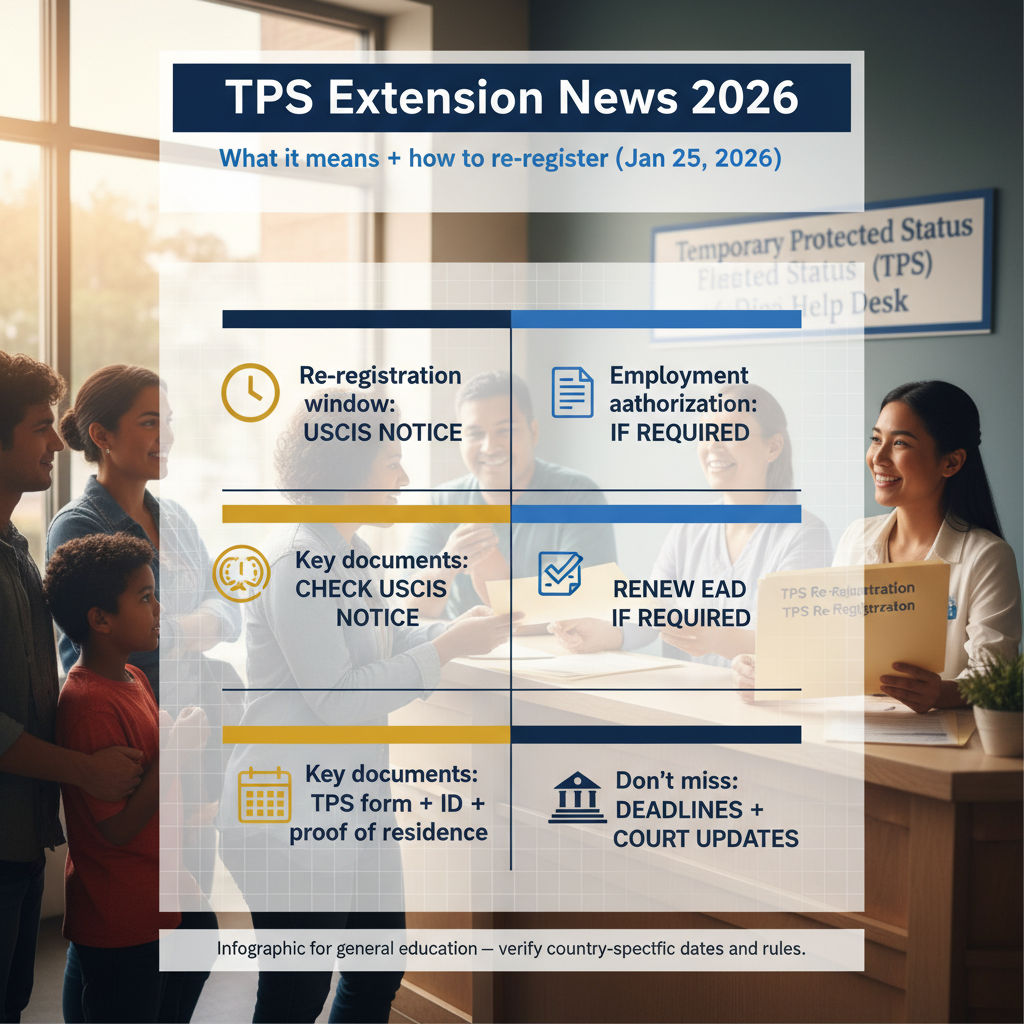
The TPS conversation is trending again due to ongoing updates and announcements around extensions, redesignations, court challenges, and re-registration windows for certain countries. The reporting that sparked this guide can be found here: TPS (Temporary Protected Status) Extension News (Legal News).
Important: This article is educational and not legal advice. TPS rules can change quickly through Federal Register notices, USCIS policy updates, and litigation. Always verify your country’s latest TPS notice and deadlines on the USCIS official website.
Need Help? Our Orlando immigration team is ready to assist. Call +1 786-791-3106 for a free consultation, or message us online. Se Habla Español.
What This News Means for Immigrants in Orlando and Across Florida
Why this news is showing up now
TPS is “in the news” in early 2026 for a few recurring reasons:
- Upcoming expiration dates for certain TPS designations, which trigger DHS decisions to extend, redesignate, or terminate.
- Re-registration periods that require current TPS holders to file on time to keep protection and work authorization.
- Automatic EAD extensions announced in Federal Register notices that temporarily extend certain Employment Authorization Documents (EADs) while renewals are pending.
- Litigation and policy shifts that can pause or change timelines for termination or renewal processes.
- Employer compliance questions in HR departments about I-9 reverification when TPS EADs are auto-extended.
Reminder: TPS is country-specific and time-limited. A “TPS extension” headline usually means DHS (Department of Homeland Security) has extended TPS for a particular country, and USCIS has published instructions on who must re-register and how to renew an EAD using Form I-765.
How it can affect Florida residents
Florida is home to large communities from TPS-designated countries. For Central Florida residents—especially along the I-4 corridor (Orlando, Kissimmee, Sanford, and surrounding Orange County areas)—TPS updates can affect:
- Work authorization (whether you can keep working legally and whether your employer must reverify).
- Driver’s license renewals (often tied to immigration status validity and EAD dates).
- Travel plans (TPS travel typically requires advance permission, usually through Form I-131).
- Immigration court strategy if you are in removal proceedings (EOIR) and TPS provides a basis to seek administrative closure or continuances in some cases.
- Family planning and long-term options like Adjustment of Status through family petitions, when eligible.
If your case is in Orlando or you’re filing an application that later requires an interview, the Orlando USCIS Field Office may be involved depending on the benefit type (for example, Form I-485 interviews). TPS itself is generally handled through USCIS filing and does not always require an interview, but related benefits sometimes do.
What TPS (Temporary Protected Status) Extension News Is (and Why It Matters)
A plain-English definition
Temporary Protected Status (TPS) is a humanitarian immigration program that allows eligible nationals of certain countries (and people without nationality who last lived in those countries) to remain in the United States temporarily when their home country faces extraordinary conditions—such as armed conflict, environmental disaster, or other temporary conditions that make return unsafe.
TPS can provide:
- Protection from removal (deportation) during the TPS period
- Eligibility to apply for work authorization (EAD) using Form I-765
- Potential eligibility to request travel authorization (advance permission) using Form I-131
A “TPS extension” means DHS is continuing TPS for a country for an additional period and publishing instructions. Many TPS holders must re-register during a specified window—often referred to as a 90-day window (exact dates vary by country notice).
Key terms you need to know
- Designation: When DHS first grants TPS to a country.
- Extension: DHS continues TPS for an already-designated country for a new period.
- Redesignation: DHS reopens TPS for additional people from that country who arrived later (new “continuous residence” dates apply).
- Re-registration: Current TPS holders filing to keep TPS during an extension.
- EAD: Employment Authorization Document (work permit), requested via Form I-765.
- Continuous residence / continuous physical presence: Requirements tied to specific dates in the Federal Register notice for your country.
- Inadmissibility: Legal grounds that can block immigration benefits (certain crimes, fraud, etc.).
- Removal proceedings: Immigration court cases under EOIR, see Executive Office for Immigration Review.
- Adjustment of Status: The process to apply for a green card from inside the U.S., typically using Form I-485 (if eligible through a family or employment category).
- Priority Date: A place-in-line date in many immigrant visa categories, especially family- and employment-based cases (commonly linked to Form I-130 or labor certification filings).
Warning: TPS does not automatically lead to permanent residence or citizenship. It is temporary. But TPS holders may have other pathways (family-based petitions, employment options, VAWA, U visas, asylum, etc.) depending on their circumstances.
Need Help? Our Orlando immigration team is ready to assist. Call +1 786-791-3106 for a free consultation, or message us online. Se Habla Español.
Current Immigration Law: The Foundation
TPS is authorized by federal statute and implemented through regulations and country-specific notices. The legal “backbone” includes:
- Immigration and Nationality Act (INA) § 244 (8 U.S.C. § 1254a): The statute creating TPS and setting eligibility, registration, and termination rules.
- 8 C.F.R. § 244: Regulations governing TPS applications, re-registration, and EADs.
- Federal Register notices: DHS publishes country-by-country TPS decisions (extensions, redesignations, terminations) and the required filing windows.
The most reliable starting point is the country-specific TPS page and instructions on the USCIS official website, and the filing resources on USCIS Forms.
Federal requirements
While each country has its own dates and instructions, TPS generally requires:
- Nationality (or last habitual residence) of a designated country
- Meeting the required continuous residence and continuous physical presence dates
- Timely registration or re-registration (often during a 90-day window)
- No disqualifying criminal convictions or other bars
- Filing the correct forms and fees (or fee waiver request where eligible)
Common USCIS forms in TPS cases include:
- Form I-821 (Application for Temporary Protected Status)
- Form I-765 (Application for Employment Authorization)
- Form I-131 (Application for Travel Document) for advance permission to travel
TPS holders may also have family-based options such as Form I-130 (Petition for Alien Relative) and, if eligible, Form I-485 for Adjustment of Status. These are separate from TPS and require their own eligibility analysis.
For estimated timelines, USCIS publishes ranges at USCIS Processing Times.
Florida-specific considerations
TPS is federal, but Florida residents often face state and local impacts:
- Driver’s licenses and state IDs: Florida credential validity may track your EAD or TPS validity dates. Plan renewals early.
- Employment verification: Florida employers must comply with federal I-9 rules; TPS auto-extensions can create confusion. Keep copies of Federal Register notices and USCIS guidance.
- Local enforcement and risk management: If you have any criminal contact, even minor charges, consult counsel before filing. A single case can affect TPS eligibility.
- Orlando-area filing realities: For Central Florida residents, mailing addresses and lockbox locations depend on the form and category; always follow the most current USCIS instructions.
Reminder: If your case is in Orlando and you’re also pursuing a green card, the Orlando USCIS Field Office could schedule biometrics, interviews, or request additional evidence (RFE) depending on the application type.
International travel planning should always be cross-checked with the U.S. Department of State (especially if you later pursue consular processing) and with USCIS travel document rules.
How to Re-Register for TPS and Renew Your Work Permit: A Complete Step-by-Step Guide
This step-by-step guide focuses on the most common “TPS extension news” scenario: your country’s TPS was extended and you must re-register and/or renew your EAD. Always confirm your country’s exact dates and instructions on the USCIS official website.
1) Confirm your country’s TPS extension notice and deadlines
Start by locating the most recent Federal Register notice or USCIS TPS page for your country. This will tell you:
- The new TPS validity period
- The re-registration filing window (often a 90-day window)
- Whether DHS announced an automatic EAD extension and which EAD category codes/dates qualify
- Whether this is an extension, redesignation, or both
Documents to gather for this step:
- Your current EAD (front and back)
- Your last TPS approval notice (if available)
- Any USCIS receipts for prior TPS filings
- A copy/link/PDF of the relevant USCIS TPS country page or Federal Register notice
2) Decide what you need to file: re-registration, EAD renewal, or both
Many TPS holders must re-register using Form I-821 and may also renew their work permit using Form I-765. Some people re-register but do not request an EAD (for example, if they do not need work authorization). Others must renew the EAD to keep working.
Important: An automatic EAD extension (if announced) is temporary. If you need ongoing work authorization beyond the auto-extension period, you typically still must file Form I-765.
Documents to gather for this step:
- Prior Form I-821 and Form I-765 receipts/approvals (copies)
- Passport biographic page (if available)
- Government-issued photo ID (state ID/driver’s license)
- Any name-change documents (marriage certificate, court order), if applicable
3) Prepare your TPS re-registration packet (Form I-821)
Re-registration typically focuses on confirming you remain eligible and have not become ineligible due to disqualifying factors (especially criminal issues). You must complete Form I-821 accurately and consistently with prior filings.
Documents to gather for this step:
- Completed and signed Form I-821
- Two passport-style photos (only if required by instructions; many filings rely on biometrics instead)
- Evidence of identity and nationality (passport, birth certificate with photo ID, national ID)
- Proof of prior TPS grant (approval notice) if available
- Certified court dispositions for any arrests/charges (even if dismissed)
- Translation certificates for any non-English documents
Warning: Do not guess about criminal history. If you have ever been arrested in Florida (Orange County or elsewhere), get certified dispositions before filing. Missing or incomplete court records can trigger an RFE or denial.
4) Prepare your work permit renewal (Form I-765) and fee strategy
To renew your EAD, file Form I-765 under the TPS category indicated by USCIS for your country (category codes matter). Filing fees and fee waiver eligibility depend on USCIS rules at the time of filing.
Documents to gather for this step:
- Completed and signed Form I-765
- Copy of your current EAD (front and back)
- Copy of your passport photo page or other ID
- Two passport-style photos (if required by form instructions)
- If requesting a fee waiver: evidence of income/means-tested benefits and a properly prepared fee waiver request (when eligible)
Cost considerations: TPS and EAD fees can change. Always confirm current fees and filing addresses on USCIS Forms.
5) File correctly (online or by mail), track receipts, and attend biometrics
USCIS may allow online filing for some forms and categories. Whether you file online or by mail, the goal is the same: submit a complete packet to the correct location and keep proof.
Documents to gather for this step:
- Complete copy of everything you submit (PDF or paper copy)
- Proof of delivery (USPS/UPS/FedEx tracking)
- Payment confirmation (money order, check, or online payment receipt)
- Biometrics appointment notice (when issued)
Biometrics (fingerprints/photo) are often required. Missing biometrics can delay or derail your case.
If your case is in Orlando, biometrics are typically handled at a USCIS Application Support Center (ASC) serving the Orlando/Central Florida region. Follow the appointment notice instructions carefully.
6) Respond to RFEs quickly and keep your employer informed (I-9 compliance)
USCIS may issue a Request for Evidence (RFE) if something is missing or unclear. Respond fully by the deadline.
Documents to gather for this step:
- RFE notice (all pages)
- Requested evidence (court dispositions, identity documents, proof of eligibility)
- A cover letter explaining what you are submitting
- Proof of timely mailing and a complete copy of the response
For working TPS holders, employer questions are common during extensions. Provide:
- Your EAD
- The USCIS guidance/Federal Register notice showing the automatic extension (if applicable)
- Your Form I-765 receipt notice (if you filed a renewal)
Reminder: Employers must follow federal rules, and confusion is common. If HR pushes back, speak with an attorney before you lose your job.
7) Plan next steps: travel, family options, and longer-term strategies
TPS is temporary. Many families use extension periods to stabilize and explore longer-term options, such as:
- Family petitions with Form I-130 (spouse, parent, child)
- Green card applications with Form I-485 through Adjustment of Status (when eligible)
- Consular processing and visa planning (check U.S. Department of State)
- Immigration court strategy if you are in proceedings (see Executive Office for Immigration Review)
Documents to gather for this step:
- Marriage certificate, divorce decrees, birth certificates (for family-based options)
- Proof of lawful entry and immigration history (I-94, passport stamps, prior notices)
- Any prior immigration filings (asylum, petitions, court documents)
- Proof of continuous presence (leases, bills, tax records) if needed for your country’s rules
Need Help? Our Orlando immigration team is ready to assist. Call +1 786-791-3106 for a free consultation, or message us online. Se Habla Español.
Practical Steps You Can Take Today
TPS extension headlines can create urgency—and confusion. Here is a practical checklist you can start today, even before you meet with a lawyer.
Actionable checklist
- 1) Verify your country’s TPS dates on the USCIS official website and confirm the re-registration window.
- 2) Set deadline reminders for the re-registration period and EAD expiration (calendar alerts at 60/30/14 days).
- 3) Order certified court dispositions for any arrest/charge in Orange County or anywhere else—do this early.
- 4) Make a “TPS folder” with copies of all receipts, approvals, EADs, passports, and prior filings.
- 5) Talk to your employer’s HR if your EAD is auto-extended; provide printed USCIS guidance and keep notes of conversations.
- 6) Avoid international travel unless you have proper travel authorization; file Form I-131 if appropriate and get legal advice first.
- 7) Screen for long-term options (family-based Form I-130, possible Adjustment of Status with Form I-485, or other relief).
Document preparation guidance
Use this document list as a starting point (your exact needs depend on your country’s TPS notice and your history):
- Current EAD and all prior EADs (front/back copies)
- Passport (all pages with stamps), national ID, birth certificate
- I-94 record (if you ever had one), visa pages, entry documents
- All USCIS receipt notices and approval notices
- Tax transcripts or W-2s (helpful for continuous presence and identity consistency)
- Proof of address in Central Florida (lease, utilities), especially if you moved along the I-4 corridor
- Certified dispositions for any criminal matters
Timeline expectations
TPS timelines vary by country and USCIS workload. Generally, expect:
- Receipts: often within 2–6 weeks after filing (sometimes faster).
- Biometrics: usually scheduled within 3–10 weeks, but it can vary.
- EAD renewal processing: can take several months; check USCIS Processing Times.
Important: If DHS announces an automatic EAD extension, it may provide temporary coverage while your renewal is pending. Keep copies of the relevant notice with your records.
How Imigrar Helps Immigrants in Orlando
At Imigrar, we help individuals and families understand TPS extension updates, meet re-registration deadlines, and protect work authorization—while also exploring long-term immigration strategies beyond TPS. Our team is based in Orlando, Florida and serves clients nationwide.
- We analyze your country’s most recent TPS notice and confirm your filing window and eligibility.
- We prepare and file TPS re-registration and EAD renewals (including Form I-821 and Form I-765).
- We help clients handle RFEs, biometrics issues, and documentation gaps.
- We advise on travel planning and risk management before filing Form I-131.
- We screen for permanent options (family petitions like Form I-130, and when eligible, Form I-485 for Adjustment of Status) and explain how Priority Date rules may affect timing.
Se Habla Español. We understand how stressful deadlines can be, especially when your job and your family’s stability depend on your status.
We offer a free consultation by phone to help you understand next steps and reduce risk—especially if you have prior immigration issues, missed deadlines, or any criminal history.
Frequently Asked Questions
Q: How do I know if I’m eligible to re-register for TPS after an extension?
A: Start with your country’s TPS extension notice on the USCIS official website. If you already have TPS, you typically must re-register during the listed 90-day window and confirm you still meet requirements (including no disqualifying crimes). If you have arrests, get certified dispositions before filing and speak with an attorney.
Q: Does a TPS extension change my immigration status or lead to a green card?
A: A TPS extension continues your temporary protection; it does not automatically give lawful permanent residence. However, some TPS holders may qualify for other options (for example, family-based Form I-130 and possibly Form I-485 for Adjustment of Status, depending on entry history and other factors). A legal screening is essential before filing anything beyond TPS.
Q: How long does it take to get a renewed TPS work permit (EAD)?
A: Processing times vary and can change month to month. Check current estimates at USCIS Processing Times. Many people receive receipts within weeks, but EAD adjudication can take several months. If DHS announces an automatic EAD extension for your country, you may be able to keep working during that temporary period.
Q: What documents do I need for TPS re-registration and EAD renewal?
A: Most applicants should prepare: copies of prior TPS approvals, the current EAD (front/back), identity/nationality documents (passport or national ID), proof of any name changes, and certified court dispositions for any arrests/charges. For EAD renewal, you’ll file Form I-765 and follow the latest instructions on USCIS Forms.
Q: How much does it cost to re-register for TPS and renew an EAD?
A: Costs depend on the specific filing (TPS re-registration, EAD renewal, biometrics) and USCIS fee rules at the time you file. Always verify the current fee schedule and filing instructions through USCIS Forms. Some applicants may qualify to request a fee waiver in limited situations, but eligibility is fact-specific.
Q: What happens if my TPS re-registration or EAD renewal is denied?
A: A denial can put your work authorization and protection from removal at risk. Next steps depend on why USCIS denied the case—missing evidence, late filing, ineligibility, or criminal issues. If you are placed in removal proceedings, your case may be handled by EOIR (see Executive Office for Immigration Review). If you receive a denial or Notice to Appear, contact an attorney immediately to evaluate motions, re-filing options, and other relief.
Q: Can I travel internationally while on TPS during an extension?
A: Do not travel without proper authorization. TPS holders generally must request travel permission (often via Form I-131) before leaving. Traveling without authorization can lead to serious immigration consequences. If you’re considering consular processing later, also review guidance from the U.S. Department of State and get legal advice first.
Common Mistakes (and How to Avoid Them)
Mistake #1: Missing the re-registration deadline
TPS re-registration deadlines are strict. Missing the window can lead to loss of TPS benefits. Avoid this by checking your country’s notice early, setting reminders, and filing well before the end of the 90-day window.
Mistake #2: Filing the wrong EAD category or relying only on an automatic extension
Category codes on Form I-765 matter. Also, automatic EAD extensions are temporary and country-specific. Avoid this by following USCIS instructions exactly and keeping copies of the Federal Register notice with your records.
Mistake #3: Ignoring arrests or submitting incomplete court records
Even dismissed cases can require documentation. Submitting partial records can cause delays or denials. If you have any Orange County arrest history (or anywhere else), obtain certified dispositions and consult counsel before filing.
Additional official resources (bookmark these)
- USCIS official website (TPS country pages, alerts, policy updates)
- USCIS Forms (download Form I-821, Form I-765, Form I-131, Form I-130, Form I-485)
- USCIS Processing Times (estimated timelines)
- U.S. Department of State (visa and consular information)
- Executive Office for Immigration Review (immigration court information)

Closing: Protect your TPS, your job, and your family’s stability
TPS extension news can be a relief—but only if you act on it correctly. The safest approach is to confirm your country’s dates, file within the required window, keep your documentation organized, and address any risk factors (like criminal history or prior immigration issues) before submitting forms.
For Central Florida residents along the I-4 corridor, a missed deadline can quickly become a work and driver’s license crisis. If your case is in Orlando or you need help coordinating TPS with a family-based path like Form I-130 and potentially Form I-485 for Adjustment of Status, legal guidance can make the difference between a smooth renewal and a serious setback.
Need Help? Our Orlando immigration team is ready to assist. Call +1 786-791-3106 for a free consultation, or message us online. Se Habla Español.
Keep Families Together — Imigrar (Orlando, Florida; serving clients nationwide). Se Habla Español.


