


The immigration landscape is constantly shifting, and staying informed is paramount for individuals and families navigating the complexities of U.S. immigration law. At Imigrar, your trusted immigration law firm in Orlando, Florida, we are dedicated to keeping you updated on critical developments that could impact your life and your family's future.
Need Help? Our Orlando immigration team is ready to assist. Call +1 786-791-3106 for a free consultation, or message us online. Se Habla Español.
The reporting that sparked this guide
Recent TPS (Temporary Protected Status) Extension News (Legal News) has brought the critical issue of Temporary Protected Status back into the spotlight. These updates, often announced through official government channels and reported by legal news outlets, can have profound implications for hundreds of thousands of individuals from designated countries living in the United States.
What This News Means for Immigrants in Orlando and Across Florida
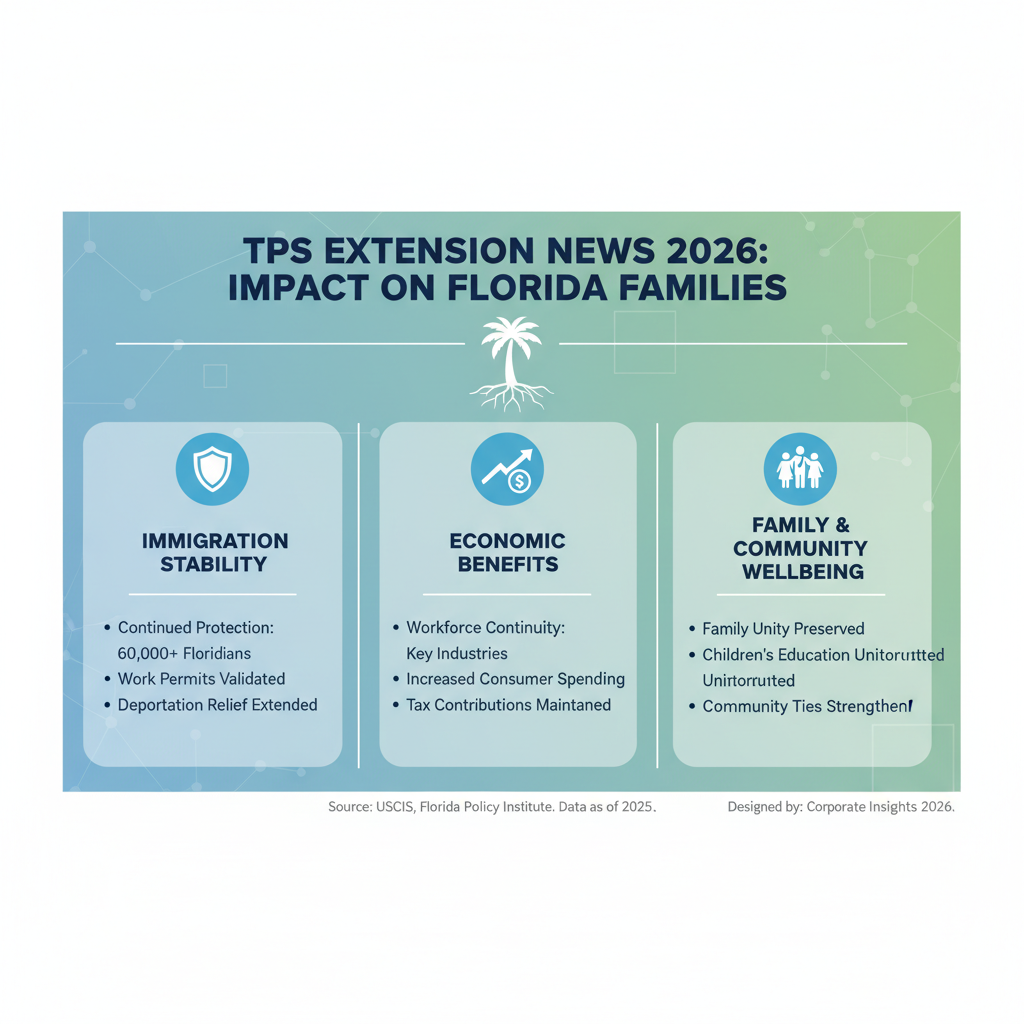
For individuals and families residing in Florida, especially in our vibrant and diverse community here in Orlando, news of TPS extensions is not just a headline – it's a lifeline. Florida is home to a significant population of immigrants from countries often designated for TPS, meaning these announcements directly affect their ability to live, work, and contribute to our society without fear of deportation.
Why this news is showing up now
Temporary Protected Status is, by its nature, temporary. The U.S. Secretary of Homeland Security reviews country designations periodically, typically 60 days before the current designation is set to expire. This review considers the current conditions in the designated country – conditions such as ongoing armed conflict, environmental disaster, or other extraordinary and temporary conditions that prevent nationals from safely returning. Based on these assessments, the Secretary may decide to extend, redesignate, or terminate TPS for a specific country.
The news you're seeing now, as of May 3, 2026, likely stems from these periodic reviews. Many TPS designations have a lifespan, and as these deadlines approach, the Department of Homeland Security (DHS) makes decisions that impact current beneficiaries. When an extension is announced, it means that the humanitarian or safety conditions in the designated country have not sufficiently improved to allow for safe return, thus warranting continued protection for its nationals in the U.S.
For beneficiaries, this news means a critical opportunity to maintain their lawful status, continue working legally, and remain with their families in the U.S. without interruption. It also triggers a specific re-registration period, which is essential to adhere to.
How it can affect Florida residents
Florida, with its large and diverse immigrant communities, particularly in areas like Orlando, Miami, and Tampa, feels the impact of TPS decisions acutely. Many TPS beneficiaries from countries such as Haiti, Nicaragua, El Salvador, Honduras, and Venezuela (among others, depending on current designations) have established deep roots in the Sunshine State. An extension of TPS means:
- Continued Stability: Families can continue to live without the immediate threat of deportation, providing a crucial sense of security for children, spouses, and other relatives.
- Work Authorization: Beneficiaries can renew their Employment Authorization Documents (EADs), allowing them to continue working legally and support their families and contribute to Florida's economy. This is vital for many sectors, including hospitality, agriculture, and construction, which are prominent in Central Florida.
- Eligibility for Travel: While not guaranteed, an extension often allows beneficiaries to apply for a travel document (Form I-131) to visit family abroad under specific circumstances, though restrictions apply.
- Community Integration: TPS holders are integral parts of our communities. An extension reinforces their ability to pay taxes, own homes, start businesses, and participate fully in civic life in places like Orange County and along the I-4 corridor.
- Access to Services: Continued TPS status can help maintain access to certain state and local services that might be tied to lawful presence.
Important: While TPS provides protection from removal and work authorization, it is not a path to permanent residency or U.S. citizenship on its own. However, it can often serve as a protective status while other immigration avenues are pursued. Understanding these nuances is crucial, and Imigrar is here to guide you through every step.
Confused about TPS extensions? Don't risk your status. Contact Imigrar for personalized advice. Call +1 786-791-3106 for a free consultation. Se Habla Español.
What Temporary Protected Status (TPS) Is (and Why It Matters)
Temporary Protected Status, or TPS, is a humanitarian immigration benefit provided by the United States government. It offers temporary immigration status to eligible nationals of certain countries who are already present in the U.S. and cannot safely return to their home countries due to specific adverse conditions.
A plain-English definition
Imagine your home country is experiencing a severe crisis – perhaps a devastating earthquake, a widespread epidemic, or a civil war. If you are already in the U.S. and it's deemed unsafe for you to return, the U.S. government might grant you Temporary Protected Status. This means you get a temporary legal status to stay in the U.S., you can apply for a work permit (Employment Authorization Document, or EAD), and you are protected from deportation for a set period. It's a temporary haven until conditions in your home country improve enough for you to return safely.
Key terms you need to know
- Designated Country: A country whose nationals are eligible for TPS due to specific, temporary, and extraordinary conditions. The Secretary of Homeland Security makes this designation.
- Eligibility Criteria: The specific requirements an individual must meet to be granted TPS, including continuous physical presence in the U.S. since a certain date, continuous residence, and passing security checks.
- Registration/Re-registration Period: The specific timeframe during which eligible individuals must apply for (initial registration) or renew (re-registration) their TPS. Missing this deadline can have severe consequences.
- Employment Authorization Document (EAD): Also known as a work permit, this document allows TPS beneficiaries to legally work in the U.S.
- Travel Authorization (Advance Parole): A document that allows certain non-citizens, including some TPS beneficiaries, to travel abroad and return to the U.S. without jeopardizing their immigration status. This is applied for using Form I-131.
- Federal Register Notice: The official daily publication of the U.S. government that announces rules, proposed rules, and notices, including TPS designations, extensions, and re-registration periods. This is the primary source of official information.
- Continuous Physical Presence (CPP): The requirement that an applicant has been physically present in the U.S. since a specific date set for their country's TPS designation.
- Continuous Residence (CR): The requirement that an applicant has maintained residence in the U.S. since a specific date set for their country's TPS designation. Brief, casual, and innocent departures do not break CR.
Understanding these terms is vital for anyone considering or currently holding TPS. The nuances can be complex, and expert legal guidance is often necessary to navigate them successfully.
Current Immigration Law: The Foundation of TPS
The authority for Temporary Protected Status is rooted in U.S. federal immigration law, specifically the Immigration and Nationality Act (INA). Section 244 of the INA (8 U.S.C. § 1254a) empowers the Secretary of Homeland Security to grant TPS. This section outlines the conditions under which a country may be designated for TPS, the eligibility requirements for individuals, and the procedures for application and re-registration.
The law specifies three primary reasons for a country's designation:
- Ongoing Armed Conflict: Making return unsafe due to war or civil strife.
- Environmental Disaster: Such as an earthquake, hurricane, or epidemic, resulting in a substantial, temporary disruption of living conditions.
- Extraordinary and Temporary Conditions: Other exceptional circumstances that prevent nationals from safely returning.
Each designation, extension, or termination is published in the Federal Register, providing specific dates for eligibility, re-registration periods, and other critical details. This is why always referring to the latest official announcements from USCIS official website is paramount.
Federal requirements for TPS Eligibility
To be eligible for TPS, individuals must meet several federal requirements:
- Be a national of a country designated for TPS, or a person without nationality who last habitually resided in that country.
- File Form I-821, Application for Temporary Protected Status, during the initial registration or re-registration period.
- Have been continuously physically present (CPP) in the U.S. since the effective date of the most recent designation or redesignation for their country.
- Have been continuously residing (CR) in the U.S. since the date specified for their country.
- Meet specific admissibility requirements (e.g., pass security background checks, not have certain criminal convictions).
- Not be inadmissible under certain provisions of the INA, including certain criminal and national security grounds.
- Not have been convicted of any felony or two or more misdemeanors committed in the U.S.
- Not be subject to any of the mandatory bars to asylum.
Warning: Even minor legal infractions can impact eligibility. It is crucial to disclose all legal history to your attorney.
Florida-specific considerations
While TPS is a federal program, its implementation and impact resonate uniquely in states like Florida. For Central Florida residents, the Orlando USCIS Field Office plays a crucial role in processing applications, conducting biometrics appointments, and handling interviews when necessary. This local presence means that understanding the specific operational procedures and potential backlogs at the Orlando office can be beneficial.
Florida's large immigrant population also means that there are extensive community resources and organizations, in addition to law firms like Imigrar, that assist TPS beneficiaries. However, it also means a higher potential for scams or misinformation. Always verify information with official sources or trusted legal counsel. The high concentration of immigrant communities from designated TPS countries in Orlando and surrounding areas like Kissimmee and Sanford makes staying informed about extensions particularly urgent for thousands of families in our region.
When filing, applicants in Florida will use the same federal forms as applicants nationwide:
- Form I-821, Application for Temporary Protected Status
- Form I-765, Application for Employment Authorization (if you want to work legally)
- Form I-131, Application for Travel Document (if you plan to travel outside the U.S.)
For detailed instructions and to download the latest versions of these forms, always visit the USCIS Forms page.
Don't navigate TPS re-registration alone. Imigrar's Orlando team provides expert guidance. Call +1 786-791-3106 for a free consultation. Se Habla Español.
How to Re-Register for TPS Following an Extension: A Complete Step-by-Step Guide
When an extension for your country's TPS designation is announced, the critical next step is to re-register within the specified window. Missing this deadline can lead to the loss of your TPS status. This guide outlines the essential steps to ensure a successful re-registration process.
1) Determine Your Eligibility and the Official Re-registration Period
The first and most crucial step is to confirm that your country's TPS designation has indeed been extended and to identify the precise re-registration period. This information is always published in a Federal Register Notice and announced by USCIS.
- Check the Official Announcement: Look for the specific Federal Register Notice for your country. This notice will state the extension period, the new validity dates for EADs, and the exact start and end dates of the re-registration window.
- Verify Your Personal Eligibility: Ensure you continue to meet all TPS eligibility requirements. This includes maintaining continuous physical presence and continuous residence in the U.S. since the original designation date, and not having any new disqualifying criminal convictions or other inadmissibility issues.
- Note the Deadline: The re-registration period is typically 60 days. Mark this deadline clearly on your calendar. Filing outside this window can result in denial.
2) Gather All Required Documents
Thorough documentation is key to a successful re-registration. While you may have submitted many of these before, USCIS requires up-to-date information and may request proof of continued eligibility.
-
Proof of Identity and Nationality:
- Copy of your passport from the designated country (if available)
- Copy of your birth certificate with photo identification
- Any national identity document from your country of origin
-
Proof of Date of Entry and Continuous Physical Presence (CPP):
- Copy of your Form I-94, Arrival/Departure Record
- School records (transcripts, diplomas)
- Employment records (pay stubs, W-2s, employment letters)
- Medical records (hospital bills, doctor's notes)
- Lease agreements, utility bills, mortgage statements
- Bank statements
- Affidavits from individuals who can attest to your presence
-
Proof of Continuous Residence (CR):
- Similar documents to CPP, demonstrating your ongoing residence in the U.S.
- Copies of previous TPS approval notices (Form I-797, Approval Notice)
- Copies of previous EADs
-
Criminal History Records:
- Important: Provide certified copies of all arrest records, court dispositions, and police clearances, even if charges were dismissed or expunged. Failure to disclose can lead to denial and accusations of fraud.
- If you have any criminal history, consult with an attorney immediately.
-
Previous TPS Documentation:
- Copy of your most recent Form I-797, Notice of Action, approving your TPS
- Copy of your most recent Employment Authorization Document (EAD)
3) Complete and File Forms I-821, I-765, and I-131 (if applicable)
These are the primary forms you will need for re-registration. Always use the latest version of the forms available on the USCIS Forms page.
-
Form I-821, Application for Temporary Protected Status:
- This is the core application for TPS re-registration.
- Fill it out completely and accurately. Pay close attention to all questions, especially those related to criminal history and immigration violations.
- There is currently no fee for filing Form I-821 for re-registration.
-
Form I-765, Application for Employment Authorization:
- If you wish to continue working legally, you must file this form to renew your EAD.
- There is a filing fee for Form I-765. Check the current fee schedule on the USCIS website.
- You may be eligible for a fee waiver (Form I-912, Request for Fee Waiver) if you meet certain poverty guidelines.
-
Form I-131, Application for Travel Document (Advance Parole):
- If you need to travel outside the U.S. and return while your TPS is active, you must apply for Advance Parole.
- There is a filing fee for Form I-131. This fee can also be waived if you qualify for a fee waiver for Form I-765.
- Warning: Traveling internationally without an approved Advance Parole document can lead to denial of re-entry and loss of your TPS status. Consult an attorney before any international travel.
-
Prepare Your Filing Package:
- Organize your forms and supporting documents neatly.
- Make a complete copy of your entire application package for your records. This is a crucial step!
- Mail your application to the correct USCIS lockbox facility as specified in the Federal Register Notice or on the USCIS website for your country's TPS designation. Use certified mail with return receipt requested for proof of mailing.
4) Attend Your Biometrics Appointment
After USCIS receives your application, you will receive a Form I-797C, Notice of Action, confirming receipt. Shortly thereafter, you will receive an appointment notice for biometrics (fingerprints, photograph, and signature) at an Application Support Center (ASC).
- Don't Miss It: Attend your appointment as scheduled. If you cannot attend, follow the instructions on the notice to reschedule, but be aware that rescheduling can delay your application.
- Bring Required Documents: Bring your appointment notice, a valid photo ID, and any other documents specified in the notice.
- For Orlando Residents: Your biometrics appointment will likely be at the local ASC serving the Orlando area.
5) Monitor Your Application Status
Once your biometrics are taken, USCIS will use the information for background checks. You can track the progress of your application online.
- Use Your Receipt Number: The 13-character receipt number on your Form I-797C can be used to check your case status on the USCIS Processing Times and case status website.
- Respond to RFEs: If USCIS needs more information, they will send a Request for Evidence (RFE). Respond promptly and thoroughly by the deadline provided. Failure to do so can lead to denial.
- Update Your Address: If you move, you must notify USCIS of your new address within 10 days using Form AR-11, Alien's Change of Address Card, and update any pending applications.
6) Receive Decision and New EAD
Once USCIS makes a decision, you will receive a written notice.
- Approval Notice: If approved, you will receive a new Form I-797, Approval Notice, and a new EAD with the extended validity period.
- Denied Application: If your application is denied, the notice will explain the reasons. You may have options to appeal or refile, depending on the reason for denial. It is critical to consult an immigration attorney immediately if your application is denied.
Need help with your TPS re-registration? Imigrar has a proven track record of helping families in Orlando and across Florida. Call +1 786-791-3106 for a free consultation. Se Habla Español.
Practical Steps You Can Take Today
Preparing for TPS re-registration doesn't have to wait until the last minute. By taking proactive steps, you can ensure a smoother and less stressful process, especially for families in Orlando and the wider Central Florida region.
Actionable Checklist:
- Verify Your Country's Status: Regularly check official USCIS announcements and the Federal Register for updates on your country's TPS designation. Subscribe to email alerts from USCIS.
- Gather and Organize Documents: Start compiling all necessary documents now. This includes proof of identity, nationality, continuous residence, continuous physical presence, and any prior immigration documents. Create a dedicated folder, digital and physical, for your TPS documents.
- Review Your Criminal History: Be honest with yourself and your attorney about any arrests or convictions, no matter how minor or old. Obtain certified copies of all court dispositions.
- Update Your Address with USCIS: If you've moved since your last application, file Form AR-11 online or by mail and update your address on any pending applications. This ensures you receive all critical notices.
- Consult with an Immigration Attorney: This is arguably the most important step. An experienced attorney can review your eligibility, help you prepare your application, identify potential issues, and ensure you meet all deadlines. Imigrar offers free consultations to help you understand your options.
- Budget for Fees: While Form I-821 for re-registration has no fee, Form I-765 and Form I-131 do. Plan for these costs or prepare to apply for a fee waiver if eligible.
- Keep Copies of Everything: Before mailing your application, make a complete copy of every single document and form. This safeguard is invaluable if anything goes missing or if USCIS requests duplicates.
Document Preparation Guidance:
- Originals vs. Copies: Generally, USCIS requests copies of documents unless specifically stated otherwise. Do NOT send original documents unless requested. However, keep your originals safe and accessible.
- Translations: Any document not in English must be accompanied by a complete and accurate English translation, certified by a competent translator. The certification must state that the translator is fluent in both English and the foreign language, and that the translation is accurate.
- Organize Chronologically: When submitting multiple documents for continuous residence/physical presence, organize them chronologically to make it easy for USCIS to review.
- Highlight Key Information: For lengthy documents, you can lightly highlight the relevant dates or names to assist the adjudicator.
Timeline Expectations:
While specific timelines vary, here's a general expectation:
- Re-registration Window: Typically a 60-day window from the date of the Federal Register Notice. Missing this is often fatal to your application.
- Receipt Notice (I-797C): Expect to receive this within 2-4 weeks after filing.
- Biometrics Appointment Notice: Typically sent within 3-8 weeks after filing. The appointment itself is usually scheduled a few weeks after the notice.
- EAD Processing: Processing times for Form I-765 can vary significantly. Check the USCIS Processing Times website for the most current estimates for your service center. It can range from a few months to over a year. USCIS often provides automatic extensions for EADs for TPS beneficiaries, so check the Federal Register Notice for details on this.
- TPS Application Decision: The decision on Form I-821 can take several months, often aligning with the EAD processing.
Reminder: These are estimates. Actual processing times can fluctuate based on USCIS workload, policy changes, and the completeness of your application. For those in Orlando, the processing times at the Texas Service Center (which handles many TPS applications) will be relevant.

How Imigrar Helps Immigrants in Orlando and Beyond
Navigating the complexities of immigration law, especially with critical deadlines and ever-changing policies like TPS extensions, can be overwhelming. At Imigrar, we understand the stakes involved for you and your family. Our mission, "Keep Families Together


