


The landscape of U.S. immigration law is constantly evolving, with policy changes and updates frequently impacting the lives of thousands of individuals and families. For those holding or seeking Temporary Protected Status (TPS), staying informed is not just beneficial—it's absolutely critical. Recent news regarding TPS extensions for designated countries has once again brought this vital humanitarian program into the spotlight, prompting many to ask: "What does this mean for me?"
At Imigrar, an immigration law firm based in Orlando, Florida, we understand the anxieties and uncertainties that come with these announcements. Our mission is to "Keep Families Together" by providing clear, accurate, and actionable legal guidance to immigrants and their loved ones across Florida and nationwide. This comprehensive guide aims to demystify the latest TPS extension news, offering a detailed roadmap for understanding your options and securing your status.
Feeling overwhelmed by TPS updates? Our Orlando immigration team is ready to assist. Call +1 786-791-3106 for a free consultation, or message us online. Se Habla Español.
The reporting that sparked this guide
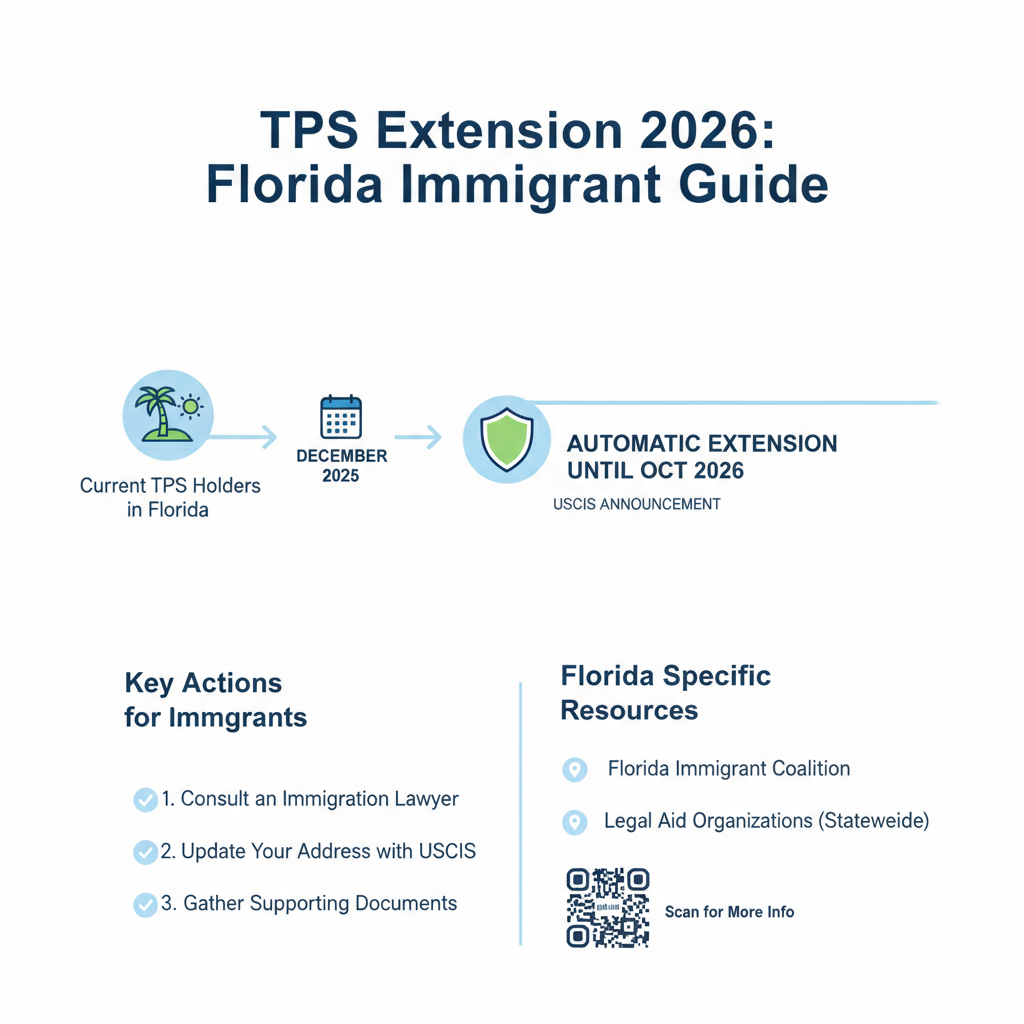
Recent TPS (Temporary Protected Status) Extension News (Legal News) has highlighted the ongoing reviews and decisions by the Department of Homeland Security (DHS) concerning various countries designated for TPS. These reports, often found in legal news outlets and official government announcements, signal critical periods for re-registration or initial registration for eligible individuals. For communities built by immigrants, these announcements are not abstract legal concepts; they are the bedrock of stability, determining whether families can remain united, work legally, and live without the constant fear of deportation. Understanding the nuances of these extensions is paramount for anyone whose future hinges on the continuation of their TPS status.
What This News Means for Immigrants in Orlando and Across Florida
For hundreds of thousands of immigrants living in the United States, particularly those in states with large immigrant populations like Florida, news of TPS extensions is a lifeline. Florida is home to vibrant immigrant communities from across the globe, many of whom rely on TPS for their ability to live and work legally in the U.S. This news means continued protection, renewed hope, and the opportunity to plan for a more stable future.
Why this news is showing up now
The Department of Homeland Security (DHS) periodically reviews the conditions in countries currently designated for TPS. These reviews are mandated by the Immigration and Nationality Act (INA) Section 244, which requires DHS to assess whether the extraordinary and temporary conditions that led to the initial designation (such as ongoing armed conflict, environmental disaster, or other extraordinary conditions) persist. If these conditions continue to meet the statutory requirements, DHS may decide to extend the TPS designation for an additional period, typically 6, 12, or 18 months. This process involves careful analysis, consultations with other government agencies, and often, public input.
The current news cycle is likely reflecting either a recent announcement of an extension or redesignation for one or more countries, or an upcoming deadline for such a decision. These announcements are crucial because they trigger specific re-registration periods, during which current TPS beneficiaries must apply to extend their status and, often, their Employment Authorization Documents (EADs). Missing these deadlines can have severe consequences, including loss of status and potential removal proceedings. The timing of these announcements is critical, as they provide a limited window for action.
How it can affect Florida residents
Florida, with its diverse population and significant immigrant communities, is profoundly impacted by TPS decisions. Cities like Orlando, Miami, Tampa, and others along the I-4 corridor are home to many individuals from TPS-designated countries. For residents in Central Florida, particularly those in Orange County and surrounding areas, an extension means continued peace of mind, the ability to maintain employment, and protection from deportation. It allows families to remain together, children to continue their education without disruption, and communities to thrive.
Conversely, if a country's TPS designation were to be terminated, it would create immense uncertainty and hardship for thousands of Florida residents, potentially leading to a loss of work authorization and facing the prospect of returning to unsafe conditions in their home countries. Therefore, these extension announcements are met with a mixture of relief and vigilance by immigrant communities and their advocates across the state. They underscore the importance of prompt action and expert legal advice to ensure compliance with all requirements. The Orlando USCIS Field Office and other local resources often see an increase in activity during these re-registration periods, emphasizing the local impact of these federal decisions.
What Temporary Protected Status (TPS) Is (and Why It Matters)
Temporary Protected Status (TPS) is a humanitarian immigration benefit granted by the United States government to eligible nationals of certain countries who are already in the U.S. It is a temporary status that offers protection from removal (deportation) and provides work authorization. TPS is a critical program that allows individuals to live and work legally in the U.S. when their home country is deemed unsafe for return due to specific, extraordinary circumstances.
A plain-English definition
Imagine your home country suddenly becomes a very dangerous place to live – perhaps due to a massive natural disaster like an earthquake or hurricane, an ongoing war, or other severe, temporary conditions that prevent people from returning safely. The U.S. government can decide to grant "Temporary Protected Status" to citizens of that country who are already in the United States. This means they can stay here legally for a specific period, typically 6 to 18 months, and they can get a permit to work. It's not a permanent solution, and it doesn't directly lead to a Green Card, but it offers a vital temporary safe haven and stability during a crisis.
Key terms you need to know
Navigating TPS requires understanding specific terminology. Here are some key terms:
- Designated Country: A foreign country whose conditions meet the statutory criteria for TPS, as determined by the Secretary of Homeland Security. Eligibility for TPS is tied directly to your nationality from one of these countries.
- Initial Registration Period: The specific timeframe during which eligible nationals of a newly designated country can apply for TPS for the first time.
- Re-registration Period: The specific timeframe during which current TPS beneficiaries must apply to extend their TPS status and Employment Authorization Documents (EADs). Missing this period can lead to loss of status.
- Employment Authorization Document (EAD): Also known as a work permit, this document (Form I-766) allows TPS beneficiaries to legally work in the United States.
- Travel Authorization (Advance Parole): A document (Form I-512) granted through Form I-131 that allows a TPS beneficiary to travel outside the U.S. and return legally without jeopardizing their TPS status. Traveling without Advance Parole can be risky and may lead to denial of re-entry.
- Department of Homeland Security (DHS): The U.S. government agency responsible for making decisions about TPS designations, extensions, and terminations.
- U.S. Citizenship and Immigration Services (USCIS): An agency within DHS that processes TPS applications, EAD requests, and other immigration benefits. You will interact with USCIS for your applications.
- Continuous Physical Presence (CPP): A requirement that a TPS applicant must have been physically present in the U.S. since a specific date set for their country's designation. Brief, casual, and innocent departures do not necessarily break CPP.
- Continuous Residence (CR): A requirement that a TPS applicant must have continuously resided in the U.S. since a specific date set for their country's designation.
Understanding these terms is fundamental to successfully applying for or re-registering for TPS. This temporary protection is immensely important as it allows individuals to escape dangerous situations, contribute to the U.S. economy, and provide for their families without the constant threat of deportation. It reflects a humanitarian commitment to protecting vulnerable populations.
Need expert guidance on TPS eligibility and re-registration? Contact Imigrar in Orlando for a free consultation. Call +1 786-791-3106 today! Se Habla Español.
Current Immigration Law: The Foundation
Temporary Protected Status is authorized under Section 244 of the Immigration and Nationality Act (INA), codified at 8 U.S.C. § 1254a. This statute grants the Secretary of Homeland Security the authority to designate a foreign country for TPS if certain conditions are met. These conditions fall into three main categories:
- Ongoing Armed Conflict: If there is an ongoing armed conflict within the state, and requiring nationals of that state to return would pose a serious threat to their personal safety.
- Environmental Disaster: If there has been an environmental disaster (such as earthquake, flood, hurricane, etc.) resulting in a substantial, but temporary, disruption of living conditions in the area, and the foreign state is unable, temporarily, to handle the return of its nationals.
- Extraordinary and Temporary Conditions: If there are other extraordinary and temporary conditions in the foreign state that prevent nationals from returning safely, and it is not contrary to the national interest of the United States to permit them to remain.
Once a country is designated, DHS publishes a notice in the Federal Register, outlining the effective dates, eligibility requirements, and application procedures. Subsequent extensions or redesignations also follow this formal notification process.
Federal requirements
To be eligible for TPS, an individual must meet several federal requirements, regardless of their country of origin:
- Be a national of a country designated for TPS, or a person without nationality who last habitually resided in that designated country.
- Have been continuously physically present (CPP) in the U.S. since the effective date of the most recent designation for their country.
- Have been continuously residing (CR) in the U.S. since the effective date of the most recent designation for their country.
- Properly apply for TPS during the initial registration period or any subsequent re-registration period.
- Not be inadmissible under certain grounds, including certain criminal offenses (felonies or two or more misdemeanors), persecution of others, or national security grounds.
- Not have failed to register for TPS without good cause during any previous registration period.
It's crucial to understand that even minor criminal offenses can impact eligibility. Consulting with an attorney is vital to assess any potential bars to TPS.
Florida-specific considerations
While TPS is a federal immigration benefit, its impact and the application process have practical implications for Florida residents. There are no Florida-specific laws that directly affect TPS eligibility, as it is governed by federal statute. However, the sheer volume of TPS beneficiaries in Florida, especially in metropolitan areas like Orlando, means that local resources, legal aid organizations, and law firms like Imigrar are often on the front lines of assisting applicants. The Orlando USCIS Field Office, located at 6680 Corporate Centre Blvd, Orlando, FL 32822, serves many Central Florida residents for biometrics appointments and interviews, if required. Understanding the local infrastructure and having access to local legal counsel can streamline the process for those in Orange County and surrounding regions. Ensuring all your documents are in order and knowing where to file them (typically via mail to a USCIS Lockbox Facility, not the local field office for initial filing) is critical.
The primary forms involved in a TPS application or re-registration are:
- Form I-821, Application for Temporary Protected Status: This is the main application form for TPS.
- Form I-765, Application for Employment Authorization: If you wish to obtain or renew an Employment Authorization Document (EAD), you must file this form.
- Form I-912, Request for Fee Waiver: If you cannot afford the filing fees, you may be eligible to request a fee waiver.
You can find these forms and detailed instructions on the USCIS Forms page. Always refer to the USCIS official website for the most current versions of forms and instructions, as they are updated periodically.
How to Re-register for TPS: A Complete Step-by-Step Guide
Given the recent news of TPS extensions, re-registration is the most common action required for current beneficiaries. This process is time-sensitive and requires careful attention to detail. Here’s a comprehensive step-by-step guide:
1) Confirm Your Country's TPS Designation and Re-registration Period
The very first step is to verify that your country’s TPS designation has indeed been extended and to identify the specific re-registration window. This information is published in the Federal Register and prominently announced on the USCIS website. Do not rely solely on news reports; always cross-reference with official government sources.
- Action: Visit USCIS official website and search for "Temporary Protected Status" or your specific country's name to find the latest Federal Register notice.
- Key Information to Find:
- Start and end dates of the re-registration period.
- The specific "Continuous Physical Presence" (CPP) and "Continuous Residence" (CR) dates, if a redesignation occurred.
- Any automatic extension notices for EADs and Forms I-797 (Notice of Action).
- Important: The re-registration window is typically a 60-day window. Missing this deadline without good cause can result in the loss of your TPS status.
2) Gather All Necessary Documents
Thorough documentation is critical for a successful re-registration. Begin collecting these documents as soon as the re-registration period is announced:
- Proof of Identity and Nationality:
- Copy of your passport from the designated country (if available).
- Copy of your birth certificate with photo identification.
- Copy of any national identity document from your country of origin with your photograph and/or fingerprint.
- Proof of Continuous Residence (CR) in the U.S.: Documents showing you have lived in the U.S. since the specified date. Examples include:
- Leases or rent receipts.
- Utility bills (electricity, water, gas) in your name.
- School records (transcripts, report cards) for yourself or your children.
- Employment records (pay stubs, W-2 forms, employment letters).
- Bank statements.
- Medical records or hospital bills.
- Affidavits from friends, family, or employers attesting to your residence.
- Proof of Continuous Physical Presence (CPP) in the U.S.: Documents showing you have been physically present in the U.S. since the specified date. These often overlap with CR documents but can also include:
- Travel records (though travel outside the U.S. generally breaks CPP unless authorized by Advance Parole).
- Receipts, dated photos, or any other dated evidence placing you in the U.S.
- Previous TPS Documentation:
- Copy of your most recent Form I-797, Notice of Action, approving your previous TPS application.
- Copy of your most recent Employment Authorization Document (EAD) (Form I-766).
- Passport-Style Photographs: Two identical, unmounted, color passport-style photos taken within 30 days of filing.
- Marriage Certificates/Birth Certificates: If you've changed your name or are applying for dependents.
- Records of Any Criminal History: Even minor arrests or citations must be disclosed and documented.
Organize these documents neatly, making copies of everything for your records. Do not send original documents unless specifically requested by USCIS.
3) Complete and File Form I-821 and Form I-765
This is where you formally apply for the extension of your status and work authorization.
- Form I-821, Application for Temporary Protected Status:
- Fill out every section completely and accurately. If a section does not apply, write "N/A."
- Review your answers carefully for any errors or inconsistencies.
- Sign the form. An unsigned form will be rejected.
- Form I-765, Application for Employment Authorization:
- If you want to continue working legally, you must file this form along with Form I-821.
- Ensure your eligibility category (usually (c)(19) for TPS) is correctly marked.
- Sign the form.
- Warning: Any misrepresentation or omission of material facts on these forms can lead to severe immigration consequences, including denial of your application and potential fraud charges.
4) Pay the Required Fees or Request a Fee Waiver
Filing fees are subject to change, so always check the latest USCIS fee schedule on their website. As of our current date (2026-09-05), the typical fees for re-registration include:
- Form I-821 Filing Fee: Often $0 for re-registrants, but always verify.
- Form I-765 Filing Fee: Required if you are requesting an EAD.
- Biometrics Services Fee: Required for all applicants who are 14 years of age or older.
You can pay by money order, personal check, cashier's check, or by credit card using Form G-1450, Authorization for Credit Card Transactions. Make checks payable to "U.S. Department of Homeland Security."
- Fee Waiver (Form I-912): If you cannot afford the fees, you may be eligible for a fee waiver. You must submit Form I-912, Request for Fee Waiver, along with supporting documentation proving your inability to pay (e.g., proof of receiving a means-tested benefit, household income below 150% of federal poverty guidelines, or financial hardship). Submit Form I-912 with your Form I-821 and Form I-765.
5) Attend Your Biometrics Appointment
After USCIS receives your application package, you will receive a Form I-797C, Notice of Action, scheduling you for a biometrics appointment at an Application Support Center (ASC). For Central Florida residents, this may be at the Orlando ASC or another nearby location.
- What to Bring: Your appointment notice (Form I-797C), a valid photo ID (e.g., passport, driver's license), and any other documents specified in the notice.
- Purpose: At this appointment, USCIS will collect your fingerprints, photographs, and signature. These are used for background checks and to produce your EAD.
- Reminder: It is critical to attend this appointment. Failure to do so without rescheduling may lead to the denial of your application. If you need to reschedule, follow the instructions on your notice immediately.
6) Monitor Your Case Status and Respond to RFEs
Once you've filed your application, you can track its progress online. USCIS will send you a receipt notice (Form I-797C) with a 13-digit receipt number.
- Online Case Status: Use your receipt number on the USCIS online case status tool.
- Processing Times: Check USCIS Processing Times for an estimate of how long your application might take.
- Request for Evidence (RFE): USCIS may send you an RFE if they need more information or documentation to make a decision.
- Action: Respond to an RFE promptly and thoroughly. Provide all requested documents and explanations within the specified deadline. Failure to respond can lead to denial.
- Notice of Action (Form I-797): You will receive a final decision notice, which will be either an approval or a denial. If approved, your new EAD will be mailed to you.
Patience is key during this stage, but proactive monitoring and swift responses to USCIS requests are essential for a smooth process.

Practical Steps You Can Take Today
Don't wait for the last minute. Even if the re-registration window hasn't officially opened for your country, there are proactive steps you can take to prepare.
Actionable Checklist:
- Verify Your Country's Status: Regularly check the
Related Articles
You may also be interested in:
-
DACA Updates 2026: Your Essential Guide to Renewal & Protection
Stay informed on DACA updates and the crucial renewal process. This comprehensive guide from Imigrar helps Deferred Action for Childhood Arrivals reci...
-
DACA Renewal Guide 2026: Updates for Dreamers in Orlando &
Stay informed on DACA updates and the renewal process as of 2026. This guide offers practical steps, requirements, and legal insights for Dreamers in ...
-
USCIS Processing Times 2026: Your Orlando Guide to Timelines &
Navigate 2026 USCIS processing times with Imigrar's expert guide. Understand updates, timelines, and how to prepare your immigration application in Or...
-
EAD Updates 2026: Your Guide to Work Permits in Orlando & Florida
Stay informed on the latest USCIS updates for Employment Authorization Documents (EADs). Learn how these changes impact your work permit application o...
-
DACA Updates 2026: Your Essential Guide to Renewal & Protection


