

Need Clarity on TPS Extensions? The rules can be complex. Our Orlando immigration team at Imigrar is ready to assist you in understanding the latest TPS updates and navigating the re-registration process. Call us today for a free consultation at +1 786-791-3106, or message us online. Se Habla Español.
Confused by Federal Immigration Laws? Imigrar's attorneys specialize in TPS and other complex immigration matters. We serve clients nationwide from our Orlando office, ensuring you understand your rights and obligations. Contact us at +1 786-791-3106 for a free consultation. Se Habla Español.
1) Determine Your Eligibility and Country-Specific Deadlines
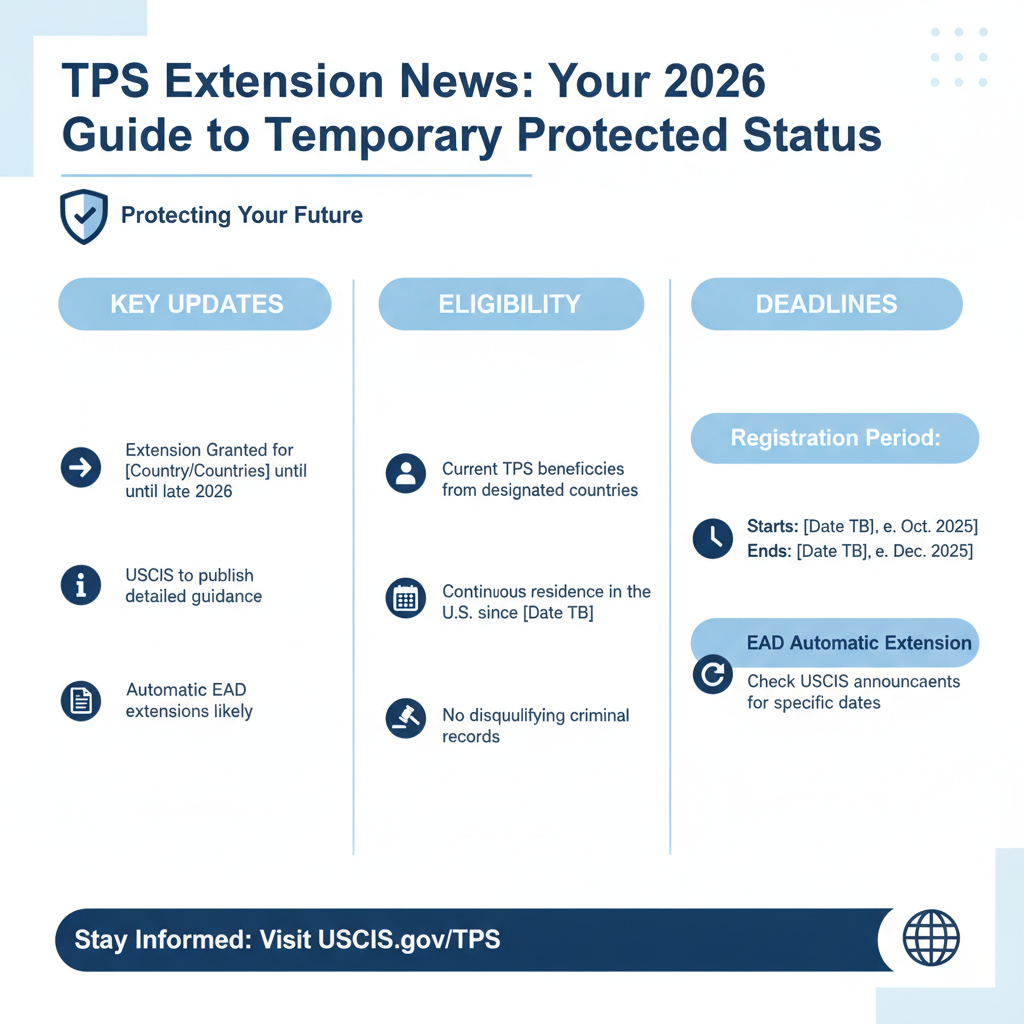
Before you begin, confirm that your country has indeed received a TPS extension and understand the specific re-registration window. Each country has its own unique deadlines set by USCIS. * **Verify Designation and Extension:** Check the USCIS official website for the latest Federal Register notices pertaining to your country. These notices announce extensions, re-designations, and the specific re-registration periods. * **Confirm Eligibility:** Ensure you continue to meet all TPS eligibility criteria, including continuous physical presence and continuous residence since your country's last designation or re-designation date. * **Check Re-registration Window:** Note the start and end dates for re-registration. This is typically a 60-day window. Filing outside this window can lead to denial, unless you have good cause, which must be clearly explained.2) Gather Required Documents
Thorough document preparation is key to a successful re-registration. Organize your documents carefully. * **Proof of Identity and Nationality:** * Copy of your passport (valid or expired, but preferably current). * Copy of your birth certificate with photo identification. * Any national identity document from your country of origin with photo and/or fingerprint. * **Proof of Residence:** * Utility bills, rent receipts, or mortgage statements showing your address in the U.S. since the required date. * Employment records, school records, or medical records. * Affidavits from friends, family, or employers attesting to your residence. * **Proof of Continuous Physical Presence:** * Entry stamps in your passport. * Travel records (if any, though generally limited for TPS). * Employment or school records. * **Previous TPS Documentation:** * Copy of your most recent Form I-797, Approval Notice for TPS. * Copy of your previous EAD. * **Other Supporting Documents (if applicable):** * Marriage certificate (if your name changed). * Birth certificates of dependents you are also re-registering. * Court dispositions for any arrests or convictions, even minor ones. **Important:** Always submit copies, not original documents, unless USCIS specifically requests originals. Keep a complete copy of everything you submit for your records.3) Complete and File Form I-821, Application for Temporary Protected Status
This is the primary form for re-registration. * **Download the Latest Form:** Always use the most current version of Form I-821 from the USCIS Forms page. * **Fill Out Accurately:** Complete all sections thoroughly and accurately. Any blank fields or inconsistent information can lead to delays or denials. If a question doesn't apply, write "N/A" (Not Applicable). * **Sign the Form:** Ensure you sign the form in blue ink. Unsigned forms will be rejected. * **Include Fees (or Fee Waiver Request):** * There is no USCIS fee for filing Form I-821 for re-registration. * However, you will need to pay the biometrics services fee, unless you are under 14 or over 79 years old. * If you cannot afford the biometrics fee, you may file Form I-912, Request for Fee Waiver, along with supporting documentation.4) Consider Filing Form I-765, Application for Employment Authorization
If you need to extend your work permit, you must file this form concurrently with Form I-821. * **Download the Latest Form:** Use the most current version of Form I-765 from the USCIS Forms page. * **Fill Out Accurately:** Complete all sections. For question 27 (Eligibility Category), enter (c)(19) for TPS beneficiaries. * **Sign the Form:** Sign in blue ink. * **Include Fees (or Fee Waiver Request):** * There is a filing fee for Form I-765. * You may include this fee with your Form I-821 filing. * If you filed Form I-912 for a fee waiver with your Form I-821, it will cover the Form I-765 fee as well. * **Include Two Passport-Style Photos:** Attach two identical, color passport-style photos taken within 30 days of filing. Lightly write your name and A-Number on the back of each photo.5) Attend Biometrics Appointment
After filing, USCIS will send you an appointment notice for biometrics. * **Notice of Appointment:** You will receive Form I-797C, Notice of Action, scheduling your biometrics appointment at an Application Support Center (ASC), likely the one serving Central Florida if you're in Orlando. * **What to Bring:** Bring the appointment notice, a valid photo ID (e.g., passport, EAD, driver's license), and any other documents requested. * **Purpose:** Biometrics (fingerprints, photos, and signature) are collected for background checks and identity verification.6) Respond to RFEs and Monitor Status
Stay vigilant during the processing period. * **Request for Evidence (RFE):** USCIS may send an RFE if they need more information or clarification. It is critical to respond to RFEs promptly and completely by the deadline provided. Failure to do so can lead to denial. * **Monitor Case Status:** You can check the status of your case online using the receipt number provided on your Form I-797C on the USCIS Case Status Online tool. * **Update Address:** If you move while your application is pending, you must update your address with USCIS within 10 days of moving by filing Form AR-11, Alien's Change of Address Card, and by updating your address online. Failure to do so could result in missed notices.7) Receive Decision
Once USCIS has completed its review, you will receive a decision. * **Approval Notice:** If approved, you will receive an approval notice for your TPS extension and, if filed, your new EAD card will be mailed to you. * **Denial Notice:** If denied, USCIS will send a written notice explaining the reasons for the denial. It is crucial to consult with an immigration attorney immediately upon receiving a denial to understand your options, which may include filing a motion to reopen or reconsider, or appealing the decision. **Reminder:** The processing times for TPS re-registration can vary significantly. You can check estimated processing times for your service center on the USCIS Processing Times page. ## Practical Steps You Can Take Today Even if your country's TPS extension has just been announced, there are immediate, proactive steps you can take to ensure a smooth re-registration process. Preparation is key to avoiding delays and protecting your status. ### Actionable checklist with 5+ items 1. **Verify Your Country's Status:** Double-check the official USCIS announcements for your specific country. Confirm the re-registration window, any new eligibility dates, and whether there's been a re-designation that might allow new applicants. 2. **Locate All Previous TPS Documents:** Gather your original TPS approval notices (Form I-797), previous EAD cards, and any past application copies. These are vital for proving your continuous status. 3. **Update Your Contact Information:** Ensure your address with USCIS is current. If you've moved, file Form AR-11, Alien's Change of Address Card, immediately and update your address online. This prevents missed notices. For Central Florida residents, ensure your Orlando address is correctly on file. 4. **Start Gathering Supporting Documents:** Begin collecting proof of continuous residence and physical presence in the U.S. since your country's last designation date. This includes utility bills, bank statements, school records, employment records, and medical records. 5. **Consult with an Immigration Attorney:** This is perhaps the most important step. An experienced attorney, like those at Imigrar, can confirm your eligibility, help you gather and organize documents, accurately complete forms, and represent you if any issues arise. This is especially crucial if you have any criminal history, travel history, or previous immigration issues. 6. **Review Your Travel History:** If you have traveled outside the U.S. since receiving TPS, ensure you did so with an approved Form I-131, Advance Parole Document. Unauthorized travel can lead to denial of re-registration. ### Document preparation guidance * **Organize by Category:** Create separate folders for identity documents, proof of residence, employment history, previous immigration documents, etc. * **Make Copies:** Never send original documents unless specifically requested by USCIS. Make clear, legible photocopies of everything. * **Keep a Master Copy:** Before mailing your application, make a complete copy of the entire package, including the forms, supporting documents, and payment receipts. This is your safeguard. * **Translate Documents:** If any of your supporting documents are not in English, you must provide a certified English translation. The translator must certify that they are competent to translate and that the translation is accurate. ### Timeline expectations * **Re-registration Window:** Typically a 60-day window from the date of the Federal Register notice announcing the extension. It is paramount to file within this window. * **Processing Times:** USCIS processing times for TPS re-registration can vary. You can monitor average processing times on the USCIS Processing Times website. Be prepared for several months of waiting. * **EAD Extension:** Often, USCIS will automatically extend the validity of existing EADs for a certain period (e.g., 180 days or longer) beyond their expiration date for those who timely re-register. Check the Federal Register notice for your country for specific auto-extension details. This allows you to continue working while your new EAD is being processed. * **Biometrics Appointment:** Typically scheduled a few weeks to a few months after filing your application. **Warning:** Do not assume your TPS is automatically extended just because your country's designation was. You **must** re-register to maintain your status. ## How Imigrar Helps Immigrants in Orlando At Imigrar, our commitment to "Keep Families Together" is at the core of everything we do. For immigrants in Orlando, across Florida, and throughout the nation, navigating the complexities of U.S. immigration law can be daunting, especially with frequent updates like TPS extensions. We are here to be your trusted guide and advocate. ### Our experience and expertise Our team of experienced immigration attorneys possesses a deep understanding of TPS regulations, eligibility criteria, and the re-registration process. We regularly monitor updates from USCIS, the Department of Homeland Security, and relevant legal news sources to ensure our advice is always current and accurate. * **Comprehensive Knowledge:** We have extensive experience with Form I-821 (Application for Temporary Protected Status) and Form I-765 (Application for Employment Authorization), as well as associated forms like Form I-912 (Fee Waiver) and Form I-131 (Travel Document). * **Personalized Guidance:** We understand that every individual's situation is unique. We take the time to listen to your story, assess your specific circumstances, and provide tailored legal strategies that best suit your needs. * **Proactive Approach:** We don't just react to changes; we help you prepare for them. From organizing your documents to ensuring timely filing within the re-registration window, we guide you every step of the way. * **Local and National Reach:** While we are proudly based in Orlando, serving Central Florida, our expertise extends to clients nationwide. We are familiar with the procedures and requirements of various USCIS Service Centers and Field Offices, including the Orlando USCIS Field Office. ### Free consultation offer We believe that everyone deserves access to quality legal advice, especially when their immigration status is at stake. That's why Imigrar offers a **free, no-obligation consultation** for new clients. During this initial meeting, we can: * Review your current immigration situation and any specific concerns regarding TPS. * Explain the recent TPS extension news and how it applies to your country and circumstances. * Discuss the re-registration process, required documents, and potential timelines. * Answer your questions and provide an honest assessment of your case. * Outline the legal services we can provide and the associated fees, so you have full transparency. **Se Habla Español.** Our bilingual team is dedicated to serving the diverse communities of Florida and beyond. We ensure that language barriers do not prevent you from receiving the expert legal assistance you need. Let Imigrar be your partner in navigating the TPS re-registration process. We are committed to helping you maintain your protected status and "Keep Families Together."Secure Your TPS Status with Expert Help. Don't risk your future. Imigrar's Orlando immigration attorneys are here to provide comprehensive support for your TPS re-registration. Call +1
Schedule a free consultation with our attorney-reviewed team todayHave Questions About Your Case?


