


Date of Publication: 2026-08-02
The reporting that sparked this guide
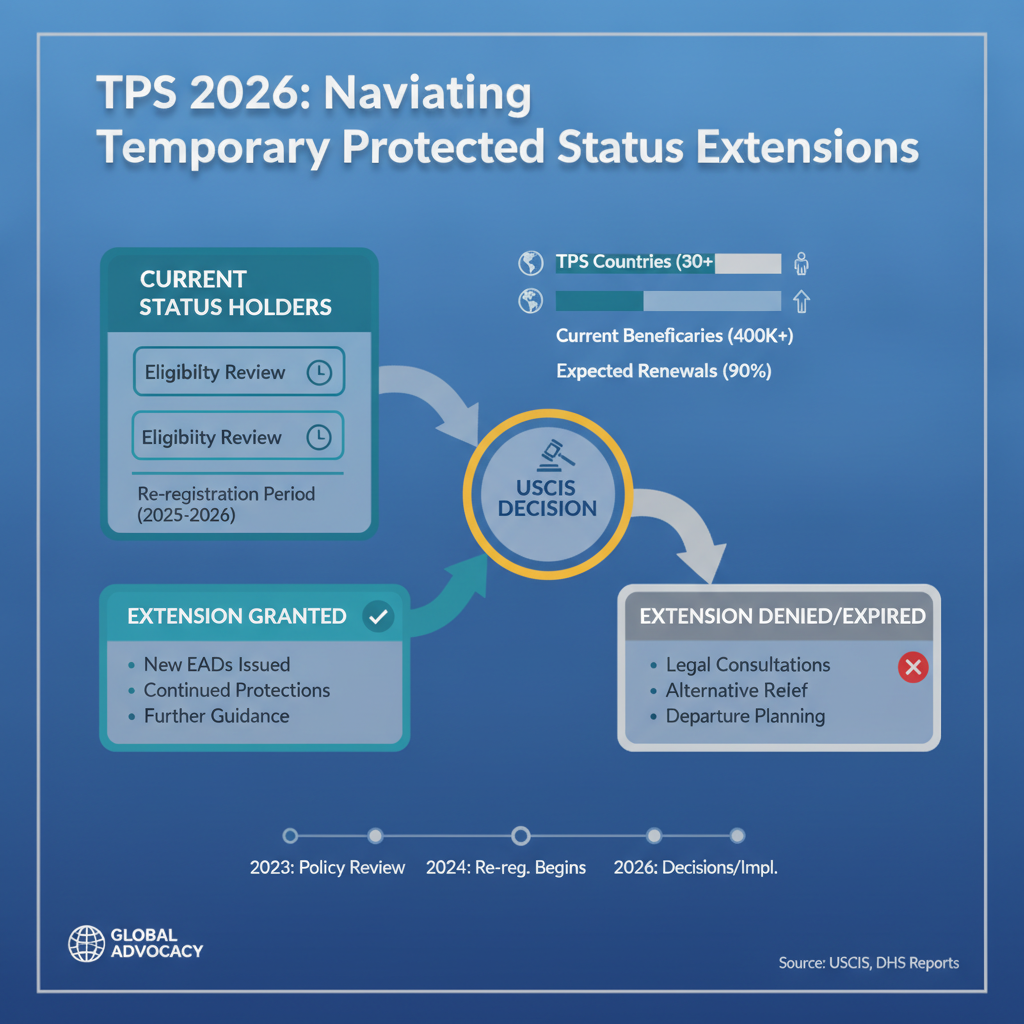
The ongoing legal news surrounding Temporary Protected Status (TPS) extensions and re-designations continues to be a critical topic for immigrant communities nationwide. At Imigrar, we closely monitor these developments to provide timely and accurate information. This comprehensive guide is inspired by the latest updates in:
TPS (Temporary Protected Status) Extension News (Legal News)
What This News Means for Immigrants in Orlando and Across Florida
The landscape of U.S. immigration law is constantly shifting, and few areas demonstrate this more clearly than Temporary Protected Status (TPS). For hundreds of thousands of individuals from designated countries, TPS offers a vital lifeline, allowing them to live and work legally in the United States when their home countries face extraordinary conditions. Recent announcements regarding TPS extensions and re-designations are more than just legal bulletins – they represent renewed hope, stability, and the ability to "Keep Families Together" for countless individuals and their loved ones.
Why this news is showing up now
As of August 2026, the discussion around TPS is particularly active for several key reasons:
- Ongoing Designations and Re-designations: The U.S. government, through the Department of Homeland Security (DHS), regularly reviews conditions in designated countries. This can lead to extensions of existing TPS designations, re-designations (which allow new applicants from a country to apply), or in some cases, terminations. The current political climate and global events often drive these decisions, making TPS a recurring topic in legal news cycles.
- Litigation and Court Orders: Several TPS designations have been subject to legal challenges and court orders, leading to extended protections even when the government initially intended to terminate them. These legal battles often result in "stays" or temporary injunctions that keep TPS protections in place for specific nationalities, requiring ongoing public awareness and guidance.
- Advocacy and Legislative Efforts: Immigration advocacy groups and legislative bodies continuously push for more permanent solutions for TPS holders, given that many have lived in the U.S. for decades, built lives, and raised families. This advocacy keeps TPS in the national conversation.
- Upcoming Deadlines: For many current TPS beneficiaries, re-registration deadlines are always approaching. Each extension announcement triggers a new re-registration period, creating an urgent need for accurate, up-to-date information to ensure continuous protection.
How it can affect Florida residents
Florida, and particularly Central Florida, is home to a vibrant and diverse immigrant population. Orlando, with its bustling economy and diverse communities, is a hub for many individuals who rely on TPS for their stability. The impact of TPS news on Florida residents is profound:
- Direct Impact on Livelihoods: For TPS beneficiaries in Orlando and surrounding counties like Orange, Seminole, and Osceola, an extension means the continuation of their Employment Authorization Documents (EADs). This directly affects their ability to work, pay bills, and support their families, contributing significantly to the local economy.
- Community Stability: Families who have built lives along the I-4 corridor, purchased homes, and established roots depend on TPS extensions to avoid displacement and uncertainty. Knowing their status is extended allows them to plan for the future, invest in their communities, and maintain their family units.
- Legal Complexities: While federal law governs TPS, navigating the application or re-registration process requires careful attention to detail. Florida residents need access to reliable legal counsel to ensure their applications are filed correctly and on time, especially with the Orlando USCIS Field Office handling many local cases.
- Planning for the Future: For many, TPS is a temporary solution. News of extensions provides a window of opportunity to explore other potential pathways to permanent residency, if available, or to prepare for future immigration challenges. This requires strategic legal planning, which our team at Imigrar specializes in.
Understanding these developments is crucial. At Imigrar, we are committed to providing the most current and actionable advice to help you navigate these critical times and secure your future in Florida.
Navigating TPS extensions can be complex. Don't face it alone. Our Orlando immigration team is ready to assist. Call +1 786-791-3106 for a free consultation, or message us online. Se Habla Español.
What Temporary Protected Status (TPS) Is (and Why It Matters)
Temporary Protected Status (TPS) is a temporary immigration benefit provided by the United States to eligible nationals of certain countries. These countries are designated by the Secretary of Homeland Security when conditions prevent their nationals from safely returning home, or when the country is unable to handle the return of its nationals adequately.
A plain-English definition
Imagine your home country is going through a terrible crisis – maybe a devastating natural disaster like an earthquake or hurricane, an ongoing armed conflict, or other extraordinary and temporary conditions. Because it wouldn't be safe or practical for you to return home, the U.S. government offers you "temporary protected status." This means you can stay in the U.S. legally for a set period, work, and sometimes travel, without fear of deportation. It's a temporary shield, not a path to a Green Card, but it provides crucial stability when you can't go back.
Key terms you need to know
- Designation: This is the act by the Secretary of Homeland Security to officially name a country for TPS. A country can be initially designated or re-designated.
- Re-designation: When a country's TPS status is extended, it can also be "re-designated." This is significant because re-designation allows new individuals from that country who were not eligible under the original designation to apply for TPS, provided they meet all other eligibility criteria and were continuously residing in the U.S. by the new designation date.
- Extension: This refers to the continuation of TPS for a country that has already been designated. It means existing beneficiaries can continue their status, usually by re-registering.
- Eligibility Period/Filing Period: This is the specific timeframe during which individuals must apply for or re-register for TPS. Missing this window can lead to denial or loss of status.
- Employment Authorization Document (EAD): Often referred to as a "work permit," this document allows TPS beneficiaries to legally work in the U.S. When TPS is extended, beneficiaries typically need to apply for a new EAD to reflect the extended validity.
- Travel Authorization (Advance Parole): While TPS does not automatically grant the right to travel internationally, beneficiaries can apply for Advance Parole (Form I-131) to travel outside the U.S. and return legally. Traveling without this document can lead to denial of re-entry.
- Continuous Physical Presence (CPP): A requirement that the applicant has been physically present in the U.S. since a specific date set by the TPS designation.
- Continuous Residence (CR): A requirement that the applicant has maintained residence in the U.S. since a specific date set by the TPS designation.
- Non-immigrant Status: TPS is a temporary status and does not automatically lead to permanent residency or citizenship. It protects individuals from deportation and provides work authorization for a limited period.
Understanding these terms is fundamental to navigating the TPS process successfully. If you're a Florida resident impacted by TPS news, knowing these definitions will help you comprehend official announcements and legal advice.
Current Immigration Law: The Foundation of TPS
Temporary Protected Status is established under Section 244 of the Immigration and Nationality Act (INA § 244). This federal law grants the Secretary of Homeland Security the authority to designate a foreign country for TPS due to:
- Ongoing armed conflict within the state, posing a serious threat to the personal safety of returning nationals.
- An environmental disaster resulting in a substantial, but temporary, disruption of living conditions, and the foreign state is unable to handle the return of its nationals adequately.
- Other extraordinary and temporary conditions in the foreign state that prevent nationals from safely returning.
Once a country is designated, eligible individuals from that country who are already in the U.S. can apply for TPS. This protection is not permanent; it is reviewed periodically (typically every 6, 12, or 18 months) to determine if the conditions warranting designation still exist. If conditions improve, the designation can be terminated; if they persist, it can be extended or re-designated.
Federal requirements
To be eligible for TPS, applicants must meet several federal requirements:
- Nationality: Be a national of a country designated for TPS, or a person without nationality who last habitually resided in that country.
- Continuous Physical Presence (CPP): Have been continuously physically present in the U.S. since the effective date of the most recent TPS designation for their country. Brief, casual, and innocent departures do not break CPP.
- Continuous Residence (CR): Have been continuously residing in the U.S. since a date specified for their country's designation.
- Timely Application: Apply for TPS within the initial registration period or any subsequent re-registration period announced by USCIS.
- Admissibility: Meet the general admissibility requirements for immigration benefits, meaning they must not have certain criminal convictions, participated in persecution, or pose a threat to national security.
- No Inadmissibility Grounds: Not be inadmissible under specific grounds, such as certain criminal offenses, drug offenses, or national security grounds.
- Not subject to Mandatory Detention: Not be subject to certain mandatory detention provisions.
Important: Even if you meet the above, you may be ineligible if you have been convicted of any felony or two or more misdemeanors committed in the U.S.
The primary forms used for TPS applications are:
- Form I-821, Application for Temporary Protected Status
- Form I-765, Application for Employment Authorization (often filed concurrently with Form I-821 to obtain a work permit)
- Form I-131, Application for Travel Document (if you intend to travel outside the U.S.)
Florida-specific considerations
While TPS is a federal program, its implementation has practical implications for Florida residents:
- USCIS Field Offices: Applications are processed by USCIS service centers, but some services like biometrics appointments or interviews (rare for TPS but possible) are handled by local field offices, such as the Orlando USCIS Field Office at 5449 Forbes Pl, Orlando, FL 32812.
- Local Resources: Immigrants in Central Florida, including those in Orange County and neighboring regions, benefit from community organizations and legal aid services that can offer support. However, for complex cases, experienced legal counsel is invaluable.
- State ID and Driver's Licenses: With an approved TPS and EAD, beneficiaries in Florida can apply for a Florida driver's license or state identification card, providing essential mobility and recognition within the state.
There are no Florida-specific laws that alter the federal TPS requirements. However, understanding how federal immigration policies are applied and affect daily life in Florida is crucial for beneficiaries.
How to Apply for or Re-register for TPS: A Complete Step-by-Step Guide
Applying for or re-registering for Temporary Protected Status requires meticulous attention to detail and adherence to strict deadlines. Here's a comprehensive guide to help you through the process:
1) Determine Your Eligibility and Country Designation
The first and most critical step is to confirm that your country has been designated for TPS and that you meet the specific eligibility criteria for that designation. USCIS announces designations, extensions, and re-designations through Federal Register notices and updates on their website.
- Check Your Country's Status: Visit the USCIS TPS page regularly to see if your country is designated, whether it has been extended, or if a re-designation allows new applicants. Pay close attention to the Continuous Residence (CR) and Continuous Physical Presence (CPP) dates specific to your country.
- Review Personal Eligibility: Ensure you meet all the individual requirements, including nationality, entry date, continuous residence, and the absence of disqualifying criminal history or other inadmissibility grounds.
2) Gather Required Documents
Collecting all necessary documents is paramount. Start early to avoid delays. You will need to provide evidence of identity, nationality, date of entry, continuous residence, and any other supporting documentation.
- Proof of Identity and Nationality:
- Passport or national identity document from your country of origin.
- Birth certificate with photo identification.
- Any national identity document bearing your photo and/or fingerprint.
- For individuals without nationality, proof of last habitual residence in the designated country.
- Proof of Entry into the U.S.:
- Passport entry stamps.
- I-94 Arrival/Departure Record.
- Airline or other transportation tickets/boarding passes.
- Proof of Continuous Residence (CR) in the U.S. since the designated date: (Provide as many as possible)
- Leases, rent receipts, utility bills (electricity, water, gas, phone).
- Employment records (pay stubs, W-2 forms, employment letters).
- School records (transcripts, report cards) for yourself or your children.
- Medical records (hospital bills, doctor's notes).
- Bank statements.
- Affidavits from friends, neighbors, or employers attesting to your residence.
- Official government documents (tax returns, benefit statements).
- Photographs: Two passport-style photos meeting USCIS specifications.
- Previous Immigration Documents (if applicable): Any prior immigration applications, notices, or decisions.
- Translations: Any documents not in English must be accompanied by a complete English translation and a certification by the translator.
Reminder: Keep original documents safe and only submit copies unless USCIS specifically requests originals. Make extra copies for your own records.
3) Complete and File Form I-821 (and related forms)
This is the core of your TPS application. Ensure all forms are filled out accurately and completely. Incomplete applications will be rejected or delayed.
- Form I-821, Application for Temporary Protected Status:
- Fill out every section. If a question doesn't apply, write "N/A."
- Ensure your name, date of birth, and other personal information match your identity documents.
- Sign the form. Unsigned forms will be rejected.
- Form I-765, Application for Employment Authorization:
- If you need a work permit, you must file this form concurrently with your Form I-821.
- Indicate your eligibility category, usually (c)(19) for TPS applicants.
- Sign the form.
- Form I-131, Application for Travel Document (Optional):
- If you anticipate needing to travel outside the U.S. while your TPS is valid, file this form for Advance Parole.
- Travel without Advance Parole can jeopardize your TPS status and ability to re-enter the U.S.
- Fee Waivers: If you cannot afford the filing fees (which can include fees for Form I-821, Form I-765, and biometrics), you may be eligible to apply for a fee waiver using Form I-912, Request for Fee Waiver. Provide sufficient evidence of your inability to pay.
- Filing Address: Send your application package to the correct USCIS lockbox facility, which varies depending on your country of designation and your state of residence. Always check the USCIS website for the most current filing addresses.
4) Attend Biometrics Appointment
After USCIS receives your application, they will send you a receipt notice and then a separate appointment notice for biometrics. This appointment is mandatory.
- What to Expect: At the appointment, your fingerprints, photograph, and signature will be collected. This information is used for background checks.
- Bring Documents: Bring your appointment notice (Form I-797C), a valid photo ID (e.g., passport, driver's license), and any other requested documents.
- Local Office: For Central Florida residents, this appointment will likely be at the Application Support Center (ASC) designated for the Orlando area.
5) Respond to Requests for Evidence (RFE) or Notices of Intent to Deny (NOID)
USCIS may determine that your application is missing information or requires clarification. They will send you an RFE or NOID.
- RFE (Request for Evidence): This means USCIS needs more documents or information to make a decision. Respond promptly and thoroughly by the specified deadline.
- NOID (Notice of Intent to Deny): This indicates that USCIS intends to deny your application and provides you with an opportunity to submit additional evidence or arguments to overcome the denial. This is a critical stage where legal assistance is highly recommended.
Warning: Failing to respond to an RFE or NOID by the deadline will almost certainly lead to a denial of your application.
6) Receive a Decision
Once USCIS has processed your application and reviewed all evidence, they will mail you a decision notice.
- Approval: If approved, you will receive an approval notice for Form I-821 and, if filed, an EAD for Form I-765. Keep these documents safe.
- Denial: If denied, the notice will explain the reasons. You may have options to appeal or refile, depending on the grounds for denial. Consulting an attorney immediately after a denial is crucial.
7) Re-register (if applicable)
TPS is temporary. If your country's designation is extended, you must re-register during each announced re-registration period to maintain your status and work authorization.
- Timelines: Re-registration periods are typically 60 days long. Missing this window without good cause can result in loss of TPS.
- Process: The re-registration process is similar to the initial application, requiring a new Form I-821 and often Form I-765, along with updated supporting documentation and fees.
Overwhelmed by TPS forms and deadlines? Let Imigrar guide you. We serve clients across Florida, including Orlando. Call us at +1 786-791-3106 for a free consultation. Se Habla Español.
Practical Steps You Can Take Today
Don't wait for a deadline to approach. Proactive preparation is key to a successful TPS application or re-registration.
Actionable Checklist (Starting August 2026)
- Verify Your Country's Status: Immediately check the USCIS website for the latest updates on your country's TPS designation, extension, or re-designation, including the specific filing window.
- Gather Core Documents: Start collecting your passport, birth certificate, proof of entry (I-94), and initial proof of continuous residence. Even if you're not filing immediately, having these ready saves time.
- Compile Residence Evidence: Begin compiling a robust portfolio of documents proving your continuous residence in the U.S. since the required date. Aim for at least one document per month, if possible, especially for critical periods.
- Consult an Immigration Attorney: Schedule a free consultation with an experienced immigration lawyer, like those at Imigrar. An attorney can assess your eligibility, identify potential issues, and help you strategize your application.
- Set Up a Filing System: Create a physical or digital folder specifically for your TPS application documents. Organize everything clearly, making it easy to retrieve and review.
- Understand Fees and Waivers: Research the current filing fees for Form I-821 and Form I-765. If you believe you qualify for a fee waiver (Form I-912), start gathering the necessary financial documentation.
- Subscribe to Updates: Sign up for email alerts from USCIS or follow reputable immigration news sources to stay informed about any new announcements or changes.
Document Preparation Guidance
- Organization is Key: Arrange your documents logically. Use dividers or separate folders for different categories (e.g., identity, residence, employment).
- Legibility: Ensure all copies are clear and legible. If a document is difficult to read, try to obtain a clearer copy or highlight key information.
- Translations: For any document not in English, provide a certified English translation. The translator must sign a statement certifying that they are competent to translate and that the translation is accurate.
- Affidavits: If you lack official documents for certain periods, affidavits from credible witnesses (friends, family, employers, religious leaders) can be helpful. These should be detailed, notarized, and explain the witness's relationship to you and how they know about your residence.
- Keep Copies: Always make a complete copy of your entire application package before mailing it to USCIS. This includes all forms, supporting documents, and checks/money orders.
Timeline Expectations
- Filing Window: For extensions and re-registrations, USCIS typically provides a 60-day window to apply. It is crucial to file within this period.
- Processing Times: TPS application processing times vary significantly based on USCIS workload, the specific service center, and the complexity of your case. You can check estimated processing times on the USCIS Processing Times page. As of August 2026, these can range from several months to over a year.
- EAD Validity: Your current EAD will likely have a specific expiration date. USCIS often issues automatic extensions of EADs for TPS beneficiaries during re-registration periods, but it is vital to check the Federal Register notice for your country to confirm eligibility and duration of any automatic extension.
- Biometrics: Expect to receive your biometrics appointment notice usually within 3-8 weeks after filing. The appointment itself will be scheduled for a few weeks after that.
Important: Timeliness is paramount for TPS. Missing a deadline can lead to loss of status, work authorization, and potential deportation proceedings. Always prioritize filing on time.

How Imigrar Helps Immigrants in Orlando and Beyond
At Imigrar, we understand that the complexities of immigration law can be daunting, especially when your family's future hangs in the balance. Our firm, based in Orlando, Florida, is dedicated to providing expert, compassionate legal assistance to immigrants not just in Central Florida but nationwide. Our tagline, "Keep Families Together," isn't just a slogan; it's the core of our mission.
Our experience and expertise in TPS matters are extensive. We regularly assist


