

Date: 2026-02-17
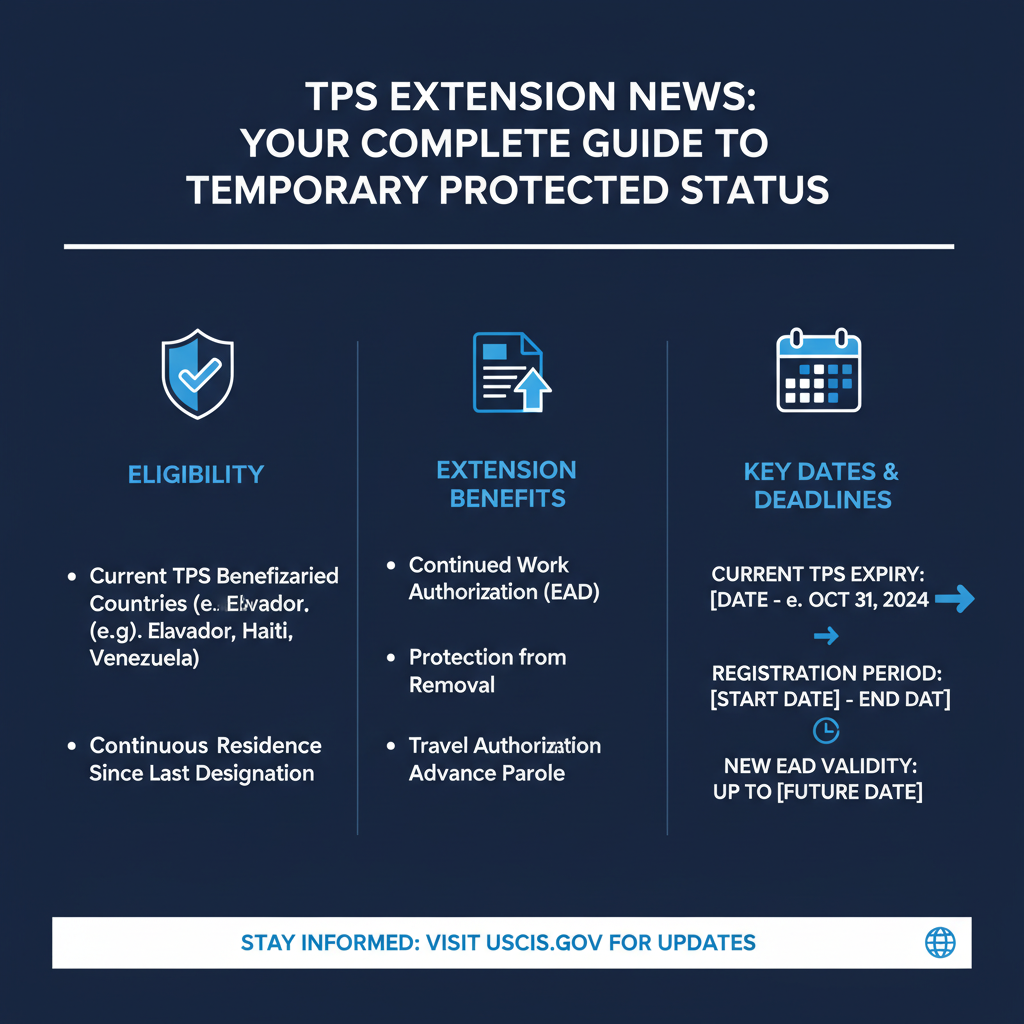
For many immigrants and their families in Orlando, across Florida, and nationwide, news regarding Temporary Protected Status (TPS) can bring a mix of hope, relief, and often, confusion. As an immigration law firm dedicated to keeping families together, Imigrar understands the profound impact these updates have on your life. Today, we're diving deep into the recent TPS extension news and what it means for you.
Navigating TPS updates can be complex. Don't face it alone. Our Orlando immigration team is ready to assist. Call +1 786-791-3106 for a free consultation, or message us online. Se Habla Español.
What This News Means for Immigrants in Orlando and Across Florida
The consistent stream of news about TPS extensions and, in some cases, redesignations, serves as a vital lifeline for hundreds of thousands of individuals living in the United States. These announcements directly impact their ability to live and work legally, providing a temporary shield against deportation and allowing them to contribute to their communities.
Why this news is showing up now
Temporary Protected Status (TPS) is a humanitarian immigration program established by Congress. The Secretary of Homeland Security has the authority to designate a foreign country for TPS due to conditions that temporarily prevent its nationals from returning safely, or, in certain circumstances, where the country is unable to handle the return of its nationals adequately. These conditions typically include:
- Ongoing armed conflict (civil war).
- An environmental disaster (earthquake, hurricane) or an epidemic.
- Other extraordinary and temporary conditions.
Once a country is designated, the designation is typically for a period of 6, 12, or 18 months. Before a designation expires, the Secretary must review the conditions in the country and determine whether to extend, redesignate, or terminate the TPS designation. This review process is what generates the recurring "TPS extension news." The specific reasons for recent extensions often relate to persistent instability, natural disaster recovery, or ongoing humanitarian crises in the designated countries, making a safe return impossible for their citizens.
How it can affect Florida residents
Florida, particularly Central Florida and the Orlando area, is home to a vibrant and diverse immigrant population. Many individuals who have been granted TPS for countries like Venezuela, Haiti, El Salvador, Honduras, Nicaragua, and others reside here, working, raising families, and contributing to the local economy. For these residents:
- Security and Stability: An extension of TPS means continued protection from deportation and the ability to legally reside in the U.S. This provides immense stability, allowing families to plan for their immediate future without the constant fear of removal.
- Work Authorization: Along with TPS status comes eligibility for an Employment Authorization Document (EAD), often referred to as a "work permit." An extension means these individuals can continue to work legally, supporting themselves and their families. This is crucial for the economic well-being of many Orlando and Florida households.
- Travel Authorization: Depending on the specific circumstances and approval of Form I-131, Application for Travel Document (Advance Parole), TPS holders may be able to travel internationally and return to the U.S. legally. An extension ensures this possibility remains open.
- Community Impact: The presence of TPS holders strengthens Florida's communities. They are essential workers, small business owners, and active participants in local life. Continued TPS protection ensures these contributions persist, benefiting cities like Orlando and surrounding areas in Orange County and along the I-4 corridor.
- Deadlines and Action: Every extension comes with specific deadlines for re-registration. Missing these deadlines can lead to the loss of TPS benefits. This news serves as a critical reminder for eligible individuals in Florida to take timely action.
Understanding these impacts is the first step toward securing your status. Imigrar is here to guide you through every update and requirement.
What Temporary Protected Status (TPS) Is (and Why It Matters)
Temporary Protected Status (TPS) is a critical humanitarian program that offers a temporary safe haven to individuals whose home countries are experiencing severe conditions, making their return unsafe. It's a lifeline for many, but its temporary nature means staying informed is paramount.
A plain-English definition
Simply put, Temporary Protected Status (TPS) is a temporary immigration benefit granted by the U.S. government to eligible nationals of certain countries. It allows them to live and work in the United States for a specified period, typically 6, 12, or 18 months, without fear of deportation. This status is granted when conditions in their home country make it unsafe for them to return, or when the country is unable to adequately handle the return of its nationals. Such conditions can include ongoing armed conflict, natural disasters, or other extraordinary and temporary circumstances.
Important: TPS is a temporary status and does not automatically lead to a Green Card or permanent residency. However, in some cases, TPS holders may be able to pursue other immigration pathways while holding TPS.
Key terms you need to know
Understanding the jargon associated with TPS is crucial for navigating the process:
- Designation: This is the initial act by the Secretary of Homeland Security declaring a country eligible for TPS due to specific conditions. Once a country is designated, its nationals present in the U.S. by a certain date can apply.
- Extension: When the Secretary of Homeland Security determines that the conditions in a designated country continue to meet the statutory requirements, the TPS designation is extended for an additional period. This is the most common type of news for long-standing TPS countries.
- Redesignation: This occurs when the Secretary determines that a country continues to meet the statutory requirements for TPS, but also changes the eligibility dates for nationals of that country. A redesignation typically means that a new group of individuals who arrived in the U.S. after the original designation date, but before the new redesignation date, become eligible to apply for TPS for the first time.
- Termination: If the Secretary determines that the conditions in a designated country no longer meet the statutory requirements, the TPS designation can be terminated. This means that TPS holders would lose their protected status and would need to seek other immigration relief or depart the U.S.
- Employment Authorization Document (EAD): Also known as a "work permit," this document (Form I-766) allows TPS beneficiaries to legally work in the United States. An EAD is issued after a successful application for TPS (Form I-821) and the related application for employment authorization (Form I-765).
- Re-registration Period: This is a specific window of time (often 60 days) during which current TPS beneficiaries must file their application to extend their status and work authorization. Missing this deadline can lead to loss of benefits.
- Statutory Eligibility Requirements: The specific criteria outlined in the law (INA Section 244) that an individual must meet to be granted TPS, such as continuous physical presence and continuous residence in the U.S. since the designated dates, and not being inadmissible under specific grounds.
- Prima Facie Eligible: This term refers to an applicant who has submitted an application that appears, on its face, to meet all the requirements for TPS. If an application is deemed prima facie eligible, USCIS may grant temporary benefits, such as an EAD, while the full application is being processed.
Confused by immigration terms? Imigrar breaks down the complexities. Contact us for clear, actionable advice on your TPS case. Call +1 786-791-3106 or reach out online. Se Habla Español.
Current Immigration Law: The Foundation of TPS
Understanding Temporary Protected Status (TPS) requires a grasp of the legal framework that underpins it. TPS is not an arbitrary program; it is firmly rooted in U.S. immigration law, specifically the Immigration and Nationality Act (INA).
Federal requirements
Temporary Protected Status is governed by Section 244 of the Immigration and Nationality Act (INA), found at 8 U.S.C. § 1254a. This section outlines the authority of the Secretary of Homeland Security to designate countries for TPS and specifies the eligibility requirements for individuals seeking this status. You can find the full text of the INA on the official USCIS official website.
To be eligible for TPS, an individual must generally meet the following federal requirements:
- Nationality: Be a national of a country designated for TPS, or a person without nationality who last habitually resided in that designated country.
- Continuous Physical Presence (CPP): Have been continuously physically present in the U.S. since the effective date of the most recent designation or redesignation for their country.
- Continuous Residence (CR): Have been continuously residing in the U.S. since a specific date set for their country's designation.
- Admissibility: Meet specific admissibility requirements. Certain criminal offenses, national security concerns, or other grounds of inadmissibility can bar an individual from TPS. However, some grounds of inadmissibility may be waived.
- Timely Application: File an application during the initial registration period or any subsequent re-registration period established for their country's designation or extension.
Warning: The specific "continuous physical presence" and "continuous residence" dates are critical and vary by designated country. It is imperative to check the most recent Federal Register notice for your country's specific dates.
The primary forms used for TPS are:
- Form I-821, Application for Temporary Protected Status: This is the main application form for TPS. It collects biographical information, details about your entry to the U.S., and your eligibility for TPS.
- Form I-765, Application for Employment Authorization: If you wish to work legally in the U.S. while on TPS, you must file this form along with or after your Form I-821.
- Form I-601, Application for Waiver of Grounds of Inadmissibility: If you have certain grounds of inadmissibility that might prevent you from getting TPS, you might need to file this form.
- Form I-131, Application for Travel Document: If you need to travel outside the U.S. while on TPS, you must apply for Advance Parole using this form.
All these forms and their instructions can be found on the USCIS Forms page.
Florida-specific considerations
While TPS is a federal program, its implementation has practical considerations for Florida residents:
- Orlando USCIS Field Office: If your case is in Orlando or the surrounding Central Florida area, your local USCIS Field Office might be involved for interviews (though rare for TPS initial applications) or for biometrics appointments. The Orlando USCIS Field Office is located at 6680 Corporate Centre Blvd, Orlando, FL 32822.
- High Volume of Applicants: Florida has a significant population of nationals from many TPS-designated countries, such as Haiti and Venezuela. This can sometimes lead to higher processing volumes at the USCIS Processing Times centers that handle these applications, potentially impacting wait times.
- Access to Legal Services: Due to the large immigrant community, there are numerous legal aid organizations and private firms like Imigrar specializing in immigration law in Central Florida. This means residents have good access to expert assistance, which is highly recommended for TPS applications.
- Community Support Networks: For Central Florida residents, a strong network of community organizations and advocacy groups often provides support, information, and resources for TPS holders, especially in areas with a high concentration of specific national groups (e.g., Haitian community centers, Venezuelan exile groups).
Staying informed about federal updates and understanding how they translate to your local situation is key. Imigrar is deeply rooted in the Orlando community and understands these local dynamics.
How to Apply for or Re-Register for TPS: A Complete Step-by-Step Guide
Whether you are applying for Temporary Protected Status (TPS) for the first time under a new designation or redesignation, or re-registering to maintain your existing status, the process requires meticulous attention to detail. This step-by-step guide will walk you through the essential actions.
1) Determine Your Eligibility and the Correct Filing Period
Before you begin, confirm that you meet all the criteria for TPS and are filing within the correct window.
- Country Designation: Is your country currently designated for TPS? Check the official USCIS website or recent Federal Register notices for the latest list of designated countries and their specific dates.
- Continuous Residence (CR) and Continuous Physical Presence (CPP): Ensure you meet the specific CR and CPP dates for your country's designation or redesignation. These dates are non-negotiable.
- Inadmissibility Grounds: Review if you have any criminal history or other grounds that might make you inadmissible. Some can be waived, but it's crucial to identify them early.
- Filing Period: Are you within the initial registration period (for new applicants) or the re-registration period (for current TPS holders)? Missing these deadlines is a common mistake and can lead to denial.
Reminder: For re-registrants, USCIS typically announces a 60-day re-registration window before the current TPS designation expires. Pay close attention to these announcements.
2) Gather All Required Documents and Evidence
Preparation is key. Start collecting your documents well in advance. For both initial applications and re-registrations, you'll generally need:
-
Proof of Identity and Nationality:
- Copy of your passport from the designated country (if available).
- Copy of your birth certificate with photo identification.
- Any national identity document from your country of origin with a photo and/or fingerprint.
- Two passport-style photographs.
-
Proof of Entry into the U.S. and Continuous Residence (CR):
- Copies of your passport with U.S. entry stamps (Form I-94, Arrival/Departure Record).
- Rental receipts, utility bills, or mortgage statements showing your address.
- Employment records (pay stubs, W-2 forms, letters from employers).
- School records (transcripts, enrollment letters).
- Medical records (hospital bills, doctor's notes).
- Bank statements.
- Affidavits from friends, family, or employers attesting to your residence.
-
Proof of Continuous Physical Presence (CPP):
- Any document that shows you were physically in the U.S. on the specific required dates (e.g., flight tickets, hotel receipts, dated photographs with location data, affidavits).
-
Criminal History (if any):
- Certified court dispositions for any arrests or convictions, even if expunged or minor.
-
Previous Immigration Applications/Decisions:
- Copies of any prior immigration applications (e.g., asylum, visa petitions) and their outcomes.
Important: All documents not in English must be accompanied by a complete English translation certified by the translator.
3) Complete Forms I-821 and I-765 (and other relevant forms)
The core of your application involves accurately completing the necessary USCIS forms.
-
Form I-821, Application for Temporary Protected Status:
- Fill out every section completely and accurately. If a section does not apply, write "N/A."
- Answer all questions truthfully. Inconsistent information can lead to delays or denial.
- Ensure your name, date of birth, and other identifying information match your supporting documents.
-
Form I-765, Application for Employment Authorization:
- If you want to work legally, you must file this form.
- For TPS applicants, the eligibility category is typically (c)(19).
- You may file Form I-765 concurrently with Form I-821 or at a later date.
-
Form I-601, Application for Waiver of Grounds of Inadmissibility (if applicable):
- If you have grounds of inadmissibility, you might need to file this form with supporting evidence explaining why a waiver should be granted. Consult with an attorney if you believe this applies to you.
-
Form I-131, Application for Travel Document (if you plan to travel):
- If you anticipate needing to travel internationally, you must apply for Advance Parole using this form. Travel without Advance Parole can lead to serious immigration consequences.
Reminder: Download the latest versions of these forms from USCIS Forms, as forms are frequently updated.
4) Prepare Supporting Evidence and Organize Your Application Packet
Your application is only as strong as the evidence supporting it. Organize your documents professionally.
- Make Copies: Always keep a complete copy of everything you send to USCIS for your records.
- Tabs and Labels: Use tabs and labels to clearly mark each type of document (e.g., "Proof of Nationality," "Proof of Residence," "Form I-821"). This helps USCIS officers process your application more efficiently.
- Cover Letter: Include a cover letter listing all the forms and supporting documents enclosed in your packet.
- Fee Waivers: If you cannot afford the filing fees, you may be eligible to apply for a fee waiver using Form I-912, Request for Fee Waiver. Provide strong evidence of financial hardship.
5) Calculate and Submit Filing Fees
Filing fees are mandatory unless you are granted a fee waiver.
- Form I-821 Fee: Check the USCIS website for the current fee.
- Form I-765 Fee: Check the USCIS website for the current fee.
- Biometrics Fee: An additional fee for biometrics services (fingerprints, photo, signature) is usually required.
- Payment Method: You can pay by money order, personal check, cashier's check, or by credit card using Form G-1450, Authorization for Credit Card Transactions. Make checks payable to "U.S. Department of Homeland Security." Do not send cash.
- Mailing Address: Send your application to the correct USCIS lockbox facility. The address depends on the designated country and whether you are filing Form I-821 alone or with Form I-765. Always check the "Where to File" instructions for Form I-821 on the USCIS website.
Warning: Incorrect fees or payment methods are a common reason for application rejection.
6) Attend Your Biometrics Appointment
After filing, USCIS will send you a notice (Form I-797C, Notice of Action) scheduling a biometrics appointment at an Application Support Center (ASC).
- Do Not Miss It: Attend this appointment as scheduled. If you cannot make it, follow the instructions on the notice to reschedule immediately.
- Required Documents: Bring the appointment notice and a valid photo ID (e.g., passport, state ID).
- Purpose: At the ASC, USCIS will collect your fingerprints, photograph, and signature. This information is used for background checks and to produce your EAD if approved.
7) Await Decision and Next Steps
After your biometrics appointment, the waiting period begins. You can check your case status online using the receipt number provided on your Form I-797C at USCIS Case Status Online.
- Receipt Notices: You should receive receipt notices for all forms filed (e.g., Form I-797C for I-821 and I-765).
- Employment Authorization Document (EAD): If your Form I-765 is approved, you will receive your new EAD card in the mail.
- TPS Approval Notice: If your Form I-821 is approved, you will receive an approval notice confirming your TPS status.
- Requests for Evidence (RFE) or Notices of Intent to Deny (NOID): If USCIS needs more information or intends to deny your application, they will send an RFE or NOID. Respond promptly and thoroughly with the requested information. This is where legal counsel is invaluable.
Important: Keep all notices and documents from USCIS in a safe place. They are crucial records of your immigration status.
Applying for TPS? The details matter. Let Imigrar's experienced Orlando team ensure your application is flawless. Call us at +1 786-791-3106 for a free consultation. Se Habla Español.

Practical Steps You Can Take Today
The best way to navigate TPS extensions and applications is to be proactive. Here are immediate steps you can take to prepare and protect your status.
Actionable checklist with 5+ items
- Verify Your Country's Status: Immediately check the official USCIS website (USCIS official website) for the latest updates on your country's TPS designation, extension, or redesignation. Pay close attention to the specific eligibility dates (CR, CPP) and filing deadlines.
- Consult with an Immigration Attorney: Even if you've re-registered before, changes in law or personal circumstances can complicate matters. A free consultation with Imigrar can clarify your eligibility, identify potential issues, and ensure you're on the right track.
- Locate and Organize Existing Documents: Gather all immigration documents, including previous TPS approval notices, EADs, passports, birth certificates, and proof of residence. Create a dedicated file for these important papers.
- Start Gathering New Evidence for Continuous Residence: If you're a new applicant or re-registering, continuously collect documents that prove your presence in the U.S. since the required date. This includes utility bills, bank statements, pay stubs, rental agreements, school records, and medical records.
- Check Your Criminal Record: If you have any arrests or convictions, no matter how minor or old, obtain certified court dispositions. These must be disclosed and can impact eligibility.
- Monitor USCIS Processing Times: While waiting for a decision, keep an eye on the USCIS Processing Times page for the service center handling your application. This helps manage expectations.
Document preparation guidance
- Keep Originals Safe: Never send original documents to USCIS unless specifically requested. Always provide clear, legible photocopies.
- Translations: For any document not in English (e.g., birth certificate, marriage certificate), you must include a complete English translation and a certification by the translator that the translation is accurate and they are competent to translate.
- Proofread Forms: Double-check every field on Form I-821 and Form I-765 for errors, typos, or omissions. Even small mistakes can lead to RFEs or denials.
- Chronological Order: When submitting evidence of continuous residence, arrange documents in chronological order, starting from the earliest date required. This makes it easier for USCIS to review.
- Affidavits: If you lack formal documents for certain periods, affidavits from friends, family, or employers who can attest to your presence and residence can be helpful, but they must be detailed and notarized.
Timeline expectations
Understanding the typical timelines for TPS applications and re-registrations can help manage your expectations:
- Re-registration Window: For extensions, USCIS typically announces a re-registration period of 60 days. You must file within this window.
-
Processing Times for Forms:
- Form I-821: Processing times vary significantly by service center and volume, ranging from a few months to over a year. Check the USCIS website for current estimates.
- Form I-765: Often processed concurrently with Form


