


The reporting that sparked this guide: TPS (Temporary Protected Status) Extension News (Legal News)
What This News Means for Immigrants in Orlando and Across Florida
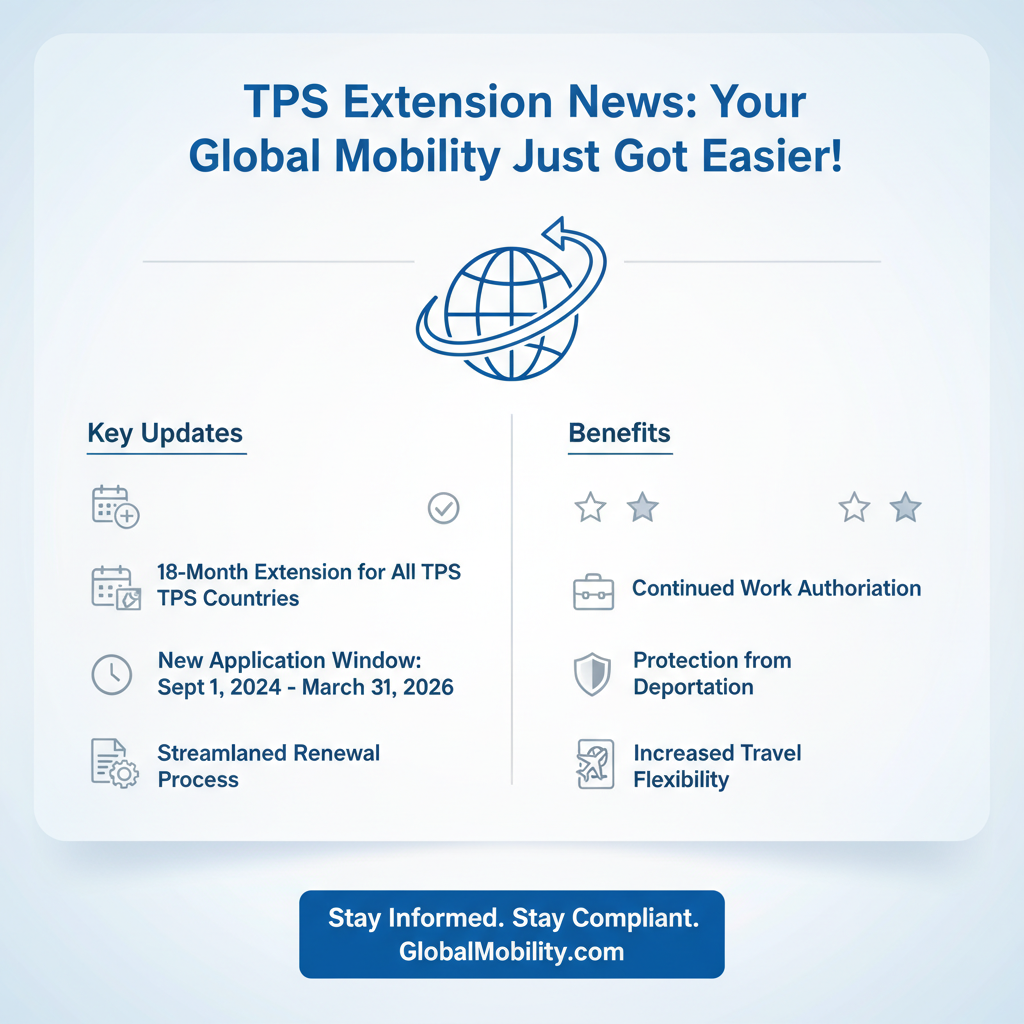
The landscape of U.S. immigration law is constantly evolving, with frequent updates that can profoundly impact the lives of individuals and families. Recent reports concerning Temporary Protected Status (TPS) extensions for various designated countries are prime examples of such critical developments. For immigrants residing in Orlando, across Florida, and throughout the nation, these extensions are not just bureaucratic announcements; they are lifelines that offer stability, peace of mind, and the continued ability to live and work legally in the United States.
Why this news is showing up now
TPS is a temporary immigration status granted by the Secretary of Homeland Security to eligible nationals of designated countries. These designations occur when conditions in a country temporarily prevent its nationals from returning safely, or when the country is unable to handle the return of its nationals adequately. Such conditions can include ongoing armed conflict, environmental disaster, or other extraordinary and temporary conditions. The decision to designate or extend TPS for a country is not made lightly; it involves a thorough review of current conditions by the Department of Homeland Security (DHS) in consultation with other government agencies.
The reason TPS extension news is trending now, in June 2026, is multifaceted. Firstly, TPS designations are typically made for periods of 6, 12, or 18 months and are subject to periodic review. As these periods approach their expiration, DHS must re-evaluate the conditions in the designated countries. If the original extraordinary conditions persist, or if new ones have arisen, DHS may decide to extend the designation, allowing current TPS holders to maintain their status and sometimes opening a new registration period for additional eligible individuals. This continuous review cycle means that news of extensions is a regular, albeit critical, occurrence for the immigrant community.
Secondly, legal challenges and court orders have often played a significant role in recent TPS extensions. For instance, specific litigation (like the Ramos v. Mayorkas case) has previously led to extensions for certain countries, even if the administration had initially sought to terminate their designations. These legal battles can cause uncertainty but often result in extensions that benefit thousands. As such, ongoing legal developments contribute significantly to the recurring nature of TPS news.
Finally, global events, such as new conflicts, natural disasters, or widespread instability, can trigger new designations or further extensions. The world is dynamic, and the U.S. government responds to these changes by assessing the safety and humanitarian needs of various populations. This proactive and reactive process ensures that TPS remains a relevant and responsive mechanism in U.S. immigration policy.
How it can affect Florida residents
Florida, and particularly the Orlando metropolitan area, is home to a vibrant and diverse immigrant population. Many individuals and families from countries currently designated for TPS have made Central Florida their home, contributing significantly to the local economy and culture. For these residents, news of a TPS extension is nothing short of life-altering. It means:
- Continued Legal Presence: TPS holders can continue to live and work legally in the U.S. without fear of deportation, providing immense stability for families.
- Employment Authorization: Extensions typically come with re-registration periods that allow individuals to renew their Employment Authorization Documents (EADs), ensuring they can maintain their jobs and support their families. This is crucial for Orlando's economy, which relies heavily on a diverse workforce in sectors like hospitality, tourism, and services.
- Travel Authorization: In many cases, TPS holders can apply for travel authorization (Advance Parole) to visit family abroad without jeopardizing their status upon return.
- Protection from Deportation: The primary benefit of TPS is protection from removal from the United States. This allows individuals to build stable lives here, invest in their communities, and pursue educational and professional opportunities.
- Community Impact: For Florida communities, stable TPS populations mean stable families, consistent school attendance for children, and continued economic contributions. The uncertainty surrounding TPS status can create significant stress and instability; extensions alleviate this, allowing communities to thrive.
For Central Florida residents, staying informed about these updates is paramount. The Orlando USCIS Field Office processes many applications from the region, and understanding the specific deadlines and requirements for your country's designation is critical. Imigrar is deeply committed to serving the Orlando immigrant community, offering expert guidance through these complex processes to ensure families can stay together and build secure futures.
Need Help? Our Orlando immigration team is ready to assist. Call +1 786-791-3106 for a free consultation, or message us online. Se Habla Español.
What Temporary Protected Status (TPS) Is (and Why It Matters)
Temporary Protected Status, or TPS, is a humanitarian immigration program established by the U.S. Congress. It provides a temporary legal status to foreign nationals from specific countries who are already present in the United States, when conditions in their home country make it unsafe for them to return.
A plain-English definition
Imagine your home country suddenly experiences a devastating earthquake, a brutal civil war, or another extreme event that makes it dangerous or impossible for you to go back. If you are already in the United States when this happens, the U.S. government might decide to grant "Temporary Protected Status" to people from your country. This means that for a temporary period, you are allowed to stay and work legally in the U.S. You won't be deported, and you can get a work permit. It's a temporary shield, not a path to a Green Card, but it offers crucial safety and stability until conditions in your home country improve.
Key terms you need to know
- Designated Country: A country whose citizens are eligible for TPS due to ongoing armed conflict, environmental disaster, or other extraordinary and temporary conditions. The Secretary of Homeland Security makes these designations.
- Eligibility Requirements: Specific criteria an individual must meet to qualify for TPS, including continuous physical presence (CPP) and continuous residence (CR) in the U.S. since the date of the country's designation.
- Registration Period: A specific timeframe during which eligible individuals must apply for TPS or re-register for an extension. Missing this deadline can have severe consequences.
- Employment Authorization Document (EAD): Also known as a work permit, this document allows TPS holders to legally work in the United States. Applying for an EAD requires filing Form I-765.
- Travel Document (Advance Parole): A document that allows certain non-citizens, including TPS holders, to travel outside the U.S. and return without jeopardizing their immigration status. This requires filing Form I-131.
- Re-registration: The process by which current TPS beneficiaries apply to extend their status when their country's designation is extended. This typically involves filing Form I-821 again.
- Initial Registration: The process for individuals who are applying for TPS for the first time, usually during an initial designation period or a new re-designation that opens up eligibility.
- Continuous Physical Presence (CPP): Being physically present in the U.S. for the entire period specified by a TPS designation.
- Continuous Residence (CR): Maintaining residence in the U.S. from a specified date, with brief, casual, and innocent absences allowed.
TPS matters because it embodies humanitarian principles, offering refuge to those who cannot safely return home. For individuals, it provides a crucial opportunity to live, work, and contribute to U.S. society without fear, often for many years. For families, it means parents can work to support their children, and children can attend school without the constant anxiety of their parents' uncertain legal status. While it is temporary, TPS can be a stepping stone for some towards other forms of relief, though it does not directly lead to permanent residency (a Green Card) on its own.
Current Immigration Law: The Foundation of TPS
Temporary Protected Status is rooted in U.S. federal immigration law, specifically the Immigration and Nationality Act (INA). The authority to designate and extend TPS lies with the Secretary of Homeland Security, who makes these decisions based on statutory criteria.
The legal framework for TPS is found in Section 244 of the Immigration and Nationality Act (INA), codified at 8 U.S.C. § 1254a. This section outlines the conditions under which a country may be designated for TPS, the eligibility requirements for individuals, and the benefits conferred by the status. It is a critical piece of legislation that underscores the U.S. commitment to providing humanitarian relief.
Federal requirements
To be eligible for TPS, an applicant must meet several federal requirements:
- Nationality: Be a national of a country designated for TPS, or a person without nationality who last habitually resided in that country.
- Continuous Physical Presence (CPP): Have been continuously physically present in the U.S. since the effective date of the most recent designation for your country. Brief, casual, and innocent departures do not break CPP.
- Continuous Residence (CR): Have been continuously residing in the U.S. since a date specified by the Secretary of Homeland Security for your country's designation. Again, brief, casual, and innocent absences do not break CR.
- Timely Application: Apply for TPS during the initial registration period for your country, or during any subsequent re-registration period. There are limited exceptions for late initial filings under certain circumstances.
- Admissibility: Meet the general admissibility requirements for immigration to the U.S., though certain grounds of inadmissibility can be waived.
- No Ineligibility Bars: Not be inadmissible under specific criminal or security-related grounds. For example, individuals convicted of any felony or two or more misdemeanors in the U.S. are ineligible. Additionally, those who participated in the persecution of others or who are subject to certain terrorism-related grounds of inadmissibility are barred.
It is crucial to understand that TPS does not automatically lead to permanent resident status (a Green Card). It is a temporary benefit. However, holding TPS does not prevent you from applying for other immigration benefits for which you might be eligible, such as Adjustment of Status through a family petition or asylum, provided you meet those separate eligibility criteria.
The U.S. Citizenship and Immigration Services (USCIS) is the government agency responsible for processing TPS applications. You can find all official forms, instructions, and updates on the USCIS official website.
Florida-specific considerations
While TPS is a federal program, its implementation and impact resonate locally. For Florida residents, especially those in the Orlando area, there are several practical considerations:
- Orlando USCIS Field Office: The local USCIS field office in Orlando serves a large portion of Central Florida. While most TPS applications are mailed to specific service centers, interviews (if required) or other follow-up actions might involve this office. Knowing its location and typical procedures can be helpful.
- Community Resources: Florida has a robust network of non-profit organizations and legal aid services that assist immigrants. These organizations often provide workshops and direct assistance during TPS re-registration periods.
- Language Access: Given Florida's significant Spanish-speaking population, legal resources and government communications often include Spanish translations. Imigrar, for instance, provides services in both English and Spanish (Se Habla Español) to ensure clear communication and understanding.
- Local Economy: TPS holders contribute significantly to Florida's economy, working in various sectors from agriculture to tourism. Maintaining their work authorization through timely re-registration is vital for both individual families and the state's economic health.
Understanding these federal requirements and local considerations is key to successfully navigating the TPS process. Consulting with an experienced immigration attorney, especially one familiar with the nuances of applications from Central Florida, is highly recommended.
Don't risk your status! TPS deadlines are strict. Contact Imigrar for timely and accurate assistance with your application or re-registration. Call us at +1 786-791-3106 today. Se Habla Español.
How to Apply for TPS (or Re-Register): A Complete Step-by-Step Guide
Applying for Temporary Protected Status, whether it's your initial registration or re-registration for an extension, requires careful attention to detail and strict adherence to deadlines. This step-by-step guide will walk you through the process.
1) Determine Your Eligibility and Country Designation
Before you begin, confirm that your country has been designated for TPS and that you meet the specific eligibility requirements for that designation. This includes checking the dates for Continuous Physical Presence (CPP) and Continuous Residence (CR).
-
Required Documents for this step:
- Proof of nationality (e.g., passport, birth certificate with photo ID).
- Proof of entry into the U.S. (e.g., I-94 arrival/departure record, airline tickets, passport stamps).
- Proof of continuous residence in the U.S. since the designated date (e.g., utility bills, leases, employment records, school records, medical records).
- Important: Check the USCIS TPS page frequently for the latest country designations and extension announcements, as these dates are critical.
2) Gather All Required Documents
Accurate and complete documentation is crucial. Create a checklist of all necessary documents and gather them well in advance. These generally include:
-
Proof of Identity and Nationality:
- Passport or national identity document from your country of origin.
- Birth certificate with photo identification.
- Any national identity document with a photograph and/or fingerprint.
- Proof of non-nationality and last habitual residence in a designated country (if applicable).
-
Proof of Continuous Residence (CR):
- Rental agreements, leases, or deeds.
- Utility bills (electricity, water, gas) in your name.
- Employment records (pay stubs, W-2 forms, letters from employers).
- School records (transcripts, enrollment letters).
- Medical records or bills.
- Bank statements.
- Letters from churches, unions, or other organizations.
- Affidavits from friends, family, or employers attesting to your residence.
-
Proof of Continuous Physical Presence (CPP):
- Entry stamps in passport or I-94 Arrival/Departure Record.
- Airline tickets or boarding passes.
- Any records showing your physical presence within the U.S. during the required period.
- Passport-style photographs: Typically two, meeting USCIS specifications.
3) Complete the Necessary Forms
You will need to fill out specific forms accurately. Do not leave any fields blank; if a question does not apply, write "N/A."
- Form I-821, Application for Temporary Protected Status: This is the primary application form for TPS. Ensure all sections are completed truthfully and accurately.
- Form I-765, Application for Employment Authorization: If you wish to work legally in the U.S., you must file this form. Even if you have an existing EAD, you will need to apply for a new one during re-registration.
- Form I-601, Application for Waiver of Grounds of Inadmissibility (if applicable): If you have certain inadmissibility grounds, you may need to file this form. This is a complex area where legal advice is essential.
- Form I-131, Application for Travel Document (if applicable): If you plan to travel outside the U.S. and return, you must apply for Advance Parole. Travel without this document can lead to denial of re-entry and loss of TPS.
- Warning: Always use the most current version of the forms, available on the USCIS Forms page.
4) Pay the Required Fees
Each form has an associated filing fee. You may also need to pay a biometrics services fee. Fee waivers are available for some applicants based on income or receipt of public benefits.
-
Fees (as of current date, subject to change):
- Form I-821: No fee for initial registration or re-registration, but an Employment Authorization Document (EAD) fee may apply for those aged 14 and older who want an EAD.
- Form I-765: Filing fee for the EAD.
- Biometrics Services Fee: Required for applicants aged 14 and older.
- Form I-131: Filing fee for the travel document.
- Payment Methods: Check or money order payable to "U.S. Department of Homeland Security," or credit card using Form G-1450, Authorization for Credit Card Transactions.
- Fee Waivers: You can apply for a fee waiver using Form I-912, Request for Fee Waiver, if you meet the criteria.
- Reminder: Check the USCIS fee schedule for the most up-to-date information.
5) Submit Your Application Package
Assemble your application package carefully. Include all forms, supporting documents (copies, not originals, unless specifically requested), and fee payments.
- Organize: Use tabs or separators to clearly distinguish between forms and their supporting documents.
- Copies: Send copies of all supporting documents. Keep the originals for your records.
- Mailing Address: Send your package to the correct USCIS lockbox facility. The address depends on your mailing address and the specific forms you are filing. Check the instructions for Form I-821 for the precise address.
- Proof of Mailing: Use a service that provides tracking and delivery confirmation (e.g., USPS Certified Mail with return receipt, FedEx, UPS). This is your proof of timely submission.
6) Attend Your Biometrics Appointment
After USCIS receives your application, you will receive a receipt notice and, typically, an appointment notice for a biometrics (fingerprints, photograph, signature) services appointment at an Application Support Center (ASC).
- What to Bring: Your appointment notice, a valid photo ID (e.g., passport, driver's license), and any other documents specified in the notice.
- Important: Do not miss this appointment. If you cannot attend, follow the instructions on the notice to reschedule. Failure to appear can lead to the denial of your application. The Orlando ASC serves applicants from Orange County and surrounding areas.
7) Monitor Your Application Status
You can track the progress of your application online using the receipt number provided by USCIS.
- Online Status Check: Use the USCIS Case Status Online tool.
- Processing Times: Check the USCIS Processing Times page for an estimate of how long your application might take. Be aware that these are estimates and actual times can vary.
- Respond to RFEs: If USCIS needs more information, they will send a Request for Evidence (RFE). Respond promptly and thoroughly by the deadline.
- Notification: USCIS will mail you a decision notice once your application is processed.
The entire process can be lengthy, often taking several months. Patience and diligence are key. For Central Florida residents, especially those navigating the I-4 corridor, it's vital to stay on top of all communications from USCIS.
Practical Steps You Can Take Today
Don't wait until the last minute to act on TPS extensions or re-registrations. Proactive planning can make all the difference in securing your status. Here are practical steps you can take today:
Actionable Checklist:
- Verify Your Country's Status: Check the official USCIS TPS page to confirm if your country is designated, the current extension period, and the specific re-registration or initial registration deadlines.
- Gather Existing Documents: Start compiling all documents related to your identity, nationality, and residence in the U.S. This includes passports, birth certificates, I-94 records, utility bills, and employment records.
- Update Contact Information: Ensure USCIS has your current mailing address. If you've moved, file Form AR-11, Alien's Change of Address Card, and update your address online.
- Consult an Attorney: Even if you've applied for TPS before, new extensions or changes in eligibility criteria can be complex. Schedule a consultation with an experienced immigration attorney to review your case and ensure compliance.
- Review Financials for Fees: Determine if you will need to pay filing fees or if you qualify for a fee waiver (Form I-912). Start setting aside funds or preparing documentation for a waiver request.
Document Preparation Guidance:
- Organization is Key: Create a physical or digital folder for your TPS application. Label sections clearly (e.g., "Proof of Nationality," "Proof of Residence," "Forms").
- Make Copies: Never send original documents unless specifically requested by USCIS. Always keep a complete copy of your entire application package for your records.
- Translate Documents: Any document not in English must be accompanied by a complete and certified English translation. The translator must certify that they are competent to translate and that the translation is accurate.
- Evidence of Continuous Residence: The more evidence you have proving your continuous residence in the U.S. since the designated date, the stronger your application. Aim for documents from different periods to show continuous presence.
Timeline Expectations:
- Re-registration Window: These are typically 60-day windows. Important: You MUST file within this window. Missing it can lead to denial.
- Processing Times: USCIS processing times vary widely depending on the volume of applications and specific service center. Check the USCIS Processing Times tool for estimates. Expect several months for EADs and TPS approvals.
- EAD Delays: Sometimes, EADs are delayed beyond the expiration date of your current one. USCIS often provides automatic extensions of EADs for re-registrants, usually announced in the Federal Register. Verify if this applies to your situation to avoid employment gaps.
- Biometrics Appointment: This usually happens within a few weeks to a few months after filing.
For individuals in Orlando and surrounding areas like Kissimmee or Sanford, understanding these timelines and preparing meticulously can alleviate much of the stress associated with the TPS process. Imigrar is here to help you navigate these complexities and ensure your application is submitted correctly and on time.
How Imigrar Helps Immigrants in Orlando
At Imigrar, we understand that navigating the U.S. immigration system can be daunting, especially when dealing with critical updates like TPS extensions. Our firm is dedicated to providing compassionate, expert legal representation to immigrants and their families in Orlando, Central Florida, and across the nation. Our tagline, "Keep Families Together," isn't just a phrase; it's the core of our mission.
Our experience and expertise
Our team of experienced immigration attorneys brings a wealth of knowledge and a deep understanding of the intricacies of immigration law, including Temporary Protected Status. We stay abreast of the latest changes in policies, designations, and legal precedents to ensure our clients receive the most accurate and up-to-date advice. Whether you are applying for TPS for the first time, re-registering for an extension, or exploring other pathways to permanent residency, we have the expertise to guide you.
We pride ourselves on:
- Personalized Attention: We treat every client's case with the individual attention it deserves, understanding that each family's situation is unique. We take the time to listen, explain, and strategize.
- Comprehensive Guidance: From document collection and form preparation to representation in interviews or responses to Requests for Evidence (RFEs), we handle every aspect of your application process.
- Strategic Planning: We don't just process paperwork; we help you understand your long-term options, including potential pathways beyond TPS, such as Green Card applications through family petitions or other avenues.
- Local Knowledge: Operating from Orlando, we are familiar with the specific procedures and practices of the Orlando USCIS Field Office and local immigration courts, providing an advantage for our Central Florida clients.
Free consultation offer
We know that taking the first step can be the hardest. That's why Imigrar offers a free consultation to discuss your specific TPS situation or any other immigration concerns you may have. During this consultation, we will:
- Assess your eligibility for TPS or other immigration benefits.
- Explain the current legal landscape and how it applies to you.
- Outline the steps involved in your application or re-registration.
- Answer your questions and address your concerns without obligation.
This is an opportunity to gain clarity and peace of mind from expert legal professionals, right here in Orlando. We are committed to empowering our community with knowledge and effective legal solutions.
Se Habla Español. We are proud to serve Florida's diverse communities, and our bilingual team ensures that language is never a barrier to accessing high-quality legal representation. We are ready to communicate with you comfortably and effectively in


