


The reporting that sparked this guide: TPS (Temporary Protected Status) Extension News (Legal News)
What This News Means for Immigrants in Orlando and Across Florida
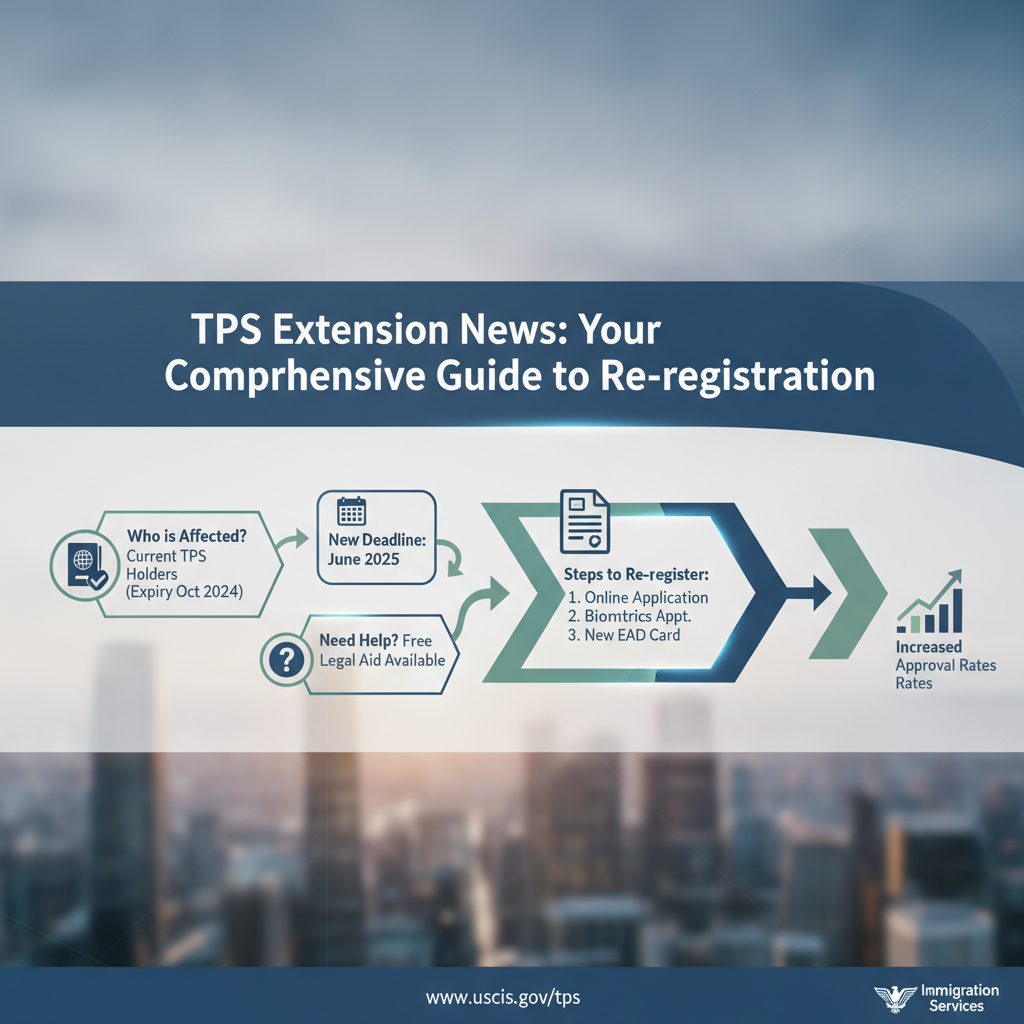
The landscape of U.S. immigration law is constantly shifting, and few areas reflect this more dynamically than Temporary Protected Status (TPS). Recent announcements regarding TPS extensions for various designated countries have created a wave of both relief and urgency for hundreds of thousands of individuals and families. For those living in Orlando, Central Florida, and indeed across the entire United States, understanding these updates is not just important—it's absolutely critical to maintaining legal status and stability.
Why this news is showing up now
TPS extensions are not arbitrary decisions; they are the result of ongoing evaluations by the Secretary of Homeland Security. Under Section 244 of the Immigration and Nationality Act (INA), the Secretary can designate a country for TPS due to extraordinary and temporary conditions that prevent its nationals from safely returning. These conditions often include ongoing armed conflict, environmental disasters (such as earthquakes or hurricanes), or other extraordinary and temporary conditions. When such conditions persist, the Secretary has the authority to extend a country's TPS designation, often after a thorough review of the country's current state and a public comment period.
The news you're seeing now, as of mid-2026, likely stems from the culmination of these review processes. Many existing TPS designations were set to expire, prompting the Department of Homeland Security (DHS) to assess whether the original qualifying conditions continued to exist or whether new ones had emerged. These extensions provide a lifeline, allowing current TPS holders to maintain their status and work authorization in the U.S. for another designated period, typically 18 months.
How it can affect Florida residents
Florida is home to one of the largest and most diverse immigrant populations in the United States. Our state, and particularly the vibrant community of Orlando and Central Florida, has a significant number of residents from countries that have been designated for TPS. This includes individuals from nations like El Salvador, Haiti, Honduras, Nicaragua, Venezuela, and others, who have built lives, careers, and families here.
For these Floridian families, news of a TPS extension is profoundly impactful:
- Continued Legal Presence: An extension means that eligible individuals can continue to live and work legally in Florida, without fear of deportation, for the duration of the new period. This stability allows them to continue contributing to our economy and communities.
- Work Authorization: With an extension comes the opportunity to renew one's Employment Authorization Document (EAD). For many, this EAD is their primary means of legal employment, supporting their families, paying taxes, and contributing to the local economy, from Orange County to the entire I-4 corridor.
- Travel Authorization: An extension also allows individuals to apply for Advance Parole, which grants permission to travel outside the U.S. and return without jeopardizing their TPS status. This is crucial for family emergencies or vital trips.
- Community Stability: When families are secure in their status, communities thrive. Children can continue their education without disruption, parents can maintain their jobs, and local businesses benefit from a stable workforce. This news reinforces Imigrar's mission to "Keep Families Together."
However, extensions also come with critical responsibilities. TPS holders must understand the re-registration process and strict deadlines to avoid losing their status. Missing a deadline or submitting an incomplete application can have severe consequences, underscoring the importance of accurate, timely action.
Feeling overwhelmed by TPS extension news? Our Orlando immigration team is here to provide clarity and expert guidance. Don't risk your status. Call +1 786-791-3106 for a free consultation, or message us online. Se Habla Español.
What Temporary Protected Status (TPS) Is (and Why It Matters)
Temporary Protected Status (TPS) is a humanitarian immigration benefit provided by the U.S. government to eligible nationals of certain countries who are already present in the United States. It's a temporary status, as its name suggests, designed to protect individuals when conditions in their home country make it unsafe for them to return or when their country is unable to handle the return of its nationals adequately.
Why does it matter so much? Because TPS offers a crucial lifeline. It allows individuals who would otherwise face immense danger or hardship upon return to their home countries to live and work legally in the U.S. for a specified period. This status provides protection from deportation and grants eligibility for an Employment Authorization Document (EAD) and, in some cases, travel authorization. For many, TPS is the only legal pathway they currently have to live safely and provide for their families in the United States.
A plain-English definition
Imagine your home country experiences a massive natural disaster, like a devastating earthquake or a prolonged civil war. If you were already in the United States when that disaster happened, the U.S. government might decide it's too dangerous for you to go back. So, they grant you "Temporary Protected Status." This means, for a set period (usually 6, 12, or 18 months), you can legally stay in the U.S., get a work permit, and you won't be deported. When that period is almost up, the government reviews the situation in your home country. If it's still dangerous, they might extend your TPS, meaning you'll need to re-register to keep your status. If conditions improve, TPS might be terminated, and you'd need to explore other immigration options.
Key terms you need to know
Navigating TPS requires understanding some specific terminology:
- Designation: This is the initial act by the Secretary of Homeland Security to grant TPS to a specific country due to qualifying conditions (armed conflict, environmental disaster, or extraordinary and temporary conditions).
- Extension: When the initial designation period (or a previous extension) is set to expire, the Secretary of Homeland Security reviews the country's conditions. If the qualifying conditions persist, the designation period is extended for another term (e.g., 18 months). This is what the recent news is about.
- Redesignation: In some cases, a country's TPS status might be terminated, but then new, severe conditions arise. In such instances, the Secretary can "redesignate" the country for TPS, allowing individuals who arrived after the initial designation date (but before the redesignation date) to apply.
- Re-registration Period: This is a specific, limited timeframe (often a 60-day window) during which current TPS beneficiaries must file their applications to extend their status. Missing this deadline can lead to loss of status.
- Employment Authorization Document (EAD): Also known as a work permit, this card allows TPS beneficiaries to legally work in the U.S. for the duration of their TPS status. It's crucial for financial stability.
- Travel Authorization (Advance Parole): This is a document, Form I-131, that grants a TPS beneficiary permission to travel outside the United States and return without jeopardizing their TPS status. It's not a visa, but an authorization to be paroled back into the U.S.
- USCIS (U.S. Citizenship and Immigration Services): The government agency responsible for adjudicating TPS applications, EADs, and travel documents. You will interact with USCIS for all aspects of your TPS journey.
- Beneficiary: An individual who has been granted TPS.
Current Immigration Law: The Foundation of TPS
The legal basis for Temporary Protected Status (TPS) is found in Section 244 of the Immigration and Nationality Act (INA), specifically 8 U.S.C. § 1254a. This statute outlines the conditions under which the Secretary of Homeland Security can designate a foreign country for TPS and the eligibility requirements for individuals seeking this protection. Understanding this legal framework is essential for anyone applying for or re-registering for TPS.
The power to grant and extend TPS lies with the executive branch, specifically the Secretary of Homeland Security, in consultation with other government agencies. This means that TPS decisions can be influenced by foreign policy considerations, humanitarian concerns, and domestic political pressures, leading to the dynamic and sometimes unpredictable nature of TPS designations and extensions.
Federal requirements
To be eligible for TPS, both the country and the individual must meet specific federal requirements:
For Country Designation: The Secretary of Homeland Security may designate a country for TPS if:
- There is an ongoing armed conflict within the state, posing a serious threat to the personal safety of nationals if they were to return.
- There has been an earthquake, flood, drought, epidemic, or other environmental disaster resulting in a substantial, but temporary, disruption of living conditions, and the foreign state is unable to handle the return of its nationals adequately.
- There are extraordinary and temporary conditions in the foreign state that prevent nationals from returning safely, and the U.S. Attorney General (now Secretary of Homeland Security) finds it contrary to U.S. national interests to return such nationals.
For Individual Eligibility (Initial Registration or Re-registration): To be granted or maintain TPS, an individual must:
- Be a national of a country designated for TPS, or a person without nationality who last habitually resided in that country.
- Have been continuously physically present (CPP) in the U.S. since the effective date of the most recent designation.
- Have been continuously resided (CR) in the U.S. since the date specified for their country's designation. Brief, casual, and innocent departures do not break continuous physical presence or residence.
- Apply for TPS within the initial registration period or the re-registration period for extensions.
- Not be inadmissible under certain grounds, including criminal offenses (felony or two or more misdemeanors), persecution of others, or certain national security grounds.
- Not have failed to register for selective service if required to do so.
Important: Even if your country's TPS designation is extended, you must still meet individual eligibility criteria, especially concerning criminal history and continuous presence in the U.S. Any travel outside the U.S. without Advance Parole can also jeopardize your status.
The primary form for TPS application and re-registration is Form I-821, Application for Temporary Protected Status. If you wish to work, you must also file Form I-765, Application for Employment Authorization. For travel, Form I-131, Application for Travel Document, is required.
For the most up-to-date information and to download forms, always refer to the USCIS official website.
Florida-specific considerations
While TPS is a federal program, its impact is deeply felt at the state and local levels. For Florida residents, particularly those in Orlando, Tampa, Miami, and other major metropolitan areas with large immigrant communities, the federal TPS law dictates their ability to live, work, and contribute to the local economy. There are no Florida-specific laws that add to or detract from federal TPS requirements, but several practical considerations apply:
- Local USCIS Field Offices: If your case requires an interview or biometrics, you may be scheduled at the Orlando USCIS Field Office or another office within Florida. Knowing the location and procedures of these offices is beneficial.
- Driver's Licenses and State IDs: With a valid EAD and TPS approval notice, Florida residents can apply for or renew a Florida driver's license or state identification card, which is crucial for daily life, employment, and navigating the I-4 corridor. The Department of Highway Safety and Motor Vehicles (DHSMV) will recognize your federal immigration status.
- Community Resources: Florida has numerous non-profit organizations and community groups that offer assistance to immigrants, often complementing the legal services provided by firms like Imigrar. These resources can be particularly helpful during re-registration periods.
- Legal Support: The complexity of federal immigration law, combined with the nuances of individual cases, makes legal representation invaluable. For Central Florida residents, having an experienced immigration attorney in Orlando ensures that all federal requirements are met, and local procedures are understood.
How to Re-Register for TPS: A Complete Step-by-Step Guide
The announcement of a TPS extension means that current beneficiaries must take action to maintain their status. Re-registration is not automatic. It requires careful attention to detail and adherence to strict deadlines. Here’s a comprehensive, step-by-step guide to help you navigate the process.
1) Determine Your Eligibility and Re-registration Period
Before you do anything else, confirm that your country has received a TPS extension and identify the specific re-registration window. USCIS will announce a specific 60-day window during which you must submit your application. This information is typically found on the USCIS website for your specific country's TPS designation.
- Check Your Country's Status: Visit the USCIS TPS webpage and find the section for your country to confirm the extension and new expiration date.
- Verify Individual Eligibility: Ensure you still meet all individual requirements. Have you maintained continuous physical presence? Have you committed any new crimes? Any travel outside the U.S. without Advance Parole could jeopardize your eligibility.
- Note the Deadline: Mark the re-registration deadline prominently on your calendar. Missing this deadline is one of the most common reasons for loss of TPS.
2) Gather Required Documents
Thorough documentation is paramount. Start gathering these items well in advance:
- Proof of Identity and Nationality:
- Copy of your birth certificate with photo identification.
- Copy of your passport (valid or expired).
- Copy of national identity document from your country of origin with photo and/or fingerprint.
- Proof of Continuous Residence (CR): Documents showing you have lived in the U.S. since your country's last CR date (not just the most recent extension date). Examples include:
- Employment records (pay stubs, W-2 forms, letters from employers).
- Rent receipts, utility bills, mortgage statements.
- School records (transcripts, report cards).
- Medical records (hospital or doctor bills).
- Bank statements.
- Affidavits from friends, relatives, or employers attesting to your presence.
- Proof of Continuous Physical Presence (CPP): Documents showing you have been physically present in the U.S. since your country's CPP date. These often overlap with CR documents but focus on physical presence.
- Previous TPS Documentation:
- Copy of your previous Form I-797, Approval Notice for TPS.
- Copy of your most recent Employment Authorization Document (EAD).
- Passport-Style Photos: Two identical, unmounted, color passport-style photographs taken within 30 days of filing.
- Fee Payment: Check, money order, or credit card payment for filing fees (or fee waiver application, if applicable).
Reminder: Provide copies of documents, not originals, unless specifically requested by USCIS. Keep a complete copy of your entire application package for your records.
3) Complete and File Form I-821, Application for Temporary Protected Status
This is the core form for TPS re-registration. Accuracy is vital.
- Download the Latest Form: Always download the most current version of Form I-821 from the USCIS Forms page.
- Fill Out Completely: Answer every question truthfully and accurately. If a question doesn't apply, write "N/A" (Not Applicable).
- Criminal History: Be honest about any arrests, charges, or convictions, even if they were minor or dismissed. Consult with an attorney if you have any criminal history, as it can affect your eligibility.
- Sign the Form: An unsigned form will be rejected.
- Assemble Your Application: Attach all supporting documents in an organized manner. USCIS prefers applications to be bound with a single binder clip or rubber band.
- Mail Your Application: Send your completed Form I-821 to the correct USCIS filing address for your country and state, as listed on the USCIS website. Use a mailing service that provides tracking, such as certified mail with a return receipt.
4) File Form I-765, Application for Employment Authorization (Optional but Recommended)
If you wish to continue working legally in the U.S., you must file Form I-765 along with or shortly after your Form I-821.
- Download the Latest Form: Get the current Form I-765 from the USCIS website.
- Fill Out Carefully: For TPS re-registrants, your eligibility category will typically be (c)(10).
- Include Photos: Attach two new passport-style photos.
- Fee Payment: Include the filing fee for Form I-765, or a request for a fee waiver (Form I-912) if applicable.
- Mail with I-821: It's generally recommended to mail Form I-765 in the same package as your Form I-821 to ensure they are processed together.
Warning: While USCIS often provides automatic EAD extensions for a specific period (e.g., 180 days or longer) for certain TPS categories, you still need to file Form I-765 for a new card. Do not assume your EAD will be automatically renewed indefinitely without filing.
5) Consider Form I-131, Application for Travel Document (If Needed)
If you anticipate needing to travel outside the U.S. during the next TPS period, you must apply for Advance Parole.
- Download the Latest Form: Obtain Form I-131 from the USCIS website.
- Explain Travel Purpose: Clearly state the reason for your travel (e.g., family emergency, humanitarian reasons, employment).
- Include Photos: Attach two new passport-style photos.
- Fee Payment: Include the filing fee for Form I-131, or a request for a fee waiver (if applicable).
- File Early: It can take several months for Advance Parole to be approved. Do not travel outside the U.S. before receiving your approved Form I-512L, Advance Parole Document. Traveling without it could result in denial of re-entry or loss of TPS.
6) Attend Biometrics Appointment (If Scheduled)
After filing, USCIS will likely send you an appointment notice (Form I-797C) for biometrics (fingerprints, photos, and signature). This typically occurs at an Application Support Center (ASC).
- Do Not Miss It: Attend your appointment on time with the appointment notice and a valid photo ID.
- Rescheduling: If you absolutely cannot make it, follow the instructions on the notice to request a reschedule immediately. Unexcused absences can lead to denial.
- Orlando Biometrics: For many Central Florida residents, this appointment will be at the Orlando Application Support Center.
7) Monitor Your Application Status
Once you've filed, you can track your application's progress.
- Receipt Notices: USCIS will send you receipt notices (Form I-797C) for each form you filed (I-821, I-765, I-131). These notices contain your receipt numbers, which are crucial for tracking.
- Online Case Status: Use your receipt numbers to check your case status online at the USCIS Case Status Online tool.
- Processing Times: Check the USCIS Processing Times page for an estimate of how long it might take to process your application. Times can vary significantly.
- Respond to RFEs: If USCIS sends a Request for Evidence (RFE) or Notice of Intent to Deny (NOID), respond promptly and thoroughly with all requested information. Failure to do so will likely result in a denial.
Need personalized assistance with your TPS re-registration? The intricate details and strict deadlines can be daunting. Let Imigrar's experienced immigration attorneys guide you through every step. Call +1 786-791-3106 today for a free, confidential consultation. Se Habla Español.

Practical Steps You Can Take Today to Secure Your TPS
The best defense against immigration complications is proactive planning. With TPS extensions announced, there are immediate, practical steps you can take right now to ensure a smooth re-registration process and protect your status.
- Consult with an Experienced Immigration Attorney: This is arguably the most crucial step. An attorney can assess your specific eligibility, review your documents, help you complete forms accurately, and advise you on any potential complications (like criminal history or prior travel). For Central Florida residents, Imigrar offers expert guidance right here in Orlando.
- Locate and Organize All Existing Immigration Documents: Gather your previous TPS approval notices (Form I-797), EADs, any travel documents, and your current passport. Create a dedicated folder or digital file for all these essential papers.
- Begin Gathering Proof of Continuous Residence and Physical Presence: Don't wait until the re-registration window opens. Start collecting utility bills, pay stubs, bank statements, rental agreements, school records, and other evidence that demonstrates your continuous presence in the U.S. since your country's last CR and CPP dates.
- Check USCIS Website for Specific Re-registration Dates: Regularly visit the USCIS TPS webpage for your country. The official re-registration window and new expiration dates will be published there. Mark these dates clearly on your calendar.
- Update Your Address with USCIS: If you have moved since your last TPS application, file Form AR-11, Alien's Change of Address Card, online or by mail immediately. Failing to do so can result in missed notices and critical deadlines.
- Review Your Criminal Record (if applicable): If you have any arrests or convictions, no matter how minor or old, obtain certified copies of all court dispositions. Discuss these immediately with your attorney, as certain offenses can render you ineligible for TPS.
- Plan for Filing Fees: Be aware of the current USCIS


