


The reporting that sparked this guide: TPS (Temporary Protected Status) Extension News (Legal News)
What This News Means for Immigrants in Orlando and Across Florida
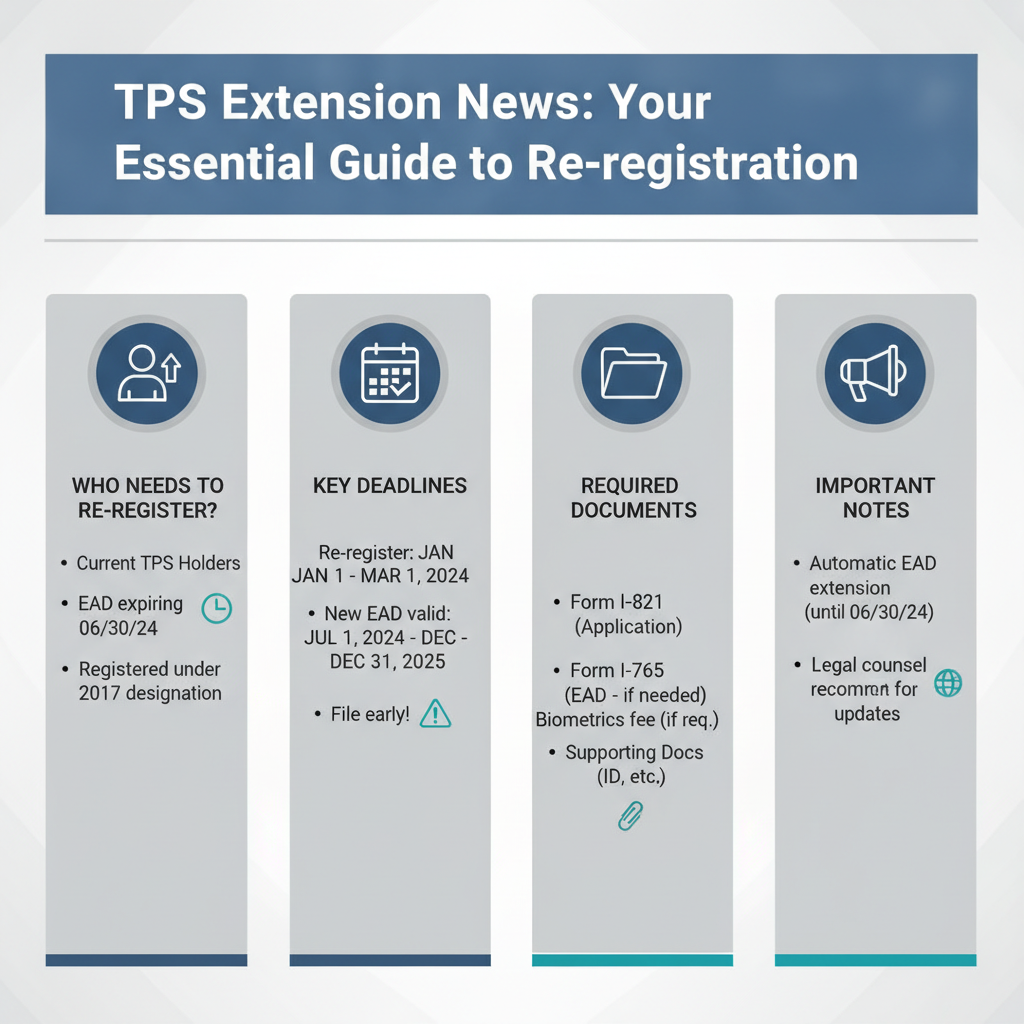
Recent reports in immigration legal news cycles indicate a continued focus on Temporary Protected Status (TPS) designations and extensions. For many individuals and families who have found safety and stability under TPS, these announcements are not just headlines—they are lifelines. At Imigrar, we understand the profound impact such news has on our community in Orlando, Central Florida, and nationwide.
Why this news is showing up now
The landscape of Temporary Protected Status is constantly evolving. Governments periodically review the conditions in designated countries to determine whether the extraordinary circumstances that led to TPS designation still exist. These circumstances can include ongoing armed conflict, environmental disaster, or other temporary and extraordinary conditions that prevent a country's nationals from safely returning. When a country's designation is set to expire, the Department of Homeland Security (DHS) must make a decision: terminate TPS, extend it, or even redesignate the country, which can open eligibility to new applicants.
We are currently in a period where several TPS designations are approaching their expiration dates. This naturally leads to increased media attention and legal analysis as advocacy groups, policymakers, and affected communities await DHS’s decisions. The news you’re seeing reflects this ongoing process of review and the critical decisions being made that impact hundreds of thousands of individuals. These decisions are often influenced by current geopolitical events, humanitarian conditions, and legal challenges, making the news cycle particularly active around these crucial junctures.
How it can affect Florida residents
Florida, particularly the Orlando metropolitan area and the I-4 corridor, is home to vibrant immigrant communities from various TPS-designated countries. For these residents, news of a TPS extension or redesignation is paramount. An extension means continued legal presence, work authorization, and protection from deportation—allowing families to remain together and contribute to our local economy and culture. It provides certainty in an otherwise uncertain immigration system.
Conversely, a termination of TPS for a specific country could plunge thousands of Florida residents into a state of anxiety, facing the potential loss of their legal status and the threat of deportation. This could disrupt families, businesses, and communities across Orange County and beyond. Therefore, staying informed about these developments is not merely a recommendation; it is a necessity for those whose lives are directly impacted. Imigrar is committed to providing timely, accurate information and expert legal guidance to help our neighbors navigate these complex changes, ensuring they understand their rights and options. Our goal is always to Keep Families Together, and TPS extensions are a vital part of that mission.
Need Help Navigating TPS News? Our Orlando immigration team is ready to assist. Call +1 786-791-3106 for a free consultation, or message us online. Se Habla Español.
What Temporary Protected Status (TPS) Is (and Why It Matters)
Temporary Protected Status (TPS) is a humanitarian immigration benefit provided by the United States to eligible nationals of certain countries. It is a temporary status, meaning it does not lead directly to permanent residency (a Green Card), but it offers crucial protections and benefits for a designated period.
A plain-English definition
Imagine your home country is experiencing a major crisis—perhaps a devastating earthquake, a widespread epidemic, or a violent civil war. It's simply not safe for you to return. The U.S. government, recognizing these dire circumstances, can offer a temporary solution: Temporary Protected Status (TPS). If you're from a designated country and meet certain eligibility requirements, TPS allows you to live and work legally in the U.S. for a specific period, protecting you from deportation. It’s a temporary safe haven until conditions in your home country improve enough for a safe return.
Key terms you need to know
- Designation: The act by the Secretary of Homeland Security to grant TPS to a country due to specific conditions. This is the initial decision that makes nationals of that country eligible.
- Redesignation: This occurs when DHS determines that new, extraordinary conditions in a country warrant extending TPS eligibility to individuals who arrived in the U.S. after the initial designation date, as well as to those previously eligible.
- Extension: When DHS decides that the original conditions for a country's TPS designation continue, they extend the period of TPS for current beneficiaries. This is what much of the recent news focuses on.
- Re-registration: The process by which current TPS beneficiaries must reapply to maintain their status during an extension period. This is a critical step to avoid losing benefits.
- Employment Authorization Document (EAD): Often referred to as a "work permit," this document (Form I-766) allows TPS beneficiaries to legally work in the U.S.
- Prima Facie Eligibility: This means that an applicant appears to meet all the basic requirements for TPS based on the initial documentation provided. It's a preliminary determination.
- Continuous Physical Presence (CPP): A requirement that an applicant has been continuously present in the U.S. since a specific date set by the TPS designation for their country.
- Continuous Residence (CR): A requirement that an applicant has continuously resided in the U.S. since a specific date set by the TPS designation for their country. Brief, casual, and innocent absences do not break continuous residence.
Understanding these terms is vital for anyone considering applying for or re-registering for TPS. It’s a status that offers stability and hope, allowing individuals to escape immediate danger and build a temporary life in the U.S. while contributing to communities like those in Orlando.
Current Immigration Law: The Foundation of TPS
Temporary Protected Status is rooted in U.S. federal immigration law, specifically Section 244 of the Immigration and Nationality Act (INA), found at 8 U.S.C. § 1254a. This section grants the Secretary of Homeland Security the authority to designate a foreign country for TPS. The decision to designate a country is made when conditions in that country fall into one of three categories:
- Ongoing armed conflict: This prevents the safe return of nationals.
- Environmental disaster: Such as an earthquake, hurricane, or epidemic, resulting in a substantial, temporary disruption of living conditions.
- Other extraordinary and temporary conditions: These prevent nationals from safely returning to their home country.
The Secretary must also determine that allowing these individuals to remain in the U.S. is not contrary to the national interest. Once a country is designated, the Secretary also sets the effective date of the designation, the eligibility criteria for nationals, and the re-registration period for current beneficiaries.
Federal requirements for TPS
To be eligible for TPS, an individual must meet several federal criteria:
- Be a national of a country designated for TPS, or a person without nationality who last habitually resided in that country.
- File during the initial registration period for their country, or during any extension of that period (re-registration).
- Have been continuously physically present in the U.S. since the effective date of the most recent designation for their country.
- Have continuously resided in the U.S. since the date specified for their country's designation.
- Pass security and background checks.
There are also certain bars to TPS eligibility. An individual may be ineligible if they:
- Have been convicted of any felony or two or more misdemeanors committed in the U.S.
- Are found inadmissible under certain grounds of the INA, including those related to criminal activity, national security, or persecution of others.
- Fail to meet the continuous physical presence and continuous residence requirements.
- Fail to register for TPS without good cause during the initial registration period or any extension.
Important: Even if you meet the general eligibility, it is crucial to understand these bars to eligibility. A consultation with an experienced immigration attorney can help you determine if any apply to your situation.
The primary forms used for TPS are:
- Form I-821, Application for Temporary Protected Status
- Form I-765, Application for Employment Authorization (if you need a work permit)
- Form I-601, Application for Waiver of Grounds of Inadmissibility (if applicable)
You can find these forms and detailed instructions on the USCIS Forms page. For comprehensive information, always refer to the USCIS official website.
Florida-specific considerations
While TPS is a federal program, its impact and implementation have specific nuances for Florida residents. There are no Florida-specific laws that alter TPS eligibility or benefits; federal law governs all aspects of the program. However, living in Florida means:
- USCIS Field Office: If your case requires an interview or biometrics appointment, you will likely interact with the USCIS Field Office in Orlando or another Florida location. The Orlando USCIS Field Office handles many cases for Central Florida residents.
- Community Resources: Florida has a robust network of community organizations and legal aid groups that support immigrant populations. Imigrar is proud to be a part of this network, offering specialized legal services for TPS applicants in Orlando and surrounding areas.
- Legal Expertise: Navigating federal immigration law can be complex. For Central Florida residents, having access to local, knowledgeable immigration attorneys who are familiar with USCIS procedures and the specific needs of our diverse communities is invaluable.
It's important to remember that TPS does not confer permanent resident status. However, it provides a crucial layer of protection and the ability to work legally, offering beneficiaries a chance to build stable lives in Florida while their home countries recover.
Confused by TPS Requirements? Let Imigrar clarify your options. Our Orlando immigration lawyers are here to help. Call +1 786-791-3106 for a free consultation. Se Habla Español.
How to Re-register for TPS: A Complete Step-by-Step Guide
If your country’s TPS designation has been extended, you will need to re-register to maintain your status and benefits. Missing the re-registration deadline can lead to loss of status and potential deportation. This guide outlines the essential steps for re-registration.
1) Determine Your Eligibility and Country Designation
Before you begin, confirm that your country is indeed designated for TPS and that an extension has been announced. USCIS will publish a Federal Register notice announcing the extension and outlining the specific re-registration period and eligibility criteria. This notice is your authoritative source of information. You must have continuously maintained your TPS status since your initial grant to be eligible for re-registration. Ensure you have not committed any disqualifying crimes or other infractions.
- Required Documents for this step (for self-assessment):
- Official Federal Register notice for your country’s TPS extension (available on USCIS official website).
- Your previous TPS approval notice (Form I-797).
- Any records of travel outside the U.S. since your last TPS approval.
2) Gather All Necessary Documentation
Accurate and complete documentation is critical. Start gathering these items well in advance of the re-registration deadline. You will need to prove your identity, nationality, residence, and that you maintained your TPS status.
- Required Documents for Re-registration:
- Copy of your most recent TPS approval notice (Form I-797).
- Copy of your most recent Employment Authorization Document (EAD), Form I-766 (if applicable).
- Proof of identity and nationality (e.g., birth certificate with photo identification, national identity card from your country, passport).
- Proof of continuous residence in the U.S. since the initial designation date for your country. This can include:
- Rent receipts, utility bills, or mortgage statements.
- Employment records (pay stubs, W-2 forms).
- School records for you or your children.
- Medical records.
- Affidavits from individuals who can attest to your presence.
- Any documents related to arrests or convictions, even if they were dismissed or expunged.
- Two identical passport-style photos (if applying for a new EAD).
Warning: Ensure all foreign language documents are accompanied by a complete English translation certified by a competent translator. Submit copies, not originals, unless specifically requested by USCIS.
3) Complete and File Form I-821 (and Form I-765)
You must properly fill out and file Form I-821, Application for Temporary Protected Status. If you wish to maintain or obtain a new Employment Authorization Document (EAD), you must also file Form I-765, Application for Employment Authorization, concurrently with Form I-821.
- Steps for filing:
- Download the latest versions of Form I-821 and Form I-765 from the USCIS Forms page.
- Read the instructions thoroughly.
- Fill out all sections completely and accurately. Do not leave any sections blank; if a question does not apply, write "N/A."
- Sign both forms in blue ink. An unsigned form will be rejected.
- Calculate the correct filing fees. As of 2026, the fee for Form I-821 is typically waived for re-registrants, but there is a fee for Form I-765 unless you are eligible for a fee waiver (Form I-912). Check the USCIS Fee Schedule for current amounts.
- Assemble your application package with the forms, supporting documents, and fee payment (check or money order payable to "U.S. Department of Homeland Security").
- Mail your package to the correct USCIS lockbox facility as specified in the Federal Register notice for your country.
Important: The re-registration window is typically 60 days. You must file your application within this specific period. Late filings are generally not accepted unless there is good cause, which is difficult to prove.
4) Attend Biometrics Appointment (If Required)
After filing, USCIS will send you a receipt notice (Form I-797C) and, in most cases, an appointment notice for biometrics (fingerprints, photograph, and signature). This appointment is mandatory. Failure to attend will likely result in the denial of your application.
- During your appointment:
- Bring the appointment notice and a valid photo ID (e.g., passport, driver's license).
- Arrive on time at the designated Application Support Center (ASC). For Central Florida residents, this might be the ASC serving the Orlando area.
5) Monitor Your Application Status
You can track the progress of your application online using the receipt number provided on your Form I-797C. Visit the USCIS Case Status Online tool.
- What to expect:
- Receipt of your application.
- Biometrics appointment scheduled and completed.
- Possible Request for Evidence (RFE).
- Decision on your application.
Reminder: USCIS processing times can vary significantly. Check the USCIS Processing Times page for estimates, but be prepared for potential delays. During this time, your current TPS status and EAD remain valid for the period specified in the Federal Register notice, often with an automatic extension for several months while your re-registration is pending.
6) Respond to RFEs (Requests for Evidence)
If USCIS determines that your application is missing information or requires further clarification, they will send you a Request for Evidence (RFE). This is a critical document that must be addressed promptly and thoroughly.
- If you receive an RFE:
- Read it carefully to understand exactly what information or documents USCIS is requesting.
- Gather the requested evidence.
- Submit your response by the deadline specified in the RFE. Failure to respond on time or with sufficient evidence can lead to a denial.
- Consider consulting an attorney, especially if the RFE is complex.
7) Receive Decision and Next Steps
Once USCIS has reviewed all your information, they will issue a decision. If your re-registration is approved, you will receive a new TPS approval notice (Form I-797) and, if requested, a new EAD card (Form I-766). If denied, the notice will explain the reasons for the denial and outline any appeal options.
- After approval:
- Keep your new approval notice and EAD card safe.
- Be aware of the new expiration date for your TPS and EAD.
- Continue to monitor news for future extensions.
- If denied:
- Consult with an immigration attorney immediately to understand the reasons for denial and explore potential appeals or other immigration relief options.
Practical Steps You Can Take Today
Proactive preparation is key to a smooth TPS re-registration process. Don't wait until the last minute!
Actionable Checklist:
- Verify Your Country's Status: Check the official USCIS website for Federal Register notices concerning TPS extensions for your country. Make sure you know the re-registration window.
- Locate All Previous TPS Documents: Gather your initial TPS approval notice, previous EADs, and any other correspondence from USCIS regarding your TPS status.
- Collect Proof of Continuous Residence: Start compiling documents that show your physical presence in the U.S. since your initial designation date. This includes utility bills, bank statements, rental agreements, pay stubs, and school records from your time in Florida.
- Review Your Personal History: Reflect on any arrests, convictions, or significant absences from the U.S. since your last TPS approval. Be prepared to disclose this information and discuss it with an attorney.
- Check Your Passport and IDs: Ensure your passport and any other identity documents are valid and readily accessible.
- Save for Fees: If you are applying for a new EAD, be aware of the filing fees. Start setting aside funds or prepare a fee waiver application (Form I-912) if you qualify.
- Consult with an Immigration Attorney: This is arguably the most important step. An attorney can help you assess eligibility, gather documents, properly fill out forms, and address any potential issues.
Document Preparation Guidance
- Organize Everything: Create a physical or digital folder for all your TPS-related documents. Label everything clearly.
- Make Copies: Always keep original documents and submit only copies to USCIS unless they specifically request originals.
- Certified Translations: If any document is not in English, you MUST provide a certified English translation. The translator must attest that they are competent to translate and that the translation is accurate.
- Affidavits: If you lack official documents for certain periods, consider obtaining affidavits from friends, family, or employers who can attest to your continuous residence and good moral character.
Timeline Expectations
The re-registration period is typically a 60-day window. It is imperative to file within this timeframe. After filing, processing times can vary:
- Receipt Notice: You should receive a receipt notice (Form I-797C) within 2-4 weeks.
- Biometrics Appointment: An appointment notice usually arrives within 4-8 weeks after filing. The appointment itself will be shortly after.
- EAD Processing: Processing times for the Form I-765 can range from several months to over a year, depending on USCIS backlogs. However, Federal Register notices often include an automatic extension of existing EADs for a specified period (e.g., 180 days, 540 days) while the re-registration application is pending. This allows you to continue working legally.
- Final Decision: A final decision on your Form I-821 can also take several months to over a year.
Reminder: Check the USCIS Processing Times page frequently, filtering by Form I-821 and Form I-765 for your service center.
How Imigrar Helps Immigrants in Orlando
At Imigrar, our mission is to Keep Families Together. We understand the anxieties and complexities that come with navigating the U.S. immigration system, especially when dealing with critical benefits like Temporary Protected Status. Our Orlando-based firm serves clients not just in Central Florida, but nationwide, providing expert legal guidance and compassionate support.
Our experience and expertise
Our team of dedicated immigration attorneys possesses extensive experience in TPS applications, re-registrations, and related immigration matters. We stay up-to-date with the latest Federal Register notices, policy changes from DHS, and evolving legal interpretations to provide our clients with the most accurate and effective advice. We have successfully assisted countless individuals from various TPS-designated countries, helping them secure their status and employment authorization.
We pride ourselves on our thorough approach, from initial eligibility assessment to meticulous document preparation and timely submission. We understand the unique challenges faced by immigrants in Orlando, whether it's navigating local resources or understanding how federal policies impact their lives in Orange County. Our firm is equipped to handle complex cases, including those with criminal histories or other potential bars to eligibility, striving to find every possible avenue for relief.
Free consultation offer
We believe that everyone deserves access to quality legal advice. That's why Imigrar offers a free, no-obligation consultation. During this initial meeting, we will:
- Review your specific situation and immigration history.
- Assess your eligibility for TPS re-registration or other immigration benefits.
- Explain the current legal landscape and any recent news affecting your case.
- Outline the steps involved in your application and discuss potential challenges.
- Answer your questions and provide clear, actionable advice.
This is your opportunity to get expert insights without financial commitment, helping you make informed decisions about your future. We are here to be your trusted legal partners.
Se Habla Español: We are proud to serve our diverse community, and our team is fully bilingual in English and Spanish. We ensure that language is never a barrier to receiving the legal assistance you need and deserve.
Ready to Re-register for TPS? Don't risk your status. Contact Imigrar today for expert legal help. Call +1 786-791-3106 for your free consultation, or reach out online. Se Habla Español.

Frequently Asked Questions About TPS Extensions
Q: Can I apply for TPS if I entered the U.S. without inspection (illegally)?
A: Yes, generally. Unlike many other immigration benefits, lawful entry is not a requirement for TPS eligibility. You must meet the continuous physical presence and continuous residence requirements from the designated date for your country. However, if you have other immigration violations or criminal history, it's crucial to consult with an attorney, as these could still bar you from TPS.
Q: Does TPS lead to a Green Card or permanent residency?
A: TPS itself does not directly lead to a Green Card or permanent residency. It is a temporary status. However, in some cases, TPS beneficiaries may be eligible to apply for other immigration benefits, such as Adjustment of Status, if they have another qualifying path, like a U.S. citizen spouse or certain employment-based petitions. The ability to travel with a travel document (Form I-131, Advance Parole) while on TPS can also sometimes facilitate the adjustment of status process for those who entered without inspection, but this is a complex area of law requiring expert advice.
Q: How long does TPS re-registration and EAD processing take?
A: Processing times vary significantly. You can expect to receive a receipt notice within a few weeks and a biometrics appointment notice within a couple of months. The actual processing of Form I-821 and Form I-765 can take anywhere from 6 months to over a year. However, USCIS often issues automatic extensions for existing EADs for a period (e.g., 180 or 540 days) in the Federal Register notice for a TPS extension, allowing you to continue working legally while your application is pending. Always check the USCIS Processing Times page for the most current estimates.
Q: What if I don't have all my original documents, like my birth certificate or old EAD?
A: While originals are preferred


