


What This News Means for Immigrants in Orlando and Across Florida
Why this news is showing up now
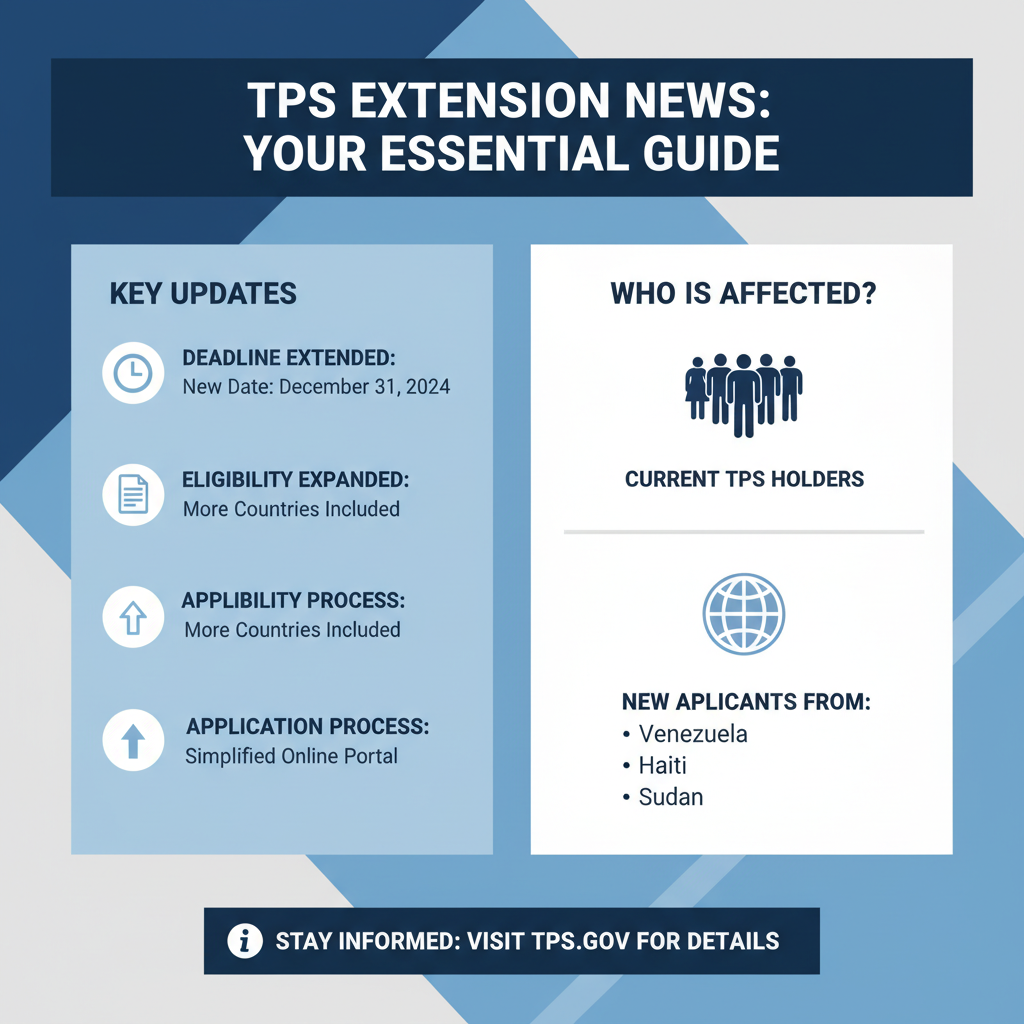
The news cycle frequently highlights updates regarding **Temporary Protected Status** because the designation for each country is temporary by nature. Countries are designated for TPS due to extraordinary and temporary conditions, such as ongoing armed conflict, environmental disaster, or other extraordinary and temporary conditions that prevent nationals from safely returning. These designations typically last for 6, 12, or 18 months and are then subject to review by the Secretary of Homeland Security. When the designation period for a country approaches its end, the Secretary must decide whether to extend the existing designation, terminate it, or in some cases, redesignate the country for TPS. This decision-making process, often influenced by ongoing conditions in the designated country and current U.S. foreign policy, generates significant legal and public interest. Recent news reports, like those from Legal News, often reflect these crucial decisions, signaling upcoming re-registration periods or changes in eligibility for specific national groups. For beneficiaries, these announcements are not just news; they are critical deadlines and opportunities to maintain lawful presence and work authorization in the U.S.How it can affect Florida residents
Florida is home to a significant number of immigrants from various TPS-designated countries, making any news regarding **Temporary Protected Status** particularly relevant to residents here. Orlando, in particular, is a melting pot of cultures and nationalities, with many families building their lives and contributing to the local economy under the protection of TPS. When a country's TPS designation is extended, it means that current beneficiaries from that country must typically re-register within a specific window to maintain their status and their **Employment Authorization Documents (EADs)**. Failing to re-register on time can lead to the loss of TPS benefits, including the ability to work legally and protection from removal. Conversely, if a country is redesignated for TPS, it can open doors for new applicants who meet the eligibility criteria and who arrived in the U.S. by a specified date. This can be a lifeline for individuals who previously did not qualify but are now seeking stability and protection. For families in Central Florida, whether in Orlando, Kissimmee, or along the I-4 corridor, these changes can mean the difference between remaining united and facing separation. The **Orlando USCIS Field Office** and local immigration services become central points of contact for many. Staying informed and acting swiftly is paramount. Imigrar is deeply committed to serving this community, ensuring that every family understands their options and receives the expert legal guidance needed to navigate these complex updates.Need Help? Our Orlando immigration team is ready to assist. Call +1 786-791-3106 for a free consultation, or message us online. Se Habla Español.
What Temporary Protected Status (TPS) Is (and Why It Matters)
**Temporary Protected Status (TPS)** is a humanitarian immigration benefit provided by the United States government. It offers a lifeline to foreign nationals in the U.S. who cannot safely return to their home countries due to specific, temporary conditions. Understanding TPS is crucial for anyone who may be eligible or who has family members benefiting from this status.A plain-English definition
Imagine a situation where your home country becomes unsafe – perhaps due to a devastating natural disaster, an ongoing civil war, or other severe, temporary crises. If you are already in the U.S. when this happens, the U.S. government may decide that it's too dangerous for its nationals to return. **Temporary Protected Status** is the humanitarian program that allows eligible individuals from such designated countries to temporarily live and work in the United States, without fear of deportation, until conditions in their home country improve enough for their safe return. It is, as the name suggests, temporary, and does not lead directly to permanent residency (a Green Card), though TPS holders may be eligible for other immigration benefits.Key terms you need to know
Navigating TPS requires familiarity with several important terms: * **Designation:** The official act by the Secretary of Homeland Security to grant TPS to a specific country. This happens when conditions in that country meet the legal criteria. * **Extension:** When the existing TPS designation for a country is prolonged for an additional period (typically 6, 12, or 18 months) because the unsafe conditions persist. Current beneficiaries must **re-register** during the specified window. * **Redesignation:** This occurs when a country’s TPS designation is extended, but also includes a new eligibility date, allowing additional nationals from that country who arrived in the U.S. by the new cut-off date to apply for TPS for the first time. * **Termination:** If the Secretary of Homeland Security determines that conditions in a designated country have improved sufficiently, the TPS designation can be ended. This means beneficiaries will lose their TPS status on a future date and must seek other immigration relief or depart the U.S. * **Beneficiary:** An individual who has been granted TPS. * **Re-registration:** The process by which current TPS beneficiaries apply to extend their protected status and their **Employment Authorization Document (EAD)** when their country's designation is extended. This is typically a mandatory step to maintain benefits. * **Employment Authorization Document (EAD):** Also known as a work permit, this document allows TPS beneficiaries to legally work in the U.S. * **Advance Parole:** A travel document that allows TPS beneficiaries to travel outside the U.S. and return legally without jeopardizing their TPS status. This must be obtained *before* traveling. * **Lawful Presence:** While TPS does not grant permanent resident status, it does grant **lawful presence** in the United States, which is important for various immigration processes and benefits. Understanding these terms is fundamental to comprehending the implications of any TPS news and effectively managing your immigration status.Current Immigration Law: The Foundation of TPS
**Temporary Protected Status (TPS)** is a statutory benefit authorized by Section 244 of the Immigration and Nationality Act (INA), specifically 8 U.S.C. § 1254a. This law outlines the conditions under which the Secretary of Homeland Security (formerly the Attorney General) can designate a foreign country for TPS. The legal framework is precise, detailing both the reasons for designation and the eligibility requirements for individuals.Federal requirements
For a country to be designated for TPS, the Secretary of Homeland Security must find that one of the following conditions exists: 1. **Ongoing Armed Conflict:** There is an ongoing armed conflict within the state, posing a serious threat to the personal safety of nationals if they were to return. 2. **Environmental Disaster:** The country has experienced an environmental disaster (such as an earthquake, hurricane, or tsunami), or an epidemic, resulting in a substantial, but temporary, disruption of living conditions, and the foreign state is unable to handle the return of its nationals adequately. 3. **Extraordinary and Temporary Conditions:** There exist extraordinary and temporary conditions in the foreign state that prevent nationals from safely returning, and granting TPS would not be contrary to the national interest of the United States. Once a country is designated, individuals seeking TPS must meet several federal eligibility criteria: * **Nationality:** Be a national of a designated country, or a person without nationality who last habitually resided in that country. * **Continuous Physical Presence (CPP):** Have been continuously physically present in the U.S. since a specific date set by the designation. * **Continuous Residence (CR):** Have been continuously residing in the U.S. since a specific date set by the designation. * **Timely Application:** Apply for TPS within the initial registration period or during any re-registration period. * **Admissibility:** Meet general admissibility requirements for immigration benefits, with certain waivers available for specific grounds of inadmissibility. * **No Disqualifying Factors:** Not be inadmissible under certain criminal or security-related grounds, not have been convicted of any felony or two or more misdemeanors committed in the U.S., and not be subject to certain bars related to persecution. Applicants typically file **Form I-821, Application for Temporary Protected Status**, and often **Form I-765, Application for Employment Authorization**, concurrently. Additionally, some may file **Form I-601, Application for Waiver of Grounds of Inadmissibility**, if needed. For travel outside the U.S., **Form I-131, Application for Travel Document (Advance Parole)**, is required. **Important:** Each country's designation has specific cut-off dates for **Continuous Physical Presence** and **Continuous Residence**, which are critical for eligibility. These dates are announced in the Federal Register notice for each designation or extension. You can find more details on the official USCIS official website.Florida-specific considerations
While TPS is a federal program, its implementation has local implications. For beneficiaries living in Florida, especially in the Orlando area, understanding the local USCIS operations is beneficial. * **Orlando USCIS Field Office:** If your case requires an interview or biometrics appointment, you will likely interact with the **Orlando USCIS Field Office** located at 6680 Corporate Centre Blvd, Orlando, FL 32822. Knowing its location and typical procedures can help you prepare. * **Community Resources:** Central Florida, including Orange County, has numerous non-profit organizations and community centers that offer assistance with immigration paperwork, language services, and referrals. While these can be helpful, it’s crucial to distinguish between legal advice and administrative support. Only accredited representatives or licensed attorneys can provide legal counsel. * **Legal Expertise:** Given the complexities of immigration law, especially with overlapping statuses or potential inadmissibility issues, consulting with an experienced Orlando immigration attorney is highly recommended. Our team at Imigrar understands the specific challenges faced by Florida residents and can provide tailored advice.Need Help? Our Orlando immigration team is ready to assist. Call +1 786-791-3106 for a free consultation, or message us online. Se Habla Español.
How to Apply for TPS or Re-register: A Complete Step-by-Step Guide
Whether you are applying for **Temporary Protected Status (TPS)** for the first time under a new designation or redesignation, or are re-registering to maintain your existing status due to an extension, the process requires careful attention to detail and adherence to deadlines. This guide will walk you through the general steps.1) Determine Your Eligibility and Gather Essential Documents
The first crucial step is to confirm your eligibility based on the specific designation or extension for your country. Check the Federal Register notice or the USCIS TPS webpage for your country's specific dates for **Continuous Physical Presence (CPP)** and **Continuous Residence (CR)**, as well as the registration or re-registration window. **Required Documents (General List):** * **Proof of Identity and Nationality:** * Passport (required for most applicants) * Birth certificate with photo identification * National identity document from your country of origin with photo and/or fingerprint * Any other national identity document from your country of origin with photo and/or fingerprint * **Proof of Entry into the U.S. (if applicable):** * **Form I-94, Arrival/Departure Record** * Passport entry stamps * Airline tickets or boarding passes * **Proof of Continuous Residence in the U.S. since the designated date:** * Rental receipts, utility bills, or lease agreements (showing your name and address) * Employment records (pay stubs, W-2 forms, letters from employers) * School records (transcripts, report cards, attendance records) * Medical records (doctor's visits, hospital bills) * Affidavits from friends, family, or employers (attesting to your residence) * Bank statements, credit card statements * Tax returns * **Proof of Continuous Physical Presence in the U.S. since the designated date:** * Similar documents to Continuous Residence, showing your physical presence within the U.S. * **Previous Immigration Documents (if any):** * Any prior USCIS notices, receipts, or decision letters * Previous EADs (for re-registrants) **Reminder:** For re-registration, you will primarily need your previous TPS approval notice, EAD, and updated proof of continuous residence/physical presence if there have been significant gaps or changes.2) Complete the Required Forms
Accurate completion of forms is critical. Any errors or omissions can lead to delays or even denial. * **Form I-821, Application for Temporary Protected Status:** This is the primary application form for TPS. Fill it out completely and accurately. * **Form I-765, Application for Employment Authorization:** Most TPS applicants also want to work legally. File this form concurrently with **Form I-821** to request an **Employment Authorization Document (EAD)**. * **Form I-601, Application for Waiver of Grounds of Inadmissibility (if needed):** If you have certain inadmissibility issues (e.g., specific criminal convictions, immigration violations), you may need to file this waiver. Consult an attorney to determine if this applies to you. * **Form I-131, Application for Travel Document (Advance Parole) (if you plan to travel):** If you anticipate needing to travel outside the U.S. while your TPS is pending or approved, you must obtain **Advance Parole** *before* your departure. Traveling without it can terminate your TPS and make you inadmissible. **Warning:** Do NOT leave any questions blank. If a question does not apply, write "N/A." If you need more space, attach a separate sheet, clearly labeling which question you are answering.3) Pay the Correct Filing Fees
USCIS forms require specific filing fees. These fees can change, so always check the USCIS Forms page or the Federal Register notice for the most current amounts. * **Form I-821 Fee:** This fee may be waived for initial applicants under certain circumstances. For re-registrants, the fee is generally required. * **Form I-765 Fee:** This fee is typically required for both initial applicants and re-registrants. * **Biometrics Services Fee:** All applicants (initial and re-registrants) aged 14 and older must pay a biometrics services fee. * **Fee Waiver:** If you cannot afford the fees, you may be eligible to apply for a fee waiver by filing **Form I-912, Request for Fee Waiver**. Eligibility for fee waivers is strict, and a denial of a fee waiver request will delay your application. **Important:** Send a check or money order for the exact amount. Do not send cash. Clearly write the form number and your name on the check/money order.4) File Your Application Package
Once all forms are completed, signed, and all required documents and fees are prepared, assemble your application package. * **Organize:** Arrange your documents logically, usually with the forms on top, followed by supporting evidence in the order they are listed on the form instructions or a cover letter. * **Cover Letter (Recommended):** A cover letter listing all the forms and supporting documents included can help USCIS process your application more efficiently. * **Mail to the Correct Address:** The filing address depends on your specific category and where you live. Always check the "Where to File" section on the USCIS instructions for **Form I-821** and **Form I-765**. For many Florida residents, the filing address will be a USCIS Lockbox facility. * **Keep Copies:** Make a complete copy of your entire application package, including all forms, documents, and the check/money order, before mailing it. This is your personal record. * **Tracking:** Send your package via certified mail with return receipt requested, or a courier service that provides tracking. This provides proof of mailing and delivery.5) Attend Your Biometrics Appointment
After USCIS receives your application, you will typically receive a **Form I-797C, Notice of Action**, acknowledging receipt. Soon after, you will receive another notice scheduling your biometrics appointment at an Application Support Center (ASC). * **What to Bring:** Bring the appointment notice, a valid photo ID (e.g., passport, driver's license), and any other documents specified in the notice. * **Purpose:** At the appointment, USCIS will collect your fingerprints, photograph, and signature. This information is used for background checks. * **Location:** For Central Florida residents, this will likely be at an ASC within a reasonable distance from Orlando.6) Respond to Requests for Evidence (RFE) or Interview Notices
During the processing of your application, USCIS may send you a **Request for Evidence (RFE)** if they need additional information or clarification. * **Respond Promptly:** It is crucial to respond to an RFE by the deadline specified in the notice. Failure to do so can lead to a denial. * **Provide All Requested Information:** Carefully read the RFE and provide all the requested documents. If you cannot provide a specific document, explain why. * **Interviews:** While most TPS applications do not require an interview, USCIS reserves the right to schedule one. If an interview is scheduled, you will receive a notice with the date, time, and location (likely the **Orlando USCIS Field Office**).7) Receive a Decision
Once USCIS has completed its review and background checks, you will receive a decision notice. * **Approval:** If approved, you will receive an approval notice for your **Form I-821**, and if requested, your **Employment Authorization Document (EAD)** will be mailed to you. * **Denial:** If your application is denied, the notice will explain the reasons. You may have options to appeal the decision or file a motion to reopen/reconsider, but this requires immediate legal advice. **Reminder:** Processing times can vary significantly. You can check the general processing times on the USCIS Processing Times page.Need Help? Our Orlando immigration team is ready to assist. Call +1 786-791-3106 for a free consultation, or message us online. Se Habla Español.
Practical Steps You Can Take Today
Staying proactive is key when it comes to **Temporary Protected Status (TPS)**. With news of extensions and redesignations constantly emerging, knowing what steps to take right now can safeguard your status and future. Here’s an actionable checklist: * **Stay Informed:** Regularly check the official USCIS official website and the Federal Register for announcements specific to your country. Sign up for email alerts from reputable immigration news sources. * **Identify Your Re-registration Window:** If your country’s TPS designation has been extended, mark the re-registration period on your calendar immediately. Missing this window is a primary cause for loss of status. These windows are often **60 days**, but can vary. * **Organize Your Documents:** Even if you’re not applying immediately, start gathering and organizing all documents that prove your identity, nationality, **Continuous Residence**, and **Continuous Physical Presence** in the U.S. Keep them in a secure, accessible place. * **Review Your Previous Application:** If you are a re-registrant, pull out your previous TPS application and approval notices. Note any changes in your address, employment, or other personal information. * **Update Your Address with USCIS:** If you have moved, file **Form AR-11, Alien's Change of Address Card**, online or by mail within **10 days** of moving. Failure to do so can result in missed notices and critical information. * **Consult an Attorney:** Contact an experienced immigration attorney, like those at Imigrar in Orlando, for a free consultation. An attorney can assess your specific situation, confirm eligibility, review your documents, and guide you through the application or re-registration process. This is especially vital if you have any criminal history, prior immigration violations, or have traveled outside the U.S. * **Budget for Fees:** Understand the filing fees for **Form I-821** and **Form I-765**, as well as the biometrics fee. If you anticipate needing a fee waiver, gather the necessary financial documentation for **Form I-912**. **Document Preparation Guidance:** * **Originals vs. Copies:** Generally, USCIS requires copies of supporting documents, not originals, unless specifically requested. Keep your original documents safe. * **Translations:** Any document not in English must be accompanied by a complete English translation certified by the translator as accurate and competent. * **Affidavits:** If you rely on affidavits, ensure they are notarized and include the full contact information of the affiant, clearly stating their relationship to you and how they have knowledge of the facts they are attesting to. **Timeline Expectations:** * **Re-registration:** The re-registration window is typically published in the Federal Register and is often **60 days**. It is crucial to file within this period. * **Processing Times:** After filing, it can take several months for USCIS to process your application and issue a new EAD. Check the USCIS Processing Times page for current estimates, but be prepared for potential delays. * **EAD Auto-Extension:** When a country's TPS designation is extended, USCIS often publishes a notice in the Federal Register automatically extending the validity of certain EADs for a specific period (e.g., 180 or 540 days) for re-registrants who file on time. This allows you to continue working legally while your new EAD is being processed. Always check the specific Federal Register notice for your country. **Important:** Do not wait until the last minute. The complexity of these applications and the potential for unexpected issues make early preparation essential.How Imigrar Helps Immigrants in Orlando
At Imigrar, we understand the profound impact that immigration news, especially concerning **Temporary Protected Status (TPS)**, has on individuals and families. Located in Orlando, Florida, our firm is dedicated to providing compassionate, expert legal representation to immigrants not only in Central Florida but nationwide. Our tagline, "Keep Families Together," is at the core of everything we do. Our team brings extensive experience and in-depth knowledge of U.S. immigration law. We specialize in navigating the intricate processes of TPS applications, re-registrations, and related immigration benefits. We pride ourselves on: * **Expertise in TPS:** Our attorneys are well-versed in the latest TPS designations, extensions, and redesignations for all eligible countries. We stay current with Federal Register notices, USCIS policy changes, and relevant court decisions to provide accurate and up-to-date advice. * **Personalized Guidance:** We know that every case is unique. We take the time to listen to your story, assess your specific circumstances, and develop a tailored legal strategy that aligns with your goals. Whether you are applying for TPS for the first time, re-registering, or exploring pathways to permanent residency, we are here to guide you. * **Comprehensive Support:** From gathering necessary documents and meticulously completing complex forms like **Form I-821** and **Form I-765**, to preparing you for biometrics appointments and responding to **Requests for Evidence (RFEs)**, we handle every aspect of your application with precision and care. * **Strategic Planning:** We don't just focus on the immediate TPS application. We also help you understand how TPS fits into your long-term immigration goals, exploring potential avenues for **Adjustment of Status** or other forms of relief where applicable. * **Local Presence, National Reach:** While our office is in Orlando, we serve clients across Florida and throughout the United States. We are familiar with the procedures of the **Orlando USCIS Field Office** and can represent you effectively regardless of your location. We believe that access to quality legal advice should not be a barrier. That’s why we offer a **free consultation** to discuss your TPS questions and immigration needs. During this initial meeting, you can speak directly with an experienced attorney who will provide an honest assessment of your situation and outline your options. **Se Habla Español:** We are proud to serve our Spanish-speaking community with dedicated bilingual staff and attorneys who can explain complex legal concepts clearly and effectively in your native language. Our goal is to ensure you feel comfortable, understood, and confident in your legal representation. Don't navigate the complexities of TPS alone. Let Imigrar be your trusted partner in securing your future and keeping your family together.
Frequently Asked Questions
Q: Who is eligible for TPS?
A: Eligibility for **Temporary Protected Status (TPS)** is specific to individuals from countries designated by the Secretary of Homeland Security. To be eligible, you must be a national of a designated country (or a person without nationality who last habitually resided in that country), have been continuously physically present in the U.S. since a specific date, and continuously resided in the U.S. since another specific date. You must also apply within the designated registration or re-registration period and meet general admissibility requirements, avoiding certain criminal or security-related disqualifications. Each country's designation details specific dates and requirements, so always check the official USCIS TPS webpage.
Q: How does TPS impact my immigration status and future Green Card applications?
A: **Temporary Protected Status** grants you **lawful presence** in the U.S. and protection from removal, along with work authorization. It does not, however, lead directly to a Green Card (permanent residency). However, for some TPS beneficiaries, it can open pathways to other immigration benefits. For example, in some federal circuit courts (including the 11th Circuit, which covers Florida), having TPS can fulfill the "inspection and admission" requirement needed to adjust status to a Green Card if you are otherwise eligible through a qualifying family petition (e.g., filed by a U.S. citizen spouse or parent) or an employment-based petition. This is a complex area of law, and consulting an attorney is essential to understand your specific options.
Q: What are the typical timelines for TPS applications and EAD processing?
A: The timeline for **Temporary Protected Status** applications and **Employment Authorization Document (EAD)** processing can vary significantly. After filing, it can take anywhere from a few months to over a year for USCIS to process your application and issue a new EAD. Biometrics appointments are usually scheduled within a few weeks or months of filing. USCIS provides estimated processing times on their USCIS Processing Times website, but these are estimates and can fluctuate. For re-registrants, USCIS often issues automatic extensions for


