


What This News Means for Immigrants in Orlando and Across Florida
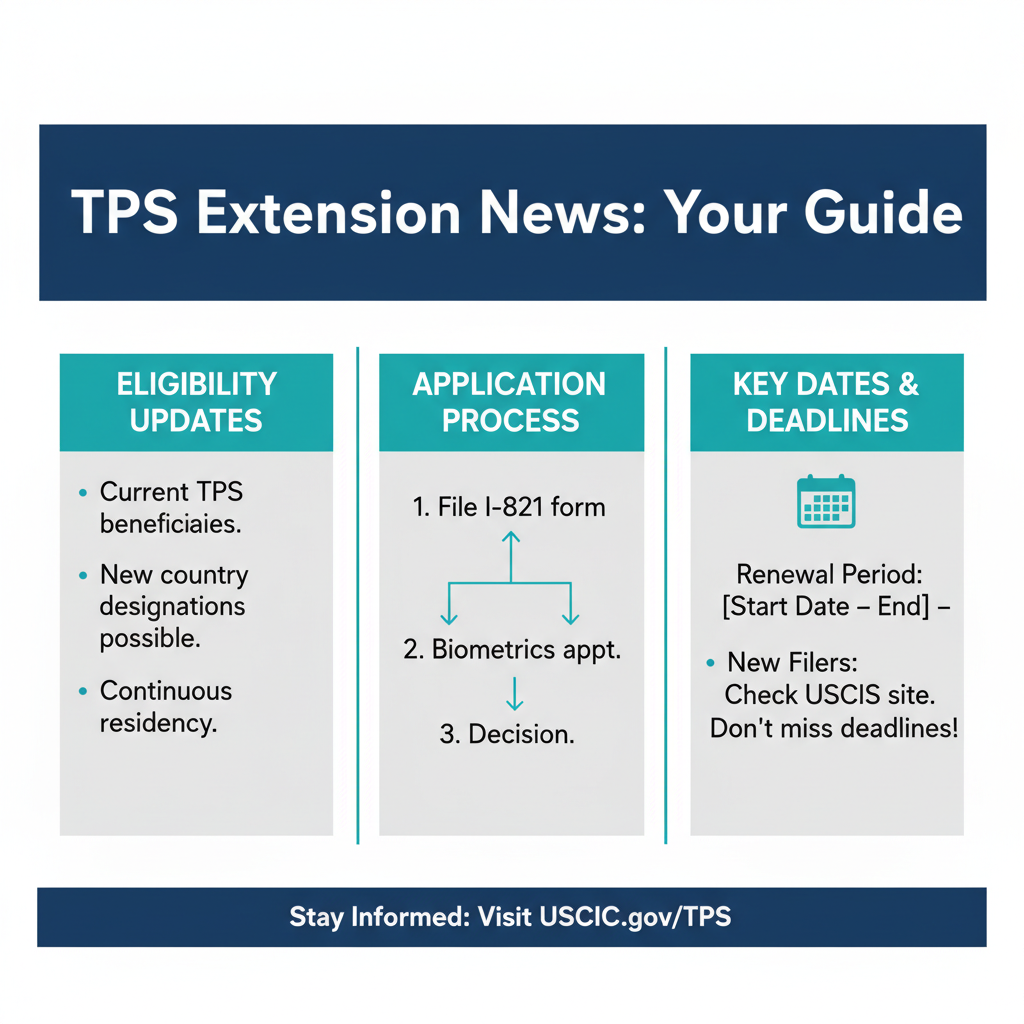
Why this news is showing up now
The U.S. government periodically reviews the conditions in countries previously designated for TPS. Under the Immigration and Nationality Act (INA), the Secretary of Homeland Security (DHS) has the authority to designate a foreign country for TPS due to extraordinary and temporary conditions that prevent its nationals from safely returning. These conditions can include ongoing armed conflict, environmental disaster, or other extraordinary and temporary conditions. When these conditions persist, or new ones arise, DHS may decide to extend the designation for an existing TPS country, redesignate a country, or even designate a new country. These decisions are typically made several months before the current expiration date of a country's designation to allow beneficiaries ample time to prepare and apply for re-registration. The recent news cycle reflects these ongoing reviews and subsequent announcements, which are a regular part of the TPS program's administration. For many, these extensions are a lifeline, allowing them to continue living and working legally in the U.S. without fear of deportation, while their home countries remain unsafe.How it can affect Florida residents
Florida, particularly Central Florida and cities like Orlando, has a diverse immigrant population, including many individuals from TPS-designated countries. For residents in Orlando, Orange County, and along the I-4 corridor, these extensions directly impact their ability to maintain legal status, renew their employment authorization, and plan for their families' futures. An extension of TPS means that current beneficiaries from the designated country can re-register to maintain their status for another specified period. This often includes an automatic extension of their existing Employment Authorization Documents (EADs), providing continuity in their ability to work. Without these extensions, individuals would face the difficult prospect of losing their legal work authorization and potentially being subject to removal proceedings. For families, the implications are profound. An extension helps keep families together, allowing parents to continue supporting their children and contributing to their communities. It means stability for employment, housing, and access to essential services. Conversely, if TPS were to be terminated for a country, it could lead to widespread uncertainty, family separation, and economic hardship for thousands of Floridians. Understanding these updates is not just about legal compliance; it's about safeguarding your life and your family's future in the U.S.Need Help Navigating TPS Extensions? Our Orlando immigration team is ready to assist. Call +1 786-791-3106 for a free consultation, or message us online. Se Habla Español.
What TPS (Temporary Protected Status) Is (and Why It Matters)
Temporary Protected Status (TPS) is a temporary immigration benefit granted by the United States to eligible nationals of designated countries. It's a critical humanitarian program designed to protect foreign nationals already in the U.S. from returning to their home countries where conditions are deemed unsafe.A plain-English definition
Imagine a natural disaster or a war breaks out in your home country, making it dangerous for you to return. If you are already in the United States when this happens, and your country is designated for TPS, the U.S. government might allow you to stay here legally for a temporary period. This status provides you with protection from deportation (removal) and the ability to obtain an Employment Authorization Document (EAD), allowing you to work legally in the U.S. It does not lead directly to a Green Card or permanent residency, but it offers a crucial lifeline during times of crisis in your home country.Key terms you need to know
Understanding these terms is vital when dealing with TPS: * **Designation**: This is the initial act by the Secretary of Homeland Security (DHS) to grant TPS to a specific country. It's based on criteria like armed conflict, environmental disaster, or other extraordinary and temporary conditions. * **Extension**: When DHS determines that the unsafe conditions in a designated country still exist, they can extend the TPS designation for an additional period, typically 6, 12, or 18 months. This allows current beneficiaries to maintain their status. * **Redesignation**: Sometimes, DHS may decide to redesignate a country for TPS. This usually happens when there's a significant change in conditions or when DHS wants to expand eligibility to individuals who arrived in the U.S. after the initial designation date. A redesignation opens a new registration period for those who qualify based on the new arrival date and other criteria. * **Re-registration Period**: This is a specific window of time (usually 60 days) during which current TPS beneficiaries must apply to renew their status when an extension is announced. **Important:** Missing this deadline can result in the loss of your TPS. * **Employment Authorization Document (EAD)**: Also known as a work permit, this document allows TPS beneficiaries to work legally in the United States. When TPS is extended, USCIS often issues automatic extensions of existing EADs for a certain period to prevent gaps in work authorization. * **Travel Authorization (Advance Parole)**: While having TPS protects you from deportation, it does not automatically allow you to travel outside the U.S. and return. To travel abroad, you must apply for Form I-131, Application for Travel Document, and receive **Advance Parole** permission before departing. Traveling without it can lead to the termination of your TPS and inability to re-enter the U.S. * **Continuous Physical Presence (CPP)**: A requirement for TPS eligibility, meaning you must have been physically present in the U.S. since a specific date set by the DHS for your country's designation. * **Continuous Residence (CR)**: Another requirement, meaning you must have resided in the U.S. since a specific date set by DHS for your country's designation. Understanding these terms is crucial for anyone seeking or holding TPS, especially when new extensions or redesignations are announced.Current Immigration Law: The Foundation of TPS
The authority for Temporary Protected Status (TPS) is established under Section 244 of the Immigration and Nationality Act (INA), 8 U.S.C. § 1254a. This federal law grants the Secretary of Homeland Security (DHS) the discretion to designate a foreign country for TPS. The law outlines the specific conditions under which a country can be designated: 1. **Ongoing armed conflict**: Which poses a serious threat to the personal safety of nationals of that country if they were to return. 2. **Environmental disaster**: Such as an earthquake, hurricane, or epidemic, resulting in a substantial, but temporary, disruption of living conditions in the foreign country, and the foreign country is unable, at least temporarily, to handle the return of its nationals. 3. **Other extraordinary and temporary conditions**: That prevent nationals of the country from safely returning. Once a country is designated, eligible individuals who are nationals of that country and meet other statutory requirements can apply for TPS.Federal requirements for TPS
To be eligible for TPS, an individual must meet several federal criteria: * **Nationality**: Be a national of a country designated for TPS, or a person without nationality who last habitually resided in that designated country. * **Continuous Physical Presence (CPP)**: Have been continuously physically present in the U.S. since the effective date of the most recent TPS designation or redesignation for their country. * **Continuous Residence (CR)**: Have continuously resided in the U.S. since the date specified for their country's designation. Brief, casual, and innocent departures from the U.S. do not break continuous residence or physical presence. * **Timely Application**: Apply for TPS during the initial registration period or, if already a beneficiary, during the re-registration period for an extension. * **Admissibility**: Meet certain admissibility requirements. Certain criminal offenses, national security grounds, or other bars to asylum can make an applicant ineligible for TPS. For instance, individuals convicted of any felony or two or more misdemeanors committed in the U.S. are generally ineligible. * **Security Checks**: Pass required security and background checks. It's important to remember that TPS is a temporary benefit. It does not confer permanent resident status, nor does it necessarily lead to any other immigration status. However, a person with TPS may apply for other immigration benefits for which they may be eligible.Florida-specific considerations
While TPS is a federal program and there are no specific Florida state laws governing its eligibility or application process, the impact on Florida residents is significant. For Central Florida residents, particularly those in Orange County and surrounding areas, access to legal resources and community support is vital. * **Local Impact**: An extension of TPS directly affects the legal standing, employment opportunities, and daily lives of thousands of Floridians. It ensures they can continue to live and work in their communities, contribute to the local economy, and keep their families together. * **Access to Services**: For individuals in Florida, having TPS status allows them to obtain Florida driver's licenses or state identification cards, access certain social services, and enroll in educational programs, all of which are crucial for integration and stability. * **Orlando USCIS Field Office**: If your case is in Orlando, you may interact with the **Orlando USCIS Field Office** for biometrics appointments or interviews, although most TPS applications are processed nationally. Understanding local procedures and having legal representation familiar with the region can be beneficial. The primary forms associated with TPS are: * Form I-821, Application for Temporary Protected Status * Form I-765, Application for Employment Authorization (to obtain a work permit) * Form I-131, Application for Travel Document (if you need to travel outside the U.S.) You can find these forms and detailed instructions on the USCIS Forms page. Always refer to the USCIS official website for the most current information and form versions.How to Re-register for TPS (or Apply for Initial Registration): A Complete Step-by-Step Guide
Whether you are re-registering for an extension of your existing TPS or applying for initial TPS under a new designation or redesignation, the process requires careful attention to detail and strict adherence to deadlines. This guide will walk you through the essential steps.1) Determine Your Eligibility and Country Status
Before anything else, confirm that your country has been designated or extended for TPS and that you meet the specific eligibility criteria for that designation. * **Check Official Announcements**: Regularly check the USCIS official website for official Federal Register notices regarding your country's TPS status. These notices will specify the designation/extension period, the re-registration or initial registration window, and the required Continuous Physical Presence (CPP) and Continuous Residence (CR) dates. * **Review Personal Eligibility**: Ensure you meet the federal requirements: * Are you a national of the designated country (or habitually resided there)? * Have you maintained CPP and CR since the specified dates? * Do you have any criminal convictions that might bar you from eligibility? * Have you previously applied for TPS and were granted it (for re-registration)? **Required Documents (for this step - for self-assessment):** * Government-issued identification from your home country (passport, national ID). * Proof of your arrival date in the U.S. (e.g., I-94 arrival/departure record). * Evidence of continuous physical presence and residence.2) Gather All Necessary Documents
This is a crucial step. Missing or incorrect documents are a leading cause of delays and denials. * **Proof of Identity and Nationality**: * Passport copy (all pages with photo, biographical data, and visa stamps). * Birth certificate (with certified English translation if applicable). * National identity card from your home country. * **Proof of Entry and Continuous Physical Presence (CPP)**: * Form I-94, Arrival/Departure Record. * Passport entry stamps. * Airline tickets, boarding passes. * School records (if applicable). * Medical records (hospital visits, doctor's appointments). * Employment records (pay stubs, W-2 forms, employment letters). * Utility bills (electricity, water, gas, internet) showing your name and address. * Rent receipts or lease agreements. * Bank statements. * Affidavits from witnesses who can attest to your presence. * **Proof of Continuous Residence (CR)**: * Same documents as CPP, but specifically showing your residence in the U.S. from the designated date. * Tax returns. * Car registration/insurance. * Letters from churches, community organizations. * **Photographs**: Two passport-style photos meeting USCIS specifications. * **Previous TPS Documentation (for re-registration)**: * Copy of your previous Form I-797, Approval Notice for TPS. * Copy of your current EAD. **Warning:** All foreign language documents must be accompanied by a complete and accurate English translation certified by the translator as competent to translate and that the translation is accurate.3) Complete Required USCIS Forms
You will typically need to complete the following forms: * **Form I-821, Application for Temporary Protected Status**: This is the primary application form. Fill it out completely and accurately. * **Form I-765, Application for Employment Authorization**: If you wish to obtain or renew your work permit. For re-registration, USCIS often automatically extends existing EADs, but you still need to file Form I-765 to get a new card for the extended period. * **Form I-131, Application for Travel Document**: If you intend to travel outside the U.S. during the TPS period. You must receive **Advance Parole** approval *before* you travel. **Important:** Always use the latest version of the forms available on the USCIS Forms website. Read instructions carefully for each form.4) Prepare Your Application Packet
Organize your application thoroughly to avoid processing delays. * **Assemble Documents**: Place forms on top, followed by supporting documents. USCIS recommends organizing documents with cover sheets or tabs. * **Copy Everything**: Make a complete copy of your entire application packet for your records before mailing. This is critical for future reference or if documents are lost. * **Photographs**: Securely attach your passport-style photos to the designated section of the forms or place them in an envelope labeled with your name and A-Number. * **Fee Waivers**: If you cannot afford the filing fees, you may be eligible to apply for a fee waiver using Form I-912, Request for Fee Waiver. Include this form and supporting documentation with your application.5) Submit Your Application and Pay Fees
* **Calculate Fees**: Refer to the USCIS website for current filing fees for each form. Fees can change, so verify before submitting. For re-registration, you typically pay the Form I-765 fee and the biometrics fee. The Form I-821 fee is often waived for re-registrants but check the specific Federal Register notice for your country. * **Payment Method**: Pay with a money order, personal check, cashier's check, or by credit card using Form G-1450, Authorization for Credit Card Transactions. Make checks payable to "U.S. Department of Homeland Security." * **Mailing Address**: Send your application to the correct USCIS lockbox facility. The address depends on the forms you are filing and sometimes your state of residence. Check the "Where to File" section on the USCIS website for each form. * **Proof of Mailing**: Send your application via certified mail with a return receipt requested. This provides proof that you mailed your application and that USCIS received it.Overwhelmed by TPS Application Steps? Don't risk a denial. Imigrar's experienced Orlando immigration attorneys can guide you. Call +1 786-791-3106 for a free consultation. Se Habla Español.
6) Attend Biometrics Appointment (If Required)
After USCIS receives your application, they will send you a receipt notice. For many applicants, the next step is a biometrics appointment at an Application Support Center (ASC). * **Appointment Notice**: You will receive a Form I-797C, Notice of Action, detailing the date, time, and location of your biometrics appointment. * **What to Bring**: Bring the appointment notice, a valid photo ID (e.g., passport, driver's license), and any other documents specified in the notice. * **Purpose**: At the appointment, USCIS will collect your fingerprints, photograph, and signature for background checks. This is a mandatory step.7) Monitor Your Case Status and Respond to RFEs
* **Case Status Online**: You can track the status of your application online using the receipt number provided by USCIS on their Case Status Online tool. * **Receipt Notices**: Keep all notices from USCIS, including receipt notices for each form filed. * **Requests for Evidence (RFEs)**: USCIS may send you an RFE if they need more information or documentation to process your application. **Important:** Respond promptly and thoroughly to any RFE by the specified deadline. Failure to do so will likely lead to a denial. * **Approval Notice**: If your application is approved, you will receive an approval notice (Form I-797, Notice of Action) and, if applicable, your new EAD. **Reminder:** The process can take time. Check USCIS Processing Times for general estimates, but individual cases can vary.Practical Steps You Can Take Today for TPS
Navigating TPS extensions and applications can feel overwhelming, but taking proactive steps can significantly improve your chances of a smooth process. Here's what you can do right now: * **Consult with an Experienced Immigration Attorney**: This is arguably the most crucial step. An attorney can confirm your eligibility, ensure you meet all deadlines, help you gather necessary documentation, and properly complete complex forms. This is especially vital for Central Florida residents who might need local support. * **Verify Your Country's Status and Re-registration Window**: Go to the USCIS official website immediately. Find the latest Federal Register notice for your country to confirm the extension/designation period and, most importantly, the re-registration or initial registration deadline. **Warning:** Missing the deadline is a common mistake that can lead to loss of status. * **Start Gathering Documents NOW**: Even if the re-registration window hasn't opened, begin compiling all documents listed in Step 2 of our guide. Proving Continuous Physical Presence and Continuous Residence often requires a wide array of historical documents. The sooner you start, the better prepared you'll be. * **Review Your Immigration History**: Be prepared to provide accurate and complete information about your entire immigration history, including any previous applications, entries, departures, or interactions with immigration authorities. Full disclosure is essential. * **Secure Funds for Filing Fees (or Prepare Fee Waiver Application)**: Check current USCIS fees. If you anticipate needing a fee waiver, start gathering the necessary financial documentation for Form I-912. * **Update Your Address with USCIS**: If you have moved, file Form AR-11, Alien's Change of Address Card, online or by mail, within 10 days of moving. Failure to do so can result in missed notices and critical deadlines. * **Keep Organized Records**: Create a dedicated folder (physical and/or digital) for all your TPS-related documents, correspondence from USCIS, and copies of your submitted applications. This organization will be invaluable throughout the process. **Timeline Expectations:** * **Re-registration Window**: Typically 60 days from the Federal Register notice publication date. It is critical to file within this window. * **EAD Automatic Extensions**: Often, USCIS will automatically extend existing EADs for a period (e.g., 18 months) to prevent gaps in work authorization for timely re-registrants. Check your specific country's Federal Register notice for details. * **Processing Times**: USCIS processing times vary widely. You can check estimated times for Form I-821 and Form I-765 on the USCIS Processing Times page. Be prepared for several months of waiting.How Imigrar Helps Immigrants in Orlando and Nationwide
At Imigrar, our mission is to "Keep Families Together." We understand the complexities and emotional weight of immigration processes, especially when it comes to critical protections like Temporary Protected Status (TPS). Located in Orlando, Florida, we proudly serve clients not only in Central Florida, including Orange County and communities along the I-4 corridor, but also nationwide.Our experience and expertise
Our team of dedicated immigration attorneys has extensive experience navigating the nuances of TPS designations, extensions, and re-registrations. We stay abreast of the latest legal developments and policy changes from USCIS, the Department of Homeland Security, and the Executive Office for Immigration Review (EOIR). We provide comprehensive legal support, including: * **Eligibility Assessment**: Thoroughly evaluating your individual circumstances to confirm eligibility for TPS, or other potential immigration benefits. * **Document Preparation**: Assisting you in gathering, organizing, and preparing all necessary supporting documents, including certified translations. * **Form Completion**: Meticulously completing and reviewing all USCIS forms (Form I-821, Form I-765, Form I-131, etc.) to ensure accuracy and completeness. * **Application Submission**: Guiding you through the proper submission process to the correct USCIS lockbox facility. * **Responding to RFEs**: Preparing robust responses to any Requests for Evidence (RFEs) from USCIS. * **Case Monitoring**: Monitoring your case status and communicating with USCIS on your behalf. * **Strategic Advice**: Providing counsel on how TPS might interact with other immigration pathways, such as family-based petitions (Form I-130) or Adjustment of Status (Form I-485).Free consultation offer
We believe that everyone deserves access to expert legal advice. That's why Imigrar offers a **free, no-obligation consultation** for prospective clients. During this initial meeting, we can discuss your specific situation, explain the recent TPS updates relevant to your country, and outline how we can assist you. Our team is dedicated to providing personalized attention and compassionate representation. We are committed to helping you understand your rights and options, ensuring your application is as strong as possible. **Se Habla Español.** We are proud to serve the Hispanic community with bilingual legal services, ensuring clear communication and understanding every step of the way.
Frequently Asked Questions About TPS Extensions
Understanding TPS can be complex. Here are answers to some of the most common questions we receive:Q: What if I missed the initial registration deadline for my country, but my country's TPS has been extended or redesignated?
A: If your country's TPS status has been *extended*, and you missed the initial registration, you generally cannot apply unless there's an exception (e.g., you were a minor or had certain disabilities). However, if your country receives a *redesignation*, a new initial registration period opens, which means individuals who arrived in the U.S. after the previous cutoff date but before the new one, and meet all other criteria, may be eligible to apply for the first time. It is crucial to check the specific Federal Register notice for your country's redesignation. Consult with an attorney to assess your eligibility.
Q: Does TPS lead to a Green Card or permanent residency?
A: No, TPS by itself does not directly lead to a Green Card or permanent residency. It is a temporary humanitarian status. However, having TPS does not prevent you from applying for other immigration benefits for which you may be eligible, such as through a family-based petition (e.g., Form I-130 filed by a U.S. citizen spouse or parent) or an employment-based petition. In some cases, having TPS may allow you to meet certain requirements for Adjustment of Status (Form I-485) if you have an immediate relative petition and entered the U.S. legally, or if a federal circuit court decision in your jurisdiction allows TPS to count as an "admission." This is a complex area, and legal advice is essential.
Q: How long does TPS re-registration or an initial application typically take to process?
A: Processing times for TPS applications and re-registrations can vary significantly. They depend on USCIS workload, the volume of applications for your specific country, and the completeness of your submitted documents. You can check current estimated processing times for Form I-821 and Form I-765 on the USCIS Processing Times page. Be prepared for processing to take several months, sometimes even over a year, especially for initial applications. Re-registrations generally process faster.
Q: What specific documents do I need to prove continuous physical presence and continuous residence?
A: You need a variety of documents that establish your presence in the U.S. from the specified dates. These can include: rent


