


At Imigrar, we understand that changes in immigration law and policy can bring both hope and uncertainty. Our mission, "Keep Families Together," drives us to provide clear, actionable information to help you navigate these complex processes. Today, we're focusing on critical updates regarding Temporary Protected Status (TPS) extensions, a topic that impacts thousands of individuals and families across Florida and the nation.
The reporting that sparked this guide: TPS (Temporary Protected Status) Extension News (Legal News)
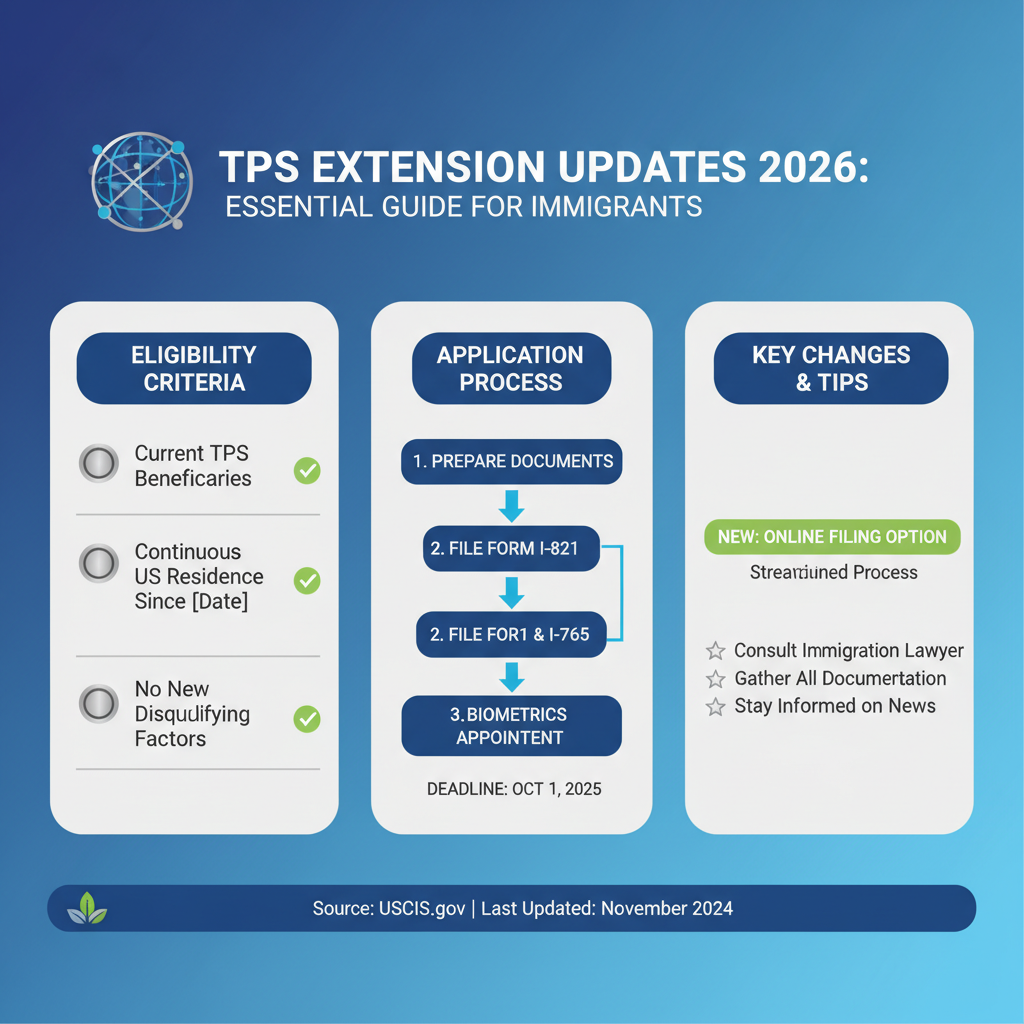
The immigration landscape is constantly shifting, with new policies, court decisions, and administrative actions frequently making headlines. Recent reports in legal news outlets highlight ongoing discussions and announcements regarding the extension of Temporary Protected Status for various designated countries. These developments are not mere bureaucratic updates; they are life-altering decisions for individuals who have built lives and communities in the United States, often escaping dire conditions in their home countries.
What This News Means for Immigrants in Orlando and Across Florida
The news of TPS extensions is a beacon of hope for many, yet it also necessitates careful attention to detail and timely action. For immigrants residing in Orlando, throughout Central Florida, and across the state, these updates directly impact your ability to live and work legally, plan for your family's future, and avoid the threat of deportation.
Why this news is showing up now
Temporary Protected Status is, by its very nature, temporary. It is granted by the Secretary of Homeland Security to eligible nationals of certain countries who are unable to return safely to their home country due to conditions such as ongoing armed conflict, environmental disasters, or other extraordinary and temporary conditions. However, these designations are not permanent. They are typically granted for periods ranging from 6 to 18 months and must be periodically reviewed and either extended or terminated by the Secretary of Homeland Security. This periodic review is precisely why you're seeing "TPS extension news" surface now. As current designations approach their expiration dates, the Department of Homeland Security (DHS) must assess the prevailing conditions in the designated countries. This process involves careful consideration of reports from the Department of State, humanitarian organizations, and other sources, leading to official announcements published in the Federal Register. These announcements then trigger re-registration periods, giving eligible individuals a window to renew their status.
The current geopolitical climate, marked by conflicts, political instability, and natural disasters in various parts of the world, often influences these decisions. For instance, countries like Haiti, Venezuela, El Salvador, Honduras, and Nicaragua have significant populations in the U.S., and ongoing challenges in these nations frequently lead to discussions and decisions regarding their TPS designations.
How it can affect Florida residents
Florida is home to one of the largest and most diverse immigrant populations in the United States. Many communities in Florida, including those in and around Orlando, have a high concentration of individuals from TPS-designated countries. For example, Central Florida, including Orange County and surrounding areas along the I-4 corridor, is home to vibrant communities from El Salvador, Honduras, Haiti, and Venezuela, all of whom have current or past TPS designations. Therefore, any news regarding TPS extensions has a profound and immediate impact on thousands of Florida residents:
- Continued Protection from Deportation: An extension means eligible individuals maintain their protection from removal from the U.S. This provides immense relief and stability for families.
- Work Authorization: TPS beneficiaries are eligible for Employment Authorization Documents (EADs). An extension ensures they can continue to work legally, supporting themselves and their families, and contributing to Florida's economy. This is particularly vital in sectors heavily reliant on immigrant labor.
- Driving Privileges and State Services: In Florida, an EAD or TPS approval notice can be used to obtain or renew a driver's license. Extensions help ensure continued access to this essential privilege, facilitating daily life and access to employment.
- Family Unity: For many, TPS is a lifeline that allows them to remain with their U.S. citizen or lawful permanent resident family members. Extensions help "Keep Families Together," aligning with Imigrar's core mission.
- Long-Term Planning: While TPS is temporary, extensions allow individuals to plan for their lives, whether it's continuing education, starting a business, or exploring other potential pathways to permanent residency if they become available.
- Economic Impact: The ability of TPS holders to work and contribute to the economy is significant. Extensions help stabilize local economies in areas like Orlando, where immigrant communities play a vital role.
Important: Staying informed and acting swiftly during re-registration periods is paramount. Failure to do so can result in the loss of your protected status and all associated benefits.
Need Help Navigating TPS Extensions? Our Orlando immigration team is ready to assist. Call +1 786-791-3106 for a free consultation, or message us online. Se Habla Español.
What Temporary Protected Status (TPS) Is (and Why It Matters)
Understanding TPS is the first step toward securing your status. It’s a humanitarian relief program with specific criteria and significant implications.
A plain-English definition
Temporary Protected Status (TPS) is a temporary immigration benefit granted to eligible nationals of certain countries. The Secretary of Homeland Security can designate a country for TPS if conditions there temporarily prevent the country's nationals from returning safely, or if the country is unable to handle the return of its nationals adequately. These conditions typically fall into three categories:
- Ongoing armed conflict (e.g., civil war).
- An environmental disaster (e.g., earthquake, hurricane, tsunami) or an epidemic.
- Other extraordinary and temporary conditions.
If you are granted TPS, you are:
- Protected from deportation (removal) from the United States.
- Eligible to obtain an Employment Authorization Document (EAD), allowing you to work legally in the U.S.
- Eligible to apply for a travel authorization (Advance Parole), which may allow you to travel outside the U.S. and return.
Important: TPS is a temporary status and does not automatically lead to lawful permanent resident (green card) status or U.S. citizenship. It is designed to provide temporary relief until conditions in your home country improve.
Key terms you need to know
Navigating TPS requires understanding some specific terminology:
- Designated Country: A country whose nationals are eligible for TPS due to specific, extraordinary conditions. Examples often include El Salvador, Honduras, Haiti, Nicaragua, Venezuela, Sudan, South Sudan, Syria, Afghanistan, Cameroon, Ethiopia, Myanmar, and Ukraine.
- Re-registration Period: The specific window of time (e.g., 60 days) during which current TPS beneficiaries must file to extend their status when their country's designation is extended. Missing this deadline can result in the loss of TPS benefits.
- Employment Authorization Document (EAD): Also known as a work permit, this card allows TPS beneficiaries to legally work in the United States. Applying for an EAD requires filing Form I-765.
- Travel Authorization (Advance Parole): A document issued by USCIS (Form I-131) that allows a foreign national, including a TPS beneficiary, to travel abroad and return to the United States without jeopardizing their immigration status. Traveling without Advance Parole can have severe consequences.
- Secretary of Homeland Security: The head of the Department of Homeland Security (DHS) who has the authority to designate, extend, or terminate TPS for specific countries.
- USCIS (U.S. Citizenship and Immigration Services): The government agency responsible for administering immigration and naturalization benefits, including processing TPS applications. Visit the USCIS official website for all forms and instructions.
- Federal Register Notice: The official daily publication of the U.S. government that announces public notices, proposed rules, and final rules. All TPS designations, extensions, and terminations are formally announced here. This is the definitive source for re-registration deadlines and eligibility criteria.
- Continuous Physical Presence (CPP): A requirement for TPS eligibility, meaning you must have been physically present in the U.S. since a specific date determined by your country's designation.
- Continuous Residence (CR): A requirement for TPS eligibility, meaning you must have continuously resided in the U.S. since a specific date determined by your country's designation. Brief, casual, and innocent absences do not necessarily break continuous residence.
Current Immigration Law: The Foundation of TPS
Temporary Protected Status is not an arbitrary program; it is firmly rooted in U.S. immigration law, specifically the Immigration and Nationality Act (INA).
The legal basis for TPS is found in Section 244 of the Immigration and Nationality Act (INA), codified at 8 U.S.C. § 1254a. This statute grants the Secretary of Homeland Security the discretionary authority to designate a foreign country for TPS. The law outlines the conditions under which a country can be designated, the eligibility requirements for individuals, and the benefits conferred by the status. It also details the process for extending or terminating a designation. This federal framework ensures consistency and provides the legal legitimacy for the program, which has offered refuge to millions since its inception in 1990.
Federal requirements
To be eligible for TPS, whether for an initial designation or re-registration, individuals must meet several federal requirements:
- Nationality: Be a national of a country designated for TPS, or a person without nationality who last habitually resided in that country.
- Continuous Physical Presence (CPP): Have been continuously physically present in the United States since the effective date of the most recent designation for your country.
- Continuous Residence (CR): Have been continuously residing in the United States since the date specified for your country's initial designation. Note that brief, casual, and innocent departures from the U.S. do not necessarily break continuous residence.
- Timely Filing: Apply for TPS (Form I-821) within the initial registration period or the re-registration period announced in the Federal Register.
- Admissibility: Meet certain admissibility requirements. This generally means you must not have been convicted of any felony or two or more misdemeanors committed in the U.S. You also cannot be found inadmissible under certain grounds of INA Section 212(a), such as those related to terrorism or persecution.
- No Inadmissibility Bars: You are not subject to certain mandatory bars to TPS, such as those related to persecution of others, or participation in human rights violations.
All applications are processed by USCIS official website. Key forms involved are:
- Form I-821, Application for Temporary Protected Status.
- Form I-765, Application for Employment Authorization (if you need a work permit).
- Form I-131, Application for Travel Document (if you plan to travel outside the U.S. and return).
Florida-specific considerations
While TPS is a federal program, its impact and the application process have particular nuances for Florida residents:
- Large Affected Populations: Florida is home to significant populations from several TPS-designated countries. For instance, the Haitian community is very prominent, especially in South Florida, but also growing in Central Florida. Similarly, many Salvadoran and Honduran nationals reside across the state, and the Venezuelan community in Florida is among the largest in the U.S. This means a high volume of applications and a strong community need for accurate information.
- Access to Legal Services: Given the large immigrant population, there are numerous legal aid organizations and private immigration law firms, like Imigrar, specializing in TPS and related services. For Central Florida residents, the Orlando USCIS Field Office serves as a key location for interviews and biometrics appointments, making local legal counsel particularly valuable.
- State-Level Benefits and Documentation: TPS approval notices and EADs are recognized by the Florida Department of Highway Safety and Motor Vehicles (FLHSMV) for obtaining driver's licenses and state identification cards. This is a critical benefit that allows TPS holders to commute to work, school, and appointments.
- Local Community Support: Immigrant communities in Orlando and surrounding areas often have robust support networks, churches, and community centers that can provide assistance with document gathering, language translation, and connecting individuals with legal resources.
For those in Orlando and the greater Central Florida region, understanding these local dynamics, alongside the federal requirements, is crucial for a successful TPS application or re-registration.
Overwhelmed by TPS Deadlines? Imigrar can help you stay on track. Call +1 786-791-3106 for a free consultation, or message us online. Se Habla Español.

How to Re-register for TPS: A Complete Step-by-Step Guide
Re-registering for TPS is a critical process that requires attention to detail and adherence to strict deadlines. Follow this guide to ensure a successful application.
1) Confirm Your Country's Designation and Re-registration Period
This is the absolute first step. Do not assume your country’s TPS has been extended or that the re-registration period is the same as before. Each designation and extension comes with its own specific dates.
- Check Official Sources: The most reliable sources are the USCIS official website and the Federal Register. USCIS will issue a press release and update its TPS webpage for the specific country. The Federal Register Notice will contain the official dates for the designation, extension, and the re-registration window.
- Note Key Dates: Identify the start and end dates of the re-registration period. These are typically around 60 days long. Also, note the new expiration date of your TPS and EAD.
- Example: If Haiti's TPS is extended, USCIS will publish a Federal Register Notice detailing the new expiration date and the 60-day re-registration window for eligible Haitian nationals.
2) Gather Required Documents
Thorough documentation is paramount. Start collecting these documents as soon as possible.
- Proof of Identity and Nationality:
- Copy of your passport from the designated country (valid or expired).
- Copy of your birth certificate with photo identification.
- Any national identity document from your country bearing your photo and/or fingerprint.
- If you are a person without nationality, proof you last habitually resided in the designated country.
- Proof of Continuous Residence (CR) and Continuous Physical Presence (CPP): Documents demonstrating your presence in the U.S. since the specified dates for your country's designation. Provide as many as possible for each year.
- Copies of previous TPS approval notices (Form I-797) and EADs.
- Employment records (pay stubs, W-2 forms, employer letters).
- Rent receipts, utility bills (electricity, water, gas, internet), or mortgage statements.
- School records (transcripts, enrollment letters for yourself or children).
- Medical records (hospital bills, doctor's notes, vaccination records).
- Affidavits from friends, family, or employers attesting to your presence.
- Bank statements with your U.S. address.
- Tax returns.
- Birth certificates of children born in the U.S.
- Any other dated documents showing your name and U.S. address.
- Photographs: Two identical passport-style photos taken within 30 days of filing.
- Marriage Certificates/Birth Certificates: If applying for family members or if your name has changed.
Reminder: For re-registration, USCIS generally requires less initial evidence of CR/CPP than for initial registration, assuming you already provided it. However, it's wise to have updated proof ready.
3) Complete and File Form I-821 (Application for Temporary Protected Status)
This is the core application for renewing your TPS.
- Download the Latest Form: Always download the most current version of Form I-821 from the USCIS Forms page.
- Fill Out Accurately: Complete all sections thoroughly and truthfully. Any inaccuracies can lead to delays or denial. If a question doesn't apply, mark it "N/A."
- Sign the Form: An unsigned application will be rejected.
- Include Supporting Documents: Attach copies of all required supporting documents. Do NOT send original documents unless specifically requested by USCIS.
- Filing Fee: For re-registrants, the Form I-821 fee is usually waived, but you *must* pay the biometrics services fee. Check the USCIS Fee Schedule for current fees.
- Fee Waiver (Optional): If you cannot afford the fees, you may apply for a fee waiver by filing Form I-912, Request for Fee Waiver. You must provide evidence of your inability to pay.
- Mail Your Application: Send your completed package to the correct USCIS lockbox facility. The address depends on your designated country and where you reside. Check the Form I-821 instructions or the USCIS website for the correct mailing address.
4) File Form I-765 (Application for Employment Authorization) (Optional but Recommended)
If you wish to continue working legally, you must


