


The landscape of U.S. immigration law is constantly shifting, and staying informed is crucial for immigrants and their families. At Imigrar, an Orlando-based immigration law firm serving clients nationwide, we understand the profound impact these changes have on your lives. Today, we delve into significant developments concerning Temporary Protected Status (TPS) extensions, a vital lifeline for many.
This comprehensive guide is designed to provide clarity, practical advice, and actionable steps for those affected by recent TPS news. We aim to empower you with the knowledge needed to navigate these updates successfully, ensuring families can continue to live and work safely in the United States.
The reporting that sparked this guide
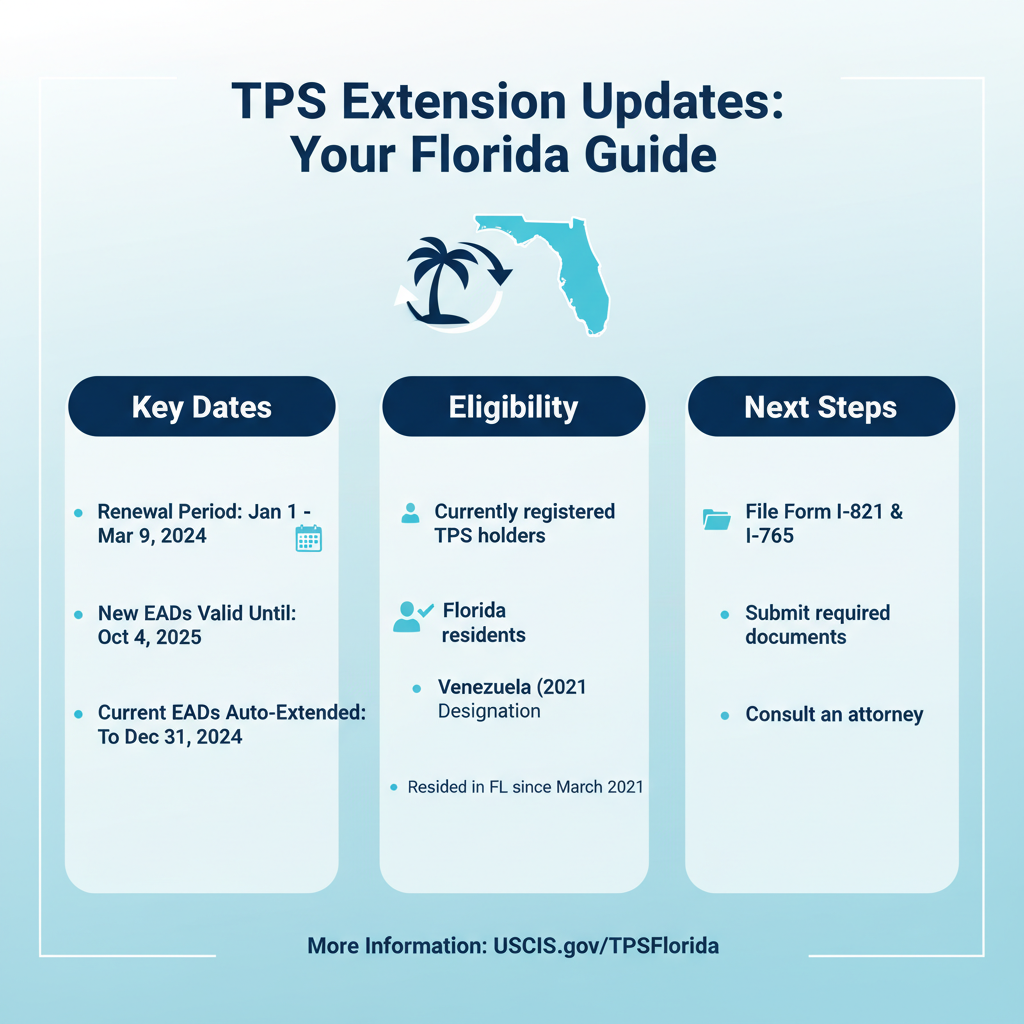
Recent TPS (Temporary Protected Status) Extension News (Legal News) has brought critical updates to the forefront, impacting thousands of individuals from various designated countries. These announcements, often stemming from U.S. Department of Homeland Security (DHS) decisions, signal extensions or re-designations for certain nations, directly affecting the legal status and future of their citizens residing in the U.S.
What This News Means for Immigrants in Orlando and Across Florida
For individuals and families holding or seeking Temporary Protected Status, news of extensions is not just a headline; it's a direct determinant of their ability to live, work, and remain united in the United States. These updates offer a renewed sense of security for many, while also demanding prompt and accurate action to maintain their protected status.
Why this news is showing up now
TPS is a temporary immigration benefit granted to eligible nationals of certain countries who are already in the United States. This status is granted when conditions in their home country, such as ongoing armed conflict, environmental disaster, or other extraordinary and temporary conditions, make it unsafe for them to return. The U.S. Secretary of Homeland Security periodically reviews the conditions in designated countries to determine whether to extend, terminate, or re-designate TPS for that country.
The news you're seeing now typically arises from these statutory review periods. As the current TPS designations for various countries approach their expiration dates, the Secretary of Homeland Security must assess whether the original conditions warranting TPS designation still exist. If those conditions persist, or if new extraordinary circumstances arise, the designation may be extended, sometimes with an option for re-designation or new designation. These decisions are critical and are usually announced several months before the current expiration to give affected individuals time to prepare and re-register.
For example, if a country was designated for TPS due to an earthquake five years ago, and now faces severe political instability or another natural disaster, the Secretary might extend TPS based on the new conditions, or even re-designate the country, which could allow new applicants who arrived after the initial designation to apply.
How it can affect Florida residents
Florida, particularly Central Florida and cities like Orlando, is home to a significant population of immigrants from countries currently designated for TPS. This includes, but is not limited to, individuals from Haiti, Venezuela, Nicaragua, El Salvador, Honduras, and others.
- Continued Legal Presence: For current TPS holders in Florida, an extension means they can continue to live and work legally in the U.S. without fear of deportation for the duration of the extension. This stability is invaluable for families, allowing children to continue their schooling and adults to maintain employment, contributing to Florida’s economy.
- Work Authorization: Along with TPS extension, the associated Employment Authorization Document (EAD), also known as a work permit, is typically extended. This allows individuals to continue working legally. For many in Orlando and the I-4 corridor, this means maintaining their jobs in hospitality, agriculture, healthcare, and other vital sectors.
- Travel Authorization: While TPS generally protects against deportation, travel outside the U.S. requires specific authorization (Form I-131, Application for Travel Document). An extension ensures that those who have received such authorization can potentially continue to travel under those terms, though specific rules apply.
- Impact on Local Communities: The stability provided by TPS extensions benefits not just individuals but also the wider community in Orlando and Orange County. It allows families to plan for the future, invest in their homes, and continue contributing to the social and economic fabric of Central Florida.
- Re-registration Requirements: Important: An extension does not mean automatic renewal. Affected Florida residents must actively re-register for TPS within the designated window to maintain their status. Missing this deadline can lead to loss of status and potential deportation proceedings.
If your case is in Orlando, understanding these federal updates and how they translate into local action is paramount. The Orlando USCIS Field Office processes many such applications, and knowing the specific requirements and deadlines is essential to avoid complications.
Need Help Navigating TPS Extensions? Don't risk your status. Our Orlando immigration team at Imigrar is ready to assist you with the re-registration process. Call +1 786-791-3106 for a free consultation, or message us online. Se Habla Español.
What Temporary Protected Status (TPS) Is (and Why It Matters)
Temporary Protected Status (TPS) is a temporary immigration benefit provided to eligible nationals of specific countries who are already in the United States. It's a humanitarian measure designed to protect individuals from returning to countries deemed unsafe due to extraordinary circumstances.
A plain-English definition
Imagine your home country becomes extremely dangerous overnight – perhaps due to a major war, a devastating natural disaster like an earthquake or hurricane, or a severe health crisis that cripples the infrastructure. The U.S. government, recognizing that it would be unsafe to force people back to such conditions, offers a temporary protected status. This status allows you to live and work legally in the U.S. for a specific period without fear of deportation. It's not a path to a Green Card or permanent residency on its own, but it offers a crucial temporary haven.
Key terms you need to know
- Designation: The act by the Secretary of Homeland Security (DHS) of identifying a country for TPS. This happens when conditions in that country meet the legal criteria for TPS.
- Extension: When the Secretary determines that conditions warranting TPS continue to exist, the existing TPS designation period is prolonged. This is what recent news often refers to.
- Re-designation: Sometimes, the Secretary may "re-designate" a country for TPS. This occurs when existing conditions continue to meet the TPS criteria, but also allows individuals who arrived in the U.S. after the initial designation date to apply for TPS, provided they meet all other eligibility requirements.
- Re-registration Period: A specific window of time (e.g., a 90-day window) during which current TPS beneficiaries must submit their application to continue their status under an extension. Missing this deadline can result in the loss of TPS.
- Employment Authorization Document (EAD): Also known as a work permit, this document (Form I-766) allows TPS beneficiaries to work legally in the U.S. It is usually renewed concurrently with TPS re-registration.
- Travel Authorization (Advance Parole): A document (Form I-512L) that allows a TPS beneficiary to travel outside the U.S. and return legally. This is applied for using Form I-131.
- Continuous Physical Presence (CPP): A requirement for TPS eligibility, meaning the applicant must have been physically present in the U.S. since a specific date set for their country's designation.
- Continuous Residence (CR): Another eligibility requirement, meaning the applicant has continually resided in the U.S. since a specific date set for their country's designation.
- Immigration Status: Refers to an individual's legal standing in the United States (e.g., U.S. citizen, lawful permanent resident, non-immigrant visa holder, TPS beneficiary). TPS provides a temporary legal status.
Understanding these terms is vital for anyone affected by TPS extensions, especially for those in Florida who need to navigate the re-registration process. While TPS offers significant protections, it is crucial to remember its temporary nature and to comply with all re-registration requirements.
Current Immigration Law: The Foundation of TPS
Temporary Protected Status is a statutory benefit rooted in U.S. immigration law. It is primarily governed by Section 244 of the Immigration and Nationality Act (INA), found at 8 U.S.C. § 1254a. This section outlines the conditions under which the Secretary of Homeland Security may designate a foreign country for TPS and the eligibility requirements for individuals seeking this status.
The law mandates that the Secretary of Homeland Security may grant TPS to eligible nationals of a foreign state if the Attorney General, in consultation with appropriate agencies of the U.S. government, determines that:
- There is an ongoing armed conflict within the state, posing a serious threat to the personal safety of returning nationals.
- An environmental disaster (e.g., earthquake, hurricane, flood) has occurred, resulting in a substantial, but temporary, disruption of living conditions, and the foreign state is unable to handle the return of its nationals adequately.
- There are extraordinary and temporary conditions in the foreign state that prevent nationals from safely returning, and granting TPS is consistent with U.S. foreign policy interests.
Each designation, extension, or termination decision is published in the Federal Register, providing official notice of the changes, specific dates, and eligibility criteria for the affected country.
Federal requirements for TPS
To be eligible for TPS, individuals must meet several federal requirements:
- Nationality: Be a national of a country designated for TPS, or a person without nationality who last habitually resided in that country.
- Continuous Physical Presence (CPP): Have been continuously physically present in the U.S. since the effective date of the most recent designation or re-designation for their country. Brief, casual, and innocent departures do not interrupt CPP.
- Continuous Residence (CR): Have been continuously residing in the U.S. since the date specified for their country's designation.
- Admissibility: Meet the general admissibility requirements for immigration, although some grounds of inadmissibility can be waived.
- No Disqualifying Criminal History: Not have been convicted of any felony or two or more misdemeanors committed in the U.S.
- No Other Disqualifying Factors: Not be subject to certain other bars to eligibility, such as participating in the persecution of others or certain national security grounds.
- Timely Application: Apply for TPS within the registration period established for their country's designation or re-designation. For extensions, this means re-registering within the specified window.
Warning: Even if you meet the requirements, failure to apply within the specified timeframes can result in the denial of your application or loss of status.
For the most up-to-date information on specific country designations and requirements, always refer to the USCIS official website.
Florida-specific considerations
While TPS is a federal immigration benefit, its implications resonate deeply at the state and local levels, particularly in Florida, a state with a large and diverse immigrant population.
- Driver's Licenses: TPS beneficiaries in Florida can generally obtain a Florida driver's license or state identification card, provided they present their valid EAD and other required identity documents. Extensions of TPS directly impact the validity of these documents, requiring renewal upon re-registration.
- Access to Services: TPS allows individuals to access certain public benefits for which they are otherwise eligible. This includes some forms of healthcare, educational opportunities, and social services, which are critical for families in Orlando and Central Florida.
- Local Law Enforcement: Holding valid TPS provides a legal basis for presence in the U.S., which is important in interactions with local law enforcement. It provides protection against arbitrary detention or deportation based solely on immigration status.
- Economic Contributions: TPS holders contribute significantly to Florida's economy through their labor, taxes, and consumption. Maintaining their status through extensions ensures this continued contribution to the local economy, from agriculture in South Florida to the service industry in Orlando.
- Educational Opportunities: Children of TPS holders can enroll in public schools. Adults may also pursue higher education or vocational training, benefiting from the stability TPS provides.
For Central Florida residents, understanding how federal TPS laws intertwine with state-specific regulations is crucial. Imigrar assists clients in Orlando and across Florida in navigating these complexities to ensure they fully benefit from their protected status.
Confused by TPS Regulations? Imigrar's expert team provides clarity and guidance. Contact us at +1 786-791-3106 for a free consultation to discuss your TPS case, whether you're in Orlando, Miami, or anywhere in the U.S. Se Habla Español.
How to Re-Register for TPS: A Complete Step-by-Step Guide
Re-registering for Temporary Protected Status is a critical process for maintaining your legal presence and work authorization in the U.S. It requires careful attention to detail and adherence to specific deadlines. Below is a comprehensive, step-by-step guide to help you navigate this process.
1) Understand Your Country's Specific Extension Details
Before doing anything, confirm that your country’s TPS designation has been extended or re-designated and understand the specific re-registration period. USCIS will announce these details in a Federal Register Notice. This notice will specify:
- The new expiration date for TPS for your country.
- The re-registration period (e.g., a 60-day or 90-day window) during which you must file your application.
- Any specific requirements or changes for your country.
- Whether automatic extensions of EADs are granted, and for how long.
Action: Visit the USCIS TPS page or consult an immigration attorney immediately upon hearing news of an extension to confirm these details for your specific country.
2) Gather Required Documents
Even for re-registration, it’s essential to have your foundational documents in order. While you may not need to submit all original supporting evidence you did for your initial application, you must provide proof of your identity and current TPS status.
- Proof of Identity and Nationality:
- Copy of your passport from your designated country (if available).
- Copy of your birth certificate with photo identification.
- Any national identity document from your country with a photo and/or fingerprint.
- Copy of your U.S. immigration document with your photograph or fingerprint (e.g., previous EAD, Form I-94 Arrival/Departure Record).
- Proof of Previous TPS Grant:
- Copy of your previous Form I-797 Approval Notice for TPS.
- Copy of your current EAD (Form I-766) issued under TPS.
- Proof of Continuous Residence and Physical Presence (if requested or if there were significant absences):
- Utility bills, rent receipts, school records, employment records, medical records, bank statements, or other dated documents showing you have been in the U.S. since the specified date.
Reminder: All foreign language documents must be accompanied by a complete English translation certified by a competent translator.
3) Complete Form I-821 and Form I-765 (if needed)
You will need to file Form I-821, Application for Temporary Protected Status, to re-register. If you also wish to maintain your work authorization, you must file Form I-765, Application for Employment Authorization.
- Form I-821: Fill out every section completely and accurately. Even if a section doesn't apply, write "N/A" (not applicable) to avoid processing delays. Be truthful about all your immigration and criminal history.
- Form I-765: If you want to continue working, you must file this form. Ensure you select the correct eligibility category (usually (c)(10) for TPS beneficiaries).
Important: You must use the edition of the forms specified by USCIS for your re-registration period. Check the USCIS Forms page for the latest versions.
4) Prepare Supporting Evidence
For re-registration, if you have continuously maintained TPS and are only extending, you generally do not need to resubmit all the extensive evidence of continuous residence and physical presence that you did for your initial application. However, you must submit:
- A copy of the front and back of your last Form I-797, Notice of Action, for your most recent TPS approval.
- A copy of the front and back of your most recent EAD issued under TPS.
- If you have had any changes to your criminal history since your last TPS application, you must include certified copies of all court dispositions and police reports.
- If you have traveled outside the U.S. since your last TPS application, include copies of your valid Form I-512L, Advance Parole Document, and entry stamps.
5) Pay the Filing Fees
Filing fees are subject to change, so always verify the current amounts on the USCIS Fee Schedule. For TPS re-registration, you typically need to pay:
- The Form I-821 filing fee (for individuals 14 and older, there may be no fee for re-registration, but always verify).
- The biometrics services fee (for individuals 14 and older).
- The Form I-765 filing fee (if you are applying for an EAD).
Fee Waivers: You may be eligible for a fee waiver if you can demonstrate an inability to pay. You would need to submit Form I-912, Request for Fee Waiver, along with supporting documentation.
Payment Method: You can pay by money order, personal check, cashier’s check, or by credit card using Form G-1450, Authorization for Credit Card Transactions.
6) Submit Your Application Package
Once all forms are completed, documents gathered, and fees prepared, organize your application package carefully. USCIS provides specific mailing addresses for TPS applications, which vary depending on your country of designation and the service center processing your case.
- Mailing Address: Check the USCIS website or the Federal Register Notice for the correct "Direct Filing Addresses for Form I-821" for your country.
- Organization: Use fasteners (binder clips, paper clips) to keep documents together. Do not staple entire packages together. Place forms on top, followed by fee payments, and then supporting evidence in logical order.
- Copies: Make a complete copy of your entire application package before mailing it. This is your personal record.
- Tracking: Send your application via certified mail with a return receipt or a courier service that provides tracking (e.g., FedEx, UPS). This provides proof of mailing and delivery.
7) Attend Biometrics Appointment and Monitor Your Case
After USCIS receives your application, they will send you a receipt notice (Form I-797C, Notice of Action). Within a few weeks or months, you will receive an appointment notice for biometrics (fingerprints, photograph, and signature) at an Application Support Center (ASC).
- Biometrics: Attend your biometrics appointment as scheduled. This is mandatory. If you miss it, your application may be denied.
- Case Status: You can monitor the status of your application online using the receipt number provided on your Form I-797C at the USCIS Case Status Online tool.
- Receipt of EAD: If your EAD is approved, it will be mailed to you. USCIS may also issue an automatic extension of your existing EAD, which will be announced in the Federal Register.
Warning: The processing times can vary significantly. You can check current USCIS Processing Times online, but be prepared for potential delays.
Practical Steps You Can Take Today
Proactive engagement is key when dealing with immigration matters, especially with TPS extensions. Here's an actionable checklist to help you prepare and respond effectively to the latest news.
Actionable Checklist (5+ items):
- Verify Your Country's Status: Immediately check the USCIS TPS webpage or the Federal Register for the official announcement regarding your country's TPS extension or re-designation. Note the specific re-registration period and new expiration date.
- Review Your Eligibility: Confirm you still meet all TPS eligibility criteria, especially concerning continuous physical presence and residence, and ensure no new disqualifying factors (e.g., criminal convictions) have arisen.
- Gather Essential Documents: Start compiling copies of your previous TPS approval notice (Form I-797), current EAD (Form I-766), passport, birth certificate, and any other identity documents.
- Update Your Address with USCIS: If you have moved since your last application, file Form AR-11, Alien's Change of Address Card, online or by mail within 10 days of moving. This ensures you receive all USCIS notices, including biometrics appointments.
- Consult with an Immigration Attorney: Even if you've re-registered before, changes in law or your personal circumstances can impact your case. A free consultation with Imigrar can provide tailored advice and peace of mind.
- Save for Fees: Be prepared for filing fees. While some fees might be waived, it’s best to have funds available for the biometrics fee and the EAD fee if applicable.
- Make Copies of Everything: Before sending anything to USCIS, make a complete copy of your entire application package for your records.
Document preparation guidance
- Accuracy is Paramount: Ensure all information on your forms is truthful and matches your supporting documents exactly. Discrepancies can lead to delays or denials.
- Organization: Present your documents in a clear, organized manner. USCIS often provides specific instructions on how to assemble packages. Use tabs or labels for different sections.
- Translations: Any document not in English must be accompanied by a full English translation and a certification from the translator stating that the translation is accurate and that they are competent to translate from the foreign language into English.
- Certified Copies: Do not send original documents unless specifically requested by USCIS. Always send clear photocopies. Keep your originals safe. For court documents, you may need certified copies from the court.
- Keep a Record: Maintain a detailed log of all documents sent, dates mailed, and tracking numbers.
Timeline expectations
Understanding the typical timeline can help manage expectations:
- Re-registration Period: This is a strict deadline, typically a 60-day or 90-day window from the Federal Register Notice publication. You MUST file within this period.
- Receipt Notice: Expect to receive a Form I-797C receipt notice from USCIS within 2-4 weeks after they receive your application.
- Biometrics Appointment: A biometrics appointment notice usually arrives within 4-8 weeks after your receipt notice. The appointment itself will be scheduled a few weeks after the notice.
- EAD Processing: Renewal of your EAD can take several months. In some cases, USCIS may issue an automatic extension of your existing EAD for a certain period, as announced in the Federal Register. However, do not rely solely on this; file your I-765 promptly. Check USCIS Processing Times for current estimates.
- TPS Approval: The final approval for your TPS extension can take anywhere from a few months to over a year, depending on the service center workload and individual case complexities.
Important: Start early! Do not wait until the last minute to begin preparing your re-registration application. Delays can occur, and missing the deadline can have severe consequences.

How Imigrar Helps Immigrants in Orlando
At Imigrar, our mission is to "Keep Families Together." We understand the complexities and emotional toll that immigration processes, especially something as critical as TPS re-registration, can take on individuals and families. Based in Orlando, Florida, we proudly serve clients not only across Central Florida but nationwide, offering dedicated and compassionate legal support.
Our experience and expertise
Our team of experienced immigration attorneys at Imigrar possesses in-depth knowledge of Temporary Protected Status laws and the nuances of USCIS procedures. We have successfully assisted countless individuals from various designated countries in their initial TPS applications, re-registrations, and related matters. Our expertise covers:
- Current TPS Regulations: Staying abreast of the latest Federal Register Notices, policy changes, and specific requirements for each designated country.
- Application Preparation: Meticulously preparing and reviewing Form I-821, Form I-765, and Form I-131 to ensure accuracy and completeness, minimizing the risk of Request for Evidence (RFE) or denial.
- Document Collection and Organization: Guiding clients through the process of gathering necessary supporting documents, ensuring proper translations, and organizing the application package according to USCIS standards.
- Responding to Challenges: Assisting with responses to RFEs, Notices of Intent to Deny (NOID), and other USCIS inquiries.
- Holistic Approach: Understanding how TPS interacts with other immigration pathways and advising clients on potential long-term strategies, such as Adjustment of Status, if applicable.
- Local Knowledge: For those in Orlando and surrounding areas like Orange County, we are familiar with the specific practices of the Orlando USCIS Field Office and local resources.
We pride ourselves on providing clear, straightforward advice, making complex legal jargon understandable for non-lawyers. Our goal is to alleviate your stress and handle the legal complexities so you can focus on your family and future.
Free consultation offer
We believe that everyone deserves access to expert legal advice, especially when their immigration status is at


