


Navigating the complexities of U.S. immigration law can be daunting, especially when news breaks that directly impacts your status or the status of your loved ones. At Imigrar, we understand the anxieties and hopes that accompany every change in policy. Our mission is to "Keep Families Together," and that means providing clear, accurate, and actionable information to the communities we serve in Orlando, across Florida, and nationwide.
The reporting that sparked this guide
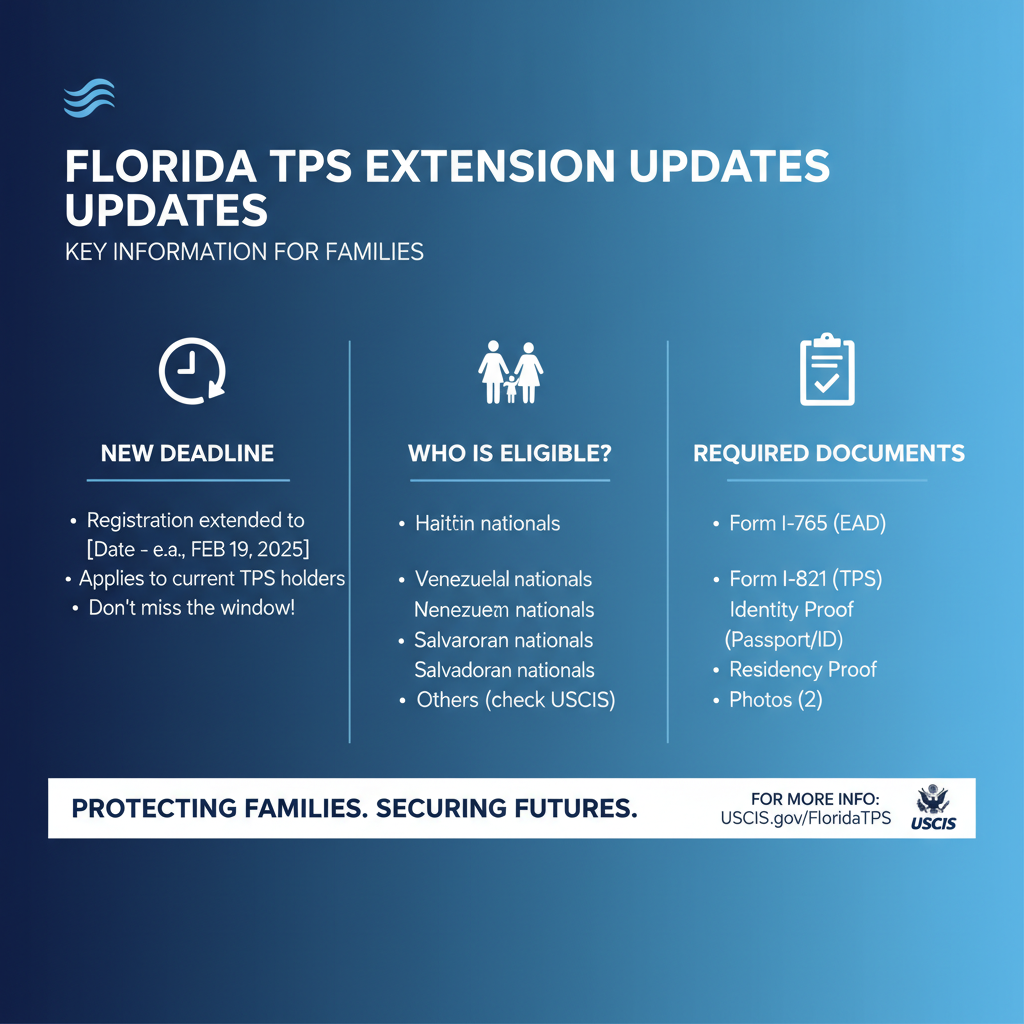
Recent developments regarding Temporary Protected Status (TPS) extensions have brought both relief and questions for thousands of individuals and families. The ongoing humanitarian crises and challenging conditions in several designated countries continue to necessitate these vital protections. Understanding these updates is crucial for anyone currently holding TPS or potentially eligible for it.
This comprehensive guide is inspired by the latest information on TPS extensions, as highlighted in:
TPS (Temporary Protected Status) Extension News (Legal News)
What This News Means for Immigrants in Orlando and Across Florida
The news of TPS extensions is a beacon of hope and stability for many families who have found refuge and built lives in the United States. For immigrants in Orlando and throughout Florida, these extensions mean continued protection from deportation and the ability to maintain legal work authorization, allowing them to contribute to our communities and support their families without constant fear.
Why this news is showing up now
TPS is a temporary immigration status granted by the Secretary of Homeland Security to eligible nationals of certain countries (or parts thereof) who are already in the United States. This status is granted when conditions in their home country prevent their safe return, such as ongoing armed conflict, environmental disaster, or other extraordinary and temporary conditions. The decision to extend TPS for designated countries is not made lightly; it follows a thorough review by the Department of Homeland Security (DHS) of the current conditions in those nations. These extensions are announced periodically as the existing designations or extensions approach their expiration dates, ensuring continuous protection for eligible individuals.
As of August 6, 2026, recent announcements regarding TPS extensions reflect the ongoing assessment of conditions in various designated countries. These decisions are critical for planning and ensuring compliance with immigration regulations. The process involves detailed analysis of geopolitical stability, human rights situations, and the ability of a country to safely repatriate its citizens. When these conditions persist or worsen, extensions are often deemed necessary.
How it can affect Florida residents
Florida, particularly Central Florida with its vibrant and diverse population, is home to a significant number of individuals from TPS-designated countries. For residents in Orlando, Tampa, Miami, and along the I-4 corridor, these extensions directly impact their daily lives. An extension of TPS means:
- Continued Protection: Eligible individuals will remain protected from removal from the U.S.
- Work Authorization: TPS holders can continue to apply for and renew their Employment Authorization Documents (EADs), allowing them to legally work and support themselves and their families. This is vital for the economic stability of many households in Orange County and beyond.
- Travel Authorization: In some cases, TPS holders may be able to apply for travel authorization (advance parole) to leave and re-enter the U.S. without jeopardizing their status.
- Peace of Mind: Perhaps most importantly, it offers a temporary reprieve from uncertainty, allowing families to plan for their futures with greater stability.
For Central Florida residents, understanding the specific re-registration periods and requirements for their country’s TPS designation is paramount. Missing a deadline can lead to loss of status, which is why staying informed and acting promptly is critical.
Need Help? Our Orlando immigration team is ready to assist. Call +1 786-791-3106 for a free consultation, or message us online. Se Habla Español.
What Temporary Protected Status (TPS) Is (and Why It Matters)
Temporary Protected Status (TPS) is a humanitarian immigration program administered by the U.S. government. It provides a legal, temporary immigration status to foreign nationals in the United States who cannot safely return to their home countries due to specific, extraordinary circumstances.
A plain-English definition
Imagine your home country is experiencing a major crisis – a devastating earthquake, an ongoing war, or an epidemic. If you are already in the U.S. when this crisis occurs, the U.S. government might decide it's unsafe for you to return home. TPS is like a temporary shield that protects you from being deported and allows you to live and work legally in the U.S. until conditions improve in your home country. It's not a path to a Green Card or permanent residency on its own, but it offers crucial stability and protection for a defined period, which can be extended if conditions do not improve.
The Secretary of Homeland Security designates a country for TPS based on statutory conditions specified in the Immigration and Nationality Act (INA). These designations are typically for periods of 6, 12, or 18 months and can be extended multiple times if the conditions persist.
Key terms you need to know
Understanding these terms is essential when discussing TPS:
- Designated Country: A country (or a part of a country) formally identified by the Secretary of Homeland Security as meeting the statutory criteria for TPS. Examples include El Salvador, Haiti, Honduras, Nepal, Nicaragua, Sudan, Syria, Venezuela, and Yemen, among others.
- Initial Registration: The first opportunity for eligible individuals from a newly designated country to apply for TPS. There is a specific window of time for initial registration.
- Re-registration: The process by which current TPS beneficiaries apply to extend their status when their country's designation is extended. This process also has a specific application window.
- Beneficiary: An individual who has been granted TPS.
- Employment Authorization Document (EAD): Also known as a work permit, this document allows TPS beneficiaries to legally work in the U.S. It is obtained by filing Form I-765.
- Advance Parole: A document (obtained by filing Form I-131) that allows certain non-citizens to travel outside the U.S. and return without jeopardizing their immigration status. TPS beneficiaries may be eligible for advance parole.
- Immigration and Nationality Act (INA): The primary body of law governing immigration in the United States. TPS is authorized under Section 244 of the INA.
- USCIS: U.S. Citizenship and Immigration Services, the government agency responsible for administering immigration and naturalization benefits, including TPS applications.
Important: TPS does not lead directly to permanent resident status (a Green Card). However, holding TPS does not prevent an individual from applying for other immigration benefits for which they may be eligible.
Current Immigration Law: The Foundation
Temporary Protected Status is established under Section 244 of the Immigration and Nationality Act (INA), codified at 8 U.S.C. § 1254a. This section outlines the authority of the Secretary of Homeland Security to designate countries for TPS based on specific conditions.
The law specifies three primary grounds for designation:
- Ongoing Armed Conflict: Where returning nationals would pose a serious threat to their personal safety due to conflict.
- Environmental Disaster: Such as earthquake, flood, drought, or epidemic, leading to a substantial, but temporary, disruption of living conditions, and the foreign state is unable to handle the return of its nationals adequately.
- Extraordinary and Temporary Conditions: Other conditions in the foreign state that prevent nationals from returning safely, unless the Secretary finds that permitting them to remain in the U.S. would be contrary to the national interest of the U.S.
Each designation or extension comes with a Federal Register notice detailing the specific effective dates, eligibility requirements, and application procedures. These notices are the official legal pronouncements that govern TPS for each country.
Federal requirements
To be eligible for TPS, applicants must meet several federal requirements:
- Nationality: Be a national of a country designated for TPS, or a person without nationality who last habitually resided in that country.
- Continuous Physical Presence (CPP): Have been continuously physically present in the U.S. since the effective date of the most recent TPS designation or re-designation for their country.
- Continuous Residence (CR): Have been continuously residing in the U.S. since the date specified for their country's designation.
- Admissibility: Meet general admissibility requirements for immigration. Certain criminal offenses or national security grounds can render an applicant ineligible.
- Timely Application: Apply for TPS during the initial registration period or during a re-registration period for an extension.
Reminder: Even if you meet these criteria, you must also pass security and background checks conducted by USCIS. Certain criminal convictions or national security concerns can make you ineligible for TPS.
The primary forms used for TPS applications are:
- Form I-821, Application for Temporary Protected Status
- Form I-765, Application for Employment Authorization (if you want to work legally)
- Form I-131, Application for Travel Document (if you need to travel outside the U.S.)
You can find these forms and detailed instructions on the USCIS Forms page.
Florida-specific considerations
While TPS is a federal program, certain practical considerations are specific to Florida residents:
- USCIS Field Offices: If your case requires an interview or biometrics appointment, you will likely be scheduled at a USCIS Field Office. For Central Florida residents, this often means the Orlando USCIS Field Office.
- Legal Support: Given Florida's large immigrant population, there are many legal resources available. However, it's crucial to choose an experienced immigration attorney like those at Imigrar, who understand both federal law and local challenges.
- Community Resources: Various non-profit organizations and community centers in Orlando and other major Florida cities offer support services to immigrant communities, which can be helpful during the application process.
For the most up-to-date information on TPS designations and extensions, always refer to the USCIS official website and the Federal Register notices.
Need Help? Our Orlando immigration team is ready to assist. Call +1 786-791-3106 for a free consultation, or message us online. Se Habla Español.
How to Re-register for TPS: A Complete Step-by-Step Guide
If your country's TPS designation has been extended, you must re-register during the specified window to maintain your status. This guide outlines the typical steps involved in the re-registration process. Warning: Always consult the specific Federal Register notice for your country’s extension for exact dates and requirements, as these can vary.
1) Review the Federal Register Notice for Your Country
The very first and most critical step is to find and thoroughly read the official Federal Register notice announcing the TPS extension for your specific country. This notice contains all the definitive details you need. It will specify:
- The new expiration date of the TPS designation.
- The exact re-registration period (start and end dates). This window is typically 60 days, but can vary.
- Any changes to eligibility criteria or required documents.
- Instructions regarding automatic extensions of EADs and other documents.
Required Documents/Information for this step:
- Access to the internet to search the Federal Register or the USCIS website.
- Your country of nationality.
Actionable Advice: Bookmark the USCIS TPS page and regularly check for updates regarding your country. Do not rely solely on news reports; always verify information with official sources.
2) Complete and File Form I-821, Application for Temporary Protected Status
This is the core application for renewing your TPS. You must complete Form I-821 accurately and completely. Ensure you are using the latest edition of the form, which can be downloaded from the USCIS Forms page.
Key details for Form I-821:
- Clearly mark that you are "re-registering" for TPS.
- Provide all requested personal information, including your Alien Registration Number (A-Number).
- Answer all eligibility questions truthfully.
- Sign the form. An unsigned form will be rejected.
Required Documents to include with Form I-821:
- Copy of your most recent Form I-797, Approval Notice for TPS.
- Copy of your birth certificate (if you have one and it was previously submitted, you may not need to resubmit unless requested).
- Copy of your passport identity page or national identity document with photo.
- Proof of identity and nationality (e.g., passport, national identity card from your country, birth certificate with photo identification).
- Proof of continuous physical presence (CPP) and continuous residence (CR) in the U.S. since the specified dates for your country. This might include utility bills, pay stubs, rental agreements, school records, medical records, or affidavits. While often not required for *re-registration* if you've maintained status, USCIS reserves the right to request it.
Filing Fees: Check the USCIS website for the current filing fee for Form I-821. Fee waivers (Form I-912, Request for Fee Waiver) may be available for eligible individuals.
3) Complete and File Form I-765, Application for Employment Authorization (Optional but Recommended)
If you wish to continue working legally in the U.S., you must file Form I-765. This form is often filed concurrently with Form I-821.
Key details for Form I-765:
- Indicate that you are applying for "renewal of employment authorization."
- For the eligibility category, enter (c)(19) for TPS beneficiaries.
- Ensure all personal information matches your Form I-821.
- Sign the form.
Required Documents to include with Form I-765:
- Two passport-style photos taken within 30 days of filing.
- Copy of your last EAD (front and back).
- Copy of your identity document (e.g., passport, birth certificate with photo ID).
- Copy of your Form I-94, Arrival/Departure Record (if available).
- Copy of your most recent Form I-797, Approval Notice for TPS.
Filing Fees: There is a separate filing fee for Form I-765. A fee waiver (Form I-912) can be requested for this form as well. Note: Filing Form I-821 and Form I-765 concurrently may sometimes allow for a single fee waiver request covering both.
4) Complete and File Form I-131, Application for Travel Document (If Needed)
If you anticipate needing to travel outside the United States while your TPS is valid, you should apply for an Advance Parole Document by filing Form I-131. Traveling without Advance Parole can lead to serious immigration consequences, including denial of re-entry or loss of your TPS status.
Key details for Form I-131:
- Select "Application for Travel Document" and indicate "Advance Parole Document."
- Provide your reason for travel (e.g., humanitarian, educational, employment).
- Ensure consistency with other application forms.
- Sign the form.
Required Documents to include with Form I-131:
- Two passport-style photos.
- Copy of your government-issued photo identification.
- Copy of your birth certificate.
- Proof of your TPS status (e.g., Form I-797 approval notice for Form I-821).
- Documentation supporting your reason for travel (e.g., letter from employer, medical documents, family death certificate).
Filing Fees: There is a filing fee for Form I-131. Fee waivers may be available.
5) Prepare and Organize Your Application Packet
Before mailing, organize your application packet meticulously. USCIS receives thousands of applications daily, and a well-organized submission can prevent delays.
Organization Tips:
- Place a cover letter listing all enclosed forms and documents.
- Securely fasten documents with a binder clip, not staples (unless specifically instructed).
- Include all forms (I-821, I-765, I-131, I-912 if applicable) and supporting documents in a logical order.
- Make a complete copy of your entire application packet for your records. This is crucial for future reference.
- Include payment (check or money order) for the fees, or your approved Form I-912.
6) Mail Your Application Packet
Send your complete application packet to the correct USCIS lockbox facility. The mailing address depends on your state of residence and the specific forms you are filing. Always check the "Where to File" section on the USCIS website for Form I-821 instructions. For Florida residents, this will typically be a lockbox in a different state.
Important: Use a mailing service that provides tracking (e.g., USPS Certified Mail with Return Receipt, FedEx, UPS). This provides proof of mailing and delivery, which can be invaluable if there are any issues.
7) Attend Biometrics Appointment and Monitor Your Case
After filing, USCIS will send you a receipt notice (Form I-797C) confirming receipt of your application. Subsequently, you will receive an appointment notice for biometrics (fingerprints, photograph, signature) at an Application Support Center (ASC). It is mandatory to attend this appointment.
Monitoring Your Case:
- Use the receipt number from your Form I-797C to check your case status online on the USCIS Case Status Online tool.
- Be prepared for potentially long processing times. You can check average processing times on the USCIS Processing Times page.
- Respond promptly to any Requests for Evidence (RFEs) from USCIS.
Warning: Do not travel internationally until you have received your Advance Parole Document (Form I-512L). Leaving the U.S. without it could lead to denial of re-entry.
Practical Steps You Can Take Today
Even before the re-registration period officially opens, or if you're awaiting specific details, there are immediate steps you can take to prepare and ensure a smooth process.
- Gather Essential Documents: Start collecting copies of all previous TPS approval notices (Form I-797), EADs, passports, birth certificates, marriage certificates, and any other identity documents. Also, compile records proving continuous residence in the U.S. since your country's initial designation (e.g., utility bills, pay stubs, bank statements, school records, medical records).
- Update Your Contact Information with USCIS: If you've moved since your last application, file Form AR-11, Alien's Change of Address Card, and update your address online. USCIS communicates primarily via mail, and a missed notice can have severe consequences.
- Consult the Official USCIS Website: Regularly check the dedicated TPS page on USCIS.gov/TPS for announcements specific to your country. Pay close attention to Federal Register notices for precise dates and instructions.
- Budget for Fees: Understand the current filing fees for Form I-821 and Form I-765. While fee waivers are available, preparing for the costs can avoid last-minute stress.
- Seek Legal Counsel: Contact an experienced immigration attorney at Imigrar. Our team can assess your specific situation, confirm your eligibility, help you gather the necessary documents, and prepare your application meticulously. This is especially crucial if you have any past criminal history, prior immigration violations, or have traveled outside the U.S. since receiving TPS.
- Create a Filing Checklist: Based on the Federal Register notice for your country and the USCIS forms' instructions, create a detailed checklist of every form, document, and fee required. Check off each item as you prepare it.
Document preparation guidance
- Copies, Not Originals: Generally, USCIS requires copies of supporting documents, not originals. Keep your originals safe.
- Translate Foreign Documents: Any document not in English must be accompanied by a complete and accurate English translation, certified by the translator as competent to translate and that the translation is accurate.
- Organize Chronologically: For documents like proof of residence, organize them chronologically to clearly demonstrate continuous presence.
- Label Everything: Clearly label each document (e.g., "Copy of Passport," "Copy of Birth Certificate," "Utility Bill - March 2024").
Timeline expectations
- Re-registration Window: Typically 60 days from the date of the Federal Register notice. It is imperative to file within this window.
- Receipt Notice: Expect to receive a Form I-797C receipt notice within 2-4 weeks after filing.
- Biometrics Appointment: A biometrics appointment notice usually arrives 4-8 weeks after filing, with the appointment itself scheduled a few weeks later.
- EAD Processing: Processing times for EADs (Form I-765) can vary significantly, from a few months to over a year. The Federal Register notice for your country's extension may include an automatic extension of your current EAD for a specific period, which can provide continued work authorization while your new EAD is processed. Check this carefully!
- TPS Approval: The approval notice for Form I-821 can also take several months.
Important: While waiting, avoid any actions that could complicate your immigration status. Consult with an attorney before making any major decisions, especially concerning travel.
How Imigrar Helps Immigrants in Orlando
At Imigrar, we understand that the TPS re-registration process, though seemingly straightforward, can be fraught with potential pitfalls. From ensuring all forms are correctly filled out to gathering the right supporting documents and meeting critical deadlines, every detail matters. Our firm is dedicated to providing compassionate, comprehensive, and effective legal representation to immigrants and their families in Orlando, Central Florida, and across the nation.
Our experience and expertise
Our team of experienced immigration attorneys has a deep understanding of TPS regulations, including the nuances of extensions, re-registrations, and initial applications. We stay abreast of the latest legal developments and policy changes issued by USCIS, the Department of Homeland Security, and the Executive Office for Immigration Review (EOIR).
We have successfully guided countless clients through their TPS journeys, helping them maintain their protected status and secure their work authorization. Our expertise covers:
- Detailed eligibility assessments for TPS, including analysis of continuous residence and continuous physical presence.
- Thorough preparation and review of Form I-821, Form I-765, and Form I-131.
- Assistance with gathering and organizing supporting documentation.
- Guidance on responding to Requests for Evidence (RFEs) from USCIS.
- Representation for those with complex cases, including individuals with past immigration issues or criminal records.
- Strategic advice on potential pathways beyond TPS, such as U.S. Department of State visa options or family-based petitions.
Our commitment is to provide personalized attention, ensuring that your application is not just filed, but filed correctly and strategically to maximize your chances of approval. We know the Orlando USCIS Field Office procedures and can offer localized insights.
Free consultation offer
The first step towards securing your future is to understand your options. Imigrar offers a free, confidential consultation to discuss your TPS situation. During this consultation, we will:
- Listen to your story and understand your specific needs.
- Review the details of your current immigration status and any prior applications.
- Explain the recent TPS extension news and how it applies to you.
- Outline the re-registration process and answer your questions.
- Discuss any potential challenges and how we can help you overcome them.
There's no obligation, just clear, professional advice to help you make informed decisions. Don't navigate this complex process alone. We are here to help you "Keep Families Together."
Se Habla Español. Our bilingual team is ready to assist Spanish-speaking clients with clarity and cultural understanding.

Frequently Asked Questions
Q: Am I automatically extended if my country's TPS is extended?
A: No, not automatically in all aspects. While the Federal Register notice announcing an extension typically includes an automatic extension of existing Employment Authorization Documents (EADs) and other documentation for a specific period (e.g., 6 or 12 months) to bridge the gap during re-registration processing, you must still affirmatively file Form I-821 for re-registration during the designated window to maintain your TPS status. Failing to re-register will lead to the termination of your TPS once your current protection period and any automatic extensions expire.
Q: What if I miss the re-registration deadline?
A: Missing the re-registration deadline is a serious issue. Generally, if you fail to re-register without good cause, your TPS will be withdrawn or terminated. However, in some limited circumstances, USCIS may accept late re-registration if you can demonstrate "good cause" for the delay. This is a high bar, and you would need to provide compelling evidence explaining why you couldn't file on time. If you find yourself in this situation, it is crucial to consult with an experienced immigration attorney immediately, as your immigration status could be at risk.
Q: How does having TPS impact my eligibility for a Green Card?
A: TPS itself does not provide a direct pathway to a Green Card (permanent residency). However, holding TPS does not prevent you from applying for other immigration benefits for which you might be eligible. For example, if you are married to a U.S. citizen, or have a U.S. citizen child who is 21 or older and can petition for you, you may be able to adjust your status to a lawful permanent resident. In some circuits, an approved advance parole document for TPS holders allows for inspection and admission, which can be critical for Adjustment of Status eligibility. It’s essential to discuss your specific circumstances with an immigration attorney to explore all potential pathways.
Q: What documents do I need to prove continuous residence and continuous physical presence?
A: While re-registrants often don't need to resubmit extensive proof unless requested, it's wise to have it ready. For initial applications or if USCIS requests it during re-registration, you'll need documents showing your presence in the U.S. since the specified date for your country’s TPS designation. Examples include employment records (pay stubs, W-2s), rent receipts or mortgage statements, utility bills, school records for children, medical records, bank statements, affidavits from friends or employers, or any other official documents bearing your name and showing dates within the required period. The more diverse and consistent your documentation, the stronger your proof.
Q: What are the costs associated with TPS re-registration?
A: The costs typically include the filing fee for Form I-821, Application


