


The reporting that sparked this guide: TPS (Temporary Protected Status) Extension News (Legal News)
What This News Means for Immigrants in Orlando and Across Florida
Why this news is showing up now
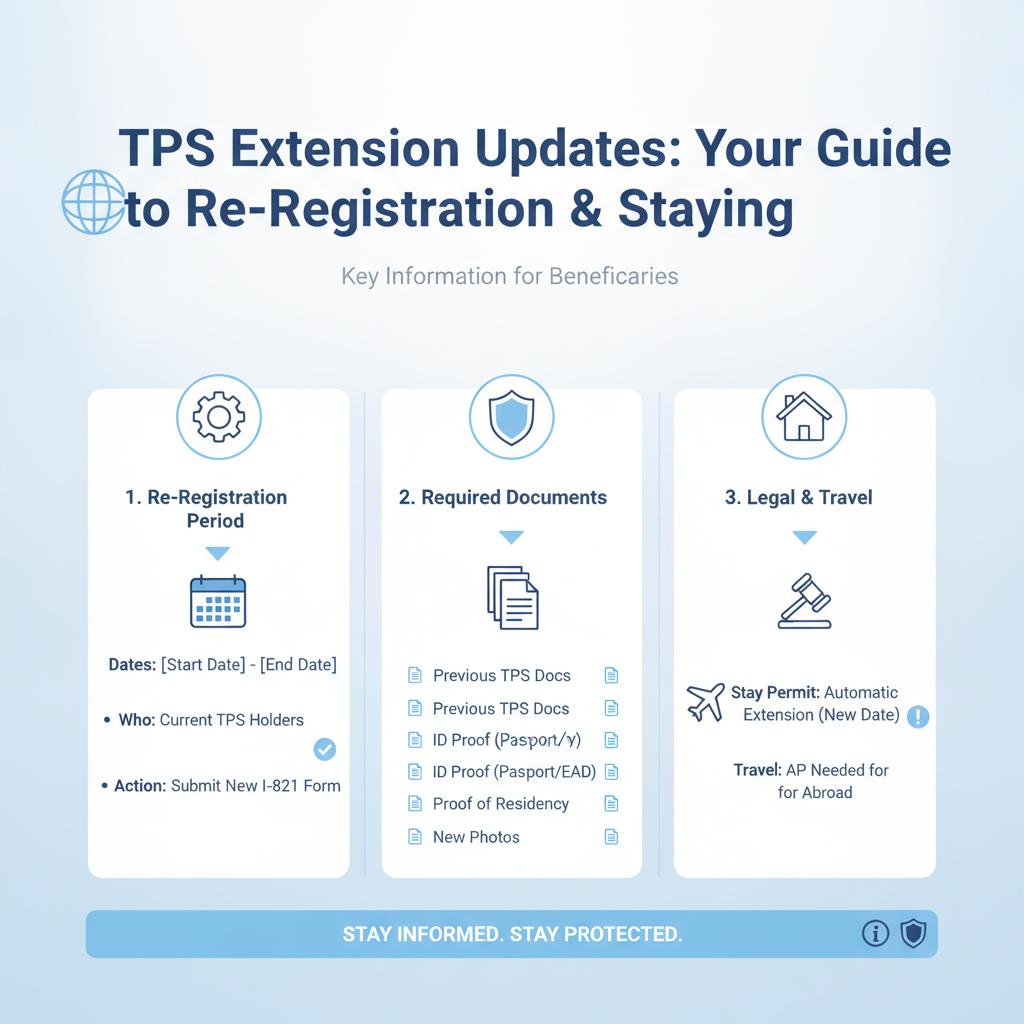
TPS is a temporary immigration benefit granted by the Secretary of Homeland Security to eligible nationals of certain countries who are already in the United States. This designation is made when conditions in their home country prevent their safe return, such as ongoing armed conflict, environmental disaster, or other extraordinary and temporary conditions. The law requires DHS to periodically review these designations. This means that every so often, usually 60 days before a country's current TPS designation is set to expire, the Secretary of Homeland Security must decide whether to extend, redesignate, or terminate TPS for that country. The "trending news" you're seeing now reflects these ongoing reviews and subsequent announcements. An extension means that the Secretary has determined that the unsafe conditions in the designated country persist, making it unsafe for its nationals to return. This decision triggers a crucial re-registration period, giving current TPS holders the opportunity to continue their protected status.How it can affect Florida residents
Florida is home to a vibrant and diverse immigrant population, with many individuals from countries currently designated for TPS. For residents of Orlando, Miami, Tampa, and other communities throughout Florida who hold TPS, an extension announcement brings immense relief and stability. * **Continued Protection:** An extension means you remain protected from deportation from the United States for the duration of the extension period. This is arguably the most critical benefit, offering peace of mind to families who might otherwise face the unimaginable prospect of separation. * **Work Authorization:** With TPS, eligible individuals can apply for and maintain an Employment Authorization Document (EAD), also known as a work permit. An extension allows you to renew your EAD, ensuring you can continue to work legally in the U.S. and provide for your family. This is vital for Florida's economy and for the financial stability of countless households along the I-4 corridor and beyond. * **Travel Authorization:** While not automatic, TPS holders can apply for travel authorization (advance parole) to travel outside the U.S. and return legally. An extension allows for the continued possibility of applying for and using this benefit, which can be crucial for visiting sick relatives or attending to urgent matters abroad, provided strict guidelines are followed. * **Planning for the Future:** For many, TPS is a temporary solution, but an extension offers more time to explore other potential avenues for permanent residency, if available. It allows individuals to continue building their lives without the immediate threat of forced return to dangerous conditions. For Central Florida residents, particularly those in Orange County and surrounding areas, who may be navigating the complexities of their immigration status, these TPS updates are not just national news – they are deeply personal. Understanding the specifics of each extension, including the re-registration window and required forms, is paramount. Imigrar is deeply rooted in Orlando, and we understand the unique needs and concerns of our community.Need Help? Our Orlando immigration team is ready to assist with your TPS re-registration and answer your questions. Call +1 786-791-3106 for a free consultation, or message us online. Se Habla Español.
What Temporary Protected Status (TPS) Is (and Why It Matters)
Temporary Protected Status (TPS) is a humanitarian immigration program established under U.S. law. It’s a critical tool the U.S. government uses to offer refuge to foreign nationals already present in the United States whose home countries are experiencing severe, temporary crises. For those impacted, TPS offers a crucial safeguard against forced return to dangerous conditions.A plain-English definition
Imagine your home country suddenly becomes too dangerous to return to – perhaps due to a devastating earthquake, an ongoing war, or another severe crisis. If you are already in the United States when this happens, and your country is designated for TPS, you may be allowed to stay here temporarily. This is Temporary Protected Status. It means you won't be deported, and you can get a work permit to legally support yourself and your family. It's a temporary haven, not a path to permanent residency itself, but it provides stability and safety until conditions in your home country improve.Key terms you need to know
Understanding the jargon is crucial when dealing with immigration matters. Here are some essential terms related to TPS: * **Designation:** This is the official act by the Secretary of Homeland Security to identify a country as eligible for TPS. This happens when the country meets specific statutory criteria, such as experiencing armed conflict, environmental disaster, or other extraordinary and temporary conditions. * **Extension:** When a country's TPS designation is nearing its expiration date, the Secretary of Homeland Security reviews the conditions in that country. If the unsafe conditions persist, the designation is "extended," meaning TPS holders from that country can continue their status for an additional period (typically 6, 12, or 18 months). * **Redesignation:** This occurs when the Secretary of Homeland Security determines that new or substantially changed conditions in a country warrant a new TPS designation. It allows individuals who may have entered the U.S. after the initial designation date, but before the redesignation date, to apply for TPS, provided they meet all other eligibility criteria. * **Re-registration:** This is the process that current TPS beneficiaries must complete during a specific window (usually 60 days) to maintain their TPS and related work authorization when a country's designation is extended. It's not automatic; you must actively re-register. * **Employment Authorization Document (EAD):** Often called a "work permit," this document (Form I-766) allows TPS beneficiaries to work legally in the United States. Re-registration for TPS typically includes applying for a new or renewed EAD. * **Advance Parole (Travel Authorization):** This document (issued after approval of Form I-131) allows certain non-citizens, including TPS holders, to travel outside the U.S. and be inspected at a port of entry upon their return. It is critical to obtain advance parole *before* traveling internationally; leaving without it can jeopardize your TPS status. * **Continuous Physical Presence (CPP):** A requirement for initial TPS eligibility, meaning you must have been physically present in the U.S. since a specific date set for your country's designation. * **Continuous Residence (CR):** Another initial eligibility requirement, meaning you must have resided in the U.S. since a specific date set for your country's designation.Current Immigration Law: The Foundation of TPS
Temporary Protected Status is not a discretionary program decided on a whim; it is firmly rooted in federal immigration law. Specifically, it is authorized by **Section 244 of the Immigration and Nationality Act (INA)**, found at **8 U.S.C. § 1254a**. This statute outlines the criteria under which the Secretary of Homeland Security can designate a foreign country for TPS.Federal requirements
To be eligible for TPS, individuals must meet several federal requirements: 1. **Nationality:** You must be a national of a country designated for TPS, or a person without nationality who last habitually resided in that designated country. 2. **Continuous Physical Presence (CPP):** You must have been continuously physically present in the United States since the effective date of your country's most recent TPS designation. 3. **Continuous Residence (CR):** You must have continuously resided in the United States since the date specified for your country's designation. Brief, casual, and innocent departures from the U.S. do not break continuous residence or physical presence. 4. **Timely Application:** You must apply for TPS (or re-register for an extension) during the initial registration period or any subsequent re-registration period. There are limited exceptions for late initial registration under certain circumstances. 5. **Admissibility:** You must meet the general admissibility requirements for immigration benefits, with certain waivers available. 6. **No Ineligibility Grounds:** You must not be inadmissible under specific criminal or security-related grounds, including conviction of any felony or two or more misdemeanors committed in the U.S., or found to be a persecutor of others. The federal government, through U.S. Citizenship and Immigration Services (USCIS), is the sole authority for processing TPS applications. All forms, fees, and decisions are handled at the federal level. **Important:** Each country's designation comes with specific dates for Continuous Physical Presence (CPP) and Continuous Residence (CR), as well as its own re-registration window. It is crucial to check the specific Federal Register notice for your country. You can find these notices and general information on the USCIS official TPS website.Florida-specific considerations
While TPS is a federal program, its impact on Florida residents is substantial. There are no Florida-specific laws that govern TPS eligibility or processing. However, the sheer volume of immigrants residing in Florida from designated countries means that TPS extensions directly affect thousands of families and the state's economy. * **Local Impact:** An extension of TPS means continued stability for many families in Orlando, Tampa, Miami, and other cities. These individuals contribute to Florida's workforce, pay taxes, and enrich their communities. The Orlando USCIS Field Office may handle interviews or specific requests, but the core application process is centrally managed. * **State Resources:** While Florida does not administer TPS, various non-profit organizations and legal aid services across the state often provide assistance to immigrants with their applications, though these are not official government entities. It's essential to seek legal advice from qualified immigration attorneys, like those at Imigrar, rather than relying on unverified sources. * **Documentation for State Purposes:** Your TPS approval notice (Form I-797C) and valid EAD (Form I-766) are federal documents. These documents are recognized by the State of Florida for purposes such as obtaining a driver's license, applying for certain state benefits (where eligible), and for employment verification. Always ensure your documents are current. **USCIS Forms you'll likely encounter for TPS:** * **Form I-821, Application for Temporary Protected Status:** This is the primary form for applying for or re-registering for TPS. * **Form I-765, Application for Employment Authorization:** This form is used to apply for a work permit (EAD) based on your TPS status. * **Form I-131, Application for Travel Document:** Used to apply for advance parole if you need to travel outside the U.S. while on TPS. You can find all official forms and instructions directly on the USCIS Forms page.How to Re-Register for TPS: A Complete Step-by-Step Guide
If your country’s TPS designation has been extended, re-registering is a critical process to maintain your protected status and work authorization. Missing the deadline or submitting an incomplete application can lead to serious consequences. Follow this detailed guide carefully.1) Determine Your Eligibility and Re-registration Window
First, confirm that your country’s TPS designation has indeed been extended and note the specific re-registration period. This information is published in a Federal Register notice and announced by USCIS. * **Check the Official Announcement:** Visit the USCIS TPS webpage and look for the specific notice for your country. This notice will state the new expiration date for TPS, the re-registration start and end dates (typically a **60-day window**), and any automatic EAD extensions. * **Confirm Continuous Residence/Physical Presence:** While re-registering, you generally only need to confirm you have maintained CR and CPP since your initial registration. However, be prepared to demonstrate this if USCIS requests further evidence. * **Review Ineligibility Grounds:** Re-familiarize yourself with the grounds of ineligibility. If you have committed any new felonies or two or more misdemeanors since your last TPS approval, or if there are any new security concerns, consult an attorney immediately.2) Gather Required Documents
Thorough documentation is key to a successful re-registration. Organize your documents well in advance. * **Proof of Identity and Nationality:** * Copy of your birth certificate * Copy of your passport (if available) * National identity card from your country of origin * Any other official photo identification * **Proof of Previous TPS Grant (for re-registration):** * Copy of your most recent Form I-797, Approval Notice for TPS * Copy of your most recent Employment Authorization Document (EAD) * **Proof of Continuous Residence and Physical Presence (if requested or if you have new evidence):** * Rent receipts, utility bills, or mortgage statements * Employment records (pay stubs, W-2 forms, letters from employers) * School records (transcripts, enrollment letters) * Medical records * Affidavits from friends, family, or employers * Bank statements * Any other dated documents showing your presence in the U.S. * **Photographs:** * Two identical, passport-style color photographs taken within the last 30 days. Write your name and A-Number lightly on the back of each photo. * **Supporting Documents for Fee Waivers (if applicable):** * Form I-912, Request for Fee Waiver, along with supporting documentation (e.g., proof of means-tested benefits, household income below 150% of poverty guidelines, or financial hardship).3) Complete Form I-821, Application for Temporary Protected Status
This is the primary form for re-registration. * **Download the Latest Version:** Always use the most current version of Form I-821 from the USCIS Forms website. * **Read Instructions Carefully:** Follow the instructions precisely. Do not leave any required fields blank. If a question does not apply, write "N/A" (Not Applicable). * **Provide Accurate Information:** Ensure all information matches your previous TPS application and other immigration records. Discrepancies can cause delays or issues. * **Sign and Date:** Crucially, sign and date the form. An unsigned form will be rejected.4) Complete Form I-765, Application for Employment Authorization (if seeking EAD)
Most TPS re-registrants also need to renew their work permits. * **Download the Latest Version:** Obtain the current Form I-765 from the USCIS website. * **Check the Category:** For TPS, your eligibility category will typically be **(c)(10)**. * **Fee Exemption:** If you are only applying for an EAD based on an *initial* TPS application, a fee may be required. However, for a *re-registration* EAD, the fee for Form I-765 is often waived if you are also filing Form I-821 and meet certain criteria, but *always check the specific Federal Register notice for your country*. In many cases, for re-registrants, the Form I-765 fee is required unless you qualify for a fee waiver. * **Sign and Date:** Ensure the form is properly signed and dated.5) Consider Form I-131, Application for Travel Document (if seeking advance parole)
If you anticipate needing to travel internationally during the extension period, you must apply for advance parole. * **File Separately:** While you can mail it with your TPS re-registration, it’s a separate application with its own fee. * **Explain Your Need:** Clearly state the reason for your travel (e.g., family emergency, humanitarian reasons). * **Important:** Do NOT travel outside the U.S. without an approved Advance Parole document. Doing so could lead to your TPS being terminated and prevent your re-entry.6) Pay the Required Fees (or apply for fee waiver)
Fees can be complex and change, so verify the current amounts. * **Form I-821 Fee:** There is no fee for filing Form I-821 for re-registration. * **Form I-765 Fee:** The fee for Form I-765 for re-registration is typically required unless you qualify for a fee waiver. * **Biometrics Fee:** A biometrics services fee is generally required for all applicants 14 years of age or older. * **Form I-131 Fee:** If filing, Form I-131 has its own fee. * **Fee Waivers:** If you cannot afford the fees, you may be eligible to apply for a fee waiver by filing Form I-912, Request for Fee Waiver, along with supporting evidence. * **Payment Method:** You can pay by money order, personal check, cashier’s check, or by credit card using Form G-1450, Authorization for Credit Card Transactions. Make checks payable to "U.S. Department of Homeland Security."7) Submit Your Application Package
Double-check everything before mailing. * **Assemble Your Package:** Place the forms and supporting documents in a logical order (e.g., cover letter, check/G-1450, Form I-821, supporting documents for I-821, Form I-765, supporting documents for I-765, Form I-131, supporting documents for I-131, photos). * **Make Copies:** **Warning:** Make a complete copy of your *entire* application package for your records before mailing it. This includes all forms, supporting documents, and proof of payment. * **Mailing Address:** Check the specific USCIS instructions for your country's TPS designation to find the correct filing address. It usually varies based on your mailing address. * **Proof of Mailing:** Send your package via certified mail with a return receipt requested. This provides proof that you mailed your application and that USCIS received it.Overwhelmed by the paperwork? Let Imigrar guide you. Our Orlando-based immigration attorneys are experts in TPS applications and re-registrations. Call +1 786-791-3106 for a free consultation. Se Habla Español.
Practical Steps You Can Take Today
Don't wait until the last minute to begin your TPS re-registration process. Proactive steps can save you stress and prevent potential issues. * **Actionable Checklist:** * **Verify Your Country's Status:** Immediately check the USCIS TPS website for the latest updates on your specific country’s designation and the re-registration window. * **Locate All Previous TPS Documents:** Gather your prior approval notices (Form I-797), EADs, and copies of your last application. * **Collect Proof of Continuous Presence:** Start assembling documents that prove your continuous physical presence and residence in the U.S. since your last registration. * **Update Your Address with USCIS:** If you have moved, file Form AR-11, Alien’s Change of Address Card, online or by mail, within **10 days** of moving. This is critical for receiving notices. * **Review Your Personal History:** Reflect on any arrests, charges, or convictions, no matter how minor, since your last TPS approval. Be prepared to disclose these to your attorney. * **Consult an Attorney:** Contact an experienced immigration attorney at Imigrar. Even if you've re-registered before, an attorney can ensure accuracy, identify potential issues, and help with complex cases. * **Budget for Fees:** Calculate the necessary fees for Form I-765, biometrics, and Form I-131 (if applicable). If you plan to request a fee waiver, begin gathering the necessary financial documentation. * **Document Preparation Guidance:** * **Organize Chronologically:** Arrange supporting documents by date for easy review. * **Use Tabs/Labels:** For large packages, use tabs to separate different types of evidence (e.g., "Proof of Residence," "Employment Records"). * **Make Copies:** As mentioned, make copies of *everything* for your personal records. * **Certified Translations:** If any document is not in English, it must be accompanied by a complete and accurate English translation certified by a competent translator. The translator must attest that they are competent to translate and that the translation is accurate. * **Do Not Send Originals (Unless Requested):** Generally, send copies of supporting documents. USCIS will specifically request originals if they need them. * **Timeline Expectations:** * **Re-registration Window:** The **60-day window** for re-registration is strict. Missing it can lead to termination of your TPS, unless you qualify for a rare late re-registration exception. * **EAD Processing:** Processing times for new EADs can vary significantly. Check the USCIS Processing Times page for the latest estimates. * **Automatic EAD Extensions:** Often, when TPS is extended, USCIS will issue an automatic extension of existing EADs for a certain period (e.g., 6 or 18 months) for those who timely re-register. This allows you to continue working while your new EAD is processed. Always check the official Federal Register notice for details on automatic EAD extensions for your country. * **Biometrics Appointment:** After filing, you will likely receive a notice for a biometrics appointment at a local Application Support Center (ASC), such as the one serving the Orlando area. It is **mandatory** to attend this appointment. * **Decision:** You will receive a written decision from USCIS regarding your re-registration. **Reminder:** The re-registration period is generally non-negotiable. Act swiftly and precisely.How Imigrar Helps Immigrants in Orlando and Beyond
Navigating the complexities of immigration law, especially with critical deadlines like those for TPS re-registration, can be daunting. At Imigrar, we understand the stakes involved for you and your family. Our firm is dedicated to providing expert, compassionate, and effective legal representation to immigrants in Orlando, across Florida, and nationwide. Our tagline, "Keep Families Together," is at the heart of everything we do. * **Our Experience and Expertise:** Our team of immigration attorneys possesses deep knowledge of TPS regulations, including eligibility criteria, re-registration procedures, and the nuances of automatic EAD extensions. We stay constantly updated on the latest policy changes and Federal Register notices affecting designated countries. We have successfully assisted countless clients with their TPS applications, re-registrations, and related immigration matters. * **Personalized Guidance:** We don't believe in one-size-fits-all solutions. We take the time to understand your unique situation, review your history, and explain every step of the re-registration process in clear, understandable terms. We will help you gather the correct documents, accurately complete all necessary forms (Form I-821, Form I-765, Form I-131), and prepare your application package for submission. * **Addressing Complexities:** If you have concerns about past arrests, travel history, or other issues that might complicate your re-registration, our attorneys are here to provide strategic advice and explore all possible solutions. We can help you identify and address potential grounds of ineligibility or inadmissibility. * **Free Consultation Offer:** We offer a **free initial consultation** to discuss your TPS situation. This is an opportunity for you to speak directly with an experienced immigration attorney, understand your options, and learn how Imigrar can support you. There's no obligation, just clear, professional advice. * **Se Habla Español:** We proudly serve Florida's diverse communities, and our team is fully bilingual. We ensure that language is never a barrier to receiving the legal help you need. Let Imigrar be your trusted partner in securing your future. We are conveniently located in Orlando, ready to assist our Central Florida neighbors and clients throughout the country.
Frequently Asked Questions About TPS Extensions
Q: Who is eligible to re-register for TPS?
A: Generally, you are eligible to re-register for TPS if you were previously granted TPS for your designated country and have maintained continuous physical presence and continuous residence in the U.S. since your initial registration. You must also not have any new disqualifying factors, such as serious criminal convictions, since your last TPS approval. It's crucial to re-register during the specific window announced by USCIS for your country's extension.
Q: How does a TPS extension affect my immigration status?
A: A TPS extension allows you to maintain your temporary protected status, providing protection from deportation and eligibility for an Employment Authorization Document (EAD) for the duration of the extension. It does not automatically lead to permanent residency or a green card, but it provides stability and time to explore other potential immigration pathways, if available. It keeps your immigration status lawful for the period of the extension.
Q: What is the timeline for TPS re-registration and processing?
A: USCIS typically announces a **60-day re-registration window** when a country's TPS designation is extended. You must file your Form I-821 and Form I-765 within this period. After filing, you will receive a receipt notice, followed by a biometrics appointment notice (usually within a few weeks to a few months). Processing times for the new EAD can vary significantly, often taking several months. Always check the USCIS Processing Times page for the latest estimates. Many extensions include an automatic EAD extension to prevent gaps in work authorization for timely re-registrants.
Q: What documents are required for TPS re-registration?
A: For re-registration, you will generally need: a copy of your most recent TPS approval notice (Form I-797), a copy of your most recent EAD, two passport-style photos, and the completed Form I-821 and Form I-765. You will also need to pay


